Ecology and Environmental Sciences ›› 2026, Vol. 35 ›› Issue (4): 575-585.DOI: 10.16258/j.cnki.1674-5906.2026.04.008
• Research Article [Environmental Science] • Previous Articles Next Articles
ZHANG Shuting1( ), WANG Mingjie1, NI Ruijing2,3,*()
Received:2025-10-08
Revised:2026-02-26
Accepted:2026-03-11
Online:2026-04-18
Published:2026-04-14
张舒婷1(), 王明洁1, 倪睿婧2,3,*()
通讯作者:
*E-mail: 作者简介:张舒婷(1992年生),女,工程师,硕士,研究方向为环境气象预报预警和服务。E-mail: 575751658@qq.com
基金资助:CLC Number:
ZHANG Shuting, WANG Mingjie, NI Ruijing. The Influence of Summer and Autumn Tropical Cyclones on O3 Concentration at Pearl River Delta[J]. Ecology and Environmental Sciences, 2026, 35(4): 575-585.
张舒婷, 王明洁, 倪睿婧. 夏秋季热带气旋对珠三角O3浓度的影响[J]. 生态环境学报, 2026, 35(4): 575-585.
Add to citation manager EndNote|Ris|BibTeX
URL: https://www.jeesci.com/EN/10.16258/j.cnki.1674-5906.2026.04.008
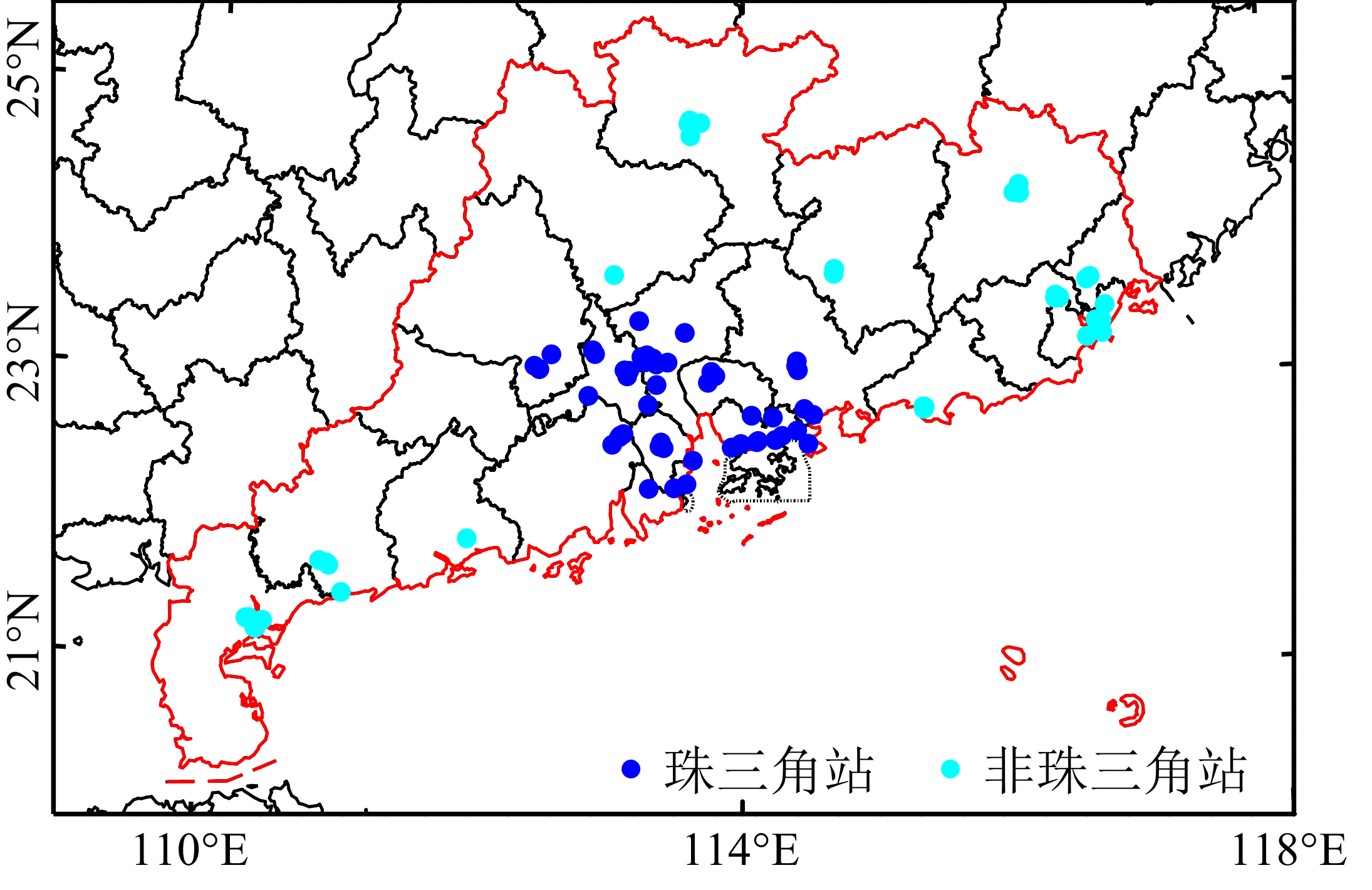
Figure 1 The distribution of in-site O3 concentration monitoring stations in Guangdong, China

Figure 2 Correspondence between the summer-autumn western North Pacific tropical cyclones and O3 concentration deviations in the Pearl River Delta, China

Figure 3 Classification of selected western North Pacific tropical cyclones into two types during June to November, 2018-2024
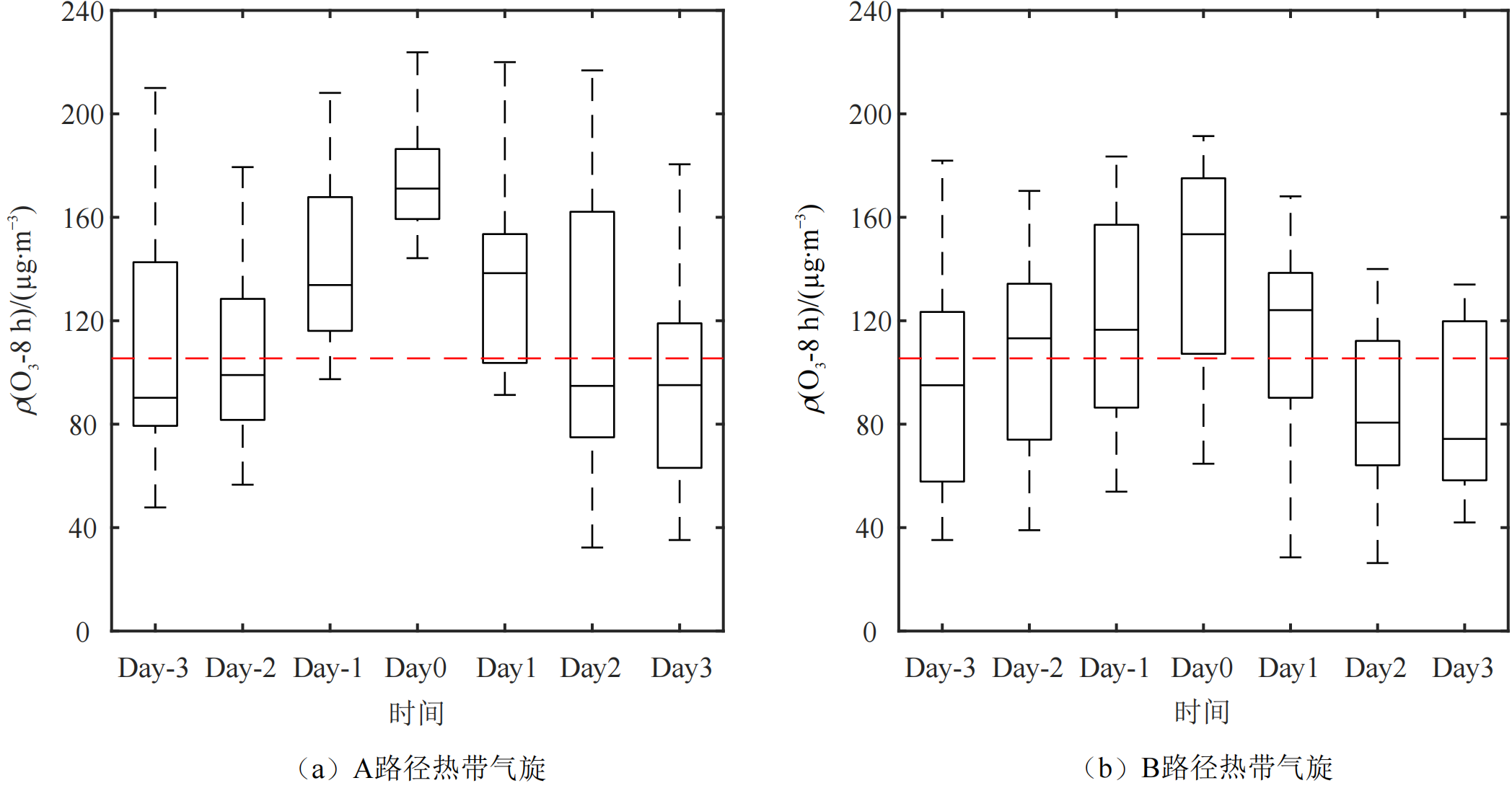
Figure 4 Box plots of the daily variation of ρ(O3-8 h) in Pearl River Delta under the influence of tropical cyclones during June to November, 2018-2024
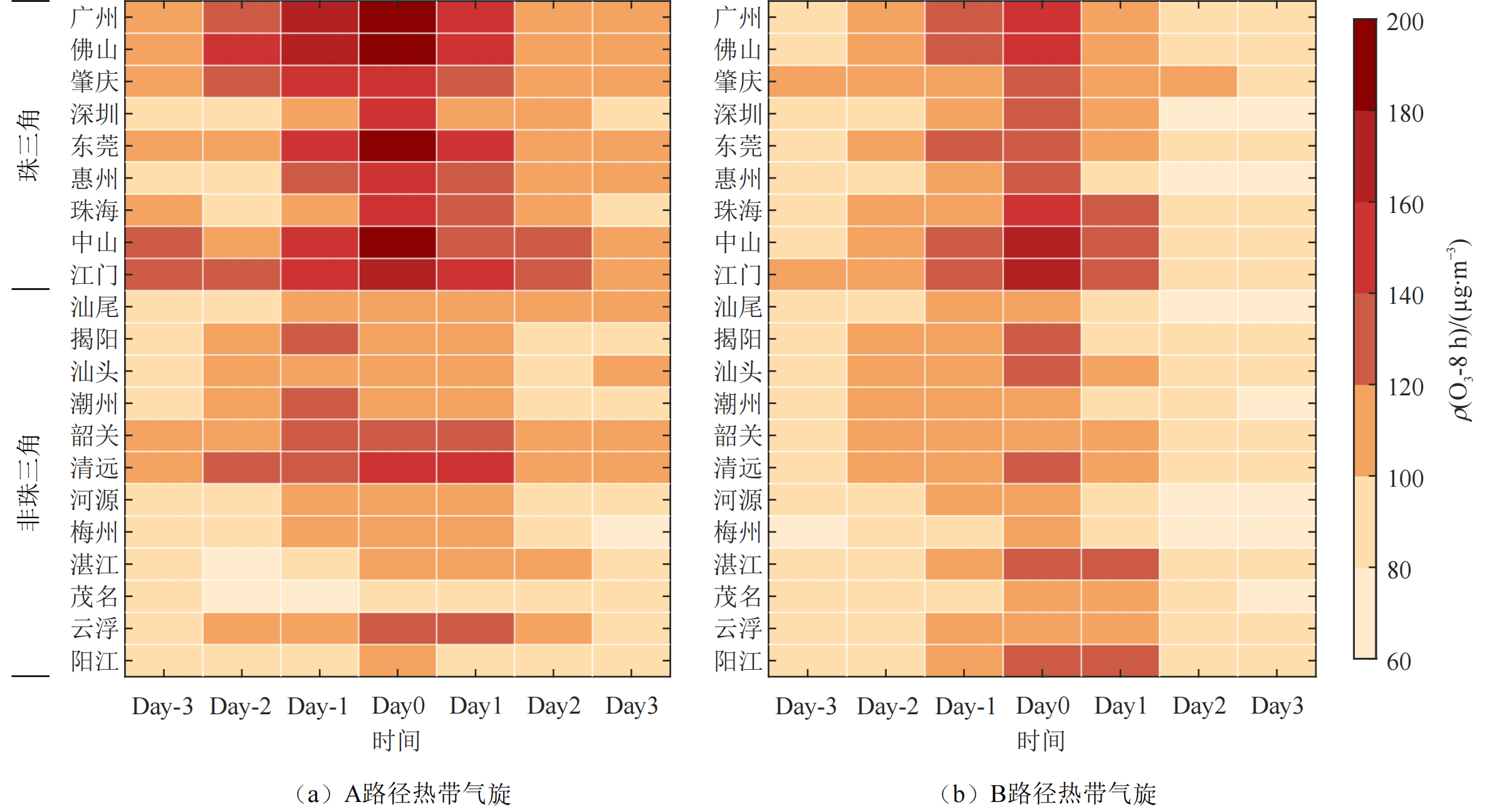
Figure 5 The daily variation of ρ(O3-8 h) in cities across Guangdong province under the influence of tropical cyclones during June to November, 2018-2024
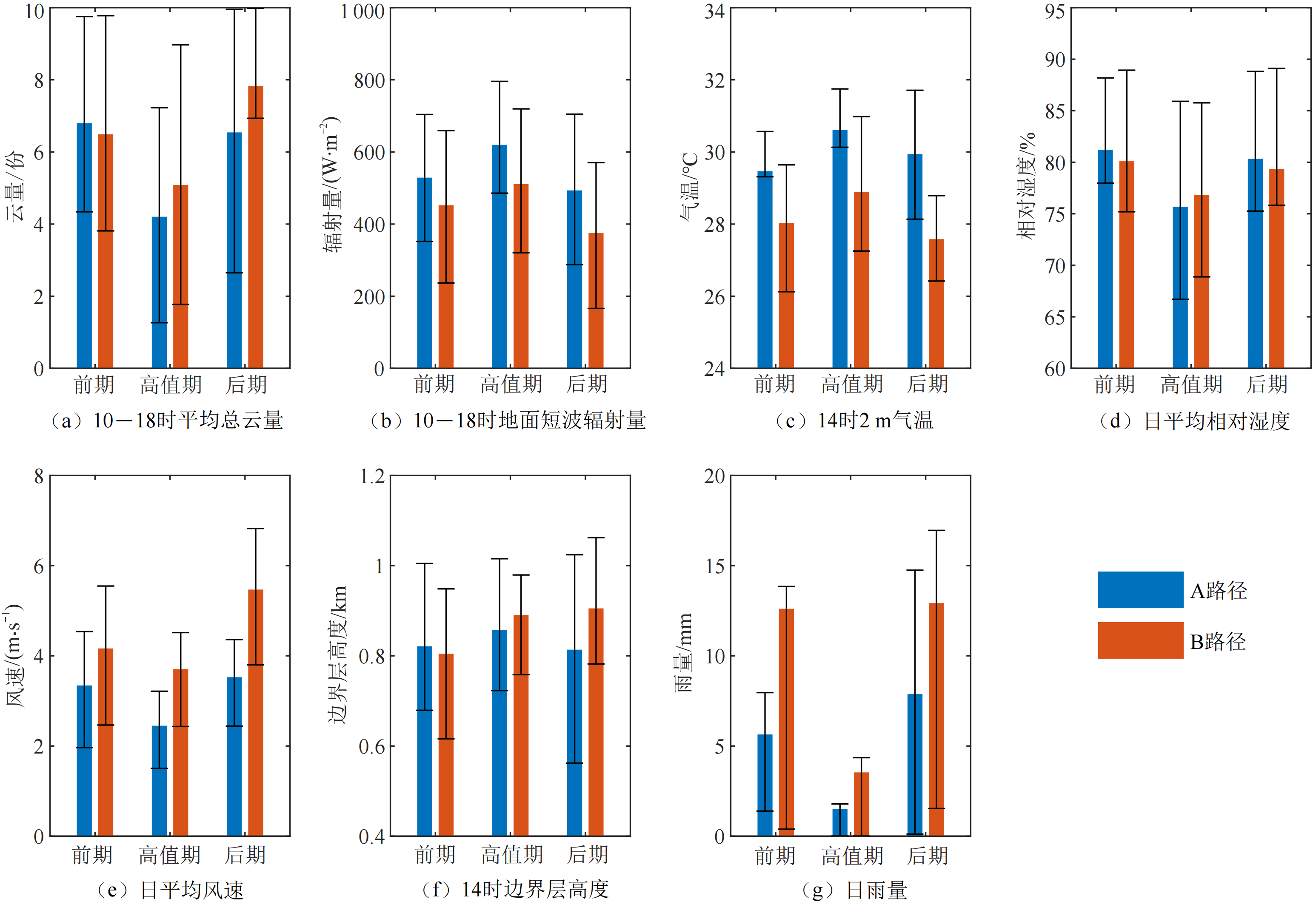
Figure 6 Meteorological elements evolution in Shenzhen under the influence of the tropical cyclones during June to November, 2018-2024
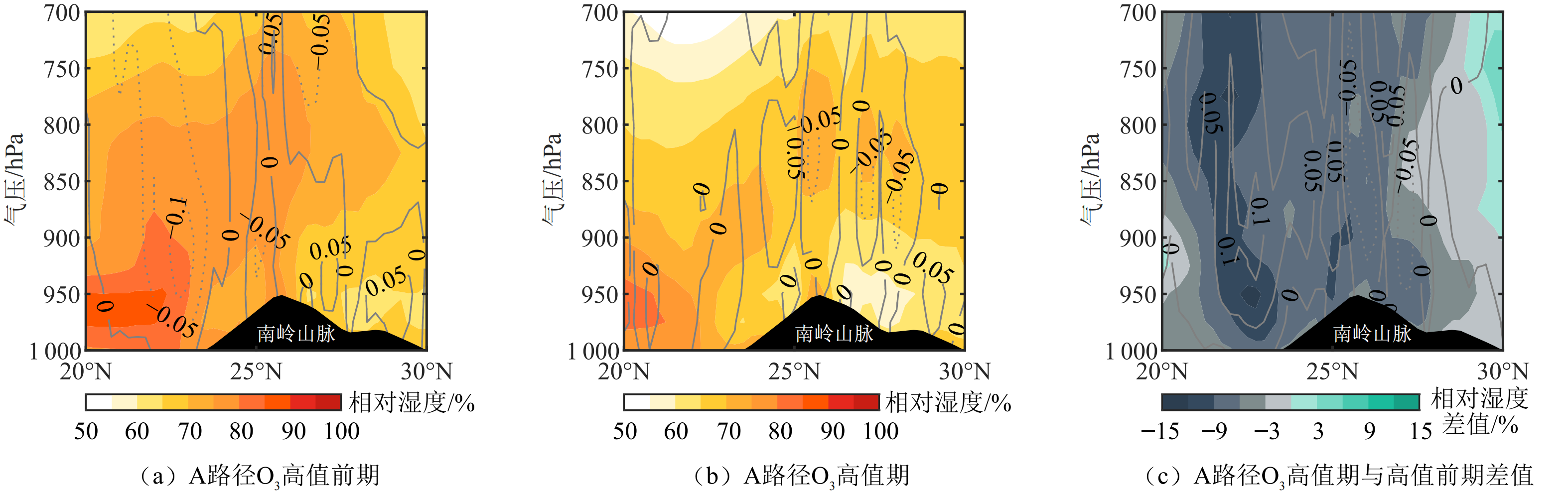
Figure 7 Latitude-pressure cross-sections of relative humidity and vertical velocity under the influence of tropical cyclones with northwestward path during June to November, 2018-2024
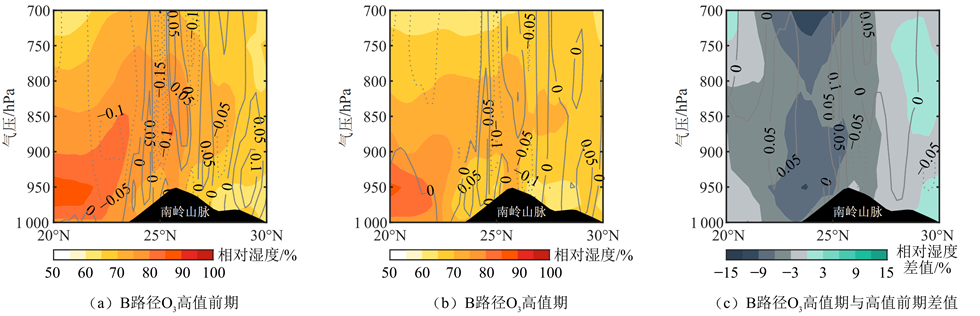
Figure 8 Latitude-pressure cross-sections of relative humidity and vertical velocity under the influence of tropical cyclones with westward path during June to November, 2018-2024
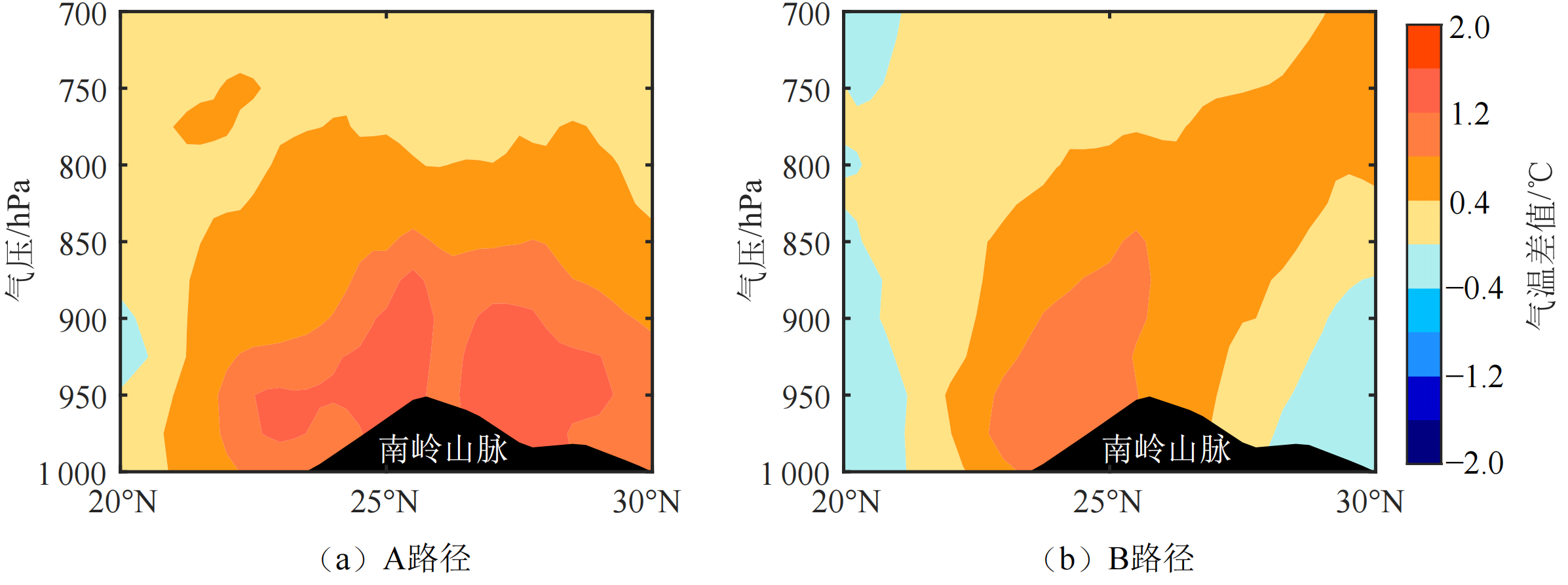
Figure 9 Latitude-pressure cross-sections of temperature variations under the influence of the two different types of tropical cyclones during June to November, 2018-2024

Figure 10 Evolution of 500 hPa geopotential height and 925 hPa wind fields of the two different types of tropical cyclones during June to November, 2018-2024
| [1] | CHEN Z X, LIU J, CHENG X G, et al., 2021. Positive and negative influences of typhoons on tropospheric ozone over southern China[J]. Atmospheric Chemistry & Physics, 21: 16911-16923. |
| [2] | DENG T, WANG T J, WANG S Q, et al., 2019. Impact of typhoon periphery on high ozone and high aerosol pollution in the Pearl River Delta region[J/OL]. Science of the Total Environment, [2019-03-01]. https://doi.org/10.1016/j.scitotenv.2019.02.450. |
| [3] | DING H, KONG L B, YOU Y C, et al., 2023. Effects of tropical cyclones with different tracks on ozone pollution over the Pearl River Delta region[J/OL]. Atmospheric Research, [2023-02-25]. https://doi.org/10.1016/j.atmosres.2023.106680. |
| [4] | HU W Z, LIU R, CHEN Z C, et al., 2023. Processes conducive to high ozone formation in Pearl River Delta in the presence of Pacific tropical cyclones[J/OL]. Atmospheric Environment, [2023-05-18]. https://doi.org/10.1016/j.atmosenv.2023.119859. |
| [5] | LIN H X, DING K, HUANG X, et al., 2024. Impacts of Northward Typhoons on Autumn Haze Pollution Over North China Plain[J/OL]. Journal of Geophysical Research: Atmospheres, [2024-03-28]. https://doi.org/10.1029/2023JD040465. |
| [6] |
LU X Q, YU H, YING M, et al., 2021. Western North Pacific Tropical Cyclone Database Created by the China Meteorological Administration[J]. Advances in Atmospheric Sciences, 38(4): 690-699.
DOI |
| [7] |
MENG K, ZHAO T L, XU X D, et al., 2022. Anomalous surface O3 changes in North China Plain during the northwestward movement of a landing typhoon[J]. Science of the Total Environment, 820: 153196.
DOI URL |
| [8] | OUYANG S S, DENG T, LIU R, et al., 2022. Impact of a subtropical high and a typhoon on a severe ozone pollution episode in the Pearl River Delta, China[J]. Atmospheric Chemistry & Physics, 22: 10751-10767. |
| [9] |
SILVER B, REDDINGTON C L, ARNOLD S R, et al., 2018. Substantial changes in air pollution across China during 2015-2017[J]. Environmental Research Letters, 13(11): 114012-114019.
DOI URL |
| [10] |
YING M, ZHANG W, YU H, et al., 2014. An overview of the China Meteorological Administration Tropical Cyclone Database[J]. Journal of Atmospheric and Oceanic Technology, 31(2): 287-301.
DOI URL |
| [11] | 曹侃, 应旻, 魏峻山, 等, 2021. 江西省臭氧污染特征及其与气象条件的关系[J]. 中国环境监测, 37(2): 44-59. |
| CAO K, YING M, WEI J S, et al., 2021. Characteristics of ozone pollution in Jiangxi Province and its relationship with meteorological factors[J]. Environmental Monitoring in China, 37(2): 44-59. | |
| [12] | 曹梅, 范绍佳, 靳春, 等, 2023. 2015-2020年广东臭氧污染特征、污染天气分型及局地气象要素影响[J]. 环境科学学报, 43(1): 19-31. |
| CAO M, FAN S J, JIN C, et al., 2023. O3 pollution characteristics, weather classifications and local meteorological conditions in Guangdong from 2015 to 2020[J]. ACTA Scientiae Circumstantiae, 43(1): 19-31. | |
| [13] | 龚宇, 李婷苑, 陈靖扬, 等, 2024. 2022年两次台风外围叠加下的臭氧污染成因分析[J]. 广东气象, 46(2): 42-46. |
| GONG Y, LI T Y, CHEN J Y, et al., 2024. Analysis of the causes of ozone pollution under the superimposed influence of typhoon peripheral systems in 2022[J]. Guangdong Meteorology, 46(2): 42-46. | |
| [14] | 洪莹莹, 翁佳烽, 谭浩波, 等, 2021. 珠江三角洲秋季典型O3污染的气象条件及贡献量化[J]. 中国环境科学, 41(1): 1-10. |
| HONG Y Y, WENG J F, TAN H B, et al., 2021. Meteorological conditions and contribution quantification of typical ozone pollution during autumn in Pearl River Delta[J]. China Environmental Science, 41(1): 1-10. | |
| [15] | 嵇萍, 汪宇, 陈多宏, 等, 2018. 台风登陆前珠三角地区近地面O3浓度升高的原因初探[J]. 环境污染与防治, 40(3): 296-300. |
| JI P, WANG Y, CHEN D H, et al., 2018. Causes for the surface O3 increase before a typhoon landing in the Pearl River Delta region[J]. Environmental Pollution and Control, 40(3): 296-300. | |
| [16] | 李莉, 杨闻达, 吕升, 等, 2022. 嘉兴市臭氧污染特征及其与气象条件的关系[J]. 中山大学学报(自然科学版)(中英文), 61(2): 147-153. |
| LI L, YANG W D, LÜ S, et al., 2022. Characteristics of ozone pollution and its relationship with meteorological factors in Jiaxing city[J]. Acta Scientiarum Naturalium Universitatis Sunyatseni, 61(2): 147-153. | |
| [17] | 李明华, 甘泉, 曹静, 等, 2019. 惠州市臭氧污染特征及其与气象条件关系研究[J]. 热带气象学报, 35(3): 324-331. |
| LI M H, GAN Q, CAO J, et al., 2019. Characteristics of ozone pollution and its relationship with meteorological conditions in Huizhou[J]. Journal of Tropical Meteorology, 35(3): 324-331. | |
| [18] | 梁碧玲, 张丽, 赖鑫, 等, 2017. 深圳市臭氧污染特征及其与气象条件的关系[J]. 气象与环境学报, 33(1): 66-71. |
| LIANG B L, ZHANG L, LAI X, et al., 2017. Analysis of the characteristics of ozone pollution and its relationship with meteorological conditions in Shenzhen[J]. Journal of Meteorology and Environment, 33(1): 66-71. | |
| [19] | 林良勋, 冯业荣, 黄忠, 等, 2006. 广东省天气预报技术手册[M]. 北京: 气象出版社: 41-43. |
| LIN L X, FENG Y R, HUANG Z, et al., 2006. Guangdong weather forecast guide[M]. Beijing: China Meteorological Press: 41-43. | |
| [20] | 刘建, 吴兑, 范绍佳, 等, 2017. 前体物与气象因子对珠江三角洲臭氧污染的影响[J]. 中国环境科学, 37(3): 813-820. |
| LIU J, WU D, FAN S J, et al., 2017. Impacts of precursors and meteorological factors on ozone pollution in Pearl River Delta[J]. China Environmental Science, 37(3): 813-820. | |
| [21] | 刘天绍, 刘孙俊, 杨玺, 等, 2018. 1951-2015影响广东沿海台风的统计分析[J]. 海洋预报, 35(4): 68-74. |
| LIU T S, LIU S J, YANG X, et al., 2018. Statistical analysis of the typhoon influencing Guangdong province during 1951-2015[J]. Marine Forecasts, 35(4): 68-74. | |
| [22] | 刘玉, 佟磊, 何莲, 等, 2023. 沿海天气系统对中国大气臭氧的影响研究概述[J]. 环境科学与技术, 46(S1): 26-34. |
| LIU Y, TONG L, HE L, et al., 2023. The impact of typical coastal weather systems on atmospheric ozone in China[J]. Environmental Science & Technology, 46(S1): 26-34. | |
| [23] | 蒲义良, 吴斯敏, 叶朗明, 等, 2020. 江门市城区臭氧浓度变化特征及气象影响因素分析[J]. 热带气象学报, 36(5): 650-659. |
| PU Y L, WU S M, YE L M, et al., 2020. Variation characteristics and meteorological factors of ozone concentration in the urban area of Jiangmen[J]. Journal of Tropical Meteorology, 36(5): 650-659. | |
| [24] | 沈劲, 黄晓波, 汪宇, 等, 2017. 广东省臭氧污染特征及其来源解析研究[J]. 环境科学学报, 37(12): 4449-4457. |
| SHEN J, HUANG X B, WANG Y, et al., 2017. Study on ozone pollution characteristics and source apportionment in Guangdong Province[J]. ACTA Scientiae Circumstantiae, 37(12): 4449-4457. | |
| [25] | 沈劲, 杨土士, 晏平仲, 等, 2020. 广东省臭氧污染特征及其成因分析[J]. 环境科学与技术, 43(12): 90-95. |
| SHEN J, YANG T S, YAN P Z, et al., 2020. Characteristics and causes of ozone pollution in Guangdong Province[J]. Environmental Science & Technology, 43(12): 90-95. | |
| [26] | 沈劲, 李婷苑, 廖彤, 等, 2023. 广东省夏秋季臭氧污染与台风的关系分析[J]. 环境科学学报, 43(1): 152-160. |
| SHEN J, LI T Y, LIAO T, et al., 2023. Analysis on the relationship between ozone pollution and typhoons in summer and autumn in Guangdong Province[J]. ACTA Scientiae Circumstantiae, 43(1): 152-160. | |
| [27] | 汪宇, 彭钰雯, 陈多宏, 等, 2019. 珠三角城市近地面臭氧污染分布特征及变化趋势[J]. 环境污染与防治, 41(9): 1103-1107. |
| WANG Y, PENG Y W, CHEN D H, et al., 2019. Distribution and trends of ground level O3 pollution in the Pearl River Delta cities[J]. Environmental Pollution & Control, 41(9): 1103-1107. | |
| [28] | 王旭东, 尹沙沙, 杨健, 等, 2021. 郑州市臭氧污染变化特征、气象影响及输送源分析[J]. 环境科学, 42(2): 604-615. |
| WANG X D, YIN S S, YANG J, et al., 2021. Characteristics, meteorological influences, and transport source of ozone pollution in Zhengzhou City[J]. Environmental Science, 42(2): 604-615. | |
| [29] | 翁佳烽, 梁晓媛, 李婷苑, 等, 2023. 粤西北地区O3污染特征及气象成因分析[J]. 环境科学与技术, 46(S1): 48-54. |
| WENG J F, LIANG X Y, LI T Y, et al., 2023. Analysis of factors affecting ozone and its variation characteristics in northwestern Guangdong[J]. Environmental Science & Technology, 46(S1): 48-54. | |
| [30] | 徐晓斌, 2016. 我国霾和光化学污染观测研究进展[J]. 应用气象学报, 27(5): 604-619. |
| XU X B, 2016. Observational study advances of haze and photochemical pollution in China[J]. Journal of Applied Meteorological Science, 27(5): 604-619. | |
| [31] | 严刚, 薛文博, 雷宇, 等, 2020. 我国臭氧污染形势分析及防控对策建议[J]. 环境保护, 48(15): 15-19. |
| YAN G, XUE W B, LEI Y, et al., 2020. Situation and control measures of ozone pollution in China[J]. Environmental Protection, 48(15): 15-19. | |
| [32] | 严文莲, 刘端阳, 康志明, 等, 2019. 江苏臭氧污染特征及其与气象因子的关系[J]. 气象科学, 39(4): 477-487. |
| YAN W L, LIU D Y, KANG Z M, et al., 2019. The characteristics of ozone pollution and its relationship with meteorological factors in Jiangsu[J]. Journal of the Meteorological Sciences, 39(4): 477-487. | |
| [33] | 杨旭, 张小玲, 康延臻, 等, 2017. 京津冀地区冬半年空气污染天气分型研究[J]. 中国环境科学, 37(9): 3201-3209. |
| YANG X, ZHANG X L, KANG Y Z, et al., 2017. Circulation weather type classification for air pollution over the Beijing-Tianjin-Hebei region during winter[J]. China Environmental Science, 37(9): 3201-3209. | |
| [34] | 尹稚祯, 王兴磊, 2020. 珠三角城市群臭氧浓度时空变化特征分析[J]. 复旦学报(自然科学版), 59(6): 748-760. |
| YIN Z Z, WANG X L, 2020. Analysis of the spatial and temporal variation characteristics of ozone concentration in the Pearl River Delta urban agglomerations[J]. Journal of Fudan University (Natural Science), 59(6): 748-760. | |
| [35] | 张倩倩, 张兴赢, 2019. 基于卫星和地面观测的2013年以来我国臭氧时空分布及变化特征[J]. 环境科学, 40(3): 1132-1142. |
| ZHANG Q Q, ZHANG X Y, 2019. Ozone spatial-temporal distributed and Trend over China since 2013: Insight from satellite and surface observation[J]. Environmental Science, 40(3): 1132-1142. | |
| [36] | 赵伟, 高博, 刘明, 等, 2019. 气象因素对香港地区臭氧污染的影响[J]. 环境科学, 40(1): 55-66. |
| ZHAO W, GAO B, LIU M, et al., 2019. Impact of meteorological factors on the ozone pollution in Hong Kong[J]. Environmental Science, 40(1): 55-66. | |
| [37] | 赵伟, 王硕, 庞晓蝶, 等, 2022a. 2015-2021年陕西关中城市群臭氧污染变化趋势[J]. 环境科学, 43(12): 5399-5406. |
| ZHAO W, WANG S, PANG X D, et al., 2022a. Trends of ozone pollution in Guanzhong urban agglomeration from 2015 to 2021[J]. Environmental Science, 43(12): 5399-5406. | |
| [38] | 赵伟, 吕梦瑶, 卢清, 等, 2022b. 热带气旋对珠三角秋季臭氧污染的影响[J]. 环境科学, 43(6): 2957-2965. |
|
ZHAO W, LÜ M Y, LU Q, et al., 2022b. Effects of tropical cyclones on ozone pollution in the Pearl River Delta in Autumn[J]. Environmental Science, 43(6): 2957-2965.
DOI URL |
| [1] | WEN Lirong, LIN Boji, LI Tingting, ZHANG Ziyang, ZHANG Zhengen, JIANG Ming, ZHOU Yan, ZHANG Tao, LI Jun, ZHANG Gan. Source Apportionment of Ammonium in Atmospheric PM2.5 in the Pearl River Delta Based on Nitrogen Isotope [J]. Ecology and Environmental Sciences, 2023, 32(9): 1654-1662. |
| [2] | XIAO Yihua, FU Zhigao, XU Han, SHI Xin, TANG Haiming, CHEN Bufeng. Effects of Urbanization on Leaf Functional Traits of Different Functional Groups in Pearl River Delta [J]. Ecology and Environmental Sciences, 2022, 31(9): 1783-1793. |
| [3] | JIANG Ming, ZHANG Ziyang, LI Tingting, LIN Boji, ZHANG Zhengen, LIAO Tong, YUAN Luan, PAN Suhong, LI Jun, ZHANG Gan. Source Apportionment of Ammonium in Atmospheric PM2.5 in the Pearl River Delta Based on Nitrogen Isotope [J]. Ecology and Environmental Sciences, 2022, 31(9): 1840-1848. |
| [4] | FAN Keyu, GAO Yuan, LAI Zini, ZENG Yanyi, LIU Qianfu, LI Haiyan, MAI Yongzhan, YANG Wanling, WEI Jingxin, SUN Jinhui, WANG Chao. Characteristics of Microplastic Pollution in Fish in the Pearl River Delta [J]. Ecology and Environmental Sciences, 2022, 31(8): 1590-1598. |
| [5] | SU Yongsong, SONG Song, CHEN Ye, YE Ziqiang, ZHONG Runfei, WANG Zhaoyao. Temporal and Spatial Characteristics of Net Anthropogenic Nitrogen Input and Its Influencing Factors in the Pearl River Delta [J]. Ecology and Environmental Sciences, 2022, 31(8): 1599-1609. |
| [6] | LIANG Junfen, CAI Xun, FENG Shanshan, TAO Liang. Evaluation of the Development Degree and Restriction Factors of Agricultural and Rural Modernization in the Pearl River Delta Region [J]. Ecology and Environmental Sciences, 2022, 31(8): 1680-1689. |
| [7] | ZHU Li'an, ZHANG Huihua, CHENG Jiong, LI Ting, LIN ZI, LI Junjie. Potential Ecological Risk Pattern Analysis of Heavy Metals in Soil of Forestry Land in The Pearl River Delta [J]. Ecology and Environmental Sciences, 2022, 31(6): 1253-1262. |
| [8] | WEN Dian, ZHAO Peihua, CHEN Chuguo, LI Furong, DU Ruiying, HUANG Yongdong, LI Lei, WANG Fuhua. Study on Safety Threshold of Soil Cadmium in the Vegetable Producing Areas of the Pearl River Delta [J]. Ecology and Environmental Sciences, 2022, 31(3): 603-609. |
| [9] | WU Xianwen, CHEN Yingbiao. Ecological Sensitivity Assessment Based on Natural Resource Data [J]. Ecology and Environmental Sciences, 2021, 30(5): 976-983. |
| [10] | HONG Yingying, CHEN Chen, BAO Hongyan, SHEN Jin. Sources and Sensitivity Analysis of Ozone in Spring Over the Southwestern Part of Pearl River Delta Region [J]. Ecology and Environmental Sciences, 2021, 30(5): 984-994. |
| Viewed | ||||||
|
Full text |
|
|||||
|
Abstract |
|
|||||
Copyright © 2021 Editorial Office of ACTA PETROLEI SINICA
Address:No. 6 Liupukang Street, Xicheng District, Beijing, P.R.China, 510650
Tel: 86-010-62067128, 86-010-62067137, 86-010-62067139
Fax: 86-10-62067130
Email: syxb@cnpc.com.cn
Support byBeijing Magtech Co.ltd, E-mail:support@magtech.com.cn
