
Ecology and Environmental Sciences ›› 2026, Vol. 35 ›› Issue (1): 40-53.DOI: 10.16258/j.cnki.1674-5906.2026.01.004
• Research Article [Ecology] • Previous Articles Next Articles
HUANG Jixing1( ), LIU Wanyi1, YANG Shuqi1, ZHU Weihan1, ZANG Yuanrui1, DAI Yongwu2, LIN Jinhuang1,*()
Received:2025-04-19
Revised:2025-11-14
Accepted:2025-11-19
Online:2026-01-18
Published:2026-01-05
黄纪星1(), 刘婉仪1, 杨舒棋1, 朱玮晗1, 臧元瑞1, 戴永务2, 林金煌1,*()
通讯作者:
* E-mail: 作者简介:黄纪星(1999年生),男,硕士研究生,主要从事耕地多功能研究。E-mail: jixinghuang@fafu.edu.cn
基金资助:CLC Number:
HUANG Jixing, LIU Wanyi, YANG Shuqi, ZHU Weihan, ZANG Yuanrui, DAI Yongwu, LIN Jinhuang. Temporal and Spatial Trade-offs between the Production, Livelihood, and Ecological Functions of Cultivated Land from the Perspective of Ecosystem Services[J]. Ecology and Environmental Sciences, 2026, 35(1): 40-53.
黄纪星, 刘婉仪, 杨舒棋, 朱玮晗, 臧元瑞, 戴永务, 林金煌. 将生态系统服务纳入耕地多功能的权衡协同评估和分区管理[J]. 生态环境学报, 2026, 35(1): 40-53.
Add to citation manager EndNote|Ris|BibTeX
URL: https://www.jeesci.com/EN/10.16258/j.cnki.1674-5906.2026.01.004

Figure 1 Overview of the studied area
| 数据类型 | 年份 | 单位 | 形式 | 数据来源 |
|---|---|---|---|---|
| 粮食产量 | 2000-2020 | t·km−2 | - | 《中国县域统计年鉴》 |
| 土地利用类型 | 2000-2020 | - | 栅格(1 km×1 km) | 中科院资源与环境数据中心( |
| 植被覆盖率 | 2000-2020 | - | 栅格(1 km×1 km) | |
| GDP密度 | 2000-2020 | 104 yuan·km−2 | 栅格(1 km×1 km) | |
| 人口密度 | 2000-2020 | 104 person·km−2 | 栅格(1 km×1 km) | |
| 年均降雨量 | 2000-2020 | mm | 栅格(1 km×1 km) | |
| 蒸发量 | 2000-2020 | mm | 栅格(1 km×1 km) | |
| 年均气温 | 2000-2020 | ℃ | 栅格(1 km×1 km) | |
| 流域边界 | 2000-2020 | - | 矢量 | |
| 数字高程模型 | 2020 | - | 栅格(250 m×250 m) | 地理空间数据云 |
| 土壤质地 | 2009 | - | 矢量 | 国家青藏高原科学数据中心( |
| 社会经济数据 | 2000-2020 | - | - | 《中国农村统计年鉴》,《城市统计年鉴》 |
Table 1 Data sources
| 数据类型 | 年份 | 单位 | 形式 | 数据来源 |
|---|---|---|---|---|
| 粮食产量 | 2000-2020 | t·km−2 | - | 《中国县域统计年鉴》 |
| 土地利用类型 | 2000-2020 | - | 栅格(1 km×1 km) | 中科院资源与环境数据中心( |
| 植被覆盖率 | 2000-2020 | - | 栅格(1 km×1 km) | |
| GDP密度 | 2000-2020 | 104 yuan·km−2 | 栅格(1 km×1 km) | |
| 人口密度 | 2000-2020 | 104 person·km−2 | 栅格(1 km×1 km) | |
| 年均降雨量 | 2000-2020 | mm | 栅格(1 km×1 km) | |
| 蒸发量 | 2000-2020 | mm | 栅格(1 km×1 km) | |
| 年均气温 | 2000-2020 | ℃ | 栅格(1 km×1 km) | |
| 流域边界 | 2000-2020 | - | 矢量 | |
| 数字高程模型 | 2020 | - | 栅格(250 m×250 m) | 地理空间数据云 |
| 土壤质地 | 2009 | - | 矢量 | 国家青藏高原科学数据中心( |
| 社会经济数据 | 2000-2020 | - | - | 《中国农村统计年鉴》,《城市统计年鉴》 |
| 生态系统服务类型 | 计算方法 | 计算公式 |
|---|---|---|
| 生境质量 | 通过土地利用类型、胁迫源距离以及敏感性因子三者结合来测算,胁迫因子和半饱和常数等参数(Bhagabati et al., | 式中:Qxi ——土地利用类型i中像元x的生境质量指标;Hq、Do与K——区域生境适宜性指标、威胁因子与半饱和常数 |
| 产水量 | 基于水热耦合平衡假设,参考以往研究(钱彩云等, | 式中:Wi ——第i个像元的产水量;Vi与Pi——第i个像元的年均蒸散发量与降水量 |
| 水土保持 | 通过计算区域实际土壤侵蚀量及潜在的土壤侵蚀量的差值来空间定量化测度区域的土壤保持量(王鹏涛等, | Si=Ri×Ki×Li×Si×(1−Ci×Pi) (4) 式中:Si——第i像元的水土保持总量(t);Ri、Ki、Li、Si、Ci、Pi——降雨侵蚀量、土壤侵蚀侵蚀量、地形、地貌、植被覆盖与管理因子 |
| 碳固存 | 根据地上与地下生物量、土壤有机质、死亡有机质以及碳库中的平均碳密度和土地利用类型测算区域内的碳储量 | Ci =Ca+Cb+Cc+Cd (5) 式中:Ci ——区域碳总储量;Ca、Cb、Cc、Cd——第i个像元中地上、地下、土壤与死亡有机质碳储量 |
Table 2 Ecological function evaluation indicators
| 生态系统服务类型 | 计算方法 | 计算公式 |
|---|---|---|
| 生境质量 | 通过土地利用类型、胁迫源距离以及敏感性因子三者结合来测算,胁迫因子和半饱和常数等参数(Bhagabati et al., | 式中:Qxi ——土地利用类型i中像元x的生境质量指标;Hq、Do与K——区域生境适宜性指标、威胁因子与半饱和常数 |
| 产水量 | 基于水热耦合平衡假设,参考以往研究(钱彩云等, | 式中:Wi ——第i个像元的产水量;Vi与Pi——第i个像元的年均蒸散发量与降水量 |
| 水土保持 | 通过计算区域实际土壤侵蚀量及潜在的土壤侵蚀量的差值来空间定量化测度区域的土壤保持量(王鹏涛等, | Si=Ri×Ki×Li×Si×(1−Ci×Pi) (4) 式中:Si——第i像元的水土保持总量(t);Ri、Ki、Li、Si、Ci、Pi——降雨侵蚀量、土壤侵蚀侵蚀量、地形、地貌、植被覆盖与管理因子 |
| 碳固存 | 根据地上与地下生物量、土壤有机质、死亡有机质以及碳库中的平均碳密度和土地利用类型测算区域内的碳储量 | Ci =Ca+Cb+Cc+Cd (5) 式中:Ci ——区域碳总储量;Ca、Cb、Cc、Cd——第i个像元中地上、地下、土壤与死亡有机质碳储量 |

Figure 2 Temporal and spatial patterns of cultivated land in the Yangtze River Economic Belt from 2000 to 2020
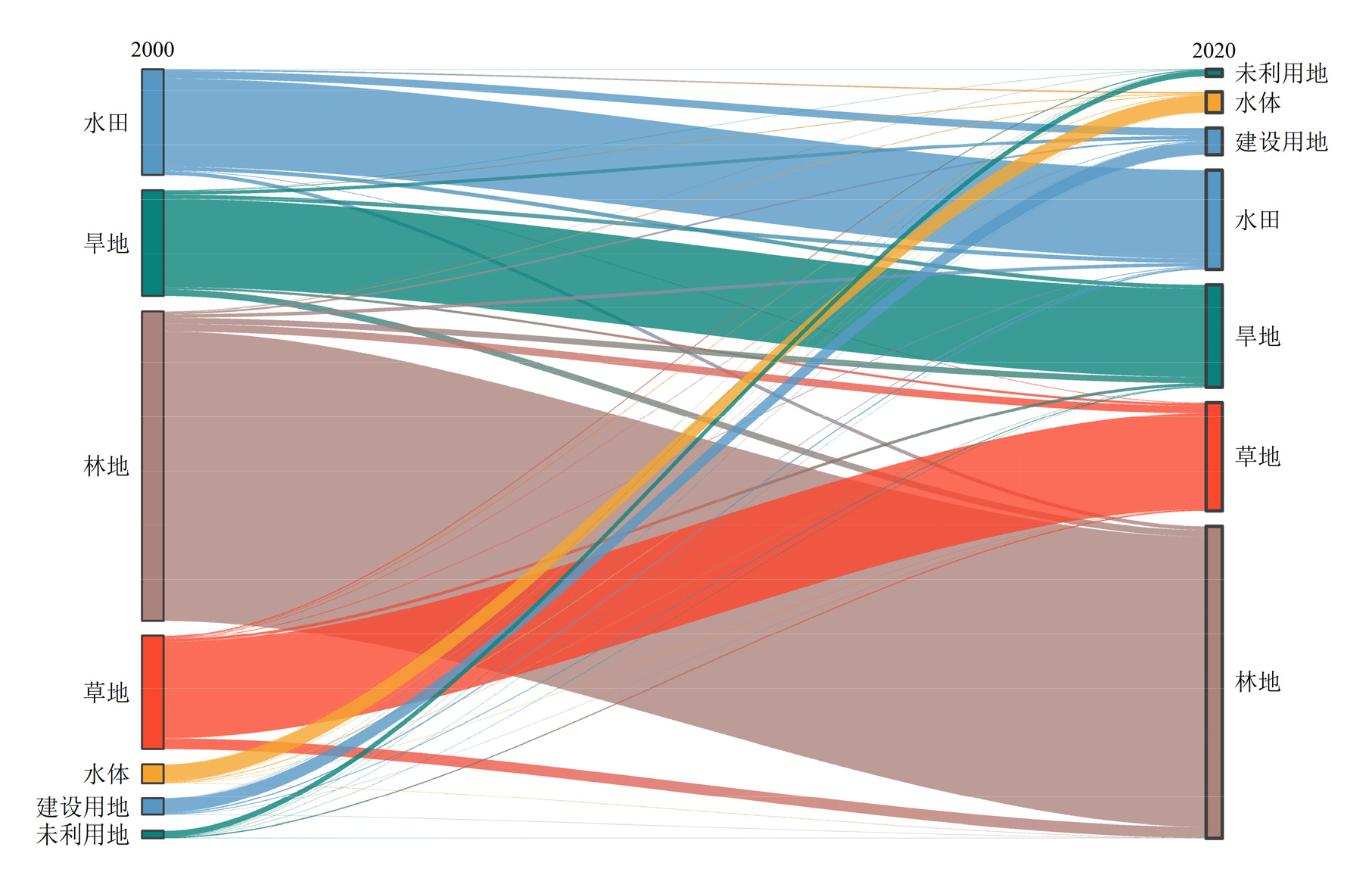
Figure 3 Land use change pathways of cultivated land in the Yangtze River Economic Belt

Figure 4 Temporal and spatial pattern features of the multifunctionality of cultivated land in relation to production, live, and ecology from 2000 to 2020
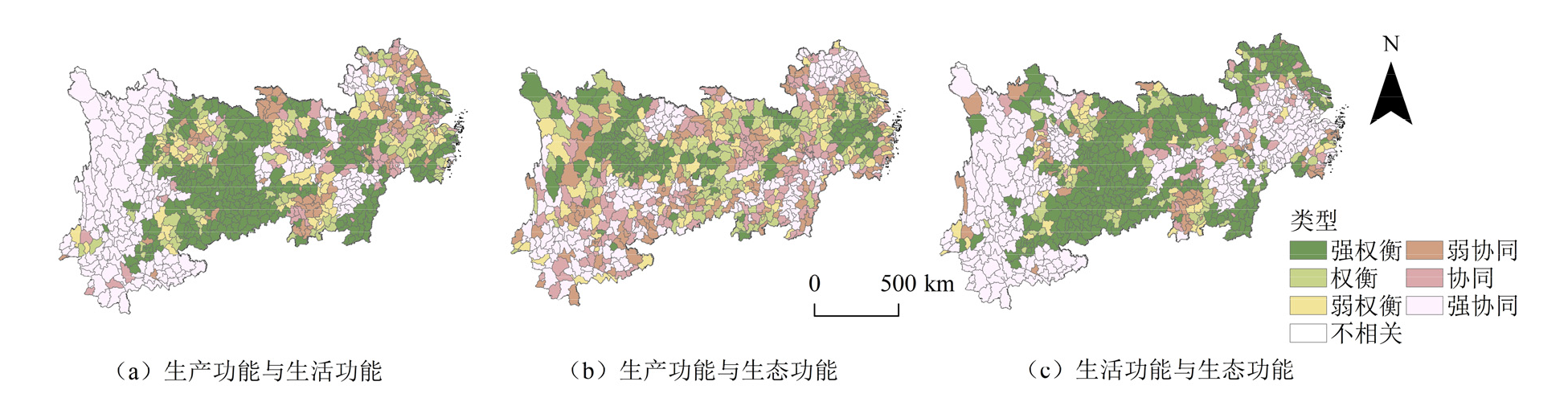
Figure 5 Temporal and spatial characteristics of trade-offs/synergies of cultivated land multifunctionality at the county scale
| 类型 | 生产-生活 | 生产-生态 | 生活-生态 |
|---|---|---|---|
| 强权衡 | 34.18 | 16.99 | 34.87 |
| 权衡 | 9.52 | 14.93 | 7.36 |
| 弱权衡 | 7.07 | 10.81 | 3.92 |
| 不相关 | 9.52 | 5.89 | 7.79 |
| 弱协同 | 6.77 | 15.23 | 5.00 |
| 协同 | 7.46 | 15.13 | 5.50 |
| 强协同 | 25.44 | 21.02 | 35.56 |
Table 3 Proportion of counties with trade-offs/synergies of different cultivated land multifunctionality %
| 类型 | 生产-生活 | 生产-生态 | 生活-生态 |
|---|---|---|---|
| 强权衡 | 34.18 | 16.99 | 34.87 |
| 权衡 | 9.52 | 14.93 | 7.36 |
| 弱权衡 | 7.07 | 10.81 | 3.92 |
| 不相关 | 9.52 | 5.89 | 7.79 |
| 弱协同 | 6.77 | 15.23 | 5.00 |
| 协同 | 7.46 | 15.13 | 5.50 |
| 强协同 | 25.44 | 21.02 | 35.56 |

Figure 6 Temporal and spatial pattern characteristics of the three ecosystem functions of cultivated land from 2000 to 2020
| Year | Moran’s I | Z | P |
|---|---|---|---|
| 2000 | 0.67 | 39.79 | 0 |
| 2010 | 0.71 | 41.85 | 0 |
| 2020 | 0.48 | 28.59 | 0 |
Table 4 Global spatial autocorrelation index of the three ecosystem functions of cultivated land
| Year | Moran’s I | Z | P |
|---|---|---|---|
| 2000 | 0.67 | 39.79 | 0 |
| 2010 | 0.71 | 41.85 | 0 |
| 2020 | 0.48 | 28.59 | 0 |
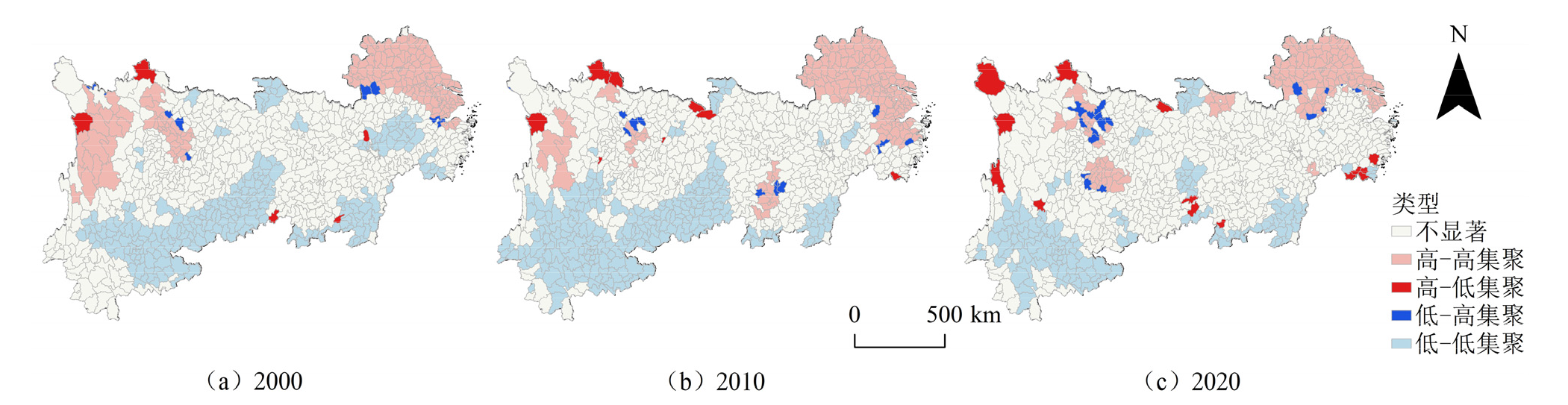
Figure 7 LISA clustering map of the comprehensive three ecosystem functions of cultivated land from 2000 to 2020
| 功能区 类型 | 包含 区域 | 县域数量占比 | 管控目标 |
|---|---|---|---|
| 弹性发展区 | Q1,Q2,Q4 | 58.74% | 推动城乡协调发展,缓解区域生态压力,促进耕地可持续发展 |
| 生产保护区 | Q3,Q5,Q7 | 23.37% | 保证耕地安全,推进绿色高效农业发展,协同强化生态屏障 |
| 关键发展区 | Q6,Q8,Q9 | 17.89% | 统筹城乡空间,推动产业融化发展,促进耕地功能转型升级 |
Table 5 Characteristics of functional areas and management objectives
| 功能区 类型 | 包含 区域 | 县域数量占比 | 管控目标 |
|---|---|---|---|
| 弹性发展区 | Q1,Q2,Q4 | 58.74% | 推动城乡协调发展,缓解区域生态压力,促进耕地可持续发展 |
| 生产保护区 | Q3,Q5,Q7 | 23.37% | 保证耕地安全,推进绿色高效农业发展,协同强化生态屏障 |
| 关键发展区 | Q6,Q8,Q9 | 17.89% | 统筹城乡空间,推动产业融化发展,促进耕地功能转型升级 |

Figure 8 Zoning of comprehensive functions of cultivated land in the Yangtze River Economic Belt
| [1] | ANNA M R, SEAN M S, SARAH E G, et al., 2019. Towards multifunctional land use in an agricultural landscape: A trade-off and synergy analysis in the Lower Fraser Valley, Canada[J]. Landscape and Urban Planning, 188: 88-100. |
| [2] |
BHAGABATI N, RICKETTS T, SULISTYAWAN T, et al., 2014. Ecosystem services reinforce Sumatran tiger conservation in land use plans[J]. Biological Conservation, 169: 147-156.
DOI URL |
| [3] |
CHEN D S, DUAN Y F, JIANG P H, et al., 2024a. Spatial zoning to enhance ecosystem service co-benefits for sustainable land-use management in the Yangtze River Economic Belt, China[J]. Ecological Indicators, 159: 111753.
DOI URL |
| [4] |
CHEN D X, WANG Y M, BAO H J, 2024b. Sharing or sparing? The trade-offs among urban services, food production and ecosystem services[J]. Habitat International, 147: 103037.
DOI URL |
| [5] | CUI Y Z, WANG W X, WANG Q Y, et al., 2024. Characteristics and optimization strategies of multi-subject governance network structure for land consolidation[J]. Journal of Rural Studies, 105: 103470. |
| [6] | HAN B, JIN X B, SUN R, et al., 2023. Understanding land-use sustainability with a systematical framework: An evaluation case of China[J]. Land Use Policy, 128: 106767. |
| [7] |
HE M W, GE D Y, JIANG J Y, et al., 2023. How do urban function and development level effect construction level of green infrastructure? A case study of 110 built-up areas of cities in the Yangtze River Economic Zone[J]. Cities, 143: 104620.
DOI URL |
| [8] |
JIANG G H, WANG M Z, QU Y B, et al., 2020. Towards cultivated land multifunction assessment in China: Applying the “influencing factors-functions-products-demands” integrated framework[J]. Land Use Policy, 99: 104982.
DOI URL |
| [9] | KHAIRABADI O, SAJADZADEH H, MOHAMADIANMANSOOR S, et al., 2020. Assessment and evaluation of tourism activities with emphasis on agritourism: The case of Simin region in Hamedan City[J]. Land Use Policy, 105: 105045. |
| [10] |
LENG A, WANG K, BA J J, et al., 2024. Analyzing sustainable development in Chinese cities: A focus on land use efficiency in production-living-ecological aspects[J]. Journal of Cleaner Production, 448: 141461.
DOI URL |
| [11] | LI S N, SHAO Y Z, HONG M J, et al., 2023. Impact mechanisms of urbanization processes on supply-demand matches of cultivated land multifunction in rapid urbanization areas[J]. Habitat International, 138: 102726. |
| [12] |
LI W M, CAI Z Y, JIN L S, 2022. Spatiotemporal characteristics and influencing factors of the coupling coordinated development of production-living-ecology system in China[J]. Ecological Indicators, 145: 109738.
DOI URL |
| [13] | LI Y, CHEN Z J, XU X, et al., 2023. Assessing resource utilization, food production and ecosystem service value from spring wheat farmland under reduced irrigation and N fertilization management using a process simulation-based framework[J]. Journal of Hydrology, 625: 130362. |
| [14] |
LIANG X Y, LI Y B, 2020. Identification of spatial coupling between cultivated land functional transformation and settlements in Three Gorges Reservoir Area, China[J]. Habitat International, 104: 102236.
DOI URL |
| [15] | LYU X Q, PENG W L, NIU S D, et al., 2022. Evaluation of sustainable intensification of cultivated land use according to farming households’ livelihood types[J]. Ecological Indicators, 144: 108848. |
| [16] | MA W Q, YANG H, JIANG G H, et al., 2024. Exploring trade-offs between residential and industrial functions in rural areas and their ecological impacts across transitioning agricultural systems: Evidence from the metropolitan suburbs of China[J]. Journal of Environmental Management, 353: 120907. |
| [17] | MENG J J, CHENG H R, LI F, et al., 2022. Spatial-temporal trade-offs of land multi-functionality and function zoning at finer township scale in the middle reaches of the Heihe River[J]. Land Use Policy, 116: 106019. |
| [18] |
PENG H J, ZHANG X S, REN W, et al., 2023. Spatial pattern and driving factors of cropland ecosystem services in a major grain-producing region: A production-living-ecology perspective[J]. Ecological Indicators, 155: 111024.
DOI URL |
| [19] | SHEN S S, YAN D, LIU X J, 2024. Achieving coordinated development of multi-functional urban agriculture in Xiamen, China[J]. Sustainable Cities and Society, 105: 105070. |
| [20] |
SHI R, SHEN Y J, DU R R, et al., 2024. The impact of agricultural productive service on agricultural carbon efficiency—From urbanization development heterogeneity[J]. Science of The Total Environment, 906: 167604.
DOI URL |
| [21] |
SONG B J, ROBINSON G M, DOUGLAS K, et al., 2023. Multifunctional agriculture in a peri-urban fringe: Chinese farmers’ responses to shifts in policy and changing socio-economic conditions[J]. Land Use Policy, 133: 106869.
DOI URL |
| [22] | SONG W, CAO S S, DU M Y, et al., 2024. Aligning territorial spatial planning with sustainable development goals: A comprehensive analysis of production, living, and ecological spaces in China[J]. Ecological Indicators, 158: 111816. |
| [23] | SONG X Q, WANG X, HU S G, et al., 2022. Functional transition of cultivated ecosystems: Underlying mechanisms and policy implications in China[J]. Land Use Policy, 128: 106195. |
| [24] | SU D, CAO Y, WANG J Y, et al., 2023. Toward constructing an eco-account of cultivated land by quantifying the resources flow and eco-asset transfer in China[J]. Land Use Policy, 129: 106822. |
| [25] |
SUN X, LU Z, LI F, et al., 2018. Analyzing spatio-temporal changes and trade-offs to support the supply of multiple ecosystem services in Beijing, China[J]. Ecological Indicators, 94: 117-129.
DOI URL |
| [26] |
TAO J Y, LU Y Q, GE D Z, et al., 2022. The spatial pattern of agricultural ecosystem services from the production-living-ecology perspective: A case study of the Huaihai Economic Zone, China[J]. Land Use Policy, Volume 122: 106355.
DOI URL |
| [27] |
TAO J Y, ZHANG J H, DONG P, et al., 2024. Spatial heterogeneity in cropland multifunctionality trade-offs and their drivers: A case study of the Huaihai Economic Zone, China[J]. Environmental Impact Assessment Review, 107: 107569.
DOI URL |
| [28] | WANG X J, WANG D Y, WU S Z, et al., 2023. Cultivated land multifunctionality in undeveloped peri-urban agriculture areas in China: Implications for sustainable land management[J]. Journal of Environmental Management, 337: 116500. |
| [29] |
WANG Z J, YANG H, HU Y M, et al., 2023. Multifunctional trade-off/synergy relationship of cultivated land in Guangdong: A long time series analysis from 2010 to 2030[J]. Ecological Indicators, 154: 110700.
DOI URL |
| [30] |
YANG D R, YANG Q, TONG Z J, et al., 2024. Coupling coordination analysis of production, living, and ecological spaces in wetlands: A case study of Xianghai Wetland Nature Reserve, China[J]. Ecological Indicators, 158: 111578.
DOI URL |
| [31] |
ZHANG S Y, HU W Y, LI M R, et al., 2021. Multiscale research on spatial supply-demand mismatches and synergic strategies of multifunctional cultivated land[J]. Journal of Environmental Management, 299: 113605.
DOI URL |
| [32] | ZHAO J, ZHAO Y L, 2023. Synergy/trade-offs and differential optimization of production, living, and ecological functions in the Yangtze River Economic Belt, China[J]. Ecological Indicators, 145: 109925. |
| [33] |
ZHANG Z, WANG Q, YAN F Q, et al., 2024. Revealing spatio-temporal differentiations of ecological supply-demand mismatch among cities using ecological network: A case study of typical cities in the “Upstream-Midstream-Downstream” of the Yellow River Basin[J]. Ecological Indicators, 166: 112468.
DOI URL |
| [34] |
ZONG W W, CHENG L, XIA N, et al., 2018. New technical framework for assessing the spatial pattern of land development in Yunnan Province, China: A “production-life-ecology” perspective[J]. Habitat International, 80: 28-40.
DOI URL |
| [35] | ZOU Y, MENG J J, ZHU L K, et al., 2024. Characterizing land use transition in China by accounting for the conflicts underlying land use structure and function[J]. Journal of Environmental Management, 352: 119311. |
| [36] | 陈艳林, 韩博, 金晓斌, 等, 2023. 长江经济带耕地产能变化及土地整治影响分析[J]. 农业工程学报, 39(2): 182-193. |
| CHEN Y L, HAN B, JIN X B, et al., 2023. Analysis of the cropland productivity change and the impact of land consolidation in the Yangtze River Economic Zone[J]. Transactions of the Chinese Society of Agricultural Engineering, 39(2): 182-193. | |
| [37] | 戴永务, 朱玮晗, 杨舒棋, 等, 2025. 长江经济带生态系统健康时空格局及其影响因素[J]. 中国农业大学学报, 30(1): 188-205. |
| DAI Y W, ZHU W H, YANG S Q, et al., 2025. Spatiotemporal patterns and influencing factors of ecosystem health in the Yangtze River Economic Belt[J]. Journal of China Agricultural University, 30(1): 188-205. | |
| [38] | 黄晓虎, 韩秀秀, 李帅东, 等, 2017. 城市主要大气污染物时空分布特征及其相关性[J]. 环境科学研究, 30(7): 1001-1011. |
| HUANG X H, HAN X X, LI S D, et al., 2017. Spatiotemporal distribution characteristics and correlations of major atmospheric pollutants in urban areas[J]. Research of Environmental Sciences, 30(7): 1001-1011. | |
| [39] | 姜芳茗, 徐志红, 王建锋, 等, 2022. 国土空间复合生态功能识别与分区[J]. 浙江大学学报(农业与生命科学版), 48(2): 227-239. |
| JIANG F M, XU Z H, WANG J F, et al., 2022. Identification and zoning of composite ecological functions of territorial space[J]. Journal of Zhejiang University (Agriculture and Life Sciences Edition), 48(2): 227-239. | |
| [40] |
李升发, 李秀彬, 辛良杰, 等, 2017. 中国山区耕地撂荒程度及空间分布——基于全国山区抽样调查结果[J]. 资源科学, 39(10): 1801-1811.
DOI |
| LI S F, LI X B, XIN L J, et al., 2017. The extent and spatial distribution of abandoned farmland in mountainous areas of China: Evidence from a national sample survey in mountainous regions[J]. Resources Science, 39(10): 1801-1811. | |
| [41] | 李雨彤, 陈荣蓉, 杨朝现, 等, 2020. 基于土地利用结构分析的川中传统农区功能分区研究[J]. 中国农业资源与区划, 41(7): 143-152. |
| LI Y T, CHEN R R, YANG C X, et al., 2020. Functional zoning of traditional agricultural areas in Sichuan Basin based on land use structure analysis[J]. Chinese Journal of Agricultural Resources and Regional Planning, 41(7): 143-152. | |
| [42] |
梁鑫源, 金晓斌, 孙瑞, 等, 2022. 多情景粮食安全底线约束下的中国耕地保护弹性空间[J]. 地理学报, 77(3): 697-713.
DOI |
| LIANG X Y, JIN X B, SUN R, et al., 2022. China’s resilience-space for cultivated land protection under the restraint of multi-scenario food security bottom line[J]. Acta Geographica Sinica, 77(3): 697-713. | |
| [43] | 罗莎莎, 赖庆标, 王旭东, 等, 2023. 基于多功能评价与权衡-协同关系的福建省耕地区划管控[J]. 农业工程学报, 39(13): 271-280. |
| LUO S S, LAI Q B, WANG X D, et al., 2023. Cultivated land zoning regulation in Fujian Province based on multifunctional evaluation and trade-off-synergy relationships[J]. Transactions of the Chinese Society of Agricultural Engineering, 39(13): 271-280. | |
| [44] |
钱彩云, 巩杰, 张金茜, 等, 2018. 甘肃白龙江流域生态系统服务变化及权衡与协同关系[J]. 地理学报, 73(5): 868-879.
DOI |
| QIAN C Y, GONG J, ZHANG J X, et al., 2018. Changes in ecosystem services and their trade-offs and synergies in the Bailongjiang River Basin, Gansu Province[J]. Acta Geographica Sinica, 73(5): 868-879. | |
| [45] | 宋小青, 欧阳竹, 2012. 耕地多功能内涵及其对耕地保护的启示[J]. 地理科学进展, 31(7): 859-868. |
| SONG X Q, OUYANG Z, 2012. The multifunctional connotation of cultivated land and its implications for cultivated land protection[J]. Progress in Geography, 31(7): 859-868. | |
| [46] | 苏浩, 吴次芳, 2021. 东北黑土区耕地系统变化机理[J]. 农业工程学报, 37(6): 243-251. |
| SU H, WU C F, 2021. Mechanism of cultivated land system change in the Northeast Black Soil Region[J]. Transactions of the Chinese Society of Agricultural Engineering, 37(6): 243-251. | |
| [47] | 孙博, 吴雨珂, 闫白冰, 等, 2023. 1990-2020年淮河生态经济带耕地资源分布变化特征与驱动机制[J]. 农业工程学报, 39(23): 247-258. |
| SUN B, WU Y K, YAN B B, et al., 2023. Characteristics and driving mechanisms of cultivated land resource distribution changes in the Huaihe River Ecological Economic Belt from 1990 to 2020[J]. Transactions of the Chinese Society of Agricultural Engineering, 39(23): 247-258. | |
| [48] | 孙远洋, 张蕾, 何国钰, 等, 2025. 城乡梯度视角下武汉市 “三生” 功能耦合协调时空演变及影响因素[J]. 农业工程学报, 41(8): 261-271. |
| SUN Y Y, ZHANG L, HE G Y, et al., 2025. Spatiotemporal evolution and influencing factors of production-living-ecological function coupling coordination in Wuhan from an urban-rural gradient perspective[J]. Transactions of the Chinese Society of Agricultural Engineering, 41(8): 261-271. | |
| [49] |
王鹏涛, 张立伟, 李英杰, 等, 2017. 汉江上游生态系统服务权衡与协同关系时空特征[J]. 地理学报, 72(11): 2064-2078.
DOI |
| WANG P T, ZHANG L W, LI Y J, et al., 2017. Spatiotemporal characteristics of trade-offs and synergies of ecosystem services in the upper reaches of the Hanjiang River[J]. Acta Geographica Sinica, 72(11): 2064-2078. | |
| [50] | 王晓峰, 马雪, 冯晓明, 等, 2019. 重点脆弱生态区生态系统服务权衡与协同关系时空特征[J]. 生态学报, 39(20): 7344-7355. |
| WANG X F, MA X, FENG X M, et al., 2019. Spatial-temporal characteristics of trade-off and synergy of ecosystem services in key vulnerable ecological areas in China[J]. Acta Ecologica Sinica, 39(20): 7344-7355. | |
| [51] | 武子豪, 郝晋珉, 陈航, 等, 2024. 河北省耕地多功能评价与关键权衡协同分析[J]. 农业工程学报, 40(14): 199-209. |
| WU Z H, HAO J M, CHEN H, et al., 2024. Multifunctional evaluation of cultivated land and analysis of key trade-offs and synergies in Hebei Province[J]. Transactions of the Chinese Society of Agricultural Engineering, 40(14): 199-209. | |
| [52] | 熊昌盛, 张永蕾, 王雅娟, 等, 2021. 中国耕地多功能评价及分区管控[J]. 中国土地科学, 35(10): 104-114. |
| XIONG C S, ZHANG Y L, WANG Y J, et al., 2021. Multifunctional evaluation and zoning control of cultivated land in China[J]. China Land Science, 35(10): 104-114. | |
| [53] | 张一达, 刘学录, 任君, 等, 2020. 基于耕地多功能权衡与协同分析的耕地利用转型研究——以北京市为例[J]. 中国农业资源与区划, 41(6): 25-33. |
| ZHANG Y D, LIU X L, REN J, et al., 2020. Research on cultivated land use transformation based on the trade-offs and synergies of multifunctional cultivated land: A case study of Beijing[J]. Chinese Journal of Agricultural Resources and Regional Planning, 41(6): 25-33. | |
| [54] | 祝锦霞, 潘艺, 张艳彬, 等, 2022. 种植类型变化对耕地系统韧性影响的关键阈值研究[J]. 中国土地科学, 36(4): 49-58. |
| ZHU J X, PAN Y, ZHANG Y B, et al., 2022. Critical thresholds of the impact of crop type changes on the resilience of cultivated land systems[J]. China Land Science, 36(4): 49-58. |
| Viewed | ||||||
|
Full text |
|
|||||
|
Abstract |
|
|||||
Copyright © 2021 Editorial Office of ACTA PETROLEI SINICA
Address:No. 6 Liupukang Street, Xicheng District, Beijing, P.R.China, 510650
Tel: 86-010-62067128, 86-010-62067137, 86-010-62067139
Fax: 86-10-62067130
Email: syxb@cnpc.com.cn
Support byBeijing Magtech Co.ltd, E-mail:support@magtech.com.cn
