
Ecology and Environmental Sciences ›› 2026, Vol. 35 ›› Issue (1): 54-61.DOI: 10.16258/j.cnki.1674-5906.2026.01.005
• Research Article [Ecology] • Previous Articles Next Articles
TANG Zhongao1( ), CHUN Zhenjie1, DUAN Xingwu1,2, ZHANG Ruihuan1, RONG Li1,2,*(), LIU Wenxu1
Received:2025-02-25
Revised:2025-09-20
Accepted:2025-10-15
Online:2026-01-18
Published:2026-01-05
唐中奥1(), 淳祯杰1, 段兴武1,2, 张瑞环1, 荣丽1,2,*(), 刘文旭1
通讯作者:
* E-mail: 作者简介:唐中奥(2001年生),男,硕士研究生,研究方向为干热河谷生态修复。E-mail: tangzhongao@stu.ynu.edu.cn
基金资助:CLC Number:
TANG Zhongao, CHUN Zhenjie, DUAN Xingwu, ZHANG Ruihuan, RONG Li, LIU Wenxu. Simulated Effects of Erosion on Soil Microorganisms and Soil Organic Carbon[J]. Ecology and Environmental Sciences, 2026, 35(1): 54-61.
唐中奥, 淳祯杰, 段兴武, 张瑞环, 荣丽, 刘文旭. 模拟侵蚀对元江流域黄红壤土壤微生物和土壤有机碳的影响[J]. 生态环境学报, 2026, 35(1): 54-61.
Add to citation manager EndNote|Ris|BibTeX
URL: https://www.jeesci.com/EN/10.16258/j.cnki.1674-5906.2026.01.005
| 级别 | 侵蚀厚度/cm |
|---|---|
| 无明显侵蚀 | 0 |
| 轻度侵蚀 | 5,10 |
| 中度侵蚀 | 20 |
| 强烈侵蚀 | 30 |
| 剧烈侵蚀 | 40 |
Table 1 Classification of soil erosion degree
| 级别 | 侵蚀厚度/cm |
|---|---|
| 无明显侵蚀 | 0 |
| 轻度侵蚀 | 5,10 |
| 中度侵蚀 | 20 |
| 强烈侵蚀 | 30 |
| 剧烈侵蚀 | 40 |
| 微生物类型 | 磷脂脂肪酸标记物 |
|---|---|
| 革兰氏阳性菌(G+) | i14:0,i15:0,a15:0,i16:0,i17:0,a17:0 |
| 革兰氏阴性菌(G−) | 16:1ω7c,18:1ω7c,cy17:0,cy19:0 |
| 放线菌 | 10Me16:0,10Me17:0,10Me18:0 |
| 真菌 | 18:2ω6c,18:1ω9c |
| 细菌 | i14:0,15:0,a15:0,i15:0,i16:0,16:1ω7c,a17:0,i17:0,17:0,cy17:0,18:1ω7c,cy19:0 |
| 丛枝菌根真菌(AMF) | 16:1ω5c |
Table 2 PLFAs biomarkers and their corresponding microbial types
| 微生物类型 | 磷脂脂肪酸标记物 |
|---|---|
| 革兰氏阳性菌(G+) | i14:0,i15:0,a15:0,i16:0,i17:0,a17:0 |
| 革兰氏阴性菌(G−) | 16:1ω7c,18:1ω7c,cy17:0,cy19:0 |
| 放线菌 | 10Me16:0,10Me17:0,10Me18:0 |
| 真菌 | 18:2ω6c,18:1ω9c |
| 细菌 | i14:0,15:0,a15:0,i15:0,i16:0,16:1ω7c,a17:0,i17:0,17:0,cy17:0,18:1ω7c,cy19:0 |
| 丛枝菌根真菌(AMF) | 16:1ω5c |
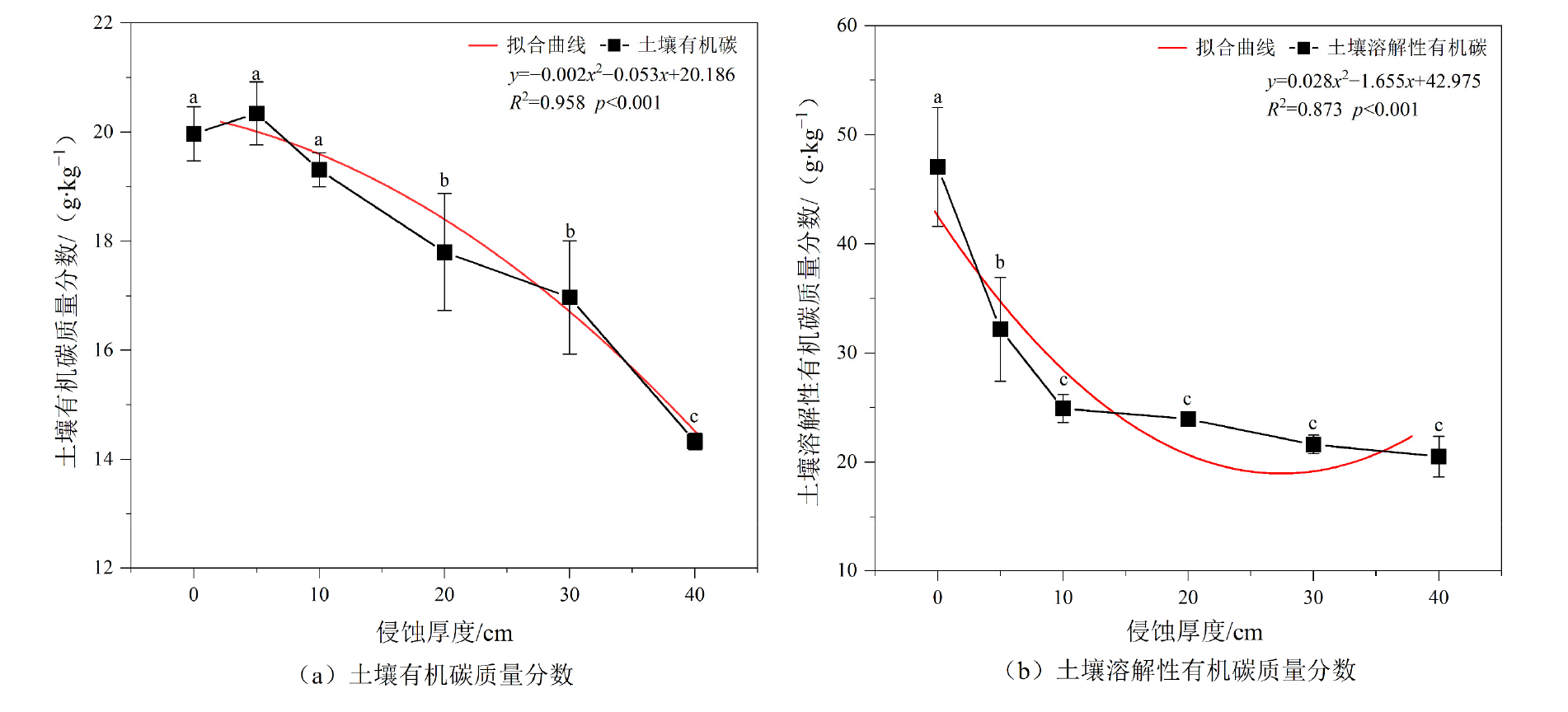
Figure 1 The relationship between different erosion depths and the mass fractions of SOC and DOC

Figure 2 Relationship between soil erosion intensity and the mass molar concentration of phospholipid fatty acids (PLFAs) in the soil microbial community
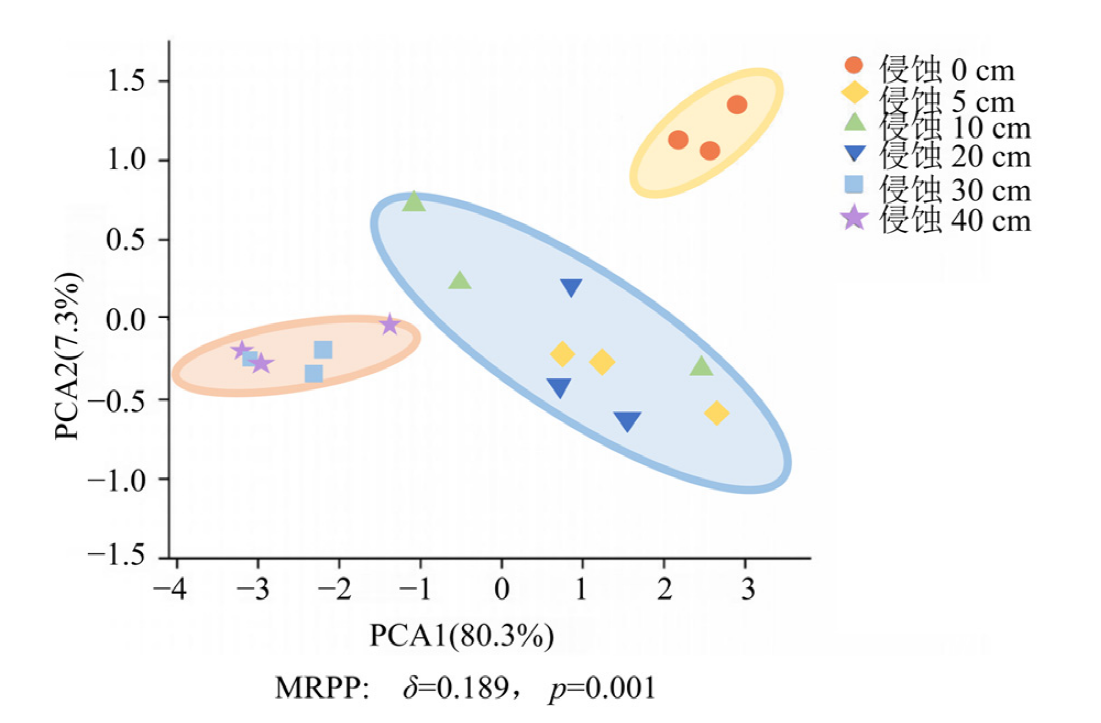
Figure 3 Principal component analysis of soil phospholipid fatty acids under different erosion degrees
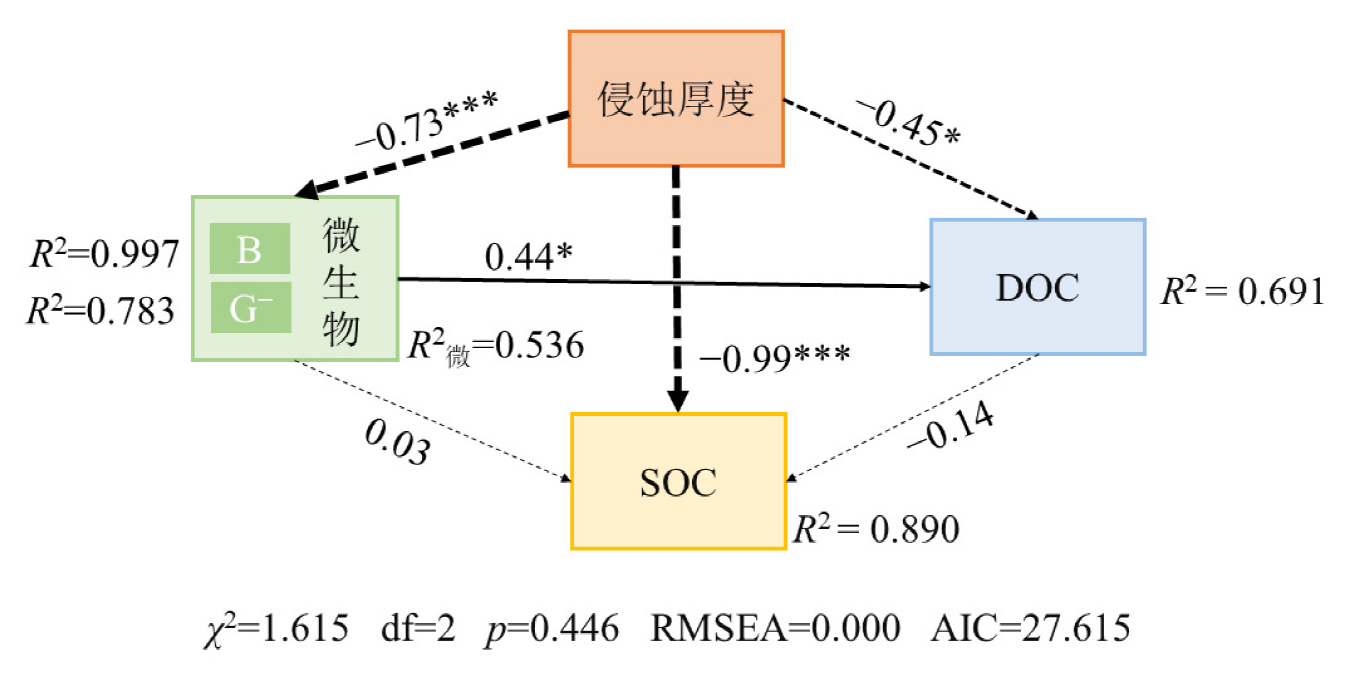
Figure 4 Structural equation models analysis of direct and indirect effects of soil erosion and microorganisms on soil carbon
| [1] |
BERHE A A, BARNES T R, SIX J, et al., 2018. Role of Soil Erosion in Biogeochemical Cycling of Essential Elements: Carbon, Nitrogen, and Phosphorus[J]. Annual Review of Earth and Planetary Sciences, 46(1): 521-548.
DOI URL |
| [2] |
BERHE A A, HARTE J, HARDEN W J, et al., 2007. The Significance of the Erosion-induced Terrestrial Carbon Sink[J]. BioScience, 57(4): 337-346.
DOI URL |
| [3] |
CHEN H, LI D J, MAO Q G, et al., 2019. Resource limitation of soil microbes in karst ecosystems[J]. Science of the Total Environment, 650(Part 1): 241-248.
DOI URL |
| [4] |
CUI Y X, FANG L C, GUO X B, et al., 2018. Responses of soil microbial communities to nutrient limitation in the desert-grassland ecological transition zone[J]. Science of the Total Environment, 642: 45-55.
DOI URL |
| [5] |
DUAN X W, BAI Z W, RONG L, et al., 2020. Investigation method for regional soil erosion based on the Chinese Soil Loss Equation and high-resolution spatial data: Case study on the mountainous Yunnan Province, China[J]. Catena, 184: 104237.
DOI URL |
| [6] |
DUNGAIT J A, GHEE C, ROWAN J S, et al., 2013. Microbial responses to the erosional redistribution of soil organic carbon in arable fields[J]. Soil Biology and Biochemistry, 60: 195-201.
DOI URL |
| [7] | CHAPIN F S, MATSON P A, VITOUSEK P M, 2011. Principles of Terrestrial Ecosystem Ecology[M]. New York: Springer. |
| [8] |
FANIN N, KARDOL P, FARRELL M, et al., 2019. The ratio of Gram-positive to Gram-negative bacterial PLFA markers as an indicator of carbon availability in organic soils[J]. Soil Biology and Biochemistry, 128: 111-114.
DOI URL |
| [9] |
FONTAINE S, HENAULT C, AAMOR A, et al., 2010. Fungi mediate long term sequestration of carbon and nitrogen in soil through their priming effect[J]. Soil Biology and Biochemistry, 43(1): 86-96.
DOI URL |
| [10] |
GIRMAY G, SINGH B, NYSSEN J, et al., 2009. Runoff and sediment-associated nutrient losses under different land uses in Tigray, Northern Ethiopia[J]. Journal of Hydrology, 376(1-2): 70-80.
DOI URL |
| [11] | HILTON R G, WEST A J, 2020. Mountains, erosion and the carbon cycle[J]. Nature Reviews Earth & Environment, 1(6): 284-299. |
| [12] |
HOU S, XIN M X, WANG L, et al., 2014. The effects of erosion on the microbial populations and enzyme activity in black soil of northeastern China[J]. Acta Ecologica Sinica, 34(6): 295-301.
DOI URL |
| [13] |
HU Y J, XIANG D, VERESOGLOU S D, et al., 2014. Soil organic carbon and soil structure are driving microbial abundance and community composition across the arid and semi-arid grasslands in northern China[J]. Soil Biology and Biochemistry, 77: 51-57.
DOI URL |
| [14] |
JONES D L, WILLETT V B, et al., 2006. Experimental evaluation of methods to quantify dissolved organic nitrogen (DON) and dissolved organic carbon (DOC) in soil[J]. Soil Biology and Biochemistry, 38(5): 991-999.
DOI URL |
| [15] |
LAL R, 2004. Soil carbon sequestration impacts on global climate change and food security[J]. Science, 304(5677): 1623-1627.
DOI PMID |
| [16] | LAL R, 2019. Accelerated Soil erosion as a source of atmospheric CO2[J]. Soil & Tillage Research, 188: 35-40. |
| [17] |
LAL R, PIMENTEL D, 2008. Soil erosion: A carbon sink or source?[J]. Science, 319(5866): 1040-1042.
DOI PMID |
| [18] |
LI W, WANG J L, ZHANG X J, et al., 2018. Effect of degradation and rebuilding of artificial grasslands on soil respiration and carbon and nitrogen pools on an alpine meadow of the Qinghai-Tibetan Plateau[J]. Ecological Engineering, 111: 134-142.
DOI URL |
| [19] | LI Z W, LIU C, DONG Y T, et al., 2017. Response of soil organic carbon and nitrogen stocks to soil erosion and land use types in the Loess hilly-gully region of China[J]. Soil & Tillage Research, 166: 1-9. |
| [20] |
LI Z W, XIAO H B, TANG Z H, et al., 2015. Microbial responses to erosion-induced soil physico-chemical property changes in the hilly red soil region of southern China[J]. European Journal of Soil Biology, 71: 37-44.
DOI URL |
| [21] |
LIU C, LI Z W, DONG Y T, et al., 2017. Do land use change and check-dam construction affect a real estimate of soil carbon and nitrogen stocks on the Loess Plateau of China?[J]. Ecological Engineering, 101: 220-226.
DOI URL |
| [22] | MA W M, LI Z W, DING K Y, et al., 2016. Soil erosion, organic carbon and nitrogen dynamics in planted forests: A case study in a hilly catchment of Hunan Province, China[J]. Soil & Tillage Research, 155: 69-77. |
| [23] |
OUYANG S N, TIAN Y Q, LIU Q, 2016. Nitrogen competition between three dominant plant species and microbes in a temperate grassland[J]. Plant and Soil, 408(1-2): 121-132.
DOI URL |
| [24] |
RUIZ-COLMENERO M, BIENES R, ELDRIDGE D, et al., 2013. Vegetation cover reduces erosion and enhances soil organic carbon in a vineyard in the central Spain[J]. Catena, 104: 153-160.
DOI URL |
| [25] |
SCHIETTECATTE W, GABRIELS D, CORNELIS W M, et al., 2008. Enrichment of organic carbon in sediment transport by interrill and rill erosion processes[J]. Soil Science Society of America Journal, 72(1): 50-55.
DOI URL |
| [26] |
SCHLESINGER W H, ANDREWS J A, 2000. Soil respiration and the global carbon cycle[J]. Biogeochemistry, 48(1): 7-20.
DOI |
| [27] |
SMITH A P, MARÍN-SPIOTTA E, GRAAFF M A D, et al., 2014. Microbial community structure varies across soil organic matter aggregate pools during tropical land cover change[J]. Soil Biology and Biochemistry, 77: 292-303.
DOI URL |
| [28] |
STALLARD R F, 1998. Terrestrial sedimentation and the carbon cycle: Coupling weathering and erosion to carbon burial[J]. Global Biogeochemical Cycles, 12(2): 231-257.
DOI URL |
| [29] |
TAN Z L, LEUNG L R, LI H Y, et al., 2020. A substantial role of soil erosion in the land carbon sink and its future changes[J]. Global Change Biology, 26(4): 2642-2655.
DOI URL |
| [30] |
VAN OOST K, QUINE T A, GOVERS G, et al., 2007. The impact of agricultural soil erosion on the global carbon cycle[J]. Science, 318(5850): 626-629.
PMID |
| [31] |
WANG Z, VAN OOST K, LANG A, et al., 2014. The fate of buried organic carbon in colluvial soils: A long-term perspective[J]. Biogeosciences, 11(3): 873-883.
DOI URL |
| [32] |
WEI S C, ZHANG X P, MCLAUGHLIN N B, et al., 2016. Effect of breakdown and dispersion of soil aggregates by erosion on soil CO2 emission[J]. Geoderma, 264(Part A): 238-243.
DOI URL |
| [33] |
XIAO H B, LI Z W, CHANG X F, et al., 2017. Soil erosion-related dynamics of soil bacterial communities and microbial respiration[J]. Applied Soil Ecology, 119: 205-213.
DOI URL |
| [34] |
XIAO H B, LI Z W, CHANG X F, et al., 2018. Microbial CO2 assimilation is not limited by the decrease in autotrophic bacterial abundance and diversity in eroded watershed[J]. Biology and Fertility of Soils, 54(5): 595-605.
DOI |
| [35] |
XIAO H B, SHI Z H, CHEN J, et al., 2021. The regulatory effects of biotic and abiotic factors on soil respiration under different land-use types[J]. Ecological Indicators, 127: 107787.
DOI URL |
| [36] |
YAO X, YU K Y, WANG G Y, et al., 2019. Effects of soil erosion and reforestation on soil respiration, organic carbon and nitrogen stocks in an eroded area of Southern China[J]. Science of The Total Environment, 683: 98-108.
DOI URL |
| [37] |
ZABALOY M C, GARLAND J L, ALLEGRINI M, et al., 2016. Soil microbial community-level physiological profiling as related to carbon and nitrogen availability under different land uses[J]. Pedosphere, 26(2): 216-225.
DOI URL |
| [38] |
ZHANG J H, WANG Y, LI F C, 2015. Soil organic carbon and nitrogen losses due to soil erosion and cropping in a sloping terrace landscape[J]. Soil Research, 53(1): 87-96.
DOI URL |
| [39] |
ZHANG Y J, GUO S L, LIU Q F, et al., 2015. Responses of soil respiration to land use conversions in degraded ecosystem of the semi-arid Loess Plateau[J]. Ecological Engineering, 74: 196-205.
DOI URL |
| [40] | 崔利论, 袁文平, 张海成, 2016. 土壤侵蚀对陆地生态系统碳源汇的影响[J]. 北京师范大学学报(自然科学版), 52(6): 816-822. |
| CUI L L, YUAN W P, ZHANG H C, 2016. Soil erosion effect on terrestrial ecosystem carbon source and sink[J]. Journal of Beijing Normal University (Natural Science), 52(6): 816-822. | |
| [41] | 丁咸庆, 柏菁, 项文化, 等, 2020. 不同浸提剂处理森林土壤溶解性有机碳含量比较[J]. 土壤, 52(3): 518-524. |
| DING X Q, BAI J, XIANG W H, et al., 2020. Comparison of dissolved organic carbon contents in forest soils extracted by different agents[J]. Soil, 52(3): 518-524. | |
| [42] |
房蕊, 于镇华, 李彦生, 等, 2021. 大气CO2浓度和温度升高对农田土壤碳库及微生物群落结构的影响[J]. 中国农业科学, 54(17): 3666-3679.
DOI |
|
FANG R, YU Z H, LI Y S, et al., 2021. Effects of elevated CO2 concentration and warming on soil carbon pools and microbial community composition in farming soil[J]. Scientia Agricultura Sinica, 54(17): 3666-3679.
DOI |
|
| [43] | 冯棋, 汪亚峰, 杨磊, 等, 2018. 土壤侵蚀对陆地碳源汇的作用机制研究进展[J]. 土壤通报, 49(6): 1505-1512. |
| FENG Q, WANG Y F, YANG L, et al., 2018. Research progress on mechanisms of soil erosion on terrestrial carbon source and sink[J]. Chinese Journal of Soil Science, 49(6): 1505-1512. | |
| [44] | 李彬彬, 武兰芳, 2019. 秸秆还田条件下剖面土壤溶解性有机碳含量及其组分结构的变化[J]. 农业环境科学学报, 38(7): 1567-1577. |
| LI B B, WU L F, 2019. Concentration and components of dissolved organic carbon in soil profiles after crop residues were incorporated into the topsoil[J]. Journal of Agro-Environment Science, 38(7): 1564-1577. | |
| [45] | 李俊, 吴福忠, 杨万勤, 等, 2016. 高山草甸冬季凋落物分解过程中土壤动物对微生物群落结构的影响[J]. 应用与环境生物学报, 22(1): 27-34. |
|
LI J, WU F Z, YANG W Q, et al., 2016. Effects of soil fauna on microbial community structure in foliar litter during winter decomposition in an alpine meadow[J]. Chinese Journal of Applied and Environmental Biology, 22(1): 27-34.
DOI URL |
|
| [46] | 刘慧, 魏永霞, 2014. 黑土区土壤侵蚀厚度对土地生产力的影响及其评价[J]. 农业工程学报, 30(20): 288-296. |
| LIU H, WEI Y X, 2014. Influence of soil erosion thickness on soil productivity of black soil and its evaluation[J]. Transactions of the Chinese Society of Agricultural Engineering, 30(20): 288-296. | |
| [47] | 马文明, 李忠武, 丁克毅, 等, 2020. 水力侵蚀作用下土壤有机碳库稳定性机制研究进展[J]. 中国水土保持科学, 18(1): 125-130. |
| MA W M, LI Z W, DING K Y, et al., 2020. Advances in the study of the stability of soil organic carbon storage affected by water erosion[J]. Science of Soil and Water Conservation, 18(1): 125-130. | |
| [48] | 裴雪霞, 党建友, 张定一, 等, 2014. 不同耕作方式对石灰性褐土磷脂脂肪酸及酶活性的影响[J]. 应用生态学报, 25(8): 2275-2280. |
| PEI X X, DANG J Y, ZHANG D Y, et al., 2014. Effects of different tillage methods on phospholipid fatty acids and enzyme activities in calcareous cinnamon soil[J]. Chinese Journal of Applied Ecology, 25(8): 2275-2280. | |
| [49] | 丘清燕, 梁国华, 黄德卫, 等, 2013. 森林土壤可溶性有机碳研究进展[J]. 西南林业大学学报: 自然科学, 33(1): 86-96. |
| QIU Q Y, LIANG G H, HUANG D W, et al., 2013. Advances in studies on soluble organic carbon in forest soils[J]. Journal of Southwest Forestry University (Natural Sciences), 33(1): 86-96. | |
| [50] | 佟亚宁, 王彬, 王文刚, 等, 2024. 东北典型黑土区土壤侵蚀对有机碳时空变化特征的影响[J]. 水土保持学报, 38(5): 59-70. |
| DONG Y N, WANG B, WANG W G, et al., 2024. Impact of soil erosion on the temporal and spatial dynamics of organic carbon in the typical black soil region of northeast China[J]. Journal of Soil and Water Conservation, 38(5): 59-70. | |
| [51] | 王莹, 阮宏华, 黄亮亮, 等, 2010. 围湖造田不同土地利用方式土壤水溶性有机碳的变化[J]. 南京林业大学学报, 34(5): 109-114. |
| WANG Y, RUAN H H, HUANG L L, et al., 2010. Soil water soluble organic carbon in reclaimed land from lake under different land uses[J]. Journal of Nanjing Forestry University (Natural Sciences Edition), 34(5): 109-114. | |
| [52] | 王志强, 刘宝元, 王旭艳, 等, 2009. 东北黑土区土壤侵蚀对土地生产力影响试验研究[J]. 中国科学: 地球科学, 39(10): 1397-1412. |
| WANG Z Q, LIU B Y, WANG X Y, et al., 2009. Erosion effect on the productivity of black soil in northeast China[J]. Science China Ser D-Earth Sciences, 39(10): 1397-1412. | |
| [53] | 习盼, 董倩, 张亚楠, 等, 2020. 盐城滩涂湿地典型植物群落土壤活性有机碳组分分布特征[J]. 生态学杂志, 39(11): 3623-3632. |
|
XI P, DONG Q, ZHANG Y N, et al., 2020. Distribution characteristics of active components in soil organic carbon across typical plant communities in Yancheng coastal wetlands[J]. Chinese Journal of Ecology, 39(11): 3623-3632.
DOI |
|
| [54] | 颜慧, 钟文辉, 李忠佩, 等, 2008. 长期施肥对红壤水稻土磷脂脂肪酸特性和酶活性的影响[J]. 应用生态学报, 19(1): 71-75. |
| YANG H, ZHONG W H, LI P Z, et al., 2008. Effects of long-term fertilization on phospholipid fatty acids and enzyme activities in paddy red soil[J]. Chinese Journal of Applied Ecology, 19(1): 71-75. | |
| [55] | 张孝存, 郑粉莉, 安娟, 等, 2013. 典型黑土区坡耕地土壤侵蚀对土壤有机质和氮的影响[J]. 干旱地区农业研究, 31(4): 182-186. |
| ZHANG X C, ZHENG F L, AN J, et al., 2013. Effects of soil erosion on soil organic matter and nitrogen in sloping farm land in typical back soil region[J]. Agricultural Research in the Arid Areas, 31(4): 182-186. | |
| [56] | 中华人民共和国水利部, 2007. 土壤侵蚀分类分级标准: SL 190—2007 [S]. 修订版. 北京: 奔流电子音像出版(北京)有限公司: 10-11. |
| Ministry of Water Resources of the People’s Republic of China, 2007. Standards for classification and gradation of soil erosion[S]. Revised edition. Beijing: Benliu Electronic & Audiovisual Publishing (Beijing) Co., Ltd.: 10-11. | |
| [57] | 朱华, 谭运洪, 杨永平, 2024. 中国西南干热河谷萨王纳植被综述[J]. 植物科学学报, 42(5): 682-696. |
| ZHU H, TAN Y H, YANG Y P, et al., 2024. Review on savanna vegetation in the dry hot river valleys of southwestern China[J]. Plant Science Journal, 42(5): 682-696. | |
| [58] | 朱世硕, 夏彬, 郝旺林, 等, 2020. 黄土区侵蚀坡面土壤微生物群落功能多样性研究[J]. 中国环境科学, 40(9): 4099-4105. |
| ZHU S S, XIA B, HAO W L, et al., 2020. Functional diversity of soil microbial community on eroded slope in the Loess Plateau Region[J]. China Environment Science, 40(9): 4099-4105. |
| [1] | SHI Hanzhi, CAO Yiran, LIU Fan, WU Zhichao, LI Furong, DENGTENG Haobo, XU Aiping, LI Dongqin, WEN Dian, WANG Xu. Study on the Regulation of Soil Lead Forms Transformation under the Combined Action of Straw and Bacteria [J]. Ecology and Environmental Sciences, 2026, 35(1): 155-166. |
| [2] | WANG Guolin, LIU Kaiying, SONG Ningning, LIU Jun, WANG Fangli, WANG Xuexia, ZONG Haiying, LI Shaojing. Response Mechanism of Organic Nitrogen Components in Saline-alkali Soil to the Input of Straw and Straw Biochar [J]. Ecology and Environmental Sciences, 2026, 35(1): 62-74. |
| [3] | LIU Qing, GONG Yushun, WANG Wei, FANG Xiantao, WU Jinshui, SHEN Jianlin. Spatio-temporal Characteristics of Soil Organic Carbon and Its Components in Typical tea Gardens in Hunan Province, China [J]. Ecology and Environmental Sciences, 2025, 34(9): 1386-1397. |
| [4] | SHEN Jialong, WU Lihong, LI Linshuang, ZHOU Yuanfang, YANG Xiaomin. Effects of Land Uses on Soil Organic Carbon Fractions and Their Carbon Sequestration in a Typical Karst Small Mountain Watershed [J]. Ecology and Environmental Sciences, 2025, 34(3): 358-367. |
| [5] | LI Jianfu, HUANG Zhilin, HE Chengzhong, JIANG Xin, SONG Lin, LIU Jiaxin, CHEN Liding. Spatial Distribution and Key Factors Affecting Soil Organic Carbon Within the Karst Fault Basin in Eastern Yunnan, China [J]. Ecology and Environmental Sciences, 2024, 33(9): 1339-1352. |
| [6] | SHI Hanzhi, XIONG Zhenqian, CAO Yiran, WU Zhichao, WEN Dian, LI Furong, LI Dongqin, WANG Xu. Effect of Straw Returning to Field on Organic Carbon Fixation in Red Soil and Black Soil [J]. Ecology and Environmental Sciences, 2024, 33(9): 1372-1383. |
| [7] | LUO Qing, HE Qing, WU Huiqiu, KOU Liyue, FANG Xu, ZHANG Xinyu, LI Yuan, CHAI Yuting, ZHANG Ruisheng, DAI Wenju. Characteristics of Soil Organic Carbon Fractions in Liao River Estuary Wetland and Their Influencing Factors [J]. Ecology and Environmental Sciences, 2024, 33(3): 333-340. |
| [8] | LIN Dandan, BI Huaxing, ZHAO Danyang, GUAN Ning, HAN Jindan, GUO Yanjie. Soil Organic Carbon Fractions and Carbon Pool Characteristics of Robinia pseudoacacia Forests with Different Densities in the Loess Region of Western Shanxi Province [J]. Ecology and Environmental Sciences, 2024, 33(3): 379-388. |
| [9] | CHANG Boran, CHEN Rulan, WANG Biao, LAN Tian, DENG Lin, XUE Huiying. Characteristics of Soil Organic Carbon and Its Component Distribution in Different Forest Stand Types on Mount Zola in Southeastern Tibet [J]. Ecology and Environmental Sciences, 2024, 33(10): 1495-1505. |
| [10] | LI Chuanfu, ZHU Taochuan, MING Yufei, YANG Yuxuan, GAO Shu, DONG Zhi, LI Yongqiang, JIAO Shuying. Effect of Organic Fertilizer and Desulphurized Gypsum on Soil Aggregates and Organic Carbon and Its Fractions Contents in the Saline-alkali Soil of the Yellow River Delta [J]. Ecology and Environmental Sciences, 2023, 32(5): 878-888. |
| [11] | ZHANG Lin, QI Shi, ZHOU Piao, WU Bingchen, ZHANG Dai, ZHANG Yan. Study on Influencing Factors of Soil Organic Carbon Content in Mixed Broad-leaved and Coniferous Forests Land in Beijing Mountainous Areas [J]. Ecology and Environmental Sciences, 2023, 32(3): 450-458. |
| [12] | QIN Jiaqi, XIAO Zhirou, MING Angang, ZHU Hao, TENG Jinqian, LIANG Zeli, TAO Yi, QIN Lin. Effect of Monoculture and Mixed Plantation with Coniferous and Broadleaved Tree Species on Soil Microbial Carbon Cycle Functional Gene Abundance [J]. Ecology and Environmental Sciences, 2023, 32(10): 1719-1731. |
| [13] | LI Weiwen, HUANG Jinquan, QI Yujie, LIU Xiaolan, LIU Jigen, MAO Zhichao, GAO Xiufang. Meta-analysis of Soil Microbial Biomass Carbon Content and Its Influencing Factors under Soil Erosion [J]. Ecology and Environmental Sciences, 2023, 32(1): 47-55. |
| [14] | XIAO Guoju, LI Xiujing, GUO Zhanqiang, HU Yanbin, WANG Jing. Effects of Soil Organic Carbon on Maize Growth and Water Use at the Eastern Foot of Helan Mountain in Ningxia [J]. Ecology and Environmental Sciences, 2022, 31(9): 1754-1764. |
| [15] | MA Huiying, LI Xinzhu, MA Xinyu, GONG Lu. Characteristics and Driving Factors of Soil Organic Carbon Fractions under Different Vegetation Types of the mid-Northern Piedmont of the Tianshan Mountains, Xinjiang [J]. Ecology and Environmental Sciences, 2022, 31(6): 1124-1131. |
| Viewed | ||||||
|
Full text |
|
|||||
|
Abstract |
|
|||||
Copyright © 2021 Editorial Office of ACTA PETROLEI SINICA
Address:No. 6 Liupukang Street, Xicheng District, Beijing, P.R.China, 510650
Tel: 86-010-62067128, 86-010-62067137, 86-010-62067139
Fax: 86-10-62067130
Email: syxb@cnpc.com.cn
Support byBeijing Magtech Co.ltd, E-mail:support@magtech.com.cn
