
Ecology and Environmental Sciences ›› 2026, Vol. 35 ›› Issue (2): 289-297.DOI: 10.16258/j.cnki.1674-5906.2026.02.012
• Environmental Science • Previous Articles Next Articles
HAN Nianlong( ), ZHANG Zhenlin, GAO Haojia, PENG Anqi, JI Jiahui
Received:2025-06-17
Revised:2026-01-22
Accepted:2026-01-26
Online:2026-02-18
Published:2026-02-09
韩念龙(), 张镇林, 高浩嘉, 彭安琪, 纪家慧
作者简介:韩念龙(1983年生),男,副教授,主要从事土地资源管理研究。E-mail: 94432715@qq.com
基金资助:CLC Number:
HAN Nianlong, ZHANG Zhenlin, GAO Haojia, PENG Anqi, JI Jiahui. Identification of Ecosystem Service Bundles and Functional Zoning in the Dongjiang River Basin Based on Self-Organizing Map Neural Network[J]. Ecology and Environmental Sciences, 2026, 35(2): 289-297.
韩念龙, 张镇林, 高浩嘉, 彭安琪, 纪家慧. 基于自组织映射神经网络的东江流域生态服务簇识别与功能分区[J]. 生态环境学报, 2026, 35(2): 289-297.
Add to citation manager EndNote|Ris|BibTeX
URL: https://www.jeesci.com/EN/10.16258/j.cnki.1674-5906.2026.02.012

Figure 1 The studied area
| 数据类型 | 内容 | 数据来源 |
|---|---|---|
| 土地利用栅格数 | CLCD土地利用数据(2000/2020) | 武汉大学( |
| 气象栅格数据 | 降水、潜在蒸散量、平均气温、日照时数等(2000-2020) | 国家青藏高原科学数据中心( |
| 土壤栅格数据 | 土层深度/植物可利用含水率 | 世界土壤数据库(HWSD)、第二次全国土壤调查 1꞉100万土壤数据( |
| 遥感数据 | 东江流域NDVI(2000/2020) | 地球资源数据云( |
| 统计数据 | 东江流域粮食总产值(包括稻谷、小麦、玉米和薯类) | 广东省统计年鉴/江西省统计年鉴( |
| 高程数据 | 东江流域DEM | 中国科学院资源环境科学与数据中心( |
| 流域地理数据 | 基于DEM的东江流域边界提取 | 中国科学院资源环境科学与数据中心( |
| 水系数据 | Open Street Map |
Table 1 Data content and sources
| 数据类型 | 内容 | 数据来源 |
|---|---|---|
| 土地利用栅格数 | CLCD土地利用数据(2000/2020) | 武汉大学( |
| 气象栅格数据 | 降水、潜在蒸散量、平均气温、日照时数等(2000-2020) | 国家青藏高原科学数据中心( |
| 土壤栅格数据 | 土层深度/植物可利用含水率 | 世界土壤数据库(HWSD)、第二次全国土壤调查 1꞉100万土壤数据( |
| 遥感数据 | 东江流域NDVI(2000/2020) | 地球资源数据云( |
| 统计数据 | 东江流域粮食总产值(包括稻谷、小麦、玉米和薯类) | 广东省统计年鉴/江西省统计年鉴( |
| 高程数据 | 东江流域DEM | 中国科学院资源环境科学与数据中心( |
| 流域地理数据 | 基于DEM的东江流域边界提取 | 中国科学院资源环境科学与数据中心( |
| 水系数据 | Open Street Map |
| 权衡协同关系 | 相关性程度 | 取值范围[−1, 1] | 显著性水平 |
|---|---|---|---|
| 协同关系 | 正相关 | 0<r≤1 | ***/**/* |
| 无关系 | 不相关 | r=0 | ***/**/* |
| 权衡关系 | 负相关 | −1≤r<0 | ***/**/* |
Table 2 Criteria for weighing synergies
| 权衡协同关系 | 相关性程度 | 取值范围[−1, 1] | 显著性水平 |
|---|---|---|---|
| 协同关系 | 正相关 | 0<r≤1 | ***/**/* |
| 无关系 | 不相关 | r=0 | ***/**/* |
| 权衡关系 | 负相关 | −1≤r<0 | ***/**/* |
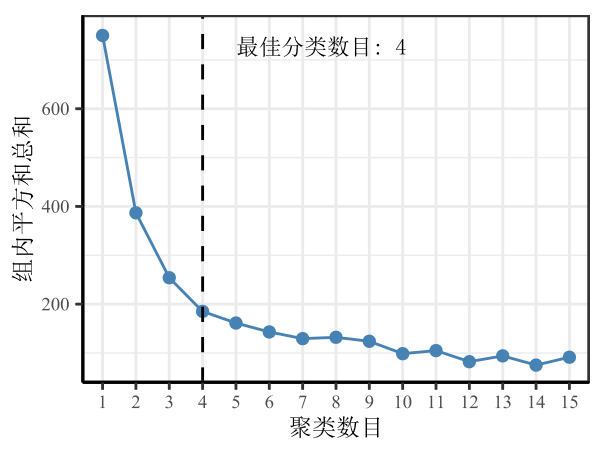
Figure 2 The optimal number of clusters for the SOM method

Figure 3 Changes in ecosystem services in the Dongjiang Basin from 2000 to 2020
| 年份 | 水源涵养(WY) | 生境质量(HQ) | 粮食生产(FP) | 净初级生产力(NPP) | 土壤保持(SC) | 生态系统服务 |
|---|---|---|---|---|---|---|
| 2000 | 1 | −0.60*** | 0.48*** | −0.21* | −0.20* | WY |
| 1 | −0.69*** | 0.53*** | 0.51*** | HQ | ||
| 1 | −0.42*** | −0.47*** | FP | |||
| 1 | 0.79*** | NPP | ||||
| 1 | SC | |||||
| 2020 | 1 | −0.66*** | 0.12 | −0.51*** | −0.14 | WY |
| 1 | −0.44*** | 0.39*** | 0.48*** | HQ | ||
| 1 | 0.11 | −0.32*** | FP | |||
| 1 | 0.35*** | NPP | ||||
| 1 | SC |
Table 3 Correlation coefficients of ecosystem services from 2000 to 2020
| 年份 | 水源涵养(WY) | 生境质量(HQ) | 粮食生产(FP) | 净初级生产力(NPP) | 土壤保持(SC) | 生态系统服务 |
|---|---|---|---|---|---|---|
| 2000 | 1 | −0.60*** | 0.48*** | −0.21* | −0.20* | WY |
| 1 | −0.69*** | 0.53*** | 0.51*** | HQ | ||
| 1 | −0.42*** | −0.47*** | FP | |||
| 1 | 0.79*** | NPP | ||||
| 1 | SC | |||||
| 2020 | 1 | −0.66*** | 0.12 | −0.51*** | −0.14 | WY |
| 1 | −0.44*** | 0.39*** | 0.48*** | HQ | ||
| 1 | 0.11 | −0.32*** | FP | |||
| 1 | 0.35*** | NPP | ||||
| 1 | SC |

Figure 4 Ecological function of the Dongjiang River Basin based on service clusters

Figure 5 Area changes of ecosystem services bundles from 2000 to 2020
| [1] |
DOU H S, LI X B, LI S K, et al., 2020. Mapping ecosystem services bundles for analyzing spatial trade-offs in Inner Mongolia, China[J]. Journal of Cleaner Production, 256: 120444.
DOI URL |
| [2] |
KAREIVA P, WATTS S, MCDONALD R, et al., 2007. Domesticated Nature: Shaping landscapes and ecosystems for Human Welfare[J]. Science, 316(5833): 1866-1869.
DOI PMID |
| [3] |
KOHONEN T, 1982. Self-organized formation of topologically correct feature maps[J]. Biological Cybernetics, 43(1): 59-69.
DOI URL |
| [4] | SHARP R, TALLIS H T, RICKETTS T, et al., 2015. InVEST 3.2.0 user’s guide[R]. The Natural Capital Project, Stanford University, University of Minnesota, The Nature Conservancy, and World Wildlife Fund. |
| [5] | SPEARMAN C, 1904. The proof and measurement of association between two things. By C. Spearman, 1904[J]. American Journal of Psychology, 15: 72-101. |
| [6] |
WANG J T, PENG J, ZHAO M Y, et al., 2017. Significant trade-off for the impact of Grain-for-Green Programme on ecosystem services in North-western Yunnan, China[J]. Science of the Total Environment, 574: 57-64.
DOI URL |
| [7] |
XIA H, YUAN S F, PRISHCHEPOV A V, 2023. Spatial-temporal heterogeneity of ecosystem service interactions and their social-ecological drivers: Implications for spatial planning and management[J]. Resources, Conservation and Recycling, 189: 106767.
DOI URL |
| [8] | 陈新闯, 李锋, 李小倩, 等, 2021. 珠三角城市群生态空间分区方法与管控对策[J]. 生态学报, 41(13): 5233-5241. |
| CHEN X C, LI F, LI X Q, et al., 2021. Method and control measures of ecological space zoning in Pearl River Delta urban agglomeration[J]. Acta Ecologica Sinica, 41(13): 5233-5241. | |
| [9] | 丁宁, 李佳鸿, 2010. 东江流域经济梯度差异现状、成因及对策分析[J]. 中国市场 (44): 87-89. |
| DING N, LI J H, 2010. Analysis of the current situation, causes and countermeasures of economic gradient differences in the Dongjiang River Basin[J]. China Market (44): 87-89. | |
| [10] |
傅伯杰, 张立伟, 2014. 土地利用变化与生态系统服务: 概念、方法与进展[J]. 地理科学进展, 33(4): 441-446.
DOI |
| FU B J, ZHANG L W, 2014. Land-use change and ecosystem services: Concepts, methods and progress[J]. Progress in Geography, 33(4): 441-446. | |
| [11] | 傅伯杰, 王帅, 沈彦俊, 等, 2021. 黄河流域人地系统耦合机理与优化调控[J]. 中国科学基金, 35(4): 504-509. |
| FU B J, WANG S, SHEN Y J, et al., 2021. Mechanisms of human-natural system coupling and optimization of the Yellow River basin[J]. Science Foundation of China, 35(4): 504-509. | |
| [12] |
胡宇霞, 龚吉蕊, 朱趁趁, 等, 2023. 基于生态系统服务簇的内蒙古荒漠草原生态系统服务的空间分布特征[J]. 草业学报, 32(4): 1-14.
DOI |
| HU Y X, GONG J R, ZHU C C, et al., 2023. Spatial distribution of ecosystem services in the desert steppe, Inner Mongolia based on ecosystem service bundles[J]. Acta Prataculturae Sinica, 32(4): 1-14. | |
| [13] | 李恒凯, 李淑芳, 郑春燕, 等, 2022. 基于生态系统服务功能的东江流域关键性生态空间识别[J]. 农业工程学报, 38(3): 257-266. |
| LI H K, LI S F, ZHENG C Y, et al., 2022. Identification of the critical ecological spaces in the Dongjiang River Basin based on ecosystem service function[J]. Transactions of the Chinese Society of Agricultural Engineering, 38(3): 257-266. | |
| [14] | 林蔚, 陈梓林, 李晖, 2022. 东江下游流域城水耦合协调关系评价及其影响因素[J]. 水资源保护, 38(4): 66-74. |
| LIN W, CHEN Z L, LI H, 2022. Evaluation of urban-water coupling coordination relationship and its influencing factors in lower reaches of the Dongjiang River Basin[J]. Water Resources Conservation, 38(4): 66-74. | |
| [15] | 毛倩鸿, 田雅丝, 2024. 权衡协同视角下城市边缘区生态系统服务优化研究——以苏州市为例[J]. 生态学报, 44(15): 6567-6583. |
| MAO Q H, TIAN Y S, 2024. Optimization of ecosystem services in urban fringe from the perspective of trade-offs and synergy: A case study of Suzhou City[J]. Acta Ecologica Sinica, 44(15): 6567-6583. | |
| [16] |
申嘉澍, 梁泽, 刘来保, 等, 2020. 雄安新区生态系统服务簇权衡与协同[J]. 地理研究, 39(1): 79-91.
DOI |
| SHEN J S, LIANG Z, LIU L B, et al., 2020. Trade-offs and synergies of ecosystem service bundles in Xiong’an New Area[J]. Geographical Research, 39(1): 79-91. | |
| [17] |
苏伯儒, 刘某承, 2023. 基于生态系统服务权衡的生态系统管理策略研究进展[J]. 自然资源学报, 38(7): 1848-1862.
DOI |
|
SU B R, LIU M C, 2023. Research progress in ecosystem management strategies based on ecosystem services trade-offs[J]. Journal of Natural Resources, 38(7): 1848-1862.
DOI URL |
|
| [18] | 汪勇政, 余浩然, 陆林, 2024. 基于空间约束K-means模型的长三角地区生态系统服务时空格局及功能分区研究[J]. 生态学报, 44(16): 7087-7104. |
| WANG Y Z, YU H R, LU L, 2024. Spatio-temporal pattern and functional zoning of ecosystem services in the Yangtze River Delta region based on spatially constrained K-means[J]. Acta Ecologica Sinica, 44(16): 7087-7104. | |
| [19] |
王彬宇, 王玲, 陈俊辰, 等, 2023. 四湖流域生态功能分区及其影响因素识别[J]. 应用生态学报, 34(10): 2757-2766.
DOI |
|
WANG B Y, WANG L, CHEN J C, et al., 2023. Identification of ecological functional zoning and its influencing factors in the Sihu Lake Basin, China[J]. Chinese Journal of Applied Ecology, 34(10): 2757-2766.
DOI |
|
| [20] | 王晓峰, 贾子续, 冯晓明, 等, 2023. 黄土高原土壤保持服务供需平衡及其驱动因素[J]. 生态学报, 43(7): 2722-2733. |
| WANG X F, JIA Z X, FENG X M, et al., 2023. Balance between supply and demand of soil conservation services on the Loess Plateau and its driving factors[J]. Acta Ecologica Sinica, 43(7): 2722-2733. | |
| [21] | 张继平, 刘春兰, 王辉, 等, 2025. 基于生态系统服务及其权衡关系时空演变特征的生态功能分区研究: 以潮白河流域为例[J]. 生态与农村环境学报, 41(1): 61-71. |
| ZHANG J P, LIU C L, WANG H, et al., 2025. Ecological function zoning based on the spatial-temporal change pattern of ecosystem services and their trade-offs: A case study of the Chaobai River Basin[J]. Journal of Ecology and Rural Environment, 41(1): 61-71. | |
| [22] |
张甜, 彭建, 刘焱序, 等, 2015. 基于植被动态的黄土高原生态地理分区[J]. 地理研究, 34(9): 1643-1661.
DOI |
| ZHANG T, PENG J, LIU Y X, et al., 2015. Ecogeographic zoning of the Loess Plateau based on vegetation dynamics[J]. Geographical Research, 34(9): 1643-1661. | |
| [23] |
张鑫, 张丹, 张广森, 等, 2024. 关中平原城市群生态系统服务时空特征及生态功能区划分[J]. 干旱区地理, 47(9): 1587-1595.
DOI |
| ZHANG X, ZHANG D, ZHANG G S, et al., 2024. Spatiotemporal characteristics of ecosystem services and division of ecological function zones in the urban agglomeration of the Guanzhong Plain[J]. Arid Zone Geography, 47(9): 1587-1595. | |
| [24] | 赵晓慧, 朱明畅, 欧阳天豪, 等, 2023. 东江流域生态系统服务供需关系及驱动力研究[J]. 赣南师范大学学报, 44(6): 78-85. |
| ZHAO X H, ZHU M C, OUYANG T H, et al., 2023. Research on the supply-demand relationship and driving force of ecosystem services in the Dongjiang Basin[J]. Journal of Gannan Normal University, 44(6): 78-85. | |
| [25] |
朱文泉, 潘耀忠, 张锦水, 2007. 中国陆地植被净初级生产力遥感估算[J]. 植物生态学报, 31(3): 413-424.
DOI |
|
ZHU W Q, PAN Y Z, ZHANG J S, 2007. Remote sensing estimation of net primary productivity of terrestrial vegetation in China[J]. Chinese Journal of Plant Ecology, 31(3): 413-424.
DOI URL |
|
| [26] | 国家统计局, 2021. 中国统计年鉴—2021[EB/OL]. 北京: 中国统计出版社, (2021-09) [2024-06-20]. http://www.stats.gov.cn/sj/ndsj/2021/indexch.htm. |
| National Bureau of Statistics, 2021. China Statistical Yearbook—2021 [EB/OL]. Beijing: China Statistics Press, (2021-09) [2024-06-20]. http://www.stats.gov.cn/sj/ndsj/2021/indexch.htm. | |
| [27] | 水利部珠江水利委员会, 2021. 2020年水资源公报[R/OL]. 广州: 水利部珠江水利委员会, (2021-07-13) [2024-07-09]. http://www.zwswj.com/cms/webfile/slyw/96351.html. |
| Ministry of Water Resources Pearl River Water Resources Commission, 2021. 2020 Water Resources Bulletin[R/OL]. Guangzhou: Ministry of Water Resources Pearl River Water Resources Commission, (2021-07-13) [2024-07-09]. http://www.zwswj.com/cms/webfile/slyw/96351.html. |
| Viewed | ||||||
|
Full text |
|
|||||
|
Abstract |
|
|||||
Copyright © 2021 Editorial Office of ACTA PETROLEI SINICA
Address:No. 6 Liupukang Street, Xicheng District, Beijing, P.R.China, 510650
Tel: 86-010-62067128, 86-010-62067137, 86-010-62067139
Fax: 86-10-62067130
Email: syxb@cnpc.com.cn
Support byBeijing Magtech Co.ltd, E-mail:support@magtech.com.cn
