
Ecology and Environmental Sciences ›› 2026, Vol. 35 ›› Issue (2): 245-255.DOI: 10.16258/j.cnki.1674-5906.2026.02.008
• Research Article [Ecology] • Previous Articles Next Articles
CUI Liyang1( ), ZHANG Lei2,*(), JIA Xia3,*(), ZHAO Yonghua2, MU Qi2, SI Shaocheng2
Received:2025-08-27
Revised:2025-12-17
Accepted:2026-01-08
Online:2026-02-18
Published:2026-02-09
Contact:
ZHANG Lei,JIA Xia
崔丽洋1(), 张磊2,*(), 贾夏3,*(), 赵永华2, 穆琪2, 司绍诚2
通讯作者:
张磊,贾夏
作者简介:崔丽洋(1990年生),男,工程师,主要研究方向为生态地质。E-mail: 1831701669@qq.com
基金资助:CLC Number:
CUI Liyang, ZHANG Lei, JIA Xia, ZHAO Yonghua, MU Qi, SI Shaocheng. Soil Quality Assessment of Saline-alkali Land in Southern Xinjiang Combined with Ecosystem Services[J]. Ecology and Environmental Sciences, 2026, 35(2): 245-255.
崔丽洋, 张磊, 贾夏, 赵永华, 穆琪, 司绍诚. 结合生态系统服务的南疆盐碱地土壤质量评价[J]. 生态环境学报, 2026, 35(2): 245-255.
Add to citation manager EndNote|Ris|BibTeX
URL: https://www.jeesci.com/EN/10.16258/j.cnki.1674-5906.2026.02.008

Figure 1 Overview of the studied area
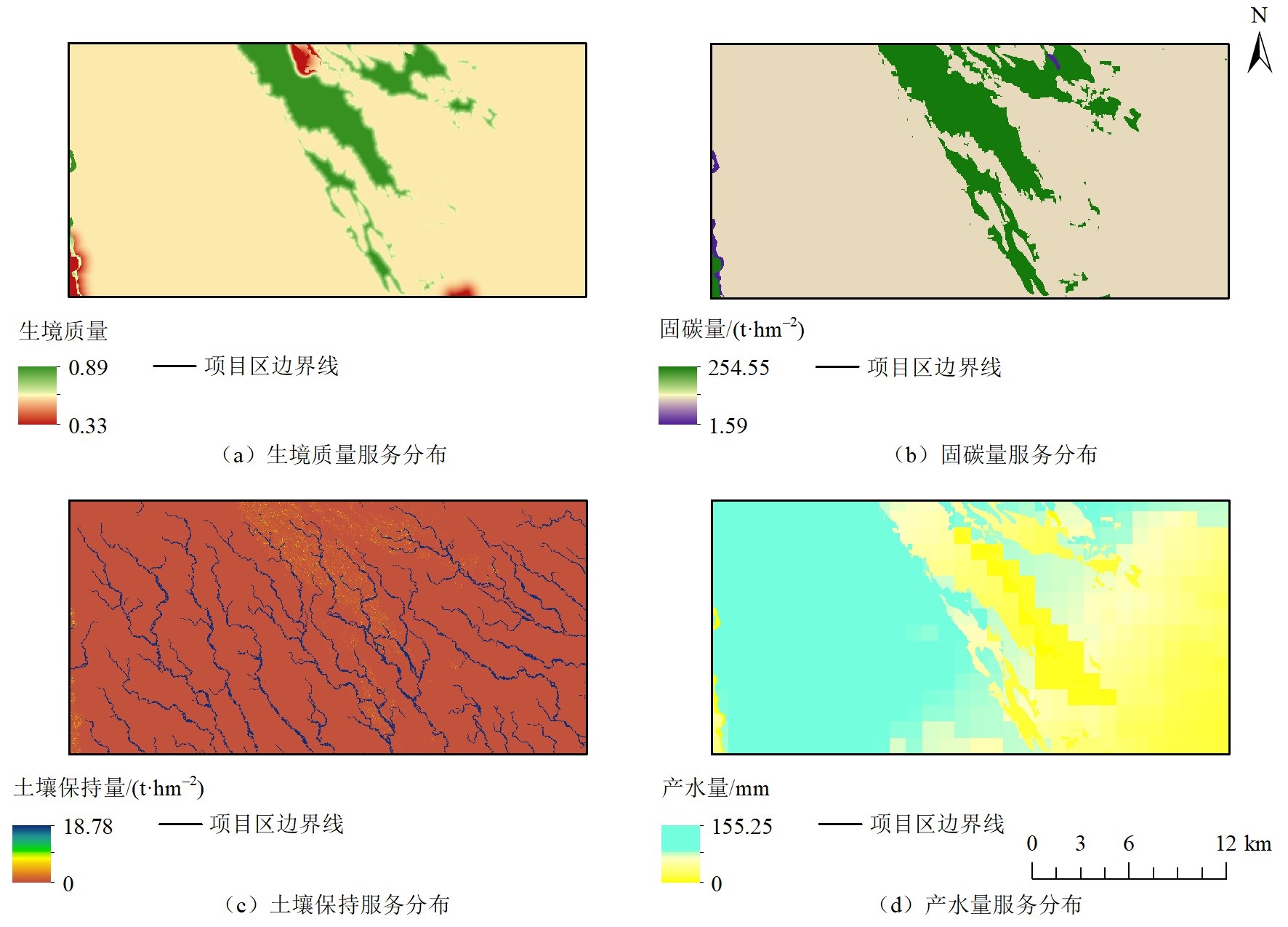
Figure 2 Ecosystem service distribution
| 指标 | 最大值 | 最小值 | 均值 | 标准差 | 变异系数 |
|---|---|---|---|---|---|
| 水分质量分数/% | 27.65 | 1.65 | 15.97 | 5.55 | 0.35 |
| 容重/(g∙cm−3) | 1.77 | 1.05 | 1.44 | 0.16 | 0.11 |
| 孔隙度/% | 62.12 | 32.41 | 44.99 | 7.15 | 0.16 |
| 氯离子质量分数/(g∙kg−1) | 116.09 | 0.93 | 22.94 | 15.91 | 0.69 |
| 钠离子质量分数/(g∙kg−1) | 94.30 | 0.63 | 13.87 | 13.10 | 0.94 |
| 硫酸根离子质量分数/(g∙kg−1) | 151.79 | 1.68 | 24.18 | 24.61 | 1.02 |
| 水溶性盐总量/(g∙kg−1) | 307.00 | 11.30 | 56.73 | 42.09 | 0.74 |
| 速效氮质量分数/(mg∙kg−1) | 132.00 | 3.50 | 27.36 | 22.77 | 0.83 |
| 速效钾质量分数/(mg∙kg−1) | 2274.00 | 55.50 | 247.83 | 287.44 | 1.16 |
| 全氮质量分数/(μg∙g−1) | 1187.00 | 99.40 | 283.46 | 153.21 | 0.54 |
| 全磷质量分数/(μg∙g−1) | 749.00 | 322.00 | 548.58 | 84.93 | 0.15 |
| 全钾质量分数/% | 3.22 | 1.12 | 1.94 | 0.48 | 0.25 |
| 有效磷质量分数/(mg∙kg−1) | 54.90 | 0.65 | 3.58 | 6.92 | 1.93 |
| 阳离子交换量/(cmol∙kg−1) | 37.80 | 0.16 | 7.19 | 7.30 | 1.01 |
| pH | 8.69 | 7.46 | 8.20 | 0.32 | 0.04 |
| 腐殖质总碳质量分数/(g∙kg−1) | 14.40 | 0.71 | 2.92 | 2.21 | 0.76 |
| 富里酸碳质量分数/(g∙kg−1) | 13.80 | 0.25 | 1.79 | 1.79 | 1.00 |
| 胡敏素碳质量分数/(g∙kg−1) | 7.48 | 0.00 | 1.13 | 1.20 | 1.06 |
| 有机质质量分数/(g∙kg−1) | 24.80 | 1.23 | 5.04 | 3.81 | 0.75 |
| 溶解性有机氮质量分数/ (mg∙kg−1) | 33.68 | 1.26 | 8.08 | 5.20 | 0.64 |
| 溶解性有机碳质量分数/ (mg∙kg−1) | 206.58 | 11.66 | 54.08 | 48.41 | 0.90 |
| 微生物量碳质量分数/ (mg∙kg−1) | 493.18 | 29.47 | 143.07 | 85.11 | 0.59 |
| 细菌多样性指数 | 3063.42 | 401.38 | 1146.69 | 546.64 | 0.48 |
| 真菌多样性指数 | 368.61 | 40.46 | 111.39 | 55.80 | 0.50 |
Table 1 Descriptive statistics of soil indicators
| 指标 | 最大值 | 最小值 | 均值 | 标准差 | 变异系数 |
|---|---|---|---|---|---|
| 水分质量分数/% | 27.65 | 1.65 | 15.97 | 5.55 | 0.35 |
| 容重/(g∙cm−3) | 1.77 | 1.05 | 1.44 | 0.16 | 0.11 |
| 孔隙度/% | 62.12 | 32.41 | 44.99 | 7.15 | 0.16 |
| 氯离子质量分数/(g∙kg−1) | 116.09 | 0.93 | 22.94 | 15.91 | 0.69 |
| 钠离子质量分数/(g∙kg−1) | 94.30 | 0.63 | 13.87 | 13.10 | 0.94 |
| 硫酸根离子质量分数/(g∙kg−1) | 151.79 | 1.68 | 24.18 | 24.61 | 1.02 |
| 水溶性盐总量/(g∙kg−1) | 307.00 | 11.30 | 56.73 | 42.09 | 0.74 |
| 速效氮质量分数/(mg∙kg−1) | 132.00 | 3.50 | 27.36 | 22.77 | 0.83 |
| 速效钾质量分数/(mg∙kg−1) | 2274.00 | 55.50 | 247.83 | 287.44 | 1.16 |
| 全氮质量分数/(μg∙g−1) | 1187.00 | 99.40 | 283.46 | 153.21 | 0.54 |
| 全磷质量分数/(μg∙g−1) | 749.00 | 322.00 | 548.58 | 84.93 | 0.15 |
| 全钾质量分数/% | 3.22 | 1.12 | 1.94 | 0.48 | 0.25 |
| 有效磷质量分数/(mg∙kg−1) | 54.90 | 0.65 | 3.58 | 6.92 | 1.93 |
| 阳离子交换量/(cmol∙kg−1) | 37.80 | 0.16 | 7.19 | 7.30 | 1.01 |
| pH | 8.69 | 7.46 | 8.20 | 0.32 | 0.04 |
| 腐殖质总碳质量分数/(g∙kg−1) | 14.40 | 0.71 | 2.92 | 2.21 | 0.76 |
| 富里酸碳质量分数/(g∙kg−1) | 13.80 | 0.25 | 1.79 | 1.79 | 1.00 |
| 胡敏素碳质量分数/(g∙kg−1) | 7.48 | 0.00 | 1.13 | 1.20 | 1.06 |
| 有机质质量分数/(g∙kg−1) | 24.80 | 1.23 | 5.04 | 3.81 | 0.75 |
| 溶解性有机氮质量分数/ (mg∙kg−1) | 33.68 | 1.26 | 8.08 | 5.20 | 0.64 |
| 溶解性有机碳质量分数/ (mg∙kg−1) | 206.58 | 11.66 | 54.08 | 48.41 | 0.90 |
| 微生物量碳质量分数/ (mg∙kg−1) | 493.18 | 29.47 | 143.07 | 85.11 | 0.59 |
| 细菌多样性指数 | 3063.42 | 401.38 | 1146.69 | 546.64 | 0.48 |
| 真菌多样性指数 | 368.61 | 40.46 | 111.39 | 55.80 | 0.50 |

Figure 3 Correlation between soil indicators
| 指标 | 主成分载荷 | Norm值 | |||||||
|---|---|---|---|---|---|---|---|---|---|
| PC1 | PC2 | PC3 | PC4 | PC5 | PC6 | PC7 | PC8 | ||
| 生境质量 | 0.01 | 0.41 | 0.73 | -0.14 | -0.01 | -0.25 | 0.03 | -0.22 | 1.60 |
| 固碳量/(t·hm−2) | 0.05 | 0.42 | 0.81 | -0.09 | 0.17 | 0.01 | 0.06 | -0.08 | 1.68 |
| 土壤保持量/(t·hm−2) | 0.19 | 0.3 | 0.36 | -0.04 | 0.20 | -0.63 | 0.03 | 0.16 | 1.35 |
| 产水量/mm | -0.26 | -0.09 | -0.50 | 0.52 | 0.03 | -0.20 | -0.09 | 0.17 | 1.41 |
| 水分质量分数/% | 0.26 | 0.01 | -0.09 | -0.52 | 0.58 | 0.19 | 0.05 | 0.12 | 1.34 |
| 容重/(g∙cm−3) | -0.09 | 0.34 | 0.14 | 0.52 | 0.03 | -0.13 | 0.53 | 0.18 | 1.29 |
| 孔隙度/% | 0.11 | -0.07 | 0.19 | -0.72 | 0.20 | 0.28 | 0.09 | -0.26 | 1.29 |
| 氯离子质量分数/(g∙kg−1) | 0.81 | -0.43 | 0.10 | 0.14 | -0.03 | 0.16 | 0.17 | -0.01 | 2.45 |
| 钠离子质量分数/(g∙kg−1) | 0.83 | -0.48 | 0.14 | 0.11 | 0.01 | 0.03 | -0.11 | -0.01 | 2.53 |
| 硫酸根离子质量分数/(g∙kg−1) | 0.79 | -0.42 | 0.10 | 0.04 | 0.03 | -0.04 | -0.13 | -0.09 | 2.38 |
| 水溶性盐总质量分数/(g∙kg−1) | 0.86 | -0.47 | 0.11 | 0.10 | 0 | 0.06 | 0.03 | -0.04 | 2.58 |
| 速效氮质量分数/(mg∙kg−1) | 0.4 | -0.07 | 0.11 | -0.21 | -0.4 | -0.10 | 0.36 | 0.20 | 1.35 |
| 速效钾质量分数/(mg∙kg−1) | 0.54 | 0.64 | -0.43 | -0.04 | -0.07 | 0.10 | -0.01 | -0.14 | 2.17 |
| 全氮质量分数/(μg∙g−1) | 0.57 | 0.7 | -0.21 | -0.14 | 0.07 | -0.16 | -0.04 | 0.02 | 2.25 |
| 全磷质量分数/(μg∙g−1) | 0.21 | 0.14 | -0.35 | -0.25 | 0.10 | 0.17 | 0.50 | 0.36 | 1.19 |
| 全钾质量分数/% | -0.09 | 0.51 | 0.35 | 0.05 | -0.58 | -0.11 | -0.05 | -0.05 | 1.51 |
| 有效磷质量分数/(mg∙kg−1) | 0.51 | 0.63 | -0.47 | 0 | -0.04 | 0.14 | -0.10 | -0.07 | 2.13 |
| 阳离子交换量/(cmol∙kg−1) | 0.65 | -0.35 | 0.06 | 0.27 | 0.14 | -0.28 | -0.17 | -0.06 | 2.04 |
| pH | 0.33 | -0.04 | 0.06 | -0.33 | 0.06 | -0.27 | -0.47 | 0.55 | 1.34 |
| 腐殖质总碳质量分数/(g∙kg−1) | 0.96 | 0.11 | 0 | 0.09 | 0.01 | -0.03 | 0.06 | -0.01 | 2.66 |
| 富里酸碳质量分数/(g∙kg−1) | 0.85 | -0.35 | 0.10 | 0.19 | -0.1 | 0.11 | 0.10 | -0.09 | 2.51 |
| 胡敏素碳质量分数/(g∙kg−1) | 0.52 | 0.73 | -0.15 | -0.11 | 0.17 | -0.23 | -0.04 | 0.11 | 2.18 |
| 有机质质量分数/(g∙kg−1) | 0.96 | 0.11 | 0 | 0.09 | 0.02 | -0.03 | 0.06 | -0.01 | 2.67 |
| 溶解性有机氮质量分数/(mg∙kg−1) | 0.23 | 0.62 | -0.10 | 0.06 | -0.29 | 0.43 | -0.22 | -0.08 | 1.66 |
| 溶解性有机碳质量分数/(mg∙kg−1) | 0.41 | 0.29 | 0.16 | -0.21 | -0.56 | 0.17 | -0.07 | 0.21 | 1.57 |
| 微生物量碳质量分数/(mg∙kg−1) | 0.17 | 0.55 | -0.28 | 0.26 | 0.31 | -0.23 | 0.06 | -0.42 | 1.57 |
| 细菌多样性指数 | -0.02 | 0.32 | 0.40 | 0.46 | 0.29 | 0.46 | -0.17 | 0.21 | 1.42 |
| 真菌多样性指数 | 0.01 | 0.40 | 0.43 | 0.43 | 0.29 | 0.45 | -0.05 | 0.23 | 1.5 |
| 特征值 | 7.60 | 4.77 | 2.89 | 2.27 | 1.69 | 1.67 | 1.10 | 1.08 | |
| 方差贡献率 | 27.14 | 17.05 | 10.32 | 8.11 | 6.03 | 5.95 | 3.93 | 3.84 | |
| 累计贡献率 | 27.14 | 44.19 | 54.51 | 62.62 | 68.64 | 74.59 | 78.52 | 82.36 | |
Table 2 Principal component loadings and Norm values
| 指标 | 主成分载荷 | Norm值 | |||||||
|---|---|---|---|---|---|---|---|---|---|
| PC1 | PC2 | PC3 | PC4 | PC5 | PC6 | PC7 | PC8 | ||
| 生境质量 | 0.01 | 0.41 | 0.73 | -0.14 | -0.01 | -0.25 | 0.03 | -0.22 | 1.60 |
| 固碳量/(t·hm−2) | 0.05 | 0.42 | 0.81 | -0.09 | 0.17 | 0.01 | 0.06 | -0.08 | 1.68 |
| 土壤保持量/(t·hm−2) | 0.19 | 0.3 | 0.36 | -0.04 | 0.20 | -0.63 | 0.03 | 0.16 | 1.35 |
| 产水量/mm | -0.26 | -0.09 | -0.50 | 0.52 | 0.03 | -0.20 | -0.09 | 0.17 | 1.41 |
| 水分质量分数/% | 0.26 | 0.01 | -0.09 | -0.52 | 0.58 | 0.19 | 0.05 | 0.12 | 1.34 |
| 容重/(g∙cm−3) | -0.09 | 0.34 | 0.14 | 0.52 | 0.03 | -0.13 | 0.53 | 0.18 | 1.29 |
| 孔隙度/% | 0.11 | -0.07 | 0.19 | -0.72 | 0.20 | 0.28 | 0.09 | -0.26 | 1.29 |
| 氯离子质量分数/(g∙kg−1) | 0.81 | -0.43 | 0.10 | 0.14 | -0.03 | 0.16 | 0.17 | -0.01 | 2.45 |
| 钠离子质量分数/(g∙kg−1) | 0.83 | -0.48 | 0.14 | 0.11 | 0.01 | 0.03 | -0.11 | -0.01 | 2.53 |
| 硫酸根离子质量分数/(g∙kg−1) | 0.79 | -0.42 | 0.10 | 0.04 | 0.03 | -0.04 | -0.13 | -0.09 | 2.38 |
| 水溶性盐总质量分数/(g∙kg−1) | 0.86 | -0.47 | 0.11 | 0.10 | 0 | 0.06 | 0.03 | -0.04 | 2.58 |
| 速效氮质量分数/(mg∙kg−1) | 0.4 | -0.07 | 0.11 | -0.21 | -0.4 | -0.10 | 0.36 | 0.20 | 1.35 |
| 速效钾质量分数/(mg∙kg−1) | 0.54 | 0.64 | -0.43 | -0.04 | -0.07 | 0.10 | -0.01 | -0.14 | 2.17 |
| 全氮质量分数/(μg∙g−1) | 0.57 | 0.7 | -0.21 | -0.14 | 0.07 | -0.16 | -0.04 | 0.02 | 2.25 |
| 全磷质量分数/(μg∙g−1) | 0.21 | 0.14 | -0.35 | -0.25 | 0.10 | 0.17 | 0.50 | 0.36 | 1.19 |
| 全钾质量分数/% | -0.09 | 0.51 | 0.35 | 0.05 | -0.58 | -0.11 | -0.05 | -0.05 | 1.51 |
| 有效磷质量分数/(mg∙kg−1) | 0.51 | 0.63 | -0.47 | 0 | -0.04 | 0.14 | -0.10 | -0.07 | 2.13 |
| 阳离子交换量/(cmol∙kg−1) | 0.65 | -0.35 | 0.06 | 0.27 | 0.14 | -0.28 | -0.17 | -0.06 | 2.04 |
| pH | 0.33 | -0.04 | 0.06 | -0.33 | 0.06 | -0.27 | -0.47 | 0.55 | 1.34 |
| 腐殖质总碳质量分数/(g∙kg−1) | 0.96 | 0.11 | 0 | 0.09 | 0.01 | -0.03 | 0.06 | -0.01 | 2.66 |
| 富里酸碳质量分数/(g∙kg−1) | 0.85 | -0.35 | 0.10 | 0.19 | -0.1 | 0.11 | 0.10 | -0.09 | 2.51 |
| 胡敏素碳质量分数/(g∙kg−1) | 0.52 | 0.73 | -0.15 | -0.11 | 0.17 | -0.23 | -0.04 | 0.11 | 2.18 |
| 有机质质量分数/(g∙kg−1) | 0.96 | 0.11 | 0 | 0.09 | 0.02 | -0.03 | 0.06 | -0.01 | 2.67 |
| 溶解性有机氮质量分数/(mg∙kg−1) | 0.23 | 0.62 | -0.10 | 0.06 | -0.29 | 0.43 | -0.22 | -0.08 | 1.66 |
| 溶解性有机碳质量分数/(mg∙kg−1) | 0.41 | 0.29 | 0.16 | -0.21 | -0.56 | 0.17 | -0.07 | 0.21 | 1.57 |
| 微生物量碳质量分数/(mg∙kg−1) | 0.17 | 0.55 | -0.28 | 0.26 | 0.31 | -0.23 | 0.06 | -0.42 | 1.57 |
| 细菌多样性指数 | -0.02 | 0.32 | 0.40 | 0.46 | 0.29 | 0.46 | -0.17 | 0.21 | 1.42 |
| 真菌多样性指数 | 0.01 | 0.40 | 0.43 | 0.43 | 0.29 | 0.45 | -0.05 | 0.23 | 1.5 |
| 特征值 | 7.60 | 4.77 | 2.89 | 2.27 | 1.69 | 1.67 | 1.10 | 1.08 | |
| 方差贡献率 | 27.14 | 17.05 | 10.32 | 8.11 | 6.03 | 5.95 | 3.93 | 3.84 | |
| 累计贡献率 | 27.14 | 44.19 | 54.51 | 62.62 | 68.64 | 74.59 | 78.52 | 82.36 | |
| 指标 | 公因子方差 | 权重 |
|---|---|---|
| 固碳量/(t∙hm−2) | 0.883 | 0.112 |
| 土壤保持量/(t∙hm−2) | 0.712 | 0.090 |
| 产水量/mm | 0.668 | 0.085 |
| 容重/(g∙cm−3) | 0.739 | 0.094 |
| 孔隙度/% | 0.761 | 0.096 |
| 全氮质量分数/(μg∙g−1) | 0.918 | 0.116 |
| 全钾质量分数/(μg∙g−1) | 0.752 | 0.095 |
| pH | 0.813 | 0.103 |
| 有机质质量分数/(g∙kg−1) | 0.948 | 0.120 |
| 溶解性有机碳质量分数/(mg∙kg−1) | 0.705 | 0.089 |
Table 3 Common factor variance and weights of soil indicators in the minimum data set
| 指标 | 公因子方差 | 权重 |
|---|---|---|
| 固碳量/(t∙hm−2) | 0.883 | 0.112 |
| 土壤保持量/(t∙hm−2) | 0.712 | 0.090 |
| 产水量/mm | 0.668 | 0.085 |
| 容重/(g∙cm−3) | 0.739 | 0.094 |
| 孔隙度/% | 0.761 | 0.096 |
| 全氮质量分数/(μg∙g−1) | 0.918 | 0.116 |
| 全钾质量分数/(μg∙g−1) | 0.752 | 0.095 |
| pH | 0.813 | 0.103 |
| 有机质质量分数/(g∙kg−1) | 0.948 | 0.120 |
| 溶解性有机碳质量分数/(mg∙kg−1) | 0.705 | 0.089 |
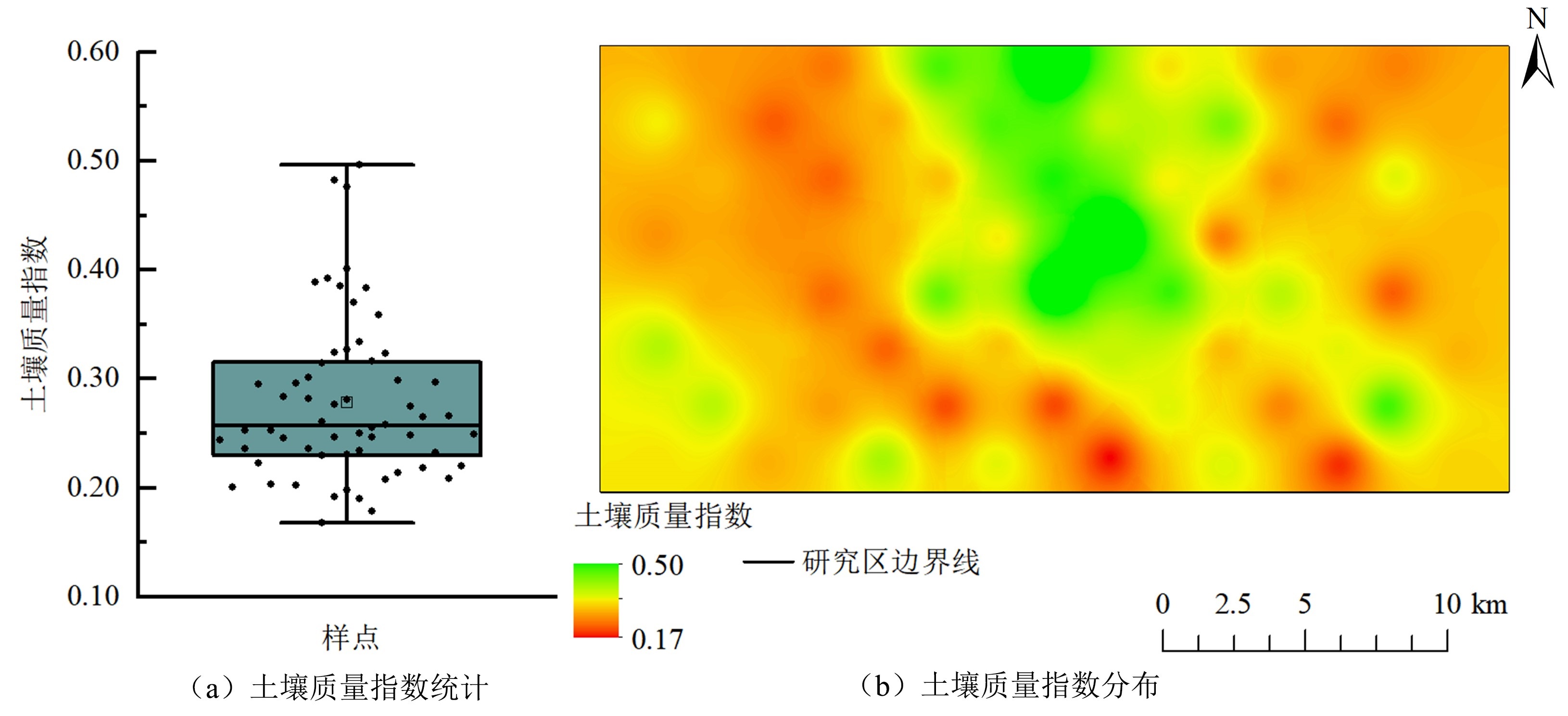
Figure 4 Spatial distribution and box diagram of soil quality index
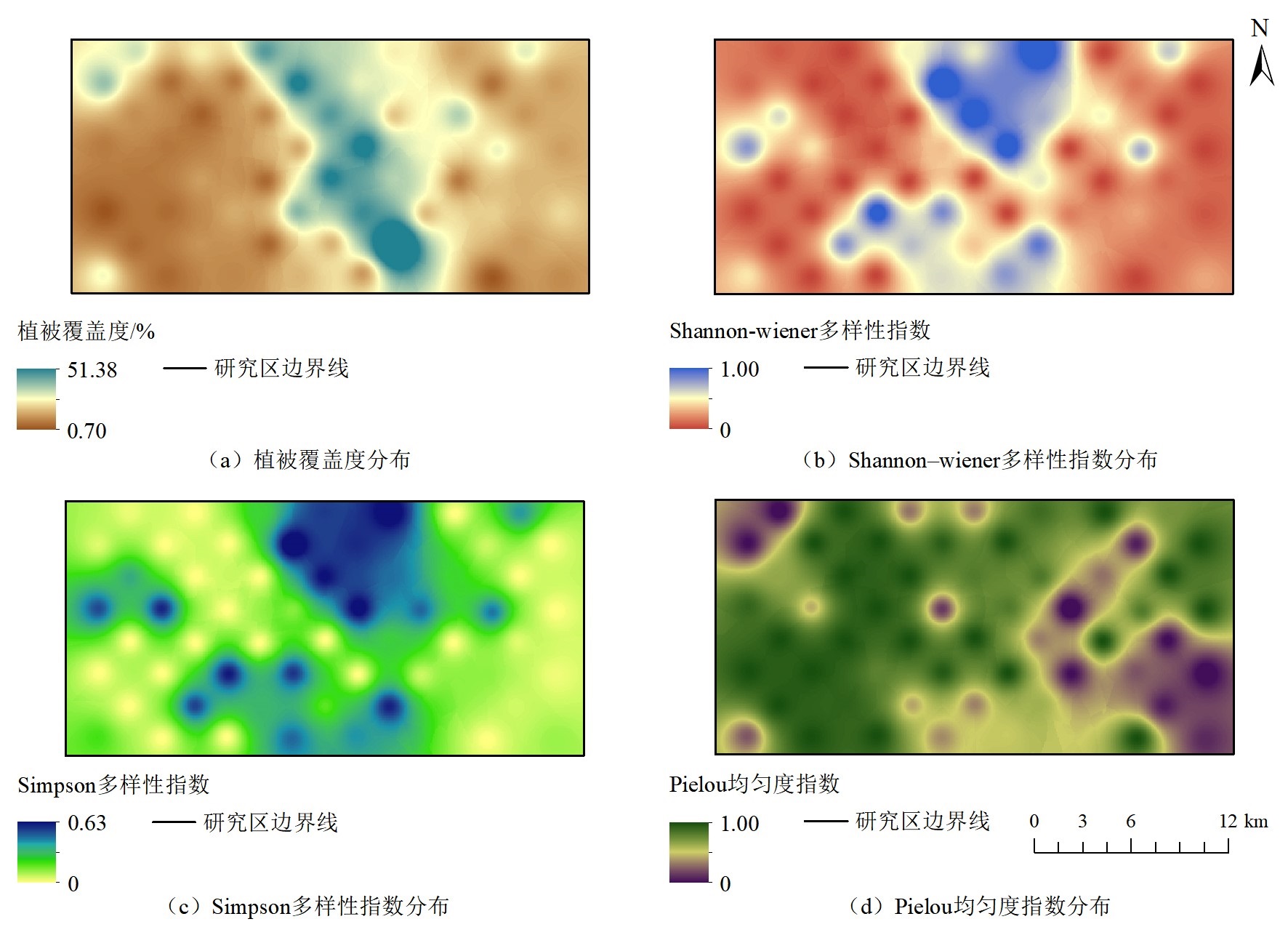
Figure 5 Spatial distribution of vegetation characteristics
| 指标 | 土壤质量指数 | 植被覆盖度/% | Shannon-Wiener多样性指数 | Simpson多样性指数 | Pielou均匀度指数 |
|---|---|---|---|---|---|
| 土壤质量指数 | - | 0.501** | 0.203 | 0.201 | 0.056 |
| 植被覆盖度/% | 0.501** | - | 0.488** | 0.462** | -0.140 |
| Shannon-Wiener多样性指数 | 0.203 | 0.488** | - | 0.963** | -0.060 |
| Simpson多样性指数 | 0.201 | 0.462** | 0.963** | - | -0.058 |
| Pielou均匀度指数 | 0.056 | -0.140 | -0.060 | -0.058 | - |
Table 4 Correlation between SQI and vegetation characteristics
| 指标 | 土壤质量指数 | 植被覆盖度/% | Shannon-Wiener多样性指数 | Simpson多样性指数 | Pielou均匀度指数 |
|---|---|---|---|---|---|
| 土壤质量指数 | - | 0.501** | 0.203 | 0.201 | 0.056 |
| 植被覆盖度/% | 0.501** | - | 0.488** | 0.462** | -0.140 |
| Shannon-Wiener多样性指数 | 0.203 | 0.488** | - | 0.963** | -0.060 |
| Simpson多样性指数 | 0.201 | 0.462** | 0.963** | - | -0.058 |
| Pielou均匀度指数 | 0.056 | -0.140 | -0.060 | -0.058 | - |
| [1] |
ANDREWS S S, KARLEN D L, MITCHELL J P, 2002. A comparison of soil quality indexing methods for vegetable production systems in Northern California[J]. Agriculture, Ecosystems and Environment, 90(1): 25-45.
DOI URL |
| [2] |
CHURCHMAN G J, 2010. The philosophical status of soil science[J]. Geoderma, 157: 214-221.
DOI URL |
| [3] |
KARLEN D L, MAUSBACH M, DORAN J W, et al., 1997. Soil quality: A concept, definition, and framework for evaluation (a guest editorial)[J]. Soil Science Society of America Journal, 61(1): 4-10.
DOI URL |
| [4] |
PICCOLO A, DROSOS M, 2025. The essential role of humified organic matter in preserving soil health[J]. Chemical and Biological Technologies in Agriculture, 12(1): 21.
DOI |
| [5] |
SUN D B, LI Y Z, YU J B, et al., 2022. Spatial distribution of soil quality under different vegetation types in the Yellow River Delta wetland[J]. Frontiers in Ecology and Evolution, 10: 977899.
DOI URL |
| [6] |
TENG L D, JIANG G H, DING Z L, et al., 2024. Evaluation of tobacco-planting soil quality using multiple distinct scoring methods and soil quality indices[J]. Journal of Cleaner Production, 441: 140883.
DOI URL |
| [7] |
VASU D, SINGH S K, RAY S K, et al., 2016. Soil quality index (SQI) as a tool to evaluate crop productivity in semi-arid Deccan plateau, India[J]. Geoderma, 282: 70-79.
DOI URL |
| [8] |
VASU D, TIWARI G, SAHOO S, et al., 2021. A minimum data set of soil morphological properties for quantifying soil quality in coastal agroecosystems[J]. Catena, 198: 105042.
DOI URL |
| [9] |
ZHANG X X, SONG J X, WANG Y R, et al., 2022b. Threshold effects of vegetation coverage on runoff and soil loss in the Loess Plateau of China: A meta-analysis[J]. Geoderma, 412: 115720.
DOI URL |
| [10] |
ZHANG Y H, WANG L, JIANG J, et al., 2022a. Application of soil quality index to determine the effects of different vegetation types on soil quality in the Yellow River Delta wetland[J]. Ecological Indicators, 141: 109116.
DOI URL |
| [11] |
ZHAO Z H, ZHANG C Z, WANG H Y, et al., 2023. The effects of natural humus material amendment on soil organic matter and integrated fertility in the black soil of Northeast China: Preliminary results[J]. Agronomy, 13(3): 794.
DOI URL |
| [12] |
ZHOU J S, ZHANG S B, HUI D F. et al., 2024. Pyrogenic organic matter decreases while fresh organic matter increases soil heterotrophic respiration through modifying microbial activity in a subtropical forest[J]. Biology and Fertility of Soils, 60(4): 509-524.
DOI |
| [13] |
ZHOU Y, MA H B, XIE Y Z, et al., 2020. Assessment of soil quality indexes for different land use types in typical steppe in the loess hilly area, China[J]. Ecological Indicators, 118: 106743.
DOI URL |
| [14] |
白丽丽, 王文颖, 德却拉姆, 等, 2024. 祁连山典型植被土壤碳、氮、磷含量及生态化学计量特征的垂直变化[J]. 干旱区研究, 41(3): 444-455.
DOI |
|
BAI L L, WANG W Y, DEQUELAMU, et al., 2024. Elevational variations in ecological soil C, N, and P stoichiometry among five typical vegetation types in the Qilian Mountains[J]. Arid zone research, 41(3): 444-455.
DOI |
|
| [15] | 陈鲲玲, 2010. 新疆阿克苏柯柯牙林地综合效益评价[J]. 生态经济(学术版) (2): 379-384. |
| CHEN K L, 2010. Evaluation on comprehensive effect of woodland of Xinjiang Akesu[J]. Ecological Economy (2): 379-384. | |
| [16] | 陈正发, 史东梅, 金慧芳, 等, 2019. 基于土壤管理评估框架的云南坡耕地耕层土壤质量评价[J]. 农业工程学报, 35(3): 256-267. |
| CHEN Z F, SHI D M, JIN H F, et al., 2019. Evaluation on cultivated-layer soil quality of sloping farmland in Yunnan based on soil management assessment framework (SMAF)[J]. Transactions of the Chinese Society of Agricultural Engineering, 35(3): 256-267. | |
| [17] | 代天金, 陈俊英, 郭佳奇, 等, 2025. 不同植被覆盖条件下Sentinel-1/2数据融合监测土壤含盐量模型研究[J]. 农业机械学报, 56(8): 32-41. |
| DAI T J, CHEN J Y, GUO J Q, et al., 2025. Monitoring of soil salt content during different growth periods of crops based on Sentinel-1/2[J]. Transactions of the Chinese Society for Agricultural Machinery, 56(8): 32-41. | |
| [18] | 代先强, 周嵘, 周鑫斌, 等, 2024. 重庆市植烟土壤质量评价指标体系的构建与应用[J]. 土壤, 56(2): 388-397. |
| DAI X Q, ZHOU R, ZHOU X B, et al., 2024. Construction and application of soil quality evaluation index system for tobacco planting in Chongqing[J]. Soils, 56(2): 388-397. | |
| [19] | 董心亮, 王金涛, 田柳, 等, 2023. 盐渍化土壤团聚体和微生物与有机质关系研究进展[J]. 中国生态农业学报(中英文), 31(3): 364-372. |
| DONG X L, WANG J T, TIAN L, et al., 2023. Review of relationships between soil aggregates, microorganisms and soil organic matter in salt-affected soil[J]. Chinese Journal of Eco-Agriculture, 31(3): 364-372. | |
| [20] | 董雪, 王春燕, 黄丽, 等, 2014. 侵蚀红壤腐殖酸组分特点及其对水稳性团聚体的影响[J]. 土壤学报, 51(1): 114-125. |
| DONG X, WANG C Y, HUANG L, et al., 2014. Characteristics of humus fraction in erosion ultisols and their effects on water-stable aggregates[J]. Acta Pedologica Sinica, 51(1): 114-125. | |
| [21] | 段碧辉, 孙奥, 王芳, 等, 2023. 荆门市耕地不同利用方式土壤质量综合评价[J]. 土壤, 55(6): 1371-1379. |
| DUAN B H, SUN A, WANG F, et al., 2023. Soil quality comprehensive evaluation of farmlands under different use patterns in Jingmen City, Hubei Province[J]. Soils, 55(6): 1371-1379. | |
| [22] | 贡璐, 张海峰, 吕光辉, 等, 2011. 塔里木河上游典型绿洲不同连作年限棉田土壤质量评价[J]. 生态学报, 31(14): 4136-4143. |
| GONG L, ZHANG H F, LÜ G H, et al., 2011. Soil quality assessment of continuous cropping cotton fields for different years in a typical oasis in the upper reaches of the Tarim River[J]. Acta Ecologica Sinica, 31(14): 4136-4143. | |
| [23] |
韩术鑫, 王利红, 王振华, 等, 2018. 基于内梅罗指数法构建的评价因子筛选和优化方法[J]. 山东科学, 31(2): 94-99.
DOI |
| HAN S X, WANG L H, WANG Z H, et al., 2018. A method for screening and optimizing of evaluation factors based on Nemerow index method[J]. Shandong Science, 31(2): 94-99. | |
| [24] | 李承基, 官凤英, 郑亚雄, 等, 2023. 配比施肥对带状采伐毛竹林林下植被多样性的影响[J]. 生态学杂志, 42(4): 796-803. |
| LI C J, GUAN F Y, ZHENG Y X, et al., 2023. Effects of proportioned fertilization on understory vegetation diversity in strip-harvested Phyllostachys edulis forests[J]. Chinese Journal of Ecology, 42(4): 796-803. | |
| [25] | 李鹤, 2022. 新疆柯柯牙生态工程水资源保障研究[J]. 水资源开发与管理, 8(7): 10-13, 37. |
| LI H, 2022. Study on water resources guarantee of Kekeya ecological project in Xinjiang[J]. Water resources development and management, 8(7): 10-13, 37. | |
| [26] | 李鹏飞, 张兴昌, 郝明德, 等, 2019. 基于最小数据集的黄土高原矿区复垦土壤质量评价[J]. 农业工程学报, 35(16): 265-273. |
| LI P F, ZHANG X C, HAO M D, et al., 2019. Soil quality evaluation for reclamation of mining area on Loess Plateau based on minimum data set[J]. Transactions of the Chinese Society of Agricultural Engineering, 35(16): 265-273. | |
| [27] | 李霞, 朱万泽, 舒树淼, 等, 2021. 基于主成分分析的大渡河中游干暖河谷草地土壤质量评价[J]. 生态学报, 41(10): 3891-3900. |
| LI X, ZHU W Z, SHU S M, et al., 2021. Soil quality assessment of grassland in dry and warm valley of Dadu River based on prineipal component analysis[J]. Acta Ecologica Sinica, 41(10): 3891-3900. | |
| [28] | 林方美, 姜川, 曾小玲, 等, 2024. 热带不同土地利用方式林下植被多样性和生物量分配特征及其季节动态[J]. 生态学报, 44(20): 9379-9390. |
| LIN F M, JIANG C, ZENG X L, et al., 2024. Seasonal dynamics of understory vegetation diversity and biomass allocation across different tropical land use types[J]. Acta Ecologica Sinica, 44(20): 9379-9390. | |
| [29] | 刘湘君, 乔冠宇, 郭丰浩, 等, 2023. 基于最小数据集的黄淮海旱作区耕层土壤质量评价及障碍分析[J]. 农业工程学报, 39(12): 104-113. |
| LIU X J, QIAO G Y, GUO F H, et al., 2023. Evaluation and obstacle analysis of cultivated horizon soil quality based on MDS in the dry farming areas of Huang-Huai-Hai Region[J]. Transactions of the Chinese Society of Agricultural Engineering, 39(12): 104-113. | |
| [30] | 刘鑫, 王一博, 吕明侠, 等, 2018. 基于主成分分析的青藏高原多年冻土区高寒草地土壤质量评价[J]. 冰川冻土, 40(3): 469-479. |
|
LIU X, WANG Y B, LÜ M X, et al., 2018. Soil quality assessment of alpine grassland in permafrost regions of Tibetan Plateau based on principal component analysis[J]. Journal of Glaciology and Geocryology, 40(3): 469-479.
DOI |
|
| [31] | 刘亚博, 冯天骄, 王平, 等, 2024. 黄土丘陵区典型小流域不同植被恢复方式土壤理化性质差异及其影响因素[J]. 生态学报, 44(15): 6652-6666. |
| LIU Y B, FENG T J, WANG P, et al., 2024. Differences in soil physicochemical properties and influencing factors under different vegetation restoration methods in typical small watersheds in Loess hilly areas[J]. Acta Ecologica Sinica, 44(15): 6652-6666. | |
| [44] | 杨振宇, 王宝慧, 宋诗娟, 等, 2022. 固氮菌剂对黄芪生长、土壤养分及酶活性的影响[J]. 山西农业科学, 50(6): 861-868. |
| YANG Z Y, WANG B H, SONG S J, et al., 2022. Effects of nitrogen-fixing bacteria on growth of Astragalus membranaceus, soil nutrient, and enzyme activity[J]. Journal of Shanxi Agricultural Sciences, 50(6): 861-868. | |
| [45] | 玉米提·哈力克, 塔依尔江·艾山, 张利霞, 等, 2015. 柯柯牙城郊防护林主要造林类型土壤改良效应研究[J]. 新疆大学学报(自然科学版), 32(3): 258-264, 250. |
| ÜMÜT H, TAYIERJIANG A, ZHANG L X, et al., 2015. Soil Improvement effect of main afforestation types in Kökyar Peri-urban protection forest[J]. Journal of Xinjiang University (Natural Science Edition), 32(3): 258-264, 250. | |
| [46] | 张利霞, 玉米提·哈力克, 阿丽亚·拜都热拉, 等, 2013. 阿克苏市郊柯柯牙防护林不同林龄新疆杨防风及土壤改良效应[J]. 水土保持通报, 33(5): 73-77. |
| ZHANG L X, ÜMÜT H, ALIYA B, et al., 2013. Windbreak and soil improvement effects of different aged Populus bolleana in Kokyar peri-urban shelterbelt of Aksu City[J]. Bulletin of Soil and Water Conservation, 33(5): 73-77. | |
| [47] | 卓志清, 李勇, 勾宇轩, 等, 2021. 基于最小数据集的东北旱作区耕层质量评价与障碍诊断[J]. 农业机械学报, 52(9): 321-330. |
| ZHUO Z Q, LI Y, GOU Y X, et al., 2021. Quality evaluation and obstacle diagnosis of plough horizon based on minimum data set in dry farming region of northeast China[J]. Transactions of the Chinese society for Agricultural Machinery, 52(9): 321-330. | |
| [32] | 刘羽霞, 许嘉巍, 靳英华, 等, 2017. 基于地形因子的长白山高山苔原土理化性质空间差异[J]. 生态学杂志, 36(3): 640-648. |
| LIU Y X, XU J W, JIN Y H, et al., 2017. Spatial variability of soil physicochemical properties in the alpine tundra of Changbai Mountain in relation to topographic factors[J]. Chinese Journal of Ecology, 36(3): 640-648. | |
| [33] |
路昌, 蔡雪芹, 郝灿书, 等, 2024. 黄河三角洲高效生态经济区生态系统服务权衡协同关系[J]. 应用生态学报, 35(2): 457-468.
DOI |
|
LU C, CAI X Q, HAO C S, et al., 2024. Ecosystem service tradeoff and synergistic relationship in the Yellow River Delta High-Efficiency Eco-Economic Zone[J]. Chinese Journal of Applied Ecology, 35(2): 457-468.
DOI |
|
| [34] | 罗俊, 林兆里, 阙友雄, 等, 2019. 耕作深度对蔗地土壤物理性状及甘蔗产量的影响[J]. 应用生态学报, 30(2): 405-412. |
|
LUO J, LIN Z L, QUE Y X, et al., 2019. Effect of subsoiling depths on soil physical characters and sugarcane yield[J]. Chinese Journal of Applied Ecology, 30(2): 405-412.
DOI |
|
| [35] | 石海龙, 张林星, 甘凤玲, 等, 2024. 喀斯特槽谷区侵蚀坡面的土壤质量评价及障碍因子[J]. 水土保持学报, 38(2): 126-135. |
| SHL H L, ZHANG L X, GAN F L, et al., 2024. Soil quality evaluation and obstacle factors of erosion slop in karst trough valley area[J]. Journal of Soil and Water Conservation, 38(2): 126-135. | |
| [36] |
唐柄哲, 何丙辉, 闫建梅, 2016. 川中丘陵区土地利用方式对土壤理化性质影响的灰色关联分析[J]. 应用生态学报, 27(5): 1445-1452.
DOI |
| TANG B Z, HE B H, YAN J M, 2016. Gray correlation analysis of the impact of land use type on soil physical and chemical properties in the hilly area of central Sichuan, China[J]. Chinese Journal of Applied Ecology, 27(5): 1445-1452. | |
| [37] | 田英, 许喆, 王娅丽, 等, 2023. 宁夏银川平原沙化土地不同人工林土壤质量评价[J]. 生态学报, 43(4): 1515-1525. |
| TIAN Y, XU Z, WANG Y L, et al., 2023. Soil quality evaluation for different forest plantation of sandy land in Yinchuan Plain, Ningxia[J]. Acta Ecologica Sinica, 43(4): 1515-1525. | |
| [38] | 屠文竹, 赵文武, 刘月, 等, 2024. 基于生态系统服务供需关系的黄土高原生态修复分区[J]. 生态学报, 44(21): 9695-9707. |
| TU W Z, ZHAO W W, LIU Y, et al., 2024. Ecological restoration zoning on the Loess Plateau based on the supply and demand of ecosystem services[J]. Acta Ecologica Sinica, 44(21): 9695-9707. | |
| [39] | 汪景宽, 李丛, 于树, 等, 2008. 不同肥力棕壤溶解性有机碳、氮生物降解特性[J]. 生态学报, 28(12): 6165-6171. |
| WANG J K, LI C, YU S, et al., 2008. The biodegradation of dissolved organic carbon and nitrogen in brown earth with different fertility levels[J]. Acta Ecologica Sinica, 28(12): 6165-6171. | |
| [40] | 王培家, 章锦河, 杨良健, 等, 2024. 典型旅游城市生态系统服务时空演变及其影响因素——以黄山市为例[J]. 生态学报, 44(9): 3897-3910. |
| WANG P J, ZHANG J H, YANG L J, et al., 2024. Spatio-temporal evolution of ecosystem services in a typical tourist city and its influencing factors: A case study of Huangshan City[J]. Acta Ecologica Sinica, 44(9): 3897-3910. | |
| [41] | 王艺霖, 梁尧, 蔡红光, 等, 2024. 基于最小数据集的不同有机物料还田黑土土壤质量评价[J]. 土壤通报, 55(1): 68-75. |
| WANG Y L, LIANG Y, CAI H G, et al., 2024. Soil quality evaluation of black soil under different returning treatments of organic materials based on minimum data set[J]. Chinese Journal of Soil Science, 55(1): 68-75. | |
| [42] |
杨冲, 王春燕, 王文颖, 等, 2022. 青藏高原黄河源区高寒草地土壤营养特征变化及质量评价[J]. 生态环境学报, 31(5): 896-908.
DOI |
| YANG C, WANG C Y, WANG W Y, et al., 2022. Soil nutrient characteristics and quality evaluation of alpine grassland in the source area of the Yellow River on the Qinghai Tibet Plateau[J]. Ecology and Environmental Sciences, 31(5): 896-908. | |
| [43] | 杨先野, 付强, 王宝华, 等, 2008. 三江平原土壤质量变化评价的模糊神经网络模型构建及应用[J]. 水土保持研究, 15(3): 54-57. |
| YANG X Y, FU Q, WANG B H, et al., 2022. Construction and application of fuzzy neural networks model in evaluation on the soil quality changes of Sanjiang Plain[J]. Research of Soil and Water Conservation, 15(3): 54-57. |
| [1] | HAN Nianlong, ZHANG Zhenlin, GAO Haojia, PENG Anqi, JI Jiahui. Identification of Ecosystem Service Bundles and Functional Zoning in the Dongjiang River Basin Based on Self-Organizing Map Neural Network [J]. Ecology and Environmental Sciences, 2026, 35(2): 289-297. |
| [2] | HUANG Jixing, LIU Wanyi, YANG Shuqi, ZHU Weihan, ZANG Yuanrui, DAI Yongwu, LIN Jinhuang. Temporal and Spatial Trade-offs between the Production, Livelihood, and Ecological Functions of Cultivated Land from the Perspective of Ecosystem Services [J]. Ecology and Environmental Sciences, 2026, 35(1): 40-53. |
| [3] | LIN Wei, ZHOU Jinxing, HE Rongxiao, CHEN Zongzhu, CHEN Yiqing, WANG Yunlei, ZHONG Yunfang, LEI Jinrui. Temporal-Spatial Evolution of Ecosystem Service Value in the “Three-Space” System and Its Driving Factors in Northern Hainan [J]. Ecology and Environmental Sciences, 2025, 34(8): 1317-1328. |
| [4] | WANG Tianwen, LUO Mingliang, BAI Leichao. Dynamic Changes and Trade-off-Synergy Analysis of Ecosystem Services in the Jialing River Basin [J]. Ecology and Environmental Sciences, 2025, 34(6): 888-901. |
| [5] | ZHANG Renfei, XIAO Meng, LIU Zhicheng. Spatio-temporal Heterogeneity and Driving Factors of Landscape Fragmentation in Beijing-Tianjin-Hebei Region [J]. Ecology and Environmental Sciences, 2025, 34(3): 461-473. |
| [6] | YE Junhong, LIU Zhenhuan, LIU Ziyu. Scenarios Simulation of Territorial Space Ecological Restoration Zoning in the Pearl River Delta Urban Agglomeration Area [J]. Ecology and Environmental Sciences, 2025, 34(1): 4-12. |
| [7] | WU Dongyang, WU Jiahuan, LI Weizhi, HUANG Zhijie, YANG Chunya, CHEN Huojun. Effects of Vermicompost and Pig manure Combined with Chemical Fertilizers on Soil Quality, Growth and Quality of Peppers [J]. Ecology and Environmental Sciences, 2024, 33(9): 1416-1425. |
| [8] | PANG Bo, HAI Xiang, ZHANG Haifang, ZHANG Yanjun, WANG Hui, LIU Hongmei, YANG Dianlin. Effects of Spread of Veratrum nigrum on Vegetation Characteristics and Soil Physicochemical Properties in Mountain Meadow Steppe [J]. Ecology and Environmental Sciences, 2024, 33(8): 1174-1181. |
| [9] | GAO Wenming, SONG Qian, ZHANG Haoxiang, WANG Shiru. Selection of Priority Conservation Areas Based on Ecosystem Service Functions and Wildlife Habitat Suitability Evaluation: A Case Study in the Sanjiang-yuan Region [J]. Ecology and Environmental Sciences, 2024, 33(8): 1318-1328. |
| [10] | WANG Wen, HOU Qingqing, PEI Tingting. Impact of the Slope on Ecosystem Services in Hedong District of Gansu Province, China [J]. Ecology and Environmental Sciences, 2024, 33(7): 1117-1129. |
| [11] | ZHANG Weichen, WANG Xingqi, WANG Bojie. Spatiotemporal Pattern and Influencing Factors of the Ecosystem Services in the Tabu River Basin [J]. Ecology and Environmental Sciences, 2024, 33(7): 1142-1152. |
| [12] | XIANG Nan, WANG Mingxu, ZHANG Hongfeng, LIAO Baogan. Research on Zoning of Ecological Conservation Importance and Its Spatio-temporal Differentiation of Habitat Status Over a Long Time Sequence: A Case Study in Guangdong Province [J]. Ecology and Environmental Sciences, 2024, 33(6): 958-968. |
| [13] | WANG Luying, LI Xiaoma, GAN Dexin, LIU Pengao, GUO Sheng, LI Yi. Spatial Heterogeneity and Driving Factors of Ecosystem Service Trade-offs and Synergies in the Changsha-Zhuzhou-Xiangtan Urban Agglomeration [J]. Ecology and Environmental Sciences, 2024, 33(6): 969-979. |
| [14] | XU Jing, WANG Deren. Assessment and Prediction of Ecosystem Health in the Yellow River Basin Based on the VORS Model [J]. Ecology and Environmental Sciences, 2024, 33(10): 1612-1623. |
| [15] | FENG Zixian, SHE Lu, WANGXiuhui , YANG Lu, YANG Chen. Spatial and Temporal Variations of Ecological Environment Quality in Ningxia Based on Improved Remote Sensing Ecological Index [J]. Ecology and Environmental Sciences, 2024, 33(1): 131-143. |
| Viewed | ||||||
|
Full text |
|
|||||
|
Abstract |
|
|||||
Copyright © 2021 Editorial Office of ACTA PETROLEI SINICA
Address:No. 6 Liupukang Street, Xicheng District, Beijing, P.R.China, 510650
Tel: 86-010-62067128, 86-010-62067137, 86-010-62067139
Fax: 86-10-62067130
Email: syxb@cnpc.com.cn
Support byBeijing Magtech Co.ltd, E-mail:support@magtech.com.cn
