生态环境学报 ›› 2026, Vol. 35 ›› Issue (7): 1151-1162.DOI: 10.16258/j.cnki.1674-5906.2026.07.014
• 研究论文【环境科学】 •
上一篇
潘玉1( ), 孟庆玖2, 徐君2, 崔中华1,3, 李章涛1, 柳检1, 孟俊1,*()
收稿日期:2025-12-12
修回日期:2026-03-11
接受日期:2026-03-27
出版日期:2026-07-18
发布日期:2026-07-17
通讯作者:
*孟俊,mengjun@zju.edu.cn
作者简介:潘玉(2001年生),男,硕士研究生,从事土壤重金属污染修复研究。E-mail: panyu18225965613@163.com
基金资助:
Pan Yu1(), Meng Qingjiu2, Xu Jun2, Cui Zhonghua1,3, Li Zhangtao1, Liu Jian1, Meng Jun1,*()
Received:2025-12-12
Revised:2026-03-11
Accepted:2026-03-27
Online:2026-07-18
Published:2026-07-17
摘要:
中国南方水稻种植区中土壤不仅存在重金属污染,其中广泛分布的入侵物种福寿螺同时加剧农业安全生产风险。当前土壤改良剂在稻田重金属污染治理中应用广泛,但其是否能影响福寿螺生理代谢从而抑制其生长尚不明确。通过野外稻田设置实验,探究生物炭(BC,4.5 t·hm−2)、石灰(LM,1.0 t·hm−2)及生物炭+石灰复配处理(BL)施用在修复重金属污染土壤同时对福寿螺体内金属富集及肠道微生物群落的影响。结果表明,BC和BL处理使福寿螺肌肉组织中镉(Cd)的含量显著提高了40.63%和20.83%;铜(Cu)的含量显著提高了31.85%和12.77%。不同处理组下福寿螺肠道菌群的Shannon与Pielou指数均存在显著差异;NMDS分析显示BC、LM、BL组β多样性均与对照组(CK)存在差异。在BL处理下,肠道浮游菌门(Planctomycetes)、疣微菌门(Verrucomicrobia)相对丰度显著降低,而厚壁菌门(Firmicutes)、放线菌门(Actinobacteria)相对丰度显著升高。功能注释显示,所有处理组均使膜运输、能量代谢和碳水化合物代谢通路相对丰度降低,表明福寿螺肠道微生物功能类群的整体代谢活性受到了显著抑制,同时BL处理显著提升了Cd、锌(Zn)抗性基因的相对丰度。生物炭与石灰施用显著增强福寿螺肌肉组织重金属积累水平,影响其肠道微生物组成及功能基因丰度变化。
中图分类号:
潘玉, 孟庆玖, 徐君, 崔中华, 李章涛, 柳检, 孟俊. 生物炭与石灰对稻田福寿螺重金属积累及肠道微生物影响[J]. 生态环境学报, 2026, 35(7): 1151-1162.
Pan Yu, Meng Qingjiu, Xu Jun, Cui Zhonghua, Li Zhangtao, Liu Jian, Meng Jun. Effects of Biochar and Lime on Heavy Metal Accumulation and Gut Microbiota in Pomacea canaliculata from an Acidic Paddy Soil[J]. Ecology and Environmental Sciences, 2026, 35(7): 1151-1162.
| 材料 | pH | w(C)/% | w(N)/% | w(Cd)/(mg·kg−1) | w(Cu)/(mg·kg−1) | w(Ni)/(mg·kg−1) | w(Zn)/(mg·kg−1) |
|---|---|---|---|---|---|---|---|
| 生物炭 | 9.54±0.03 | 33.28±0.12 | 2.67±0.08 | 1.12±0.08 | 542.78±9.12 | 17.27±0.08 | 876.82±20.67 |
| 石灰 | 12.43±0.12 | 4.36±0.04 | 0.05±0.01 | 1.08±0.02 | 4.36±0.23 | 2.89±0.24 | 20.38±0.95 |
表1 供试生物炭与石灰基本理化性质
Table 1 Basic physical and chemical properties of biochar and lime
| 材料 | pH | w(C)/% | w(N)/% | w(Cd)/(mg·kg−1) | w(Cu)/(mg·kg−1) | w(Ni)/(mg·kg−1) | w(Zn)/(mg·kg−1) |
|---|---|---|---|---|---|---|---|
| 生物炭 | 9.54±0.03 | 33.28±0.12 | 2.67±0.08 | 1.12±0.08 | 542.78±9.12 | 17.27±0.08 | 876.82±20.67 |
| 石灰 | 12.43±0.12 | 4.36±0.04 | 0.05±0.01 | 1.08±0.02 | 4.36±0.23 | 2.89±0.24 | 20.38±0.95 |
| 处理 | pH | EC/(μS·cm−1) | w(Cd)/(mg·kg−1) | w(Cu)/(mg·kg−1) | w(Ni)/(mg·kg−1) | w(Zn)/(mg·kg−1) |
|---|---|---|---|---|---|---|
| CK | 5.54±0.06b | 64.77±4.56c | 0.173±0.016a | 0.139±0.010a | 0.225±0.020a | 1.721±0.111a |
| BC | 6.02±0.12a | 69.90±1.57c | 0.127±0.008b | 0.040±0.002b | 0.020±0.001c | 1.745±0.102a |
| LM | 6.08±0.18a | 98.70±7.97a | 0.127±0.011b | 0.037±0.005b | 0.025±0.002c | 0.105±0.009b |
| BL | 6.18±0.12a | 87.40±2.36b | 0.098±0.004c | 0.034±0.002b | 0.098±0.010b | 0.243±0.014b |
表2 生物炭与石灰处理后土壤pH、EC及有效态重金属质量分数
Table 2 Soil pH, EC, and bioavailable heavy metal concentrations after treated with biochar and lime
| 处理 | pH | EC/(μS·cm−1) | w(Cd)/(mg·kg−1) | w(Cu)/(mg·kg−1) | w(Ni)/(mg·kg−1) | w(Zn)/(mg·kg−1) |
|---|---|---|---|---|---|---|
| CK | 5.54±0.06b | 64.77±4.56c | 0.173±0.016a | 0.139±0.010a | 0.225±0.020a | 1.721±0.111a |
| BC | 6.02±0.12a | 69.90±1.57c | 0.127±0.008b | 0.040±0.002b | 0.020±0.001c | 1.745±0.102a |
| LM | 6.08±0.18a | 98.70±7.97a | 0.127±0.011b | 0.037±0.005b | 0.025±0.002c | 0.105±0.009b |
| BL | 6.18±0.12a | 87.40±2.36b | 0.098±0.004c | 0.034±0.002b | 0.098±0.010b | 0.243±0.014b |
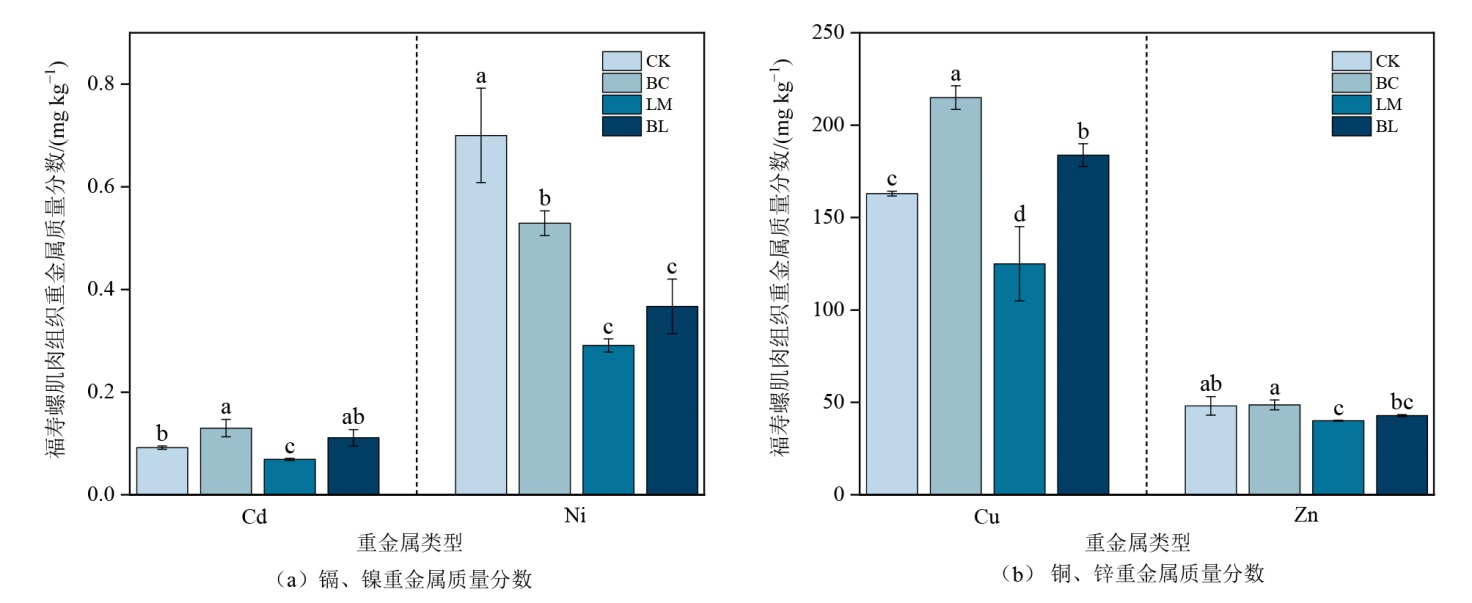
图1 生物炭与石灰施用后福寿螺肌肉组织重金属质量分数 不同小写字母表示不同处理差异性显著(p<0.05),n=3。下同
Figure 1 Heavy metal content in the muscle tissue of Pomacea canaliculata in soil after treated with biochar and lime
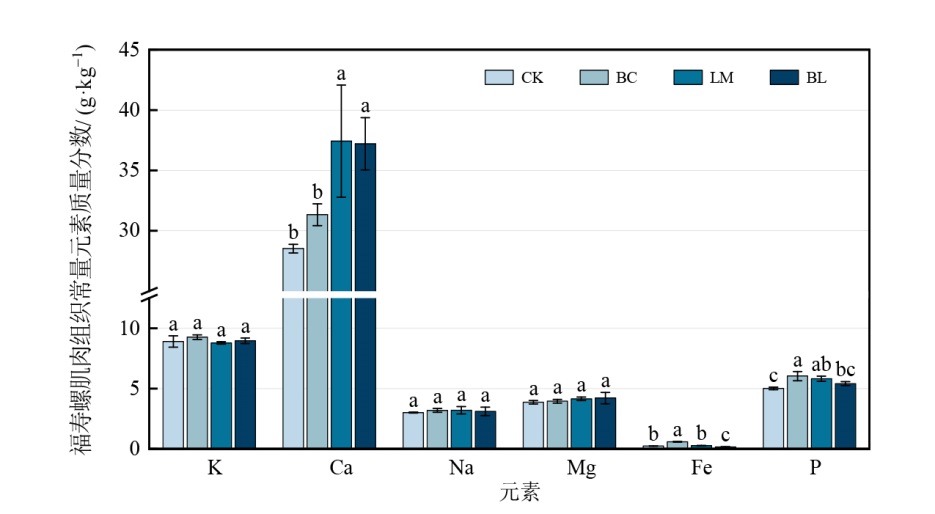
图2 生物炭与石灰施用后福寿螺肌肉组织常量元素质量分数
Figure 2 The major elements content in the muscle tissue of Pomacea canaliculata in soil after treated with biochar and lime
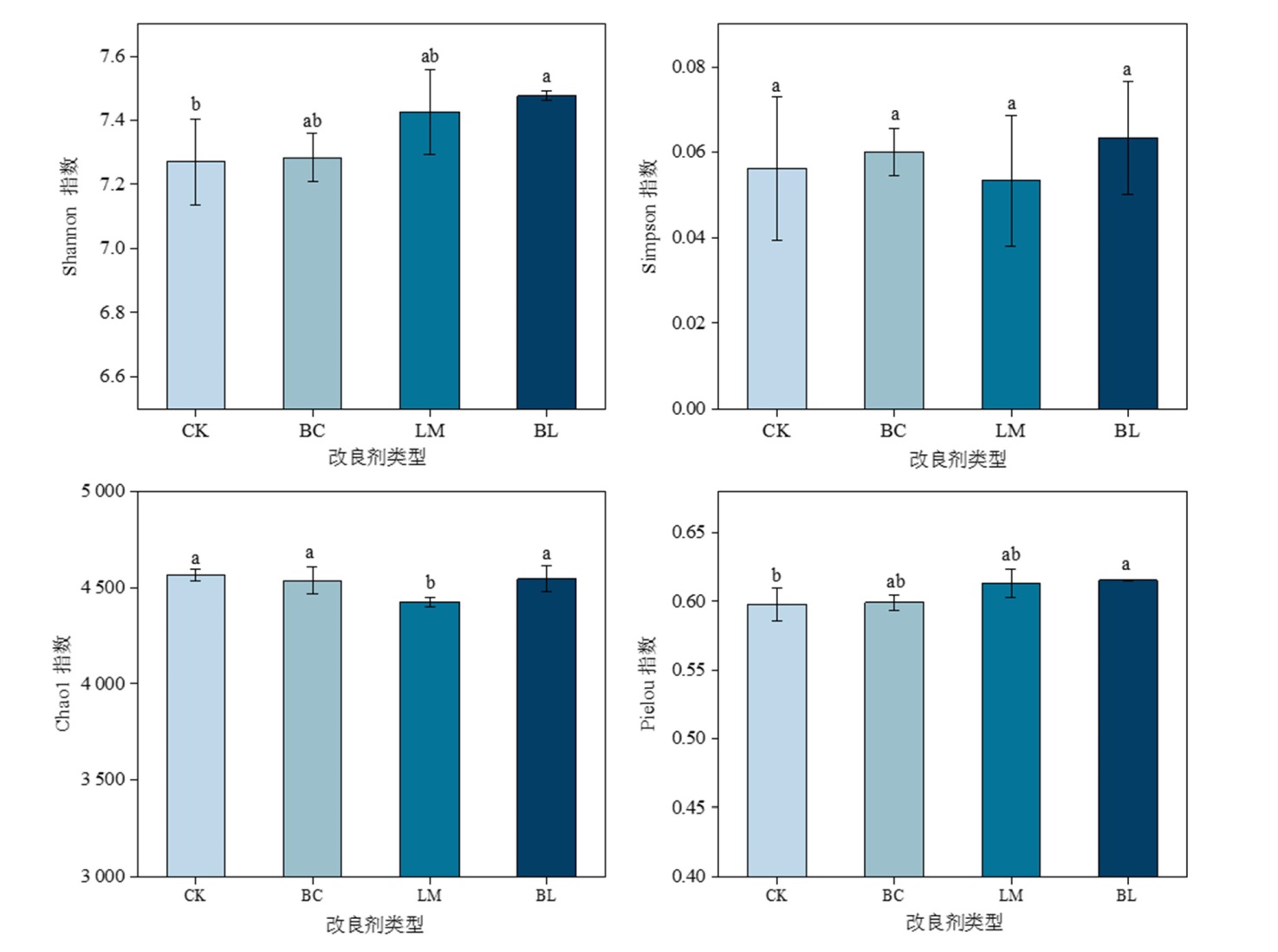
图3 福寿螺肠道微生物的α多样性指数
Figure 3 Alpha diversity index of gut microbiota in Pomacea canaliculate
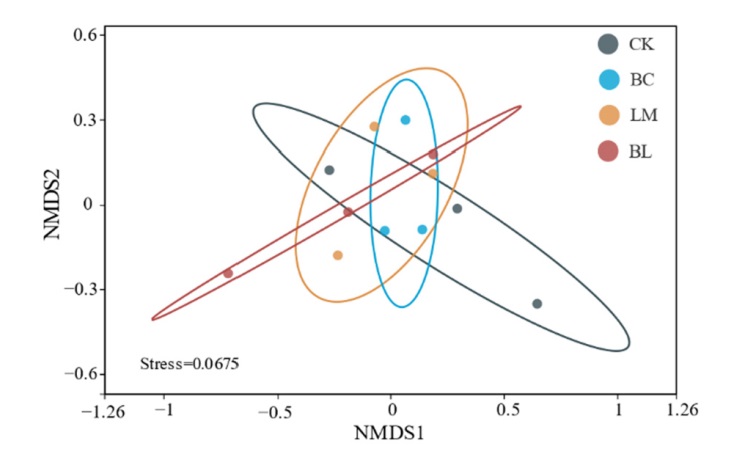
图4 福寿螺肠道菌群NMDS分析
Figure 4 NMDS analysis of gut microbiota in Pomacea canaliculata
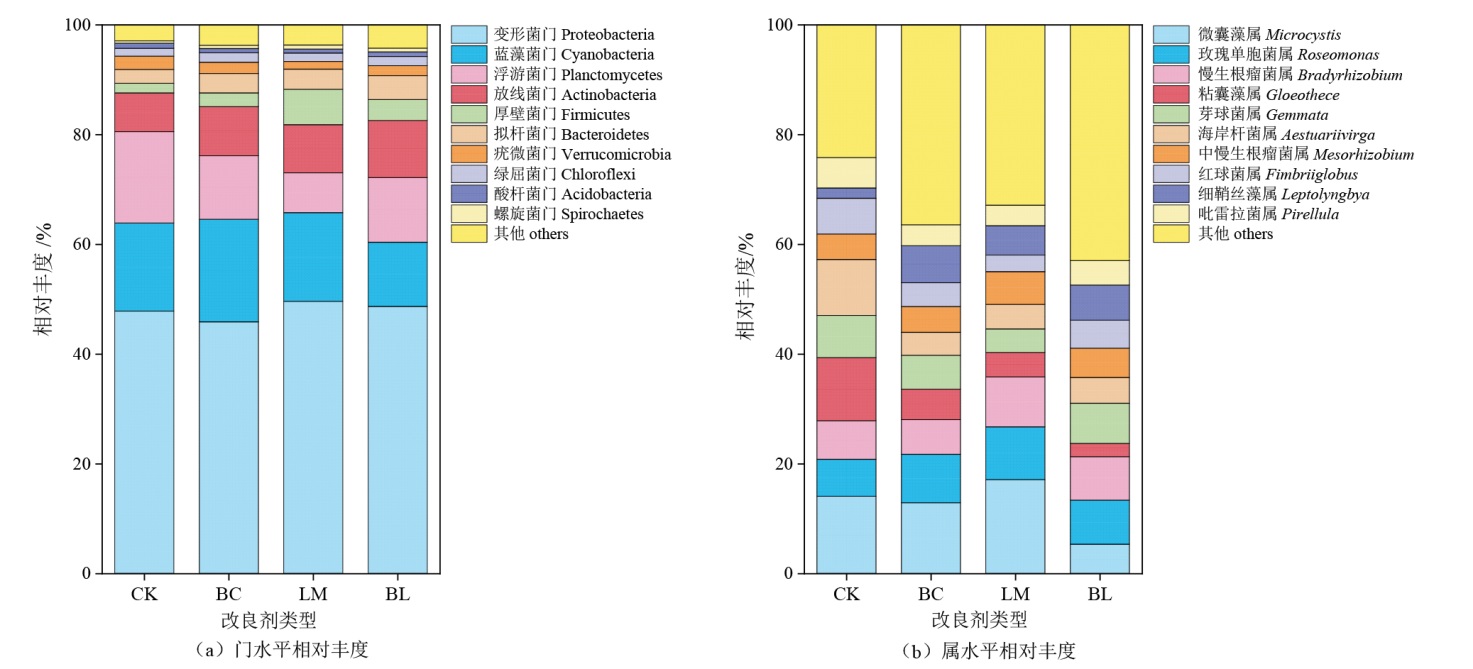
图5 福寿螺肠道微生物门和属水平物种组成的相对丰度
Figure 5 Relative abundance of gut microbiota of Pomacea canaliculate at the phylum level (a) and genus level (b)
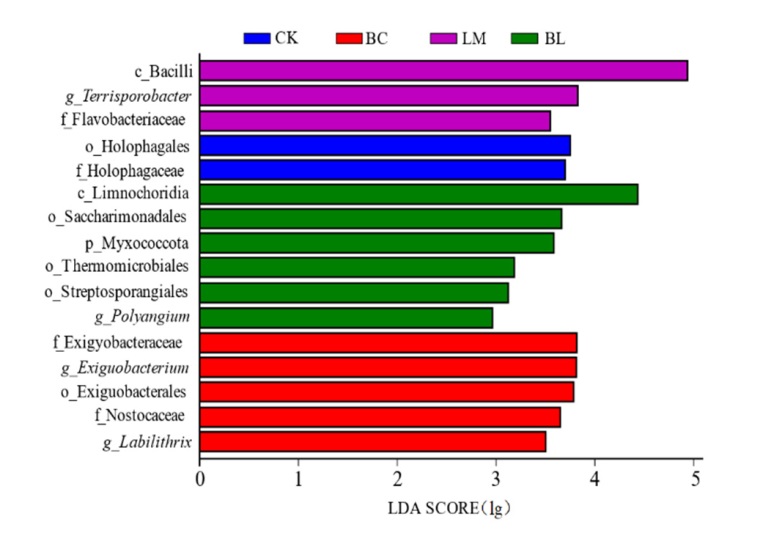
图6 福寿螺肠道菌群LEfSe分析
Figure 6 LEfSe analysis of gut microbiota in Pomacea canaliculata
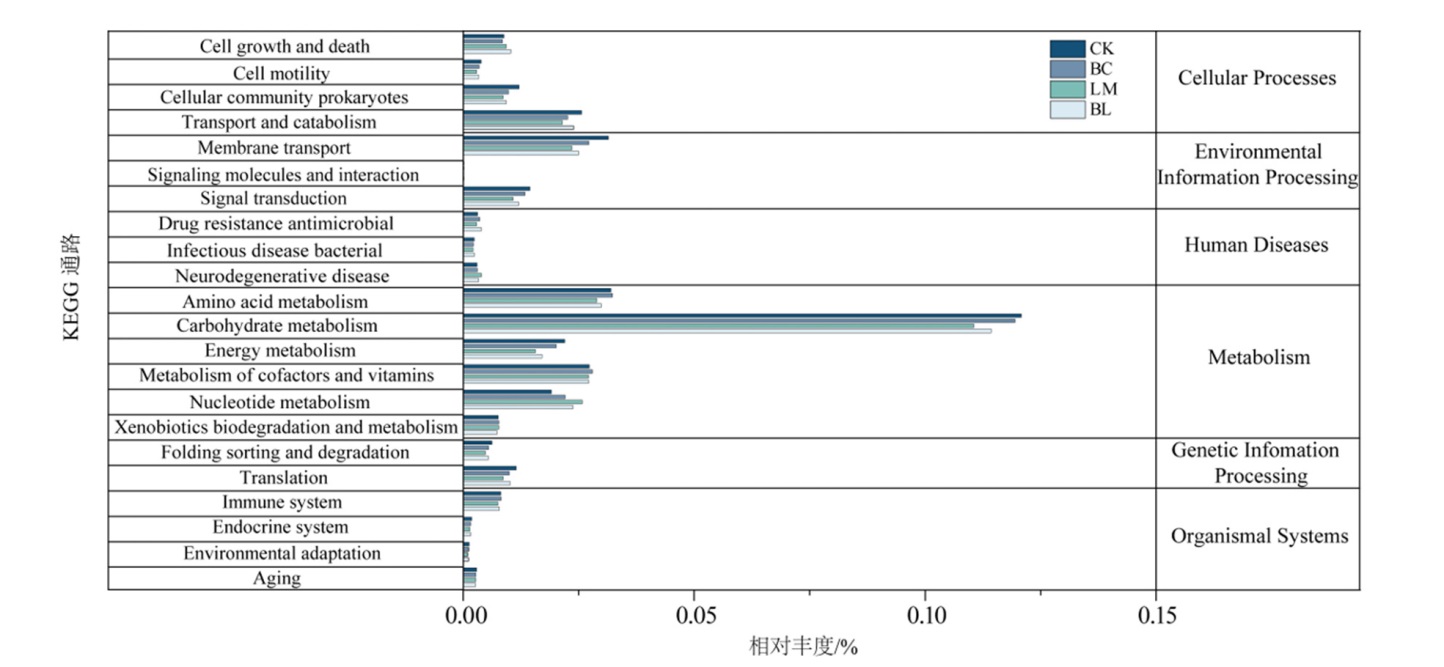
图7 福寿螺肠道微生物群落的KEGG通路的相对丰度差异
Figure 7 Differential of the relative abundance of KEGG pathways in the gut microbiota communities of Pomacea canaliculata
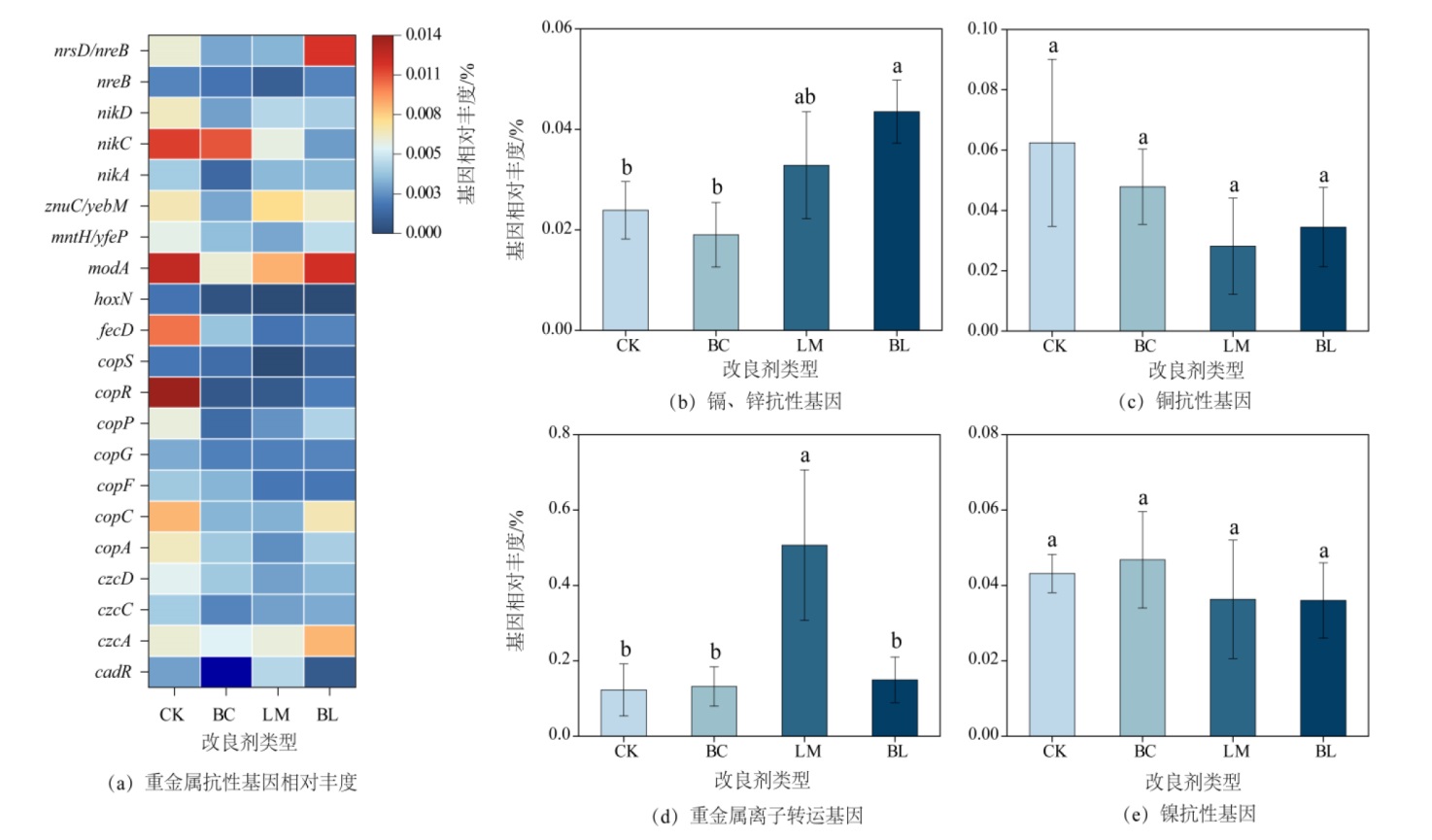
图8 福寿螺肠道微生物的重金属抗性功能基因相对丰度差异
Figure 8 Differences in relative abundance of heavy metal resistance genes in the gut microbiota of Pomacea canaliculata
| [1] |
Arunakumara K K I U, Walpola B C, Yoon M H, 2013. Current status of heavy metal contamination in Asia’s rice lands[J]. Reviews in Environmental Science and Bio/Technology, 12(4): 355-377.
DOI URL |
| [2] |
Bist P, Choudhary S, 2022. Impact of heavy metal toxicity on the gut microbiota and its relationship with metabolites and future probiotics strategy: A review[J]. Biological Trace Element Research, 200(12): 5328-5350.
DOI |
| [3] |
Constantine K L, Makale F, Mugambi I, et al., 2023. Assessment of the socio-economic impacts associated with the arrival of apple snail (Pomacea canaliculata) in Mwea irrigation scheme, Kenya[J]. Pest Management Science, 79(11): 4343-4356.
DOI URL |
| [4] |
Evariste L, Barret M, Mottier A, et al., 2019. Gut microbiota of aquatic organisms: A key endpoint for ecotoxicological studies[J]. Environmental Pollution, 248: 989-999.
DOI PMID |
| [5] |
Gorovtsov A V, Minkina T M, Mandzhieva S S, et al., 2020. The mechanisms of biochar interactions with microorganisms in soil[J]. Environmental Geochemistry and Health, 42(8): 2495-2518.
DOI PMID |
| [6] |
Halwart M, 1994. The golden apple snail Pomacea canaliculata in Asian rice farming systems: present impact and future threat[J]. International Journal of Pest Management, 40(2): 199-206.
DOI URL |
| [7] |
Huang F, Peng L, Zhag J E, et al., 2018. Cadmium bioaccumulation and antioxidant enzyme activity in hepatopancreas, kidney, and stomach of invasive apple snail Pomacea canaliculate[J]. Environmental Science and Pollution Research, 25(19): 18682-18692.
DOI |
| [8] |
Ioannou A, Xenophontos E, Karatsi A, et al., 2016. Insidious manifestation of pyogenic liver abscess caused by Streptococcus intermedius and Micrococcus luteus: A case report[J]. Oxford Medical Case Reports, 2016(1): 1-3.
DOI PMID |
| [9] |
Ladisa C, Ma Y, Habibi H R, 2021. Seasonally related metabolic changes and energy allocation associated with growth and reproductive phases in the liver of male goldfish (Carassius auratus)[J]. Journal of Proteomics, 241: 104237.
DOI URL |
| [10] |
Larsen N, Vogensen F K, Van Den Berg F W J, et al., 2010. Gut microbiota in human adults with type 2 diabetes differs from non-diabetic adults[J]. PloS One, 5(2): e9085.
DOI URL |
| [11] |
Li S G, Ji X H, Chao C, et al., 2021a. Effects of increasing lime application rates on microbial diversity and community structure in paddy soils[J]. Applied Soil Ecology, 161: 103837.
DOI URL |
| [12] |
Li W T, Ni P, Yi Y L, 2019. Comparison of reactive magnesia, quick lime, and ordinary Portland cement for stabilization/solidification of heavy metal-contaminated soils[J]. Science of the Total Environment, 671: 741-753.
DOI URL |
| [13] |
Li Y L, Yu H, Liu L N, et al., 2021b. Application of co-pyrolysis biochar for the adsorption and immobilization of heavy metals in contaminated environmental substrates[J]. Journal of Hazardous Materials, 420: 126655.
DOI URL |
| [14] |
Liu M Y, Sui C R, Zhao W Y, et al., 2025. Dynamic response of gut microbiota mediates the adaptation of Cipangopaludina chinensis to Pomacea canaliculata invasion[J]. Microbiome, 13(1): 171.
DOI URL |
| [15] |
Mao Z H, Gao Z X, Pan S K, et al., 2024. Ferroptosis: A potential bridge linking gut microbiota and chronic kidney disease[J]. Cell Death Discovery, 10(1): 234.
DOI |
| [16] |
Marigómez I, Soto M, Cajaraville M P, et al., 2002. Cellular and subcellular distribution of metals in molluscs[J]. Microscopy Research and Technique, 56(5): 358-392.
DOI URL |
| [17] |
Meng J, Zhang H L, Cui Z H, et al., 2022. Comparative study on the characteristics and environmental risk of potentially toxic elements in biochar obtained via pyrolysis of swine manure at lab and pilot scales[J]. Science of the Total Environment, 825: 153941.
DOI URL |
| [18] |
Meng J, Diao C M, Cui Z H, et al., 2024. Unravelling the influence of microplastics with/without additives on radish (Raphanus sativus) and microbiota in two agricultural soils differing in pH[J]. Journal of Hazardous Materials, 478: 135535.
DOI URL |
| [19] |
Olivier H M, Jenkins J A, Berhow M, et al., 2016. A pilot study testing a natural and a synthetic molluscicide for controlling invasive apple snails (Pomacea maculata)[J]. Bulletin of Environmental contamination and Toxicology, 96(3): 289-294.
DOI PMID |
| [20] |
Pawlett M, Hopkins D W, Moffett B F, et al., 2009. The effect of earthworms and liming on soil microbial communities[J]. Biology and Fertility of Soils, 45(4): 361-369.
DOI URL |
| [21] |
Qiu M X, Bi X Y, Liu Y Y, et al., 2025. Toxicology effects of cadmium in Pomacea canaliculate: Accumulation, oxidative stress, microbial community, and transcriptome analysis[J]. International Journal of Molecular Sciences, 26(2): 751.
DOI URL |
| [22] |
Reátegui-Zirena E G, French A D, Klein D M, et al., 2017. Cadmium compartmentalization in the pulmonate snail Lymnaea stagnalis: improving our understanding of exposure[J]. Archives of Environmental Contamination and Toxicology, 72(4): 575-585.
DOI PMID |
| [23] |
Santhosh K, Kamala K, Ramasamy P, et al., 2024. Unveiling the silent threat: Heavy metal toxicity devastating impact on aquatic organisms and DNA damage[J]. Marine Pollution Bulletin, 200: 116139.
DOI URL |
| [24] |
Sapkota R, Santos S, Farias P, et al., 2020. Insights into the earthworm gut multi-kingdom microbial communities[J]. Science of the Total Environment, 727: 138301.
DOI URL |
| [25] | Schmidt H P, Hagemann N, Draper K, et al., 2019. The use of biochar in animal feeding[J]. PeerJ, 7: e7373. |
| [26] | Segata N, Izard J, Waldron L, et al., 2011. Metagenomic biomarker discovery and explanation[J]. Genome Biology, 12(6): R60. |
| [27] |
Sui C R, Liu M Y, Chuan S Q, et al., 2024. Responses of survival, antioxidant system and intestinal microbiota of native snail Bellamya purificata to the invasive snail Pomacea canaliculate[J]. Scientific Reports, 14(1): 21267.
DOI |
| [28] |
Wang H T, Ding J, Chi Q Q, et al., 2020. The effect of biochar on soil-plant-earthworm-bacteria system in metal (loid) contaminated soil[J]. Environmental Pollution, 263: 114610.
DOI URL |
| [29] |
Wang J, Shi L, Liu J Q, et al., 2023. Earthworm-mediated nitrification and gut digestive processes facilitate the remobilization of biochar-immobilized heavy metals[J]. Environmental Pollution, 322: 121219.
DOI URL |
| [30] |
Wang T, Zhang T J, An W B, et al., 2024. Predicting the potential geographic distribution of invasive freshwater apple snail Pomacea canaliculate (Lamarck, 1819) under Climate change based on Biomod2[J]. Agronomy, 14(4): 650.
DOI URL |
| [31] |
Yang C P, Wang Y M, Ma Y Q, et al., 2022. Research on the molluscicidal activity and molecular mechanisms of arecoline against Pomacea canaliculate[J]. Ecotoxicology and Environmental Safety, 246: 114198.
DOI URL |
| [32] |
Yang X, Liu J J, Mcgrouther K, et al., 2016. Effect of biochar on the extractability of heavy metals (Cd, Cu, Pb, and Zn) and enzyme activity in soil[J]. Environmental Science and Pollution Research, 23(2): 974-984.
DOI URL |
| [33] |
Yi X L, Liu J, Cao M L, et al., 2024. Population genetics and genetic variation of Pomacea canaliculata (Gastropoda: Ampullariidae) in China revealed by sequence analyses of three mitochondrial genes[J]. Ecology and Evolution, 14(1): e10836.
DOI URL |
| [34] |
Zhang C X, Guo J, Saveanu L, et al., 2023. Invasiveness of Pomacea canaliculata: the differences in life history traits of snail populations from invaded and native areas[J]. Agronomy, 13(5): 1259.
DOI URL |
| [35] |
吕海涛, 李建忠, 鲁艳辉, 等, 2024. 稻田福寿螺的发生、危害及其防控技术研究进展[J]. 中国水稻科学, 38(2): 127-139.
DOI |
| Lü H T, Li J Z, Lu Y H, et al., 2024. Research Progress on the Damage and Management of Apple Snails (Ampullariider: Pomacea) in Paddy Fields[J]. Chinese Journal of Rice Science, 38(2): 127-139. | |
| [36] |
李金鸿, 李翔, 陈冰, 等, 2023. 生物炭对动物生长性能、肠道健康影响的研究进展[J]. 动物营养学报, 35(11): 6926-6935.
DOI |
|
Li J H, Li X, Chen B, et al., 2023. Research Progress in Biochar for Animals in Effects of Growth Performance and Intestinal Health[J]. Chinese Journal of Animal Nutrition, 35(11): 6926-6935.
DOI |
|
| [37] | 李淑贤, 林英, 祁雯, 等, 2022. 斑点福寿螺肠道菌群结构及功能研究[J]. 南京师大学报(自然科学版), 45(1): 64-73. |
| Li S X, Lin Y, Qi W, et al., 2022. Research on the Bacterial Community Structure and Functions in the Intestine of Pomacea maculata[J]. Journal of Nanjing Normal University (Natural Science Edition), 45(1): 64-73. | |
| [38] | 魏亚俊, 2022. 溶解性生物炭对抗生素抗性基因紫外光催化去除及对耐药菌影响[D]. 杭州: 浙江工商大学: 53-56. |
| Wei Y J, 2022. The effect of dissolved biochar on the UV photocatalytic removal of antibiotic resistance genes and antibioticresistant bacteria[D]. Hangzhou: Zhejiang Gongshang University: 53-56. | |
| [39] | 杨季, 王思博, 赵旦华, 等, 2020. 鸡肠道微生物组成及影响因素的研究进展[J]. 黑龙江畜牧兽医 (9): 34-37. |
| Yang J, Wang S B, Zaho D H, et al., 2020. Research progress on the microbial composition and influencing factors in chicken intestines[J]. Heilongjiang Animal Science and Veterinary Medicine (9): 34-37. | |
| [40] |
曾民, 陈佳, 李娥贤, 等, 2022. 元江普通野生稻后代镉分布特点及镉积累动态变化规律[J]. 生态环境学报, 31(3): 565-571.
DOI |
| Zeng M, Chen J, Li E X, et al., 2022. Distribution characteristics and dynamic changes of cadmium content in the introgression lines of Yuanjiang common wild rice[J]. Ecology and Environmental Sciences, 31(3): 565-571. | |
| [41] | 张思琪, 侯瑞, 徐向荣, 等, 2024. 水生动物肠道微生物与环境污染物互作机制的研究进展[J]. 环境生态学, 6(4): 27-38. |
| Zhang S Q, Hou R, Xu X R, et al., 2024. Review on the interaction between gut microbiota of aquatic animals and environmental pollutants[J]. Environmental Ecology, 6(4): 27-38. | |
| [42] | 中华人民共和国生态环境部, 国家市场监督管理总局, 2018. 土壤环境质量农用地土壤污染风险管控标准(试行): GB 15618—2018[S]. 北京: 中国标准出版社: 1-4. |
| Ministry of Ecology and Environment of the People’s Republic of China, State Administration for Market Regulation, 2018. Soil environmental quality Risk control standard for soil contamination of agricultural land (Trial): GB 15618—2018[S]. Beijing: China Standards Press: 1-4. |
| [1] | 张军梅, 方艳丽, 杨玉庆. 黄河流域三门峡段水体重金属含量特征及对斑马鱼胚胎和仔鱼的生物毒性研究[J]. 生态环境学报, 2026, 35(7): 1114-1124. |
| [2] | 邵佳丽, 谷海红, 张莹, 任宇松, 原心如, 艾艳君. 紫花苜蓿-AMF-根瘤菌双共生系统对铜和铬污染尾矿的修复作用[J]. 生态环境学报, 2026, 35(7): 1136-1150. |
| [3] | 李琴, 郑强, 杨卫君, 张力月, 王梓, 赵立宁. 减量灌水配施生物炭对麦田土壤团聚体及其碳氮分布的影响[J]. 生态环境学报, 2026, 35(6): 875-884. |
| [4] | 周家豪, 张沛, 彭煜文, 钟松雄, 邹建平, 侯冬梅. 基于机器学习识别赣江流域重金属污染主控因素[J]. 生态环境学报, 2026, 35(6): 976-985. |
| [5] | 魏龙毅, 林亲铁, 刘煜欣, 万家豪, 姚丽敏, 钟松雄. 广州某地质高背景地块土壤砷污染特征及成因分析[J]. 生态环境学报, 2026, 35(5): 819-830. |
| [6] | 张煜坤, 陈懂懂, 李奇, 贺福全, 张莉, 赵亮. 基于多元统计分析和PMF模型的土壤重金属源解析——以三江源为例[J]. 生态环境学报, 2026, 35(3): 458-468. |
| [7] | 吴宇晴, 郭洁, 吴嘉慧, 刘谞承, 赵建刚. 土壤改良剂与植物复合对离子型稀土矿Pb污染的修复效果研究[J]. 生态环境学报, 2026, 35(3): 469-477. |
| [8] | 韩存亮, 邓一荣, 常春英, 林龙勇, 程胜, 李俊春. 基于风险管控的土壤重金属高背景特征识别方法探讨[J]. 生态环境学报, 2026, 35(2): 278-288. |
| [9] | 史广宇, 沈新怡. 共热解技术对污泥中重金属的固定及资源化利用研究进展[J]. 生态环境学报, 2026, 35(2): 323-332. |
| [10] | 王国琳, 刘凯英, 宋宁宁, 刘君, 王芳丽, 王学霞, 宗海英, 李绍静. 盐碱土有机态氮组分对秸秆及秸秆生物炭输入的响应机理[J]. 生态环境学报, 2026, 35(1): 62-74. |
| [11] | 柳凤娟, 马超, 黄玲涵, 陈琪, 罗绪强. 生物炭添加对尾砂污染土壤中As和Sb植物有效性的影响[J]. 生态环境学报, 2025, 34(8): 1273-1281. |
| [12] | 贺环, 周丹丹, 马芷萱, 李芳芳, 秦珊珊, 豆思娴. 钙改性对生物炭中溶解性有机质与Cd(Ⅱ)结合的影响[J]. 生态环境学报, 2025, 34(7): 1121-1132. |
| [13] | 孟畅, 红梅, 李斐. 高光谱敏感波段筛选与机器学习协同提升土壤重金属预测精度[J]. 生态环境学报, 2025, 34(6): 950-960. |
| [14] | 林泳怡, 周燕飞, 邓金环, 田纪辉, 蔡昆争. 生物炭与磷添加促进赤红壤的硅形态转化和大豆植株硅吸收转运[J]. 生态环境学报, 2025, 34(5): 710-719. |
| [15] | 刘鸿林, 赵方凯, 杨磊, 沈琳钧, 杨恺丰, 李敏, 陈利顶. 城市公园土壤重金属污染及影响因素研究——以宁波市为例[J]. 生态环境学报, 2025, 34(5): 773-783. |
| 阅读次数 | ||||||
|
全文 |
|
|||||
|
摘要 |
|
|||||
