生态环境学报 ›› 2026, Vol. 35 ›› Issue (7): 1114-1124.DOI: 10.16258/j.cnki.1674-5906.2026.07.011
张军梅( ), 方艳丽, 杨玉庆*()
收稿日期:2025-05-06
修回日期:2025-11-17
接受日期:2025-12-10
出版日期:2026-07-18
发布日期:2026-07-17
通讯作者:
*杨玉庆,275303560@qq.com
作者简介:张军梅(1972年生),女,正高级工程师,研究方向为水利工程建设与管理。E-mail: 82318012@qq.com
基金资助:
Zhang Junmei(), Fang Yanli, Yang Yuqing*()
Received:2025-05-06
Revised:2025-11-17
Accepted:2025-12-10
Online:2026-07-18
Published:2026-07-17
摘要:
黄河作为中国第二长河,其生态环境健康持续受到广泛关注。随着《中华人民共和国黄河保护法》的实施,评估黄河重点河段的重金属含量特征及其生态风险具有重要意义。选取三门峡段为研究对象,采用ICP-MS技术分析水体中13种重金属的含量。结果表明,Pb在部分采样点超出地表水Ⅱ类水质标准限值,而Cd、Cr、Cu、Zn和As均低于Ⅱ类限值。基于6种典型重金属(Cd、Cr、Cu、Zn、Pb、Ni)的实测含量,设置3个复合暴露梯度,评估其对斑马鱼(Danio rerio)胚胎发育、仔鱼神经递质和前体物质含量及运动行为的影响。实验结果表明,环境剂量和高浓度重金属复合暴露组孵化率分别显著降低15.8%和31.3%,畸形率分别显著增加140%和256%。此外,各复合暴露组84 h心率分别显著增加16.3%、15.9%和21.7%。高浓度复合暴露显著增加了斑马鱼体内GABA、谷氨酸、苯丙氨酸、酪氨酸和色氨酸含量,分别显著增加8.40%、23.3%、77.1%、111%和104%,且加快了斑马鱼在持续光照和光暗刺激下的运动速率,提示其可诱发神经系统过度兴奋。该研究揭示了黄河三门峡段水体中重金属含量特征,阐明了环境剂量重金属复合暴露对水生生物产生的潜在负面影响,为黄河水生态保护与环境风险管理提供了科学依据。
中图分类号:
张军梅, 方艳丽, 杨玉庆. 黄河流域三门峡段水体重金属含量特征及对斑马鱼胚胎和仔鱼的生物毒性研究[J]. 生态环境学报, 2026, 35(7): 1114-1124.
Zhang Junmei, Fang Yanli, Yang Yuqing. Heavy Metal Content in the Sanmenxia Section of the Yellow River Basin and Its Developmental Toxicity to Zebrafish Embryos and Larvae[J]. Ecology and Environmental Sciences, 2026, 35(7): 1114-1124.
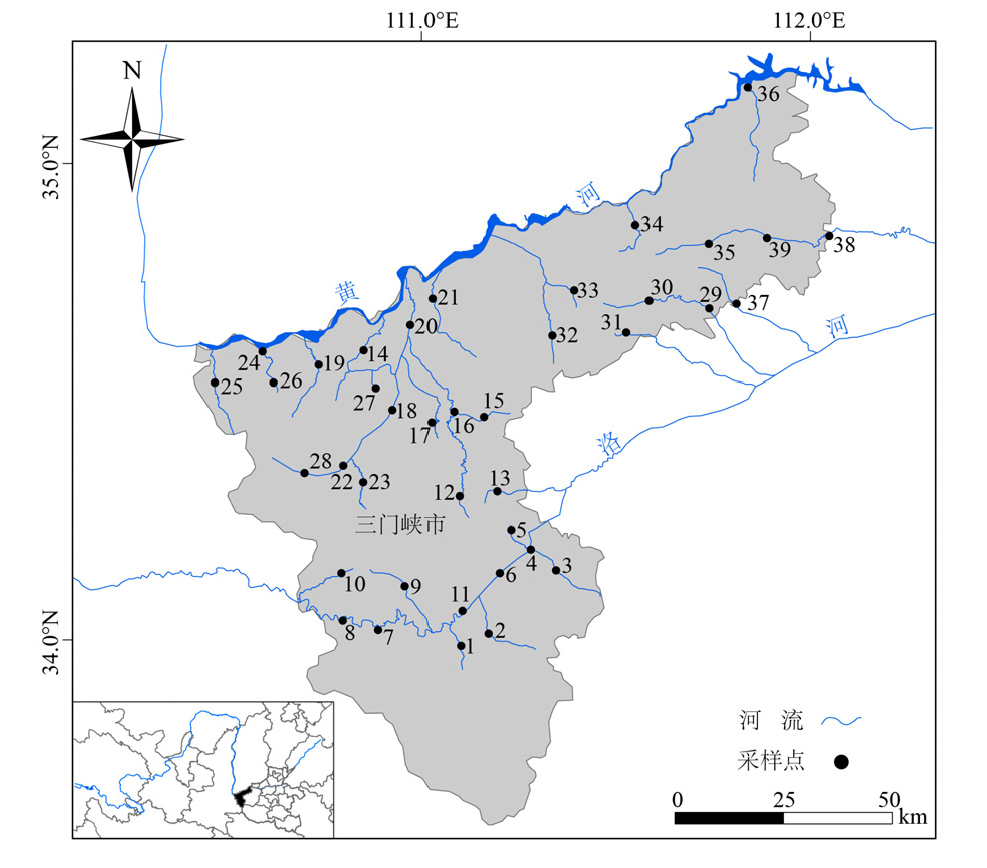
图1 黄河流域三门峡地区采样点位置分布图 该图基于审图号为GS(2024)0650号的标准地图制作,底图边界无修改
Figure 1 Distribution of sampling points in Sanmenxia area of Yellow River Basin
| 重金属 | 质量浓度/ (μg∙L−1) | 质量浓度中位数/ (μg∙L−1) | 平均值/ (μg∙L−1) | 标准差 | 变异 系数 | 地表水质II类标准限值/ (μg∙L−1) |
|---|---|---|---|---|---|---|
| Cr | 0.315-25.4 | 0.814 | 5.21 | 8.53 | 164 | 50 |
| Mn | 0.413-2730 | 1.26 | 84.8 | 405 | 478 | - |
| Fe | 87.8-1670 | 138 | 348 | 423 | 121 | - |
| Pb | 0.0643-29.1 | 0.129 | 2.24 | 5.60 | 249 | 10 |
| Al | 2.12-1280 | 4.61 | 182 | 349 | 191 | - |
| As | 2.13-25.4 | 6.00 | 7.21 | 4.63 | 64.3 | 50 |
| Cd | 0.0362-2.74 | 0.116 | 0.305 | 0.556 | 182 | 5 |
| Cu | 0.324-33.5 | 1.77 | 4.29 | 6.59 | 154 | 1000 |
| Zn | 2.18-120 | 4.65 | 22.2 | 34.1 | 154 | 1000 |
| V | 2.07-13.1 | 5.58 | 6.13 | 2.10 | 34.2 | - |
| Co | 0.122-15.0 | 0.350 | 1.75 | 3.40 | 194 | - |
| Ni | 3.38-29.3 | 10.9 | 10.5 | 3.96 | 37.6 | - |
| Ag | 0.0166-0.175 | 0.0360 | 0.0500 | 0.0390 | 79.0 | - |
表1 黄河流域三门峡地区地表水中13种重金属质量浓度(2016年)
Table 1 Concentrations of 13 heavy metals in surface water of Yellow River Basin Sanmenxia
| 重金属 | 质量浓度/ (μg∙L−1) | 质量浓度中位数/ (μg∙L−1) | 平均值/ (μg∙L−1) | 标准差 | 变异 系数 | 地表水质II类标准限值/ (μg∙L−1) |
|---|---|---|---|---|---|---|
| Cr | 0.315-25.4 | 0.814 | 5.21 | 8.53 | 164 | 50 |
| Mn | 0.413-2730 | 1.26 | 84.8 | 405 | 478 | - |
| Fe | 87.8-1670 | 138 | 348 | 423 | 121 | - |
| Pb | 0.0643-29.1 | 0.129 | 2.24 | 5.60 | 249 | 10 |
| Al | 2.12-1280 | 4.61 | 182 | 349 | 191 | - |
| As | 2.13-25.4 | 6.00 | 7.21 | 4.63 | 64.3 | 50 |
| Cd | 0.0362-2.74 | 0.116 | 0.305 | 0.556 | 182 | 5 |
| Cu | 0.324-33.5 | 1.77 | 4.29 | 6.59 | 154 | 1000 |
| Zn | 2.18-120 | 4.65 | 22.2 | 34.1 | 154 | 1000 |
| V | 2.07-13.1 | 5.58 | 6.13 | 2.10 | 34.2 | - |
| Co | 0.122-15.0 | 0.350 | 1.75 | 3.40 | 194 | - |
| Ni | 3.38-29.3 | 10.9 | 10.5 | 3.96 | 37.6 | - |
| Ag | 0.0166-0.175 | 0.0360 | 0.0500 | 0.0390 | 79.0 | - |
| 重金属 | 质量浓度/ (μg∙L−1) | 质量浓度中位数/ (μg∙L−1) | 平均值/ (μg∙L−1) | 标准差 | 变异 系数 | 地表水质II类标准限值/ (μg∙L−1) |
|---|---|---|---|---|---|---|
| Cr | 0.382-32.1 | 0.970 | 9.19 | 11.2 | 121 | 50 |
| Mn | 0.600-138 | 1.81 | 35.5 | 48.7 | 137 | - |
| Fe | 55.2-1990 | 126 | 479 | 609 | 127 | - |
| Pb | 0.0757-29.4 | 0.686 | 3.77 | 7.92 | 210 | 10 |
| Al | 3.68-1460 | 7.53 | 336 | 469 | 139 | - |
| As | 2.11-26.0 | 6.03 | 7.64 | 7.23 | 94.6 | 50 |
| Cd | 0.0429-3.72 | 0.116 | 0.649 | 1.16 | 179 | 5 |
| Cu | 0.701-28.5 | 2.94 | 4.73 | 6.90 | 146 | 1000 |
| Zn | 2.52-172 | 10.0 | 38.5 | 49.6 | 129 | 1000 |
| V | 4.57-10.5 | 5.43 | 6.05 | 1.54 | 25.5 | - |
| Co | 0.108-9.64 | 0.617 | 1.50 | 2.71 | 181 | - |
| Ni | 3.29-30.2 | 10.8 | 11.7 | 6.96 | 59.5 | - |
| Ag | 0.0186-0.914 | 0.0360 | 0.174 | 0.293 | 169 | - |
表2 黄河流域三门峡地区地表水中13种重金属质量浓度(2024年)
Table 2 Concentrations of 13 heavy metals in surface water of Yellow River Basin Sanmenxia
| 重金属 | 质量浓度/ (μg∙L−1) | 质量浓度中位数/ (μg∙L−1) | 平均值/ (μg∙L−1) | 标准差 | 变异 系数 | 地表水质II类标准限值/ (μg∙L−1) |
|---|---|---|---|---|---|---|
| Cr | 0.382-32.1 | 0.970 | 9.19 | 11.2 | 121 | 50 |
| Mn | 0.600-138 | 1.81 | 35.5 | 48.7 | 137 | - |
| Fe | 55.2-1990 | 126 | 479 | 609 | 127 | - |
| Pb | 0.0757-29.4 | 0.686 | 3.77 | 7.92 | 210 | 10 |
| Al | 3.68-1460 | 7.53 | 336 | 469 | 139 | - |
| As | 2.11-26.0 | 6.03 | 7.64 | 7.23 | 94.6 | 50 |
| Cd | 0.0429-3.72 | 0.116 | 0.649 | 1.16 | 179 | 5 |
| Cu | 0.701-28.5 | 2.94 | 4.73 | 6.90 | 146 | 1000 |
| Zn | 2.52-172 | 10.0 | 38.5 | 49.6 | 129 | 1000 |
| V | 4.57-10.5 | 5.43 | 6.05 | 1.54 | 25.5 | - |
| Co | 0.108-9.64 | 0.617 | 1.50 | 2.71 | 181 | - |
| Ni | 3.29-30.2 | 10.8 | 11.7 | 6.96 | 59.5 | - |
| Ag | 0.0186-0.914 | 0.0360 | 0.174 | 0.293 | 169 | - |
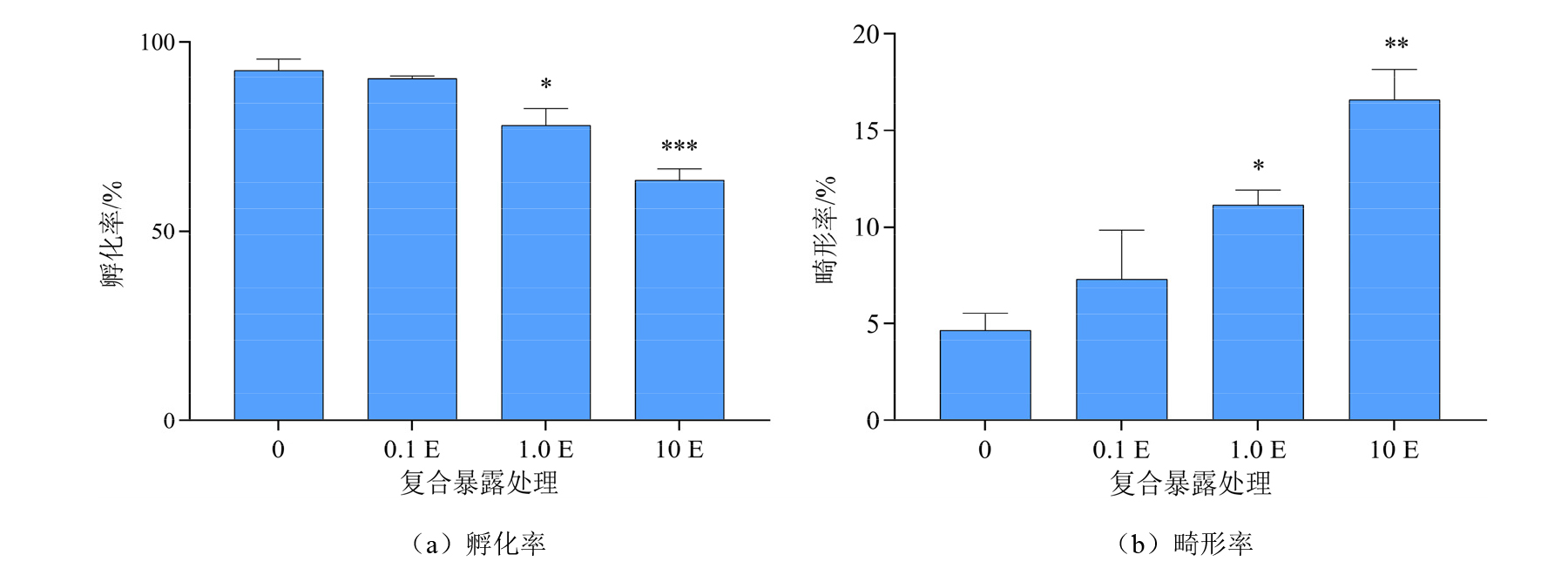
图2 重金属复合暴露对斑马鱼仔鱼孵化率和畸形率的影响 *p<0.05,**p<0.01,***p<0.001表示与对照组相比具有显著性差异。下同
Figure 2 Effects of heavy metal combined exposure on hatching rate (a) and malformation rate (b) of zebrafish embryos/larvae
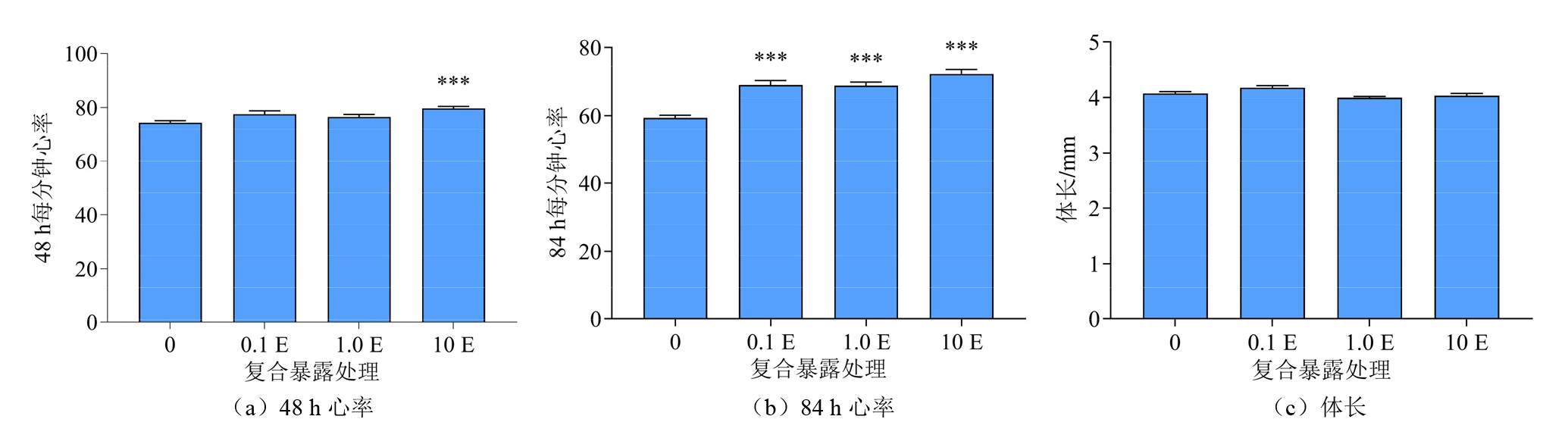
图3 重金属复合暴露对斑马鱼仔鱼48 h和84 h心率以及144 h体长的影响
Figure 3 Effects of heavy metal combined exposure on the heart rate of zebrafish at 48 h and 84 h, as well as the length at 144 h
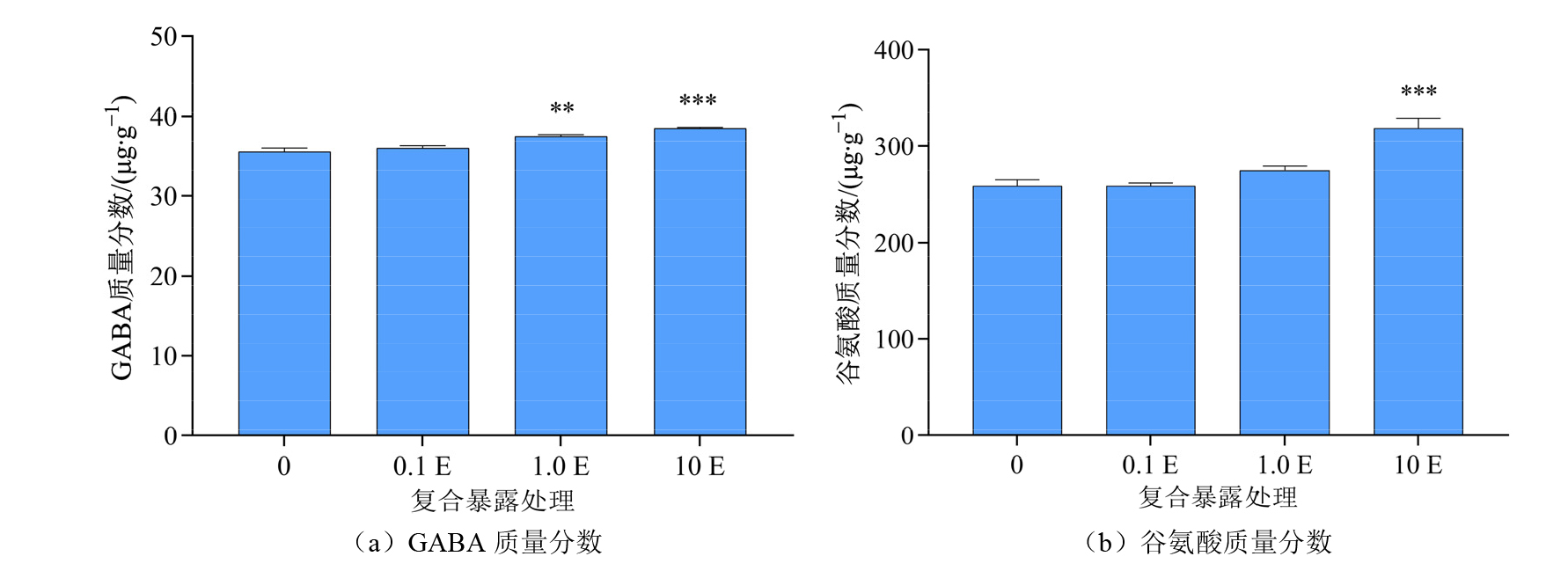
图4 重金属复合暴露144 h对斑马鱼仔鱼神经递质质量分数的影响
Figure 4 Effects of heavy metal combined exposure of 144 h on the neurotransmitter levels of zebrafish larvae
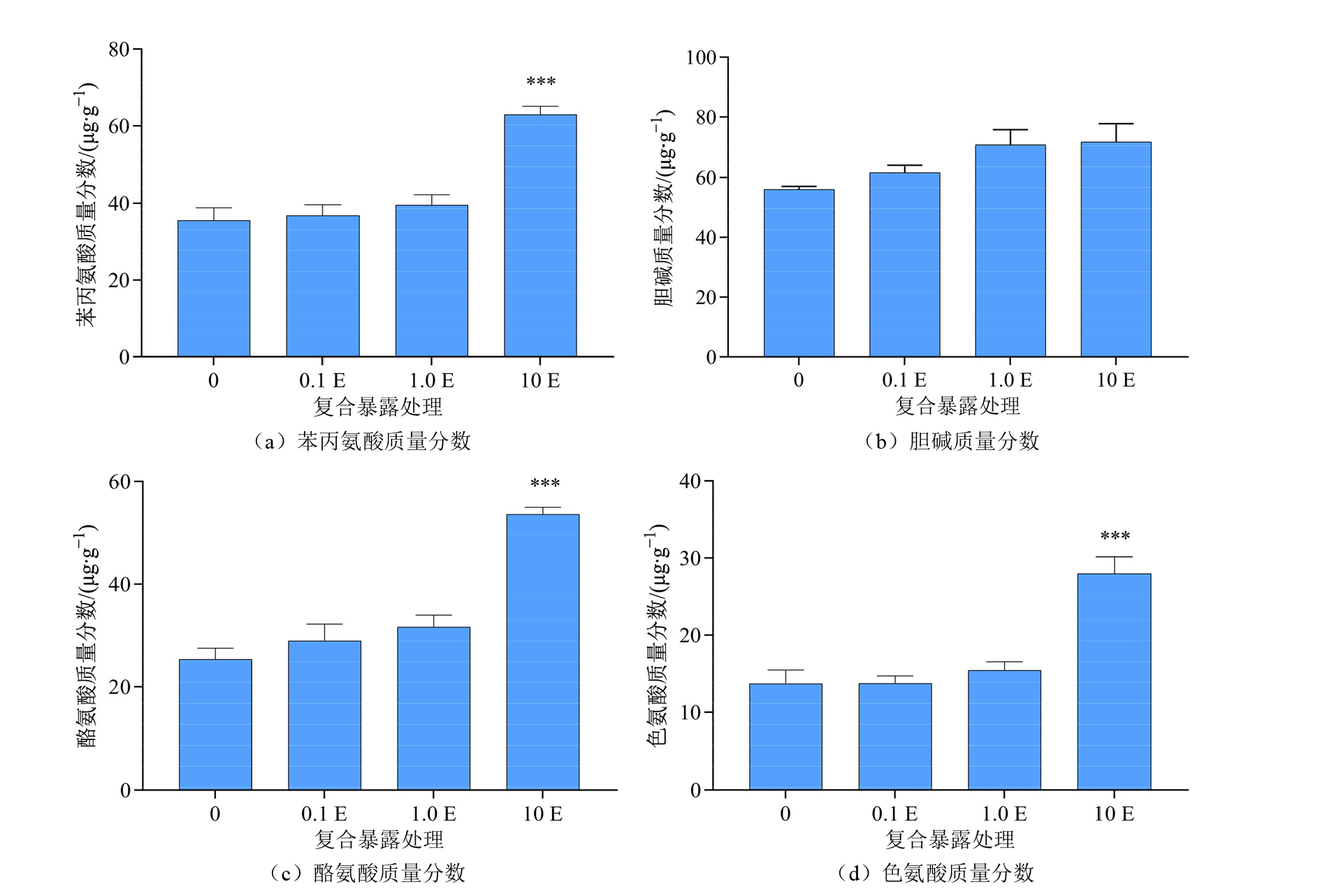
图5 重金属复合暴露144 h对斑马鱼仔鱼神经递质前体物质质量分数的影响
Figure 5 Effects of heavy metal combined exposure of 144 h on the neurotransmitter precursors levels of zebrafish larvae
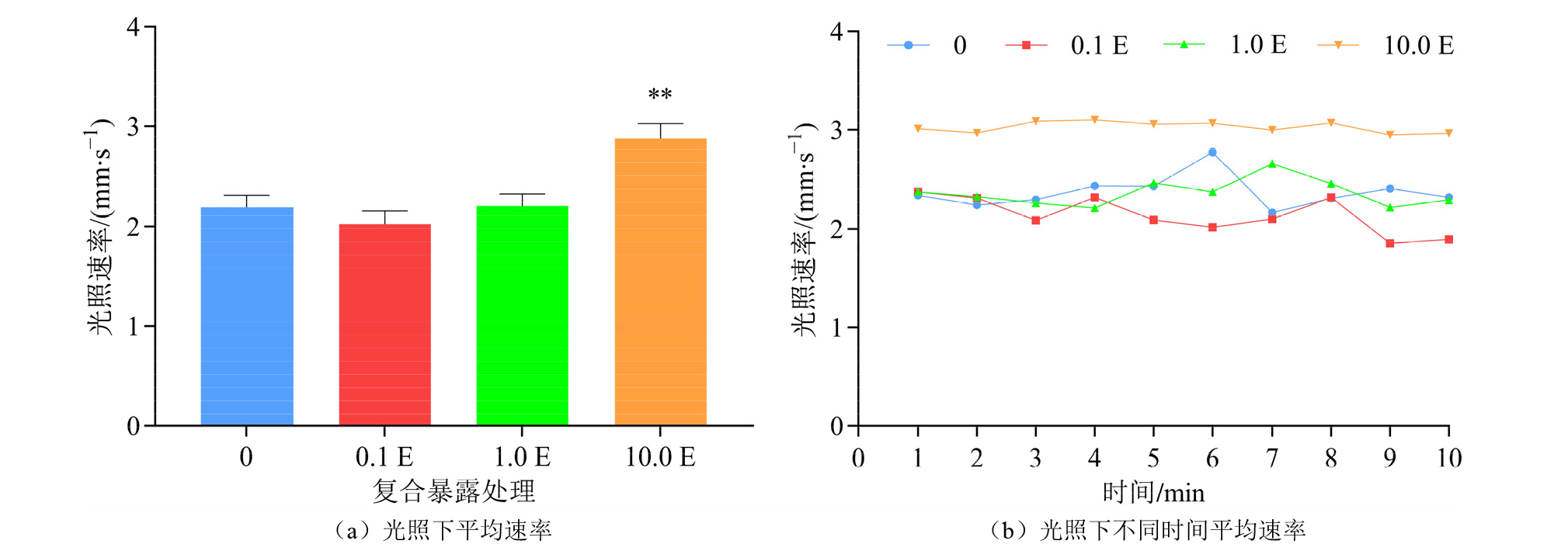
图6 重金属复合暴露144 h对斑马鱼仔鱼在光照下运动行为的影响 **p<0.01表示与对照组相比具有显著性差异
Figure 6 Effects of heavy metal combined exposure of 144 h on the locomotor behavior under light of zebrafish larvae
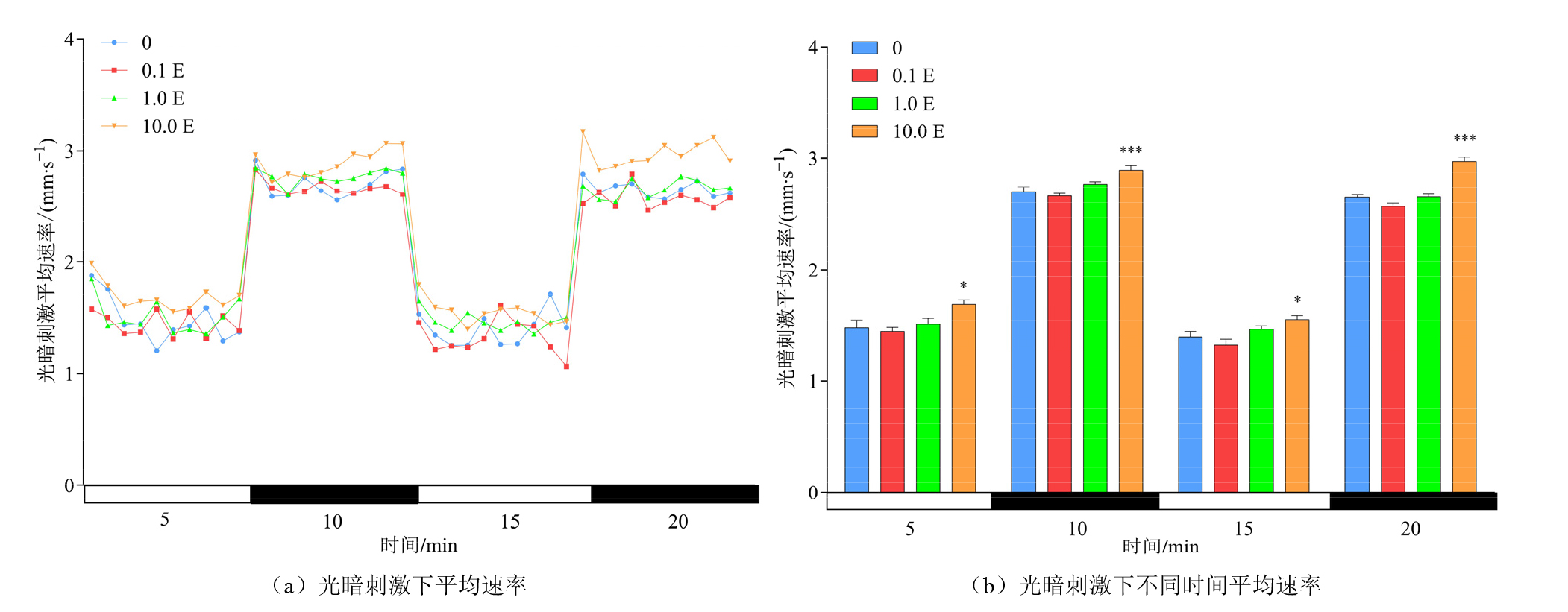
图7 重金属复合暴露144 h对斑马鱼仔鱼在光暗刺激下运动行为的影响
Figure 7 Effects of heavy metal combined exposure of 144 h on the locomotor behavior under light-dark-light-dark photoperiod stimulation of zebrafish larvae
| [1] |
Aldavood S J, Abbott L C, Evans Z R, et al., 2020. Effect of cadmium and nickel exposure on early development in zebrafish (Danio rerio) embryos[J]. Water, 12: 3005.
DOI URL |
| [2] |
Cao Y X, Zhao M J, Ma X Y, et al., 2021. A critical review on the interactions of microplastics with heavy metals: Mechanism and their combined effect on organisms and humans[J]. Science of the Total Environment, 788: 147620.
DOI URL |
| [3] |
Chowdhury S, Mazumder M, Al-Attas O, et al., 2016. Heavy metals in drinking water: Occurrences, implications, and future needs in developing countries[J]. Science of the Total Environment, 569-570: 476-488.
DOI URL |
| [4] |
Gokalp F D, Doganlar O, Doganlar Z B, et al., 2022. The genotoxic effects of mixture of aluminum, arsenic, cadmium, cobalt, and chromium on the gill tissue of adult zebrafish (Danio rerio)[J]. Drug and Chemical Toxicology, 45(3): 1158-1167.
DOI URL |
| [5] |
Gouva E, Nathanailides C, Skoufos I, et al., 2020. Comparative study of the effects of heavy metals on embryonic development of zebrafish[J]. Aquaculture Research, 51: 3255-3267.
DOI URL |
| [6] |
Hu G X, Wang H, Zhu J H, et al., 2023. Combined toxicity of acetamiprid and cadmium to larval zebrafish based on metabolomic analysis[J]. Science of the Total Environment, 867: 161539.
DOI URL |
| [7] |
Jia D T, Zhang R J, Shao J, et al., 2022. Exposure to trace levels of metals and fluoroquinolones increases inflammation and tumorigenesis risk of zebrafish embryos[J]. Environmental Science and Ecotechnology, 10: 100162.
DOI URL |
| [8] |
Kim Y J, Nam R H, Yoo Y M, et al., 2004. Identification and functional evidence of gabaergic neurons in parts of the brain of adult zebrafish (Danio rerio)[J]. Neuroscience letters, 355: 29-32.
DOI URL |
| [9] | Liu P, Wang S, Chang Z M, et al., 2021. Combined toxicity of silica nanoparticles and cadmium chloride on the cardiovascular system of zebrafish (Danio rerio) larvae[J]. Comparative Biochemistry and Physiology C: Toxicology & Pharmacology, 239: 108895. |
| [10] |
Lu N N, Sun S H, Song W C, et al., 2017. Behavioural toxicity in zebrafish (Danio rerio) exposed to waterborne zinc and chromium(VI)[J]. Chemistry and Ecology, 33(8): 725-738.
DOI URL |
| [11] |
Ma L Y, Yang H, Xiao X N, et al., 2024. Co-exposure to sodium hypochlorite and cadmium induced locomotor behavior disorder by influencing neurotransmitter secretion and cardiac function in larval zebrafish[J]. Environmental Pollution, 342: 123070.
DOI URL |
| [12] |
Naatz H, Manshian B B, Luci C R, et al., 2020. Model-based nanoengineered pharmacokinetics of iron-doped copper oxide for nanomedical applications[J]. Angewandte Chemie International Edition, 59: 1828-1836.
DOI URL |
| [13] |
Pagire S H, Lee E, Pagire H S, et al., 2018. Design, synthesis and biological evaluation of glutamic acid derivatives as anti-oxidant and anti-inflammatory agents[J]. Bioorganic & Medicinal Chemistry Letters, 28(3): 529-532.
DOI URL |
| [14] |
Poffenberger M C, Jones R G, 2014. Amino acids fuel T cell-mediated inflammation[J]. Immunity, 40(5): 635-637.
DOI PMID |
| [15] |
Rajalakshmi KSV, Liu W C, Balamuralikrishnan B, et al., 2023. Cadmium as an endocrine disruptor that hinders the reproductive and developmental pathways in freshwater fish: A review[J]. Fishes, 8(12): 589.
DOI URL |
| [16] |
Santos D, Luzio A, Matos C, et al., 2021. Microplastics alone or co-exposed with copper induce neurotoxicity and behavioral alterations on zebrafish larvae after a subchronic exposure[J]. Aquat Toxicol, 235: 105814.
DOI URL |
| [17] | Santos D, Luzio A, Felix L, et al., 2022a. Oxidative stress, apoptosis and serotonergic system changes in zebrafish (Danio rerio) gills after long-term exposure to microplastics and copper[J]. Comparative Biochemistry and Physiology C: Toxicology & Pharmacology, 258: 109363. |
| [18] |
Santos D, Luzio A, Felix L, et al., 2022b. Microplastics and copper induce apoptosis, alter neurocircuits, and cause behavioral changes in zebrafish brain[J]. Ecotoxicology and Environmental Safety, 242: 113926.
DOI URL |
| [19] |
Toma N J, Anwar S, Kabir T, et al., 2022. Lead and lead-arsenic combined exposure induces mortality and developmental impairments in zebrafish embryos: A study using wild-caught zebrafish from bangladesh[J]. Drug and Chemical Toxicology, 45(6): 2833-2842.
DOI URL |
| [20] |
Tufi S, Leonards P, Lamoree M, et al., 2016. Changes in neurotransmitter profiles during early zebrafish (Danio rerio) development and after pesticide exposure[J]. Environmental Science & Technology, 50(6): 3222-3230.
DOI URL |
| [21] |
Wang W Q, Chen H H, Zhao W J, et al., 2022. Ecotoxicological assessment of spent battery extract using zebrafish embryotoxicity test: A multi-biomarker approach[J]. Chemosphere, 287(Part 1): 132120.
DOI URL |
| [22] |
Wang W W, Wu Z L, Dai Z L, et al., 2013. Glycine metabolism in animals and humans: Implications for nutrition and health[J]. Amino Acids, 45(3): 463-477.
DOI PMID |
| [23] |
Wirbisky S E, Weber G J, Lee J W, et al., 2014. Novel dose-dependent alterations in excitatory gaba during embryonic development associated with lead (Pb) neurotoxicity[J]. Toxicology Letters, 229(1): 1-8.
DOI PMID |
| [24] |
Xia Y, Wang C Y, Zhang X S, et al., 2023. Combined effects of lead and manganese on locomotor activity and microbiota in zebrafish[J]. Ecotoxicology and Environmental Safety, 263: 115260.
DOI URL |
| [25] | Xu Y J, Peng T, Zhou Q, et al., 2023. Evaluation of the oxidative toxicity induced by lead, manganese, and cadmium using genetically modified nrf2a-mutant zebrafish[J]. Comparative Biochemistry And Physiology C-toxicology & Pharmacology, 266: 109550. |
| [26] |
Yan R, Ding J, Yang Q L, et al., 2023. Lead acetate induces cartilage defects and bone loss in zebrafish embryos by disrupting the GH/IGF-1 axis[J]. Ecotoxicology and Environmental Safety, 253: 114666.
DOI URL |
| [27] |
Yin J, Wang A P, Li W F, et al., 2017. Sensitive biomarkers identification for different iating cd and pb induced toxicity on zebrafish embryos[J]. Environmental Toxicology and Pharmacology, 56: 340-349.
DOI URL |
| [28] |
Zhang R W, Wei H P, Xia Y M, et al., 2010. Development of light response and gabaergic excitation-to-inhibition switch in zebrafish retinal ganglion cells[J]. The Journal of Physiology, 588(Part 14): 2557-2569.
DOI URL |
| [29] | 敖亮, 单保庆, 张洪, 等, 2012. 三门峡库区河流湿地沉积物重金属赋存形态和风险评价[J]. 环境科学, 33(4): 1176-1181. |
| Ao L, Shan B Q, Zhang H, et al., 2012. Heavy metals distribution and risk assessment of sediments in the riverine wetland of Sanmenxia Reservoir[J]. Environmental Science, 33(4): 1176-1181. | |
| [30] | 陈鑫, 左俊丽, 栾宁, 等, 2023. 铅对砷的毒性效应及毒代动力学过程的影响[J]. 环境化学, 42(10): 3351-3358. |
| Chen X, Zuo J L, Luan N, et al., 2023. The influence of lead on toxic effect of arsenic and its toxicokinetic process[J]. Environmental Science, 42(10): 3351-3358. | |
| [31] | 豆猛, 2023. 黄河湿地地质特征分析与土壤重金属污染分布研究[J]. 能源与环保, 45(6): 121-126. |
| Dou M, 2023. Study on geological characteristics of Yellow River wetland and distribution of heavy metal pollution in soil[J]. China Energy and Environmental Protection, 45(6): 121-126. | |
| [32] | 官庆松, 杨黎君, 高玮, 等, 2023. 三门峡黄河湿地重金属分布特征及生态风险评价[J]. 湿地科学与管理, 19(1): 55-59. |
| Guan Q S, Yang L J, Gao W, et al., 2023. spatial distribution and ecological risk assessment of heavy metals in Sanmenxia Yellow River Wetland[J]. Wetland Science & Management, 19(1): 55-59. | |
| [33] | 郭勇勇, 华江环, 朱宇轩, 等, 2022. 南水北调中线总干渠水中重金属含量及风险评价[J]. 水生生物学报, 46(7): 995-1006. |
| Guo Y Y, Hua J H, Zhu Y X, et al., 2022. Contents and risk assessment of heavy metals in surface water in the main canal of middle route of the South-To-North Water Diversion Project[J]. Acta Hydrobiologica Sinica, 46(7): 995-1006. | |
| [34] | 焦海林, 2019. 黄河三门峡段沉积物中重金属含量的研究[J]. 化工设计通讯, 45(3): 139-140. |
| Jiao H L, 2019. Study on heavy metal content in sediments of Sanmenxia section of the Yellow River[J]. Chemical Engineering Design Communications, 45(3): 139-140. | |
| [35] | 康博伦, 2024. 4种典型重金属斑马鱼发育复合毒性转录组比较研究[D]. 北京: 中国环境科学研究院. |
| Kang B L, 2024. Comparative transcriptomic analysis of developmental toxicityof zebrafish embroys exposed to four typical heavy metals[D]. Beijing: Chinese Research Academy of Environmental Sciences. | |
| [36] | 廖耿泽, 2019. 铅镉复合暴露对斑马鱼幼鱼运动行为昼夜节律的影响及机制[D]. 广州: 南方医科大学. |
| Liao G Z, 2019. The effects of co-exposure to lead andcadmium on behavioral circadian rhythm in zebrafish larvae[D]. Guangzhou: Southern Medical University. | |
| [37] | 李丹丹, 李耀辉, 田翊, 等, 2024. 豫西金矿邻近区农田土壤重金属污染特征及来源解析[J]. 四川环境, 43(4): 67-75. |
| Li D D, Li Y H, Tian Y, et al., 2024. Analysis on characteristics and sources of heavy metal pollution in farmland soil near gold mine of western Henan[J]. Sichuan Environment, 43(4): 67-75. | |
| [38] | 刘在平, 张松林, 2010. 城市污水对斑马鱼胚胎的影响[J]. 生态环境学报, 9(12): 2911-2915. |
| Liu Z P, Zhang S L, 2010. The effect of urban sewage on embryos of zebrafish[J]. Ecology and Environmental Sciences, 19(12): 2911-2915. | |
| [39] | 罗紫蝶, 郭少娟, 曾晨, 等, 2022. 镉暴露对斑马鱼胚胎发育的毒性效应研究[J]. 环境科学研究, 35(5): 1315-1322. |
| Luo Z D, Guo S J, Zeng C, et al., 2022. Toxic Effects of cadmium exposure on zebrafish embryo development[J]. Research of Environmental Sciences, 35(5): 1315-1322. | |
| [40] | 闵鹏, 周凡琪, 于凡芮, 等, 2025. 聚苯乙烯微塑料和重金属铬对斑马鱼胚胎发育的联合毒性效应[J]. 环境化学, 44(1): 265-272. |
| Min P, Zhou F Q, Yu F R, et al., 2025. Combined toxic effects of polystyrene microplastics and heavy metalchromium on embryonic development of zebrafish[J]. Environmental Chemistry, 44(1): 265-272. | |
| [41] |
宁静, 王淳, 卢莞玲, 等, 2025. 斑马鱼暴露于镉和褪黑素引起肠道组织、氧化损伤及微生物多样性变化[J]. 生态环境学报, 34(1): 77-88.
DOI |
| Ning J, Wang C, Lu G L, et al., 2025. Exposure of zebrafish to cadmium and melatonin induces changes in gut organization, oxidative damage, and microbial diversity[J]. Ecology and Environmental Sciences, 34(1): 77-88. | |
| [42] | 盛正成, 许松, 商学军, 2023. 重金属暴露与生殖毒性的相关研究进展[J]. 中华男科学杂志, 29(2): 182-186. |
| Sheng Z C, Xu S, Shang X J, 2023. Heavy metal exposure and reproductive toxicity: Advances in studies[J]. National Journal of Andrology, 29(2): 182-186. | |
| [43] |
王俊能, 马千里, 赵学敏, 等, 2019. 广西龙江突发性镉污染对鱼类影响及健康风险评估[J]. 生态环境学报, 28(5): 974-982.
DOI |
| Wang J N, Ma Q L, Zhao X M, et al., 2019. Influence of emergent cadmium pollution on fish species and health risk assessment in Longjiang River in Guangxi Autonomous Region[J]. Ecology and Environmental Sciences, 28(5): 974-982. | |
| [44] | 王韬轶, 2022. 黄河水体、悬浮物和不同粒径沉积物中痕量金属时空分布及污染评价[D]. 西安: 西安理工大学. |
| Wang T Y, 2022. Spstial-temporal distribution and pollution assessment of trace metals in water body, suspended solids and sediments of the Yellow River[D]. Xi’an: Xi’an University of Technology. | |
| [45] | 杨家林, 孙健, 马彤祯, 等, 2022. 三门峡市农产品土壤重金属元素分析及防治建议[J]. 矿产勘查, 13(8): 1220-1227. |
| Yang J L, Sun J, Ma T Z, 2022. Analysisand prevention recommendations of heavy metal elements in soil of agricultural products in Sanmenxia[J]. Mineral Exploration, 13(8): 1220-1227. | |
| [46] | 曾晨, 2018. 汞、镉、铅、砷对斑马鱼早期胚胎发育的复合毒性效应及标志基因筛选[D]. 北京: 中国环境科学研究院. |
| Zeng C, 2018. Mixture toxicity of mercury, cadmium, lead and arsenic in early embryo development of zebrafish (Danio rerio) and marker genes screening[D]. Beijing: Chinese Research Academy of Environmental Sciences. | |
| [47] |
张棋麟, 江宇航, 董志祥, 等, 2020. 汞暴露对斑马鱼肠道菌群结构和肝脏抗氧化指标的影响[J]. 生态环境学报, 29(8): 1645-1653.
DOI |
| Zhang Q L, Jiang Y H, Dong Z X, et al., 2020. Effects of mercury exposure on intestinal flora structure and liver antioxidant ability in adult zebrafish[J]. Ecology and Environmental Sciences, 29(8): 1645-1653. | |
| [48] |
张小磊, 王晶晶, 安春华, 等, 2018. 郑州沿黄地区养殖鱼类中重金属污染与健康风险评价[J]. 生态环境学报, 27(2): 350-355.
DOI |
| Zhang X L, Wang J J, An C H, et al., 2018. Pollution characteristics and health risk assessment of heavy metals in cultured fish species along the Yellow River in Zhengzhou[J]. Ecology and Environmental Sciences, 27(2): 350-355. | |
| [49] | 中华人民共和国生态环境部, 2002. 地表水环境质量标准: GB 3838—2002[S]. 北京: 中国标准出版社. |
| Ministry of Ecology and Environment of the People's Republic of China, 2002. Environmental quality standards for surface water: GB 3838—2002[S]. Beijing: China Standards Press. | |
| [50] | 周伟立, 麻冰涓, 程柳, 等, 2018. 重金属在三门峡水库的赋存特征和风险评价[J]. 人民黄河, 40(4): 83-87, 91. |
| Zhou W L, Ma B J, Cheng L, et al., 2018. Occurrence and risk assessment of heavy metals in Sanmenxia Reservoir[J]. Yellow River, 40(4): 83-87, 91. | |
| [51] |
卓丽玲, 唐森, 王灿灿, 等, 2016. 镉胁迫下钙对鲫鱼镉吸收和抗氧化酶活性的影响[J]. 生态环境学报, 25(6): 1001-1005.
DOI |
| Zhuo L L, Tang S, Wang C C, et al., 2016. Effects of Ca on Cd uptake and antioxidant enzymes activities of crucian carp under Cd stress[J]. Ecology and Environmental Sciences, 25(6): 1001-1005. |
| [1] | 邵佳丽, 谷海红, 张莹, 任宇松, 原心如, 艾艳君. 紫花苜蓿-AMF-根瘤菌双共生系统对铜和铬污染尾矿的修复作用[J]. 生态环境学报, 2026, 35(7): 1136-1150. |
| [2] | 潘玉, 孟庆玖, 徐君, 崔中华, 李章涛, 柳检, 孟俊. 生物炭与石灰对稻田福寿螺重金属积累及肠道微生物影响[J]. 生态环境学报, 2026, 35(7): 1151-1162. |
| [3] | 刘世琦, 张爱儒. 数实融合何以促进黄河流域减污降碳协同增效——基于研发创新与降本增效视角的机制分析[J]. 生态环境学报, 2026, 35(6): 885-897. |
| [4] | 周家豪, 张沛, 彭煜文, 钟松雄, 邹建平, 侯冬梅. 基于机器学习识别赣江流域重金属污染主控因素[J]. 生态环境学报, 2026, 35(6): 976-985. |
| [5] | 魏龙毅, 林亲铁, 刘煜欣, 万家豪, 姚丽敏, 钟松雄. 广州某地质高背景地块土壤砷污染特征及成因分析[J]. 生态环境学报, 2026, 35(5): 819-830. |
| [6] | 杜嘉睿, 宋芊, 高文明. 黄河源区生态系统健康时空演变与多情景模拟研究[J]. 生态环境学报, 2026, 35(4): 551-562. |
| [7] | 程文杰, 倪用鑫, 吕锡芝, 马力, 张秋芬, 王建伟, 张恒硕, 邓文彦. 黄河源区植被总生产力对气候干旱的响应[J]. 生态环境学报, 2026, 35(3): 393-402. |
| [8] | 张煜坤, 陈懂懂, 李奇, 贺福全, 张莉, 赵亮. 基于多元统计分析和PMF模型的土壤重金属源解析——以三江源为例[J]. 生态环境学报, 2026, 35(3): 458-468. |
| [9] | 韩存亮, 邓一荣, 常春英, 林龙勇, 程胜, 李俊春. 基于风险管控的土壤重金属高背景特征识别方法探讨[J]. 生态环境学报, 2026, 35(2): 278-288. |
| [10] | 马栋栋, 李雪婷, 李云龙, 李想, 何昊宣. 数字技术对黄河流域生态保护和高质量发展协同推进的影响研究[J]. 生态环境学报, 2026, 35(2): 311-322. |
| [11] | 史广宇, 沈新怡. 共热解技术对污泥中重金属的固定及资源化利用研究进展[J]. 生态环境学报, 2026, 35(2): 323-332. |
| [12] | 孟畅, 红梅, 李斐. 高光谱敏感波段筛选与机器学习协同提升土壤重金属预测精度[J]. 生态环境学报, 2025, 34(6): 950-960. |
| [13] | 刘鸿林, 赵方凯, 杨磊, 沈琳钧, 杨恺丰, 李敏, 陈利顶. 城市公园土壤重金属污染及影响因素研究——以宁波市为例[J]. 生态环境学报, 2025, 34(5): 773-783. |
| [14] | 陈岩, 石成龙, 李璞君, 肖江, 陈光才. 含重金属林木生物质与骨粉共水热液相产物:解析及应用潜力初步评价[J]. 生态环境学报, 2025, 34(4): 642-652. |
| [15] | 李曼, 吴东丽, 何昊, 余慧婕, 赵琳, 刘聪, 胡正华, 李琪. 1990-2020年黄河流域碳储量时空演变及驱动因素研究[J]. 生态环境学报, 2025, 34(3): 333-344. |
| 阅读次数 | ||||||
|
全文 |
|
|||||
|
摘要 |
|
|||||
