
生态环境学报 ›› 2026, Vol. 35 ›› Issue (7): 1136-1150.DOI: 10.16258/j.cnki.1674-5906.2026.07.013
邵佳丽1( ), 谷海红2,3,4,*(), 张莹5, 任宇松1, 原心如1, 艾艳君1
收稿日期:2025-11-24
修回日期:2026-05-22
接受日期:2026-05-22
出版日期:2026-07-18
发布日期:2026-07-17
通讯作者:
*谷海红,haihonggu1982@hotmail.com
作者简介:邵佳丽(1996年生),女,硕士研究生,主要研究方向为土壤污染修复。E-mail: 921230274@qq.com
基金资助:
Shao Jiali1(), Gu Haihong2,3,4,*(), Zhang Ying5, Ren Yusong1, Yuan Xinru1, Ai Yanjun1
Received:2025-11-24
Revised:2026-05-22
Accepted:2026-05-22
Online:2026-07-18
Published:2026-07-17
摘要:
金属尾矿大多养分贫瘠、重金属污染严重,植物和微生物难以定殖,严重制约了生态修复进程。共生是生物应对胁迫的重要策略,丛枝菌根真菌(AMF)和根瘤菌(Rhizobium)均为重要的共生微生物,有利于提高植物在胁迫环境中的耐性。以钒钛磁铁尾矿为研究对象,以豆科植物紫花苜蓿(Medicago sativa L.)为修复植物,研究AMF和根瘤菌对Cu和Cr污染尾矿中植物生长、尾矿养分、重金属形态及微生物群落的影响。结果表明,高浓度重金属污染显著抑制了植物生长,降低尾矿养分质量分数。接菌显著缓解了重金属胁迫效应,其中丛枝菌根真菌和根瘤菌双接菌效果最优,使地上、地下部干质量最高分别增加150%和49.3%,根瘤数量和鲜质量亦明显提升;尾矿养分也得到了改善,双接菌使碱解氮和速效磷近乎翻倍,有机质和酶活性总体上升;显著降低了Cu和Cr的有效性,并缓解了Cr的环境毒性;此外,双接菌处理还促进了光养细菌席藻属及固氮细菌根瘤菌的增长,抑制潜在病原真菌的相对丰度,调节AMF竞争与资源分配,进一步优化微生物群落结构和功能。综上,紫花苜蓿-AMF-根瘤菌双共生系统在提高植物耐受、降低重金属有效性、改善微生物群落结构等方面具有显著优势,为尾矿生态修复提供了理论依据。
中图分类号:
邵佳丽, 谷海红, 张莹, 任宇松, 原心如, 艾艳君. 紫花苜蓿-AMF-根瘤菌双共生系统对铜和铬污染尾矿的修复作用[J]. 生态环境学报, 2026, 35(7): 1136-1150.
Shao Jiali, Gu Haihong, Zhang Ying, Ren Yusong, Yuan Xinru, Ai Yanjun. Remediation Effects of the Medicago sativa L.-AMF-Rhizobium Dual Symbiotic System on Copper- and Chromium-Contaminated Mine Tailings[J]. Ecology and Environmental Sciences, 2026, 35(7): 1136-1150.
| 种类 | pH | 速效氮质量分数/ (mg·kg−1) | 速效磷质量分数/ (mg·kg−1) | 有机质质量分数/ (g·kg−1) | 全量重金属质量分数/(mg·kg−1) | ||||
|---|---|---|---|---|---|---|---|---|---|
| Cu | Cr | Zn | Pb | Cd | |||||
| 尾矿 | 8.09 | 1.08 | 2.13 | 17.0 | 254 | 541 | 336 | 124 | 0.25 |
| 质量标准1) | >7.5 | - 2) | - | - | 100 | 250 | 300 | 170 | 0.60 |
表1 试验材料部分理化性质
Table 1 Physicochemical properties of experimental materials
| 种类 | pH | 速效氮质量分数/ (mg·kg−1) | 速效磷质量分数/ (mg·kg−1) | 有机质质量分数/ (g·kg−1) | 全量重金属质量分数/(mg·kg−1) | ||||
|---|---|---|---|---|---|---|---|---|---|
| Cu | Cr | Zn | Pb | Cd | |||||
| 尾矿 | 8.09 | 1.08 | 2.13 | 17.0 | 254 | 541 | 336 | 124 | 0.25 |
| 质量标准1) | >7.5 | - 2) | - | - | 100 | 250 | 300 | 170 | 0.60 |
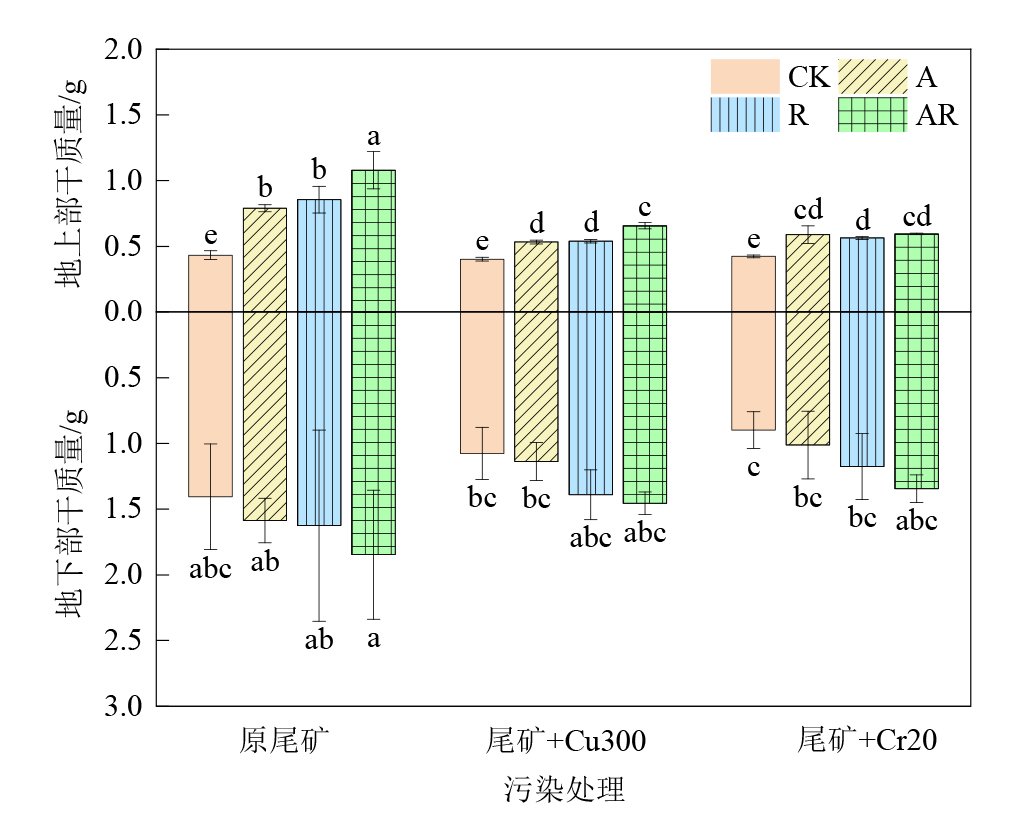
图1 不同重金属胁迫与接菌方式对紫花苜蓿干质量的影响 图中不同小写字母表示同一指标相同部位所有处理间差异显著(p<0.05,n=3),下同
Figure 1 Effects of heavy metal stress and microbial inoculation on the dry biomass of Medicago sativa

图2 不同重金属胁迫与接菌方式对紫花苜蓿根瘤数量与鲜质量的影响
Figure 2 Effects of heavy metal stress and inoculation methods on the nodule number and fresh biomass of Medicago sativa
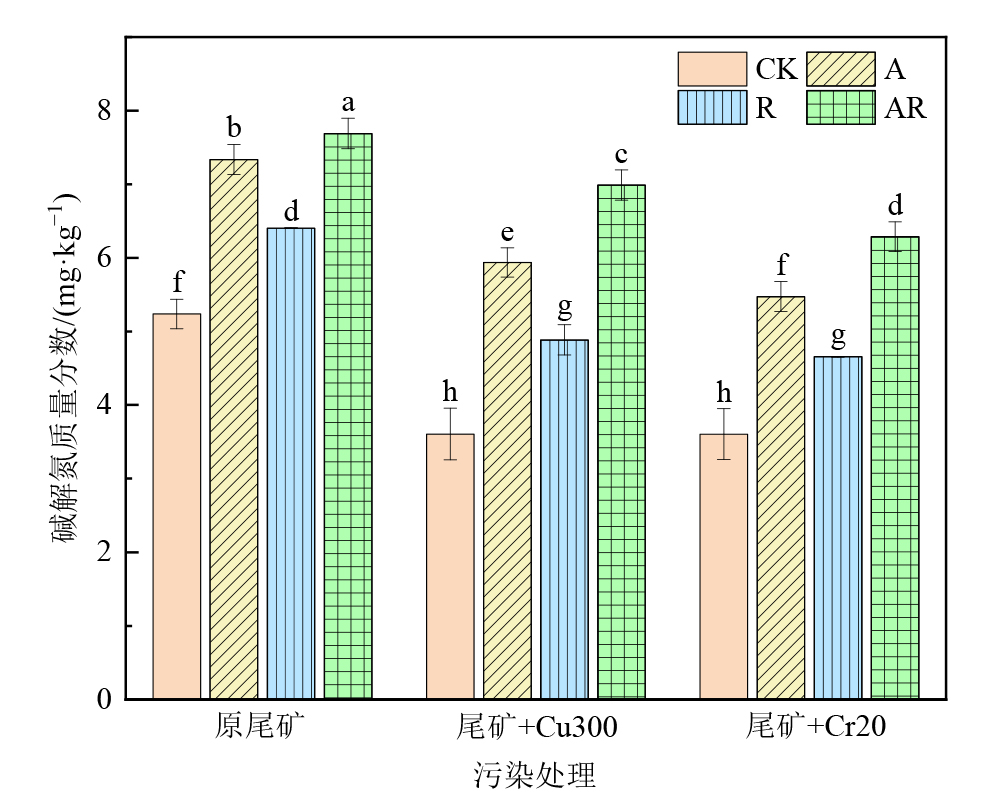
图3 不同重金属胁迫与接菌方式对尾矿碱解氮质量分数的影响
Figure 3 Effects of different heavy metal stresses and inoculation methods on alkali-hydrolyzable nitrogen content in tailings
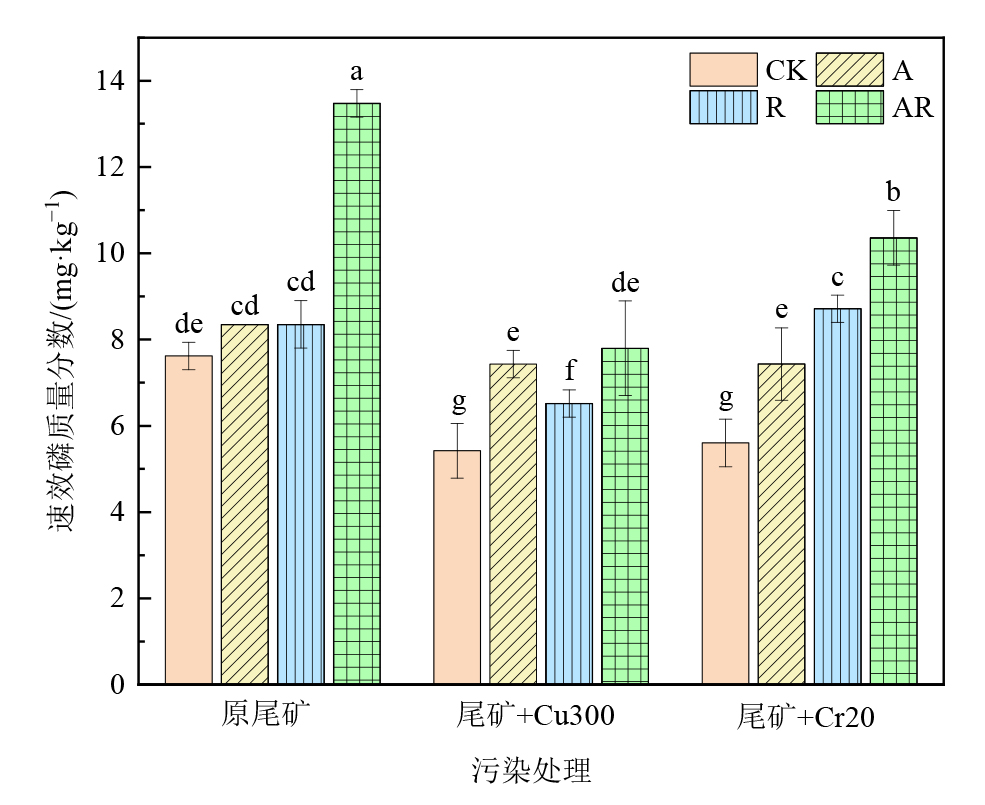
图4 不同重金属胁迫与接菌方式对尾矿速效磷质量分数的影响
Figure 4 Effects of different heavy metal stresses and inoculation methods on available phosphorus content in tailings
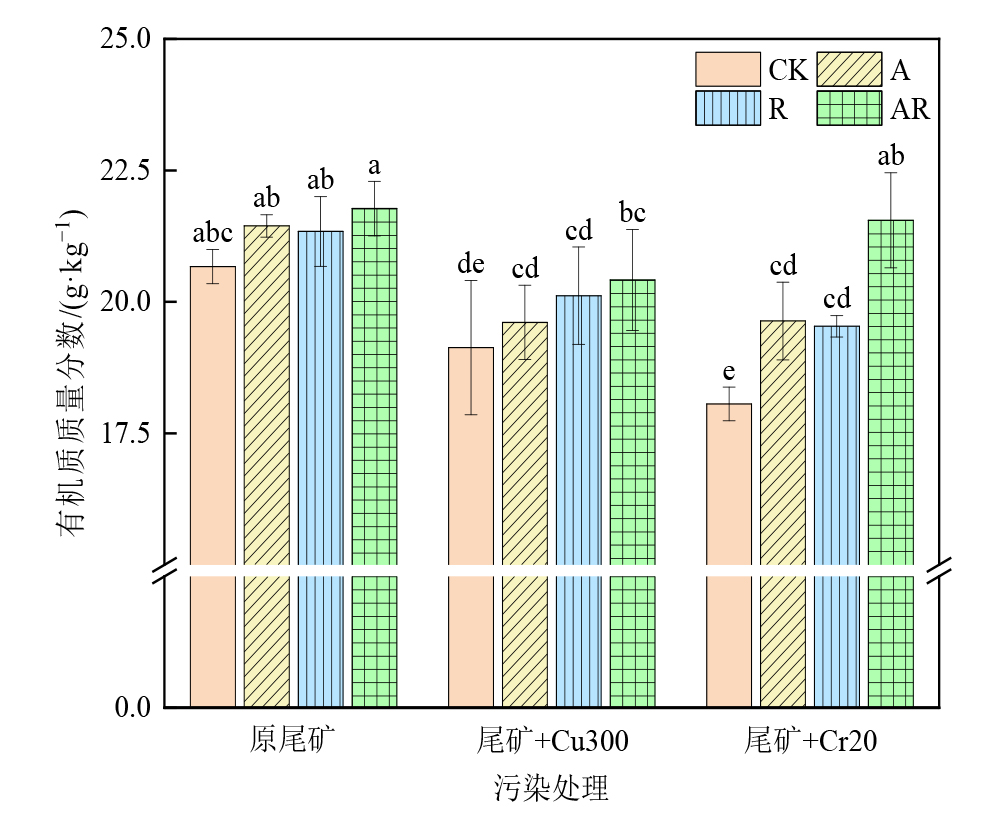
图5 不同重金属胁迫与接菌方式对尾矿有机质质量分数的影响
Figure 5 Effects of different heavy metal stresses and inoculation methods on organic matter content in tailings

图6 不同重金属胁迫与接菌方式对尾矿土壤酶活性的影响
Figure 6 Effects of different heavy metal stresses and inoculation methods on soil enzyme activities in tailing soils

图7 不同重金属胁迫与接菌方式对尾矿DTPA 提取态Cu质量分数的影响
Figure 7 Effects of different heavy metal stresses and inoculation methods on DTPA-extractable Cu content in tailings

图8 钒钛磁铁尾矿DTPA提取态Cr质量分数
Figure 8 DTPA-extractable Cr content in vanadium-titanium magnetite tailings
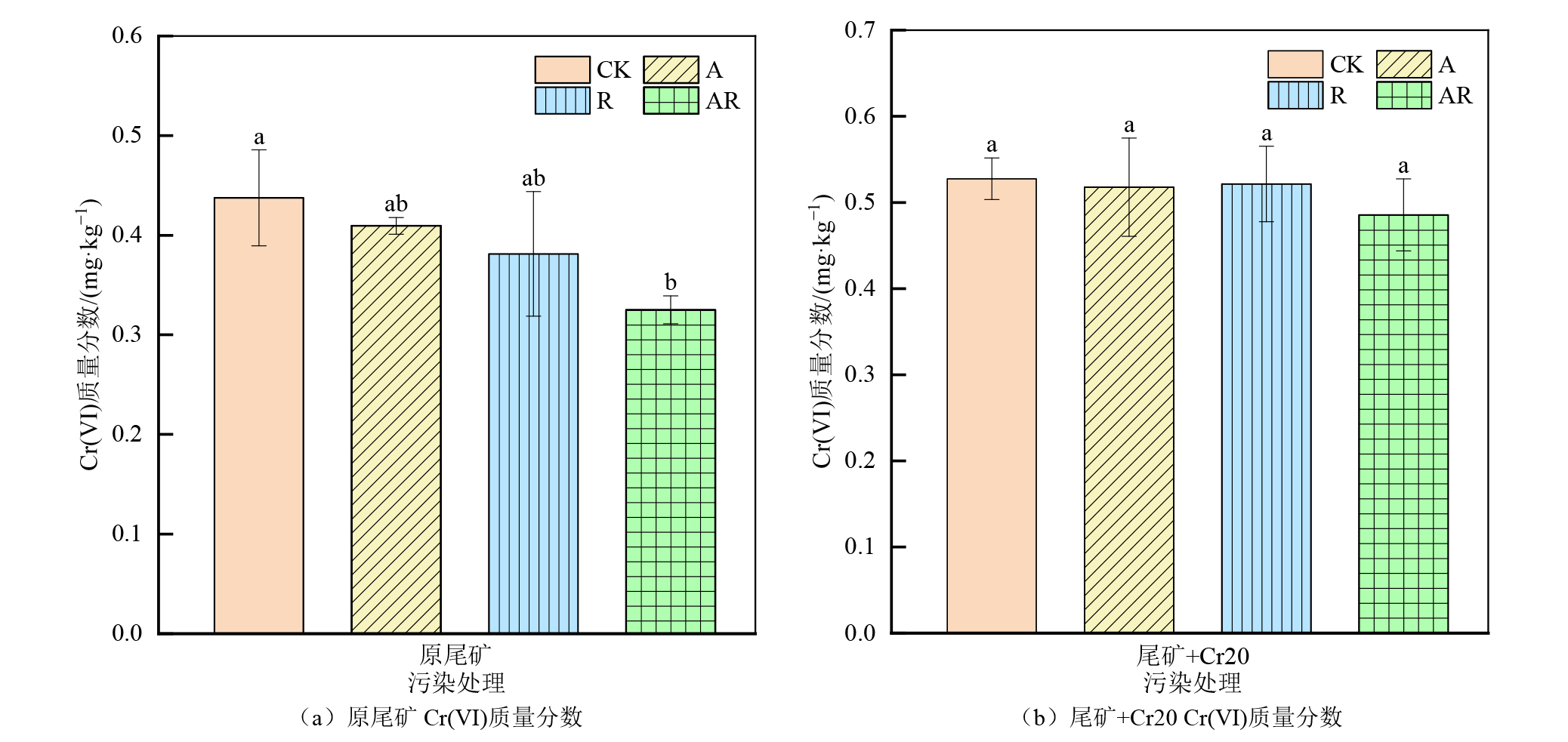
图9 钒钛磁铁尾矿Cr(Ⅵ)质量分数
Figure 9 Cr(VI) content in vanadium-titanium magnetite tailings
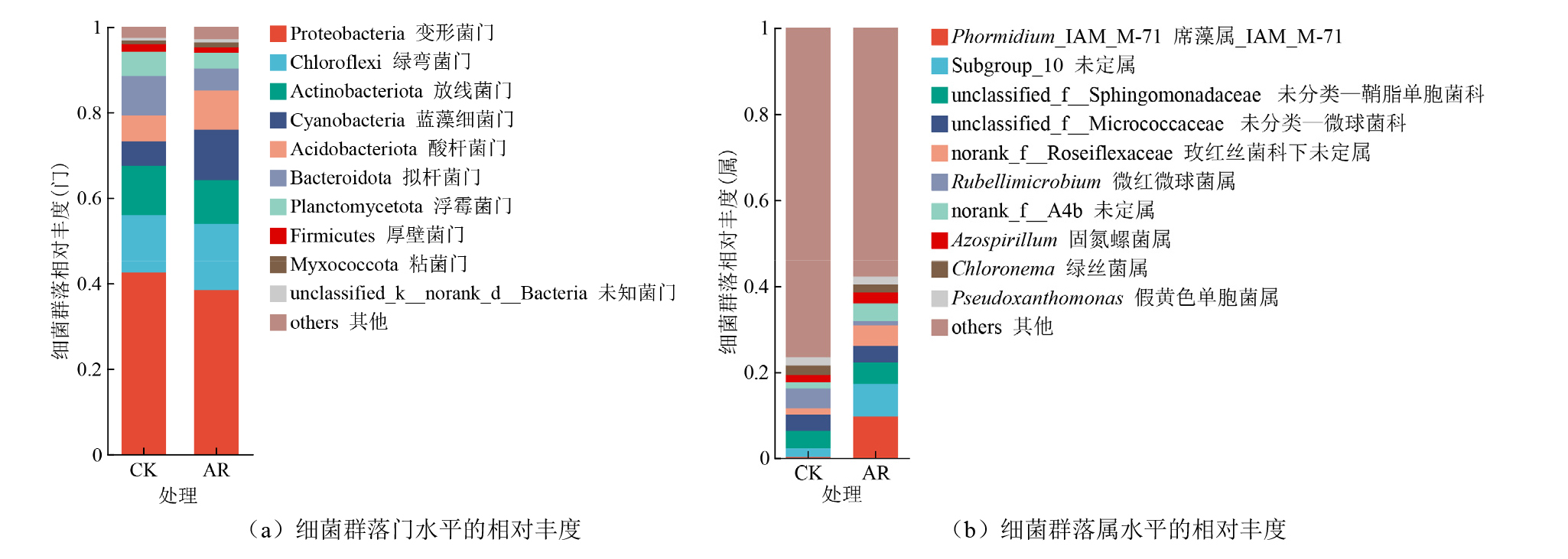
图10 不同处理下尾矿细菌在门、属水平的相对丰度柱形图
Figure 10 Bar chart of bacterial relative abundance at phylum and genus levels in tailings under different treatments
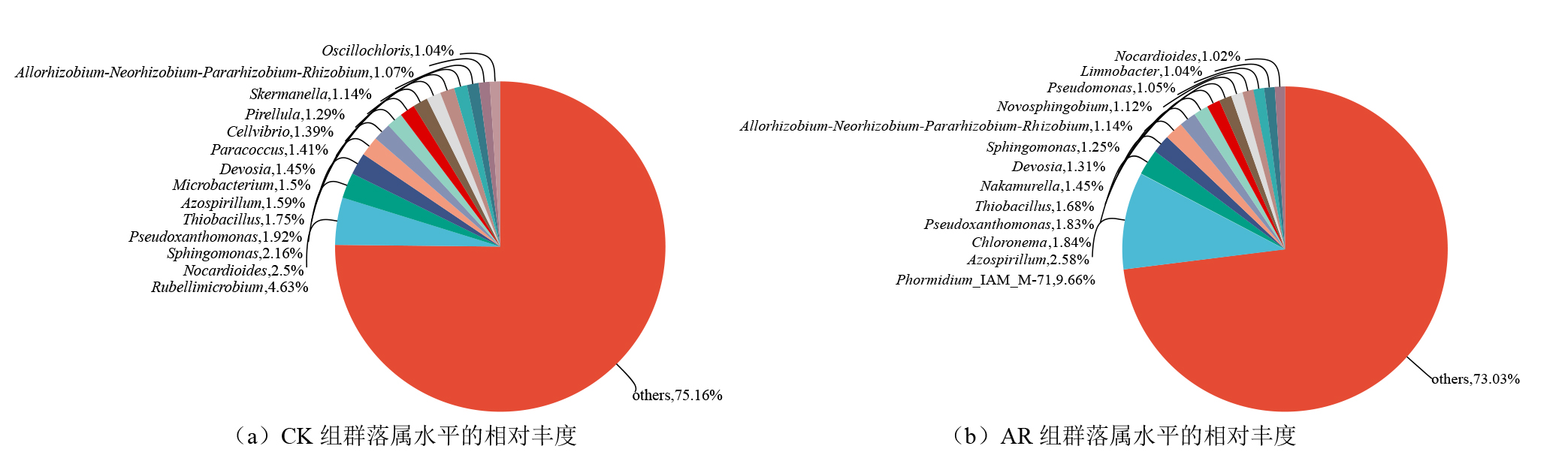
图11 不同处理下尾矿根瘤菌在属水平的相对丰度饼状图
Figure 11 Pie chart of rhizobial relative abundance at genus level in tailings under different treatments
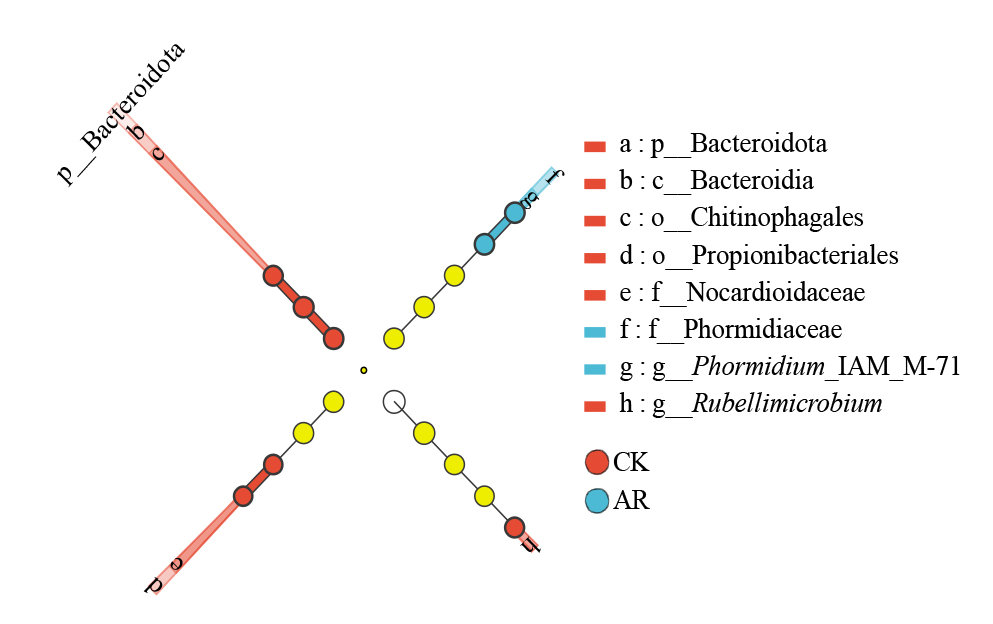
图12 尾矿细菌群落的LEfSe差异分析图(LDA>4) 不同颜色的节点代表在相应组别中显著富集、并对组间差异具有显著贡献的微生物;而浅黄色节点则表示该类群在各组间无显著差异,或其对组间差异的影响不显著(下同)
Figure 12 LEfSe analysis of differential bacterial features in tailings (LDA>4)
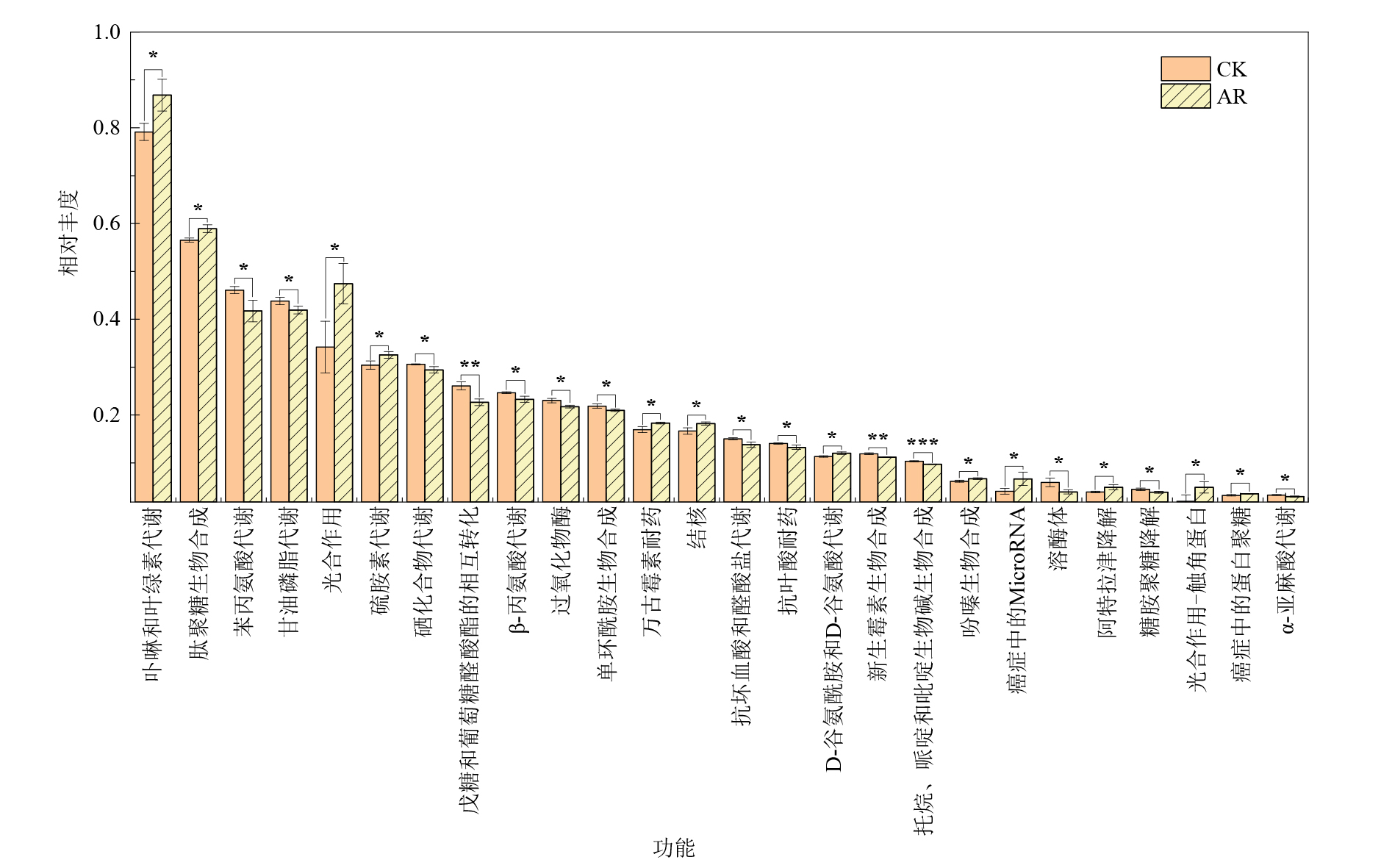
图13 尾矿细菌群落的功能预测图 p<0.05不表示,差异不显著;*、**、***分别代表p≤0.05、p≤0.01、p≤0.001,差异显著且显著性依次提高
Figure 13 Functional prediction of bacterial communities in tailings based on PICRUSt2
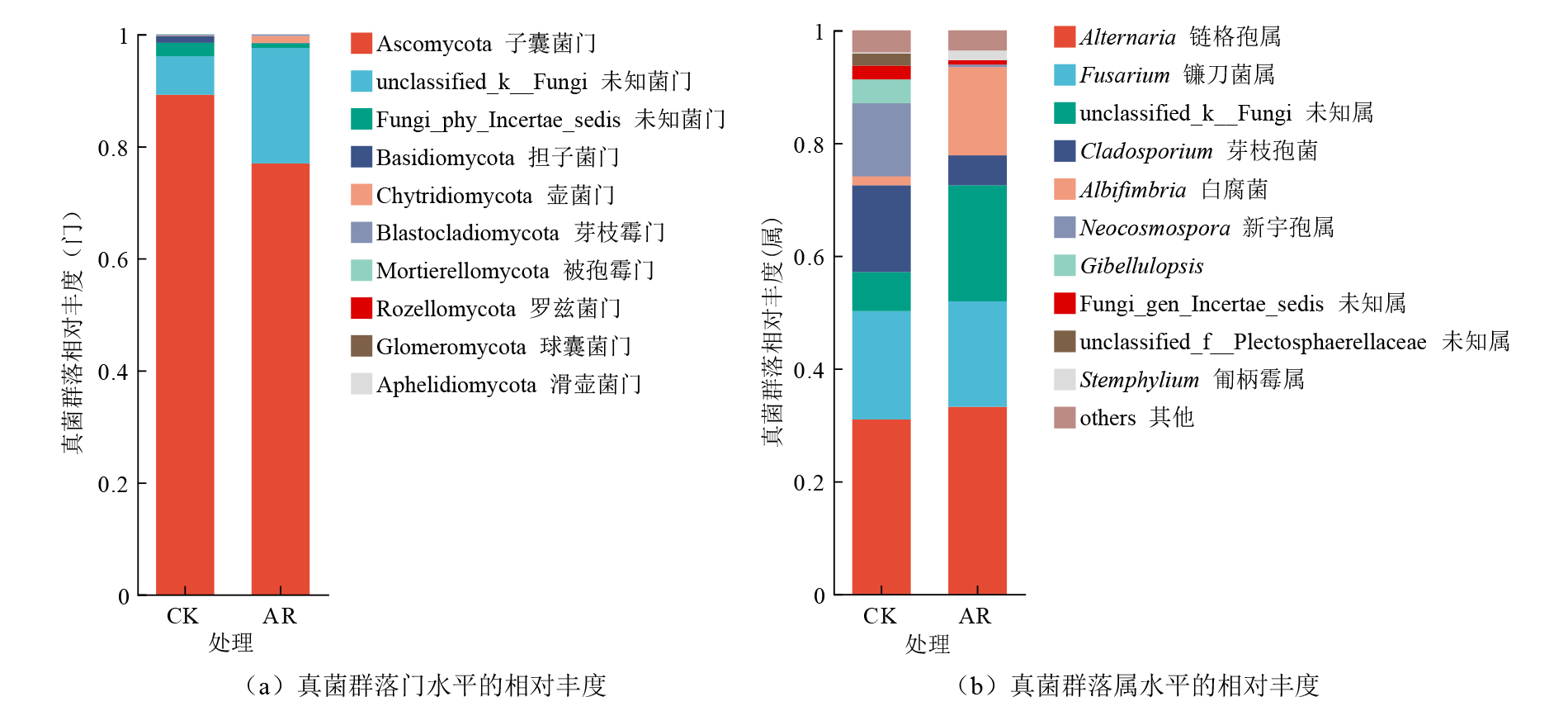
图14 不同处理下尾矿真菌在门、属水平的相对丰度柱形图
Figure 14 Bar chart of fungal relative abundance at phylum and genus levels in tailings under different treatments
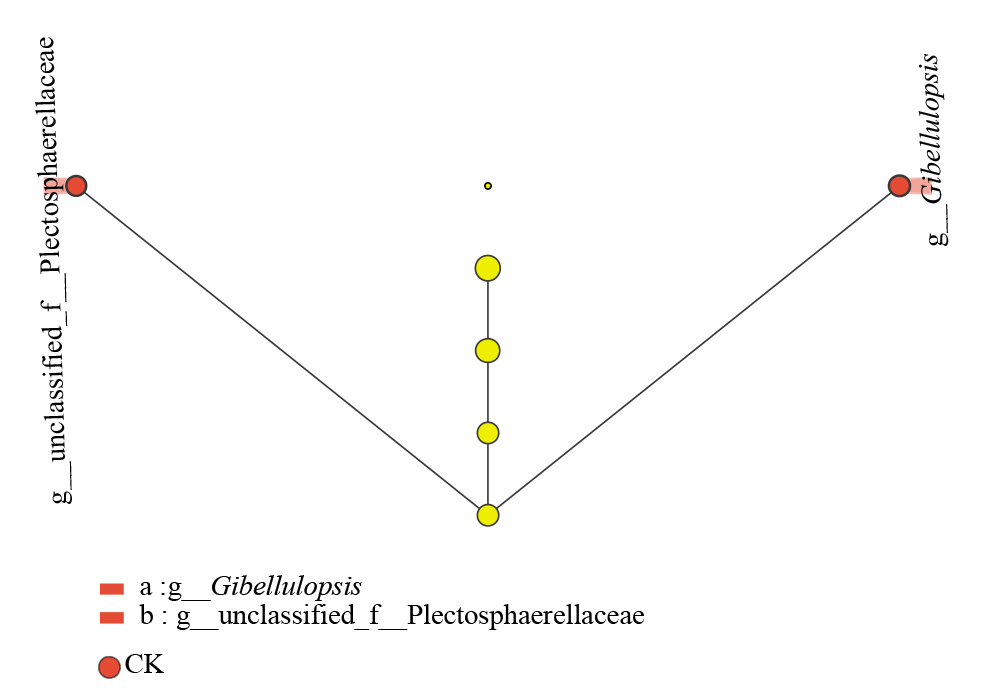
图15 尾矿真菌群落的LEfSe差异分析图(LDA>4)
Figure 15 LEfSe analysis of differential fungal features in tailings (LDA>4)
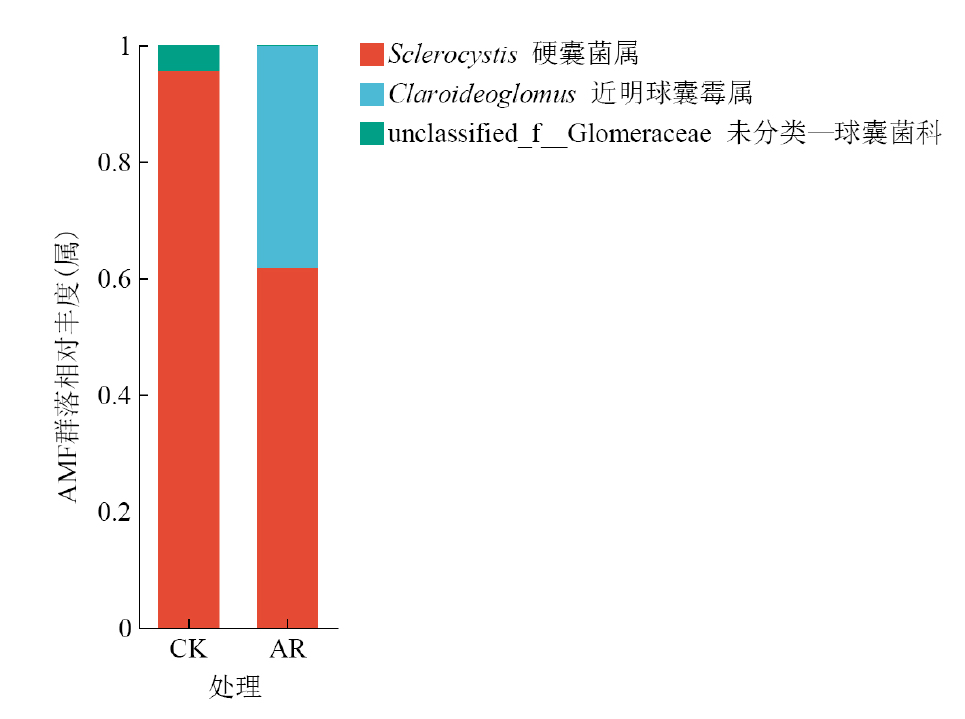
图16 不同处理下尾矿AMF在属水平的相对丰度柱形图
Figure 16 Bar chart of AMF relative abundance at genus level in tailings under different treatments
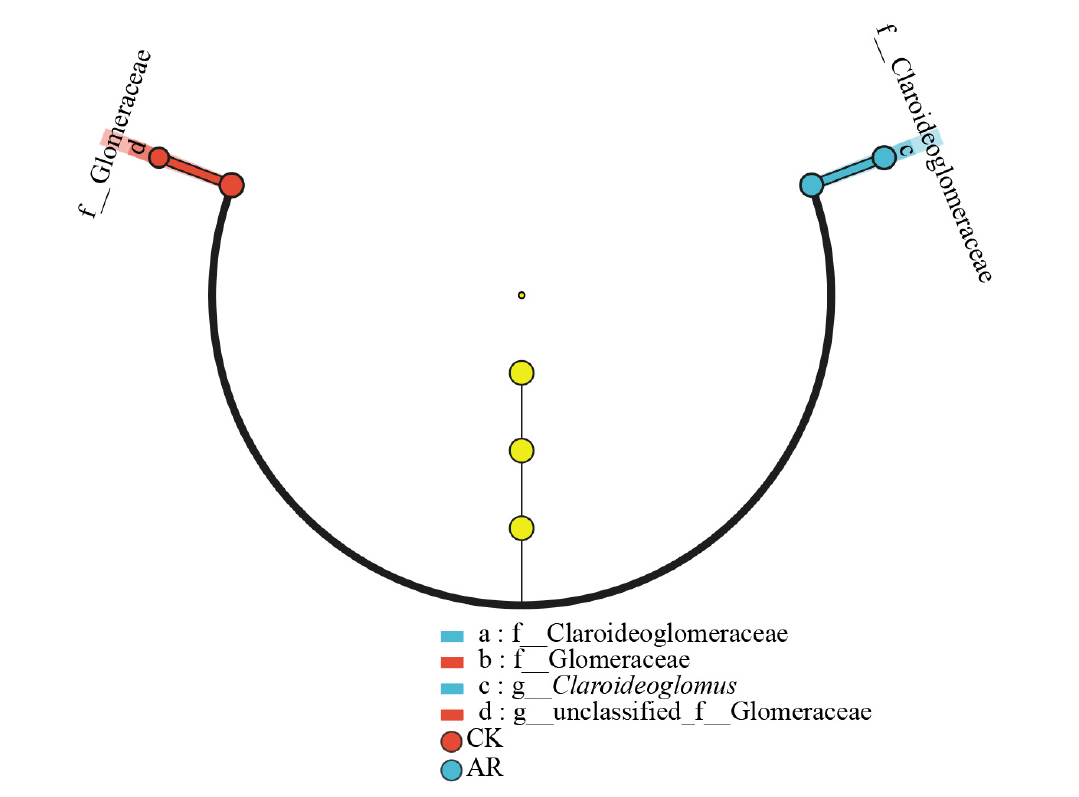
图17 尾矿AMF群落的LEfSe差异分析图(LDA>4)
Figure 17 LEfSe analysis of differential AMF features in tailings (LDA>4)
| [1] |
Chen H Z, Song L L, Zhang H B, et al., 2022. Cu and Zn stress affect the photosynthetic and antioxidative systems of alfalfa (Medicago sativa)[J]. Journal of Plant Interactions, 17(1): 695-704.
DOI URL |
| [2] |
Duan C J, Mei Y X, Wang Q, et al., 2022. Rhizobium inoculation enhances the resistance of alfalfa and microbial characteristics in copper-contaminated soil[J]. Frontiers in Microbiology, 12: 781831.
DOI URL |
| [3] |
Duan H X, Luo C L, Wang X, et al., 2024. Responses of legumes to rhizobia and arbuscular mycorrhizal fungi under abiotic stresses: A global meta-analysis[J]. Agronomy, 14(11): 2597.
DOI URL |
| [4] |
Gorgia P, Tsikou D, 2025. Tripartite symbiosis between legumes, arbuscular mycorrhizal fungi and nitrogen fixing rhizobia: Interactions and regulation[J]. Plant, Cell & Environment, 48: 1-19.
DOI URL |
| [5] | He J D, Zhang L, Dingenen J V, et al., 2024. Arbuscular mycorrhizal hyphae facilitate rhizobia dispersal and nodulation in legumes[J]. The ISME Journal, 18(1): wrae185. |
| [6] |
Kavadia A, Omirou M, Fasoula D A, et al., 2021. Co-inoculations with rhizobia and arbuscular mycorrhizal fungi alters mycorrhizal composition and lead to synergistic growth effects in cowpea that are fungal combination-dependent[J]. Applied Soil Ecology, 167: 104013.
DOI URL |
| [7] |
Li H, Wang T, Du H X, et al., 2024. Research progress in the joint remediation of plants-microbes-soil for heavy metal-contaminated soil in mining areas: A review[J]. Sustainability, 16(19): 8464.
DOI URL |
| [8] |
Pellegrino E, Nuti M, Ercoli L, 2022. Multiple arbuscular mycorrhizal fungal consortia enhance yield and fatty acids of Medicago sativa: A two-year field study on agronomic traits and tracing of fungal persistence[J]. Frontiers in Plant Science, 13: 814401.
DOI URL |
| [9] | Parihar M, Rakshit A, Adholeya A, et al., 2024. Arbuscular Mycorrhizal Fungi in Sustainable Agriculture: Nutrient and Crop Management[M]. Singapore: Springer Nature Singapore: 1-54. |
| [10] |
Shaher H, Naushin F, Hasan M, et al., 2024. Synergistic impact of rhizobium and arbuscular mycorrhizal fungi on lentil plant tolerance to heavy metal-rich fly ash amended soil[J]. Discover Plants, 1: 9.
DOI |
| [11] | Wu Y, Li Y Z, Deng Q Z, et al., 2022. Promotion effect of AM fungi and rhizobia co-inoculations on alfalfa (Medicago sativa L.) growth [J]. Rhizosphere, 22: 100537. |
| [12] |
Zhou J Q, Wilson G W T, COBB A B, et al., 2022. Mycorrhizal and rhizobial interactions influence model grassland plant community structure and productivity[J]. Mycorrhiza, 32: 15-32.
DOI PMID |
| [13] |
Zou D C, Du H X, Zhang F S, et al., 2025. Responses of Robinia pseudoacacia co-inoculated with rhizobia and arbuscular mycorrhizal fungi to cadmium under nitrogen excess condition[J]. Plant and Soil, 508: 909-924.
DOI |
| [14] | 鲍士旦, 2000. 土壤农化分析[M]. 第3版. 北京: 中国农业出版社: 25-37. |
| Bao S D, 2000. Soil Agrochemical Analysis[M]. 3rd ed. Beijing: China Agriculture Press: 25-37. | |
| [15] | 迟晓杰, 2020. 基于高光谱遥感的紫花苜蓿修复金属尾矿效果研究[D]. 唐山: 华北理工大学: 12-57. |
| Chi X J, 2020. The remediation effect of alfalfa on mine tailings based on hyperspectral remote sensing[D]. Tangshan: North China University of Science and Technology: 12-57. | |
| [16] | 曹石超, 2021. 根瘤菌与丛枝菌根真菌互作对红江橙营养吸收及生理效应的影响[D]. 重庆: 西南大学: 31-53. |
| Cao S C, 2021. Effect of interaction between rhizobia and arbuscular mycorrhizal fungi on nutrient absorption and physiological effect of Hongjiang orange[D]. Chongqing: Southwest University: 31-53. | |
| [17] | 陈振翔, 吴青青, 刘灵, 2023. AMF和根瘤菌对大豆生长和磷吸收的影响[J]. 园艺与种苗, 43(4): 68-70, 75. |
| CHEN Z X, WU Q Q, LIU L, 2023. Effects of AMF and rhizobium on growth and phosphorus absorption of soybean[J]. Horticulture & Seed, 43(4): 68-70, 75. | |
| [18] |
段海霞, 师茜, 康生萍, 等, 2024. 丛枝菌根真菌和根瘤菌与植物共生研究进展[J]. 草业学报, 33(5): 166-182.
DOI |
| Duan H X, Shi Q, Kang S P, et al., 2024. Advances in research on the interactions among arbuscular mycorrhizal fungi, rhizobia, and plants[J]. Acta Prataculturae Sinica, 33(5): 166-182. | |
| [19] | 关松荫, 1986. 土壤酶及其研究法[M]. 第3版. 北京: 农业出版社: 291-313. |
| Guan S Y, 1986. Soil Enzymes and Their Research Methods[M]. 3rd ed. Beijing: Agricultural Press: 291-313. | |
| [20] | 韩龙, 2020. 云南高原湖泊滇池的真菌多样性及其空间分布特征[D]. 昆明: 云南大学: 81-82. |
| Han L, 2020. Diversity and spatial distribution of fungi in Dianchi Lake of Yunnan plateau[D]. Kunming: Yunnan University: 81-82. | |
| [21] | 孔亚丽, 秦华, 朱春权, 等, 2024. 土壤微生物影响土壤健康的作用机制研究进展[J]. 土壤学报, 61(2): 331-347. |
| Kong Y L, Qin H, Zhu C Q, et al., 2024. Research progress on the mechanism by which soil microorganisms affect soil health[J]. Acta Pedologica Sinica, 61(2): 331-347. | |
| [22] | 刘忆, 袁玲, 2020. 根瘤菌和AM真菌对紫花苜蓿结瘤和产质量的影响[J]. 土壤学报, 57(5): 1292-1298. |
| Liu Y, Yuan L, 2020. Effects of rhizobia and arbuscular mycorrhizal fungi on nodulation, yield and quality of Medicago sativa[J]. Acta Pedologica Sinica, 57(5): 1292-1298. | |
| [23] | 卢赛, 谷海红, 艾艳君, 等, 2023. 球囊霉素相关土壤蛋白对钒钛磁铁尾矿生态环境的修复效果研究[J]. 金属矿山, 52(3): 250-258. |
| Lu S, Gu H H, Ai Y J, et al., 2023. Study on remediation effect of glomalin related soil protein on the ecological environment of vanadium-titanium magnetite tailings[J]. Metal Mine, 52(3): 250-258. | |
| [24] | 李泽钊, 2024. 基于高光谱的AMF-紫花苜蓿-根瘤菌联合修复尾矿反演研究[D]. 唐山: 华北理工大学: 40-41. |
| Li Z Z, 2024. Inversion study of AMF-alfalfa-rhizobium combined remediation of tailings based on hyperspectrum[D]. Tangshan: North China University of Science and Technology: 40-41. | |
| [25] | 李媛, 王一婷, 任彦波, 等, 2025. 铜矿区白羊草枯落物真菌群落功能及其影响因素[J]. 应用与环境生物学报, 31(10): 1593-1603. |
| Li Y, Wang Y T, Ren Y B, et al., 2025. Function and infuencing factors of the fungal community in Bothriochloa ischaemum litter in copper mining areas[J]. Chinese Journal of Applied and Environmental Biology, 31(10): 1593-1603. | |
| [26] | 苗志加, 孟祥源, 李书缘, 等, 2023. 丛枝菌根真菌修复重金属污染土壤及增强植物耐性研究进展[J]. 农业环境科学学报, 42(2): 252-262. |
| Miao Z J, Meng X Y, Li S Y, et al., 2023. Research progress on arbuscular mycorrhizal fungi (AMF) in remediation of heavy metal contaminated soil and enhancement of plant tolerance[J]. Journal of Agro-Environment Science, 42(2): 252-262. | |
| [27] | 孟庆尧, 2024. 镉-聚乙烯单一及复合污染对土壤有机碳和微生物的影响[D]. 哈尔滨: 东北农业大学: 26-27. |
| Meng Q Y, 2024. Effects of single and combined Cd-polyethylene pollution on soil organic carbon and microbial[D]. Harbin: Northeast Agricultural University:26-27. | |
| [28] | 阮仕琴, 陶刚, 娄璇, 等, 2022. 丛枝菌根真菌生态功能及其与共生植物互作机理[J]. 中国土壤与肥料, 59(5): 237-244. |
| Ruan S Q, Tao G, Lou X, et al., 2022. The ecological functions of arbuscular mycorrhizal fungi and their interaction mechanisms with the symbiotic plants[J]. Soil and Fertilizer Sciences in China, 59(5): 237-244. | |
| [29] | 索炎炎, 张翔, 司贤宗, 等, 2023. 丛枝菌根真菌和根瘤菌对连作花生养分吸收及土壤微生物特性的影响[J]. 中国土壤与肥料, 60(2): 106-112. |
| Suo Y Y, Zhang X, Si X Z, et al., 2023. Effects of arbuscular mycorrhizal fungi and rhizobia on nutrient uptake and soil microbial characteristics of continuous cropping peanut[J]. Soil and Fertilizer Sciences in China, 60(2): 106-112. | |
| [30] | 生态环境部, 2019. 土壤和沉积物六价铬的测定碱溶液提取-火焰原子吸收分光光度法: HJ 1082—2019[S]. 北京: 中国环境出版集团: 1-6. |
| Ministry of Ecology and Environment, 2019. Soil and sediment—determination of Cr(VI)—alkaline digestion-flame atomic absorption spectrometry: HJ 1082—2019[S]. Beijing: China Environmental Publishing Group: 1-6. | |
| [31] | 田超, 李倩, 许庆方, 等, 2020. 矿区土接种AMF和根瘤菌对紫花苜蓿及土壤氮磷的影响[J]. 山西农业科学, 48(4): 580-583, 587. |
| Tian C, Li Q, Xu Q F, et al., 2020. Effects of AMF and rhizobium inoculation on the nitrogen and phosphorus of alfalfa and soil in mining areas[J]. Journal of Shanxi Agricultural Sciences, 48(4): 580-583, 587. | |
| [32] |
唐秀丽, 杨建敏, 孟志龙, 等, 2023. 6种药剂处理对西葫芦种子表面微生物群落的影响[J]. 植物病理学报, 53(4): 690-700.
DOI |
|
Tang X L, Yang J M, Meng Z L, et al., 2023. Effects of six chemical treatments on surface microbial communities of zucchini seeds[J]. Acta Phytopathologica Sinica, 53(4): 690-700.
DOI |
|
| [33] | 王娜, 陈真, 张晓辉, 等, 2025. 不同原料规模堆肥过程中抗生素的降解及影响因素研究[J]. 生态与农村环境学报, 41: 1-15. |
| Wang N, Chen Z, Zhang X H, et al., 2025. Study on the degradation of antibiotics and influencing factors during composting with different raw material combinations and proportions[J]. Journal of Ecology and Rural Environment, 41: 1-15. | |
| [34] |
谢开云, 孙伶俐, 张力文, 等, 2021. 菌根真菌和根瘤菌接种对紫花苜蓿和无芒雀麦混播牧草生物量的影响[J]. 草地学报, 29(1): 182-188.
DOI |
| Xie K Y, Sun L L, Zhang L W, et al., 2021. Effect of arbuscular mycorrhizal fungi and rhizobium inoculation on the biomass of alfalfa and smooth brome in mixed culture[J]. Acta Agrestia Sinica, 29(1): 182-188. | |
| [35] | 徐玥, 2025. 生物炭调控零价铁电子传递及固定水土中Cr(Ⅵ)能力的机制[D]. 扬州: 扬州大学:33. |
| Xu Y, 2025. Modulation of electron transfer capacity of biochar-loaded zero-valent iron and its removal mechanism of Cr(VI) from soil and water[D]. Yangzhou: Yangzhou University:33. | |
| [36] | 姚伟豪, 2024. DEHP对土壤微生物及上海青生长胁迫影响规律研究[D]. 桂林: 桂林理工大学:18. |
| Yao W H, 2024. Effects of DEHP on soil microorganisms and growth stress of SHQ[D]. Guilin: Guilin University of Technology:18. | |
| [37] | 张莹, 2024. AMF-紫花苜蓿-根瘤菌双共生系统对钒钛磁铁尾矿养分及重金属的协同调控作用[D]. 唐山: 华北理工大学:3. |
| Zhang Y, 2024. The synergistic regulation of AMF-alfalfa-rhizobia dual symbiotic system on nutrients and heavy metals in vanadium-titanium magnetite tailings[D]. Tangshan: North China University of Science and Technology:3. | |
| [38] | 张豪飞, 2025. 土壤-大豆连续体中根瘤菌和AMF群落动态对不同施氮量土壤的响应及驱动因素[D]. 咸阳: 西北农林科技大学:31. |
| Zhang H F, 2025. Responses and driving factors of community dynamics of rhizobia and AMF in soil-soybean continuum to soil with different N application rates[D]. Xianyang: Northwest A & F University:31 | |
| [39] |
张淑娟, 陈昕龙, 亓静凡, 等, 2025. 基于丛枝菌根的钒污染土壤修复[J]. 生态环境学报, 34(4): 631-641.
DOI |
| Zhang S J, Chen X L, Qi J F, et al., 2025. Remediation of soil polluted with vanadium via arbuscular mycorrhiza[J]. Ecology and Environmental Sciences, 34(4): 631-641. | |
| [40] | 赵锶禹, 陈彦, 牛星怡, 等, 2025. 植物促生细菌缓解狼尾草土壤微塑料重金属复合污染毒性效应[J]. 环境科学, 46(1): 560-569. |
| Zhao S Y, Chen Y, Niu X Y, et al., 2025. Plant growth-promoting bacteria alleviate the toxic effects of soil microplastics and heavy metal complex pollution in Hybrid pennisetum[J]. Environmental Science, 46(1): 560-569. | |
| [41] | 张鹤东, 刘玉龙, 杨云朝, 等, 2025. 土壤酶活性测定方法及影响因素研究进展[J]. 现代农业科技, 54(21): 97-101. |
| Zhang H D, Liu Y L, Yang Y Z, et al., 2025. Research progress on determination methods and influencing factors of soil enzyme activities[J]. Modern Agricultural Science and Technology, 54(21): 97-101. |
| [1] | 张军梅, 方艳丽, 杨玉庆. 黄河流域三门峡段水体重金属含量特征及对斑马鱼胚胎和仔鱼的生物毒性研究[J]. 生态环境学报, 2026, 35(7): 1114-1124. |
| [2] | 潘玉, 孟庆玖, 徐君, 崔中华, 李章涛, 柳检, 孟俊. 生物炭与石灰对稻田福寿螺重金属积累及肠道微生物影响[J]. 生态环境学报, 2026, 35(7): 1151-1162. |
| [3] | 周家豪, 张沛, 彭煜文, 钟松雄, 邹建平, 侯冬梅. 基于机器学习识别赣江流域重金属污染主控因素[J]. 生态环境学报, 2026, 35(6): 976-985. |
| [4] | 魏龙毅, 林亲铁, 刘煜欣, 万家豪, 姚丽敏, 钟松雄. 广州某地质高背景地块土壤砷污染特征及成因分析[J]. 生态环境学报, 2026, 35(5): 819-830. |
| [5] | 张煜坤, 陈懂懂, 李奇, 贺福全, 张莉, 赵亮. 基于多元统计分析和PMF模型的土壤重金属源解析——以三江源为例[J]. 生态环境学报, 2026, 35(3): 458-468. |
| [6] | 韩存亮, 邓一荣, 常春英, 林龙勇, 程胜, 李俊春. 基于风险管控的土壤重金属高背景特征识别方法探讨[J]. 生态环境学报, 2026, 35(2): 278-288. |
| [7] | 史广宇, 沈新怡. 共热解技术对污泥中重金属的固定及资源化利用研究进展[J]. 生态环境学报, 2026, 35(2): 323-332. |
| [8] | 孟畅, 红梅, 李斐. 高光谱敏感波段筛选与机器学习协同提升土壤重金属预测精度[J]. 生态环境学报, 2025, 34(6): 950-960. |
| [9] | 刘鸿林, 赵方凯, 杨磊, 沈琳钧, 杨恺丰, 李敏, 陈利顶. 城市公园土壤重金属污染及影响因素研究——以宁波市为例[J]. 生态环境学报, 2025, 34(5): 773-783. |
| [10] | 陈岩, 石成龙, 李璞君, 肖江, 陈光才. 含重金属林木生物质与骨粉共水热液相产物:解析及应用潜力初步评价[J]. 生态环境学报, 2025, 34(4): 642-652. |
| [11] | 陈琳, 兰冠宇, 徐妍, 李雪, 毛雪飞. 氢键有机框架材料在环境污染物吸附和检测中的研究进展[J]. 生态环境学报, 2025, 34(3): 474-483. |
| [12] | 王斌, 曾兆荷, 董璐, 岳林. 内梅罗指数法在地下水水质评价中的修正探讨与实践效果[J]. 生态环境学报, 2025, 34(2): 293-301. |
| [13] | 张传华, 刘力, 代杰, 李曼曼, 张凤太, 邓凌. 基于土壤重金属污染和累积性评价的耕地环境质量类别划分与风险管控[J]. 生态环境学报, 2025, 34(2): 311-320. |
| [14] | 官金顺, 蒋新宇, 程炯, 陈三雄, 余世钦. 藻液添加提升稀土尾矿砂土壤碳氮固持能力[J]. 生态环境学报, 2025, 34(12): 1890-1899. |
| [15] | 吴小令, 杜衍红, 窦飞, 高双全, 王向琴. 生物炭和腐殖质治理重金属污染菜地的定位试验研究[J]. 生态环境学报, 2025, 34(12): 1952-1961. |
| 阅读次数 | ||||||
|
全文 |
|
|||||
|
摘要 |
|
|||||
