
Ecology and Environmental Sciences ›› 2026, Vol. 35 ›› Issue (6): 928-938.DOI: 10.16258/j.cnki.1674-5906.2026.06.010
• Research Article [Ecology] • Previous Articles Next Articles
ZHANG Kai1,2( ), LI Qian1,*(), LI Jiajun3, LI Bencuo1, GUO Xiaowei1, FAN Bo1, LI Wannian1, MA Zhensheng1,2
Received:2025-07-08
Revised:2026-03-12
Accepted:2026-04-23
Online:2026-06-18
Published:2026-06-08
张凯1,2(), 李茜1,*(), 李佳君3, 李本措1, 郭小伟1, 樊博1, 李万年1, 马振升1,2
通讯作者:
* 李茜,E-mail: 作者简介:张凯(2001年生),男,硕士研究生,主要从事高寒草地土壤生态学研究。E-mail: zhangkai@nwipb.cas.cn
基金资助:CLC Number:
ZHANG Kai, LI Qian, LI Jiajun, LI Bencuo, GUO Xiaowei, FAN Bo, LI Wannian, MA Zhensheng. Changes in Soil Microbial Biomass During Nutrient Imbalance Process in Degraded Alpine Grassland[J]. Ecology and Environmental Sciences, 2026, 35(6): 928-938.
张凯, 李茜, 李佳君, 李本措, 郭小伟, 樊博, 李万年, 马振升. 退化高寒草地养分失衡过程中土壤微生物量的变化[J]. 生态环境学报, 2026, 35(6): 928-938.
Add to citation manager EndNote|Ris|BibTeX
URL: https://www.jeesci.com/EN/10.16258/j.cnki.1674-5906.2026.06.010
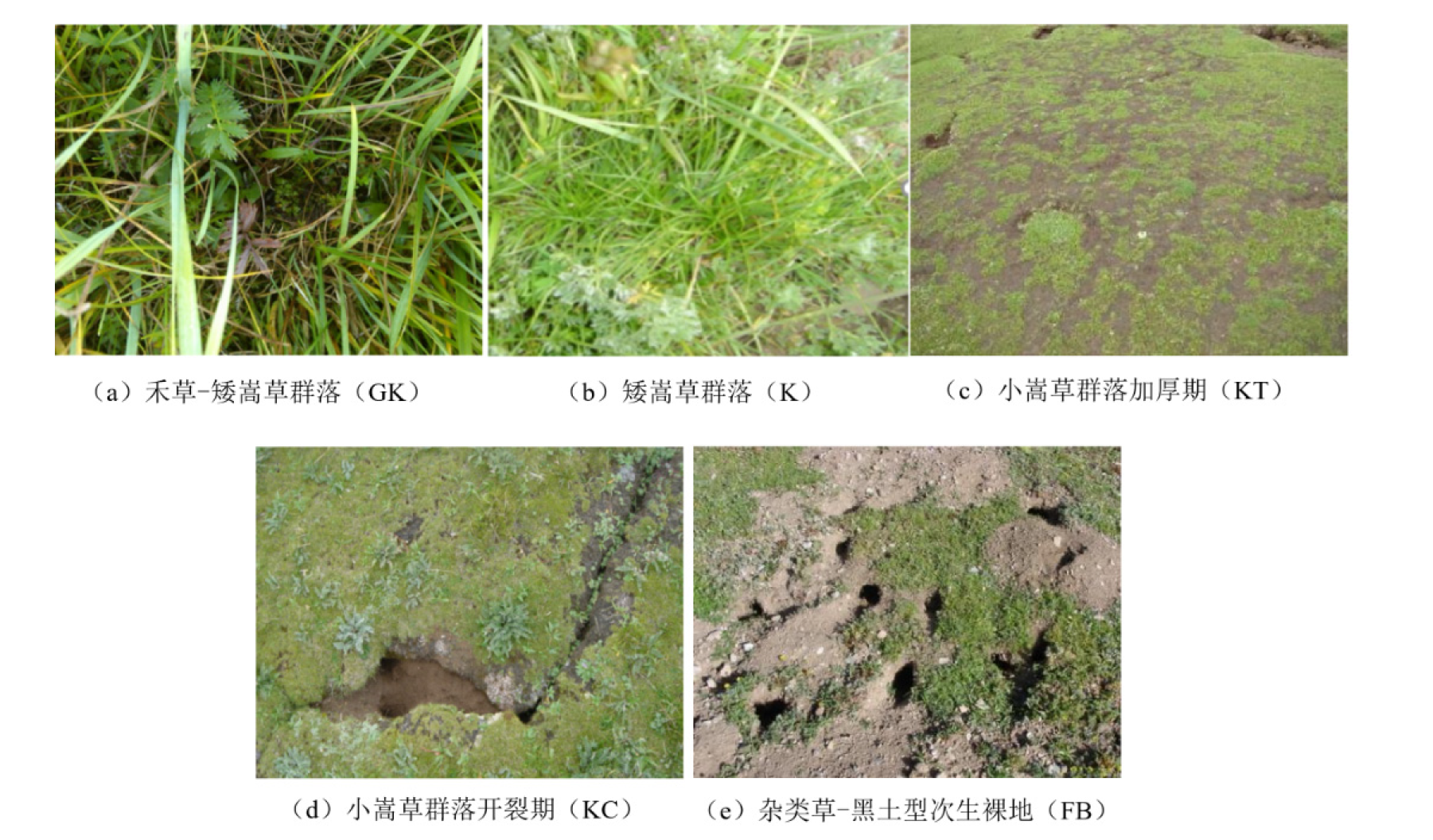
Figure 1 Landscape of different degradation degrees
| 演替阶段 | 地上总生物量/ (g·m−2) | 地上植被盖度/ % | 地下总生物量/ (g·m−2) |
|---|---|---|---|
| GK | 329.67±45.70a | 100.00±0.00a | 440.45±156.68bc |
| K | 315.44±94.52a | 98.33±2.58a | 356.80±48.89c |
| KT | 234.97±51.57b | 84.17±9.47b | 692.88±50.09a |
| KC | 229.63±26.10b | 70.83±8.61c | 564.51±51.62ab |
| FB | 78.29±10.26c | 30.33±6.95d | 47.87±17.90d |
Table 1 Characteristics of total plant biomass and coverage in different degradation succession states of alpine grasslands
| 演替阶段 | 地上总生物量/ (g·m−2) | 地上植被盖度/ % | 地下总生物量/ (g·m−2) |
|---|---|---|---|
| GK | 329.67±45.70a | 100.00±0.00a | 440.45±156.68bc |
| K | 315.44±94.52a | 98.33±2.58a | 356.80±48.89c |
| KT | 234.97±51.57b | 84.17±9.47b | 692.88±50.09a |
| KC | 229.63±26.10b | 70.83±8.61c | 564.51±51.62ab |
| FB | 78.29±10.26c | 30.33±6.95d | 47.87±17.90d |
| 演替阶段 | 禾本科/ (g·m−2) | 莎草科/ (g·m−2) | 豆科/ (g·m−2) | 杂类草/ (g·m−2) | 凋落物/ (g·m−2) |
|---|---|---|---|---|---|
| GK | 137.12± 17.14a | 41.0± 29.05a | 63.49± 36.43a | 88.06± 14.55a | 41.04± 10.16a |
| K | 162.40± 59.94a | 26.61± 12.85ab | 63.55± 29.70a | 62.88± 8.55a | 35.49± 18.33a |
| KT | 126.91± 99.75a | 10.72± 4.35b | 37.90± 34.32a | 59.44± 24.66a | 8.61± 6.66b |
| KC | 95.39± 7.64a | 19.28± 8.10ab | 38.88± 24.73a | 68.32± 15.12a | 7.76± 5.16b |
| FB | 4.16± 2.38b | - | - | 74.13± 11.65a | - |
Table 2 Characteristics of aboveground biomass and litter of plant functional groups in different degradation succession states of alpine grasslands
| 演替阶段 | 禾本科/ (g·m−2) | 莎草科/ (g·m−2) | 豆科/ (g·m−2) | 杂类草/ (g·m−2) | 凋落物/ (g·m−2) |
|---|---|---|---|---|---|
| GK | 137.12± 17.14a | 41.0± 29.05a | 63.49± 36.43a | 88.06± 14.55a | 41.04± 10.16a |
| K | 162.40± 59.94a | 26.61± 12.85ab | 63.55± 29.70a | 62.88± 8.55a | 35.49± 18.33a |
| KT | 126.91± 99.75a | 10.72± 4.35b | 37.90± 34.32a | 59.44± 24.66a | 8.61± 6.66b |
| KC | 95.39± 7.64a | 19.28± 8.10ab | 38.88± 24.73a | 68.32± 15.12a | 7.76± 5.16b |
| FB | 4.16± 2.38b | - | - | 74.13± 11.65a | - |
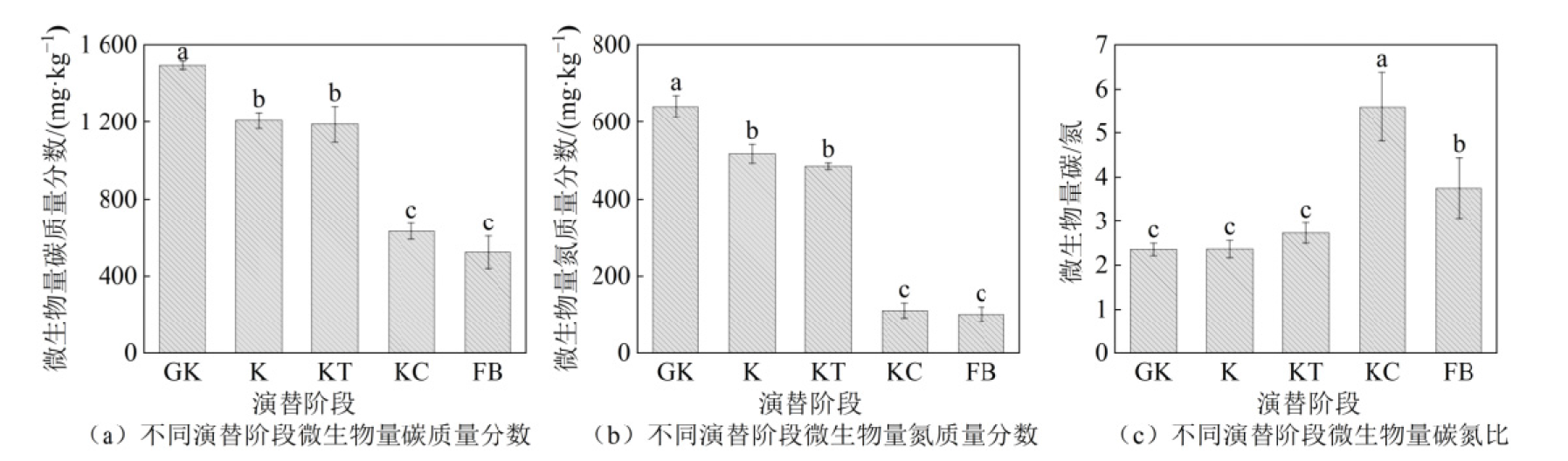
Figure 2 Changes of soil microbial biomass carbon and nitrogen contents and their stoichiometric ratios
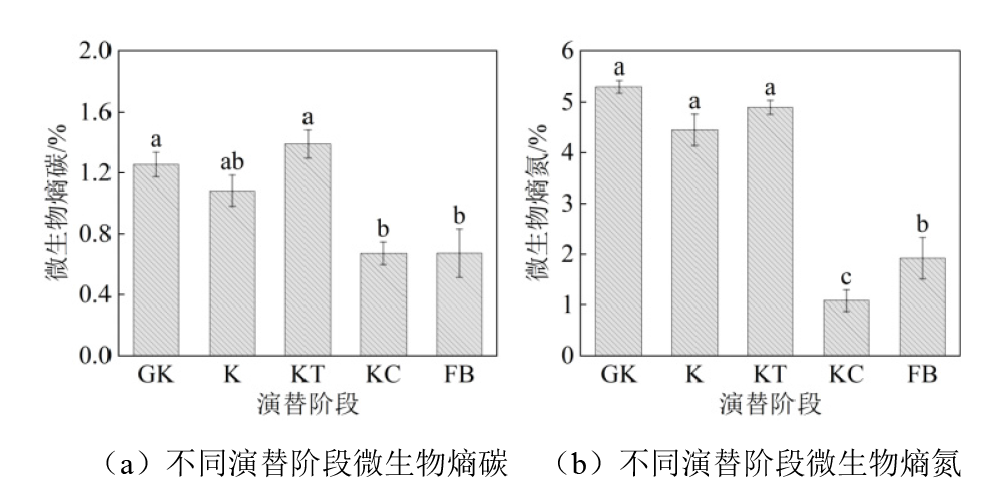
Figure 3 Changes of soil microbial biomass carbon entropy and nitrogen entropy under different succession states
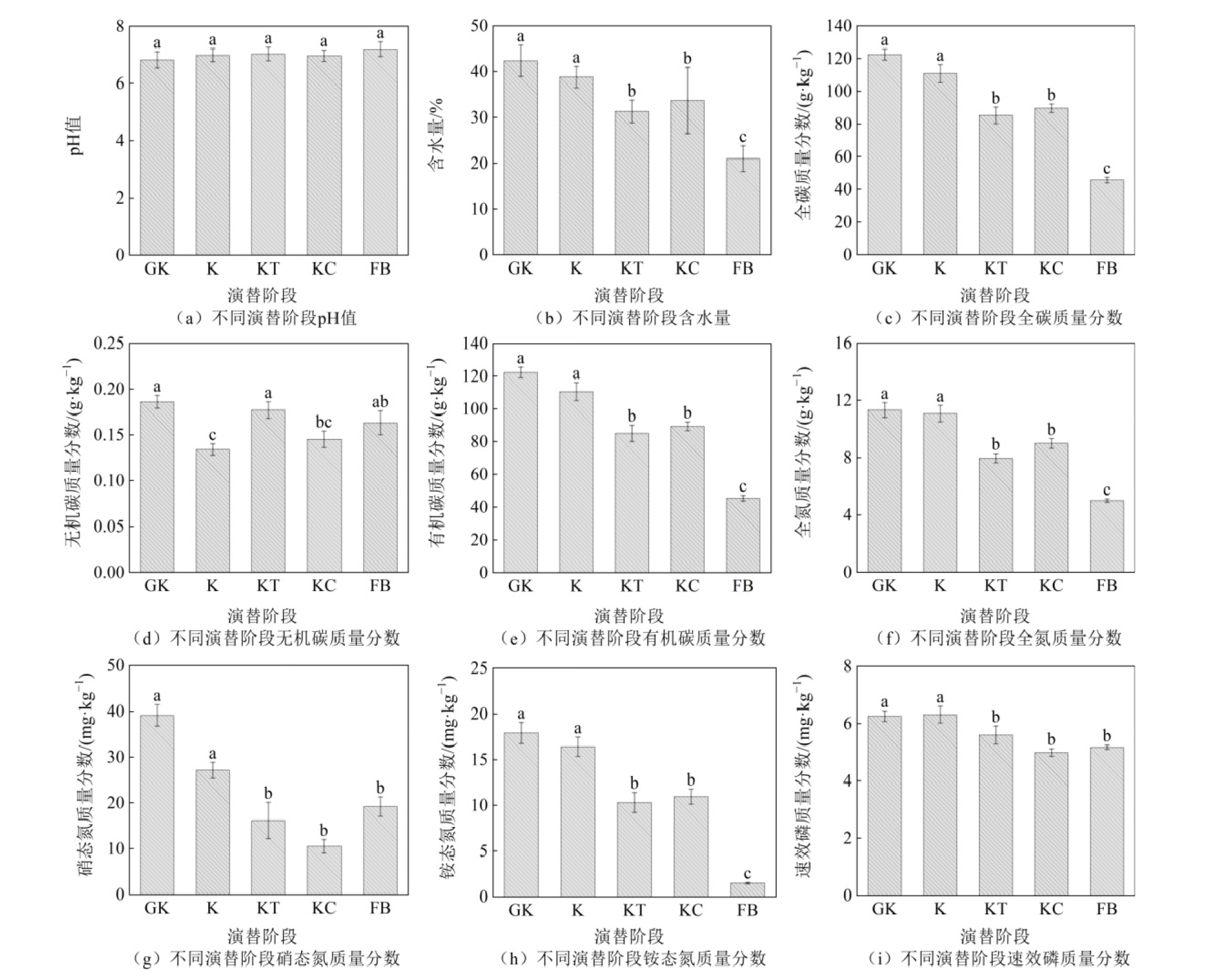
Figure 4 Changes of soil physicochemical characteristics in alpine grassland under different succession states
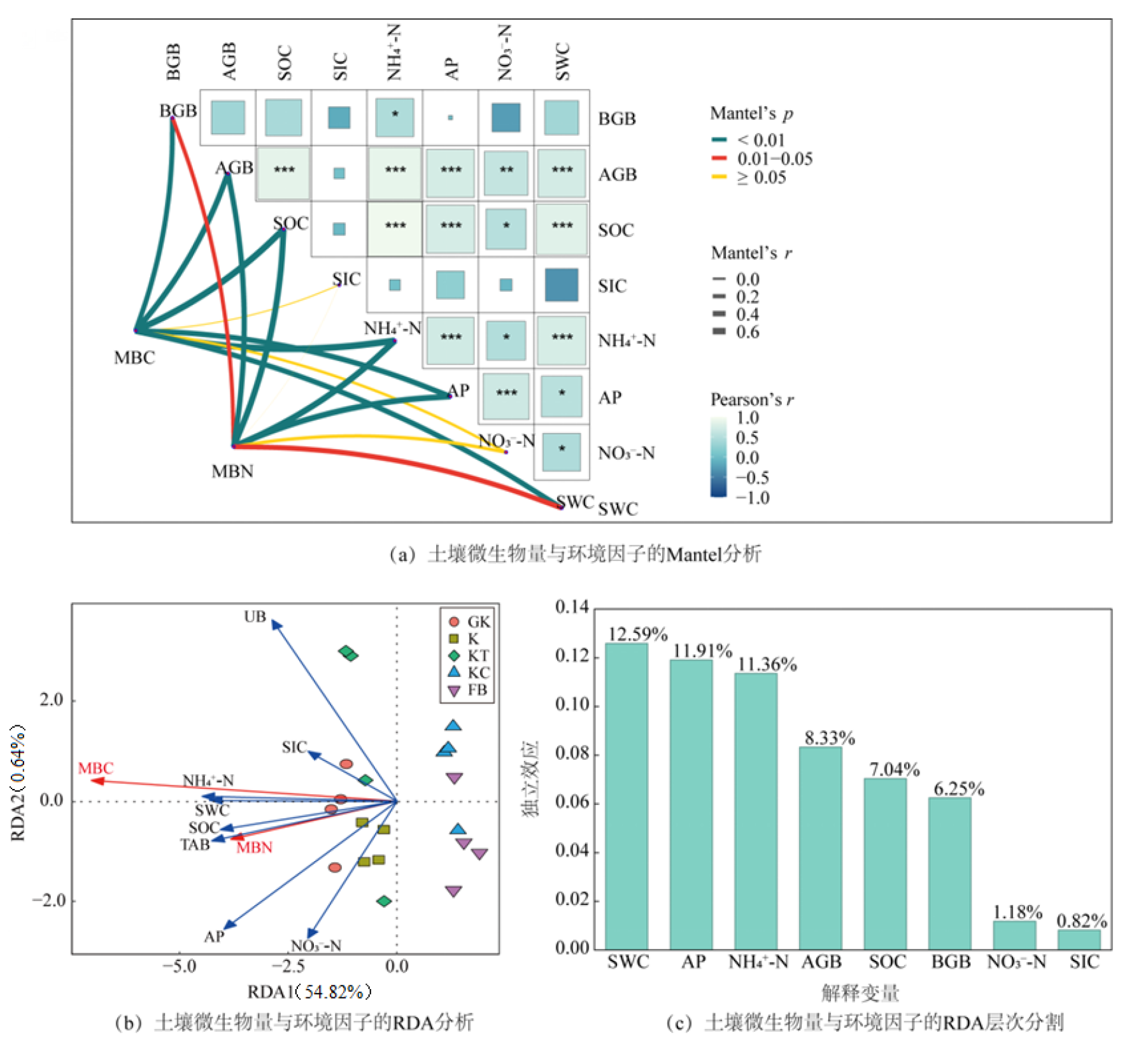
Figure 5 Mantel test and RDA analysis of soil microbial biomass carbon and nitrogen, plant biomass, and soil physicochemical properties
| [1] |
BHOPLE P, DJUKIC I, KEIBLINGER K, et al., 2019. Variations in soil and microbial biomass C, N and fungal biomass ergosterol along elevation and depth gradients in Alpine ecosystems[J]. Geoderma, 345: 93-103.
DOI URL |
| [2] |
CHEN K L, ZHOU H K, LU B B, et al., 2021. Single-species artificial grasslands decrease soil multifunctionality in a temperate steppe on the Qinghai-Tibet Plateau[J]. Agronomy, 11(11): 2092.
DOI URL |
| [3] |
DENG M F, LI P, LIU W X, et al., 2023. Deepened snow cover increases grassland soil carbon stocks by incorporating carbon inputs into deep soil layers[J]. Global Change Biology, 29(16): 4686-4696.
DOI PMID |
| [4] |
GLASSMAN S I, WEIHE C, LI J H, et al., 2018. Decomposition responses to climate depend on microbial community composition[J]. Proceedings of the National Academy of Sciences of the United States of America, 115(47): 11994-11999.
DOI PMID |
| [5] |
HAN B H, BI J, TAO S L, et al., 2025. An annual 30 m cultivated-pasture dataset of the Tibetan Plateau from 1988 to 2021[J]. Earth System Science Data, 17(6): 2933-2952.
DOI URL |
| [6] |
HE F C, DONG S K, MA C H, et al., 2025. Grazing mediates soil nutrient stocks through changing the plant functional composition and plant biomass allocation in alpine grassland[J]. Agriculture, Ecosystems & Environment, 391: 109731.
DOI URL |
| [7] |
LI H Y, QIU Y Z, Y T, et al., 2021. Nutrients available in the soil regulate the changes of soil microbial community alongside degradation of alpine meadows in the northeast of the Qinghai-Tibet Plateau[J]. Science of the Total Environment, 792: 148363.
DOI URL |
| [8] | LI Q, YAN F, CHEN D M, et al., 2025a. Root exudates of Salix cupularis orchestrate the accumulation of soil carbon and nitrogen in the rhizosphere during the restoration of a desertified alpine meadow[J]. Applied Soil Ecology, 209: 10641. |
| [9] |
LI Y, BUCKERIDGE K, WANG B R, et al., 2025b. Grazing exclusion enhanced the capability of soil microorganisms to access photosynthetic carbon in Loess Plateau grassland[J]. Soil biology & Biochemistry, 203: 109743.
DOI URL |
| [10] |
LIN L, CAO G M, XU X L, et al., 2022. Changes and relationships between components in the plant-soil system and the dominant plant functional groups in alpine Kobresia meadows due to overgrazing[J]. Diversity, 14(3): 183.
DOI URL |
| [11] |
LUO Z M, LIU J X, HE L, et al., 2022. Degradation-induced microbiome alterations may aggravate soil nutrient loss in subalpine meadows[J]. Land Degradation & Development, 33(15): 2699-2712.
DOI URL |
| [12] |
MICHALK D L, KEMP D R, BADGERY W B, et al., 2019. Sustainability and future food security-A global perspective for livestock production[J]. Land Degradation & Development, 30(5): 561-573.
DOI URL |
| [13] |
MIEHE G, MIEHE S, KAISER K, et al., 2008. Status and dynamics of Kobresia pygmaea ecosystem on the Tibetan Plateau[J]. Ambio, 37(4): 272-279.
DOI URL |
| [14] |
PAREDES S H, LEBEIS S L, 2016. Giving back to the community: microbial mechanisms of plant-soil interactions[J]. Functional Ecology, 30(7): 1043-1052.
DOI URL |
| [15] |
SEMENOV M V, ZHELEZOVA A D, KSENOFONTOVA N A, et al., 2025. Microbiological indicators for assessing the effects of agricultural practices on soil health: A review[J]. Agronomy, 15(2): 335.
DOI URL |
| [16] |
WANG J B, ZHANG J J, XIE D, et al., 2025. Shifts in soil freeze-thaw cycle and their climate impacts along the alpine wetland-grassland continuum[J]. Agricultural and Forest Meteorology, 367: 110506.
DOI URL |
| [17] |
ZHANG M X, HU J P, ZHANG J P, et al., 2025. Roles of the soil microbiome in sustaining grassland ecosystem health on the Qinghai-Tibet Plateau[J]. Microbiological Research, 293: 128078.
DOI URL |
| [18] |
ZHANG Y, YANG Y S, OSBORNE B, et al., 2024. Edaphic factors control microbial biomass and elemental stoichiometry in alpine meadow soils of the Tibet Plateau[J]. Plant and Soil, 503: 247-262.
DOI |
| [19] |
ZHANG Z C, HOU G, LIU M, et al., 2019. Degradation induces changes in the soil C꞉N꞉P stoichiometry of alpine steppe on the Tibetan Plateau[J]. Journal of Mountain Science, 16(10): 2348-2360.
DOI |
| [20] | 曹广民, 杜岩功, 梁东营, 等, 2007. 高寒嵩草草甸的被动与主动退化分异特征及其发生机理[J]. 山地学报, 25(6): 641-648. |
| CAO G M, DU Y G, LIANG D Y, et al., 2007. Character of passive-active degradation process and its mechanism in alpine Kobresia meadow[J]. Journal of Mountain Science, 25(6): 641-648. | |
| [21] | 曹广民, 林丽, 张法伟, 等, 2018. 长期生态学研究和试验示范为高寒草地的适应性管理提供理论与技术支撑[J]. 中国科学院院刊, 33(10): 1115-1126. |
| CAO G M, LIN L, ZHANG F W, et al., 2018. Long-term ecological research and experimental demonstration provide theoretical and technical support for adaptive management of alpine grassland[J]. Bulletin of the Chinese Academy of Sciences, 33(10): 1115-1126. | |
| [22] | 曹颖, 张雪, 王小丹, 等, 2025. 放牧牲畜行为对高寒草地土壤-植物系统的影响研究进展[J]. 生态与农村环境学报, 41(10): 1245-1256. |
| CAO Y, ZHANG X, WANG X D, et al., 2025. Research progress on the effects of livestock grazing behavior on soil-plant system in alpine grassland[J]. Journal of Ecology and Rural Environment, 41(10): 1245-1256. | |
| [23] | 杜岩功, 梁东营, 曹广民, 等, 2008. 放牧强度对嵩草草甸草毡表层及草地营养和水分利用的影响(简报)[J]. 草业学报, 17(3): 146-150. |
| DU Y G, LIANG D Y, CAO G M, et al., 2007. Effect on incrassation of mattic epipedon and pasture nutrient-moisture using by grazing in alpine Kobresia meadow[J]. Journal of Mountain Science, 17(3): 146-150. | |
| [24] | 耿浦耀, 王晓丽, 罗少辉, 等, 2024. 返青期休牧对三江源区土壤微生物量碳、氮和氮矿化的影响[J]. 生态学报, 44(14): 6219-6231. |
| GENG P Y, WANG X L, LUO S H, et al., 2024. Effect of rest-grazing time during the regreen-up period on soil microbial biomass carbon, nitrogen and nitrogen mineralization in the three-river source region[J]. Acta Ecologica Sinica, 44(14): 6219-6231. | |
| [25] | 郝爱华, 薛娴, 彭飞, 等, 2020. 青藏高原典型草地植被退化与土壤退化研究[J]. 生态学报, 40(3): 964-975. |
| HAO A H, XUE X, PENG F, et al., 2020. Different vegetation and soil degradation characteristics of a typical grassland in the Qinghai- Tibetan Plateau[J]. Acta Ecologica Sinica, 40(3): 964-975. | |
| [26] | 贺金生, 卜海燕, 胡小文, 等, 2020. 退化高寒草地的近自然恢复:理论基础与技术途径[J]. 科学通报, 65(34): 3898-3908. |
| HE J S, BU H Y, HU X W, et al., 2020. Close-to-nature restoration of degraded alpine grasslands: Theoretical basis and technical approach[J]. Chinese Science Bulletin, 65(34): 3898-3908. | |
| [27] |
胡雷, 王长庭, 王根绪, 等, 2014. 三江源区不同退化演替阶段高寒草甸土壤酶活性和微生物群落结构的变化[J]. 草业学报, 23(3): 8-19.
DOI |
|
HU L, WANG C T, WANG G X, et al., 2014. Changes in the activities of soil enzymes and microbial community structure at different degradation successional stages of alpine meadows in the headwater region of Three Rivers, China[J]. Acta Prataculturae Sinica, 23(3): 8-19.
DOI |
|
| [28] | 李磊, 马勇宽, 蒋鹏, 等, 2026. “六位一体”模式对宁夏盐碱地土壤水盐动态、质量等级及青贮玉米产能的影响[J]. 草业学报, 35(3): 68-82. |
| LI L, MA Y K, JIANG P, et al., 2024. Effects of a ‘six-aspect integrated’ pattern on dynamic changes in soil water and salt contents, quality of cultivated land, and silage maize productivity in saline-alkali land in the Ningxia irrigation area[J]. Acta Prataculturae Sinica, 35(3): 68-82. | |
| [29] | 李茜, 孙亚男, 林丽, 等, 2019. 放牧高寒嵩草草地不同演替阶段土壤酶活性及养分演变特征[J]. 应用生态学报, 30(7): 2267-2274. |
| LI Q, SUN Y N, LIN L, et al., 2019. Changes of soil enzyme activities and nutrients across different succession stages of grazing alpine Kobresia grassland[J]. Chinese Journal of Applied Ecology, 30(7): 2267-2274. | |
| [30] |
李洋, 王毅, 韩国栋, 等, 2022. 青藏高原高寒草地土壤微生物量碳氮含量特征及其控制要素[J]. 草业学报, 31(6): 50-60.
DOI |
| LI Y, WANG Y, HAN G D, et al., 2022. Soil microbial biomass carbon and nitrogen levels and their controlling factors in alpine grassland, Qinghai-Tibet Plateau[J]. Acta Prataculturae Sinica, 31(6): 50-60. | |
| [31] | 林丽, 张法伟, 李以康, 等, 2012. 高寒矮嵩草草甸退化过程土壤碳氮储量及C/N化学计量学特征[J]. 中国草地学报, 34(3): 42-47. |
| LIN L, ZHANG F W, LI Y K, et al., 2012. The soil carbon and nitrogen storage and C/N metrological characteristics of chemistry in Kobresia humilis meadow in degradation succession stages[J]. Chinese Journal of Grassland, 34(3): 42-47. | |
| [32] |
刘玉祯, 赵新全, 董全民, 等, 2023. 放牧对草地生态系统结构与功能影响的研究进展[J]. 草地学报, 31(8): 2253-2262.
DOI |
| LIU Y Z, ZHAO X Q, DONG Q M, et al., 2023. Research progress on the effects of grazing on grassland ecosystem structure and function[J]. Acta Agrestia Sinica, 31(8): 2253-2262. | |
| [33] |
卢虎, 姚拓, 李建宏, 等, 2015. 高寒地区不同退化草地植被和土壤微生物特性及其相关性研究[J]. 草业学报, 24(5): 34-43.
DOI |
|
LU H, YAO T, LI J H, et al., 2015. Vegetation and soil microorganism characteristics of degraded grasslands[J]. Acta Prataculturae Sinica, 24(5): 34-43.
DOI |
|
| [34] |
罗亚勇, 孟庆涛, 张静辉, 等, 2014. 青藏高原东缘高寒草甸退化过程中植物群落物种多样性、生产力与土壤特性的关系[J]. 冰川冻土, 36(5): 1298-1305.
DOI |
|
LUO Y Y, MENG Q T, ZHANG J H, et al., 2014. Species diversity and biomass in relation to soil properties of alpine meadows in the eastern Tibetan Plateau in different degradation stages[J]. Journal of Glaciology and Geocryology, 36(5): 1298-1305.
DOI |
|
| [35] | 马建国, 朱怀德, 李玉满, 等, 2024. 土壤水分影响青藏高原东部高寒草地植物群落特征及生态系统多功能性[J]. 生态学杂志, 43(1): 1-7. |
|
MA J G, ZHU H D, LI Y M, et al., 2024. Soil moisture affected plant community characteristics and ecosystem multifunctionality of alpine grasslands on the eastern Qinghai-Tibet Plateau[J]. Chinese Journal of Ecology, 43(1): 1-7.
DOI |
|
| [36] | 马源, 杨洁, 张德罡, 等, 2020. 高寒草甸退化对祁连山土壤微生物生物量和氮矿化速率的影响[J]. 生态学报, 40(8): 2680-2690. |
| MA Y, YANG J, ZHANG D G, et al., 2020. Effects of alpine meadow degradation on soil microbial biomass and nitrogen mineralization rate in the Qilian Mountains[J]. Acta Ecologica Sinica, 40(8): 2680-2690. | |
| [37] |
牛亚平, 高晓霞, 姚世庭, 等, 2025. 退化高寒草地植物多样性和功能群组成与地上生产力的关系[J]. 植物生态学报, 49(1): 83-92.
DOI |
|
NIU Y P, GAO X X, YAO S T, et al., 2025. Linkages of plant diversity and functional groups to aboveground productivity upon alpine grassland degradation[J]. Chinese Journal of Plant Ecology, 49(1): 83-92.
DOI URL |
|
| [38] |
石明明, 王喆, 周秉荣, 等, 2022. 青藏高原草地退化特征及其与气候因子的关系[J]. 应用生态学报, 33(12): 3271-3278.
DOI |
| SHI M M, WANG Z, ZHOU B R, et al., 2022. Characteristics of grassland degradation and its relationship with climate factors on Qinghai-Tibetan Plateau, China[J]. Chinese Journal of Applied Ecology, 33(12): 3271-3278. | |
| [39] | 孙建, 张振超, 董世魁, 2019. 青藏高原高寒草地生态系统的适应性管理[J]. 草业科学, 36(4): 933-938, 915-916. |
| SUN J, ZHANG Z C, 2019. Adaptive management of alpine grassland ecosystems over Tibetan Plateau[J]. Pratacultural Science, 36(4): 933-938, 915-916. | |
| [40] | 孙玉芳, 王曦, 2016. 元素分析仪测定土壤氮、碳含量的不确定度评定[J]. 分析测试技术与仪器, 22(4): 240-245. |
| SUN Y F, WANG X, 2016. Uncertainty evaluation of measurement results for determination of total carbon and nitrogen in soil samples using elemental analyzer[J]. Analysis and Testing Technology and Instruments, 22(4): 240-245. | |
| [41] |
陶惠赟, 杨闰艳, 李延灿, 等, 2025. 黄河源区矮嵩草根际土壤微生物多样性及对环境因子的响应[J]. 草业学报, 34(12): 16-32.
DOI |
| TAO H Y, YANG Y Y, LI Y C, 2025. Diversity of microorganisms in the rhizosphere soil of Kobresia humilis and their responses to environmental factors in the source region of the Yellow River[J]. Acta Prataculturae Sinica, 34(12): 16-32. | |
| [42] |
妥万花, 刘泽华, 张润琳, 等, 2025. 高寒草甸草毡层在青藏高原草地退化中的作用机制[J]. 安徽农学通报, 31(7): 43-47.
DOI |
|
TUO W H, LIU Z H, ZHANG R L, et al., 2025. Mechanisms of alpine meadow mattic epipedon on grassland degradation in Qinghai-Tibet Plateau[J]. Anhui Agricultural Science Bulletin, 31(7): 43-47.
DOI |
|
| [43] |
王瑞, 苏世锋, 尹亚丽, 等, 2025. 放牧对高寒草甸春季草场土壤磷素转化率的影响[J]. 草地学报, 33(8): 2502-2511.
DOI |
|
WANG R, SU S F, YIN Y L, et al., 2025. Effects of grazing on soil phosphorus conversion rate in alpine meadow in spring pasture[J]. Acta Agrestia Sinica, 33(8): 2502-2511.
DOI |
|
| [44] | 王小平, 杨雪, 杨楠, 等, 2019. 凋落物多样性及组成对凋落物分解和土壤微生物群落的影响[J]. 生态学报, 39(17): 6264-6272. |
| WANG X P, YANG X, YANG N, et al., 2019. Effects of litter diversity and composition on litter decomposition characteristics and soil microbial community[J]. Acta Ecologica Sinica, 339(17): 6264-6272. | |
| [45] | 吴佳芯, 李邵宇, 韩国栋, 2024. 内蒙古短花针茅荒漠草原土壤碳氮磷获取酶活性及微生物熵[J]. 草业科学, 41(10): 2240-2249. |
| WU J X, LI S Y, HAN G D, 2024. Study on soil carbon, nitrogen, phosphorus acquisition enzyme activity, and microbial entropy in Stipa breviflora desert grassland of Inner Mongolia[J]. Pratacultural Science, 41(10): 2240-2249. | |
| [46] | 薛凯, 张彪, 周姝彤, 等, 2019. 青藏高原高寒草地土壤微生物群落及影响因子[J]. 科学通报, 64(27): 2915-2927. |
| XUE K, ZHANG B, ZHOU S T, et al., 2019. Soil microbial communities in alpine grasslands on the Tibetan Plateau and their influencing factors[J]. Chinese Science Bulletin, 64(27): 2915-2927. | |
| [47] |
严双, 夏菲, 魏巍, 等, 2025. 高寒草甸不同侵蚀样地植物多样性的差异及其关键影响因子[J]. 草业学报, 34(6): 1-13.
DOI |
|
YAN S, XIA F, WEI W, et al., 2025. Differences along an erosion gradient in alpine meadow plant community diversity and factors influencing diversity[J]. Acta Prataculturae Sinica, 34(6): 1-13.
DOI |
|
| [48] |
喻岚晖, 王杰, 廖李容, 等, 2020. 青藏高原退化草甸土壤微生物量、酶化学计量学特征及其影响因素[J]. 草地学报, 28(6): 1702-1710.
DOI |
| YU L H, WANG J, LIAO L R, et al., 2020. Soil microbial biomass, enzyme activities and ecological stoichiometric characteristics and influencing factors along degraded meadows on the Qinghai-Tibet Plateau[J]. Acta Prataculturae Sinica, 28(6): 1702-1710. | |
| [49] |
张玉琪, 吴玉鑫, 李强, 等, 2021. 东祁连山不同退化程度高寒草甸土壤氮素与团聚体特征及关系研究[J]. 草地学报, 29(10): 2286-2293.
DOI |
|
ZHANG Y Q, WU Y X, LI Q, et al., 2021. Characteristics and relationship between soil nitrogen and aggregates in alpine meadows with different degradation in eastern Qilian Mountains[J]. Acta Agrestia Sinica, 29(10): 2286-2293.
DOI |
|
| [50] | 钟言钰, 罗协, 李思悦, 2025. 武汉市森林公园常见植物根际土壤微生物量碳分布及其影响因素[J]. 地质通报, 44(1): 150-157. |
| ZHONG Y Y, LUO X, LI S Y, 2025. Distribution and influencing factors of soil microbial carbon in plant rhizosphere in a Forest Park, Wuhan[J]. Geological Bulletin of China, 44(1): 150-157. |
| [1] | GUO Jiawen, LIU Kai, LIU Gaoyuan, GAO Xinxin, YANG Kun, PAN Bo. Effects of Exogenous Cane Leaf Additives in Different Forms on Properties of Red Soil and Sugarcane Growth Yunnan [J]. Ecology and Environmental Sciences, 2025, 34(7): 1100-1110. |
| [2] | SUN Yujia, LU Mei, ZHAO Xuyan, FENG Jun, LIU Guoqing, GUO Chuxiao, WANG Mingliu, HUANG Minchao, CHEN Zhiming. Response of Soil Bacterial Community Structure to Nitrogen Addition in Degraded Napahai Alpine Meadow [J]. Ecology and Environmental Sciences, 2025, 34(2): 233-246. |
| [3] | LI Yanlin, CHEN Yangyang, YANG Shuangrong, LIU Jumei. Study on the Effects of Organic Acids in Plant Root Exudates on Soil Organic Carbon and Nitrogen Mineralization [J]. Ecology and Environmental Sciences, 2024, 33(9): 1362-1371. |
| [4] | LI Chengyang, LIANG Zhihui, LI Zhenming, CAI Min, XU Ruiyao, CHEN Xiuyu, DING Jiayin, XU Qiuyun, PENG Fei. Plant Community Characteristics and Soil Characteristics of Degraded Alpine Meadows in the Beilu River Basin of the Yangtze River Source Area [J]. Ecology and Environmental Sciences, 2024, 33(7): 1063-1071. |
| [5] | SONG Jiangqin, YIN Yali, ZHAO Wen, LIU Yan, SUI Qiqi, HUO Jiuyan, ZHENG Wenxian, LI Shixiong. Characteristics of Spatial Differentiation of Soil Microbial Communities in Degraded Grassland on the “Black Soil Beaches” of Qinghai Plateau [J]. Ecology and Environmental Sciences, 2024, 33(11): 1696-1707. |
| [6] | LIU Han, WANG Ping, SUN Luyuan, QING Wenjing, CHEN Xiaofen, CHEN Jin, ZHOU Guopeng, LIANG Ting, LIU Jia, LI Yanli. Effects of Winter Green Manure Planting on Soil Microbial Biomass Carbon, Nitrogen, and Enzyme Activity in Red Soil Young Citrus Orchard [J]. Ecology and Environmental Sciences, 2023, 32(9): 1623-1631. |
| [7] | WANG Yuqin, SONG Meiling, ZHOU Rui, WANG Hongsheng. Effects of Spread of Ligularia virgaurea on Soil Physicochemical Properties and Enzyme Activities in Alpine Meadow [J]. Ecology and Environmental Sciences, 2023, 32(8): 1384-1391. |
| [8] | YANG Chunliang, LIU Minxia, WANG Qianyue, MIAO Lele, XIAO Yindi, WANG Min. Spatial Pattern and Correlation of Populations of Anemone rivularis and Kobresia myosuroides under Single-household Management and Multi-household Management Grazing Patterns [J]. Ecology and Environmental Sciences, 2023, 32(4): 651-659. |
| [9] | ZHOU Xuanbo, WANG Xiaoli, MA Yushou, WANG Yanlong, LUO Shaohui, XIE Lele. Niche of Main Plant Populations in Alpine Meadow Under the Rest-grazing in the Green-Up Period [J]. Ecology and Environmental Sciences, 2022, 31(8): 1547-1555. |
| [10] | CUI Qiao, LI Zongxing, ZHANG Baijuan, ZHAO Yue, NAN Fusen. A Meta-analysis of the Effects of Freezing and Thawing on Soil Dissolved Carbon and Nitrogen and Microbial Biomass Carbon and Nitrogen Contents [J]. Ecology and Environmental Sciences, 2022, 31(8): 1700-1712. |
| [11] | WANG Yingcheng, YAO Shiting, JIN Xin, YU Wenzhen, LU Guangxin, WANG Junbang. Comparative Study on Soil Bacterial Diversity of Degraded Alpine Meadow in the Sanjiangyuan Region [J]. Ecology and Environmental Sciences, 2022, 31(4): 695-703. |
| [12] | LI Pingxing, ZOU Lu. Identification and Construction Cost of Ecological Corridors Based on Land Use Change: The Case of Eastern Suburb Nanjing [J]. Ecology and Environmental Sciences, 2022, 31(2): 277-285. |
| [13] | YAO Shiting, LU Guangxin, DENG Ye, DANG Ning, WANG Yingcheng, ZHANG Haijuan, YAN Huilin. Effects of Simulated Warming on Soil Fungal Community Composition and Diversity [J]. Ecology and Environmental Sciences, 2021, 30(7): 1404-1411. |
| [14] | XU Wenyin, ZHANG Yupeng, DUAN Chengwei, CHAI Yu, SONG Xian, LI Xilai. Spatial Variability of Soil Nutrients in Degraded Alpine Meadows in Different Regions of the Yellow River [J]. Ecology and Environmental Sciences, 2021, 30(10): 1968-1975. |
| Viewed | ||||||
|
Full text |
|
|||||
|
Abstract |
|
|||||
Website Copyright © 2021 Editorial Office of Ecology and Environmental Sciences
Add: 808# Tianyuan Road, Tianhe District, Guangzhou. 510650.
Institute of Eco-environmental and Soil Sciences, Guangdong Academy of Sciences
Tel/Fax: 020-87024961; E-mail: editor@jeesci.com
Support by Beijing Magtech Co. Ltd., E-mail: support@magtech.com.cn
