
Ecology and Environmental Sciences ›› 2026, Vol. 35 ›› Issue (3): 414-424.DOI: 10.16258/j.cnki.1674-5906.2026.03.008
• Research Article [Ecology] • Previous Articles Next Articles
XU Longlong( ), CHEN Xiaoling, XIE Tuanhui, JIANG Chao, XU Bo, SHI Zhenhua, CHEN Yanhui()
Received:2025-05-26
Revised:2025-09-15
Accepted:2025-10-15
Online:2026-03-18
Published:2026-03-13
徐龙龙(), 陈晓玲, 谢团辉, 姜超, 徐波, 石振华, 陈炎辉()
通讯作者:
*E-mail: 作者简介:徐龙龙(2000年生),男,硕士研究生,主要研究方向为农业生态环境保护。E-mail: Xull0938@163.com
基金资助:CLC Number:
XU Longlong, CHEN Xiaoling, XIE Tuanhui, JIANG Chao, XU Bo, SHI Zhenhua, CHEN Yanhui. MaxEnt-Based Prediction of Potential Risk Areas for Solidago canadensis in Fujian[J]. Ecology and Environmental Sciences, 2026, 35(3): 414-424.
徐龙龙, 陈晓玲, 谢团辉, 姜超, 徐波, 石振华, 陈炎辉. 基于MaxEnt模型预测加拿大一枝黄花在福建的潜在入侵风险区[J]. 生态环境学报, 2026, 35(3): 414-424.
Add to citation manager EndNote|Ris|BibTeX
URL: https://www.jeesci.com/EN/10.16258/j.cnki.1674-5906.2026.03.008

Figure 1 Distribution points of Solidago canadensis in Fujian Province
| 环境变量 | 描述 | 单位 | 环境变量 | 描述 | 单位 | |
|---|---|---|---|---|---|---|
| bio_1 | 年平均温度 | ℃ | bio_19 | 最冷季度降水量 | mm | |
| bio_2 | 平均日较差 | ℃ | t_bs | 盐基饱和度 | % | |
| bio_3 | 等温性(bio_2/bio_7×100) | ℃ | t_esp | 可交换钠盐质量分数 | % | |
| bio_4 | 气温季节性变化(标准差×100) | ℃ | t_Caco3 | 碳酸盐或石灰质量分数 | % | |
| bio_5 | 最热月份最高温度 | ℃ | t_cec_clay | 粘性层土壤的阳离子交换量 | cmol·kg−1 | |
| bio_6 | 最冷月份最低温度 | ℃ | t_cec_soil | 土壤的阳离子交换量 | cmol·kg−1 | |
| bio_7 | 年温差(bio_5-bio_6) | ℃ | t_clay | 粘土质量分数 | % | |
| bio_8 | 最湿季度平均温度 | ℃ | t_ece | 电导率 | dS·m−1 | |
| bio_9 | 最干季度平均温度 | ℃ | t_gravel | 碎石体积分数 | % | |
| bio_10 | 最热季度平均温度 | ℃ | t_oc | 有机碳质量分数 | % | |
| bio_11 | 最冷季度平均温度 | ℃ | t_pH | 酸碱度 | - | |
| bio_12 | 年降水量 | mm | t_ref_bulk | 土壤容重 | kg·dm−3 | |
| bio_13 | 最湿月降水量 | mm | t_sand | 沙质量分数 | % | |
| bio_14 | 最干月降水量 | mm | t_silt | 淤泥质量分数 | % | |
| bio_15 | 降水季节性变化量 | mm | t_teb | 盐基交换量 | cmol·kg−1 | |
| bio_16 | 最湿季度降水量 | mm | t_usda_tex | 土壤质地分类 | - | |
| bio_17 | 最干季度降水量 | mm | t_Caso4 | 硫酸盐质量分数 | % | |
| bio_18 | 最热季度降水量 | mm | alt | 海拔 | m |
Attached Table 1 Environmental variables used in the study
| 环境变量 | 描述 | 单位 | 环境变量 | 描述 | 单位 | |
|---|---|---|---|---|---|---|
| bio_1 | 年平均温度 | ℃ | bio_19 | 最冷季度降水量 | mm | |
| bio_2 | 平均日较差 | ℃ | t_bs | 盐基饱和度 | % | |
| bio_3 | 等温性(bio_2/bio_7×100) | ℃ | t_esp | 可交换钠盐质量分数 | % | |
| bio_4 | 气温季节性变化(标准差×100) | ℃ | t_Caco3 | 碳酸盐或石灰质量分数 | % | |
| bio_5 | 最热月份最高温度 | ℃ | t_cec_clay | 粘性层土壤的阳离子交换量 | cmol·kg−1 | |
| bio_6 | 最冷月份最低温度 | ℃ | t_cec_soil | 土壤的阳离子交换量 | cmol·kg−1 | |
| bio_7 | 年温差(bio_5-bio_6) | ℃ | t_clay | 粘土质量分数 | % | |
| bio_8 | 最湿季度平均温度 | ℃ | t_ece | 电导率 | dS·m−1 | |
| bio_9 | 最干季度平均温度 | ℃ | t_gravel | 碎石体积分数 | % | |
| bio_10 | 最热季度平均温度 | ℃ | t_oc | 有机碳质量分数 | % | |
| bio_11 | 最冷季度平均温度 | ℃ | t_pH | 酸碱度 | - | |
| bio_12 | 年降水量 | mm | t_ref_bulk | 土壤容重 | kg·dm−3 | |
| bio_13 | 最湿月降水量 | mm | t_sand | 沙质量分数 | % | |
| bio_14 | 最干月降水量 | mm | t_silt | 淤泥质量分数 | % | |
| bio_15 | 降水季节性变化量 | mm | t_teb | 盐基交换量 | cmol·kg−1 | |
| bio_16 | 最湿季度降水量 | mm | t_usda_tex | 土壤质地分类 | - | |
| bio_17 | 最干季度降水量 | mm | t_Caso4 | 硫酸盐质量分数 | % | |
| bio_18 | 最热季度降水量 | mm | alt | 海拔 | m |

Attached Figure 1 Environmental variables correlations

Figure 2 Model optimization parameters

Figure 3 Receiver Operating Characteristic (ROC) curve
| 环境变量 | 描述 | 贡献率/% | 置换重要性/% |
|---|---|---|---|
| bio_4 | 气温季节性变化(标准差×100) | 46.4 | 42.5 |
| bio_10 | 最热季度平均温度 | 3.8 | 13.0 |
| bio_15 | 降水季节性变化 | 2.9 | 2.3 |
| bio_18 | 最热季度降水量 | 5.8 | 12.9 |
| bio_13 | 最湿月降水量 | 3.9 | 6.6 |
| bio_19 | 最冷季度降水量 | 3.1 | 5.6 |
| bio_14 | 最干月降水量 | 1.4 | 4.3 |
| t_bs | 土壤盐基饱和度 | 17.5 | 4.5 |
| t_gravel | 碎石体积百分比 | 1.0 | 2.2 |
| alt | 海拔 | 12.0 | 6.5 |
Table 1 Contribution rate of environmental variables
| 环境变量 | 描述 | 贡献率/% | 置换重要性/% |
|---|---|---|---|
| bio_4 | 气温季节性变化(标准差×100) | 46.4 | 42.5 |
| bio_10 | 最热季度平均温度 | 3.8 | 13.0 |
| bio_15 | 降水季节性变化 | 2.9 | 2.3 |
| bio_18 | 最热季度降水量 | 5.8 | 12.9 |
| bio_13 | 最湿月降水量 | 3.9 | 6.6 |
| bio_19 | 最冷季度降水量 | 3.1 | 5.6 |
| bio_14 | 最干月降水量 | 1.4 | 4.3 |
| t_bs | 土壤盐基饱和度 | 17.5 | 4.5 |
| t_gravel | 碎石体积百分比 | 1.0 | 2.2 |
| alt | 海拔 | 12.0 | 6.5 |
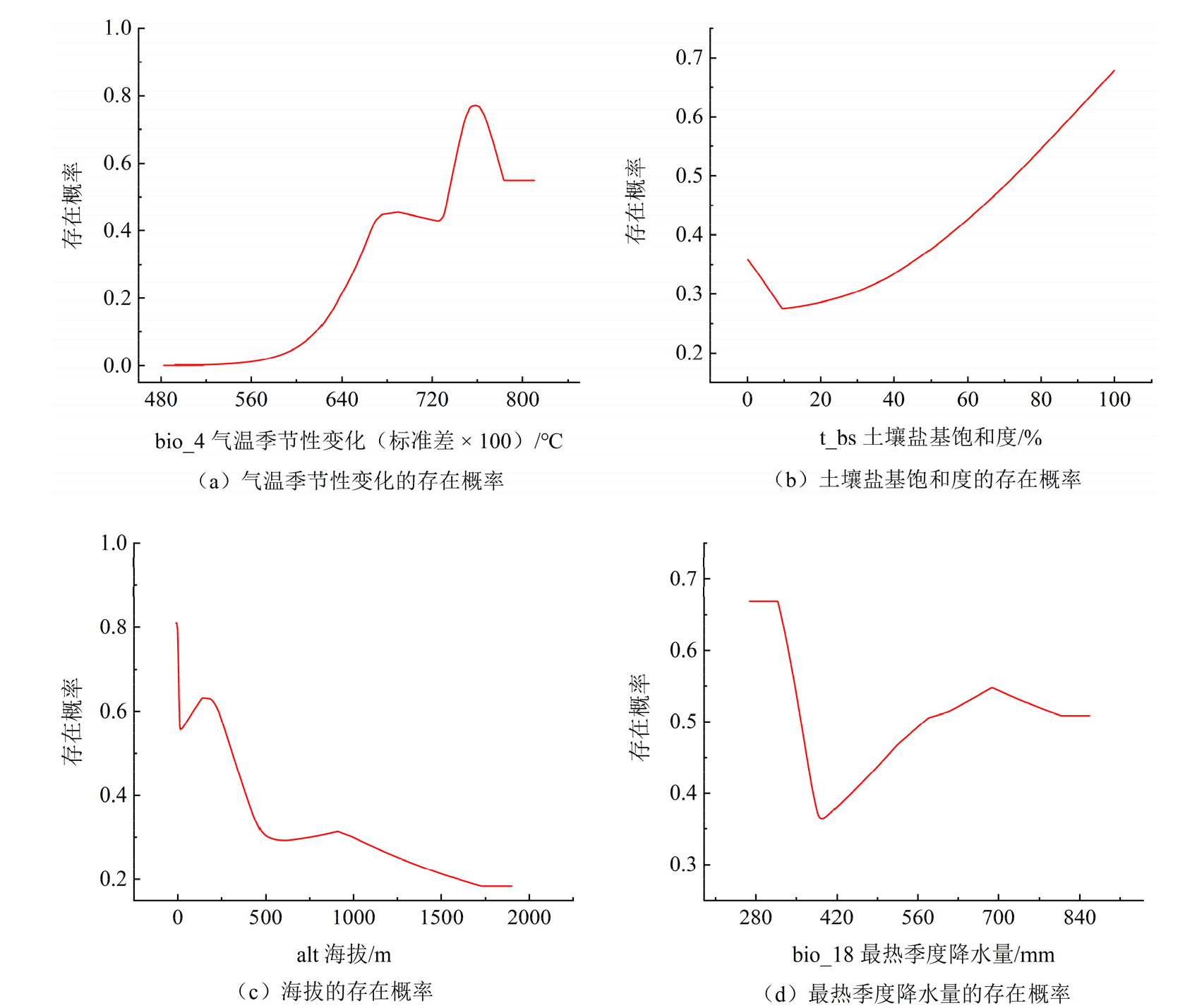
Figure 4 Response curves of main environmental variables

Figure 5 Potential risk zone distribution of Solidago canadensis in Fujian under the current climate scenario

Figure 6 Potential risk zone distribution of Solidago canadensis in Fujian under future climate change scenarios
| 气候变化情景发生 | 风险区划分 | 分布变化区 | ||||||||||||
|---|---|---|---|---|---|---|---|---|---|---|---|---|---|---|
| 无风险区 | 低风险区 | 中风险区 | 高风险区 | 收缩区 | 扩散区 | |||||||||
| 各区面积/(104 km2), 以及面积占比/% | ||||||||||||||
| SSP126(2041-2061年) | 4.13 | 34.00 | 4.96 | 40.84 | 1.98 | 16.27 | 1.08 | 8.89 | 0.04 | 0.31 | 2.27 | 18.73 | ||
| SSP126(2061-2080年) | 4.22 | 34.79 | 4.87 | 40.13 | 1.94 | 15.94 | 1.11 | 9.14 | 0.03 | 0.21 | 2.16 | 17.83 | ||
| SSP585(2041-2061年) | 3.25 | 26.75 | 5.99 | 49.31 | 1.89 | 15.60 | 1.01 | 8.34 | 0.01 | 0.04 | 3.12 | 25.74 | ||
| SSP585(2061-2080年) | 2.71 | 22.34 | 6.54 | 53.88 | 1.83 | 15.05 | 1.06 | 8.73 | 0.00 | 0.02 | 3.65 | 30.08 | ||
Table 2 Potential invasion risk area and proportion of Solidago canadensis in Fujian under different climate change scenarios
| 气候变化情景发生 | 风险区划分 | 分布变化区 | ||||||||||||
|---|---|---|---|---|---|---|---|---|---|---|---|---|---|---|
| 无风险区 | 低风险区 | 中风险区 | 高风险区 | 收缩区 | 扩散区 | |||||||||
| 各区面积/(104 km2), 以及面积占比/% | ||||||||||||||
| SSP126(2041-2061年) | 4.13 | 34.00 | 4.96 | 40.84 | 1.98 | 16.27 | 1.08 | 8.89 | 0.04 | 0.31 | 2.27 | 18.73 | ||
| SSP126(2061-2080年) | 4.22 | 34.79 | 4.87 | 40.13 | 1.94 | 15.94 | 1.11 | 9.14 | 0.03 | 0.21 | 2.16 | 17.83 | ||
| SSP585(2041-2061年) | 3.25 | 26.75 | 5.99 | 49.31 | 1.89 | 15.60 | 1.01 | 8.34 | 0.01 | 0.04 | 3.12 | 25.74 | ||
| SSP585(2061-2080年) | 2.71 | 22.34 | 6.54 | 53.88 | 1.83 | 15.05 | 1.06 | 8.73 | 0.00 | 0.02 | 3.65 | 30.08 | ||

Figure 7 Spatial changes in potential risk zones of Solidago canadensis under future climate scenarios compared to the current climate scenarios

Figure 8 Centroid transfer path in the appropriate zone of Solidago canadensis under different climate change scenarios
| [1] | CAI J F, SUN K, LI L, et al., 2024. Nitrogen addition increased resistance of resident plant community to Solidago canadensis invasion by altering allelopathic effect[J]. Journal of Plant Ecology, 17(2): rtae015. |
| [2] |
CHENG C, LIU Z K, SONG W, et al., 2024. Biodiversity increases resistance of grasslands against plant invasions under multiple environmental changes[J]. Nature Communications, 15(1): 4506.
DOI PMID |
| [3] |
COBOS M E, PETERSON A T, BARVE N, et al., 2019. Kuenm: An R package for detailed development of ecological niche models using maxent[J]. Peerj, 7: e6281.
DOI URL |
| [4] |
DATTA A, SCHWEIGER O, KÜHN I, 2019. Niche expansion of the invasive plant species Ageratina adenophora despite evolutionary constraints[J]. Journal of Biogeography, 46(7): 1306-1315.
DOI URL |
| [5] |
FAULKNER K T, ROBERTSON M P, WILSON J R U, 2020. Stronger regional biosecurity is essential to prevent hundreds of harmful biological invasions[J]. Global Change Biology, 26(4): 2449-2462.
DOI URL |
| [6] |
LAWLOR J A, COMTE L, GRENOUILLET G, et al., 2024. Mechanisms, detection and impacts of species redistributions under climate change[J]. Nature Reviews Earth and Environment, 5(5): 351-368.
DOI |
| [7] |
SARDANS J, BARTRONS M, MARGALEF O, et al., 2017. Plant invasion is associated with higher plant-soil nutrient concentrations in nutrient-poor environments[J]. Global Change Biology, 23(3): 1282-1291.
DOI PMID |
| [8] | SOLEY-GUARDIA M, ALVARADO-SERRANO D F, ANDERSON R P, 2024. Top ten hazards to avoid when modeling species distributions: A didactic guide of assumptions, problems, and recommendations[J]. Ecography, 2024(4): e6852. |
| [9] |
WEI J F, PENG L F, HE Z Q, et al., 2020. Potential distribution of two invasive pineapple pests under climate change[J]. Pest Management Science, 76(5): 1652-1663.
DOI PMID |
| [10] |
WANG C Y, CHENG H Y, WANG S, et al., 2021a. Plant community and the influence of plant taxonomic diversity on community stability and invasibility: A case study based on Solidago canadensis L.[J]. Science of The Total Environment, 768: 144518.
DOI URL |
| [11] |
WANG Z X, HE Z S, HE W M, 2021b. Nighttime climate warming enhances inhibitory effects of atmospheric nitrogen deposition on the success of invasive Solidago canadensis[J]. Climatic Change, 167(1): 20.
DOI |
| [12] |
ZHOU X H, HE W M, 2020. Climate warming facilitates seed germination in native but not invasive Solidago canadensis populations[J]. Frontiers in Ecology and Evolution, 8: 595214.
DOI URL |
| [13] |
ZHAO Z Y, XIAO N W, SHEN M, et al., 2022. Comparison between optimized Maxent and random forest modeling in predicting potential distribution: A case study with Quasipaa boulengeri in China[J]. Science of the Total Environment, 842: 156867.
DOI URL |
| [14] |
白羽, 黄莹莹, 孔海南, 等, 2012. 加拿大一枝黄花化感抑藻效应的初步研究[J]. 生态环境学报, 21(7): 1296-1303.
DOI |
| BAI Y, HUANG Y Y, KONG H N, et al., 2012. Studies on the allelopathic effects of Solidago canadensis L. on algae [J]. Ecology and Environmental Sciences, 21(7): 1296-1303. | |
| [15] |
郭水良, 方芳, 2003. 入侵植物加拿大一枝黄花对环境的生理适应性研究[J]. 植物生态学报, 27(1): 47-52.
DOI |
| GUO S L, FANG F, 2003. Physiological adaptation of the invasive plant Solidago canadensis to environmental conditions[J]. Acta Phytoecologica Sinica, 27(1): 47-52. | |
| [16] | 黄孟秋, 李景吉, 陈欣, 等, 2025. 加拿大一枝黄花瘦果萌发对干旱胁迫响应研究[J]. 生态科学, 44(1): 156-164. |
| HUANG M Q, LI J J, CHEN X, et al., 2025. Germination response of Solidago canadensis achenes to drought stress[J]. Ecological Science, 44(1): 156-164. | |
| [17] | 焦鑫宇, 李嘉谊, 杨清玉, 等, 2024. 入侵植物加拿大一枝黄花在湖北的扩散动态和影响因素研究[J]. 广西植物, 44(8): 1481-1494. |
| JIAO X Y, LI J Y, YANG Q Y, et al., 2024. Spread dynamics and influencing factors of the invasive plant Solidago canadensis in Hubei Province[J]. Guihaia, 44(8): 1481-1494. | |
| [18] |
孔维尧, 李欣海, 邹红菲, 2019. 最大熵模型在物种分布预测中的优化[J]. 应用生态学报, 30(6): 2116-2128.
DOI |
| KONG W Y, LI X H, ZOU H F, 2019. Optimization of the maximum entropy model in species distribution prediction[J]. Chinese Journal of Applied Ecology, 30(6): 2116-2128. | |
| [19] | 李丽鹤, 刘会玉, 林振山, 等, 2017. 基于MAXENT和ZONATION的加拿大一枝黄花入侵重点监控区确定[J]. 生态学报, 37(9): 3124-3132. |
| LI L H, LIU H Y, LIN Z S, et al., 2017. Identification of key invasion monitoring areas for Solidago canadensis based on MAXENT and ZONATION models[J]. Acta Ecologica Sinica, 37(9): 3124-3132. | |
| [20] | 李建宇, 史梦竹, 郭燕青, 等, 2020. 福建省农田生态系统外来入侵植物种类及其分布[J]. 热带亚热带植物学报, 28(6): 547-556. |
| LI J Y, SHI M Z, GUO Y Q, et al., 2020. Alien invasive plant species and their distribution in farmland ecosystems of Fujian Province, China[J]. Journal of Tropical and Subtropical Botany, 28(6): 547-556. | |
| [21] | 雷军成, 徐海根, 2010. 基于MaxEnt的加拿大一枝黄花在中国的潜在分布区预测[J]. 生态与农村环境学报, 26(2): 137-141. |
| LEI J C, XU H G, 2010. Prediction of the potential distribution of Solidago canadensis in China based on the MaxEnt Model[J]. Journal of Ecology and Rural Environment, 26(2): 137-141. | |
| [22] | 刘静远, 杨宇超, 于子祥, 等, 2025. 基于优化的MaxEnt模型预测朱顶红花叶病毒的潜在地理分布[J]. 植物保护, 51(1): 95-101. |
| LIU J Y, YANG Y C, YU Z X, et al., 2025. Predicting the potential geographic distribution of Hippeastrum mosaic virus based on an optimized MaxEnt model[J]. Plant Protection, 51(1): 95-101. | |
| [23] | 柳晓燕, 赵彩云, 李俊生, 等, 2022. 气候变化情景下中国外来入侵植物黄顶菊潜在分布区模拟与早期预警[J]. 环境科学研究, 35(12): 2768-2776. |
| LIU X Y, ZHAO C Y, LI J S, et al., 2022. Simulation and early warning of the potential distribution of the invasive alien plant Flaveria bidentis in China under climate change scenarios[J]. Research of Environmental Sciences, 35(12): 2768-2776. | |
| [24] | 刘艳杰, 黄伟, 杨强, 等, 2022. 近十年植物入侵生态学重要研究进展[J]. 生物多样性, 30(10): 276-292. |
| LIU Y J, HUANG W, YANG Q, et al., 2022. Key research progress in plant invasion ecology in the last decade[J]. Biodiversity Science, 30(10): 276-292. | |
| [25] | 宁昭玉, 胡树泉, 魏远竹, 等, 2007. 福建外来物种入侵现状及对经济社会和生态的影响[J]. 华东昆虫学报, 16(4): 304-309. |
| NING Z Y, HU S Q, WEI Y Z, et al., 2007. Present situation of alien species invasion and its effects on economy, society and ecology in Fujian Province[J]. Entomological Journal of East China, 16(4): 304-309. | |
| [26] | 王俊伟, 陈永豪, 许敏, 等, 2023. 气候变化背景下入侵植物曼陀罗在西藏的潜在风险区预测[J]. 生态学报, 43(20): 8620-8630. |
| WANG J W, CHEN Y H, XU M, et al., 2023. Prediction of potential risk area of the invasive plant Datura stramonium L. in Tibet under the background of climate change [J]. Acta Ecologica Sinica, 43(20): 8620-8630. | |
| [27] | 王运生, 谢丙炎, 万方浩, 等, 2007. ROC曲线分析在评价入侵物种分布模型中的应用[J]. 生物多样性, 15(4): 365-372. |
|
WANG Y S, XIE B Y, WAN F H, et al., 2007. Application of ROC curve analysis in evaluating invasive species distribution models[J]. Biodiversity Science, 15(4): 365-372.
DOI URL |
|
| [28] | 翁慧莹, 刘益鹏, 杨黔越, 等, 2025. 福建柏地理分布及随气候变化的分布格局模拟[J]. 生态学报, 45(1): 137-146. |
| WENG H Y, LIU Y P, YANG Q Y, et al., 2025. Geographical distribution of Fokienia hodginsii and distribution pattern simulation under climate change[J]. Acta Ecologica Sinica, 45(1): 137-146. | |
| [29] | 吴娜, 梅艳, 石艳春, 等, 2016. 入侵植物加拿大一枝黄花的化学成分及其生物活性综述[J]. 江苏农业科学, 44(5): 5-9. |
| WU N, MEI Y, SHI Y C, et al., 2016. A review of the chemical composition and biological activities of the invasive plant Solidago canadensis[J]. Jiangsu Agricultural Sciences, 44(5): 5-9. | |
| [30] | 吴统文, 宋连春, 李伟平, 等, 2014. 北京气候中心气候系统模式研发进展——在气候变化研究中的应用[J]. 气象学报, 72(1): 12-29. |
| WU T W, SONG L C, LI W P, et al., 2014. An overview on progress in Beijing climate center climate system model: Its development and application to climate change studies[J]. Acta Meteorologica Sinica, 72(1): 12-29. | |
| [31] | 徐强, 顾渝娟, 李盼畔, 等, 2023. 基于最大熵模型预测小火蚁在我国的适生区[J]. 植物保护, 49(4): 101-107. |
| XU Q, GU Y J, LI P P, et al., 2023. Predicting the potential distribution of the little fire ant in China using the MaxEnt model[J]. Plant Protection, 49(4): 101-107. | |
| [32] | 姚骅珊, 张博, 诸葛强, 2009. 多年生木本植物季节性休眠的分子机制[J]. 分子植物育种, 7(5): 985-989. |
| YAO H S, ZHANG B, ZHU G Q, 2009. Molecular mechanism of seasonal dormancy in perennial woody plant[J]. Molecular Plant Breeding, 7(5): 985-989. | |
| [33] |
张献瑞, 李欣迪, 陈瑜, 等, 2024. 加拿大一枝黄花入侵中国过程中的气候生态位变化[J]. 应用生态学报, 35(10): 2707-2714.
DOI |
| ZHANG X R, LI X D, CHEN Y, et al., 2024. Changes in the climatic niche of Solidago canadensis during its invasion of China[J]. Chinese Journal of Applied Ecology, 35(10): 2707-2714. | |
| [34] | 郑衍欣, 李双林, 何源, 2023. 共享社会经济路径 (SSPs) 下未来30年长江流域夏季降水预估[J]. 大气科学, 47(5): 1405-1420. |
| ZHENG Y X, LI S L, HE Y, 2023. Projection of summer rainfall in the Yangtze River basin in the next 30 years under different shared socioeconomic pathways[J]. Chinese Journal of Atmospheric Sciences, 47(5): 1405-1420. | |
| [35] |
朱耿平, 乔慧捷, 2016. Maxent模型复杂度对物种潜在分布区预测的影响[J]. 生物多样性, 24(10): 1189-1196.
DOI |
|
ZHU G P, QIAO H J, 2016. Effect of the Maxent model’s complexity on the prediction of species potential distributions[J]. Biodiversity Science, 24(10): 1189-1196.
DOI URL |
| [1] | YU Yanju, DING Xue. Study on the Spatiotemporal Patterns and Driving Factors of Forest Vegetation Net Primary Productivity in the Central Yunnan Urban Agglomeration [J]. Ecology and Environmental Sciences, 2026, 35(2): 209-222. |
| [2] | XU Da, GONG Chengcheng, ZHANG Zaiyong, RAN Bin, HU Yue, WANG Hanbing, CHEN Chen. The Spatiotemporal Variation Patterns of Vegetation Net Primary Productivity and Its Influencing Factors in the Mu Us Sandy Land [J]. Ecology and Environmental Sciences, 2025, 34(9): 1361-1372. |
| [3] | LI Dongyi, LI Tingting, XUE Wanyi, XIA Yongzhi, WANG Zhengxiang. Prediction and Analysis of Potential Habitat Distribution of Taxus wallichiana var. Chinensis under Climate Change: A Case Study of Hubei Province [J]. Ecology and Environmental Sciences, 2025, 34(9): 1398-1409. |
| [4] | LIU Zeyuan, WEI Youhai, YAN Xufa, CHENG Liang, HOU Lu, YAN Ziwei, GUO Liangzhi. Impact of Climate Change on the Potential Geographic Distribution of the Invasive Weed Sonchus asper [J]. Ecology and Environmental Sciences, 2025, 34(6): 845-852. |
| [5] | ZHANG Yali, HUANG Zhujun, TIAN Yichao, LIN Junliang, QIN Caihuan. Time-lag and Accumulation Responses of Fractional Vegetation Coverage Change to Extreme Climate in Southwestern China [J]. Ecology and Environmental Sciences, 2025, 34(5): 665-677. |
| [6] | BU Lingxin, QIN Mengting, FENG Kepeng, LAI Quan. Evaluation of the Ecological Vulnerability of Grassland Ecosystems in Arid and Semi-arid Regions under the Background of Climate Change [J]. Ecology and Environmental Sciences, 2025, 34(12): 1827-1840. |
| [7] | HU Yonghong, YUAN Yanfeng, XU Ronghan, AI Jinlong, HOU Meiting. The Characterization of Heat Wave Changes in Hainan Island Based on the Annual Heatwave Magnitude Index [J]. Ecology and Environmental Sciences, 2025, 34(12): 1909-1918. |
| [8] | YE Junhong, LIU Zhenhuan, LIU Ziyu. Scenarios Simulation of Territorial Space Ecological Restoration Zoning in the Pearl River Delta Urban Agglomeration Area [J]. Ecology and Environmental Sciences, 2025, 34(1): 4-12. |
| [9] | GAO Wenming, SONG Qian, ZHANG Haoxiang, WANG Shiru. Selection of Priority Conservation Areas Based on Ecosystem Service Functions and Wildlife Habitat Suitability Evaluation: A Case Study in the Sanjiang-yuan Region [J]. Ecology and Environmental Sciences, 2024, 33(8): 1318-1328. |
| [10] | XU Jiale, YANG Xingchuan, ZHAO Wenji, YANG Zhiqiang, ZHONG Yixue, SHI Leyan, MA Pengfei. Evolution Characteristics of Vegetation Coverage in Central and Western Inner Mongolia under the Background of Climate Change [J]. Ecology and Environmental Sciences, 2024, 33(7): 1008-1018. |
| [11] | LI Hui, DENG Jiawei, LI Yaxin, MU Yingqi. Impacts of Climate and Land Use Change on Runoff in Typical Basin of Northern Foothills of Qinling Mountains: Case Study of Bahe River Basin [J]. Ecology and Environmental Sciences, 2024, 33(5): 802-811. |
| [12] | TIAN Xuchen, WEI Hongling, XIE Shengnan, CHU Qiming, YANG Jing, ZHANG Ying, XIAO Siqiu, TANG Zonghua, LIU Ying, LI Dewen. Potential Geographical Distribution of Acer in Northeast China Based on the MaxEnt Model [J]. Ecology and Environmental Sciences, 2024, 33(4): 509-519. |
| [13] | HAO Lei, ZHAI Yongguang, QI Wenchao, LAN Qiongqiong. Spatial-temporal Dynamics of Vegetation Carbon Sources/sinks in Inner Mongolia from 2001 to 2020 and Its Response to Climate Change [J]. Ecology and Environmental Sciences, 2023, 32(5): 825-834. |
| [14] | CHEN Junfang, WU Xian, LIU Xiaolin, LIU Juan, YANG Jiarong, LIU Yu. Shaping Characteristics of Elemental Stoichiometry on Microbial Diversity under Different Soil Water Contents [J]. Ecology and Environmental Sciences, 2023, 32(5): 898-909. |
| [15] | LI Hui, LI Bilong, GE Lili, HAN Chenhui, YANG Qian, ZHANG Yuejun. Temporal and Spatial Characteristics of Vegetation Evolution and Topographic Effects in Fenhe River Basin from 2000 to 2021 [J]. Ecology and Environmental Sciences, 2023, 32(3): 439-449. |
| Viewed | ||||||
|
Full text |
|
|||||
|
Abstract |
|
|||||
Copyright © 2021 Editorial Office of ACTA PETROLEI SINICA
Address:No. 6 Liupukang Street, Xicheng District, Beijing, P.R.China, 510650
Tel: 86-010-62067128, 86-010-62067137, 86-010-62067139
Fax: 86-10-62067130
Email: syxb@cnpc.com.cn
Support byBeijing Magtech Co.ltd, E-mail:support@magtech.com.cn
