
Ecology and Environmental Sciences ›› 2026, Vol. 35 ›› Issue (2): 209-222.DOI: 10.16258/j.cnki.1674-5906.2026.02.005
• Research Article [Ecology] • Previous Articles Next Articles
YU Yanju1,2,3( ), DING Xue1,2,3,*()
Received:2025-02-19
Revised:2025-11-12
Accepted:2025-11-19
Online:2026-02-18
Published:2026-02-09
Contact:
DING Xue
余燕鞠1,2,3(), 丁雪1,2,3,*()
通讯作者:
丁雪
作者简介:余燕鞠(2002年生),女,硕士研究生,主要研究方向为土地利用模拟与碳储量估算。E-mail: 1690728905@qq.com
基金资助:CLC Number:
YU Yanju, DING Xue. Study on the Spatiotemporal Patterns and Driving Factors of Forest Vegetation Net Primary Productivity in the Central Yunnan Urban Agglomeration[J]. Ecology and Environmental Sciences, 2026, 35(2): 209-222.
余燕鞠, 丁雪. 滇中城市群森林植被净初级生产力时空变化特征及其影响因素研究[J]. 生态环境学报, 2026, 35(2): 209-222.
Add to citation manager EndNote|Ris|BibTeX
URL: https://www.jeesci.com/EN/10.16258/j.cnki.1674-5906.2026.02.005
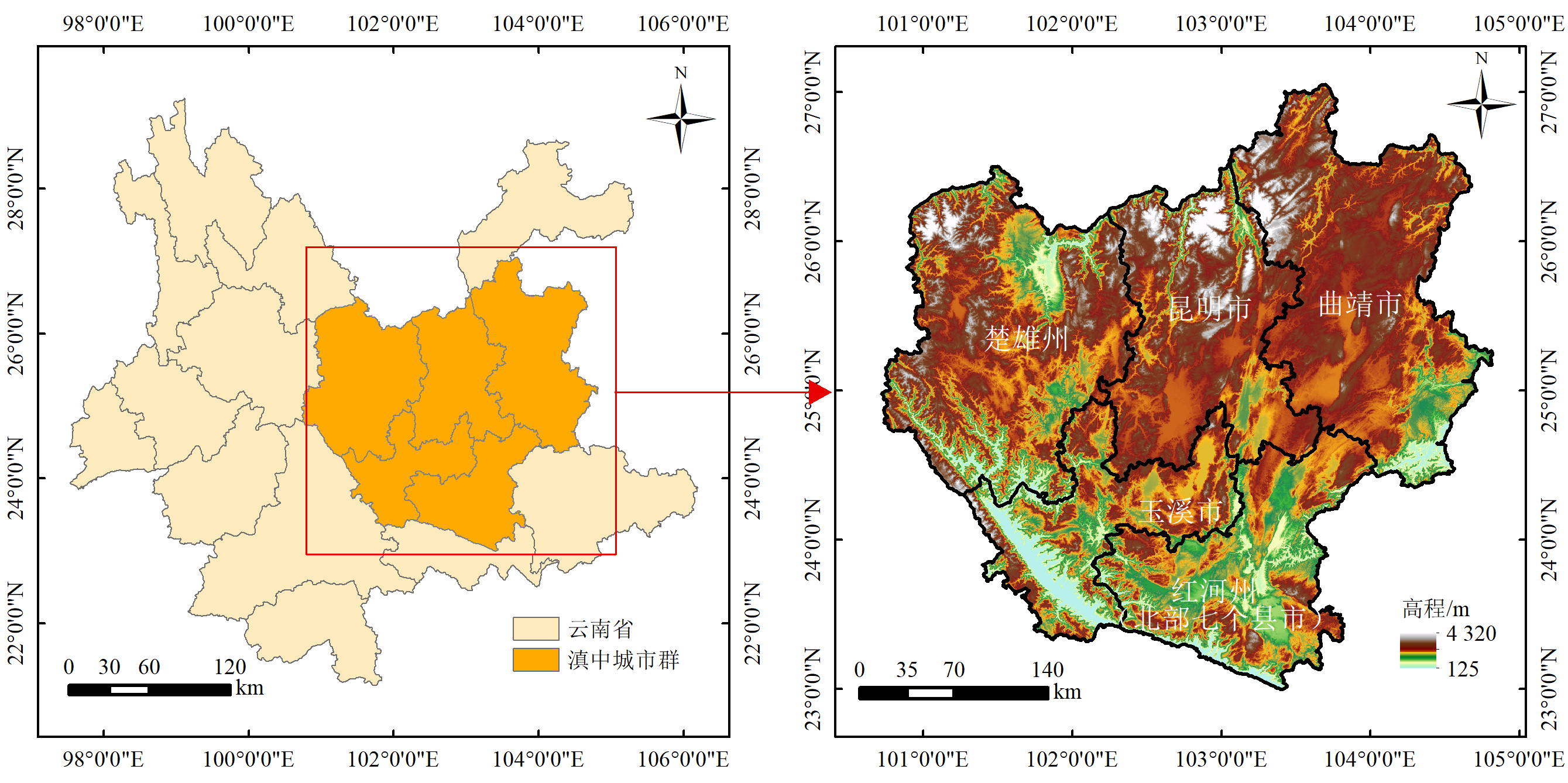
Figure 1 Location of the Central Yunnan Urban Agglomeration
| 数据类型 | 数据名称 | 空间分辨率 | 数据来源 |
|---|---|---|---|
| 森林净初级生产力 | MOD17A3H V6 | 500 m | NASA( |
| 森林类型 | MCD12Q1 V6 | 500 m | |
| 降水 | ERA5 | 0.1° | ECMWF( |
| 气温 | 0.1° | ||
| 高程 | USGS/SRTMGL1_003 | 30 m | 中科院地理空间数据云平台( |
| 坡度 | 30 m | ||
| 坡向 | 30 m | ||
| 气象站点数据 | NOAA( |
Table1 Data resources
| 数据类型 | 数据名称 | 空间分辨率 | 数据来源 |
|---|---|---|---|
| 森林净初级生产力 | MOD17A3H V6 | 500 m | NASA( |
| 森林类型 | MCD12Q1 V6 | 500 m | |
| 降水 | ERA5 | 0.1° | ECMWF( |
| 气温 | 0.1° | ||
| 高程 | USGS/SRTMGL1_003 | 30 m | 中科院地理空间数据云平台( |
| 坡度 | 30 m | ||
| 坡向 | 30 m | ||
| 气象站点数据 | NOAA( |
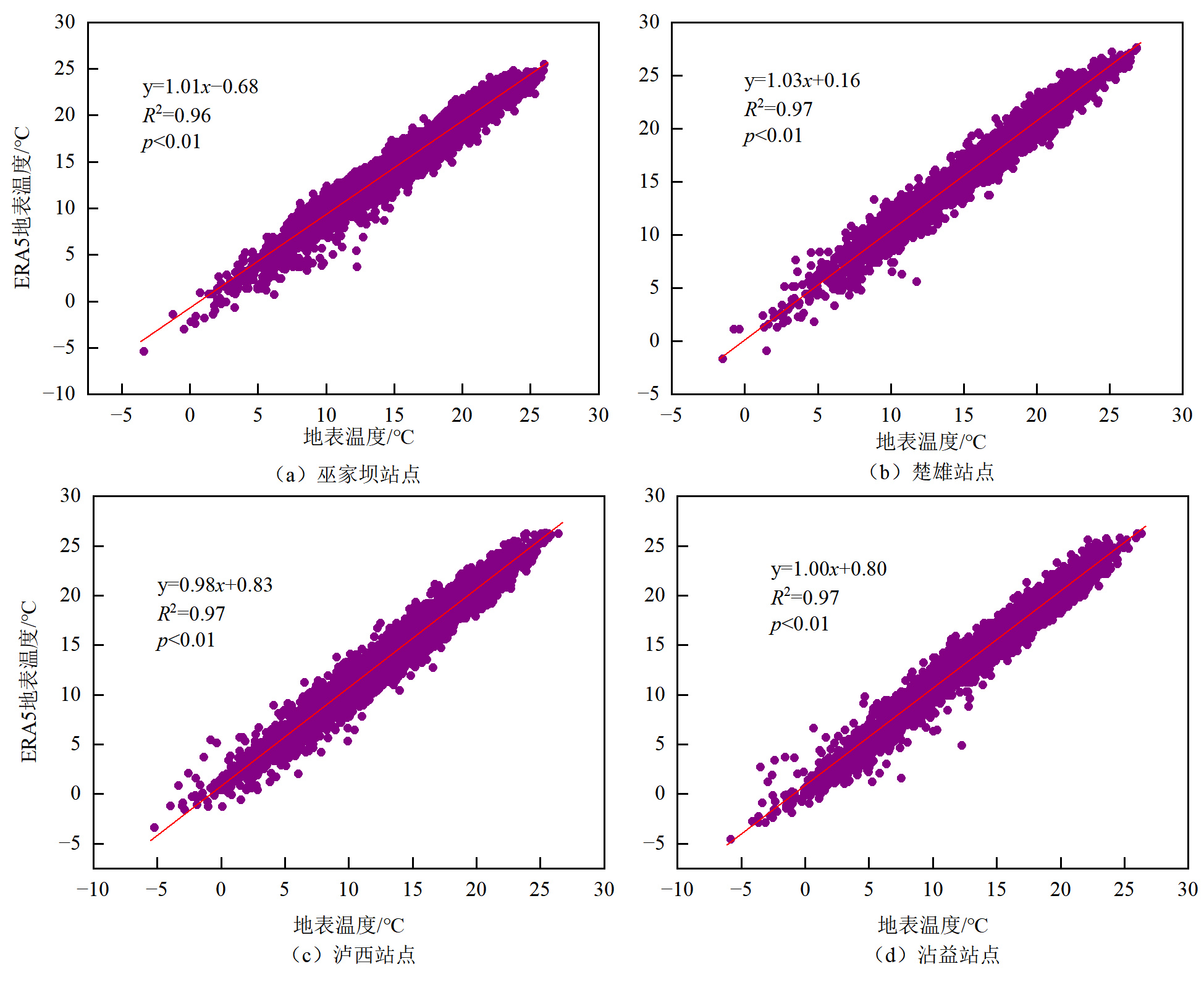
Figure 2 Scatter plots of the surface temperature from ERA5 dataset and station
| N | Z | 变化趋势 |
|---|---|---|
| N>0 | 2.58<Z | 极显著增加 |
| 1.96<Z≤2.58 | 显著增加 | |
| 1.65<Z≤1.96 | 微显著增加 | |
| 0<Z≤1.65 | 不显著增加 | |
| N=0 | Z=0 | 无变化 |
| N<0 | −1.65≤Z<0 | 不显著减少 |
| −1.96≤Z<−1.65 | 微显著减少 | |
| −2.58≤Z<−1.96 | 显著减少 | |
| Z<−2.58 | 极显著减少 |
Table 2 Classification of theil-sen median trend analysis change trend
| N | Z | 变化趋势 |
|---|---|---|
| N>0 | 2.58<Z | 极显著增加 |
| 1.96<Z≤2.58 | 显著增加 | |
| 1.65<Z≤1.96 | 微显著增加 | |
| 0<Z≤1.65 | 不显著增加 | |
| N=0 | Z=0 | 无变化 |
| N<0 | −1.65≤Z<0 | 不显著减少 |
| −1.96≤Z<−1.65 | 微显著减少 | |
| −2.58≤Z<−1.96 | 显著减少 | |
| Z<−2.58 | 极显著减少 |
| 情景 | N | C | H | 气候变化 相对作用 | 人类活动 相对作用 | 说明 |
|---|---|---|---|---|---|---|
| 植被改善 | >0 | >0 | >0 | Kc | Kh | 气候变化和人类活动 共同促进植被恢复 |
| >0 | <0 | 100 | 0 | 气候变化促进植被恢复 | ||
| <0 | >0 | 0 | 100 | 人类活动促进植被恢复 | ||
| 植被退化 | <0 | <0 | <0 | Kc | Kh | 气候变化和人类活动 共同促使植被退化 |
| <0 | >0 | 100 | 0 | 气候变化促使植被退化 | ||
| >0 | <0 | 0 | 100 | 人类活动促使植被退化 |
Table 3 Different scenarios of contributions of climate change and human activities on forest NPP changes
| 情景 | N | C | H | 气候变化 相对作用 | 人类活动 相对作用 | 说明 |
|---|---|---|---|---|---|---|
| 植被改善 | >0 | >0 | >0 | Kc | Kh | 气候变化和人类活动 共同促进植被恢复 |
| >0 | <0 | 100 | 0 | 气候变化促进植被恢复 | ||
| <0 | >0 | 0 | 100 | 人类活动促进植被恢复 | ||
| 植被退化 | <0 | <0 | <0 | Kc | Kh | 气候变化和人类活动 共同促使植被退化 |
| <0 | >0 | 100 | 0 | 气候变化促使植被退化 | ||
| >0 | <0 | 0 | 100 | 人类活动促使植被退化 |
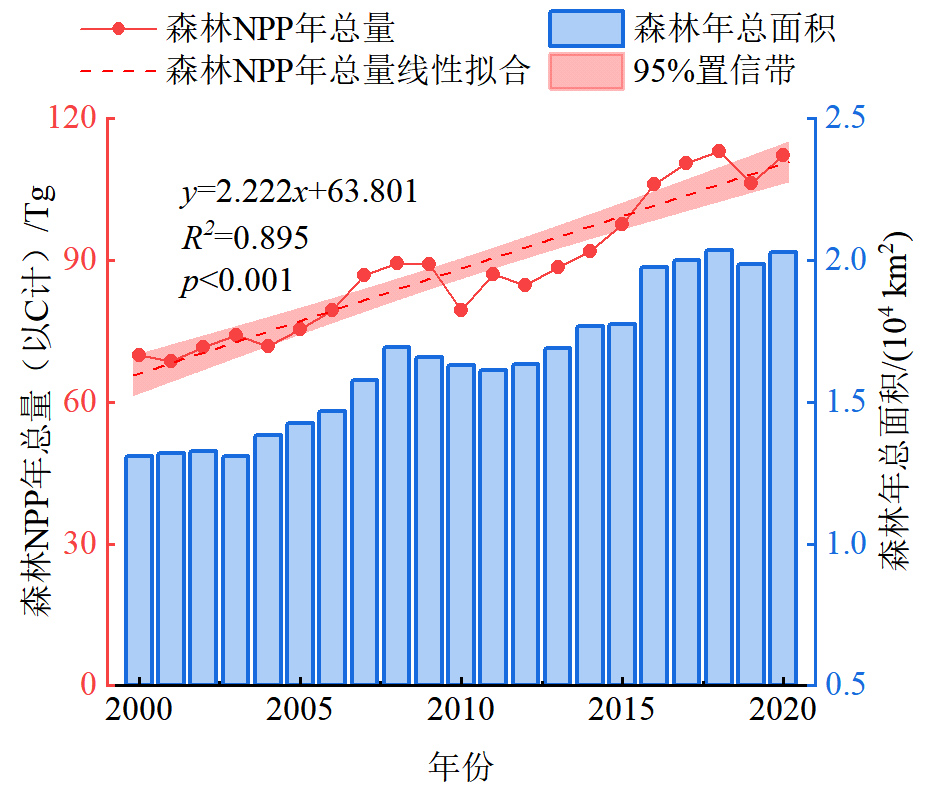
Figure 3 Variation in the annual total net primary productivity (NPP) of forest in the Central Yunnan Urban Agglomeration

Figure 4 Variation in the annual total NPP of different forest types in the Central Yunnan Urban Agglomeration

Figure 5 Variation in annual average NPP of forest in the Central Yunnan Urban Agglomeration
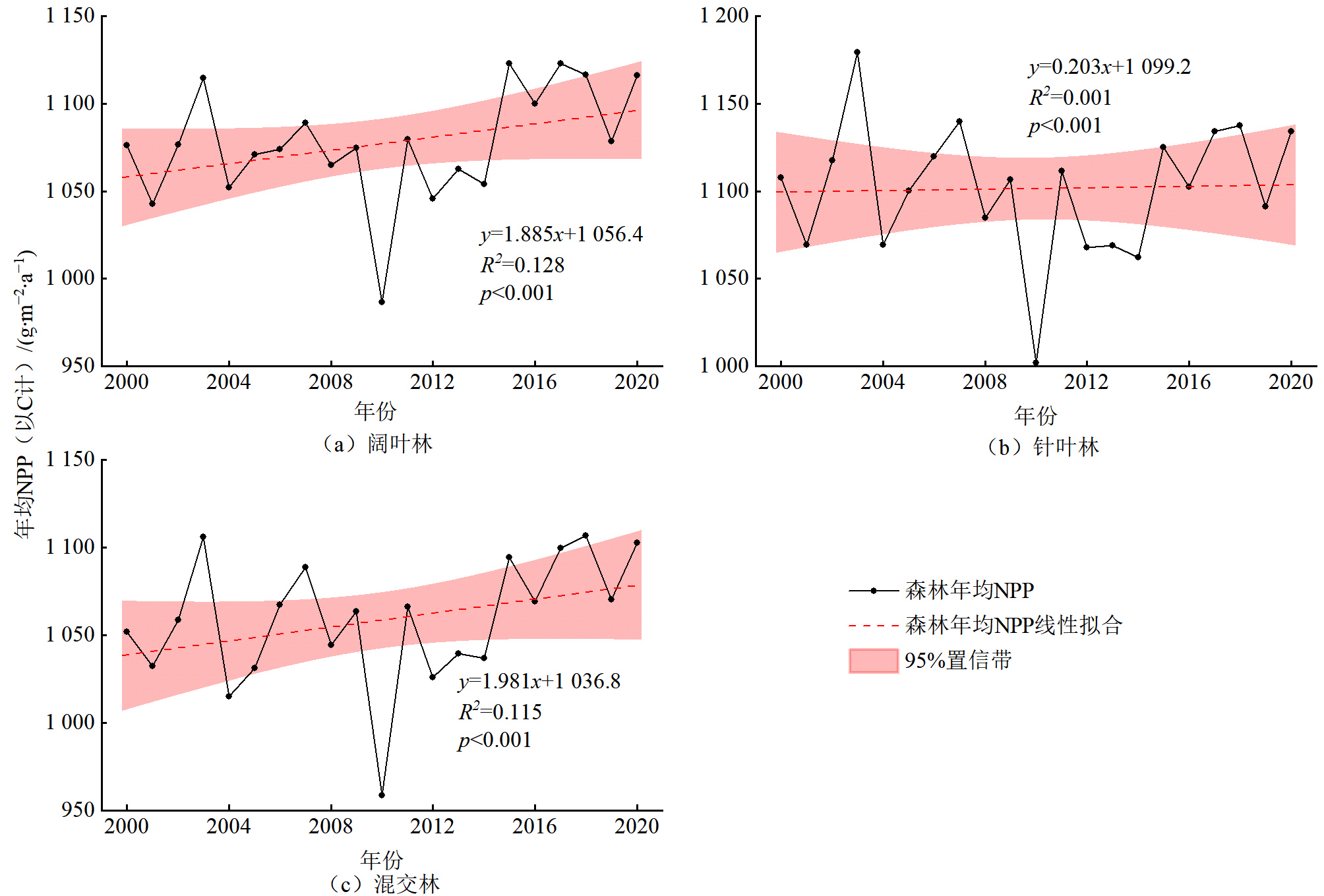
Figure 6 Variation in annual average NPP of different forest types in the Central Yunnan Urban Agglomeration

Figure 7 Forest NPP change trend of the the Central Yunnan Urban Agglomeration
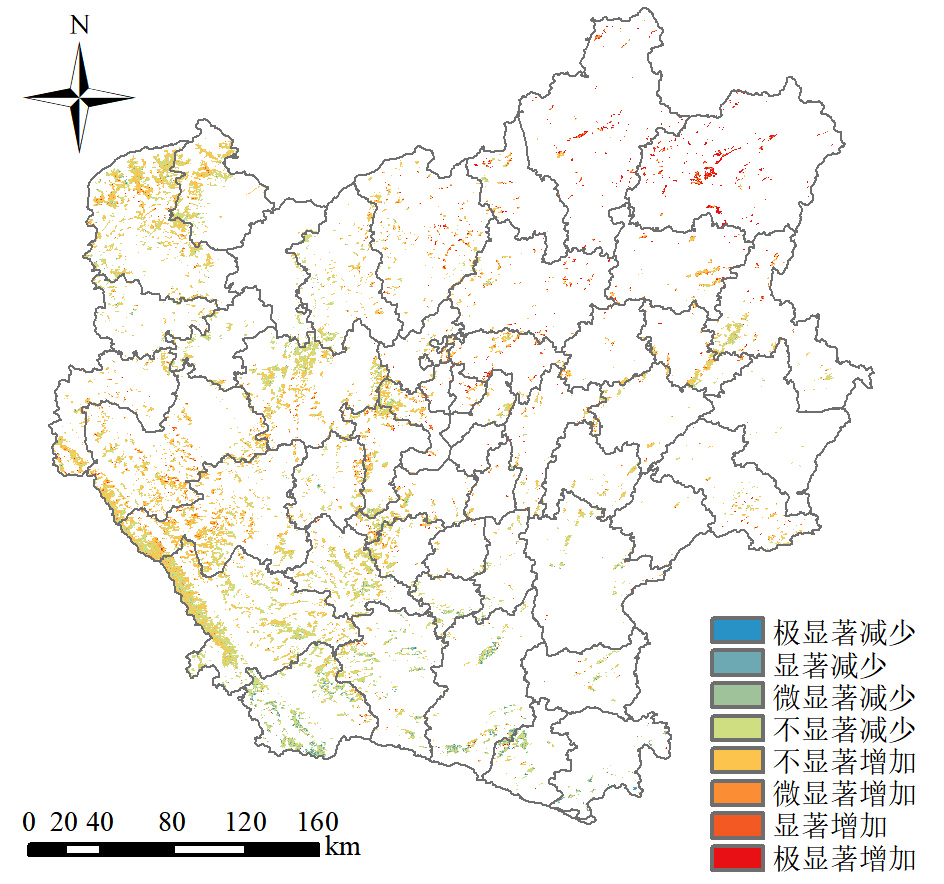
Figure 8 Significance of forest NPP change trend of the Central Yunnan Urban Agglomeration
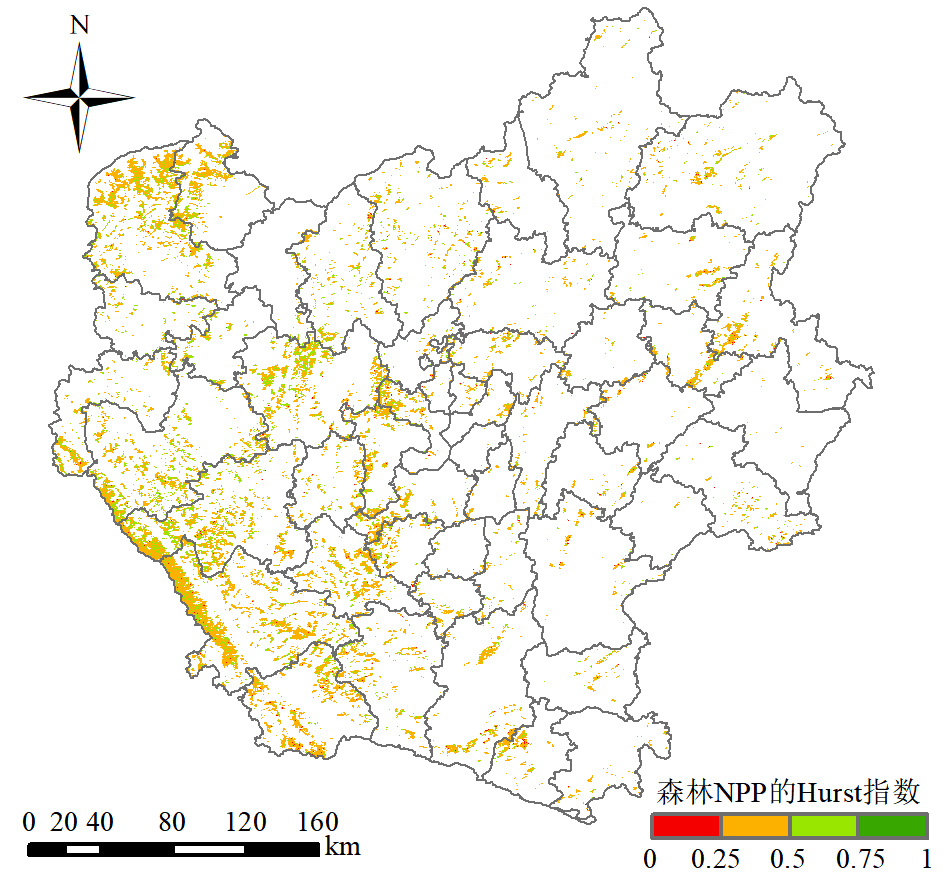
Figure 9 Hurst index of forest NPP in the Central Yunnan Urban Agglomeration

Figure 10 The impact of topographic factors on NPP

Figure 11 Variation of annual average temperature and cumulative precipitation in the Central Yunnan Urban Agglomeration

Figure 12 The contributions of temperature and precipitation to the changes in NPP in the Central Yunnan Urban Agglomeration

Figure 13 The contributions of climatic factors and human activities to the changes in NPP in the Central Yunnan Urban Agglomeration
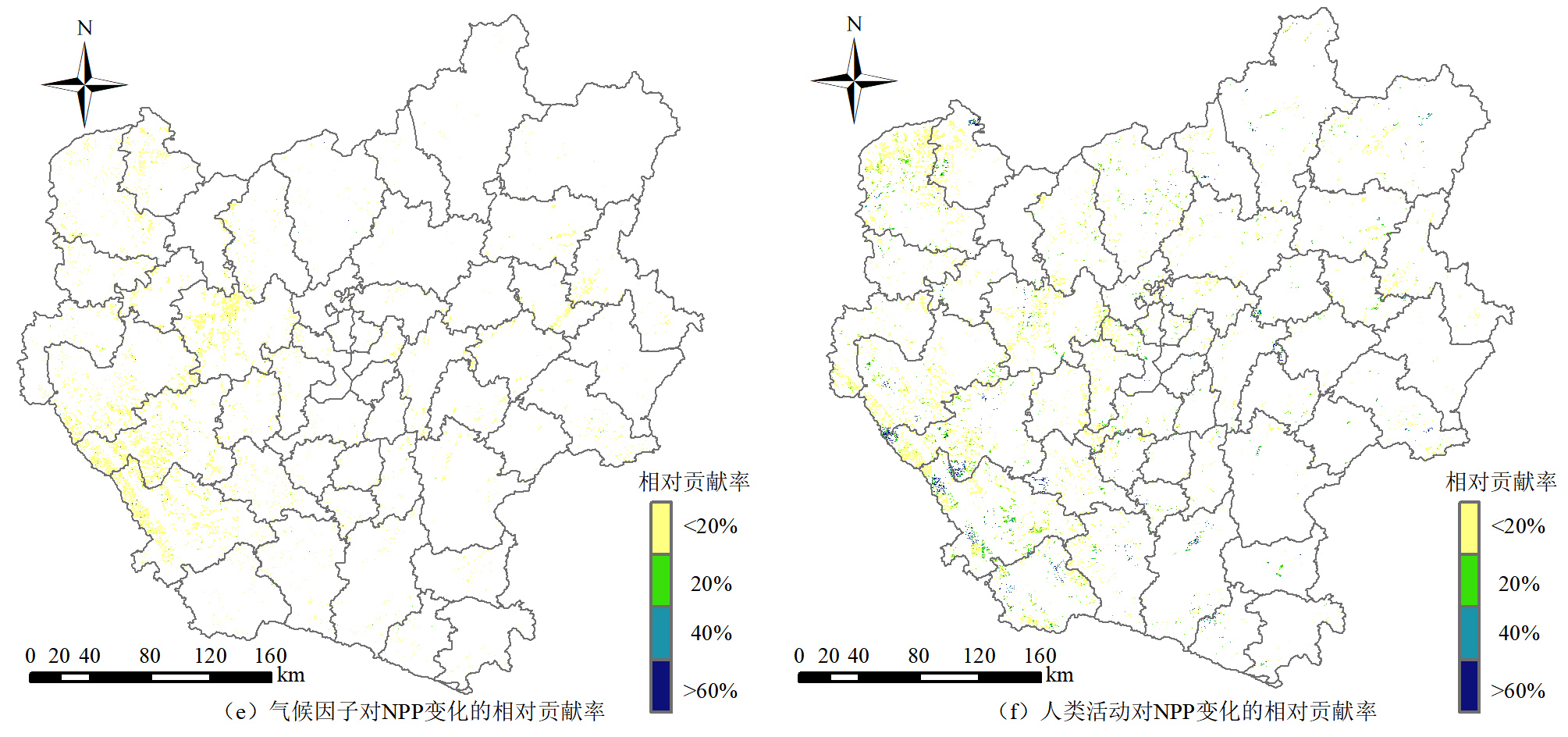
Figure 14 The contribution proportions of climate changes and human activities to forest NPP in the Central Yunnan Urban Agglomeration
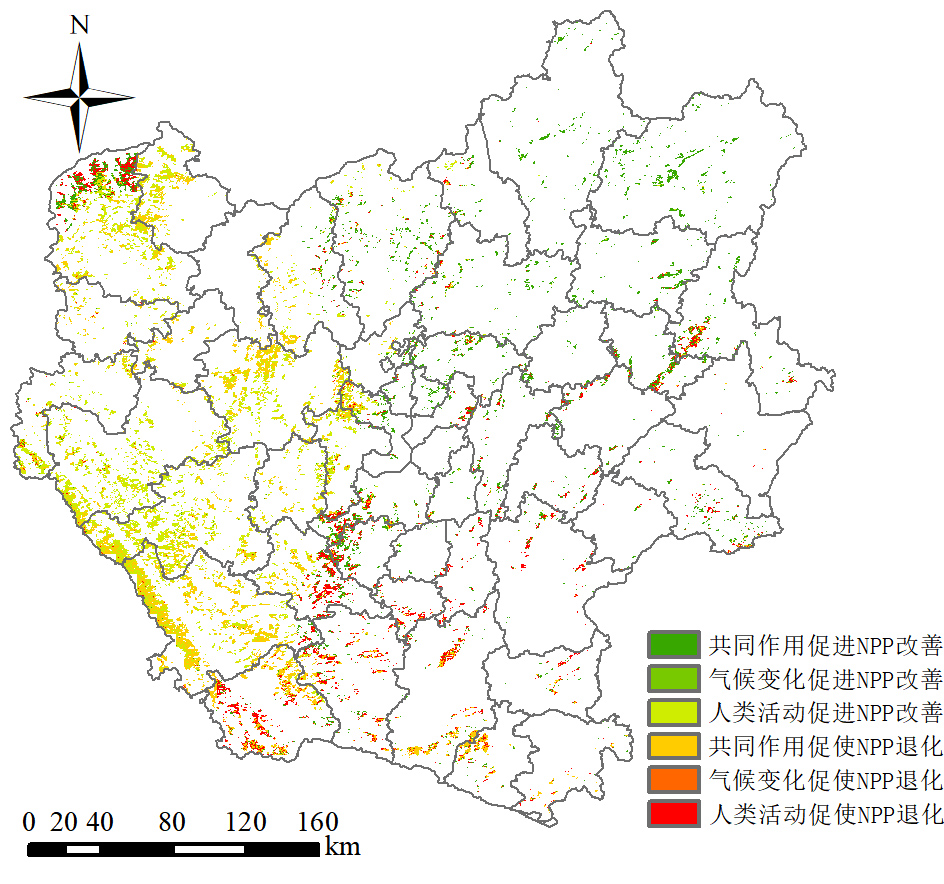
Figure 15 The dominant influence on the changes of forest NPP in the Central Yunnan Urban Agglomeration
| [1] |
BROUWERS N C, COOPS N C, 2016. Decreasing net primary production in forest and shrub vegetation across Southwest Australia[J]. Ecological Indicators, 66: 10-19.
DOI URL |
| [2] |
FIELD C B, RANDERSON J T, MALMSTRÖM C M, 1995. Global net primary production: Combining ecology and remote sensing[J]. Remote Sensing of Environment, 51(1): 74-88.
DOI URL |
| [3] |
LI W W, ZHOU J L, XU Z Y, et al., 2023. Climate impact greater on vegetation NPP but human enhance benefits after the Grain for Green Program in Loess Plateau[J]. Ecological Indicators, 157: 111201.
DOI URL |
| [4] |
SARKAR S, KAFATOS M, 2004. Interannual variability of vegetation over the Indian sub-continent and its relation to the different meteorological parameters[J]. Remote Sensing of Environment, 90(2): 268-280.
DOI URL |
| [5] |
TENG M J, ZENG L X, HU W J, et al., 2020. The impacts of climate changes and human activities on net primary productivity vary across an ecotone zone in Northwest China[J]. Science of the Total Environment, 714: 136691.
DOI URL |
| [6] |
WANG Q J, LIANG L, WANG S G, et al., 2023. Insights into spatiotemporal variations in the NPP of terrestrial vegetation in Africa from 1981 to 2018[J]. Remote Sensing, 15(11): 2748.
DOI URL |
| [7] |
YANG H F, MU S J, LI J L, 2014. Effects of ecological restoration projects on land use and land cover change and its influences on territorial NPP in Xinjiang, China[J]. Catena, 115: 85-95.
DOI URL |
| [8] |
ZHANG M, YUAN N Q, LIN H, et al., 2022. Quantitative estimation of the factors impacting spatiotemporal variation in NPP in the Dongting Lake wetlands using Landsat time series data for the last two decades[J]. Ecological Indicators, 135: 108544.
DOI URL |
| [9] |
常屹冉, 张弛, 魏嘉诚, 等, 2023. 气候变化和人类活动对内蒙古植被净初级生产力的影响[J]. 草地学报, 31(11): 3444-3452.
DOI |
| CHANG Y R, ZHANG C, WEI J C, et al., 2023. Impacts of climate change and human activities on the net primary productivity of vegetation in Inner Mongolia[J]. Acta Agrestia Sinica, 31(11): 3444-3452. | |
| [10] | 陈皓锐, 经思思, 叶苏蒙, 等, 2025. 库布其沙漠植被净初级生产力时空演变规律及其气象驱动因素分析[J]. 农业机械学报, 56(1): 424-433. |
| CHEN H R, JING S S, YE S M, et al., 2025. Analysis of spatial-temporal evolution and meteorological driving factors of vegetation net primary productivity in Kubuqi Desert[J]. Transactions of the Chinese Society for Agricultural Machinery, 56(1): 424-433. | |
| [11] | 方贺, 樊高峰, 王阔, 等, 2024. 2000-2022年长江三角洲地区植被净初级生产力时空演化特征及驱动因素[J]. 环境科学, 46(9): 5788-5799. |
| FANG H, FAN G F, WANG K, et al., 2024. Spatiotemporal variation characteristics and driving factors of vegetation NPP in the Yangtze River Delta from 2000 to 2022[J]. Environmental Science, 46(9): 5788-5799. | |
| [12] |
葛丽娟, 党虹, 戎战磊, 等, 2018. 祁连山中段植被群落的时空格局变化[J]. 干旱区研究, 35(2): 346-353.
DOI |
| GE L J, DANG H, RONG Z L, et al., 2018. Spatiotemporal distribution pattern of vegetation communities in the Middle Section of the Qilian Mountains[J]. Arid Zone Research, 35(2): 346-353. | |
| [13] | 郭睿妍, 田佳, 杨志玲, 等, 2022. 基于GEE平台的黄河流域森林植被净初级生产力时空变化特征[J]. 生态学报, 42(13): 5437-5445. |
| GUO R Y, TIAN J, YANG Z L, et al., 2022. Spatio-temporal vegetation characteristics of forest net primary productivity in the Yellow River Basin based on the Google Earth Engine cloud platform[J]. Acta Ecologica Sinica, 42(13): 5437-5445. | |
| [14] | 郝成元, 曾秋强, 2025. 量化极端气候指数对秦巴山区植被净初级生产力动态的贡献[J]. 水土保持学报, 39(2): 135-143, 154. |
| HAO C Y, ZENG Q Q, 2025. Quantifying the contribution of extreme climate indices to the dynamics of net primary productivity of vegetation in the Qinba Mountain area[J]. Journal of Soil and Water Conservation, 39(2): 135-143, 154. | |
| [15] | 何旭洋, 张福平, 李玲, 等, 2022. 气候变化与人类活动对中国西北内陆河流域植被净初级生产力影响的定量分析[J]. 兰州大学学报(自然科学版), 58(5): 650-660. |
| HE X Y, ZHANG F P, LI L, et al., 2022. Quantitative analysis of the impact of climate change and human activities on the NPP of vegetation in the inland river basins of northwest China[J]. Journal of Lanzhou University (Natural Sciences), 58(5): 650-660. | |
| [16] | 江田汉, 邓莲堂, 2004. Hurst指数估计中存在的若干问题——以在气候变化研究中的应用为例[J]. 地理科学, 24(2): 177-182. |
| JIANG T H, DENG L T, 2004. Some problems in estimating a Hurst exponent: A case study of applications to climatic change[J]. Scientia Geographica Sinica, 24(2): 177-182. | |
| [17] | 李文斌, 曹生奎, 曹广超, 等, 2024. 2000-2020年青海湖流域植被净初级生产力时空格局及驱动分析[J]. 水土保持研究, 31(5): 327-336, 343. |
| LI W B, CAO S K, CAO G C, et al., 2024. Spatiotemporal patterns of vegetation net primary productivity and their drivers in Qinghai Lake Basin from 2000 to 2020[J]. Research of Soil and Water Conservation, 31(5): 327-336, 343. | |
| [18] | 李益敏, 冯显杰, 李媛婷, 等, 2024. 云南省植被覆盖时空变化特征及影响因素研究[J]. 自然资源遥感, 36(2): 116-125. |
| LI Y M, FENG X J, LI Y T, et al., 2024. Exploring the spatio-temporal variations and influencing factors of vegetation cover in Yunnan Province[J]. Remote Sensing of Natural Resources, 36(2): 116-125. | |
| [19] | 彭双云, 陈明潇, 张老伟, 等, 2024. 滇中城市群碳储量时空演变及其对LULC变化的响应[J]. 水土保持学报, 38(4): 246-256, 266. |
|
PENG S Y, CHEN M X, ZHANG L W, et al., 2024. Spatiotemporal evolution of carbon storage in the Central Yunnan Urban Agglomeration and its response to LULC change[J]. Journal of Soil and Water Conservation, 38(4): 246-256, 266.
DOI URL |
|
| [20] | 吴丽媛, 神祥金, 刘奕雯, 等, 2024. 青藏高原草本沼泽植被净初级生产力时空变化及其对气候变化的响应[J]. 生态学报, 44(5): 2115-2126. |
| WU L Y, SHEN X J, LIU Y W, et al., 2024. Spatio-temporal variation in net primary productivity and its response to climate change in herbaceous marsh on the Qinghai-Tibet Plateau[J]. Acta Ecologica Sinica, 44(5): 2115-2126. | |
| [21] | 肖晶, 饶良懿, 2024. 2001-2020年乌梁素海流域植被NPP时空变化及驱动因素分析[J]. 环境科学, 45(8): 4744-4755. |
| XIAO J, RAO L Y, 2024. Spatiotemporal variations characteristics and driving factors of vegetation NPP in the Ulansuhai Nur Basin from 2001 to 2020[J]. Environmental Science, 45(8): 4744-4755. | |
| [22] |
徐虹, 程晋昕, 何雨芩, 等, 2024. 气候变化和人类活动对云南省植被净初级生产力的影响[J]. 高原气象, 43(4): 1064-1075.
DOI |
|
XU H, CHENG J X, HE Y Q, et al., 2024. Effects of climate change and human activities on net primary productivity in Yunnan Province[J]. Plateau Meteorology, 43(4): 1064-1075.
DOI |
|
| [23] | 徐雨晴, 肖风劲, 於琍, 2020. 中国森林生态系统净初级生产力时空分布及其对气候变化的响应研究综述[J]. 生态学报, 40(14): 4710-4723. |
| XU Y Q, XIAO F J, YU L, 2020. Review of spatio-temporal distribution of net primary productivity in forest ecosystem and its response to climate change in China[J]. Acta Ecologica Sinica, 40(14): 4710-4723. | |
| [24] | 杨安乐, 张小平, 李宗省, 等, 2023. 气候变化和人类活动对祁连山国家公园植被净初级生产力的定量影响[J]. 生态学报, 43(5): 1784-1792. |
| YANG A L, ZHANG X P, LI Z S, et al., 2023. Quantitative analysis of the impacts of climate change and human activities on vegetation NPP in the Qilian Mountain National Park[J]. Acta Ecologica Sinica, 43(5): 1784-1792. | |
| [25] | 杨紫妍, 袁金国, 李卓琳, 等, 2024. 水热及下垫面因子影响下的滹沱河流域植被NPP时空演变分析[J]. 环境科学, 46(9): 5825-5838. |
| YANG Z Y, YUAN J G, LI Z L, et al., 2024. Analysis of spatiotemporal evolution of vegetation NPP in the Hutuo River Basin under the influence of hydro-thermal factors and underlying surface factors[J]. Environmental Science, 46(9): 5825-5838. | |
| [26] | 张格语, 陈文红, 温仲明, 等, 2025. 延河流域植被净初级生产力时空演变及其驱动机制[J]. 水土保持研究, 32(3): 206-213, 221. |
| ZHANG G Y, CHEN W H, WEN Z M, et al., 2025. Spatiotemporal evolution of vegetation net primary productivity and its driving mechanisms in the Yanhe River Basin[J]. Research of Soil and Water Conservation, 32(3): 206-213, 221. | |
| [27] | 张静, 李状, 杨俊泉, 等, 2024. 气候变化和人类活动对黄淮海平原植被净初级生产力的影响[J/OL]. 地质通报, 1-19 [2025-11-12]. https://link.cnki.net/urli/d/11.4648.P.20241029.1454.006. |
| ZHANG J, LI Z, YANG J Q, et al., 2024. Impacts of climate change and human activities on net primary productivity of vegetation in the Huang-Huai-Hai Plain[J/OL]. Geological Bulletin of China, 1-19 [2025-11-12]. https://link.cnki.net/urli/d/11.4648.P.20241029.1454.006. | |
| [28] | 张良侠, 岳笑, 周德成, 等, 2023. 气候变化和人类活动对我国典型草原区植被恢复的影响[J]. 环境科学, 44(5): 2694-2703. |
| ZHANG L X, YUE X, ZHOU D C, et al., 2023. Impacts of climate change and human activities on vegetation restoration in typical grasslands of China[J]. Environmental Science, 44(5): 2694-2703. | |
| [29] | 张艺菲, 张俊玲, 2024. 气候变化和人类活动对云贵高原植被净初级生产力的影响[J]. 环境科学, 46(8): 5217-5228. |
| ZHANG Y F, ZHANG J L, 2024. Impacts of climate change and human activities on net primary productivity of vegetation in the Yunnan-Guizhou Plateau[J]. Environmental Science, 46(8): 5217-5228. | |
| [30] | 张仲芝, 赵俊三, 陈国平, 等, 2025. 基于OPGD模型的昆明市植被NPP时空演变及驱动机制[J]. 水土保持学报, 39(2): 298-308. |
| ZHANG Z Z, ZHAO J S, CHEN G P, et al., 2025. Spatiotemporal evolution of NPP and its influencing factors in Kunming City based on the OPGD model[J]. Journal of Soil and Water Conservation, 39(2): 298-308. | |
| [31] | 周娜芳, 贡恩军, 白天豪, 等, 2025. 基于CASA模型的秦巴山区NPP时空动态及影响因素分析[J]. 生态学报, 45(4): 1829-1843. |
| ZHOU N F, GONG E J, BAI T H, et al., 2025. Analysis of temporal and spatial dynamics and influencing factors of NPP in the Qinba Mountain area based on the CASA model[J]. Acta Ecologica Sinica, 45(4): 1829-1843. | |
| [32] | 周治刚, 丁晔, 王敏丽, 等, 2025. 湖北省植被净初级生产力时空分异格局及多元驱动力定量解析[J]. 环境科学, 46(5): 2997-3008. |
| ZHOU Z G, DING Y, WANG M L, et al., 2025. Quantitative analysis of the spatial and temporal distribution pattern of net primary productivity of vegetation in Hubei Province and its multiple driving forces[J]. Environmental Science, 46(5): 2997-3008. | |
| [33] |
左丽媛, 高江波, 2020. 基于地理探测器的喀斯特植被NPP定量归因[J]. 生态环境学报, 29(4): 686-694.
DOI |
| ZUO L Y, GAO J B, 2020. Quantitative attribution analysis of NPP in karst peak cluster depression based on Geographical Detector[J]. Ecology and Environmental Sciences, 29(4): 686-694. |
| [1] | TONG Wei, CHU Xiaoyan, TONG Zhipeng, WU Wenxiao, WU Jiasen. A Study on the Succession Patterns of Evergreen and Deciduous Mixed Forests Based on Niche and Random Forest [J]. Ecology and Environmental Sciences, 2026, 35(2): 199-208. |
| [2] | WU Xiyan, LI Weijun, KA Nate, PENG Yujie. Analysis of China’s Continuous Temporal xCO2 Change in 2023 Based on Random Forest and OCO-2 Remote Sensing Data [J]. Ecology and Environmental Sciences, 2025, 34(9): 1341-1350. |
| [3] | XU Da, GONG Chengcheng, ZHANG Zaiyong, RAN Bin, HU Yue, WANG Hanbing, CHEN Chen. The Spatiotemporal Variation Patterns of Vegetation Net Primary Productivity and Its Influencing Factors in the Mu Us Sandy Land [J]. Ecology and Environmental Sciences, 2025, 34(9): 1361-1372. |
| [4] | LI Dongyi, LI Tingting, XUE Wanyi, XIA Yongzhi, WANG Zhengxiang. Prediction and Analysis of Potential Habitat Distribution of Taxus wallichiana var. Chinensis under Climate Change: A Case Study of Hubei Province [J]. Ecology and Environmental Sciences, 2025, 34(9): 1398-1409. |
| [5] | LI Lin, ZHANG Chaoyang, CHU Xiaoxue, ZHOU Jinggang, WANG Xue, WEI Shiguang. Studies on Species Diversity and Functional Diversity of Different Types of Forests in Dinghu Mountains [J]. Ecology and Environmental Sciences, 2025, 34(8): 1219-1227. |
| [6] | ZHANG Shengbo, WU Zuohang, DANG Haofei, LIAO Kuo, LU Dengsheng, LI Dengqiu. The Response and Differences of Different Remote Sensing Vegetation Indices to Extreme Climate Events in the Wuyi Mountain Region over the Last 20 Years [J]. Ecology and Environmental Sciences, 2025, 34(8): 1240-1254. |
| [7] | QI Xun, FENG Xinxin, CHEN Yingjun, FENG Yanli, CHEN Tian, LI Jun, ZHANG Gan. Emission Characteristics and Influence Factors of NH3 and Amines in Particulate Matter Emitted by Light-duty Gasoline Trucks [J]. Ecology and Environmental Sciences, 2025, 34(7): 997-1006. |
| [8] | LIU Zeyuan, WEI Youhai, YAN Xufa, CHENG Liang, HOU Lu, YAN Ziwei, GUO Liangzhi. Impact of Climate Change on the Potential Geographic Distribution of the Invasive Weed Sonchus asper [J]. Ecology and Environmental Sciences, 2025, 34(6): 845-852. |
| [9] | ZHOU Ruijiao, ZHANG Hong, QIAN Min. Spatial-Temporal Evolution of Ecosystem Service Flows in the Three Gorges Reservoir Area in the Past 30 Years and Influencing Factors [J]. Ecology and Environmental Sciences, 2025, 34(6): 876-887. |
| [10] | ZHANG Yali, HUANG Zhujun, TIAN Yichao, LIN Junliang, QIN Caihuan. Time-lag and Accumulation Responses of Fractional Vegetation Coverage Change to Extreme Climate in Southwestern China [J]. Ecology and Environmental Sciences, 2025, 34(5): 665-677. |
| [11] | XU Maohong. The Study on the Elevational Patterns and Underlying Influence Factors of Soil Microbial α Diversity in a Warm-temperate Forest [J]. Ecology and Environmental Sciences, 2025, 34(5): 678-687. |
| [12] | ZHANG Dandan, WU Zhenhai, WU Ke, BI Fang, LI Yunfeng, AN Cong, HAN Yixin, LIU Zhengyang, ZHU Ling, WANG Xuezhong. Characterization of Ozone Pollution and Influencing Factors Based on Different Types of Ozone Pollution Days: A Case Study in Bozhou City [J]. Ecology and Environmental Sciences, 2025, 34(5): 720-730. |
| [13] | DENG Pengfei, XIAO Yongyou, ZENG Changjin, GAO Yu, ZHANG Xiulan, CHEN Xingbin, XIAO Fuming, XU Xiaoniu. Characteristics of Community Structure and Species Diversity of a Long-term Abandoned Chinese Fir Plantation Forest [J]. Ecology and Environmental Sciences, 2025, 34(4): 511-520. |
| [14] | XU Fei, JIA Qinqi, GUO Na, HU Jiahao, FANG Shuangxi. The Impact of Litter Removal on Soil CO2 and N2O Fluxes in Typical Moso Bamboo Forests in the Yangtze River Delta, China [J]. Ecology and Environmental Sciences, 2025, 34(3): 380-390. |
| [15] | GUO Zhao, SHI Yun, LIU Tieming, ZHANG Yuxin, YAN Yongzhi. Analysis of Spatiotemporal Patterns and Driving Factors of NPP on the Northern Slope of the Qinling Mountains from 2001 to 2020 [J]. Ecology and Environmental Sciences, 2025, 34(3): 401-410. |
| Viewed | ||||||
|
Full text |
|
|||||
|
Abstract |
|
|||||
Copyright © 2021 Editorial Office of ACTA PETROLEI SINICA
Address:No. 6 Liupukang Street, Xicheng District, Beijing, P.R.China, 510650
Tel: 86-010-62067128, 86-010-62067137, 86-010-62067139
Fax: 86-10-62067130
Email: syxb@cnpc.com.cn
Support byBeijing Magtech Co.ltd, E-mail:support@magtech.com.cn
