
Ecology and Environmental Sciences ›› 2026, Vol. 35 ›› Issue (6): 986-996.DOI: 10.16258/j.cnki.1674-5906.2026.06.015
• Research Article [Environmental Science] • Previous Articles
WANG Wei1,2( ), SHUAI Tingting1, LI Fayun1,2,3,*()
Received:2026-05-01
Revised:2026-05-29
Accepted:2026-06-03
Online:2026-06-18
Published:2026-06-08
王玮1,2(), 帅婷婷1, 李法云1,2,3,*()
通讯作者:
* 李法云,E-mail: 作者简介:王玮(1990年生),女,副教授,研究方向为人工湿地水处理技术。E-mail: vivian966@126.com
基金资助:CLC Number:
WANG Wei, SHUAI Tingting, LI Fayun. Mechanism of Synergistic Nitrogen Removal and Petroleum Hydrocarbon Degradation in Immobilized Microorganism-enhanced Constructed Wetlands[J]. Ecology and Environmental Sciences, 2026, 35(6): 986-996.
王玮, 帅婷婷, 李法云. 固定化微生物强化人工湿地氮去除协同石油烃降解的机理研究[J]. 生态环境学报, 2026, 35(6): 986-996.
Add to citation manager EndNote|Ris|BibTeX
URL: https://www.jeesci.com/EN/10.16258/j.cnki.1674-5906.2026.06.015
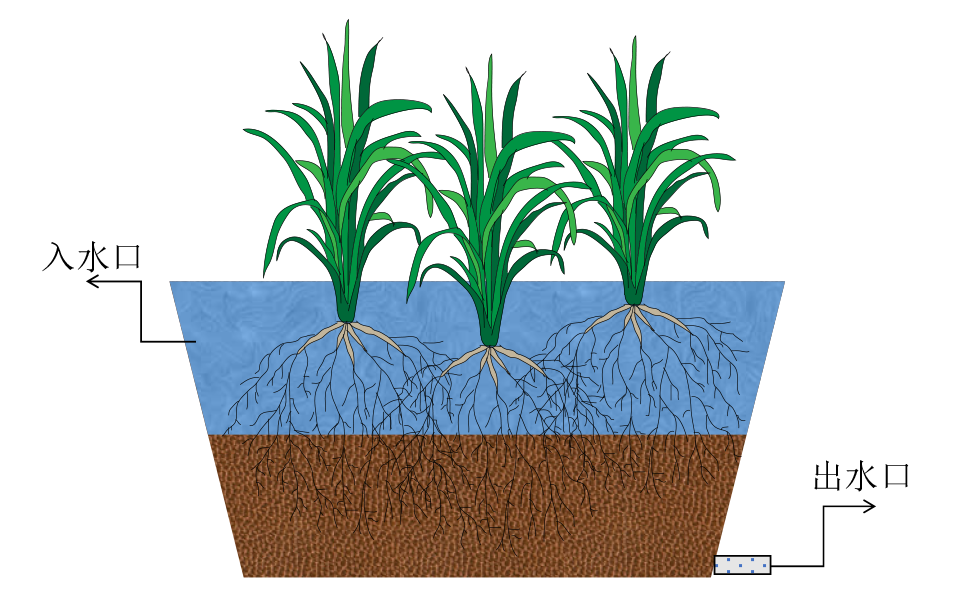
Figure 1 Schematic diagram of a small-scale constructed wetland
| 实验组 | 十六烷质量浓度/ (mg·L−1) | NH4+-N质量浓度/ (mg·L−1) | NO3−-N 质量浓度/ (mg·L−1) | TN质量 浓度/ (mg·L−1) | 种植 密度/ (棵·盆−1) | 固定化微生物量/ (g·L−1) |
|---|---|---|---|---|---|---|
| PBCN | 350 | 15 | 10 | 25 | 12 | 200 |
| PCN | 350 | 15 | 10 | 25 | 12 | 0 |
| PC | 350 | 0 | 0 | 0 | 12 | 0 |
| PN | 0 | 15 | 10 | 25 | 12 | 0 |
| BCN | 350 | 15 | 10 | 25 | 0 | 200 |
| CN | 350 | 15 | 10 | 25 | 0 | 0 |
Table 1 Setup of constructed wetland experimental group
| 实验组 | 十六烷质量浓度/ (mg·L−1) | NH4+-N质量浓度/ (mg·L−1) | NO3−-N 质量浓度/ (mg·L−1) | TN质量 浓度/ (mg·L−1) | 种植 密度/ (棵·盆−1) | 固定化微生物量/ (g·L−1) |
|---|---|---|---|---|---|---|
| PBCN | 350 | 15 | 10 | 25 | 12 | 200 |
| PCN | 350 | 15 | 10 | 25 | 12 | 0 |
| PC | 350 | 0 | 0 | 0 | 12 | 0 |
| PN | 0 | 15 | 10 | 25 | 12 | 0 |
| BCN | 350 | 15 | 10 | 25 | 0 | 200 |
| CN | 350 | 15 | 10 | 25 | 0 | 0 |
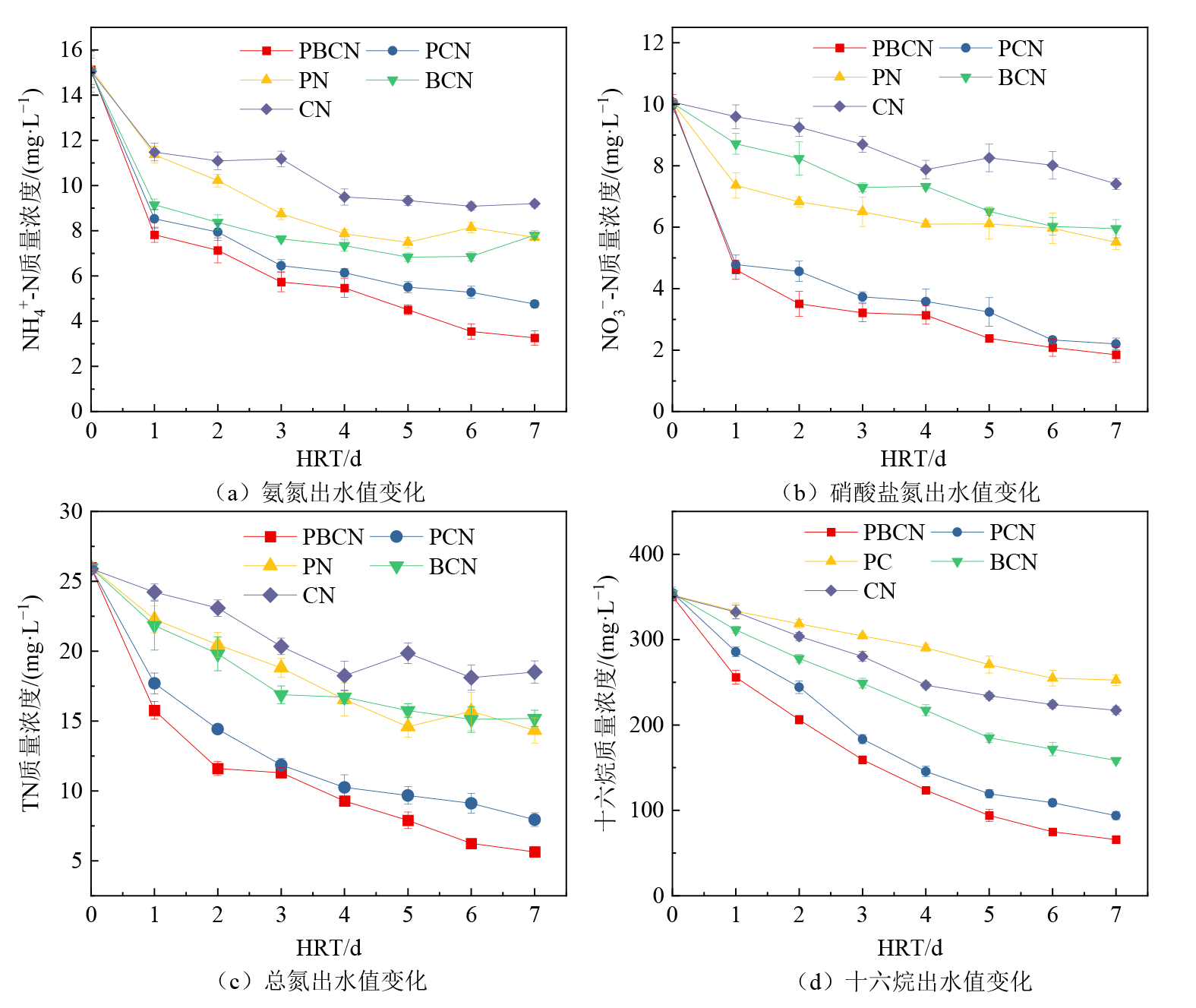
Figure 2 Change of pollutant effluent value in different treatment groups
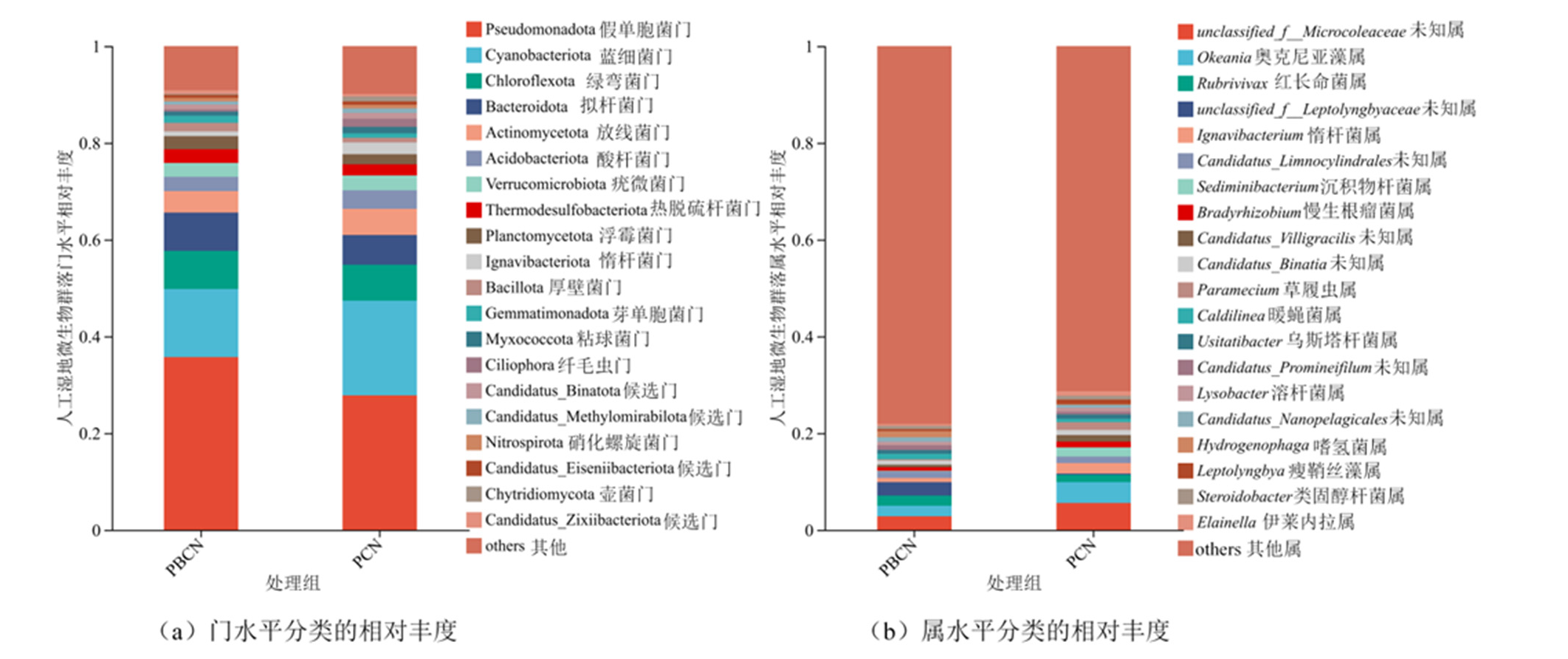
Figure 3 Relative abundance of phylum and genus horizontal classification

Figure 4 Heatmap of functional enzymes involved in nitrogen metabolism and hexadecane degradation
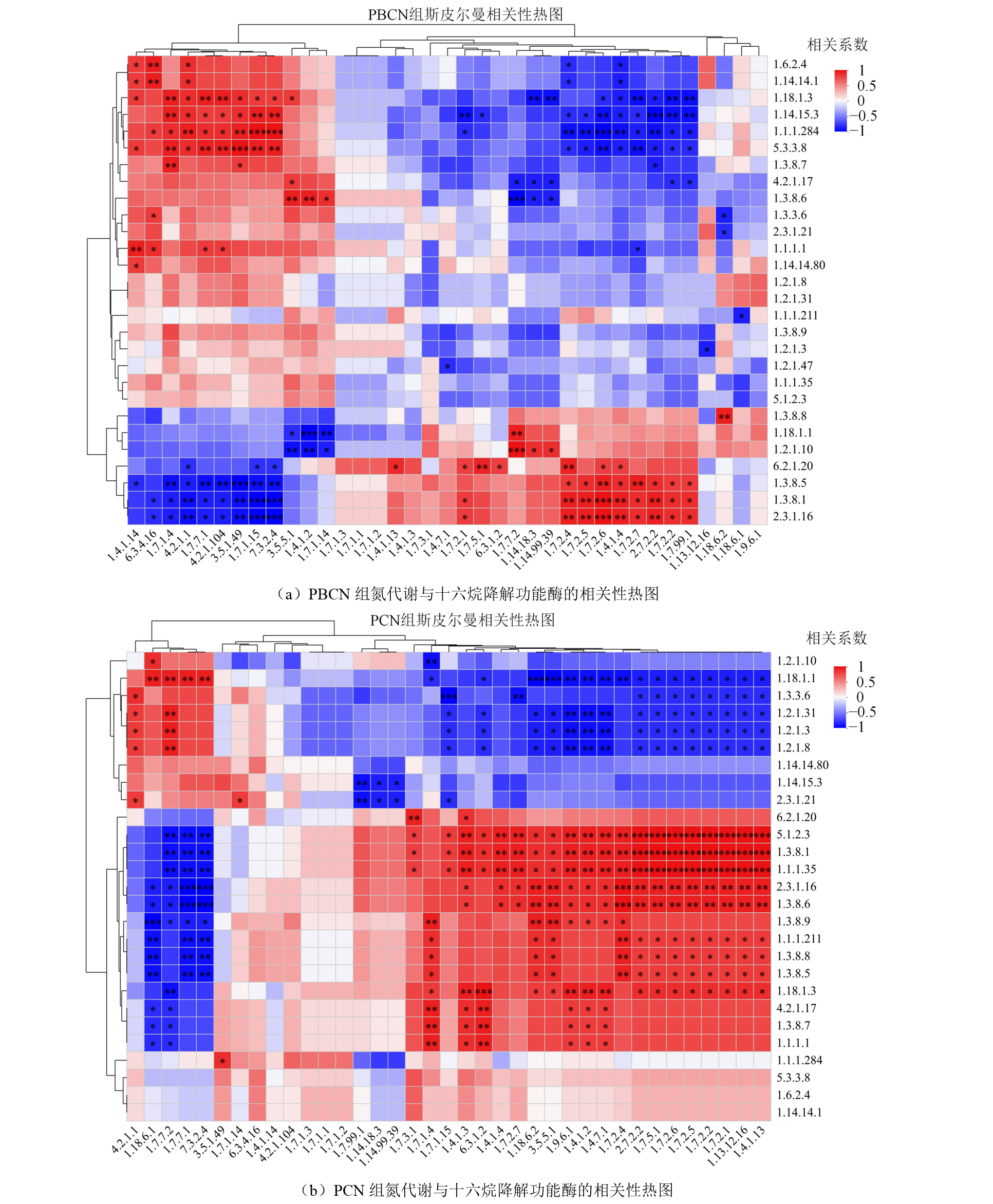
Figure 5 Heatmap of the correlation between nitrogen metabolism and hexadecane degradation function enzymes in PBCN and PCN group
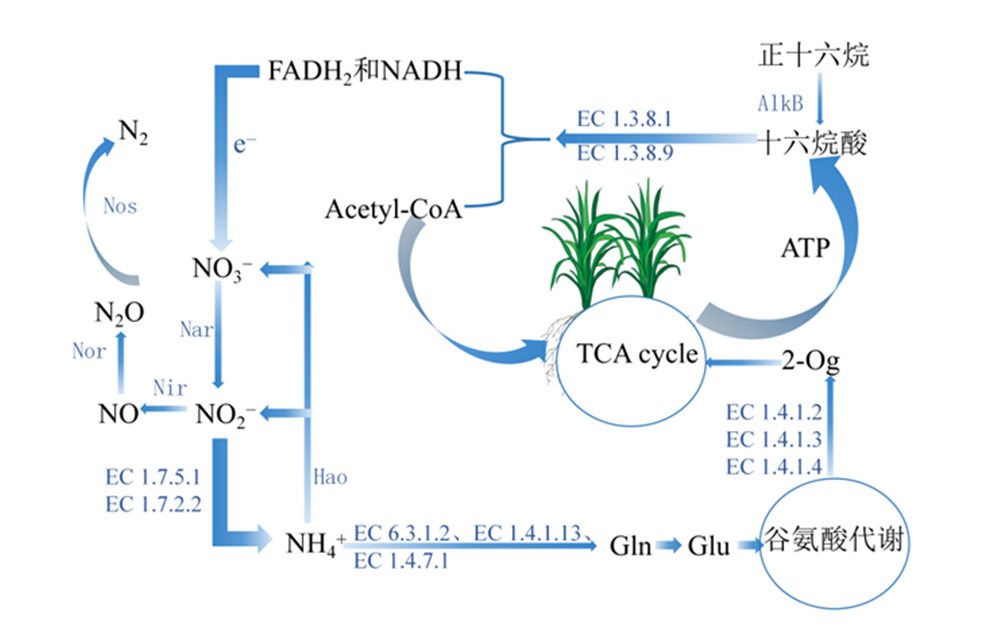
Figure 6 Coupling relationship diagram of nitrogen metabolism and hexadecane degradation
| [1] |
AGARRY S E, OGHENEJOBOH K M, LATINWO G K, et al., 2020. Biotreatment of petroleum refinery wastewater in vertical surface-flow constructed wetland vegetated with Eichhornia crassipes: Lab-scale experimental and kinetic modelling[J]. Environmental Technology, 41(14): 1793-1813.
DOI URL |
| [2] |
AKHILADAS E K, CHAKRABORTY S, 2025. Microbial and metabolic insights into petroleum refinery wastewater remediation in vertical flow constructed wetlands: A GC-MS and phytotoxicity approach[J]. Journal of Environmental Chemical Engineering, 13(5): 118853.
DOI URL |
| [3] |
BHAYA D, BIRZU G, ROCHA E P C, 2025. Horizontal gene transfer and recombination in cyanobacteriota[J]. Annual Review of Microbiology, 79: 685-711.
DOI URL |
| [4] |
CHAUHAN A, PRAJAPATI S K, 2025. Role of plant-specific microbial communities and functional genes in wastewater treatment via vertical flow constructed wetlands[J]. Journal of Environmental Chemical Engineering, 13(4): 117269.
DOI URL |
| [5] |
CHEN Y X, KRINGS S, BEALE A M J M, et al., 2022. Waterborne coatings encapsulating living nitrifying bacteria for wastewater treatment[J]. Advanced Sustainable Systems, 6(12): 2200312.
DOI URL |
| [6] |
DONG B Y, LU J F, LIU Y X, et al., 2024. A multi-omics approach to unravelling the coupling mechanism of nitrogen metabolism and phenanthrene biodegradation in soil amended with biochar[J]. Environment International, 183: 108435.
DOI URL |
| [7] |
GHANBARZADEH M, NIKNAM V, SOLTANI N, et al., 2019. Leptolyngbya fragilis ISC 108 is the most effective strain for dodecane biodegradation in contaminated soils[J]. International Journal of Phytoremediation, 21(9): 908-920.
DOI URL |
| [8] |
GUIBERT L M, LOVISO C L, BORGLIN S, et al., 2016. Diverse bacterial groups contribute to the alkane degradation potential of chronically polluted subantarctic coastal sediments[J]. Microbial Ecology, 71(1): 100-112.
DOI PMID |
| [9] |
HOWITT J A, MONDON J, MITCHELL B D, et al., 2014. Urban stormwater inputs to an adapted coastal wetland: Role in water treatment and impacts on wetland biota[J]. Science of The Total Environment, 485-486: 534-544.
DOI URL |
| [10] |
JAIN M, MAJUMDER A, GHOSAL P S, et al., 2020. A review on treatment of petroleum refinery and petrochemical plant wastewater: A special emphasis on constructed wetlands[J]. Journal of Environmental Management, 272: 111057.
DOI URL |
| [11] |
JIANG W, SHA A M, XIAO J J, et al., 2015. Experimental study on filtration effect and mechanism of pavement runoff in permeable asphalt pavement[J]. Construction and Building Materials, 100: 102-110.
DOI URL |
| [12] |
JING J W, GAO P, ZOU H T, 2026. Successional dynamics of microbial communities and remediation of petroleum-contaminated soils during pilot-scale bioaugmentation[J]. Journal of Environmental Management, 409: 130013.
DOI URL |
| [13] | LI R, GAO Y N, ZHANG L, et al., 2024. Global estimates of ambient reactive nitrogen components during 2000-2100 based on the multi-stage model[J]. Atmospheric Chemistry and Physics, 24(13): 7623-7636. |
| [14] |
LI Y T, WANG Y Q, LI X, et al., 2024. Remediation of petroleum hydrocarbon contaminated soils by nZVI coupled with electrokinetic activation of persulfate[J]. Journal of Cleaner Production, 459: 142514.
DOI URL |
| [15] |
MASOUD A M N, ALFARRA A, SORLINI S, 2022. Constructed wetlands as a solution for sustainable sanitation: A comprehensive review on integrating climate change resilience and circular economy[J]. Water, 14(20): 3232.
DOI URL |
| [16] | MONTOYA A, TEJEDA A, SULBARÁN-RANGEL B, et al., 2023. Treatment of tequila vinasse mixed with domestic wastewater in two types of constructed wetlands[J]. Water Science & Technology, 87(12): 3072-3082. |
| [17] |
MORALES G, UGIDOS A, ROJO F, 2006. Inactivation of the Pseudomonas putida cytochrome o ubiquinol oxidase leads to a significant change in the transcriptome and to increased expression of the CIO and cbb3‐1 terminal oxidases[J]. Environmental Microbiology, 8(10): 1764-1774.
DOI URL |
| [18] |
MUNIZ SACCO F C, VENDITTI S, WILMES P, et al., 2024. Vertical-flow constructed wetlands as a sustainable on-site greywater treatment process for the decrease of micropollutant concentration in urban wastewater and integration to households’ water services[J]. Science of The Total Environment, 946: 174310.
DOI URL |
| [19] |
MUSTAPHA H I, GUPTA P K, YADAV B K, et al., 2018. Performance evaluation of duplex constructed wetlands for the treatment of diesel contaminated wastewater[J]. Chemosphere, 205: 166-177.
DOI PMID |
| [20] | OSHIKI M, TAKAKI Y, HIRAI M, et al., 2022. Metagenomic analysis of five phylogenetically distant anammox bacterial enrichment cultures[J]. Microbes and Environments, 37(3): ME22017. |
| [21] |
PAN D D, SHAO S C, ZHONG J F, et al., 2022. Performance and mechanism of simultaneous nitrification-denitrification and denitrifying phosphorus removal in long-term moving bed biofilm reactor (MBBR)[J]. Bioresource Technology, 348: 126726.
DOI URL |
| [22] |
SOCOLOW R, 2016. Fitting on the Earth: Challenges of carbon and nitrogen cycle to preserve the habitability of the planet[J]. Engineering, 2(1): 21-22.
DOI URL |
| [23] |
TAHA S Y, ALMANSOORY A F, AL-BALDAWI I A, et al., 2023. Hybrid constructed wetland for treatment of power plant effluent polluted with hydrocarbons[J]. Journal of Water Process Engineering, 56: 104372.
DOI URL |
| [24] |
TAN Y, AL-HUQAIL A A, CHEN Q S, et al., 2022. Analysis of groundwater pollution in a petroleum refinery energy contributed in rock mechanics through ANFIS‐AHP[J]. International Journal of Energy Research, 46(15): 20928-20938.
DOI URL |
| [25] |
TANG J H, SU L L, FANG Y F, et al., 2023. Moderate nitrogen reduction increases nitrogen use efficiency and positively affects microbial communities in agricultural soils[J]. Agriculture, 13(4): 796.
DOI URL |
| [26] |
TAO Z K, JING Z Q, TAO M N, et al., 2023. A novel filter-type constructed wetland for secondary effluent treatment: Performance and its microbial mechanism[J]. Bioresource Technology, 380: 129075.
DOI URL |
| [27] |
VEERASAMY V, JAGANNATHAN U M, ARAKKALA S D, et al., 2023. Exploring the bacterial genetic diversity and community structure of crude oil contaminated soils using microbiomics[J]. Environmental Research, 236(Part 2): 116779.
DOI URL |
| [28] |
VYMAZAL J, DVOŘÁKOVÁ BŘEZINOVÁ T, 2016. Removal of saccharin from municipal sewage: The first results from constructed wetlands[J]. Chemical Engineering Journal, 306: 1067-1070.
DOI URL |
| [29] |
WANG H Z, LÜ Y F, BAO J F, et al., 2024. Petroleum-contaminated soil bioremediation and microbial community succession induced by application of co-pyrolysis biochar amendment: An investigation of performances and mechanisms[J]. Journal of Hazardous Materials, 466: 133600.
DOI URL |
| [30] |
WANG X O, TIAN Y M, LIU H, et al., 2019. Effects of influent COD/TN ratio on nitrogen removal in integrated constructed wetland-microbial fuel cell systems[J]. Bioresource Technology, 271: 492-495.
DOI PMID |
| [31] |
WEI W L, MA M C, JIANG X, et al., 2025. Long-term effects of nitrogen fertilization and Bradyrhizobium inoculation on diazotrophic community structure and diversity in soybean cultivation[J]. Applied Soil Ecology, 206: 105806.
DOI URL |
| [32] | WOJTOWICZ K, STELIGA T, BRZESZCZ J, et al., 2026. Phytoremediation of soil contaminated with petroleum hydrocarbons using the wild plants Scirpus sylvaticus and Cirsium oleraceum, supported by bioaugmentation[J]. International Biodeterioration & Biodegradation, 206: 106217. |
| [33] |
XU X Q, GAO X, GUI C, et al., 2024. Metagenomic insights into the enhancement of bioavailable nitrogen in continuous cropping soil through the application of traditional Chinese medicine residue following fumigation[J]. Genes, 15(12): 1532.
DOI URL |
| [34] |
YANG Z L, CHEN Y S, DONG J W, et al., 2024. Characterizing nitrogen deposited on urban road surfaces: Implication for stormwater runoff pollution control[J]. Science of The Total Environment, 952: 175692.
DOI URL |
| [35] |
YAO D D, LI Y K, XIE H J, et al., 2026. An innovative constructed wetlands design with tandem plant biomass and magnetite zones for enhanced nitrogen removal in the treatment of low C/N wastewater[J]. Journal of Environmental Chemical Engineering, 14(3): 122604.
DOI URL |
| [36] |
YARAHMADI H, 2024. Oil pollution threatens Persian Gulf marine life[J]. Science, 383(6683): 599-599.
DOI PMID |
| [37] |
ZENG Z J, WANG Y Y, ZHU W X, et al., 2023. Effect of COD/ NO3--N ratio on nitrite accumulation and microbial behavior in glucose-driven partial denitrification system[J]. Heliyon, 9(4): e14920.
DOI URL |
| [38] |
ZHANG B, XU W, MA Y C, et al., 2023. Effects of bioaugmentation by isolated Achromobacter xylosoxidans BP1 on PAHs degradation and microbial community in contaminated soil[J]. Journal of Environmental Management, 334: 117491.
DOI URL |
| [39] |
ZHANG C Q, CHEN W, WANG B, et al., 2024. Potato glycoside alkaloids exhibit antifungal activity by regulating the tricarboxylic acid cycle pathway of Fusarium solani[J]. Frontiers in Microbiology, 15: 1390269.
DOI URL |
| [40] |
ZHANG X H, WU M L, LIU Z L, et al., 2025b. Comprehensive effects of biochar-assisted nitrogen and phosphorus bioremediation on hydrocarbon removal and microecological improvement in petroleum- contaminated soil[J]. Bioresource Technology, 418: 131852.
DOI URL |
| [41] |
ZHANG X H, WU M L, OU Y W, et al., 2026. Synergistic effects of biochar-immobilized microorganisms and plant-assisted remediation in a stepwise approach: TPH removal, microecological response, and ecological toxicity[J]. Journal of Environmental Chemical Engineering, 14(2): 121902.
DOI URL |
| [42] |
ZHANG X H, WU M L, ZHANG X H, et al., 2025a. Sequential bioremediation of weathered petroleum-contaminated soil: A comparative study of biochar-immobilized microbes combined with Festuca arundinacea and Kalanchoe blossfeldiana[J]. Journal of Environmental Chemical Engineering, 13(5): 117558.
DOI URL |
| [43] | 郭露, 汪晓军, 秦嘉富, 等, 2022. 碳源投加方式对短程反硝化性能的影响[J]. 中国给水排水, 38(3): 74-80. |
| GUO L, WANG X J, QIN J F, et al., 2022. The influence of carbon source addition methods on the performance of short-term denitrification[J]. China Water and Wastewater, 38(3): 74-80. | |
| [44] |
郭琴, 李法云, 李晓桐, 等, 2025. 芽孢杆菌与不动杆菌复合菌群构建及其对苯并[a]芘的协同降解特性[J]. 生态环境学报, 34(10): 1507-1518.
DOI |
| GUO Q, LI F Y, LI X T, et al., 2025. Construction of bacterial consortium of Bacillus and Acinetobacter and its synergistic degradation characteristics of Benzo[a]pyrene[J]. Journal of Ecology and Environment Sciences, 34(10): 1507-1518. | |
| [45] | 李法云, 马佚铭, 李晓桐, 等, 2024. 一种石油烃降解菌株、培养方法、应用和微生物菌剂: 中国, CN202410540355.3[P]. (2024-08-16). |
| LI F Y, MA Y M, LI X T, et al., 2024. The invention relates to a petroleum hydrocarbon degrading strain, culture method, application and microbial agent: China, CN202410540355.3[P]. (2024-08-16). | |
| [46] | 李彤, 李翔, 李绍康, 等, 2019. 蚯蚓对植物修复石油烃污染土壤的影响[J]. 环境科学研究, 32(4): 671-676. |
| LI T, LI X, LI S K, et al., 2019. The influence of earthworms on the remediation of petroleum hydrocarbon-contaminated soil by plants[J]. Environmental Science Research, 32(4): 671-676. | |
| [47] |
吕丽萍, 张淼, 陈琛, 等, 2018. 暖季型水生植物残体分解对冬季浮床氮去除效果的影响[J]. 生态环境学报, 27(11): 2102-2109.
DOI |
| LÜ L P, ZHANG M, CHEN C, et al., 2018. Effects of aquatic macrophyte residue decomposition on winter nitrogen removal in floating constructed wetlands[J]. Journal of Ecology and Environment Sciences, 27(11): 2102-2109. | |
| [48] | 欧阳鹏武, 2024. 人工湿地对石油烃和硝态氮的协同降解作用研究[D]. 上海: 上海应用技术大学:14. |
| OUYANG P W, 2024. Study on the synergistic degradation of petroleum hydrocarbon andnitrate nitrogen by constructed[D]. Shanghai: Shanghai Institute of Technology:14. | |
| [49] | 孙婷婷, 涂耀仁, 罗鹏程, 等, 2023. 城市水体氮污染类型及同位素溯源研究[J]. 上海师范大学学报(自然科学版), 52(1): 146-154. |
| SUN T T, TU Y R, LUO P C, et al., 2023. Research on types of nitrogen pollution in urban water bodies and isotope tracing[J]. Journal of Shanghai Normal University (Natural Science Edition), 52(1): 146-154. | |
| [50] | 王鑫壹, 付保荣, 祝惠, 等, 2023. 外源微生物强化人工湿地污染物去除研究进展[J]. 中国给水排水, 39(8): 33-40. |
| WANG X Y, FU B R, ZHU H, et al., 2023. Research progress on pollutant removal in artificial wetlands enhanced by exogenous microorganisms[J]. China Water and Wastewater, 39(8): 33-40. | |
| [51] | 许敬轩, 尹鹏, 刘凤坤, 等, 2025. 耐盐产酸克雷伯氏菌 (Klebsiella oxytoca) WM27的特征、脱氮性能及固定化[J]. 微生物学通报, 52(6): 2530-2544. |
| XU J X, YIN P, LIU F K, et al., 2025. Characteristics, nitrogen removal performance and immobilization of salt-tolerant acid-producing Klebsiella oxytoca strain WM27[J]. Microbiology Bulletin, 52(6): 2530-2544. | |
| [52] | 张燕, 李英, 齐高相, 等, 2025. 氮负荷对人工湿地去污效应及其氨挥发的影响[J]. 环境科学与技术, 48(5): 20-28. |
| ZHANG Y, LI Y, QI G X, et al., 2025. The influence of nitrogen load on the decontamination effect of constructed wetlands and ammonia volatilization[J]. Environmental Science and Technology, 48(5): 20-28. |
| [1] | LI Qin, ZHENG Qiang, YANG Weijun, ZHANG Liyue, WANG Zi, ZHAO Lining. Effects of Reduced Irrigation with Biochar Amendment on Soil Aggregates and Their Carbon-Nitrogen Distribution in Wheat Fields [J]. Ecology and Environmental Sciences, 2026, 35(6): 875-884. |
| [2] | ZHANG Kai, LI Qian, LI Jiajun, LI Bencuo, GUO Xiaowei, FAN Bo, LI Wannian, MA Zhensheng. Changes in Soil Microbial Biomass During Nutrient Imbalance Process in Degraded Alpine Grassland [J]. Ecology and Environmental Sciences, 2026, 35(6): 928-938. |
| [3] | CAI Nana, WU Liucui, LIU Zhihui, QIAN Long, YANG Meihua, WANG Mengdie, YANG Guojiao, HU Zhongmin. Effects of Nitrogen and Water Addition on Ecosystem Productivity in a Temperate Typical Grassland of Inner Mongolia under Different Precipitation Backgrounds [J]. Ecology and Environmental Sciences, 2026, 35(6): 939-947. |
| [4] | CUI Zhipan, ZHANG Shaobing, ZHANG Xizhe, HAN Yanying, WU Zheng, TONG Lingchen, YE Yanhui. Effects of Nitrogen and Phosphorus Addition on Soil Enzyme Activity and Stoichiometric Ratios in the Alpine Grassland of Sejila Mountain [J]. Ecology and Environmental Sciences, 2026, 35(4): 520-528. |
| [5] | HOU Huimin, LI Haohao, WANG Hui, WANG Pengquan, BAO Zhiqiang, REN Zhiwei. Assessment and Future Scenario Prediction of Nitrogen Retention Function in the Shiyang River Basin [J]. Ecology and Environmental Sciences, 2026, 35(2): 232-244. |
| [6] | WANG Guolin, LIU Kaiying, SONG Ningning, LIU Jun, WANG Fangli, WANG Xuexia, ZONG Haiying, LI Shaojing. Response Mechanism of Organic Nitrogen Components in Saline-alkali Soil to the Input of Straw and Straw Biochar [J]. Ecology and Environmental Sciences, 2026, 35(1): 62-74. |
| [7] | FU Shouqi, YU Chaoyi, WU Lehuan, ZHANG Qi, YUAN Xiaoqian, YANG Ganghong, PAN Yuepeng. Calculation of Atmospheric Environmental Carrying Capacity and Coordinated Control of Multi-Pollutants in Zhoushan Archipelago New Area Based on the WRF-CAMx Model [J]. Ecology and Environmental Sciences, 2026, 35(1): 88-98. |
| [8] | GUO Jiawen, LIU Kai, LIU Gaoyuan, GAO Xinxin, YANG Kun, PAN Bo. Effects of Exogenous Cane Leaf Additives in Different Forms on Properties of Red Soil and Sugarcane Growth Yunnan [J]. Ecology and Environmental Sciences, 2025, 34(7): 1100-1110. |
| [9] | REN Chenjian, HAO Ruixia, ZHANG Yang, HAN Lijuan, WEI Yuxing, CHAI Lu. The Release Characteristics of Ammonia Nitrogen from River Sediments Driven by Hydrodynamic Forces [J]. Ecology and Environmental Sciences, 2025, 34(6): 931-940. |
| [10] | PAN Xuan, LUO Junxiao, TANG Bingran, GUO Xiangyu, HE Qiang, LI Hong. The Influence of Oxygen-carrying Zeolite and Tubificid Worm on Nitrogen Migration and Transformation in the Sediment-water Core [J]. Ecology and Environmental Sciences, 2025, 34(5): 763-772. |
| [11] | HUANG Deng-lingyao, TANG Bingran, MA Yuanyuan, HE Qiang, LI Hong. The Effect of As on the Transformation of Nitrogen in Paddy Soil: A Case Study Towards Purple Soil [J]. Ecology and Environmental Sciences, 2025, 34(5): 784-795. |
| [12] | MEI Yaoping, WU Benli, HUANG Long, WU Cangcang, CHEN Jing, CHEN Xiajun, HE Jixiang. Purification of Nitrogen and Phosphorus in Aquaculture Wastewater Using Different Aquatic Plants [J]. Ecology and Environmental Sciences, 2025, 34(3): 442-450. |
| [13] | SUN Yujia, LU Mei, ZHAO Xuyan, FENG Jun, LIU Guoqing, GUO Chuxiao, WANG Mingliu, HUANG Minchao, CHEN Zhiming. Response of Soil Bacterial Community Structure to Nitrogen Addition in Degraded Napahai Alpine Meadow [J]. Ecology and Environmental Sciences, 2025, 34(2): 233-246. |
| [14] | GUAN Jinshun, JIANG Xinyu, CHENG Jiong, CHEN Sanxiong, YU Shiqin. Study on the Enhancement of Carbon and Nitrogen Retention in Rare Earth Tailings Soil by Microalgae [J]. Ecology and Environmental Sciences, 2025, 34(12): 1890-1899. |
| [15] | ZHAO Chengxiao, MA Jianghong, LIU Hongxia, HU Jingwen, PAN Zitong, WANG Jiaying, LI Jinye. Enhanced Nitrogen Removal of Constructed Wetlands by Biochar [J]. Ecology and Environmental Sciences, 2025, 34(12): 1985-1992. |
| Viewed | ||||||
|
Full text |
|
|||||
|
Abstract |
|
|||||
Website Copyright © 2021 Editorial Office of Ecology and Environmental Sciences
Add: 808# Tianyuan Road, Tianhe District, Guangzhou. 510650.
Institute of Eco-environmental and Soil Sciences, Guangdong Academy of Sciences
Tel/Fax: 020-87024961; E-mail: editor@jeesci.com
Support by Beijing Magtech Co. Ltd., E-mail: support@magtech.com.cn
