
Ecology and Environmental Sciences ›› 2026, Vol. 35 ›› Issue (3): 478-487.DOI: 10.16258/j.cnki.1674-5906.2026.03.014
• Research Article [Environmental Science] • Previous Articles Next Articles
GUO Tian( ), YANG Yueqin, LI Weirui, XING Ying()
Received:2025-07-18
Revised:2026-01-01
Accepted:2026-02-20
Online:2026-03-18
Published:2026-03-13
郭甜(), 杨跃琴, 李葳蕤, 邢英()
通讯作者:
*E-mail: 作者简介:郭甜(2000年生),女(穿青人),硕士研究生,主要从事环境污染化学方向的研究。E-mail: 2123151173@qq.com
基金资助:CLC Number:
GUO Tian, YANG Yueqin, LI Weirui, XING Ying. Simulating the Impact of Biochar-Derived Organic Matter on the Migration and Transformation of Mercury in Soil[J]. Ecology and Environmental Sciences, 2026, 35(3): 478-487.
郭甜, 杨跃琴, 李葳蕤, 邢英. 模拟生物炭源有机质对土壤汞迁移转化的影响[J]. 生态环境学报, 2026, 35(3): 478-487.
Add to citation manager EndNote|Ris|BibTeX
URL: https://www.jeesci.com/EN/10.16258/j.cnki.1674-5906.2026.03.014
| 名称 | pH | 有机质质量分数/ (g·kg−1) | 阳离子交换量/ (cmol·kg−1) | 速效氮质量分数/ (g·kg−1) | 速效磷质量分数/ (g·kg−1) | 速效钾质量分数/ (g·kg−1) | THg质量分数/ (mg·kg−1) | MeHg质量分数/ (ng·g−1) |
|---|---|---|---|---|---|---|---|---|
| 土壤 | 7.18±0.02 | 20.59±0.52 | 7.29±0.10 | 0.035±0.02 | 0.062±0.01 | 0.103±0.06 | 27.01±0.57 | 8.47±0.66 |
Table 1 Basic physical and chemical properties of soil
| 名称 | pH | 有机质质量分数/ (g·kg−1) | 阳离子交换量/ (cmol·kg−1) | 速效氮质量分数/ (g·kg−1) | 速效磷质量分数/ (g·kg−1) | 速效钾质量分数/ (g·kg−1) | THg质量分数/ (mg·kg−1) | MeHg质量分数/ (ng·g−1) |
|---|---|---|---|---|---|---|---|---|
| 土壤 | 7.18±0.02 | 20.59±0.52 | 7.29±0.10 | 0.035±0.02 | 0.062±0.01 | 0.103±0.06 | 27.01±0.57 | 8.47±0.66 |
| 名称 | 富里酸 | 胡敏酸 | 酪氨酸 | 草酸 | 单宁酸 | |
|---|---|---|---|---|---|---|
| THg质量分数/(mg·kg−1) | 0.0074±0.001 | 0.60±0.031 | 0.0072±0.002 | 0.010±0.002 | 0.0043±0.001 | |
| MeHg质量分数/(ng·g−1) | ND | 0.26±0.005 | 0.11±0.013 | 0.25±0.037 | 0.49±0.026 |
Table 2 Mass fraction of total mercury and methylmercury in the tested organic matter
| 名称 | 富里酸 | 胡敏酸 | 酪氨酸 | 草酸 | 单宁酸 | |
|---|---|---|---|---|---|---|
| THg质量分数/(mg·kg−1) | 0.0074±0.001 | 0.60±0.031 | 0.0072±0.002 | 0.010±0.002 | 0.0043±0.001 | |
| MeHg质量分数/(ng·g−1) | ND | 0.26±0.005 | 0.11±0.013 | 0.25±0.037 | 0.49±0.026 |
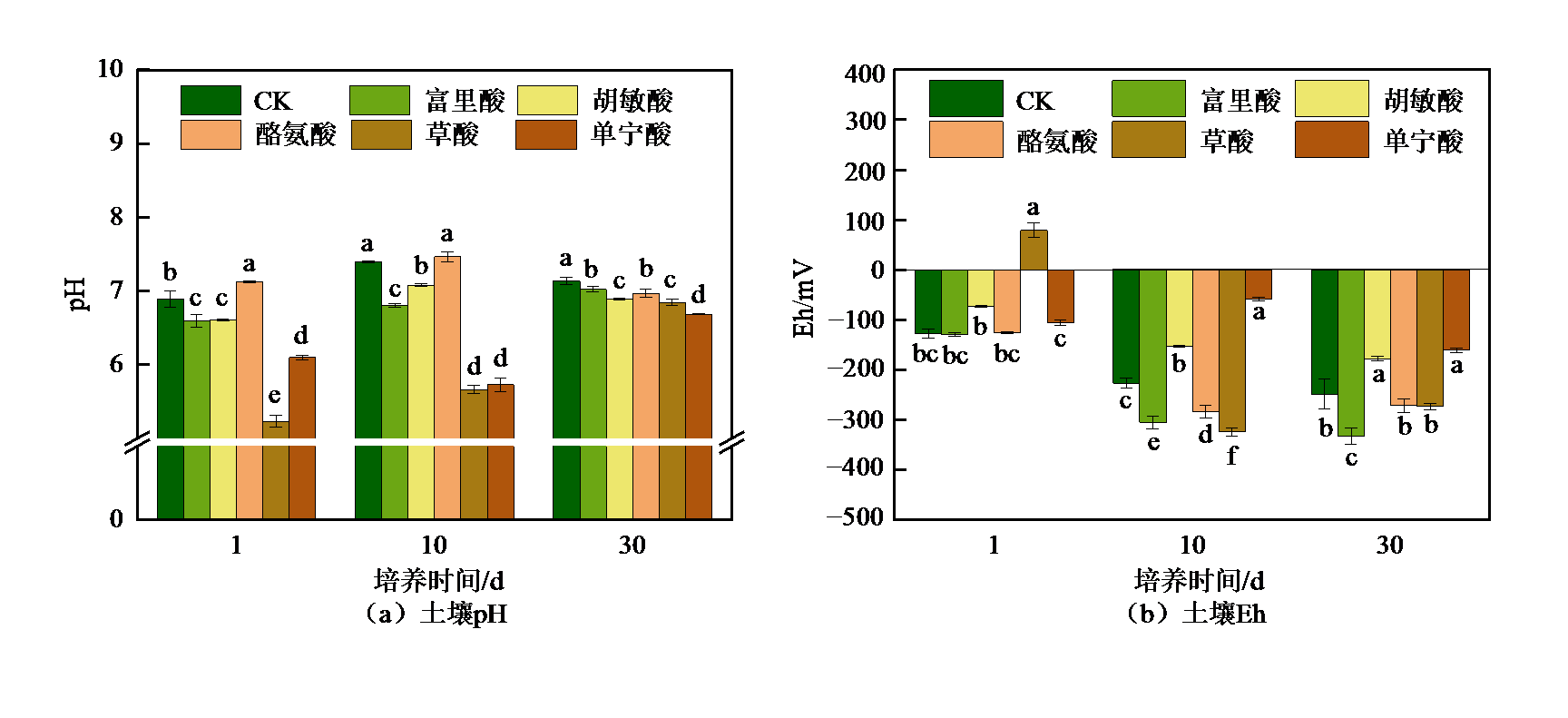
Figure 1 Variations in soil pH and Eh
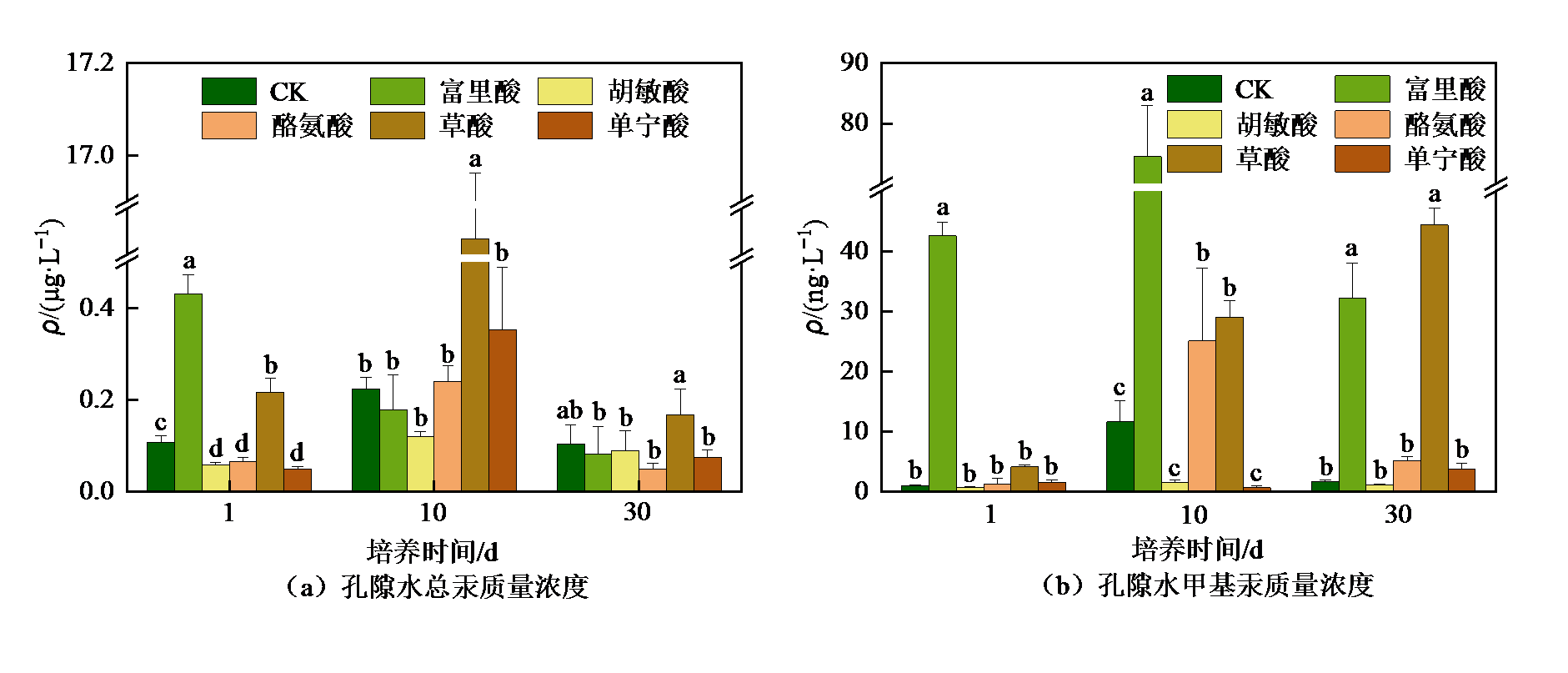
Figure 2 Mass concentration of total mercury and methylmercury in pore water
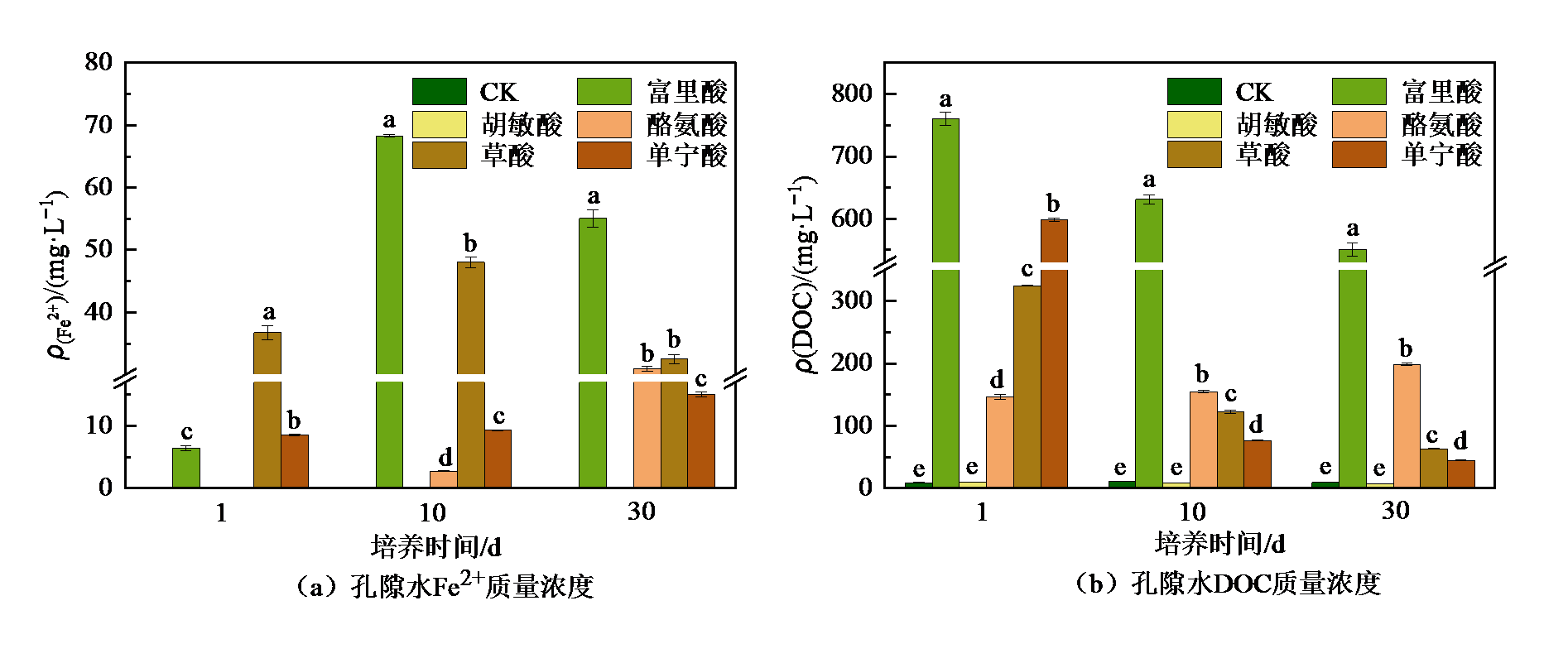
Figure 3 Variation in Fe2+ and DOC mass concentration in pore water
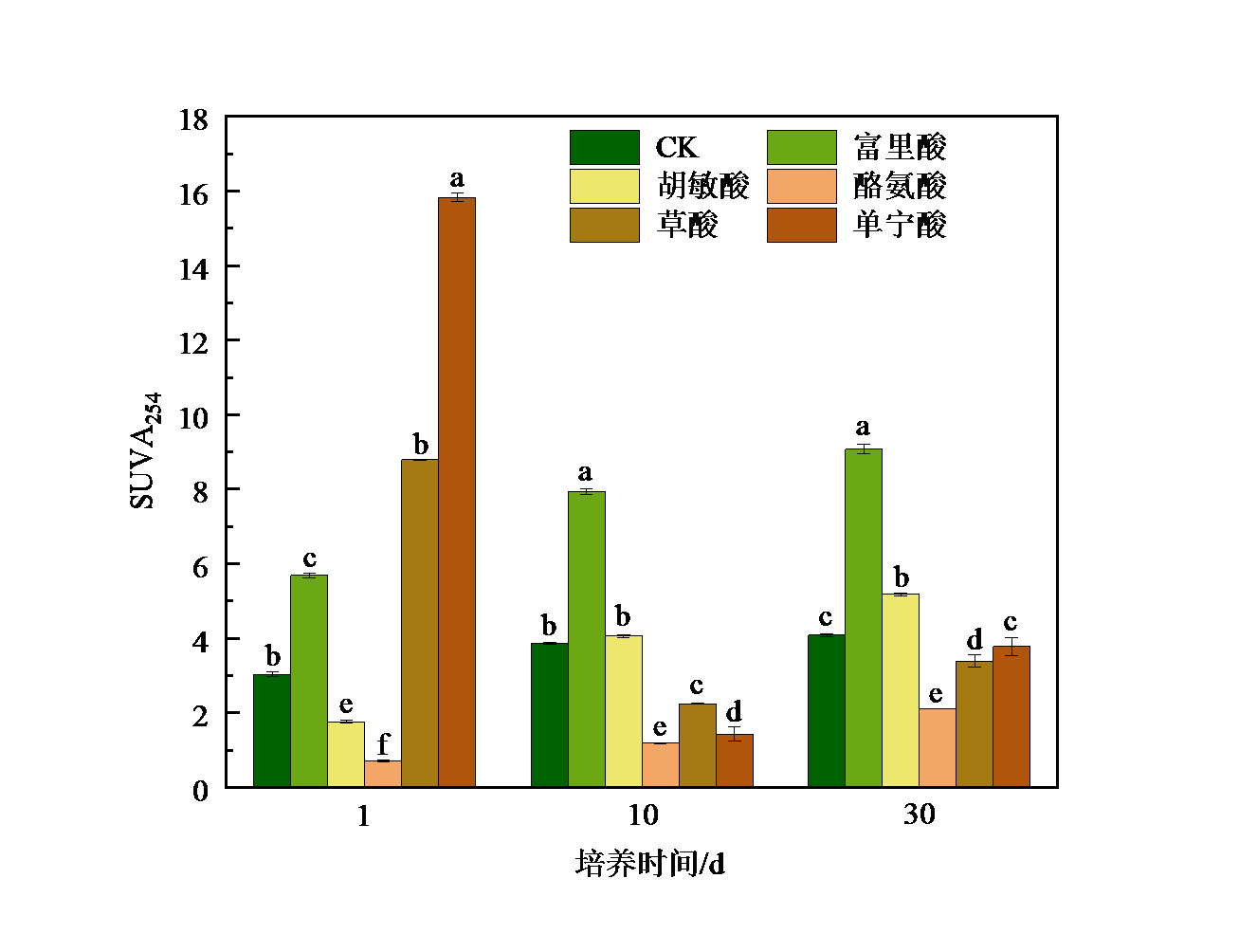
Figure 4 SUVA254 value of pore water
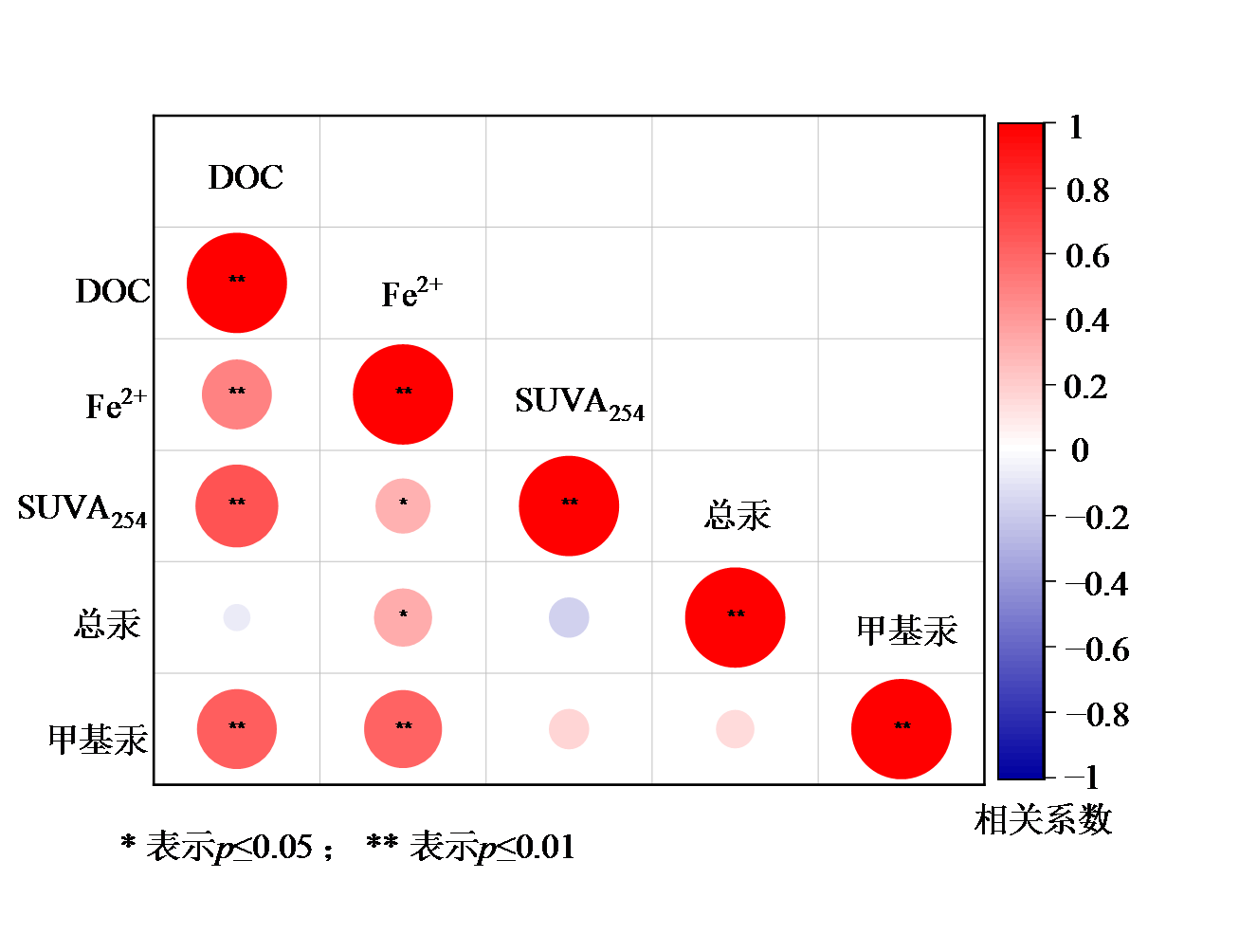
Figure 5 Pearson correlation analysis of different parameters in pore water
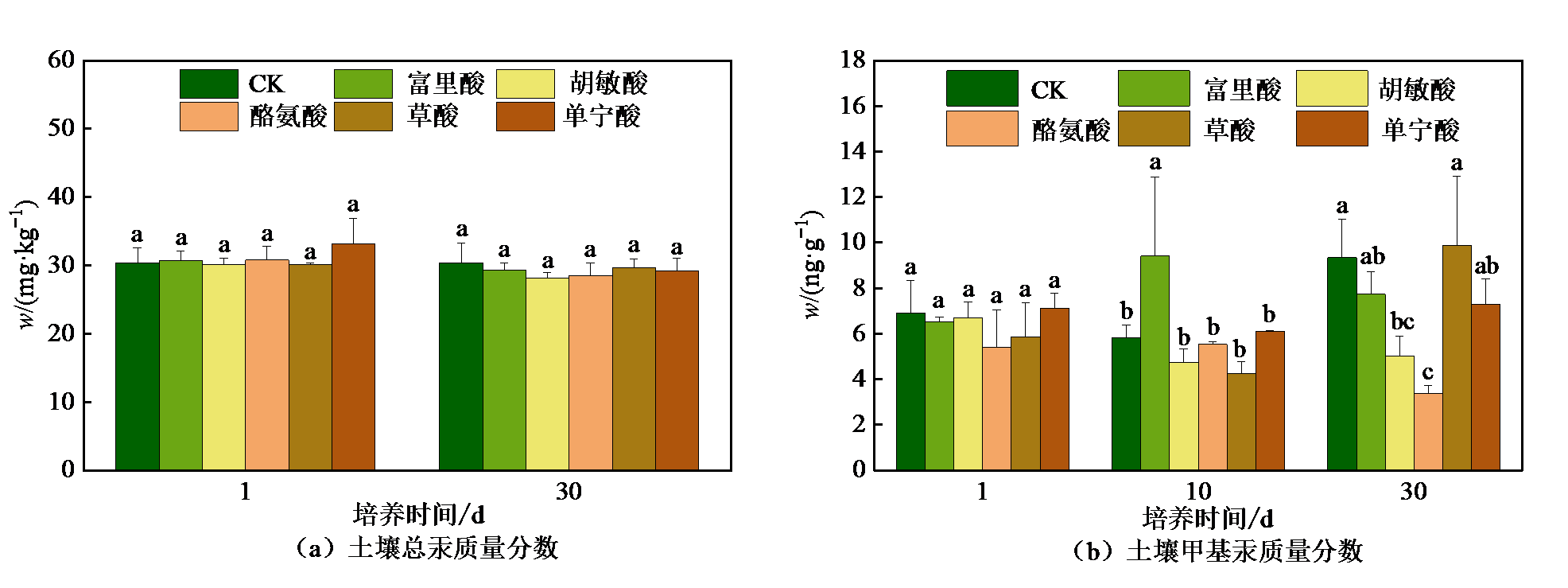
Figure 6 Mass fraction of total mercury and methylmercury in soil
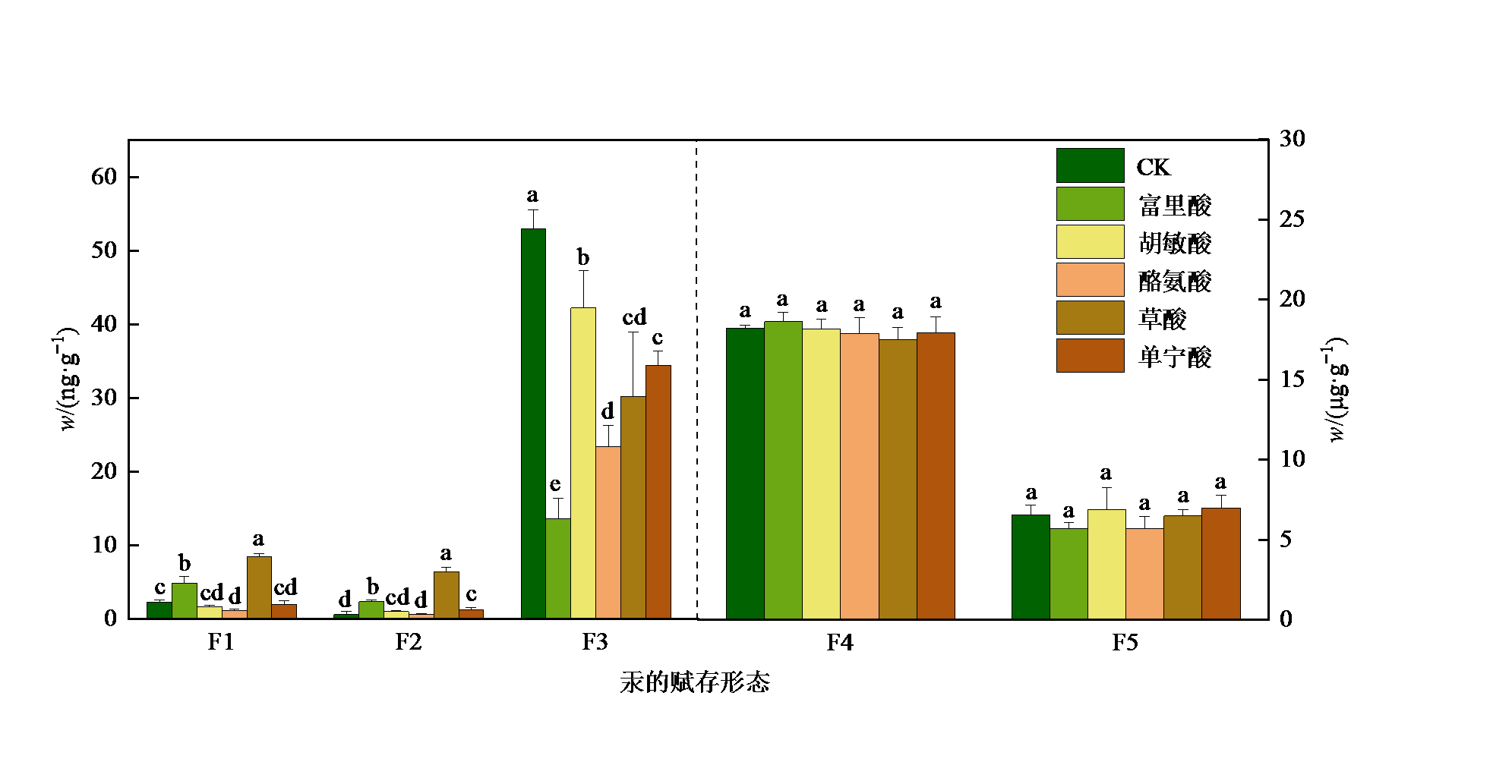
Figure 7 Mass fraction of different mercury forms in soil
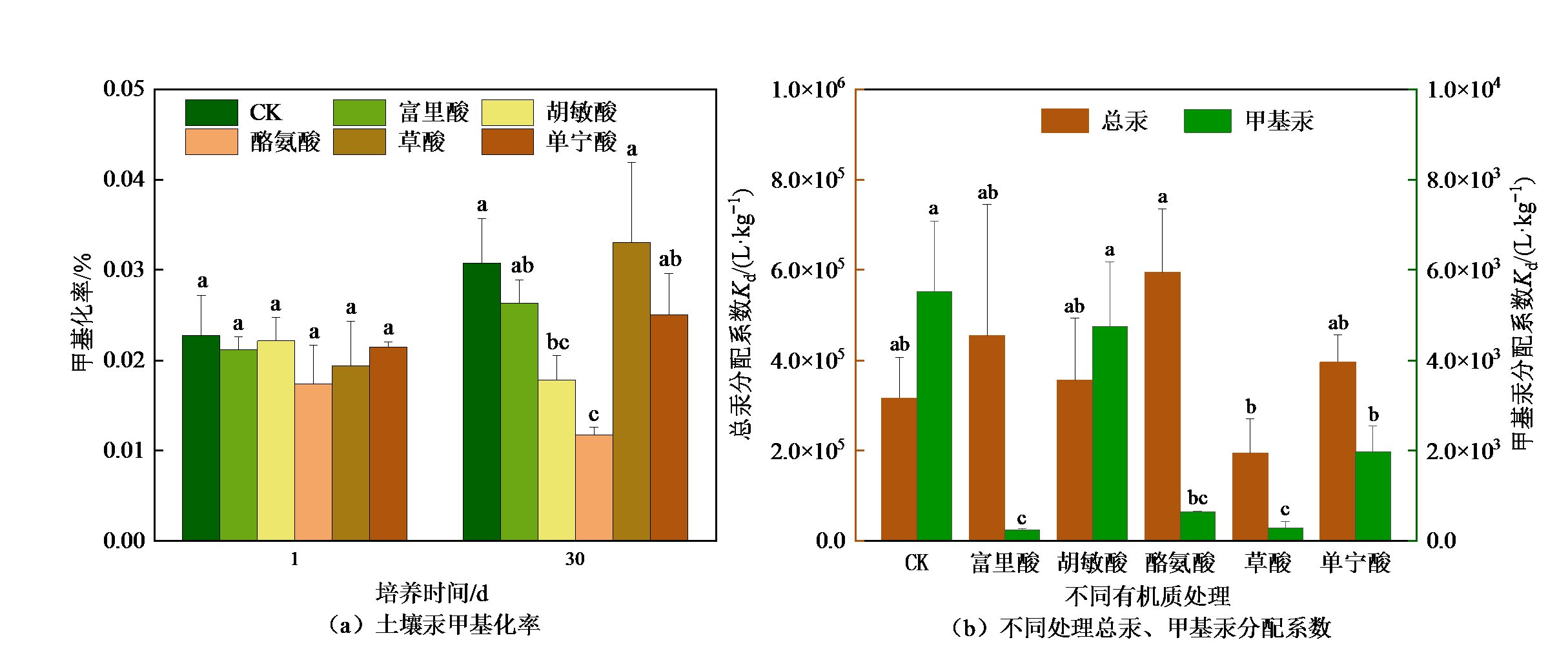
Figure 8 Mercury methylation potential and partition coefficients of total mercury and methylmercury in soils
| [1] |
ABDELHAFIZ M A, LIU J, JIANG T, et al., 2023. DOM influences Hg methylation in paddy soils across a Hg contamination gradient[J]. Environmental Pollution, 322: 121237.
DOI URL |
| [2] |
CHAI X L, HAO Y X, LIU G X, et al., 2013. The effect of aerobic conditions on the complexation ability between mercury and humic acid from landfill leachate and its implication for the environment[J]. Chemosphere, 92(4): 458-463.
DOI PMID |
| [3] |
CHU Y T, ZHU S D, WANG F Y, et al., 2019. Tyrosine-immobilized montmorillonite: an efficient adsorbent for removal of Pb2+ and Cu2+ from aqueous solution[J]. Journal of Chemical & Engineering Data, 64(8): 3535-3546.
DOI URL |
| [4] |
FANG K K, RAO S T, HE Y, et al., 2024. Rice straw-derived biochar amendment enabling a synergy for mercury alkylation and carbon sequestration in mercury-contaminated paddy soil[J]. Chemical Engineering Journal, 498: 155507.
DOI URL |
| [5] |
HU J, YANG N L, HE T R, et al., 2023. Elevated methylmercury production in mercury-contaminated paddy soil resulted from the favorable dissolved organic matter variation created by algal decomposition[J]. Environmental Pollution, 324: 121415.
DOI URL |
| [6] |
HILL J R, O’DRISCOLL N J, LEAN D R, 2009. Size distribution of methylmercury associated with particulate and dissolved organic matter in freshwaters[J]. Science of the Total Environment, 408(2): 408-414.
DOI URL |
| [7] |
JIANG X F, LONG W J, XU T, et al., 2023. Reductive transformation of Cr (VI) in contaminated soil by polyphenols: The role of gallic and tannic acid[J]. Ecotoxicology and Environmental Safety, 255: 114807.
DOI URL |
| [8] |
JIANG H, ZHANG L, ZHENG B H, et al., 2012. Role of organic acids in desorption of mercury from contaminated soils in eastern Shandong Province, China[J]. Chinese Geographical Science, 22(4): 414-421.
DOI URL |
| [9] | LIU J, LU B Q, POULAIN A J, et al., 2022. The underappreciated role of natural organic matter bond Hg (II) and nanoparticulate HgS as substrates for methylation in paddy soils across a Hg concentration gradient[J]. Environmental Pollution, 292(Part A): 118321. |
| [10] |
LIANG L, HORVAT M, CERNICHIARI E, et al., 1996. Simple solvent extraction technique for elimination of matrix interferences in the determination of methylmercury in environmental and biological samples by ethylation-gas chromatography-cold vapor atomic fluorescence spectrometry[J]. Talanta, 43(11): 1883-1888.
PMID |
| [11] |
LYON B F, AMBROSE R, RICE G, et al., 1997. Calculation of soil-water and benthic sediment partition coefficients for mercury[J]. Chemosphere, 35(4): 791-808.
PMID |
| [12] |
LIU E X, XUE J P, ZHANG G, et al., 2023. Distribution and release of mercury regulated by the decomposition of a pioneer habitat-adapted plant in the Water-Level-Fluctuating Zone of the Three Gorges Reservoir[J]. Bulletin of Environmental Contamination and Toxicology, 111(1): 1.
DOI PMID |
| [13] |
MAN Y, WANG B, WANG J X, et al., 2021. Use of biochar to reduce mercury accumulation in Oryza sativa L.: A trial for sustainable management of historically polluted farmlands[J]. Environment International, 153: 106527.
DOI URL |
| [14] |
MENG F D, YUAN G D, WEI J, et al., 2017. Humic substances as a washing agent for Cd-contaminated soils[J]. Chemosphere, 181: 461-467.
DOI PMID |
| [15] |
PU Q, MENG B, HUANG J H, et al., 2024. Dissolved organic matter fosters core mercury-methylating microbiomes for methylmercury production in paddy soils[J]. Biogeosciences, 22(6): 1543-1556.
DOI URL |
| [16] |
QIU G L, FENG X B, WANG S F, et al., 2005. Mercury and methylmercury in riparian soil, sediments, mine-waste calcines, and moss from abandoned Hg mines in east Guizhou province, southwestern China[J]. Applied Geochemistry, 20(3): 627-638.
DOI URL |
| [17] |
QIU G L, FENG X B, LI P, et al., 2008. Methylmercury accumulation in rice (Oryza sativa L.) grown at abandoned mercury mines in Guizhou, China[J]. Journal of Agricultural and Food Chemistry, 56(7): 2465-2468.
DOI URL |
| [18] |
RAN S, HE T R, ZHOU X, et al., 2022. Effects of fulvic acid and humic acid from different sources on Hg methylation in soil and accumulation in rice[J]. Journal of Environmental Sciences, 119: 93-105.
DOI PMID |
| [19] |
SUN Y Q, XIONG X N, HE M J, et al., 2021. Roles of biochar-derived dissolved organic matter in soil amendment and environmental remediation: A critical review[J]. Chemical Engineering Journal, 424(4): 130387.
DOI URL |
| [20] |
SOERENSEN A L, SCHARTUP A T, SKROBONJA A, et al., 2017. Organic matter drives high interannual variability in methylmercury concentrations in a subarctic coastal sea[J]. Environmental Pollution, 229: 531-538.
DOI PMID |
| [21] |
TANG Z Y, FAN F L, DENG S P, et al., 2020. Mercury in rice paddy fields and how does some agricultural activities affect the translocation and transformation of mercury-A critical review[J]. Ecotoxicology and Environmental Safety, 202: 110950.
DOI URL |
| [22] |
TESSIER A, CAMPBELL P G C, BISSON M, 1979. Sequential extraction procedure for the speciation of particulate trace metals[J]. Analytical Chemistry, 51(7): 844-851.
DOI URL |
| [23] |
VANDENBOSSCHE M, JIMENEZ M, CASETTA M, et al., 2015. Remediation of heavy metals by biomolecules: A review[J]. Critical Reviews in Environmental Science and Technology, 45(15): 1644-1704.
DOI URL |
| [24] |
WANG J X, FENG X B, ANDERSON C W N, et al., 2011. Ammonium thiosulphate enhanced phytoextraction from mercury contaminated soil-results from a greenhouse study[J]. Journal of Hazardous Materials, 186(1): 119-127.
DOI URL |
| [25] | YANG A A, FENG J Y, WANG H, et al., 2023a. A review of mercury uptake, transport and bioaccumulation in rice[J]. Water, Air, & Soil Pollution, 234(6): 377. |
| [26] |
YANG N L, HU J, YIN D L, et al., 2023b. Mercury and methylmercury in Hg-contaminated paddy soil and their uptake in rice as regulated by DOM from different agricultural sources[J]. Environmental Science and Pollution Research, 30(31): 77181-77192.
DOI |
| [27] |
YU Y, WAN Y N, CAMARA A Y, et al., 2018. Effects of the addition and aging of humic acid-based amendments on the solubility of Cd in soil solution and its accumulation in rice[J]. Chemosphere, 196: 303-310.
DOI PMID |
| [28] |
ZHAO L, MENG B, FENG X B, 2020. Mercury methylation in rice paddy and accumulation in rice plant: A review[J]. Ecotoxicology and Environmental Safety, 195: 110462.
DOI URL |
| [29] | 常智淋, 王朝旭, 张峰, 等, 2022. 生物炭及其碳骨架对微生物去除水中低浓度硝酸盐的影响[J]. 生态与农村环境学报, 38(11): 1464-1472. |
| CHANG Z L, WANG C X, ZHANG F, et al., 2022. Effects of biochar and its skeleton on the removal of low concentration nitrate in water by Denitrifiers[J]. Journal of Ecology and Rural Environment, 38(11): 1464-1472. | |
| [30] |
陈文哲, 黄秋香, 孟凡德, 等, 2024. 草酸和酒石酸对稻田土壤中砷解吸行为的影响研究[J]. 生态环境学报, 33(8): 1298-1305.
DOI |
| CHEN W Z, HUANG Q X, MENG F D, et al., 2024. Impacts of oxalic and tartaric acids on arsenic desorption from a paddy soil[J]. Ecology and Environmental Sciences, 33(8): 1298-1305. | |
| [31] | 高润霞, 罗文倩, 胡海艳, 等, 2020. 稻田土壤中汞的微生物甲基化研究进展[J]. 宁夏农林科技, 61(1): 46-49. |
| GAO R X, LUO W Q, HU H Y, et al., 2020. Research progress of microbial methylation of mercury in paddy soil[J]. Ningxia Journal of Agriculture and Forestry Science and Technology, 61(1): 46-49. | |
| [32] | 黄梅, 2020. 生物炭源溶解性有机质结构特性以及与重金属结合机制的研究[D]. 长沙: 湖南大学: 2-6. |
| HUANG M, 2020. Biochar-derived dissolved organic matter: Structural characteristics and binding mechanism with heavy metals[D]. Changsha: Hunan University: 2-6. | |
| [33] | 黄国勇, 付庆灵, 朱俊, 等, 2014. 低分子有机酸对土壤中Cu化学形态的影响[J]. 环境科学, 35(8): 3091-3095. |
| HUANG G Y, FU Q L, ZHU J, et al., 2014. Effects of low molecular weight organic acids on speciation of exogenous Cu in an acid soil[J]. Environmental Science, 35(8): 3091-3095. | |
| [34] | 胡继杰, 朱练峰, 钟楚, 等, 2017. 溶解氧对稻田土壤氮素转化及水稻氮代谢影响研究进展[J]. 生态学杂志, 36(7): 2019-2028. |
| HU J J, ZHU L F, ZHONG C, et al., 2017. Effects of dissolved oxygen on nitrogen transformation in paddy soil and nitrogen metabolism of rice: A review[J]. Chinese Journal of Ecology, 36(7): 2019-2028. | |
| [35] | 蒋红梅, 冯新斌, 梁琏, 等, 2004. 蒸馏-乙基化GC-CVAFS法测定天然水体中的甲基汞[J]. 中国环境科学, 24(5): 568-571. |
| JIANG H M, FENG X B, LIANG L, et al., 2004. Determination of methyl mercury in waters by distillation-GC-CVAFS technique[J]. China Environmental Science, 24(5): 568-571. | |
| [36] |
孔丝纺, 姚兴成, 张江勇, 等, 2015. 生物质炭的特性及其应用的研究进展[J]. 生态环境学报, 24(4): 716-723.
DOI |
| KONG S F, YAO X C, ZHANG J Y, et al., 2015. Review of characteristics of biochar and research progress of its applications[J]. Ecology and Environmental Sciences, 24(4): 716-723. | |
| [37] | 李汉邯, 2022. 林火灰对水环境中汞迁移转化的影响及作用机制[D]. 成都: 四川农业大学: 13-87. |
| LI H H, 2022. Impacts of wildfire ash on the fate of mercury and the mechanisms in aquatic environment[D]. Chengdu: Sichuan Agricultural University: 13-87. | |
| [38] | 李葳蕤, 2024. 稻壳生物炭中不同碳组分对水稻富集汞的影响[D]. 贵阳: 贵州师范大学: 68. |
| LI W R, 2024. Effects of different carbon components of rice husk biochar on mercury accumulation by rice[D]. Guiyang: Guizhou Normal University: 68. | |
| [39] | 鲁如坤, 2000. 土壤农业化学分析方法[M]. 北京: 中国农业科技出版社: 74-77. |
| LU R K, 2000. Analytical methods for soil and agro-chemistry[M]. Beijing: China Agricultural Science and Technology Press: 74-77. | |
| [40] | 李仲根, 冯新斌, 何天容, 等, 2005. 王水水浴消解-冷原子荧光法测定土壤和沉积物中的总汞[J]. 矿物岩石地球化学通报, 24(2): 140-143. |
| LI Z G, FENG X B, HE T R, et al., 2005. Determination of total mercury in soil and sediment by aquaregia digestion in the water bath coupled with cold vapor atom fluorescence spectrometry[J]. Bulletin of Mineralogy, Petrology and Geochemistry, 24(2): 140-143. | |
| [41] | 李雨清, 何江, 吕昌伟, 等, 2016. 富里酸对重金属在沉积物上吸附及形态分布的影响[J]. 环境科学, 37(3): 1008-1015. |
|
LI Y Q, HE J, LÜ C W, et al., 2016. Effects of fulvic acid on absorption and form distribution of heavy metals on sediments[J]. Environmental Science, 37(3): 1008-1015.
DOI URL |
|
| [42] | 刘昳晗, 刘颖, 王丽娜, 等, 2023. 桑秆生物炭对污染土壤氧化还原过程中重金属的固持效应[J]. 生态与农村环境学报, 39(11): 1483-1491. |
| LIU Y H, LIU Y, WANG L N, et al., 2023. Effect of mulberry stems biochar on immobilization of Cd, Pb and Zn in redox dynamic soil[J]. Journal of Ecology and Rural Environment, 39(11): 1483-1491. | |
| [43] | 李波, 魏世强, 青长乐, 2004. 腐殖酸对土壤吸持汞的影响研究[J]. 环境科学与技术, 27(2): 1-2, 18-114. |
|
LI B, WEI S Q, QING C L, 2004. Effect of humus on mercury adsorption in soil[J]. Environmental Science & Technology, 27(2): 1-2, 18-114.
DOI URL |
|
| [44] | 孟其义, 钱晓莉, 陈淼, 等, 2018. 稻田生态系统汞的生物地球化学研究进展[J]. 生态学杂志, 37(5): 1556-1573. |
| MENG Q Y, QIAN X L, CHEN M, et al., 2018. Biogeochemical cycle of mercury in rice paddy ecosystem: A critical review[J]. Chinese Journal of Ecology, 37(5): 1556-1573. | |
| [45] | 彭港, 吕贻锦, 丁泽聪, 等, 2021. 干湿交替对土壤DOM特性及重金属释放的影响[J]. 环境工程学报, 15(8): 2689-2700. |
| PENG G, LÜ Y J, DING Z C, et al., 2021. Effects of dry-wet cycles on the properties of soil DOM and the release of heavy metals[J]. Chinese Journal of Environmental Engineering, 15(8): 2689-2700. | |
| [46] | 覃蔡清, 2016. 低分子量有机酸对三峡库区消落带土壤汞活化及甲基化的影响[D]. 重庆: 西南大学: 19. |
| QIN C Q, 2016. Effect of low-molecular-weight organic acids on the activation and methylation of mercury in the soils of the Water-Level- Fluctuating Zone of the Three Gorges Reservoir[D]. Chongqing: Southwest University: 19. | |
| [47] | 涂文宇, 潘昭阳, 杨雪清, 等, 2025. 典型汞污染区不同蔬菜汞累积能力的差异研究[J]. 地球与环境, 53(2): 262-269. |
|
TU W Y, PAN Z Y, YANG X Q, et al., 2025. Investigation of the difference in mercury accumulation of various vegetables in typical mercury-polluted regions[J]. Earth and Environment, 53(2): 262-269.
DOI URL |
|
| [48] | 王俊, 王青清, 魏世强, 2017. 腐植酸对土壤砷化学形态及生物可给性的影响[J]. 农业环境科学学报, 36(6): 1124-1132. |
| WANG J, WANG Q Q, WEI S Q, 2017. Chemical speciation and bioaccessibility of arsenate in soil as influenced by humic acids[J]. Journal of Agro-Environment Science, 36(6): 1124-1132. | |
| [49] | 王涛, 缪志尧, 陈芮, 2024. 单宁酸对重金属离子的吸附研究[J]. 食品工业, 45(3): 119-124. |
| WANG T, MIAO Z Y, CHEN R, 2024. Study on the adsorption of tannic acid on heavy metal ions[J]. Food Industry, 45(3): 119-124. | |
| [50] | 余琼阳, 李婉怡, 张宁, 等, 2024. 农田土壤重金属污染现状与安全利用技术研究进展[J]. 土壤, 56(2): 229-241. |
| YU Q Y, LI W Y, ZHANG N, et al., 2024. Present pollution status and safe utilization technologies of heavy metal-polluted farmland soil: A review[J]. Soils, 56(2): 229-241. | |
| [51] | 游蕊, 梁丽, 覃蔡清, 等, 2016. 低分子量有机酸对三峡水库消落区土壤中汞赋存形态及其活性的影响[J]. 环境科学, 37(1): 173-179. |
| YOU R, LIANG L, QIN C Q, et al., 2016. Effect of low molecular weight organic acids on the chemical speciation and activity of mercury in the soils of the Water-Level-Fluctuating Zone of the Three Gorges Reservoir[J]. Environmental Science, 37(1): 173-179. | |
| [52] | 姚雪霞, 戴存礼, 李晓林, 等, 2015. 邻菲罗啉分光光度法测定微量铁实验条件的探讨[J]. 实验室研究与探索, 34(3): 16-19. |
| YAO X X, DAI C L, LI X L, et al., 2015. Investigating the experimental condition for determination of trace iron by phenanthroline spectrophotometry[J]. Research and Exploration in Laboratory, 34(3): 16-19. | |
| [53] | 阴皎阳, 尹大强, 王锐, 2014. 沉积物中汞的甲基化研究进展[J]. 生态毒理学报, 9(5): 819-831. |
| YIN J Y, YIN D Q, WANG R, 2014. Research progress on mercury methylation in sediments[J]. Asian Journal of Ecotoxicology, 9(5): 819-831. | |
| [54] | 姚佳, 杨飞, 张毅敏, 等, 2017. 黑藻叶、茎腐解释放溶解性有机物的特性[J]. 中国环境科学, 37(11): 4294-4303. |
| YAO J, YANG F, ZHANG Y M, et al., 2017. Research on the dissolved organic matter of Hydrilla verticillata’s leaf and stem decomposition[J]. China Environmental Science, 37(11): 4294-4303. |
| [1] | HUANG Shaoqiang, JIANG Heng, YU Shiqin, JIANG Xinyu, CHENG Jiong, CHEN Sanxiong. Effects of Chlorella Vulgaris on Water Stability of Soil Aggregates and Extracellular Polymeric Substance Components in Red Soils of Guangdong [J]. Ecology and Environmental Sciences, 2026, 35(3): 425-436. |
| [2] | ZHAO Shiyi, LI Jun, ZHAO Xu, HUANG Minghao, GOU Zhengyang, ZHU Haibiao, HUANG Hong. Spatial Heterogeneity and Influencing Factors of Soil Organic Carbon Fractions in Chongming Dongtan Wetland [J]. Ecology and Environmental Sciences, 2026, 35(3): 437-446. |
| [3] | WU Yuqing, GUO Jie, WU Jiahui, LIU Xucheng, ZHAO Jiangang. Study on the Remediation Effect of the Combination of Soil Amendment and Plant on Pb Pollution in Ion-adsorption Rare Earth Mine [J]. Ecology and Environmental Sciences, 2026, 35(3): 469-477. |
| [4] | WANG Yue, YU Fudong, ZHANG Yue, XIANG Hengxing, YAN Hengqi, MAO Dehua. Multi-scenario Simulation of Landscape Pattern and Carbon Storage Changes in Northeast Black Soil Region Based on the PLUS-InVEST Model [J]. Ecology and Environmental Sciences, 2026, 35(2): 178-189. |
| [5] | LI Yanlin, XU Hongwei, XU Lin, LUO Ziteng, YUAN Yaling, TAN Bo. Effects of Strip Clearcutting on the Composition and Stability of Soil Water-stable Aggregates in Cryptomeria fortunei Plantations [J]. Ecology and Environmental Sciences, 2026, 35(2): 223-231. |
| [6] | CUI Liyang, ZHANG Lei, JIA Xia, ZHAO Yonghua, MU Qi, SI Shaocheng. Soil Quality Assessment of Saline-alkali Land in Southern Xinjiang Combined with Ecosystem Services [J]. Ecology and Environmental Sciences, 2026, 35(2): 245-255. |
| [7] | HAN Cunliang, DENG Yirong, CHANG Chunying, LIN Longyong, CHENG Sheng, LI Junchun. Methods of Identification of High Geological Background Areas of Potentially Toxic Metal(loid)s in Soils Based on Environmental Risk Management [J]. Ecology and Environmental Sciences, 2026, 35(2): 278-288. |
| [8] | SHI Hanzhi, CAO Yiran, LIU Fan, WU Zhichao, LI Furong, DENGTENG Haobo, XU Aiping, LI Dongqin, WEN Dian, WANG Xu. Study on the Regulation of Soil Lead Forms Transformation under the Combined Action of Straw and Bacteria [J]. Ecology and Environmental Sciences, 2026, 35(1): 155-166. |
| [9] | TANG Zhongao, CHUN Zhenjie, DUAN Xingwu, ZHANG Ruihuan, RONG Li, LIU Wenxu. Simulated Effects of Erosion on Soil Microorganisms and Soil Organic Carbon [J]. Ecology and Environmental Sciences, 2026, 35(1): 54-61. |
| [10] | WANG Guolin, LIU Kaiying, SONG Ningning, LIU Jun, WANG Fangli, WANG Xuexia, ZONG Haiying, LI Shaojing. Response Mechanism of Organic Nitrogen Components in Saline-alkali Soil to the Input of Straw and Straw Biochar [J]. Ecology and Environmental Sciences, 2026, 35(1): 62-74. |
| [11] | LIU Qing, GONG Yushun, WANG Wei, FANG Xiantao, WU Jinshui, SHEN Jianlin. Spatio-temporal Characteristics of Soil Organic Carbon and Its Components in Typical tea Gardens in Hunan Province, China [J]. Ecology and Environmental Sciences, 2025, 34(9): 1386-1397. |
| [12] | LI Donglin, ZHANG Jiaojiao, YANG Lei, WANG Peng, HE Dongmei. The Influence of Water System Connectivity and Reseeding of Suaeda glauca on Vegetation Restoration and Soil Physical and Chemical Properties in Degraded Coastal Wetlands [J]. Ecology and Environmental Sciences, 2025, 34(9): 1421-1431. |
| [13] | JIANG Kai, KE Changdong, WANG Liping, LI Penghui, LAI Dizhi, ZHANG Yang, WU Yongjie, WU Renren, XIAO Liping. Source Analysis and Distribution Characteristics of Fecal Pollution and Dissolved Organic Matter in the Guangzhou Section of the Pearl River [J]. Ecology and Environmental Sciences, 2025, 34(9): 1452-1462. |
| [14] | LI Shaoting, ZHANG Le, LU Yifu, XIAO Lixiang, GUO Can, ZHANG Zhaowei. Distribution and Health Risk Analysis of Radioactive Nuclides in Soil in Some Areas of Hubei Province [J]. Ecology and Environmental Sciences, 2025, 34(8): 1172-1181. |
| [15] | PENG Hao, SUN Hongtu, TENG Keyan, ZHANG Ailing, WU Di, ZHU Pei. Thoughts on Strengthening Soil Pollution Supervision and Prevention in the Decommissioning of Nuclear Facilities [J]. Ecology and Environmental Sciences, 2025, 34(8): 1203-1211. |
| Viewed | ||||||
|
Full text |
|
|||||
|
Abstract |
|
|||||
Copyright © 2021 Editorial Office of ACTA PETROLEI SINICA
Address:No. 6 Liupukang Street, Xicheng District, Beijing, P.R.China, 510650
Tel: 86-010-62067128, 86-010-62067137, 86-010-62067139
Fax: 86-10-62067130
Email: syxb@cnpc.com.cn
Support byBeijing Magtech Co.ltd, E-mail:support@magtech.com.cn
