
Ecology and Environmental Sciences ›› 2026, Vol. 35 ›› Issue (4): 610-618.DOI: 10.16258/j.cnki.1674-5906.2026.04.011
• Research Article [Environmental Science] • Previous Articles Next Articles
ZHU Maohong1,2( ), LI Renying1,2,*(), ZHAI Yiran1, XU Hao1, DU Hongxuan1, WANG Sunyu1
Received:2025-09-01
Revised:2026-01-16
Accepted:2026-02-05
Online:2026-04-18
Published:2026-04-14
朱茂红1,2(), 李仁英1,2,*(), 翟伊然1, 徐昊1, 杜鸿萱1, 王孙雨1
通讯作者:
*E-mail: 作者简介:朱茂红(2002年生),女,硕士研究生,从事农田重金属污染防治研究。E-mail: 3318177928@qq.com
基金资助:CLC Number:
ZHU Maohong, LI Renying, ZHAI Yiran, XU Hao, DU Hongxuan, WANG Sunyu. Effects of Combined Application of High Temperature Mitigators and Arsenic Inhibitors on the Physiology and Arsenic Uptake of Rice at Tillering Stage under High Temperature Stress[J]. Ecology and Environmental Sciences, 2026, 35(4): 610-618.
朱茂红, 李仁英, 翟伊然, 徐昊, 杜鸿萱, 王孙雨. 高温缓解剂和砷阻控剂配施对高温胁迫下分蘖期水稻生理及砷吸收的影响[J]. 生态环境学报, 2026, 35(4): 610-618.
Add to citation manager EndNote|Ris|BibTeX
URL: https://www.jeesci.com/EN/10.16258/j.cnki.1674-5906.2026.04.011
| 调节剂设置 | 试剂名称 | 溶液质量浓度 |
|---|---|---|
| 高温缓解剂1 | 磷酸二氢钾 | 22.04 mmol∙L−1 |
| 高温缓解剂2 | 蔗糖 | 2% |
| 高温缓解剂3 | 茉莉酸甲酯 | 0.015 mmol∙L−1 |
| 砷阻控剂1 | 水溶性硅肥 | 167 mg∙L−1 |
| 砷阻控剂2 | 硫酸钾 | 4.15 g∙L−1 |
| 砷阻控剂3 | 有机硒肥 | 1 mg∙L−1 |
Table 1 Regulators concentration
| 调节剂设置 | 试剂名称 | 溶液质量浓度 |
|---|---|---|
| 高温缓解剂1 | 磷酸二氢钾 | 22.04 mmol∙L−1 |
| 高温缓解剂2 | 蔗糖 | 2% |
| 高温缓解剂3 | 茉莉酸甲酯 | 0.015 mmol∙L−1 |
| 砷阻控剂1 | 水溶性硅肥 | 167 mg∙L−1 |
| 砷阻控剂2 | 硫酸钾 | 4.15 g∙L−1 |
| 砷阻控剂3 | 有机硒肥 | 1 mg∙L−1 |
| 调节剂 | 水溶性硅肥 | 硫酸钾 | 有机硒肥 |
|---|---|---|---|
| 磷酸二氢钾 | T1 | T2 | T3 |
| 蔗糖 | T4 | T5 | T6 |
| 茉莉酸甲酯 | T7 | T8 | T9 |
Table 2 Treatment number setting
| 调节剂 | 水溶性硅肥 | 硫酸钾 | 有机硒肥 |
|---|---|---|---|
| 磷酸二氢钾 | T1 | T2 | T3 |
| 蔗糖 | T4 | T5 | T6 |
| 茉莉酸甲酯 | T7 | T8 | T9 |
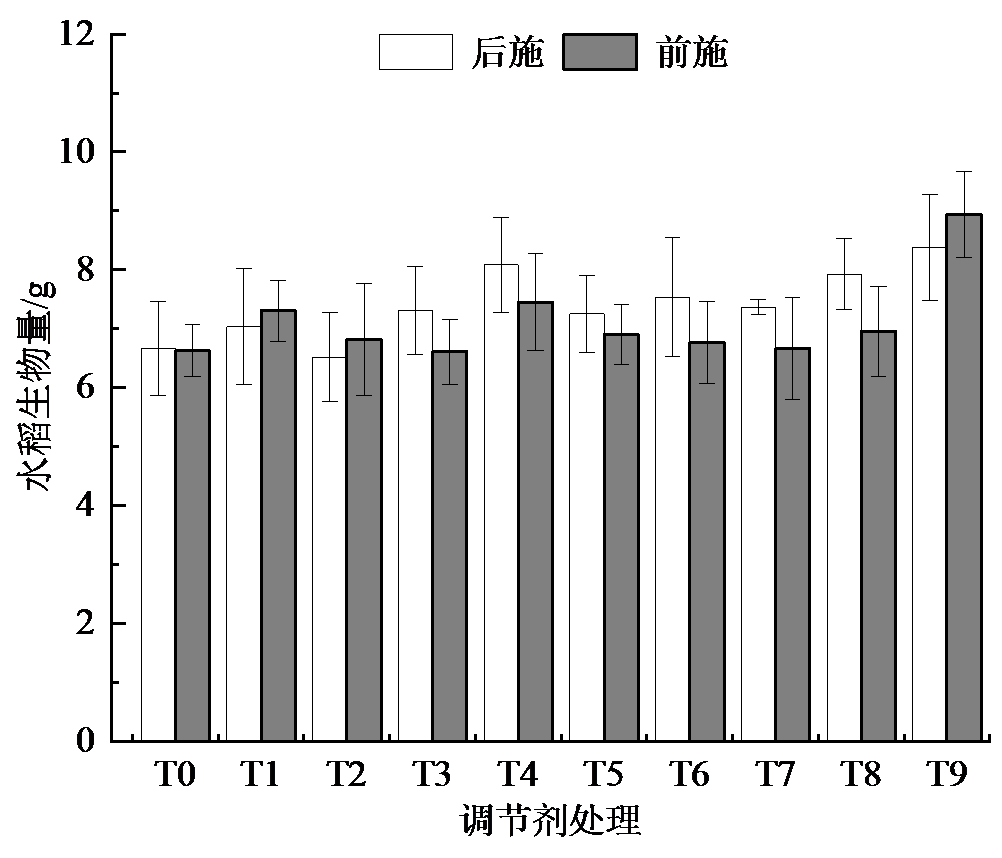
Figure 1 Effect of different regulators on the biomass of rice under high temperature and arsenic stress
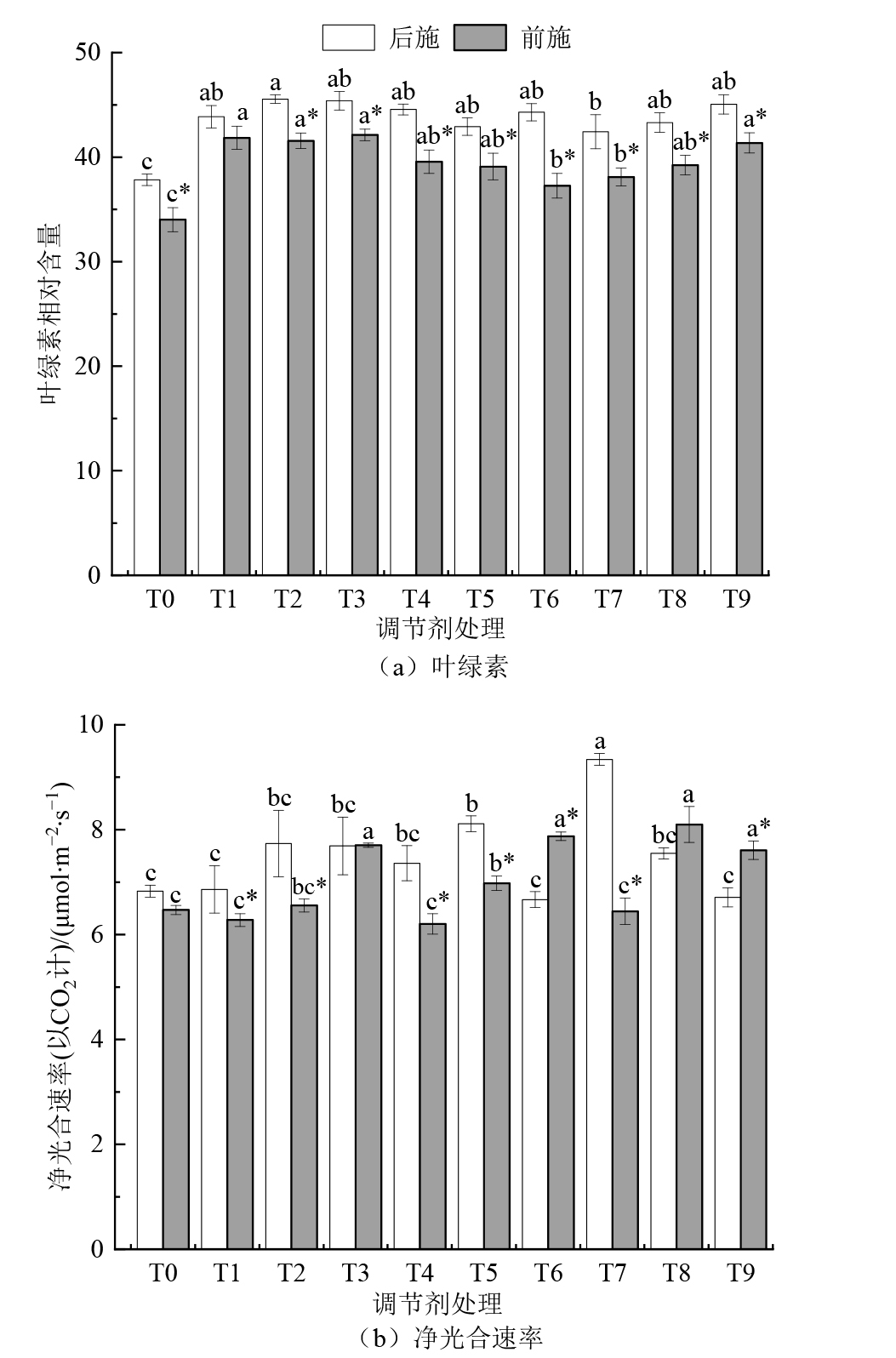
Figure 2 Effect of different regulators on the SPAD value and net photosynthetic rate of rice under high temperature and arsenic stress
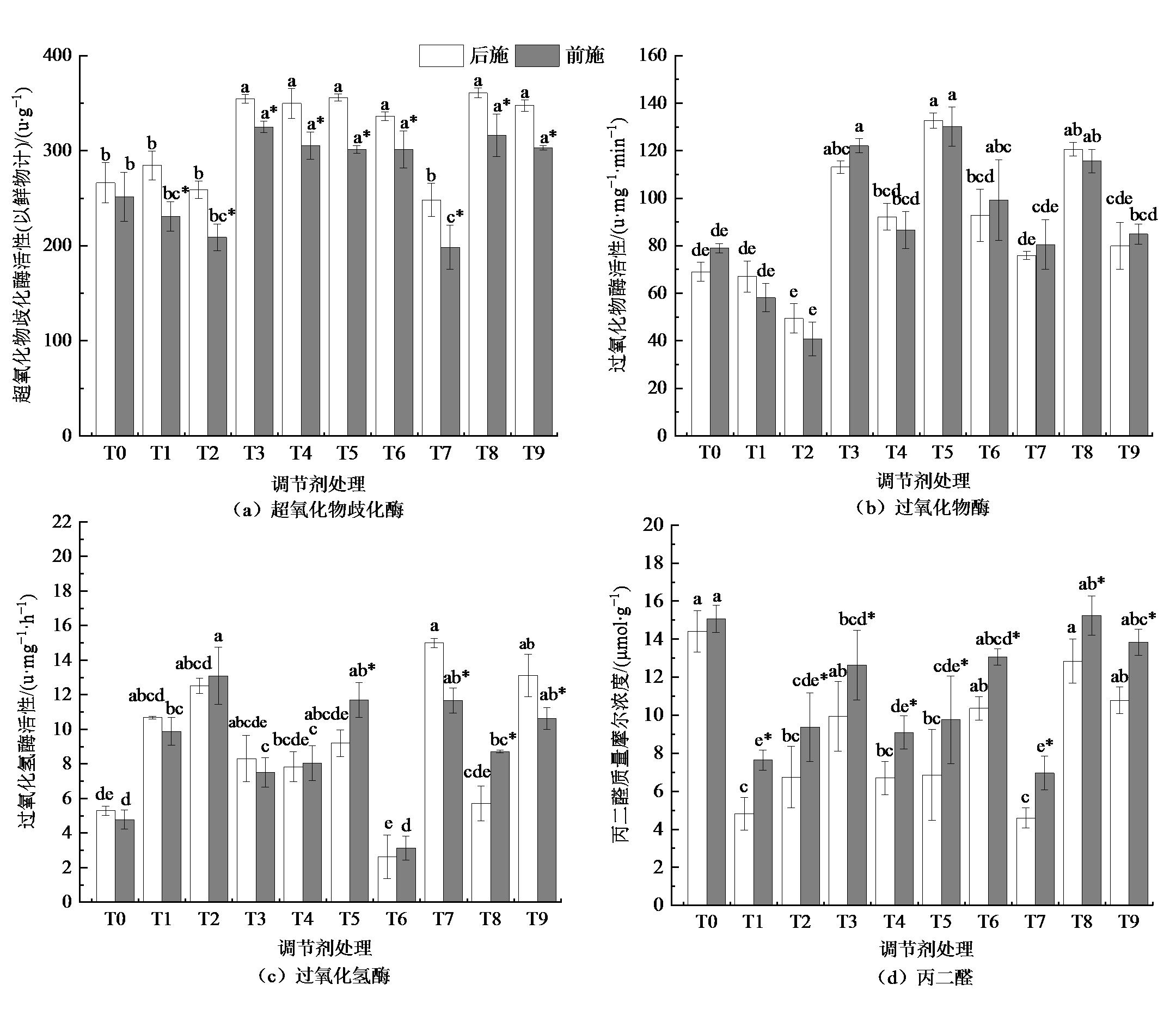
Figure 3 Effect of different regulators on the enzyme activities and MDA content of rice under high temperature and arsenic stress
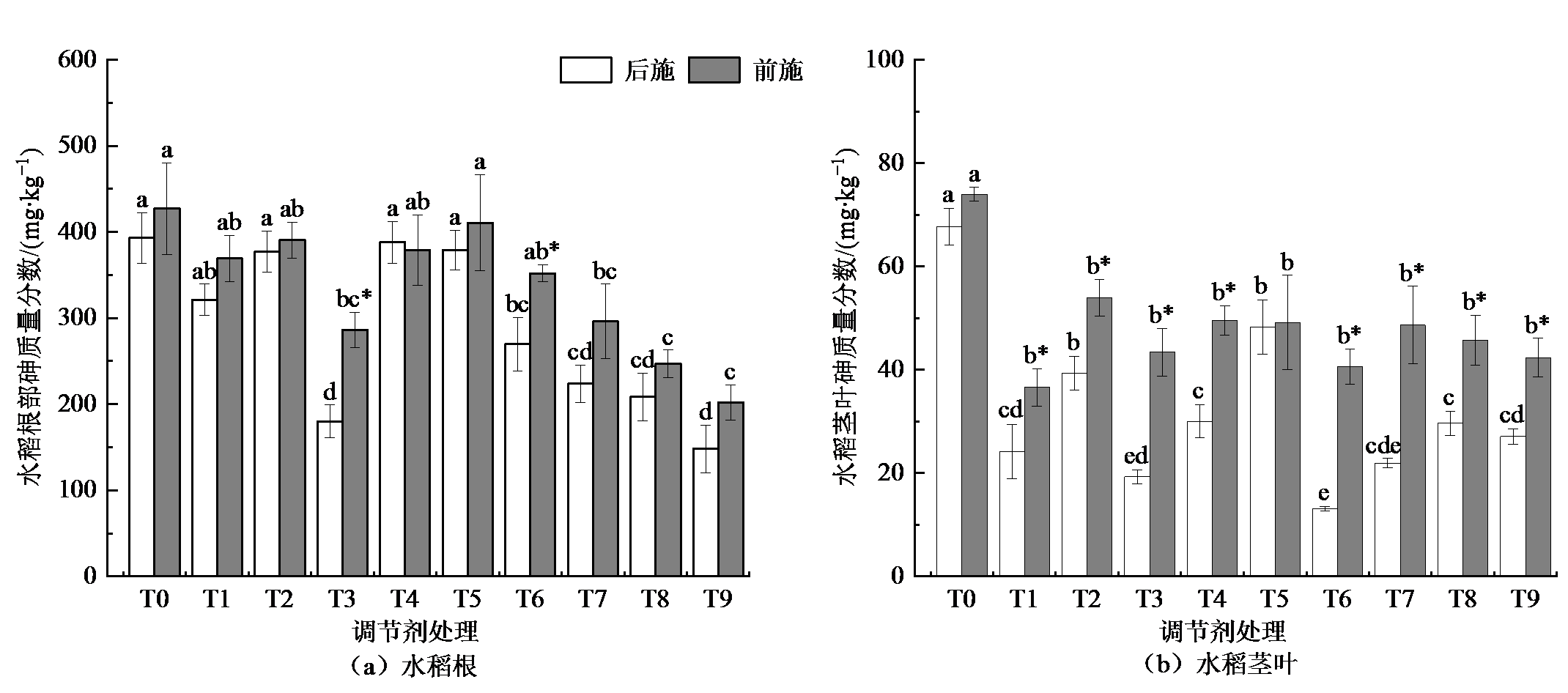
Figure 4 Effect of different regulators on arsenic mass fraction in rice under high temperature and arsenic stress
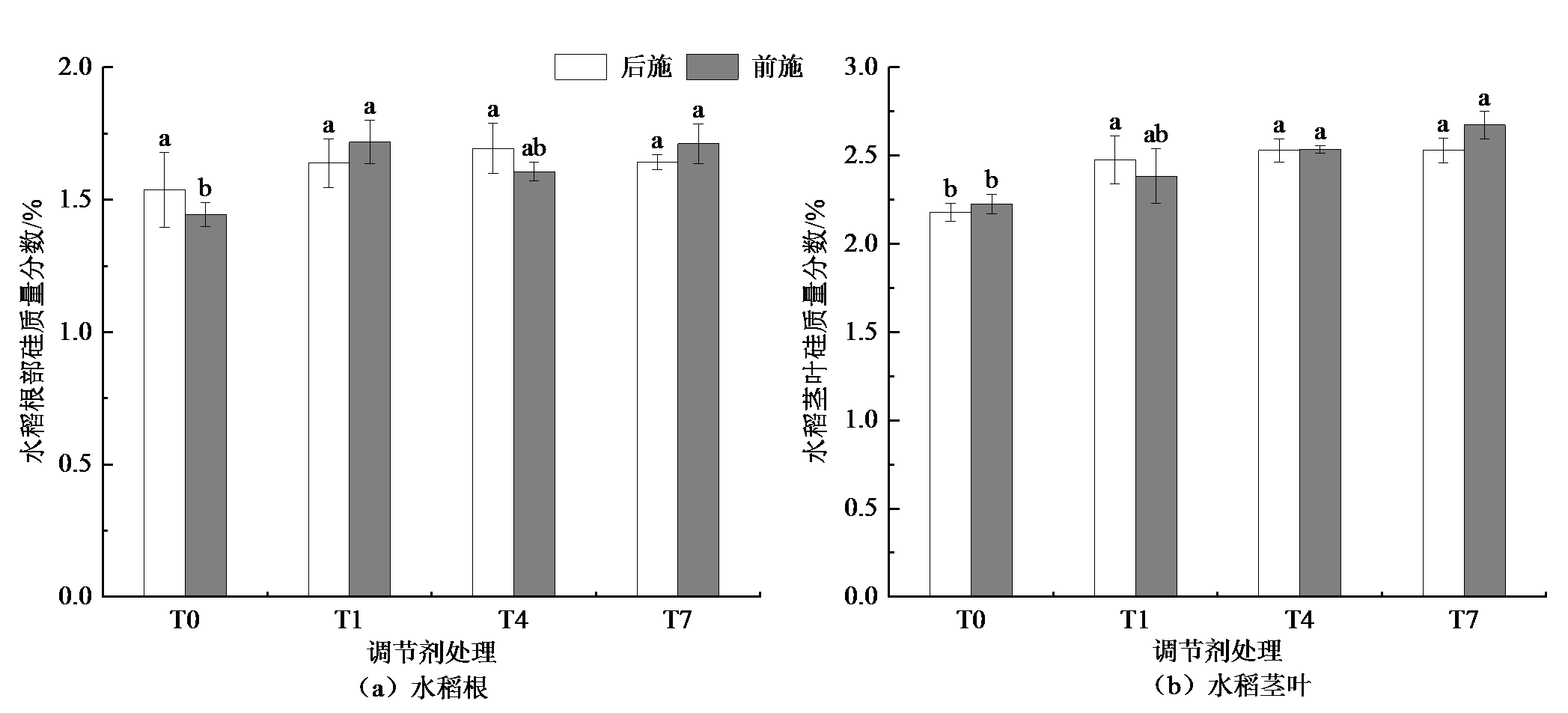
Figure 5 Effect of silicon regulators on silicon mass fraction in rice under high temperature and arsenic stress
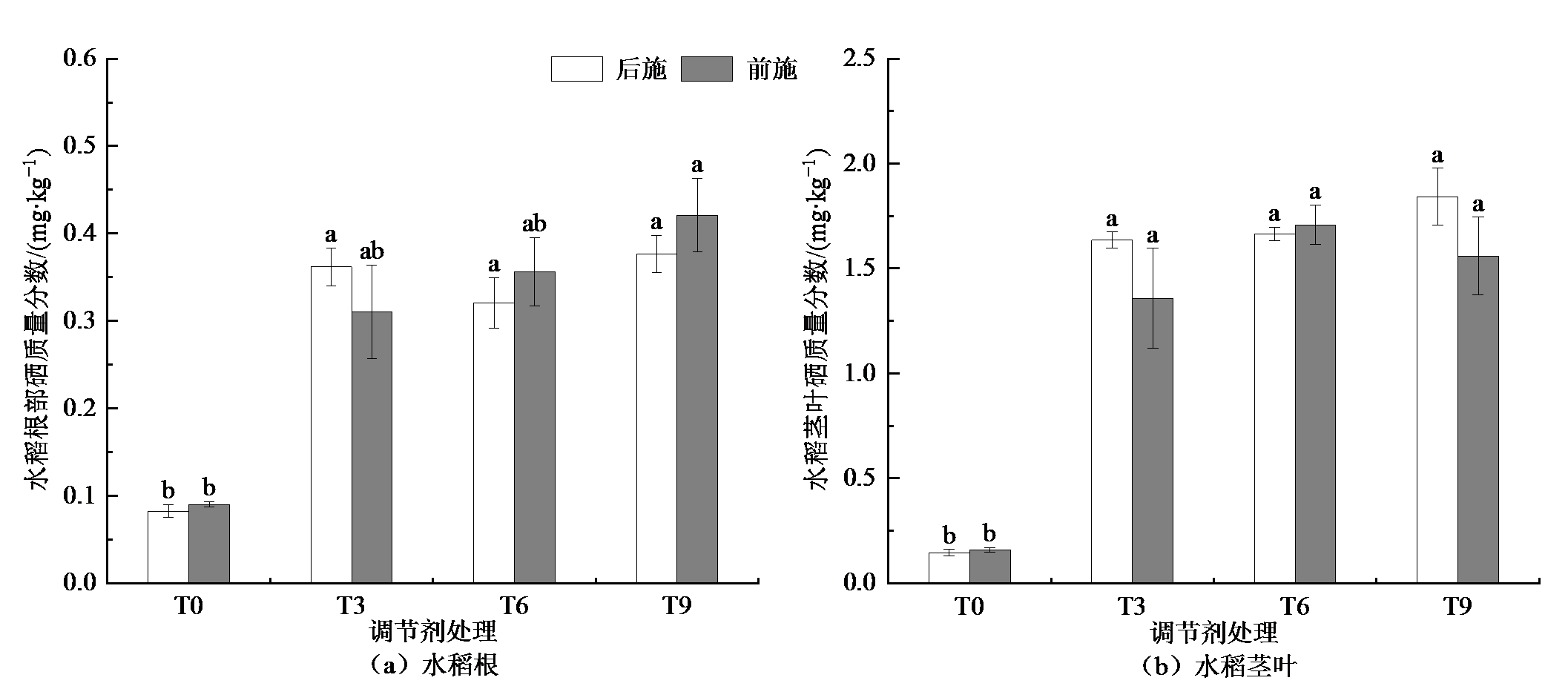
Figure 6 Effect of selenium regulators on selenium mass fraction in rice under high temperature and arsenic stress
| [1] |
AMIT K, ISRAIL A M, KUMAR S P, et al., 2023. Synergistic effects of selenium and silicon mitigate arsenic toxicity in Oryza sativa L[J]. Journal of Plant Growth Regulation, 43(4): 1272-1286.
DOI |
| [2] |
ATIF B, HESHAM A, SHAH F, 2021. Biochar coupling with phosphorus fertilization modifies antioxidant activity, osmolyte accumulation and reactive oxygen species synthesis in the leaves and xylem sap of rice cultivars under high-temperature stress[J]. Physiology and Molecular Biology of Plants, 27(9): 2083-2100.
DOI PMID |
| [3] |
DONG J, WU F B, ZHANG G P, 2006. Influence of cadmium on antioxidant capacity and four microelement concentrations in tomato seedlings (Lycopersicon esculentum)[J]. Chemosphere, 64(10): 1659-1666.
DOI PMID |
| [4] |
FLORES R A, PESSOA-DE-SOUZA M A, ANDRADE A F D, et al., 2021. Does foliar application of Silicon under natural water stress conditions increase rice yield in subtropical dry regions[J]. Silicon, 14(7): 1-10.
DOI |
| [5] |
GENG A J, LIAN W L, WANG X, et al., 2023. Regulatory mechanisms underlying arsenic uptake, transport, and detoxification in rice[J]. International Journal of Molecular Sciences, 24(13): 11031.
DOI URL |
| [6] |
GOLUI D, RAZA B M, ROY A, et al., 2023. Arsenic in the Soil-Plant-Human continuum in regions of Asia: exposure and risk assessment[J]. Current Pollution Reports, 9(4): 760-783.
DOI |
| [7] |
HU L, WANG X L, WU D S, et al., 2020. Effects of organic selenium on absorption and bioaccessibility of arsenic in radish under arsenic stress[J]. Food Chemistry, 344: 128614.
DOI URL |
| [8] |
KUMAR A, SINGH R P, SINGH P K, et al., 2014. Selenium ameliorates arsenic induced oxidative stress through modulation of antioxidant enzymes and thiols in rice (Oryza sativa L.)[J]. Ecotoxicology, 23(7): 1153-1163.
DOI URL |
| [9] |
LI D, ZHOU D, WANG P, et al., 2011. Temperature affects cadmium-induced phytotoxicity involved in subcellular cadmium distribution and oxidative stress in wheat roots[J]. Ecotoxicology and Environmental Safety, 74(7): 2029-2035.
DOI PMID |
| [10] |
LI R Y, AGO Y, LIU W J, et al., 2009. The rice aquaporin Lsi1 mediates uptake of methylated arsenic species[J]. Plant Physiology, 150(4): 2071-2080.
DOI URL |
| [11] |
LIU S H, JI X H, CHEN Z L, et al., 2023. Silicon facilitated the physical barrier and adsorption of cadmium of iron plaque by changing the biochemical composition to reduce cadmium absorption of rice roots[J]. Ecotoxicology and Environmental Safety, 256: 114879.
DOI URL |
| [12] |
MITANI N, MA J F, IWASHITA T, 2005. Identification of the silicon form in xylem sap of rice (Oryza sativa L.)[J]. Plant and Cell Physiology, 46(2): 279-283.
DOI URL |
| [13] |
MUEHE E M, WANG T M, KERL C F, et al., 2019. Rice production threatened by coupled stresses of climate and soil arsenic[J]. Nature Communications, 10(1): 4985.
DOI PMID |
| [14] |
RAHMAN A M, HASEGAWA H, RAHMAN M M, et al., 2008. Arsenic accumulation in rice (Oryza sativa L.): Human exposure through food chain[J]. Ecotoxicology and environmental safety, 69(2): 317-324.
DOI URL |
| [15] |
SAVITA B, REENA S, YASHPAL S, et al., 2020. Arsenic(III) mixed derivatives having oximes and morpholinedithiocarbamate along with their cytotoxic, antimicrobial, and antioxidant studies[J]. Journal of Biochemical and Molecular Toxicology, 34(11): e22581.
DOI URL |
| [16] |
SHARPLES J M, MEHARG A A, CHAMBERS S M, et al., 1999. Arsenate sensitivity in ericoid and ectomycorrhizal fungi[J]. Environmental Toxicology Chemistry, 18(8): 1848-1855.
DOI URL |
| [17] |
SHEETAL B, SUCHETA S, DHANWINDER S, 2023. Interactive effects of selenium and arsenic on phenolic constituents and antioxidant activity in rice (Oryza sativa L.)[J]. Chemosphere, 350: 141071.
DOI URL |
| [18] |
VERMA G, SRIVASTAVA D, NARAYAN S, et al., 2020. Exogenous application of methyl jasmonate alleviates arsenic toxicity by modulating its uptake and translocation in rice (Oryza sativa L.)[J]. Ecotoxicology and Environmental Safety, 201: 110735.
DOI URL |
| [19] |
WILLIAMS P N, VILLADA A, DEACON C, et al., 2007. Greatly enhanced arsenic shoot assimilation in rice leads to elevated grain levels compared to wheat and barley[J]. Environmental Science & Technology, 41(19): 6854-6859.
DOI URL |
| [20] |
XU P, MA Y P, WANG S M, et al., 2024. Exogenous trehalose can reduce the loss of rice yields under high temperature stress at the flowering stage by improving the carbohydrate metabolism and photosynthesis capacity of flag leaves[J]. Journal of Plant Growth Regulation, 44(6): 2892-2909.
DOI |
| [21] |
YANG J, DUAN L C, HE H H, et al., 2021. Application of exogenous KH2PO4 and salicylic acid and optimization of the sowing date enhance rice yield under high-temperature conditions[J]. Journal of Plant Growth Regulation, 41(4): 1532-1546.
DOI |
| [22] |
ZHANG L H, HU B, DENG K, et al., 2019. NRT1.1B improves selenium concentrations in rice grains by facilitating selenomethinone translocation[J]. Plant Biotechnology Journal, 17(6): 1058-1068.
DOI PMID |
| [23] |
ZHANG L H, HU B, LI W, et al., 2014. OsPT2, a phosphate transporter, is involved in the active uptake of selenite in rice[J]. New Phytologist, 201(4): 1183-1191.
DOI PMID |
| [24] |
ZHANG X, ZHANG P L, WEI X, et al., 2024. Migration, transformation of arsenic, and pollution controlling strategies in paddy soil-rice system: A comprehensive review[J]. The Science of The Total Environment, 951: 175500.
DOI URL |
| [25] |
ZHAO F J, AGO Y, MITANI N, et al., 2010. The role of the rice aquaporin Lsi1 in arsenite efflux from roots[J]. The New phytologist, 186(2): 392-399.
DOI URL |
| [26] |
ZHAO F J, TANG Z, SONG J J, et al., 2022. Toxic metals and metalloids: Uptake, transport, detoxification, phytoremediation, and crop improvement for safer food[J]. Molecular Plant, 15(1): 27-44.
DOI URL |
| [27] |
ZHAO P W, WU L, WAN Y Y, et al., 2025. Mechanisms of manganese-selenium synergistic mitigation of arsenic-cadmium cotoxicity in rice (Oryza sativa L.)[J]. Journal of Agricultural and Food Chemistry, 73(33): 21133-21147.
DOI URL |
| [28] |
ZHAO X Q, MITANI N, YAMAJI N, et al., 2010. Involvement of silicon influx transporter OsNIP2;1 in selenite uptake in rice[J]. Plant Physiology, 153(4): 1871-1877.
DOI PMID |
| [29] | 车阳, 邢志鹏, 蒋伟勤, 等, 2025. 外源植物生长调节剂对高温胁迫下水稻颖花分化及退化的影响[J]. 江苏农业学报, 41(8): 1475-1483. |
| CHE Y, XING Z P, JIANG W Q, et al., 2025. Effects of exogenous plant growth regulators on spikelet differentiation and degeneration in rice under high temperature stress conditions[J]. Jiangsu Agricultural Science, 41(8): 1475-1483. | |
| [30] | 代雯慈, 王捧娜, 翁颖, 等, 2023. 倒春寒逆境下叶面喷施磷酸二氢钾对小麦穂粒结实的影响[J]. 中国农业气象, 44(10): 889-902. |
| DAI W C, WANG P N, WENG Y, et al., 2023. Effects of foliar spraying KH2PO4 on wheat grain setting characteristics under late spring coldness[J]. Chinese Journal of Agrometeorology, 44(10): 889-902. | |
| [31] | 邓鹏辉, 蔡雅琴, 周航, 等, 2020. 水稻不同生育期As胁迫下As累积关键生育期[J]. 环境科学, 41(10): 4726-4732. |
| DENG P H, CAI Y Q, ZHOU H, et al., 2020. Key stage of As accumulation in rice under As stress at different growth stages[J]. Environmental Science, 41(10): 4726-4732. | |
| [32] | 韩芳玉, 张俊飚, 程琳琳, 等, 2019. 气候变化对中国水稻产量及其区域差异性的影响[J]. 生态与农村环境学报, 35(3): 283-289. |
| HAN F Y, ZHANG J B, CHENG L L, et al., 2019. Impact of climate change on rice yield and its regional heterogeneity in China[J]. Journal of Ecology and Rural Environment, 35(3): 283-289. | |
| [33] | 郝尚妍, 2024. 硒硅配施降低水稻籽粒砷累积效应与机制[D]. 重庆: 西南大学. |
| HAO S Y, 2024. Effect and mechanism of selenium-silicon dosing to reduce arsenic accumulation in rice grains[D]. Chongqing: Southwest University. | |
| [34] | 江晓东, 华梦飞, 杨沈斌, 等, 2019. 喷施钾钙硅制剂改善高温胁迫水稻叶片光合性能提高产量[J]. 农业工程学报, 35(5): 126-133. |
| JIANG X D, HUA M F, YANG S B, et al., 2019. Spraying exogenous otassium, calcium and silicon solutions improve photosynthetic performance of flag leaf and increase the yield of rice under heat stress condition[J]. Transactions of the Chinese Society of Agricultural Engineering, 35(5): 126-133. | |
| [35] | 江晓东, 姜琳琳, 华梦飞, 等, 2018. 喷施不同化学制剂对水稻叶片抗高温胁迫的效果分析[J]. 中国农业气象, 39(2): 92-99. |
| JIANG X D, JIANG L L, HUA M F, et al., 2018. Analysis the effect of different chemical agents on high temperature stress in rice leaves[J]. Chinese Journal of Agrometeorology, 39(2): 92-99. | |
| [36] | 李合生, 2000. 植物生理生化实验原理和技术[M]. 北京: 高等教育出版社. |
| LI H S, 2000. Principles and techniques of plant physiological biochemical experiment[M]. Beijing: Higher Education Press. | |
| [37] | 李仁英, 沈孝辉, 张耀鸿, 等, 2014. 无机砷对不同水稻品种种子萌发和幼苗光合生理的影响[J]. 农业环境科学学报, 33(6): 1067-1074. |
| LI R Y, SHEN X H, ZHANG Y H, et al., 2014. Effects of inorganic arsenic on seed germination and photosynthetic characteristics of various rice cultivars[J]. Journal of Agro-Environment Science, 33(6): 1067-1074. | |
| [38] | 鲁如坤, 2000. 土壤农业化学分析方法[M]. 北京: 中国农业科技出版社. |
| LU R K, 2000. Analysis method of soil agricultural chemistry[M]. Beijing: China Agricultural Science and Technology Press. | |
| [39] | 田钰君, 许云飞, 郭延平, 2023. 叶面喷施钾肥对无花果光合生理和叶绿素荧光特性的影响[J]. 西北农林科技大学学报(自然科学版), 51(7): 126-132. |
| TIAN Y J, XU Y F, GUO Y P, 2023. Effects of foliar potassium application on photosynthetic physiology and chlorophyll fluorescence characteristics of Ficus carica L[J]. Journal of Northwest A & F University (Natural Science Edition), 51(7): 126-132. | |
| [40] | 王思齐, 李昕悦, 陈润, 等, 2025. 喷施KH2PO4缓解小麦灌浆期高温胁迫对粒重形成抑制的作用机理[J]. 植物营养与肥料学报, 31(5): 861-869. |
| WANG S Q, LI X Y, CHEN R, et al., 2025. Mechanism of KH2PO4 foliar application in alleviating the heat stress-induced inhibition of grain weight formation during the grain-filling stage of wheat[J]. Journal of Plant Nutrition and Fertilizers, 31(5): 861-869. | |
| [41] | 吴国利, 2020. 叶面肥喷施对水稻叶片叶绿素和氮含量及产量的影响[J]. 中国农技推广, 36(6): 54-55. |
| WU G L, 2020. The effects of foliar fertilizer application on chlorophyll and nitrogen content in rice leaves and rice yield[J]. China Agricultural Technology Extension, 36(6): 54-55. | |
| [42] |
熊洪, 徐富贤, 张林, 等, 2016. 西南稻区水稻高温缓解技术研究[J]. 中国稻米, 22(5): 15-19.
DOI |
|
XIONG H, XU F X, ZHANG L, et al., 2016. Study on high temperature mitigation measures of rice in southwest china[J]. China Rice, 22(5): 15-19.
DOI |
|
| [43] | 徐向华, 刘传平, 唐新莲, 等, 2014. 叶面喷施硒硅复合溶胶抑制水稻砷积累效应研究[J]. 生态环境学报, 23(6): 1064-1069. |
| XU X H, LIU C P, TANG X L, et al., 2014. Foliar application of selenium-silicon sol reduced arsenic accumulation in rice[J]. Ecology and Environmental Sciences, 23(6): 1064-1069. | |
| [44] | 薛培英, 刘文菊, 段桂兰, 等, 2009. 外源磷对苗期小麦和水稻根际砷形态及其生物有效性的影响[J]. 生态学报, 29(4): 2027-2034. |
| XUE P Y, LIU W J, DUAN G L, et al., 2009. Effects of exogenous phosphorus on arsenic fractions in the rhizosphere and their bioavailability to rice and wheat seedlings[J]. Acta Ecologica Sinica, 29(4): 2027-2034. | |
| [45] | 张桂莲, 陈立云, 张顺堂, 等, 2006. 高温胁迫对水稻剑叶保护酶活性和膜透性的影响[J]. 作物学报, 32(9): 1306-1310. |
| ZHANG G L, CHEN L Y, ZHANG S T, et al., 2006. Effect of high temperature stress on protective enzyme activities and membrane permeability of flag leaf in rice[J]. Acta Agronomica Sinica, 32(9): 1306-1310. | |
| [46] | 张知晓, 泽桑梓, 户连荣, 等, 2018. 茉莉酸甲酯生物活性研究进展[J]. 河南农业科学, 47(11): 1-7. |
| ZHANG Z X, ZE S Z, HU L R, et al., 2018. Research advance in biological activities of methyl jasmonate[J]. Journal of Henan Agricultural Sciences, 47(11): 1-7. | |
| [47] | 郑甲成, 詹兰兰, 刘婷, 等, 2020. 有机肥和茉莉酸甲酯配施对水稻产量和品质的影响[J]. 云南农业大学学报(自然科学), 35(3): 519-525. |
| ZHENG J C, ZHAN L L, LIU T, et al., 2020. Effects of organic fertilizer and methyl jasmonate on the yield and quality of rice[J]. Journal of Yunnan Agricultural University (Natural Science), 35(3): 519-525. | |
| [48] | 周彩玉, 林隽, 唐钰焱, 等, 2024. 硫肥对水稻幼苗生长及砷、镉和铬累积的影响[J]. 农业环境科学学报, 43(7): 1458-1467. |
| ZHOU C Y, LIN J, TANG Y Y, et al., 2024. Effects of sulfate fertilizer on the growth of rice seedlings and accumulation of As, Cd, and Cr in plants[J]. Journal of Agro-Environment Science, 43(7): 1458-1467. |
| [1] | LI Xue, WANG Zhen, MAO Xuefei. Effects of Polyethylene and Polypropylene Microplastics on the Growth and Antioxidant Mechanisms of Rice Seedlings under Cadmium Stress [J]. Ecology and Environmental Sciences, 2025, 34(7): 1053-1063. |
| [2] | DU Minghui, LI Boxin, YU Yingde, TAO Lin, FAN Shixian, YU Minnan, YU Xiaowen, ZOU Shujun, HUANG Deyin. Effects of Soil Properties and Yield of Double-Cropping Rice in Southern China under Conservation Tillage Mode [J]. Ecology and Environmental Sciences, 2025, 34(4): 521-533. |
| [3] | CUI Xuedan, DUAN Guilan, WANG Xiangqin, LI Zhifeng, DOU Fei, DU Yanhong, YUAN Yuzhen, LIU Chuanping, LI Fangbai. Evaluation of the Effects and Soil Health Impacts of Iron-Modified Woody Peat in the Remediation of Moderately Cadmium and Arsenic Contaminated Paddy Fields Based on Multi-Site Long-Term Positioning Experiments [J]. Ecology and Environmental Sciences, 2025, 34(4): 608-620. |
| [4] | LI Linfeng, XU Zisheng, CHEN Yong, LI Qi, LIN Xiaoyang, LI Yichun. The Impact of Silicon Application Levels on the Iron Plaque of Rice Roots and the Accumulation and Distribution of Cadmium Within the Plant [J]. Ecology and Environmental Sciences, 2024, 33(5): 781-790. |
| [5] | WANG Xinglai, MIAO Shujie, QIAO Yunfa. Evaluating the Carbon Footprint of the Rice-Wheat Rotation System Based on Localized Parameters in Jiangsu Province [J]. Ecology and Environmental Sciences, 2023, 32(9): 1682-1691. |
| [6] | WANG Jinming, QIN Xiaobo, WAN Yunfan, ZHOU Sheng, ZHANG Zhiwei. Structure and Regional Differences of Carbon Footprint of Rice Food System in China [J]. Ecology and Environmental Sciences, 2023, 32(8): 1405-1418. |
| [7] | GONG Liang, JIN Dandan, NIU Shiwei, WANG Nan, ZOU Xiaojin, ZHANG Xin, SUI Shijiang, Xie Zhanjun, HAN Yingzuo. Potential Analysis of Carbon Sequestration and Emission Reduction in Rice Fields in Liaoning Province [J]. Ecology and Environmental Sciences, 2023, 32(7): 1226-1236. |
| [8] | HUANG Yingmei, ZHONG Songxiong, ZHU Yiwen, WANG Xiangqin, LI Fangbai. Effects and Mechanism of Element Sulfur Inhibiting Methylmercury Accumulation in Rice Plants [J]. Ecology and Environmental Sciences, 2023, 32(6): 1115-1122. |
| [9] | YANG Kai, YANG Jingrui, CAO Peipei, LÜ Chunhua, SUN Wenjuan, YU Lingfei, DENG Xi. Dynamic Response of Rice Plant Height, Tillering and SPAD under Elevated CO2 Concentration and Their Simulation [J]. Ecology and Environmental Sciences, 2023, 32(5): 933-942. |
| [10] | TANG Haiming, SHI Lihong, WEN Li, CHENG Kaikai, LI Chao, LONG Zedong, XIAO Zhiwu, LI Weiyan, GUO Yong. Effects of Different Long-term Fertilizer Managements on Rhizosphere Soil Nitrogen in the Double-cropping Rice Field [J]. Ecology and Environmental Sciences, 2023, 32(3): 492-499. |
| [11] | XU Min, XU Chao, YU Guanghui, YIN Lichu, ZHANG Quan, ZHU Hanhua, ZHU Qihong, ZHANG Yangzhu, HUANG Daoyou. Effects of Groundwater Level and Long-term Straw Return on Soil Cadmium Availability and Cadmium Concentration in Rice [J]. Ecology and Environmental Sciences, 2023, 32(1): 150-157. |
| [12] | LI Xiaohui, AI Xianbin, LI Liang, WANG Xiyang, XIN Zaijun, SUN Xiaoyan. Study on Passivation Effects of New Modified Rice Husk Biochar Materials on Cadmium Contaminated Soil [J]. Ecology and Environmental Sciences, 2022, 31(9): 1901-1908. |
| [13] | DENG Tianle, XIE Liyong, ZHANG Fengzhe, ZHAO Hongliang, JIANG Yutong. Competition for Growth Space between Barnyard Grass and Rice under Elevated Atmospheric CO2 Concentration [J]. Ecology and Environmental Sciences, 2022, 31(8): 1566-1572. |
| [14] | JIANG Chaoqiang, LI Chen, ZHU Qifa, XU Haiqing, LIU Yanhong, SHEN Jia, YAN Yifeng, YU Fei, ZU Chaolong. Evaluation of Carbon Sink and Economic Benefit in Different Planting Patterns in Southern Anhui [J]. Ecology and Environmental Sciences, 2022, 31(7): 1285-1292. |
| [15] | LI Chengwei, LIU Zhangyong, GONG Songling, YANG Wei, LI Shaoqiu, ZHU Bo. Effects of Changing Rice Cropping Patterns on CH4 and N2O Emissions from Paddy Fields [J]. Ecology and Environmental Sciences, 2022, 31(5): 961-968. |
| Viewed | ||||||
|
Full text |
|
|||||
|
Abstract |
|
|||||
Copyright © 2021 Editorial Office of ACTA PETROLEI SINICA
Address:No. 6 Liupukang Street, Xicheng District, Beijing, P.R.China, 510650
Tel: 86-010-62067128, 86-010-62067137, 86-010-62067139
Fax: 86-10-62067130
Email: syxb@cnpc.com.cn
Support byBeijing Magtech Co.ltd, E-mail:support@magtech.com.cn
