
Ecology and Environmental Sciences ›› 2026, Vol. 35 ›› Issue (2): 311-322.DOI: 10.16258/j.cnki.1674-5906.2026.02.014
• Environmental Science • Previous Articles Next Articles
MA Dongdong( ), LI Xueting, LI Yunlong, LI Xiang, HE Haoxuan
Received:2025-07-17
Revised:2025-11-25
Accepted:2025-12-23
Online:2026-02-18
Published:2026-02-09
Contact:
MA Dongdong
马栋栋(), 李雪婷, 李云龙, 李想, 何昊宣
通讯作者:
马栋栋
作者简介:马栋栋(1987年生),男,副教授,博士,研究方向为数字经济与环境治理。E-mial: dongdongma2010@163.com
基金资助:CLC Number:
MA Dongdong, LI Xueting, LI Yunlong, LI Xiang, HE Haoxuan. Research on the Impact of Digital Technology on the Coordinated Advancement of Ecological Protection and High-Quality Development in the Yellow River Basin[J]. Ecology and Environmental Sciences, 2026, 35(2): 311-322.
马栋栋, 李雪婷, 李云龙, 李想, 何昊宣. 数字技术对黄河流域生态保护和高质量发展协同推进的影响研究[J]. 生态环境学报, 2026, 35(2): 311-322.
Add to citation manager EndNote|Ris|BibTeX
URL: https://www.jeesci.com/EN/10.16258/j.cnki.1674-5906.2026.02.014
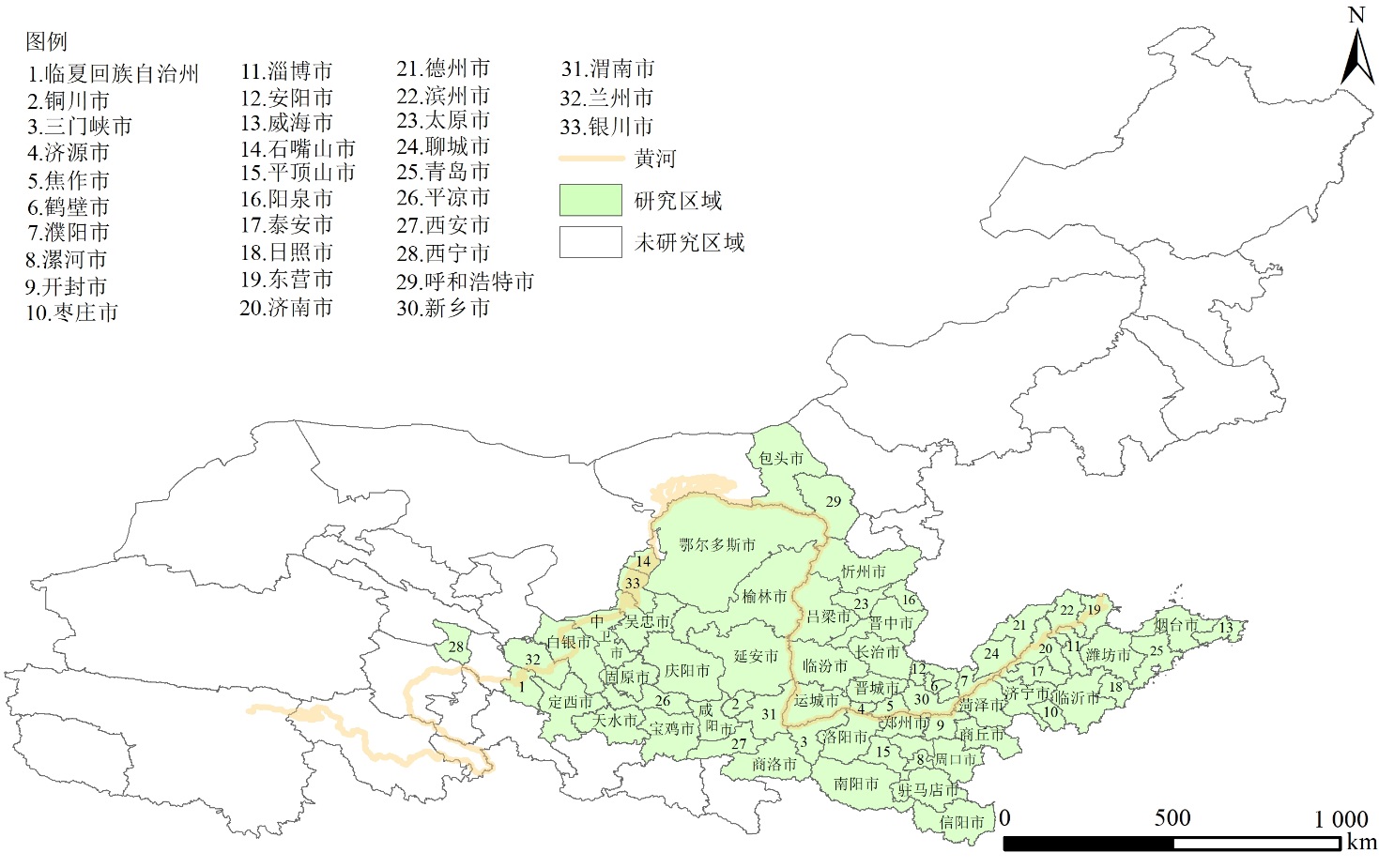
Figure 1 The geographical location of the Yellow River Basin
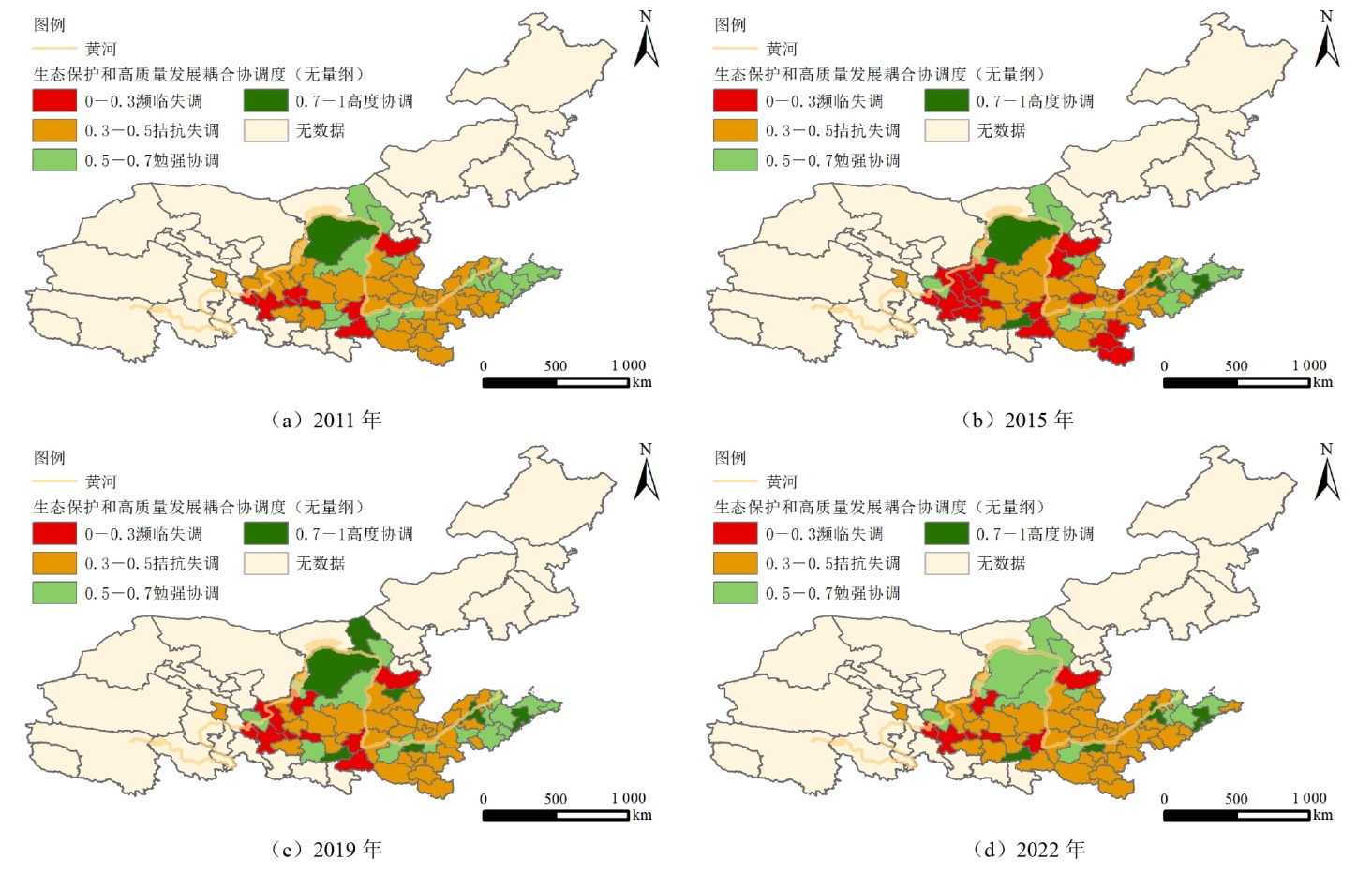
Figure 2 Spatial distribution of the coupling coordination degree of ecological protection and high quality development in the Yellow River Basin across different periods
| 变量 | 耦合协调度 | 生态保护 | 高质量发展 |
|---|---|---|---|
| 数字技术 | −6.25×10⁻³*** 1) (−4.74) 4) | 1.73*** (3.77) | 87.96*** (5.22) |
| 数字技术平方项 | 4.34×10⁻⁵** 2) (2.31) | ||
| 社会储蓄 | 1.08×10⁻⁹*** (2.74) | 8.17×10⁻⁷ (1.40) | −3.05×10⁻⁵ (−1.42) |
| 劳动力供给 | −2.34×10⁻⁷*** (−6.46) | 1.409×10⁻⁴*** (2.63) | 5.79×10⁻⁴ (0.29) |
| 财政分权度 | 1.40×10⁻³ (0.03) | 23.52 (0.38) | 4.375×103* 3) (1.76) |
| 城市化水平 | 1.19×10⁻⁵*** (5.71) | 9.5×10⁻³*** (3.11) | −2.88×10⁻² (−0.25) |
| 市场化程度 | 1.51×10⁻²*** (7.55) | 0.346 (0.12) | 7.23×10²*** (6.67) |
| 拟合优度 | 0.152 | 0.391 | 0.216 |
| 样本量 | 804 | 804 | 804 |
Table 1 Benchmark regression results
| 变量 | 耦合协调度 | 生态保护 | 高质量发展 |
|---|---|---|---|
| 数字技术 | −6.25×10⁻³*** 1) (−4.74) 4) | 1.73*** (3.77) | 87.96*** (5.22) |
| 数字技术平方项 | 4.34×10⁻⁵** 2) (2.31) | ||
| 社会储蓄 | 1.08×10⁻⁹*** (2.74) | 8.17×10⁻⁷ (1.40) | −3.05×10⁻⁵ (−1.42) |
| 劳动力供给 | −2.34×10⁻⁷*** (−6.46) | 1.409×10⁻⁴*** (2.63) | 5.79×10⁻⁴ (0.29) |
| 财政分权度 | 1.40×10⁻³ (0.03) | 23.52 (0.38) | 4.375×103* 3) (1.76) |
| 城市化水平 | 1.19×10⁻⁵*** (5.71) | 9.5×10⁻³*** (3.11) | −2.88×10⁻² (−0.25) |
| 市场化程度 | 1.51×10⁻²*** (7.55) | 0.346 (0.12) | 7.23×10²*** (6.67) |
| 拟合优度 | 0.152 | 0.391 | 0.216 |
| 样本量 | 804 | 804 | 804 |
| 变量 | 缩减年份 | 缩尾处理 |
|---|---|---|
| 数字技术 | −5.7×10⁻³*** (−4.18) | −5.9×10⁻³*** (−4.21) |
| 数字技术平方项 | 3×10−4* (1.82) | 4×10−4* (1.95) |
| 控制变量 | 是 | 是 |
| 拟合优度 | 0.906 | 0.862 |
| 样本量 | 603 | 804 |
Table 2 Robustness test results
| 变量 | 缩减年份 | 缩尾处理 |
|---|---|---|
| 数字技术 | −5.7×10⁻³*** (−4.18) | −5.9×10⁻³*** (−4.21) |
| 数字技术平方项 | 3×10−4* (1.82) | 4×10−4* (1.95) |
| 控制变量 | 是 | 是 |
| 拟合优度 | 0.906 | 0.862 |
| 样本量 | 603 | 804 |
| 变量 | 绿色发明数量 | 绿色实用新型专利数量 | 人力资本积累 | 节能效应 |
|---|---|---|---|---|
| 索贝尔(Sobel)检验 | 4.7×10⁻⁴*** (3.997) 1) | 3.2×10⁻⁴*** (2.689) | 3.1×10⁻⁴*** (3.281) | 2.7×10⁻⁴*** (3.091) |
| 古德曼(Goodman)检验1 | 4.7×10⁻⁴*** (3.974) | 3.2×10⁻⁴*** (2.674) | 3.1×10⁻⁴*** (3.244) | 2.7×10⁻⁴*** (3.052) |
| 古德曼(Goodman)检验2 | 4.7×10⁻⁴*** (4.021) | 3.2×10⁻⁴*** (2.704) | 3.1×10⁻⁴*** (3.320) | 2.7×10⁻⁴*** (3.131) |
| 间接效应系数 | 4.7×10⁻⁴*** (3.997) | 3.2×10⁻⁴*** (2.689) | 3.1×10⁻⁴*** (3.281) | 2.7×10⁻⁴*** (3.090) |
| 直接效应系数 | 1.4×10⁻³*** (3.806) | 1.5×10⁻³*** (4.288) | 1.9×10⁻³*** (4.502) | 8.7×10⁻⁴** (2.182) |
| 总效应系数 | 1.9×10⁻³*** (4.968) | 1.9×10⁻³*** (4.968) | 2.2×10⁻³*** (5.254) | 1.1×10⁻³*** (2.871) |
| 中介效应比例 | 0.252 | 0.174 | 0.143 | 0.237 |
Table 3 Analysis results of the mechanism
| 变量 | 绿色发明数量 | 绿色实用新型专利数量 | 人力资本积累 | 节能效应 |
|---|---|---|---|---|
| 索贝尔(Sobel)检验 | 4.7×10⁻⁴*** (3.997) 1) | 3.2×10⁻⁴*** (2.689) | 3.1×10⁻⁴*** (3.281) | 2.7×10⁻⁴*** (3.091) |
| 古德曼(Goodman)检验1 | 4.7×10⁻⁴*** (3.974) | 3.2×10⁻⁴*** (2.674) | 3.1×10⁻⁴*** (3.244) | 2.7×10⁻⁴*** (3.052) |
| 古德曼(Goodman)检验2 | 4.7×10⁻⁴*** (4.021) | 3.2×10⁻⁴*** (2.704) | 3.1×10⁻⁴*** (3.320) | 2.7×10⁻⁴*** (3.131) |
| 间接效应系数 | 4.7×10⁻⁴*** (3.997) | 3.2×10⁻⁴*** (2.689) | 3.1×10⁻⁴*** (3.281) | 2.7×10⁻⁴*** (3.090) |
| 直接效应系数 | 1.4×10⁻³*** (3.806) | 1.5×10⁻³*** (4.288) | 1.9×10⁻³*** (4.502) | 8.7×10⁻⁴** (2.182) |
| 总效应系数 | 1.9×10⁻³*** (4.968) | 1.9×10⁻³*** (4.968) | 2.2×10⁻³*** (5.254) | 1.1×10⁻³*** (2.871) |
| 中介效应比例 | 0.252 | 0.174 | 0.143 | 0.237 |
| 变量 | 呼包鄂榆 | 宁夏沿黄 | 兰西 | 关中平原 | 山西中部 | 中原 | 山东半岛 |
|---|---|---|---|---|---|---|---|
| 数字技术 | −2.1×10⁻³ (−0.41) | 9.49×10⁻⁴ (0.17) | 4.7×10⁻³ (1.28) | −1.11×10⁻²*** (−4.31) | −2.03×10⁻³ (−0.28) | −5.57×10⁻³*** (−3.05) | −4.8×10⁻³** (−1.94) |
| 数字技术平方项 | −1.29×10⁻⁵ (−0.20) | −4.84×10⁻⁵ (−0.69) | −1.06×10⁻⁴* (−1.90) | 1×10⁻⁴*** (3.03) | −7.36×10⁻⁵ (−0.58) | 1.82×10⁻⁵ (0.59) | 1.58×10⁻⁵ (0.50) |
| 控制变量 | 是 | 是 | 是 | 是 | 是 | 是 | 是 |
| 拟合优度 | 3.3×10⁻² | 0.124 | 0.128 | 0.112 | 0.373 | 9.4×10⁻³ | 0.236 |
| 样本量 | 48 | 60 | 60 | 132 | 60 | 264 | 192 |
Table 4 Analysis results of urban agglomeration heterogeneity
| 变量 | 呼包鄂榆 | 宁夏沿黄 | 兰西 | 关中平原 | 山西中部 | 中原 | 山东半岛 |
|---|---|---|---|---|---|---|---|
| 数字技术 | −2.1×10⁻³ (−0.41) | 9.49×10⁻⁴ (0.17) | 4.7×10⁻³ (1.28) | −1.11×10⁻²*** (−4.31) | −2.03×10⁻³ (−0.28) | −5.57×10⁻³*** (−3.05) | −4.8×10⁻³** (−1.94) |
| 数字技术平方项 | −1.29×10⁻⁵ (−0.20) | −4.84×10⁻⁵ (−0.69) | −1.06×10⁻⁴* (−1.90) | 1×10⁻⁴*** (3.03) | −7.36×10⁻⁵ (−0.58) | 1.82×10⁻⁵ (0.59) | 1.58×10⁻⁵ (0.50) |
| 控制变量 | 是 | 是 | 是 | 是 | 是 | 是 | 是 |
| 拟合优度 | 3.3×10⁻² | 0.124 | 0.128 | 0.112 | 0.373 | 9.4×10⁻³ | 0.236 |
| 样本量 | 48 | 60 | 60 | 132 | 60 | 264 | 192 |
| 变量 | (1)资源型 | (2)非资源型 |
|---|---|---|
| 数字技术 | −2.81×10⁻³* (−1.67) | −7.15×10⁻³*** (−5.33) |
| 数字技术平方项 | 2.56×10⁻⁷ (0.01) | 5.31×10⁻⁵*** (2.95) |
| 控制变量 | 是 | 是 |
| 拟合优度 | 0.348 | 1.82×10⁻² |
| 样本量 | 420 | 384 |
Table 5 Test results of resource endowment heterogeneity
| 变量 | (1)资源型 | (2)非资源型 |
|---|---|---|
| 数字技术 | −2.81×10⁻³* (−1.67) | −7.15×10⁻³*** (−5.33) |
| 数字技术平方项 | 2.56×10⁻⁷ (0.01) | 5.31×10⁻⁵*** (2.95) |
| 控制变量 | 是 | 是 |
| 拟合优度 | 0.348 | 1.82×10⁻² |
| 样本量 | 420 | 384 |
| 变量 | 回归结果 | 直接效应 | 间接效应 | 总效应 |
|---|---|---|---|---|
| 数字技术 | −2.31×10⁻³** (−2.60) 1) | −4.3×10⁻³* (−1.89) | −7.4×10⁻²** (−2.14) | −7.83×10⁻²** (−2.23) |
| 数字技术 平方项 | 2.64×10⁻⁵** (2.63) | 5.2×10⁻⁴ (1.43) | 1.42×10⁻³** (2.42) | 1.48×10⁻²** (2.47) |
| 数字技术 滞后项 | −3.55×10⁻³ (−0.98) | |||
| 数字技术平方滞后项 | 5.61×10⁻⁵ (1.06) | |||
| 控制变量 | 是 | 是 | 是 | 是 |
| 样本量 | 804 | 804 | 804 | 804 |
| 拟合优度 | 1.08×10⁻² | 4.6×10⁻² | 4.6×10⁻² | 4.6×10⁻² |
Table 6 Regression results of spatial Durbin model
| 变量 | 回归结果 | 直接效应 | 间接效应 | 总效应 |
|---|---|---|---|---|
| 数字技术 | −2.31×10⁻³** (−2.60) 1) | −4.3×10⁻³* (−1.89) | −7.4×10⁻²** (−2.14) | −7.83×10⁻²** (−2.23) |
| 数字技术 平方项 | 2.64×10⁻⁵** (2.63) | 5.2×10⁻⁴ (1.43) | 1.42×10⁻³** (2.42) | 1.48×10⁻²** (2.47) |
| 数字技术 滞后项 | −3.55×10⁻³ (−0.98) | |||
| 数字技术平方滞后项 | 5.61×10⁻⁵ (1.06) | |||
| 控制变量 | 是 | 是 | 是 | 是 |
| 样本量 | 804 | 804 | 804 | 804 |
| 拟合优度 | 1.08×10⁻² | 4.6×10⁻² | 4.6×10⁻² | 4.6×10⁻² |
| [1] |
LYU Y, WANG W Q, WU Y, et al., 2023. How does digital economy affect green total factor productivity? Evidence from China[J]. Science of the Total Environment, 857(Part 2): 159428.
DOI URL |
| [2] |
PRAPTI D R, SHARIFF A R M, MAN H C, et al., 2021. Internet of things (IoT) - based aquaculture: An overview of IoT application on water quality monitoring[J]. Reviews in Aquaculture, 14(2): 979-992.
DOI URL |
| [3] |
YANG Q H, MA H Z, WANG Y Y, et al., 2022. Research on the influence mechanism of the digital economy on regional sustainable development[J]. Procedia Computer Science, 202: 178-183.
DOI URL |
| [4] | 艾阳, 宋培, 李琳, 等, 2024. 数字经济发展、产业结构转型与劳动收入份额提升——基于人力资本的调节视角[J]. 经济评论 (3): 3-22. |
| AI Y, SONG P, LI L, et al., 2024. Digital economy development, industrial structure transformation and labor income share improvement: Based on the regulatory perspective of human capital[J]. Economic Review (3): 3-22. | |
| [5] | 安树伟, 李瑞鹏, 2020. 黄河流域高质量发展的内涵与推进方略[J]. 改革 (1): 76-86. |
| AN S W, LI R P, 2020. Connotation and promotion strategy of high-quality development in the Yellow River Basin[J]. Reform (1): 76-86. | |
| [6] | 方慧, 姜春宇, 李小玉, 2025. 数字技术创新与产业链韧性提升: 基于节点企业视角的考察[J]. 经济学动态 (2): 127-144. |
| FANG H, JIANG C Y, LI X Y, 2025. Digital technology innovation and improvement of industrial chain resilience: An investigation from the perspective of node enterprises[J]. Economic Perspectives (2): 127-144. | |
| [7] |
韩冬日, 吕晓丽, 董会忠, 等, 2023. 数字技术对降碳减污协同增效的门槛效应[J]. 资源科学, 45(11): 2130-2143.
DOI |
| HAN D R, LÜ X L, DONG H Z, et al., 2023. Threshold effect of digital technology on synergistic efficiency of carbon reduction and pollution reduction[J]. Resources Science, 45(11): 2130-2143. | |
| [8] | 江小涓, 靳景, 2022. 数字技术提升经济效率:服务分工、产业协同和数实孪生[J]. 管理世界, 38(12): 9-26. |
| JIANG X J, JIN J, 2022. Digital technology improving economic efficiency: Service division, industrial collaboration and digital-real twin[J]. Management World, 38(12): 9-26. | |
| [9] | 孔繁彬, 2022. 数字技术与环境治理现代化——基于环境成本公平性视角[J]. 财经问题研究 (8): 65-72. |
| KONG F B, 2022. Digital technology and modernization of environmental governance: From the perspective of environmental cost equity[J]. Research on Financial and Economic Issues (8): 65-72. | |
| [10] | 李达, 林龙圳, 林震, 等, 2021. 黄河流域生态保护和高质量发展的EKC检验[J]. 生态学报, 41(10): 3965-3974. |
| LI D, LIN L Z, LIN Z, et al., 2021. EKC test on ecological protection and high-quality development in the Yellow River Basin[J]. Acta Ecologica Sinica, 41(10): 3965-3974. | |
| [11] |
李衡, 韩燕, 2022. 黄河流域PM2.5时空演变特征及其影响因素分析[J]. 世界地理研究, 31(1): 130-141.
DOI |
| LI H, HAN Y, 2022. Analysis on spatial-temporal evolution characteristics of PM2.5 and its influencing factors in the Yellow River Basin[J]. World Regional Studies, 31(1): 130-141. | |
| [12] | 李三希, 黄卓, 2022. 数字经济与高质量发展:机制与证据[J]. 经济学 (季刊), 22(5): 1699-1716. |
| LI S X, HUANG Z, 2022. Digital economy and high-quality development: Mechanisms and evidence[J]. China Economic Quarterly, 22(5): 1699-1716. | |
| [13] | 李帅娜, 2021. 数字技术赋能服务业生产率:理论机制与经验证据[J]. 经济与管理研究, 42(10): 51-67. |
| LI S N, 2021. Digital technology empowering service industry productivity: Theoretical mechanism and empirical evidence[J]. Research on Economics and Management, 42(10): 51-67. | |
| [14] |
刘华军, 乔列成, 孙淑惠, 2020. 黄河流域用水效率的空间格局及动态演进[J]. 资源科学, 42(1): 57-68.
DOI |
| LIU H J, QIAO L C, SUN S H, 2020. Spatial pattern and dynamic evolution of water use efficiency in the Yellow River Basin[J]. Resources Science, 42(1): 57-68. | |
| [15] |
苗长虹, 夏成, 金凤君, 等, 2025. 黄河流域生态保护和高质量发展战略实施成效与推进策略[J]. 自然资源学报, 40(3): 569-583.
DOI |
|
MIAO C H, XIA C, JIN F J, et al., 2025. Implementation effect and promotion strategy of ecological protection and high-quality development strategy in the Yellow River Basin[J]. Journal of Natural Resources, 40(3): 569-583.
DOI URL |
|
| [16] |
苗长虹, 张佰发, 2021. 黄河流域高质量发展分区分级分类调控策略研究[J]. 经济地理, 41(10): 143-153.
DOI |
| MIAO C H, ZHANG B F, 2021. Research on zoning, grading and classification regulation strategies for high-quality development of the Yellow River Basin[J]. Economic Geography, 41(10): 143-153. | |
| [17] | 戚聿东, 刘欢欢, 2020. 数字经济下数据的生产要素属性及其市场化配置机制研究[J]. 经济纵横 (11): 63-76, 2. |
| QI Y D, LIU H H, 2020. Research on the attribute of data as a production factor and its market-oriented allocation mechanism in the digital economy[J]. Economic Review (11): 63-76, 2. | |
| [18] | 任保平, 巩羽浩, 2023. 数字经济发展促进区域协调发展:理论机理与实现路径[J]. 改革与战略, 39(4): 89-98. |
| REN B P, GONG Y H, 2023. Digital economy development promoting regional coordinated development: Theoretical mechanism and realization path[J]. Reform and Strategy, 39(4): 89-98. | |
| [19] | 任保平, 何厚聪, 2022. 中国式现代化新征程中我国数字经济创新体系的构建[J]. 上海经济研究 (12): 17-26. |
| REN B P, HE H C, 2022. Construction of China's digital economy innovation system in the new journey of Chinese modernization[J]. Shanghai Journal of Economics (12): 17-26. | |
| [20] | 任希丽, 张海伟, 2023. 数字技术与中国省区产业增长——基于双重差分非线性计量模型的实证分析[J]. 商业研究 (1): 11-19 |
| REN X L, ZHANG H W, 2023. Digital technology and industrial growth in Chinese provinces: Empirical analysis based on double difference nonlinear econometric model[J]. Commercial Research (1): 11-19. | |
| [21] | 史歌, 任保平, 2023. 黄河流域生态保护与高质量发展耦合协调综合评价[J]. 人民黄河, 45(11): 16-21, 28. |
| SHI G, REN B P, 2023. Comprehensive evaluation of coupling coordination between ecological protection and high-quality development in the Yellow River Basin[J]. Yellow River, 45(11): 16-21, 28. | |
| [22] | 宋德勇, 李超, 李项佑, 2021. 新型基础设施建设是否促进了绿色技术创新的 “量质齐升”——来自国家智慧城市试点的证据[J]. 中国人口·资源与环境, 31(11): 155-164. |
| SONG D Y, LI C, LI X Y, 2021. Does new infrastructure construction promote “quantity and quality improvement” of green technology innovation: Evidence from national smart city pilots[J]. China Population, Resources and Environment, 31(11): 155-164. | |
| [23] | 孙继琼, 2021. 黄河流域生态保护与高质量发展的耦合协调: 评价与趋势[J]. 财经科学 (3): 106-118. |
| SUN J Q, 2021. Coupling coordination between ecological protection and high-quality development in the Yellow River Basin: Evaluation and trend[J]. Finance and Economics (3): 106-118. | |
| [24] | 汤姿, 石长波, 张娜, 2018. 黑龙江省旅游经济与生态环境时空耦合研究——基于 “坚持人与自然和谐共生” 的视角[J]. 商业研究 (1): 1-9. |
| TANG Z, SHI C B, ZHANG N, 2018. Study on spatial-temporal coupling between tourism economy and ecological environment in Heilongjiang Province: From the perspective of “adhering to harmonious coexistence between human and nature”[J]. Commercial Research (1): 1-9. | |
| [25] |
王淑佳, 孔伟, 任亮, 等, 2021. 国内耦合协调度模型的误区及修正[J]. 自然资源学报, 36(3): 793-810.
DOI |
|
WANG S J, KONG W, REN L, et al., 2021. Misunderstandings and corrections of domestic coupling coordination degree models[J]. Journal of Natural Resources, 36(3): 793-810.
DOI URL |
|
| [26] |
王雪梅, 杨雪峰, 赵枫, 等, 2023. 基于机器学习算法的干旱区绿洲地上生物量估算[J]. 生态环境学报, 32(6): 1007-1015.
DOI |
| WANG X M, YANG X F, ZHAO F, et al., 2023. Estimation of aboveground biomass in the arid oasis based on the machine learning algorithm[J]. Ecology and Environmental Sciences, 32(6): 1007-1015. | |
| [27] | 杨慧梅, 江璐, 2021. 数字经济、空间效应与全要素生产率[J]. 统计研究, 38(4): 3-15. |
| YANG H M, JIANG L, 2021. Digital economy, spatial effect and total factor productivity[J]. Statistical Research, 38(4): 3-15. | |
| [28] | 杨开忠, 董亚宁, 2020. 黄河流域生态保护和高质量发展制约因素与对策——基于 “要素-空间-时间” 三维分析框架[J]. 水利学报, 51(9): 1038-1047. |
| YANG K Z, DONG Y N, 2020. Restrictive factors and countermeasures for ecological protection and high-quality development of the Yellow River Basin: Based on the “factor-space-time” three-dimensional analysis framework[J]. Journal of Hydraulic Engineering, 51(9): 1038-1047. | |
| [29] | 杨怡康, 蒋毓琪, 田文博, 2025. 黄河流域资源型城市碳生态安全与高质量发展耦合协调研究[J]. 人民黄河, 47(5): 8-14. |
| YANG Y K, JIANG Y Q, TIAN W B, 2025. Research on coupling coordination between carbon ecological security and high-quality development of resource-based cities in the Yellow River Basin[J]. Yellow River, 47(5): 8-14. | |
| [30] | 张军扩, 侯永志, 刘培林, 等, 2019. 高质量发展的目标要求和战略路径[J]. 管理世界, 35(7): 1-7. |
| ZHANG J K, HOU Y Z, LIU P L, et al., 2019. Target requirements and strategic paths for high-quality development[J]. Management World, 35(7): 1-7. | |
| [31] |
张可云, 张颖, 2020. 不同空间尺度下黄河流域区域经济差异的演变[J]. 经济地理, 40(7): 1-11.
DOI |
|
ZHANG K Y, ZHANG Y, 2020. Evolution of regional economic differences in the Yellow River Basin under different spatial scales[J]. Economic Geography, 40(7): 1-11.
DOI |
|
| [32] |
张宁宁, 粟晓玲, 周云哲, 等, 2019. 黄河流域水资源承载力评价[J]. 自然资源学报, 34(8): 1759-1770.
DOI |
|
ZHANG N N, SU X L, ZHOU Y Z, et al., 2019. Evaluation of water resources carrying capacity in the Yellow River Basin[J]. Journal of Natural Resources, 34(8): 1759-1770.
DOI URL |
|
| [33] | 赵景峰, 李妍, 2022. 数字经济对黄河流域科技创新产出的影响及空间溢出效应研究[J]. 科技管理研究, 42(9): 56-63. |
| ZHAO J F, LI Y, 2022. Research on the impact of digital economy on scientific and technological innovation output in the Yellow River Basin and its spatial spillover effect[J]. Science and Technology Management Research, 42(9): 56-63. | |
| [34] | 赵涛, 张智, 梁上坤, 2020. 数字经济、创业活跃度与高质量发展——来自中国城市的经验证据[J]. 管理世界, 36(10): 65-76. |
| ZHAO T, ZHANG Z, LIANG S K, 2020. Digital economy, entrepreneurial activity and high-quality development: Empirical evidence from Chinese cities[J]. Management World, 36(10): 65-76. | |
| [35] | 赵星, 2022. 新型数字基础设施的技术创新效应研究[J]. 统计研究, 39(4): 80-92. |
| ZHAO X, 2022. Research on the technological innovation effect of new digital infrastructure[J]. Statistical Research, 39(4): 80-92. |
| [1] | CHEN Jieru, YE Changsheng, WEI Wei, CAI Xin, WANG Lili. Analysis of “Production-Living-Ecological Space” Coupling Coordination and Influencing Factors in County Areas of Poyang Lake City Cluster [J]. Ecology and Environmental Sciences, 2025, 34(5): 807-818. |
| [2] | LI Man, WU Dongli, HE Hao, YU Huijie, ZHAO Lin, LIU Cong, HU Zhenghua, LI Qi. Spatio-temporal Evolution and Driving Factors of Carbon Storage in the Yellow River Basin from 1990 to 2020 [J]. Ecology and Environmental Sciences, 2025, 34(3): 333-344. |
| [3] | ZHANG Yan, ZHANG Shaojuan, LÜ Tao, HE Huiting. Research on the Coupling and Synergistic Relationship between Landscape Ecological Risk and Habitat Quality in the Yellow River Basin (Inner Mongolia Section) [J]. Ecology and Environmental Sciences, 2025, 34(12): 1841-1852. |
| [4] | ZHANG Wen, ZHENG Tian, LIU Yongchao, ZHONG Jie, SU Jie, LI Jialin. Identification of Key Areas for Ecological Protection and Restoration in Zhejiang Province Based on Circuit Theory [J]. Ecology and Environmental Sciences, 2024, 33(9): 1482-1494. |
| [5] | WANG Luying, LI Xiaoma, GAN Dexin, LIU Pengao, GUO Sheng, LI Yi. Spatial Heterogeneity and Driving Factors of Ecosystem Service Trade-offs and Synergies in the Changsha-Zhuzhou-Xiangtan Urban Agglomeration [J]. Ecology and Environmental Sciences, 2024, 33(6): 969-979. |
| [6] | TIAN Jiali, MAO Jingyu, PENG Jiachao, YAO Tingting, FU Shuke. The Spatiotemporal Differentiation and Driving Factors of the Synergistic Effect of Pollution and Carbon Reduction in Heavily Polluting Enterprises: Evidence from 100 A-share Enterprises [J]. Ecology and Environmental Sciences, 2024, 33(11): 1661-1671. |
| [7] | XU Jing, WANG Deren. Assessment and Prediction of Ecosystem Health in the Yellow River Basin Based on the VORS Model [J]. Ecology and Environmental Sciences, 2024, 33(10): 1612-1623. |
| [8] | QIN Yanpei, XU Shaojun, TIAN Yaowu. The Spatial Differentiation of Vegetation and Soil Carbon Density in Henan Section of the Yellow River Basin [J]. Ecology and Environmental Sciences, 2022, 31(9): 1745-1753. |
| [9] | CAO Yun, SUN Yinglong, JIANG Yueqing, WAN Jun. Analysis on Temporal-spatial Variations and Driving Factors of Net Ecosystem Productivity in the Yellow River Basin [J]. Ecology and Environmental Sciences, 2022, 31(11): 2101-2110. |
| [10] | FU Le, CHI Yanyan, YU Yang, ZHANG Liping, LIU Siyang, WANG Xiahui, XU Kaipeng, WANG Jingjing, ZHANG Xin. Characteristics and Driving Forces of Land Use Change in the Yellow River Basin from 2000 to 2020 [J]. Ecology and Environmental Sciences, 2022, 31(10): 1927-1938. |
| [11] | WANG Yimin, TAO Yuechen, CHENG Zhiyuan, LI Bowen. Long-term Protective Effect of External-Soil Spray Seeding on Highway Cutting Slope [J]. Ecology and Environmental Sciences, 2021, 30(8): 1724-1731. |
| [12] | CHEN Zhiduan, CHEN Hong, GUO Jingpeng, WU Ruohao. The Core and Technical Framework of Ecological Space Planning under the National Territory Spatial Planning System [J]. Ecology and Environmental Sciences, 2021, 30(5): 1094-1102. |
| [13] | WANG Ruijuan, PENG Wenying, LIU Dandan. Research on Beijing-Tianjin-Hebei Urban Ecological Compensation from the Perspective of Co-construction, Co-governance and Sharing [J]. Ecology and Environmental Sciences, 2021, 30(5): 1103-1110. |
| [14] | ZHANG Jing, DU Jiaqiang, SHENG Zhilu, ZHANG Yangchengsi, WU Jinhua, LIU Bo. Spatio-temporal Changes of Vegetation Cover and Their Influencing Factors in the Yellow River Basin from 1982 to 2015 [J]. Ecology and Environmental Sciences, 2021, 30(5): 929-937. |
| Viewed | ||||||
|
Full text |
|
|||||
|
Abstract |
|
|||||
Copyright © 2021 Editorial Office of ACTA PETROLEI SINICA
Address:No. 6 Liupukang Street, Xicheng District, Beijing, P.R.China, 510650
Tel: 86-010-62067128, 86-010-62067137, 86-010-62067139
Fax: 86-10-62067130
Email: syxb@cnpc.com.cn
Support byBeijing Magtech Co.ltd, E-mail:support@magtech.com.cn
