
生态环境学报 ›› 2026, Vol. 35 ›› Issue (5): 748-759.DOI: 10.16258/j.cnki.1674-5906.2026.05.008
林耀奔1,2( ), 汪栋3, 王心良4,*()
收稿日期:2025-08-30
修回日期:2026-01-19
接受日期:2026-02-13
出版日期:2026-05-18
发布日期:2026-05-08
通讯作者:
*E-mail: 作者简介:林耀奔(1991年生),男,副教授,博士,硕士研究生导师,主要研究方向为耕地生态与区域可持续发展。E-mail: lyb@njtech.edu.cn
基金资助:
LIN Yaoben1,2(), WANG Dong3, WANG Xinliang4,*()
Received:2025-08-30
Revised:2026-01-19
Accepted:2026-02-13
Online:2026-05-18
Published:2026-05-08
摘要:
在黄河流域生态保护和高质量发展战略背景下,引黄灌区水田的土壤质量与微生态环境问题日益突出。作为生态系统中的关键组成,土壤真菌在养分循环与生态调节中发挥重要作用,是衡量水田健康水平的重要生物学指标。基于东营市12个典型灌区的48个土壤样本,采用Illumina MiSeq高通量测序与土壤理化分析方法,系统揭示了真菌群落的多样性特征、空间分异规律及其驱动机制。结果显示,1)真菌Shannon多样性指数在1.85-4.13之间,子囊菌门(Ascomycota)平均占比为54.6%,担子菌门为(Basidiomycota)19.7%,罗氏菌门(Rozellomycota)为8.2%。2)土壤pH值(7.31-8.95)、有机质(8.52-21.46 g·kg−1)、速效钾(48.3-186.7 mg·kg−1)及Cd、Ni、Hg等重金属呈现显著空间梯度,奠定了真菌群落的多样性格局。3)真菌群落结构与功能型构成在不同灌区间差异显著,腐生型和复合功能型真菌为主导类型,反映出环境因子与耕作管理的复合作用。4)共现网络分析表明,pH、有机质、速效钾与Cd是驱动真菌群落演替的关键因子(p<0.05)。该研究揭示了引黄灌区土壤微生态系统的空间响应机制,为精准改善水田质量和绿色农业管理提供了理论支持与技术路径。
中图分类号:
林耀奔, 汪栋, 王心良. 引黄灌区水田土壤微生态环境空间分异及其影响因素研究[J]. 生态环境学报, 2026, 35(5): 748-759.
LIN Yaoben, WANG Dong, WANG Xinliang. Spatial Differentiation of Paddy Soil Micro-ecological Environments and Their Influencing Factors in the Yellow River Irrigation District[J]. Ecology and Environmental Sciences, 2026, 35(5): 748-759.
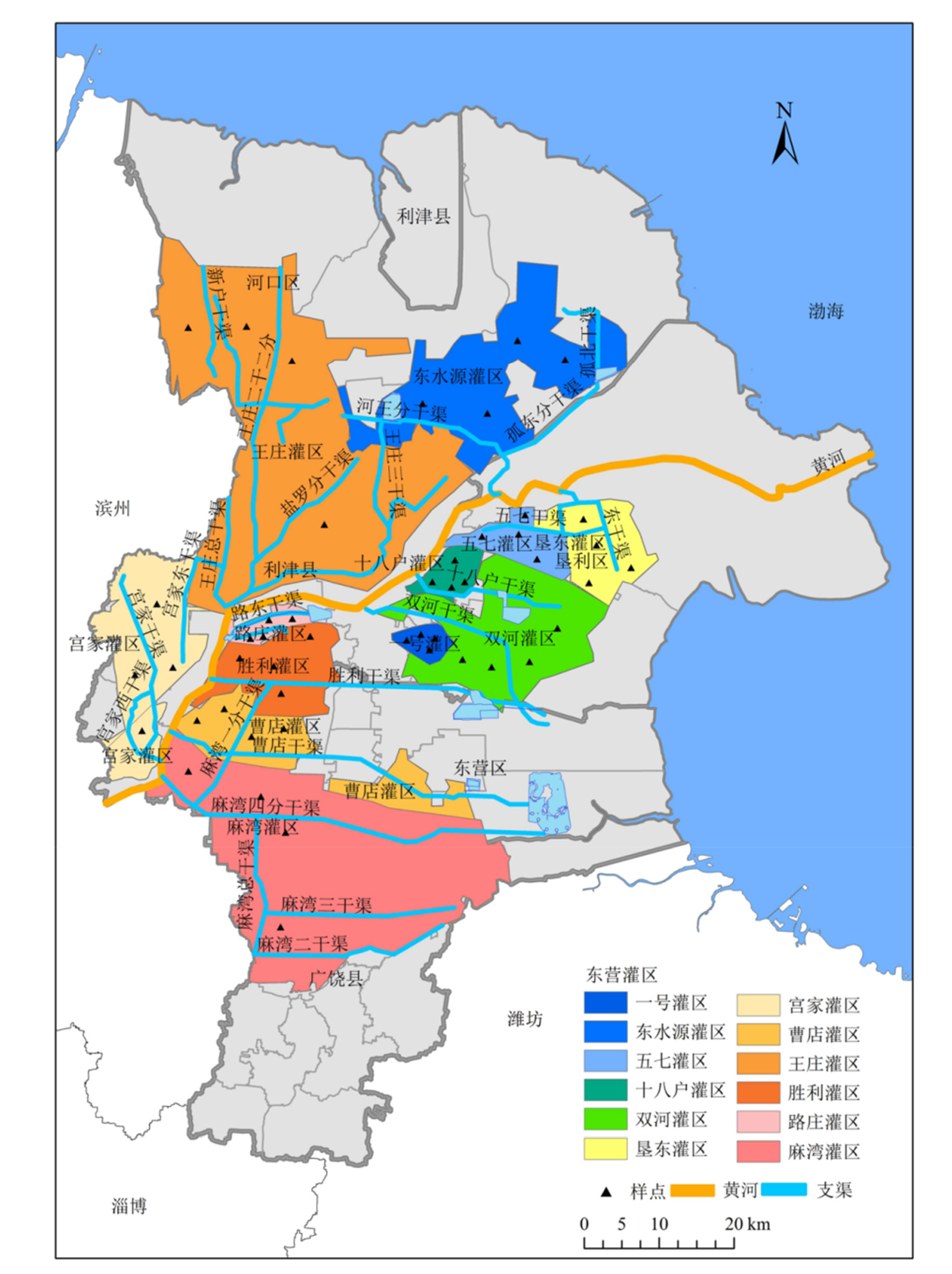
图1 样点分布图 基于国家测绘地理信息局标准地图服务网审图号为GS(2024)0650的标准地图制作;底图边界无修改
Figure 1 Spatial distribution of sampling sites
| 灌区 | 样点 | w(水分)/% | pH | w(有机质)/(g·kg−1) | w(有效磷)/(mg·kg−1) | w(速效钾)/(mg·kg−1) | w(全氮)/(g·kg−1) |
|---|---|---|---|---|---|---|---|
| 十八户 | B01-04 | 26.3±2.7a | 7.32±0.17a | 45.5±15.3a | 84.0±33.5a | 29.3±8.5ab | 2.47±0.40a |
| 曹店 | C01-04 | 21.7±3.1b | 7.29±0.12a | 31.0±10.4b | 45.5±17.5b | 30.9±10.5ab | 1.57±0.20b |
| 东水源 | D01-04 | 27.2±4.0a | 7.41±0.11ab | 42.4±13.7a | 69.6±18.6ab | 27.5±5.8ab | 2.27±0.35ab |
| 官家 | G01-04 | 22.8±2.5b | 7.44±0.15ab | 31.7±13.3b | 75.1±19.1ab | 27.7±7.6ab | 1.71±0.23b |
| 双河 | H01-04 | 24.5±4.1ab | 7.38±0.22ab | 45.6±12.0a | 62.8±14.6ab | 30.6±11.5ab | 2.11±0.29ab |
| 垦东 | K01-04 | 23.7±2.9b | 7.59±0.13ab | 37.5±14.8ab | 35.9±8.7b | 35.9±10.5a | 2.11±0.31ab |
| 路庄 | L01-04 | 17.9±3.8c | 8.02±0.11b | 28.6±9.6b | 48.2±11.3b | 20.6±5.5b | 1.52±0.16b |
| 麻湾 | M01-04 | 18.2±2.7c | 7.58±0.17ab | 29.8±13.3b | 60.8±10.4ab | 34.8±9.0ab | 1.39±0.13b |
| 五七 | Q01-04 | 26.8±3.2a | 7.36±0.18ab | 44.6±13.0a | 40.5±7.3ab | 27.1±6.9ab | 2.43±0.12ab |
| 胜利 | S01-04 | 19.1±2.5bc | 7.64±0.10ab | 40.5±10.3ab | 72.2±15.5ab | 35.5±8.9a | 2.22±0.18ab |
| 王庄 | W01-04 | 27.3±2.9ab | 7.47±0.16ab | 50.3±12.4a | 29.6±10.8b | 28.5±7.7ab | 2.23±0.13ab |
| 一号 | Y01-04 | 28.6±4.1a | 7.32±0.20ab | 55.3±14.4a | 104.6±22.7a | 32.5±9.2a | 2.72±0.43a |
表1 灌区土壤基本理化性质空间差异
Table 1 Spatial differences in fundamental physicochemical properties of soils in the irrigation area
| 灌区 | 样点 | w(水分)/% | pH | w(有机质)/(g·kg−1) | w(有效磷)/(mg·kg−1) | w(速效钾)/(mg·kg−1) | w(全氮)/(g·kg−1) |
|---|---|---|---|---|---|---|---|
| 十八户 | B01-04 | 26.3±2.7a | 7.32±0.17a | 45.5±15.3a | 84.0±33.5a | 29.3±8.5ab | 2.47±0.40a |
| 曹店 | C01-04 | 21.7±3.1b | 7.29±0.12a | 31.0±10.4b | 45.5±17.5b | 30.9±10.5ab | 1.57±0.20b |
| 东水源 | D01-04 | 27.2±4.0a | 7.41±0.11ab | 42.4±13.7a | 69.6±18.6ab | 27.5±5.8ab | 2.27±0.35ab |
| 官家 | G01-04 | 22.8±2.5b | 7.44±0.15ab | 31.7±13.3b | 75.1±19.1ab | 27.7±7.6ab | 1.71±0.23b |
| 双河 | H01-04 | 24.5±4.1ab | 7.38±0.22ab | 45.6±12.0a | 62.8±14.6ab | 30.6±11.5ab | 2.11±0.29ab |
| 垦东 | K01-04 | 23.7±2.9b | 7.59±0.13ab | 37.5±14.8ab | 35.9±8.7b | 35.9±10.5a | 2.11±0.31ab |
| 路庄 | L01-04 | 17.9±3.8c | 8.02±0.11b | 28.6±9.6b | 48.2±11.3b | 20.6±5.5b | 1.52±0.16b |
| 麻湾 | M01-04 | 18.2±2.7c | 7.58±0.17ab | 29.8±13.3b | 60.8±10.4ab | 34.8±9.0ab | 1.39±0.13b |
| 五七 | Q01-04 | 26.8±3.2a | 7.36±0.18ab | 44.6±13.0a | 40.5±7.3ab | 27.1±6.9ab | 2.43±0.12ab |
| 胜利 | S01-04 | 19.1±2.5bc | 7.64±0.10ab | 40.5±10.3ab | 72.2±15.5ab | 35.5±8.9a | 2.22±0.18ab |
| 王庄 | W01-04 | 27.3±2.9ab | 7.47±0.16ab | 50.3±12.4a | 29.6±10.8b | 28.5±7.7ab | 2.23±0.13ab |
| 一号 | Y01-04 | 28.6±4.1a | 7.32±0.20ab | 55.3±14.4a | 104.6±22.7a | 32.5±9.2a | 2.72±0.43a |
| 灌区 | Cu | Cd | Pb | Cr | As | Hg | Ni | Zn |
|---|---|---|---|---|---|---|---|---|
| 十八户 | 56.0±19.4a | 2.31±0.11ab | 41.8±9.6ab | 217.3±11.3a | 3.38±3.50a | 0.48±0.09a | 51.5±2.4a | 132.0±9.5ab |
| 曹店 | 36.0±7.5b | 2.05±0.36b | 38.1±11.6ab | 208.0±8.2a | 4.65±2.15a | 0.52±0.15a | 50.5±3.7a | 116.8±50.8ab |
| 东水源 | 45.3±7.8ab | 2.31±0.45ab | 36.9±13.6ab | 211.5±12.0a | 5.16±4.43a | 0.76±0.38a | 57.5±11.4a | 112.2±16.5b |
| 官家 | 39.0±6.9ab | 2.09±0.34ab | 38.4±7.9ab | 212.5±10.8a | 4.09±4.08a | 0.71±0.25a | 48.8±7.5a | 114.3±27.4b |
| 双河 | 43.0±6.6ab | 2.14±0.32ab | 41.6±8.1ab | 213.5±9.7a | 4.11±5.14a | 0.53±0.42a | 54.5±7.9a | 133.8±17.0ab |
| 垦东 | 40.5±6.1ab | 2.53±0.30a | 41.3±20.6ab | 216.5±15.9a | 1.97±0.87a | 0.51±0.06a | 52.8±7.5a | 112.1±13.4b |
| 路庄 | 40.3±6.8ab | 2.20±0.28ab | 34.9±4.2b | 208.8±14.9a | 2.48±3.24a | 0.37±0.19a | 55.5±8.1a | 97.6±24.9b |
| 麻湾 | 36.0±4.2b | 2.21±0.31ab | 31.4±4.4b | 209.0±7.1a | 3.58±4.91a | 0.41±0.17a | 58.5±8.1a | 102.8±10.8b |
| 五七 | 44.5±2.5ab | 2.30±0.31ab | 42.7±3.8ab | 220.8±9.3a | 3.36±2.15a | 0.46±0.07a | 49.5±9.5a | 118.0±10.9ab |
| 胜利 | 43.8±5.1ab | 2.19±0.25ab | 41.8±6.4ab | 215.0±12.5a | 7.45±3.76a | 0.49±0.25a | 57.3±10.4a | 119.8±18.0ab |
| 王庄 | 41.8±11.4ab | 2.26±0.47ab | 42.2±13.0ab | 224.0±13.7a | 2.11±1.66a | 0.44±0.26a | 58.0±3.2a | 123.0±29.3ab |
| 一号 | 39.8±14.9ab | 2.16±0.24ab | 39.2±8.7ab | 207.0±10.7a | 10.0±1.3b | 0.65±0.23a | 55.5±2.6a | 115.1±26.9b |
表2 灌区土壤重金属含量空间差异
Table 2 Spatial differences in soil heavy metal concentrations in the irrigated area mg·kg?1
| 灌区 | Cu | Cd | Pb | Cr | As | Hg | Ni | Zn |
|---|---|---|---|---|---|---|---|---|
| 十八户 | 56.0±19.4a | 2.31±0.11ab | 41.8±9.6ab | 217.3±11.3a | 3.38±3.50a | 0.48±0.09a | 51.5±2.4a | 132.0±9.5ab |
| 曹店 | 36.0±7.5b | 2.05±0.36b | 38.1±11.6ab | 208.0±8.2a | 4.65±2.15a | 0.52±0.15a | 50.5±3.7a | 116.8±50.8ab |
| 东水源 | 45.3±7.8ab | 2.31±0.45ab | 36.9±13.6ab | 211.5±12.0a | 5.16±4.43a | 0.76±0.38a | 57.5±11.4a | 112.2±16.5b |
| 官家 | 39.0±6.9ab | 2.09±0.34ab | 38.4±7.9ab | 212.5±10.8a | 4.09±4.08a | 0.71±0.25a | 48.8±7.5a | 114.3±27.4b |
| 双河 | 43.0±6.6ab | 2.14±0.32ab | 41.6±8.1ab | 213.5±9.7a | 4.11±5.14a | 0.53±0.42a | 54.5±7.9a | 133.8±17.0ab |
| 垦东 | 40.5±6.1ab | 2.53±0.30a | 41.3±20.6ab | 216.5±15.9a | 1.97±0.87a | 0.51±0.06a | 52.8±7.5a | 112.1±13.4b |
| 路庄 | 40.3±6.8ab | 2.20±0.28ab | 34.9±4.2b | 208.8±14.9a | 2.48±3.24a | 0.37±0.19a | 55.5±8.1a | 97.6±24.9b |
| 麻湾 | 36.0±4.2b | 2.21±0.31ab | 31.4±4.4b | 209.0±7.1a | 3.58±4.91a | 0.41±0.17a | 58.5±8.1a | 102.8±10.8b |
| 五七 | 44.5±2.5ab | 2.30±0.31ab | 42.7±3.8ab | 220.8±9.3a | 3.36±2.15a | 0.46±0.07a | 49.5±9.5a | 118.0±10.9ab |
| 胜利 | 43.8±5.1ab | 2.19±0.25ab | 41.8±6.4ab | 215.0±12.5a | 7.45±3.76a | 0.49±0.25a | 57.3±10.4a | 119.8±18.0ab |
| 王庄 | 41.8±11.4ab | 2.26±0.47ab | 42.2±13.0ab | 224.0±13.7a | 2.11±1.66a | 0.44±0.26a | 58.0±3.2a | 123.0±29.3ab |
| 一号 | 39.8±14.9ab | 2.16±0.24ab | 39.2±8.7ab | 207.0±10.7a | 10.0±1.3b | 0.65±0.23a | 55.5±2.6a | 115.1±26.9b |
| 灌区 | 群落丰富度指数 | 群落均匀度指数 | 群落多样性指数 | 群落覆盖度指数 | ||||||
|---|---|---|---|---|---|---|---|---|---|---|
| Sobs指数 | Chao指数 | Shannon均匀度 | Simpson均匀度 | Shannon指数 | Invsimpson指数 | Coverage指数 | ||||
| 十八户 | 590.0±130.1a | 698.1±159.1a | 0.54±0.15c | 0.022±0.017c | 3.436±1.066b | 12.74±9.69b | 0.998±0.001a | |||
| 曹店 | 490.3±114.3bc | 551.0±193.1bc | 0.61±0.15bc | 0.056±0.066b | 3.738±1.002ab | 22.23±19.57ab | 0.9987±0.001a | |||
| 东水源 | 517.0±193.5bc | 594.2±241.0bc | 0.63±0.09ab | 0.046±0.042b | 3.72±0.88ab | 24.74±14.27ab | 0.9977±0.002a | |||
| 官家 | 548.3±290.4bc | 669.3±346.3bc | 0.48±0.20c | 0.019±0.011c | 2.37±1.58c | 10.41±8.12b | 0.9977±0.002a | |||
| 双河 | 553.3±115.3bc | 633.8±229.4bc | 0.74±0.03a | 0.065±0.056b | 4.13±1.2 ab | 34.03±24.15a | 0.9989±0.002a | |||
| 垦东 | 464.5±224.2bc | 517.2±236.8bc | 0.59±0.06bc | 0.022±0.023c | 3.00±0.56b | 15.53±7.43ab | 0.9980±0.001a | |||
| 路庄 | 514.3±82.3bc | 553.8±85.1bc | 0.65±0.09ab | 0.054±0.056b | 4.00±0.58ab | 28.72±29.69a | 0.9989±0.001a | |||
| 麻湾 | 425.3±190.4c | 493.5±199.2bc | 0.48±0.25c | 0.018±0.017c | 2.67±1.55b | 9.82±11.03b | 0.9984±0.001a | |||
| 五七 | 531.0±134.3bc | 639.7±138.9bc | 0.46±0.14c | 0.014±0.009c | 2.89±1.16b | 7.99±5.64b | 0.9978±0.002a | |||
| 胜利 | 551.8±31.2bc | 591.4±33.7bc | 0.63±0.04ab | 0.039±0.019b | 3.97±0.62ab | 27.48±11.28a | 0.9989±0.001a | |||
| 王庄 | 587.8±58.9bc | 664.1±106.8bc | 0.62±0.14ab | 0.041±0.029b | 3.90±1.12ab | 23.36±18.01ab | 0.9986±0.001a | |||
| 一号 | 674.7±52.4b | 720.1±83.2ab | 0.57±0.03bc | 0.021±0.006c | 3.76±0.27ab | 19.63±7.22ab | 0.9975±0.001a | |||
表3 灌区土壤真菌多样性指标差异
Table 3 Differences in soil fungal diversity metrics across the irrigated region
| 灌区 | 群落丰富度指数 | 群落均匀度指数 | 群落多样性指数 | 群落覆盖度指数 | ||||||
|---|---|---|---|---|---|---|---|---|---|---|
| Sobs指数 | Chao指数 | Shannon均匀度 | Simpson均匀度 | Shannon指数 | Invsimpson指数 | Coverage指数 | ||||
| 十八户 | 590.0±130.1a | 698.1±159.1a | 0.54±0.15c | 0.022±0.017c | 3.436±1.066b | 12.74±9.69b | 0.998±0.001a | |||
| 曹店 | 490.3±114.3bc | 551.0±193.1bc | 0.61±0.15bc | 0.056±0.066b | 3.738±1.002ab | 22.23±19.57ab | 0.9987±0.001a | |||
| 东水源 | 517.0±193.5bc | 594.2±241.0bc | 0.63±0.09ab | 0.046±0.042b | 3.72±0.88ab | 24.74±14.27ab | 0.9977±0.002a | |||
| 官家 | 548.3±290.4bc | 669.3±346.3bc | 0.48±0.20c | 0.019±0.011c | 2.37±1.58c | 10.41±8.12b | 0.9977±0.002a | |||
| 双河 | 553.3±115.3bc | 633.8±229.4bc | 0.74±0.03a | 0.065±0.056b | 4.13±1.2 ab | 34.03±24.15a | 0.9989±0.002a | |||
| 垦东 | 464.5±224.2bc | 517.2±236.8bc | 0.59±0.06bc | 0.022±0.023c | 3.00±0.56b | 15.53±7.43ab | 0.9980±0.001a | |||
| 路庄 | 514.3±82.3bc | 553.8±85.1bc | 0.65±0.09ab | 0.054±0.056b | 4.00±0.58ab | 28.72±29.69a | 0.9989±0.001a | |||
| 麻湾 | 425.3±190.4c | 493.5±199.2bc | 0.48±0.25c | 0.018±0.017c | 2.67±1.55b | 9.82±11.03b | 0.9984±0.001a | |||
| 五七 | 531.0±134.3bc | 639.7±138.9bc | 0.46±0.14c | 0.014±0.009c | 2.89±1.16b | 7.99±5.64b | 0.9978±0.002a | |||
| 胜利 | 551.8±31.2bc | 591.4±33.7bc | 0.63±0.04ab | 0.039±0.019b | 3.97±0.62ab | 27.48±11.28a | 0.9989±0.001a | |||
| 王庄 | 587.8±58.9bc | 664.1±106.8bc | 0.62±0.14ab | 0.041±0.029b | 3.90±1.12ab | 23.36±18.01ab | 0.9986±0.001a | |||
| 一号 | 674.7±52.4b | 720.1±83.2ab | 0.57±0.03bc | 0.021±0.006c | 3.76±0.27ab | 19.63±7.22ab | 0.9975±0.001a | |||
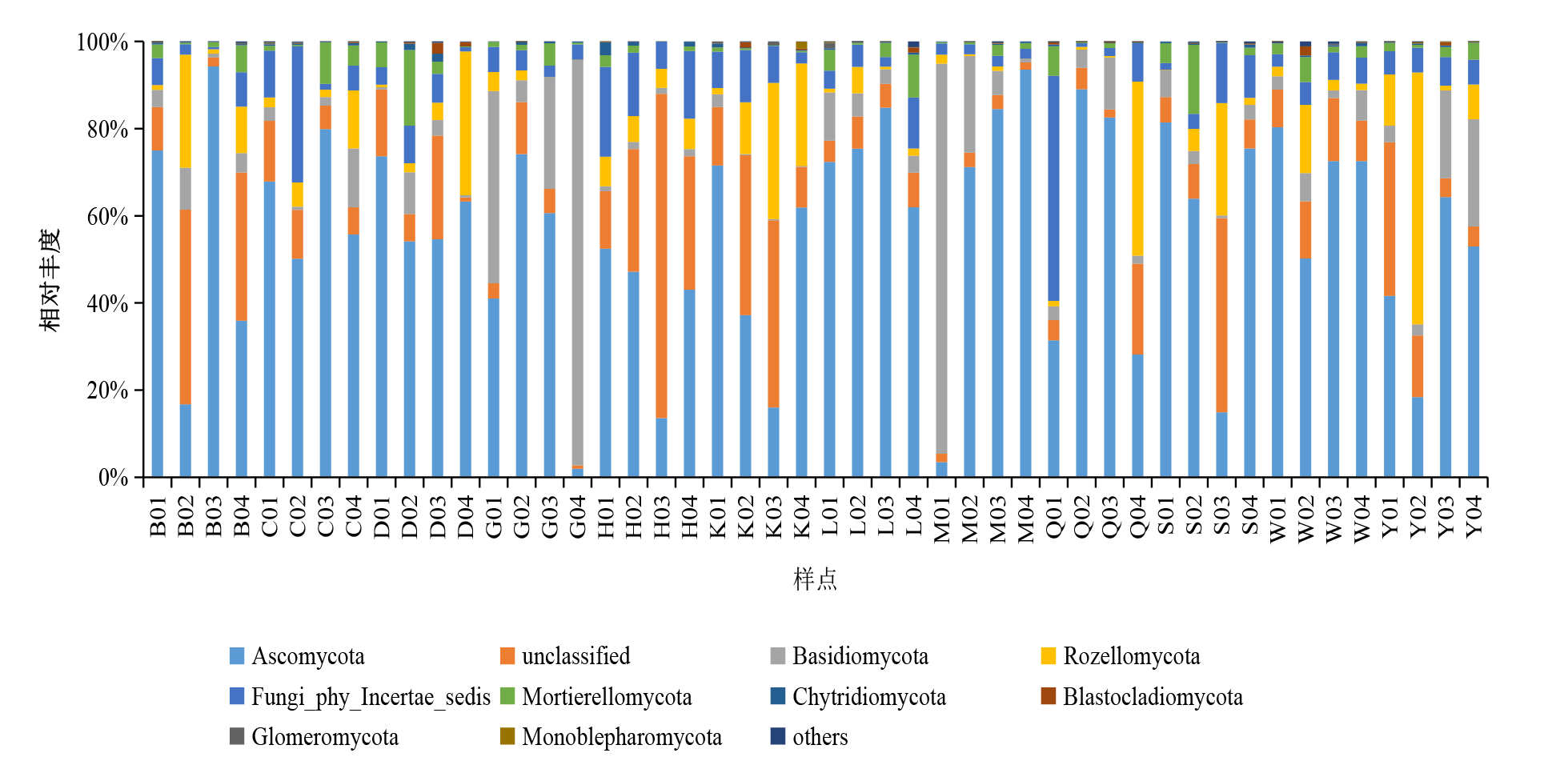
图2 不同灌区的样点土壤真菌群落结构情况
Figure 2 Soil fungal community structures across different irrigation areas
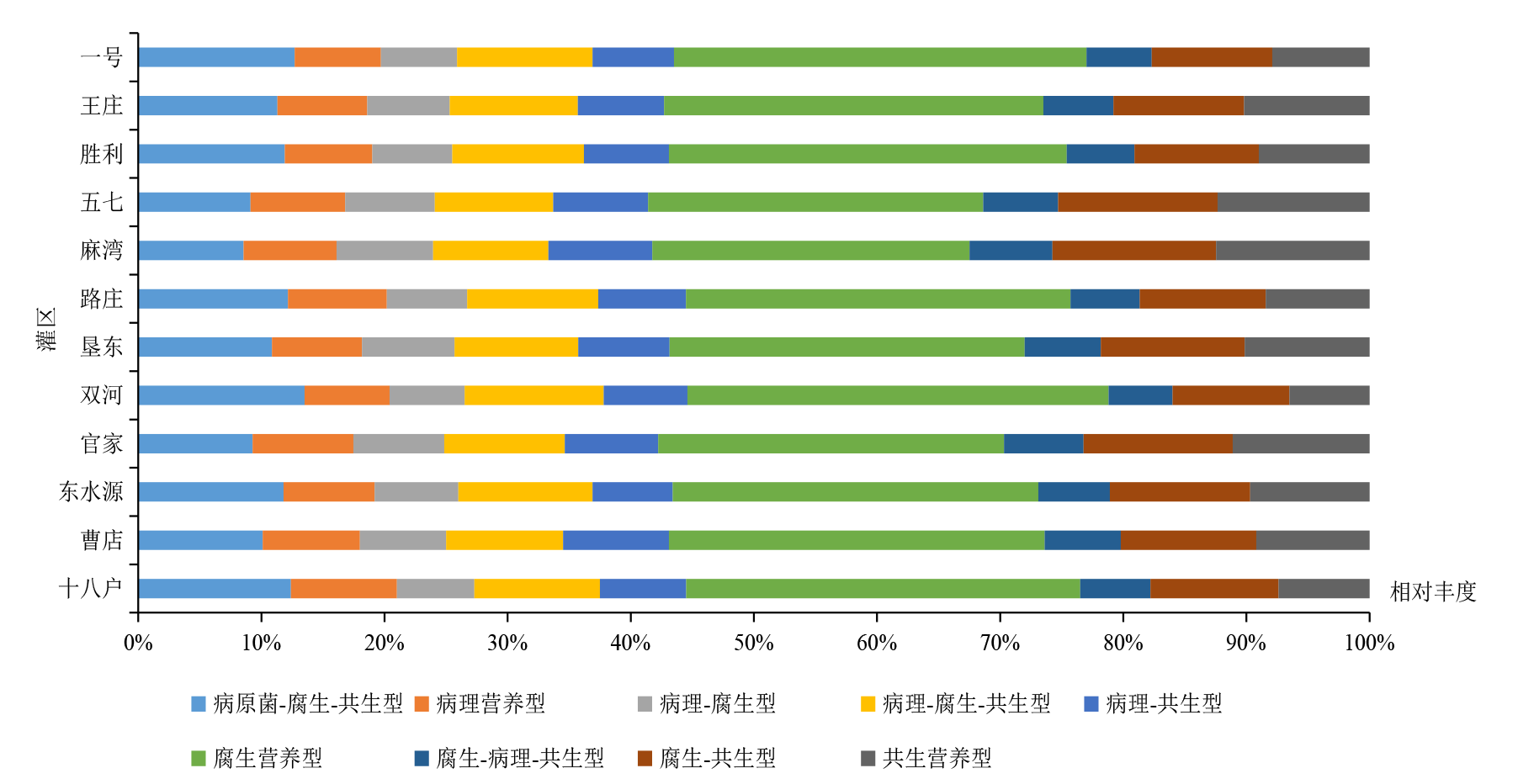
图3 不同灌区的样点土壤真菌功能情况
Figure 3 Predicted functional composition of soil fungi in different irrigation areas
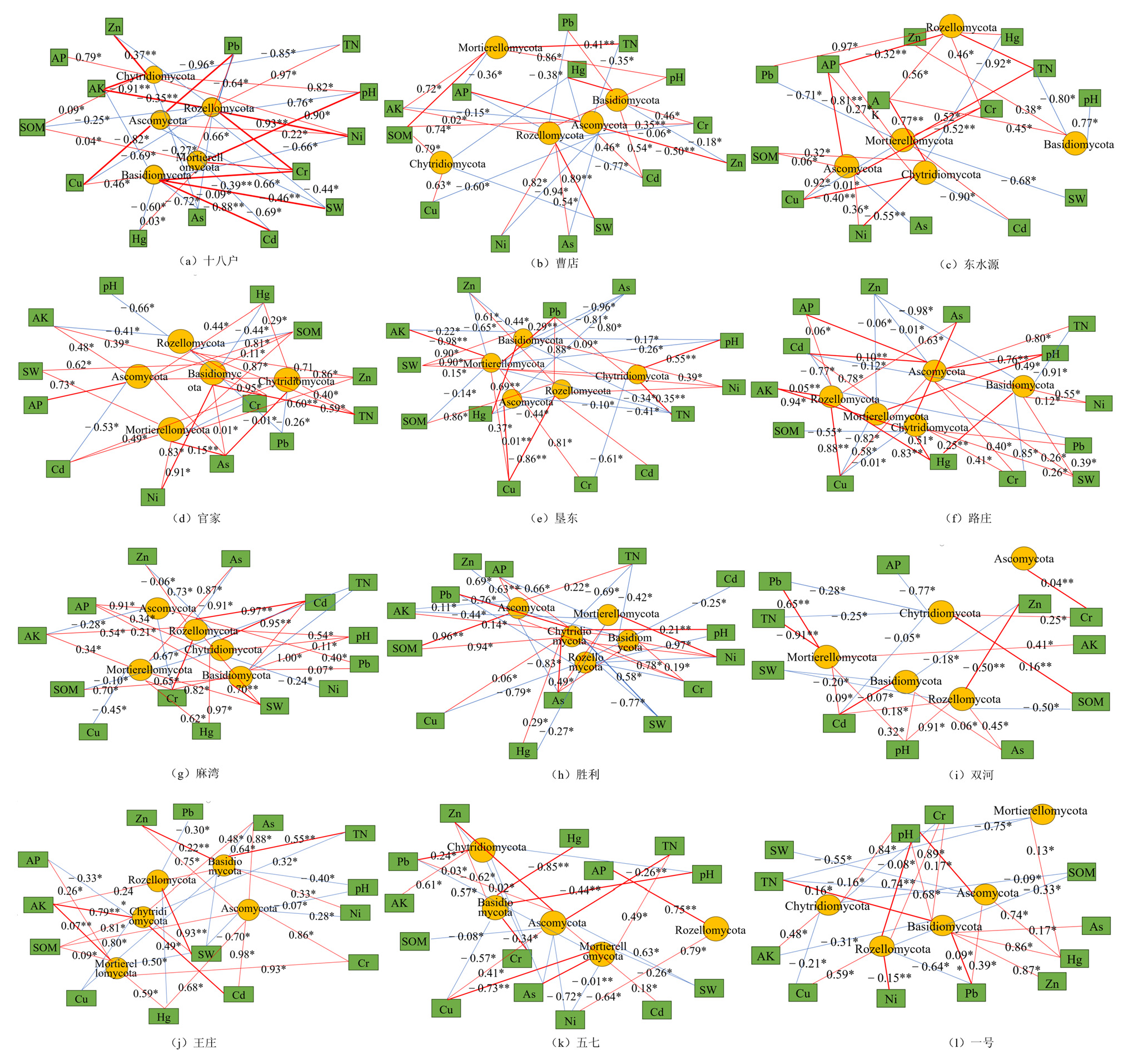
图4 各灌区土壤环境因子与真菌群落网络图 *表示显著相关性(0.01≤p<0.05),**表示极显著相关性(p<0.01);红色线条表示正相关,蓝色线条表示负相关,红色粗线为极显著正相关,蓝色粗线为极显著负相关;相关系数正负号表示相关方向,线条粗细反映相关系数大小
Figure 4 Co-occurrence networks between soil environmental variables and fungal communities across irrigation zones
| [1] |
ANGULO V, BLEICHRODT R J, DIJKSTERHUIS J, et al., 2024. Enhancement of soil aggregation and physical properties through fungal amendments under varying moisture conditions[J]. Environmental Microbiology, 26(5): e16627.
DOI URL |
| [2] |
BALU S K, ANDRA S, JEEVANANDAM J, et al., 2023. Exploring the potential of metal oxide nanoparticles as fungicides and plant nutrient boosters[J]. Crop Protection, 174: 106398.
DOI URL |
| [3] |
CHANDRAN S, LOGANATHACHETTI D S, SADAIAPPAN B, et al., 2025. Irrigation water and soil chemistry shape fungal guilds in date palm soils, enhancing pathotroph abundance under saline groundwater irrigation[J]. Current Research in Microbial Sciences, 8: 100370.
DOI URL |
| [4] |
CHERNYSHEVA E, KASHIRSKAYA N, DEMKINA E, et al., 2025. Organic grave good-related soil microorganisms: Read-out of soil biological memory for archaeological research[J]. Catena, 254: 108955.
DOI URL |
| [5] |
DU X P, BI Y L, TIAN L X, et al., 2024. Enhancing infiltration characteristics of compact soil in open-pit dumps through arbuscular mycorrhizal fungi inoculation in Amorpha fruticosa: Mechanisms and effects[J]. Catena, 247: 108515.
DOI URL |
| [6] |
EMMERLING C, HERZOG M, HOFFMANN C, et al., 2025. Operational soil warming by underground transmission lines impacts on soil microorganisms and related metabolic activities[J]. Journal of Plant Nutrition and Soil Science, 188(3): 464-472.
DOI URL |
| [7] |
GARCIA-LOPEZ MT, MECA E, JAIME R, et al., 2024. Sporulation and dispersal of the biological control agent Aspergillus flavus AF36 under field conditions[J]. Phytopathology, 114(5): 1118-1125.
DOI URL |
| [8] |
HE M Y, SHEN C, PENG S, et al., 2024. The influence of soil salinization, induced by the backwater effect of the Yellow River, on microbial community dynamics and ecosystem functioning in arid regions[J]. Environmental Research, 262(Part 1): 119854.
DOI URL |
| [9] |
LIANG X Y, WANG H T, WANG C J, et al., 2023. Disentangling the impact of biogas slurry topdressing as a replacement for chemical fertilizers on soil bacterial and fungal community composition, functional characteristics, and co-occurrence networks[J]. Environmental Research, 238(2): 117256.
DOI URL |
| [10] |
MÄDER P, STACHE F, ENGELBART L, et al., 2024. Effects of MCPA and difenoconazole on glyphosate degradation and soil microorganisms[J]. Environmental Pollution, 362: 124926.
DOI URL |
| [11] |
PEREIRA G, CASTILLO-NOVALES D, SALAZAR C, et al., 2024. Gigaspora roseae and Coriolopsis rigida fungi improve performance of Quillaja saponaria plants grown in sandy substrate with added sewage sludge[J]. Journal of Fungi, 11(1): 1-16.
DOI URL |
| [12] | RICHARDS L, CREMIN K, COATES M, et al., 2024. Ammonia leakage can underpin nitrogen-sharing among soil microorganisms[J]. The ISME Journal, 18(1): wrae171. |
| [13] |
SARKER A, MASUD M, DEEPO D M, et al., 2023. Biological and green remediation of heavy metal contaminated water and soils: A state-of-the-art review[J]. Chemosphere, 332: 138861.
DOI URL |
| [14] |
TATSUMI C, TANIGUCHI T, HYODO F, et al., 2023. Mycorrhizal type affects forest nitrogen availability, independent of organic matter quality[J]. Biogeochemistry, 165(3): 327-340.
DOI |
| [15] |
WHALEN E D, GRANDY A S, GEYER K M, et al., 2024. Microbial trait multifunctionality drives soil organic matter formation potential[J]. Nature Communications, 15(1): 10209.
DOI |
| [16] |
XUE C Y, DU Y, ALLINSON G, et al., 2024. Metals and polycyclic aromatic hydrocarbons pollutants in industrial parks under valley landforms in Tibetan Plateau: Spatial pattern, ecological risk and interaction with soil microorganisms[J]. Journal of Hazardous Materials, 471: 134411.
DOI URL |
| [17] |
YIALLOURIS A, PANA Z D, MARANGOS G, et al., 2024. Fungal diversity in the soil mycobiome: Implications for one health[J]. One Health, 18: 100720.
DOI URL |
| [18] | 陈彦云, 夏皖豫, 赵辉, 等, 2022. 粉垄耕作对耕地土壤酶活性、微生物群落结构和功能多样性的影响[J]. 生态学报, 42(12): 5009-5021. |
| CHEN Y Y, XIA W Y, ZHAO H, et al., 2022. Effects of pounded ridge tillage on soil enzyme activities, microbial community structure, and functional diversity in cultivated land[J]. Acta Ecologica Sinica, 42(12): 5009-5021. | |
| [19] | 邓江茹, 刘文娟, 马琨, 等, 2024. 减氮和控释肥替代对宁夏引黄灌区玉米产量及土壤无机氮的影响[J]. 农业环境科学学报, 49(3): 2069-2079. |
| DENG J R, LIU W J, MA K, et al., 2024. Effects of nitrogen reduction and controlled-release fertilizer substitution on maize yield and soil inorganic nitrogen in Yellow River Irrigation Districts of Ningxia[J]. Journal of Agro-Environmental Science, 49(3): 2069-2079. | |
| [20] | 杜运付, 伍金花, 高海健, 等, 2024. 菌根真菌修复重金属污染土壤研究进展[J]. 农业生物技术学报, 32(7): 1681-1692. |
| DU Y F, WU J H, GAO H J, et al., 2024. Advances in the remediation of heavy metal contaminated soils by mycorrhizal fungi[J]. Journal of Agricultural Biotechnology, 32(7): 1681-1692. | |
| [21] |
高海燕, 张胜男, 杨制国, 等, 2025. 科尔沁沙地油松固沙林土壤真菌群落结构及功能[J]. 干旱区研究, 42(1): 118-126.
DOI |
| GAO H Y, ZHANG S N, YANG Z G, et al., 2025. Structure and function of soil fungal communities in Pinus sylvestris var. mongolica shelterbelt forests in Horqin Sandy Land[J]. Arid Zone Research, 42(1): 118-126. | |
| [22] | 郭海涛, 曹艳峰, 云秋皓, 2024. 汾河平原小麦成熟前期根际土丛枝菌根真菌群落结构的空间变异[J]. 干旱区资源与环境, 38(5): 163-170. |
| GUO H T, CAO Y F, YUN Q H, 2024. Spatial variation of arbuscular mycorrhizal fungal communities in wheat rhizosphere before maturity in the Fenhe Plain[J]. Arid Land Resources and Environment, 38(5): 163-170. | |
| [23] | 侯瑞楠, 崔钰爽, 王雨, 等, 2025. 河北省同纬度不同样地土壤盐分特征与微生物群落结构研究[J]. 微生物学报, 65(4): 1417-1432. |
| HOU R N, CUI Y S, WANG Y, et al., 2025. Characteristics of soil salinity and microbial community structure in different sites of the same latitude in Hebei Province[J]. Acta Microbiologica Sinica, 65(4): 1417-1432. | |
| [24] | 李常乐, 张富, 王理德, 等, 2024. 民勤绿洲退耕地土壤微生物群落结构与功能多样性特征[J]. 环境科学学报, 45(3): 1821-1829. |
| LI C L, ZHANG F, WANG L D, et al., 2024. Structure and functional diversity of soil microbial communities in abandoned farmland in Minqin Oasis[J]. Acta Scientiae Circumstantiae, 45(3): 1821-1829. | |
| [25] | 李劲, 程铭昊, 张溢, 等, 2025. 神农架国家公园不同植被类型土壤微生物群落结构及功能[J]. 生态学报, 45(10): 4842-4854. |
| LI J, CHENG M H, ZHANG Y, et al., 2025. Soil microbial community structure and function in different vegetation types of Shennongjia National Park[J]. Acta Ecologica Sinica, 45(10): 4842-4854. | |
| [26] | 林曦照, 李星陆, 姜筱雨, 等, 2024. 放牧对中国北部草地土壤真菌群落组成和功能的影响: Meta分析[J]. 土壤学报, 61(6): 1755-1765. |
| LIN X Z, LI X L, JIANG X Y, et al., 2024. Effects of grazing on soil fungal community composition and function in northern Chinese grasslands: A meta-analysis[J]. Acta Pedologica Sinica, 61(6): 1755-1765. | |
| [27] | 刘星, 邱慧珍, 王蒂, 等, 2015. 甘肃省中部沿黄灌区轮作和连作马铃薯根际土壤真菌群落的结构性差异评估[J]. 生态学报, 35(12): 3938-3948. |
| LIU X, QIU H Z, WANG D, et al., 2015. Structural differences of rhizosphere soil fungal communities between rotation and continuous potato cropping in central Gansu Yellow River irrigation area[J]. Acta Ecologica Sinica, 35(12): 3938-3948. | |
| [28] | 罗颖, 李敬伟, 袁浩, 等, 2023. 稀土-重金属共污染土壤中真菌群落结构特征及主导影响因素[J]. 环境科学, 44(9): 5145-5153. |
| LUO Y, LI J W, YUAN H, et al., 2023. Fungal community structure and key driving factors in soils co-contaminated by rare earth elements and heavy metals[J]. Environmental Science, 44(9): 5145-5153. | |
| [29] | 骆晓声, 寇长林, 张济世, 等, 2025. 炭基肥对麦-玉轮作农田土壤酶活性和真菌群落及作物产量的影响[J]. 环境科学, 46(6): 3965-3974. |
| LUO X S, KOU C L, ZHANG J S, et al., 2025. Effects of carbon-based fertilizer on soil enzyme activities, fungal communities and crop yield in wheat-maize rotation fields[J]. Environmental Science, 46(6): 3965-3974. | |
| [30] | 牟红霞, 张文文, 刘秉儒, 2021. 引黄灌区不同种植年限紫花苜蓿土壤真菌群落多样性特征[J]. 水土保持研究, 28(4): 91-96. |
| MU H X, ZHANG W W, LIU B R, 2021. Diversity characteristics of soil fungal communities in alfalfa with different planting years in Yellow River irrigation district[J]. Research of Soil and Water Conservation, 28(4): 91-96. | |
| [31] |
王燚, 李文珊, 展鹏飞, 等, 2024. 若尔盖高原泥炭沼泽土壤微生物空间分布[J]. 应用生态学报, 35(6): 1705-1715.
DOI |
|
WANG Y, LI W S, ZHAN P F, et al., 2024. Spatial distribution of peatland soil microorganisms on the Zoige Plateau[J]. Chinese Journal of Applied Ecology, 35(6): 1705-1715.
DOI |
|
| [32] | 姚瑶, 罗朋, 李京玲, 等, 2023. 基于VIKOR方法的引黄灌区土壤质量综合评价[J]. 干旱区资源与环境, 37(6): 133-140. |
| YAO Y, LUO P, LI J L, et al., 2023. Comprehensive evaluation of soil quality in the Yellow River irrigation area based on the VIKOR method[J]. Arid Zone Research, 37(6): 133-140. | |
| [33] | 殷楠, 伊丽努尔·阿里甫江, 孙奥, 等, 2025. 东天山北坡工业带土壤重金属来源解析及健康风险评价[J]. 土壤通报, 56(3): 861-872. |
| YIN N, YILINUR·ALIFUJIANG, SUN A, et al., 2025. Source apportionment and health risk assessment of soil heavy metals in the industrial belt on the northern slope of the Eastern Tianshan Mountains[J]. Soil Bulletin, 56(3): 861-872. | |
| [34] |
余书捷, 沈蓉, 林敦梅, 2025. 外生菌根真菌对森林土壤有机质形成和分解的影响研究进展[J]. 应用生态学报, 36(3): 943-949.
DOI |
| YU S J, SHEN R, LIN D M, 2025. Progress in studies on the effects of arbuscular mycorrhizal fungi on formation and decomposition of forest soil organic matter[J]. Chinese Journal of Applied Ecology, 36(3): 943-949. | |
| [35] |
张传华, 刘力, 代杰, 等, 2025. 基于土壤重金属污染和累积性评价的耕地环境质量类别划分与风险管控[J]. 生态环境学报, 34(2): 311-320.
DOI |
| ZHANG C H, LIU L, DAI J, et al., 2025. Classification and risk management of cultivated land environmental quality based on evaluation of soil heavy metal pollution and accumulation[J]. Ecology and Environmental Sciences, 34(2): 311-320. | |
| [36] | 张英, 曹红雨, 赵珮杉, 等, 2025. 半干旱-亚湿润干旱区樟子松林地土壤真菌群落随林龄增长的演变[J]. 环境科学, 46(6): 3975-3984. |
| ZHANG Y, CAO H Y, ZHAO P S, et al., 2025. Successional changes of soil fungal communities with increasing stand age in Pinus sylvestris var. mongolica forests in semi-arid to sub-humid dry regions[J]. Environmental Science, 46(6): 3975-3984. |
| [1] | 慕浩枫, 宋喆禄, 高镇, 侯鹰, 陈卫平. 基于生态系统服务供需的城市PM2.5污染风险时间变化特征与影响因素分析[J]. 生态环境学报, 2026, 35(2): 256-266. |
| [2] | 程虎, 李逸, 陈子墨, 黄言秋, 闵炬, 施卫明, 张龙江, 纪荣婷. 新型城镇化与美丽中国建设协调度研究——以江苏省为例[J]. 生态环境学报, 2026, 35(1): 29-39. |
| [3] | 陈燕玲, 周媛, 钱悦, 吴燕良, 邓力琛, 吴琼, 占龙飞. 基于OMI的江西省臭氧柱浓度时空分布特征及影响因素研究[J]. 生态环境学报, 2026, 35(1): 99-111. |
| [4] | 祁珣, 冯鑫鑫, 陈颖军, 冯艳丽, 陈田, 李军, 张干. 轻型汽油卡车尾气颗粒物中氨和有机胺的排放特征及影响因素[J]. 生态环境学报, 2025, 34(7): 997-1006. |
| [5] | 郝晓燕, 董超, 薛阳, 韩丽萍. 能源禀赋优势区能源供给与生态安全共生效应及影响因素[J]. 生态环境学报, 2025, 34(6): 974-985. |
| [6] | 陈洁茹, 叶长盛, 魏嶶, 蔡鑫, 汪礼丽. 环鄱阳湖城市群县域“三生空间”耦合协调性及影响因素分析[J]. 生态环境学报, 2025, 34(5): 807-818. |
| [7] | 郭铭彬, 龚建周, 王丽娟, 王时宽. 2019-2023年粤港澳大湾区NO2浓度变化的自然主控因子解析[J]. 生态环境学报, 2025, 34(4): 534-547. |
| [8] | 翁雷霆, 王鹏, 肖荣波, 白晋晶, 钟俊宏. 2000-2022年珠三角城市群PM2.5与O3时空分布特征及其影响因素[J]. 生态环境学报, 2025, 34(2): 268-278. |
| [9] | 王春梅, 姜炳棋, 胡俊, 陈代文, 黄丽华, 程湾湾. 核电厂周边大气环境总放射性多尺度变化及影响因素[J]. 生态环境学报, 2025, 34(12): 1900-1908. |
| [10] | 夏依宁, 刘鹏翱, 何柯润, 田朝晖, 曾丽婷, 侯珂伦. 基于土地利用的长株潭都市圈碳储量时空格局与情景模拟[J]. 生态环境学报, 2025, 34(11): 1661-1674. |
| [11] | 孔小云, 张永坤, 李润杰, 李颖, 林成清, 马占明, 辛继林, 杨晓璇, 党怡乐, 赵家艺, 冯玲正, 周燕. 湟水河流域耕地土壤团聚体有机碳空间变异特征及其驱动因素分析[J]. 生态环境学报, 2025, 34(11): 1715-1727. |
| [12] | 尤琪, 杨艺, 张寅清, 祝凌燕. 纳米银颗粒在水环境中的化学转化及影响因素[J]. 生态环境学报, 2025, 34(1): 156-166. |
| [13] | 张维琛, 王惺琪, 王博杰. 塔布河流域生态系统服务时空格局及影响因素分析[J]. 生态环境学报, 2024, 33(7): 1142-1152. |
| [14] | 李程, 程志鹏, 刘育金, 姚义鸣, 李春雷. 全(多)氟烷基化合物生态风险及其管控政策研究[J]. 生态环境学报, 2024, 33(6): 980-996. |
| [15] | 梁燕, 刘家齐, 肖凡, 潘民萍, 韦凯文, 张楚雯, 段敏. 氮沉降形态对西南岩溶区森林土壤有效磷来源的影响[J]. 生态环境学报, 2024, 33(2): 192-201. |
| 阅读次数 | ||||||
|
全文 |
|
|||||
|
摘要 |
|
|||||
