
生态环境学报 ›› 2026, Vol. 35 ›› Issue (10): 1532-1544.DOI: 10.16258/j.cnki.1674-5906.2026.10.004
胡紫璇1( ), 白铭悦1, 刘铭1, 郭建斌1,2,*(), 王晓3, 陈春艳1
收稿日期:2025-12-30
修回日期:2026-07-03
接受日期:2026-07-29
出版日期:2026-10-18
发布日期:2026-10-21
通讯作者:
E-mail: 作者简介:胡紫璇(2002年生),女,硕士研究生,主要研究方向为生态环境地理。E-mail: huzixuan0326@163.com
基金资助:
Hu Zixuan1(), Bai Mingyue1, Liu Ming1, Guo Jianbin1,2,*(), Wang Xiao3, Chen Chunyan1
Received:2025-12-30
Revised:2026-07-03
Accepted:2026-07-29
Online:2026-10-18
Published:2026-10-21
摘要:
【目的】在半湿润-半干旱过渡区人工林生态系统中,树干储水对缓解蒸腾与根系吸水之间的不平衡至关重要,但其对不同土层土壤水分变化的动态响应机制仍缺乏定量认识。本研究旨在探究宁夏六盘山香水河小流域华北落叶松(Larix principis-rupprechtii)人工林树干储水对分层土壤水分变化的响应特征及调控机制。【方法】采用上外包线法提取单因子响应函数,构建修正的Jarvis-Stewart模型;引入梯度提升回归树模型进行敏感性分析;结合因子替代法量化各土层在不同水分条件下对树干储水的贡献率。【结果】随着土层加深,限制树干储水释放的土壤水分阈值升高,修正的Jarvis-Stewart模型能较好地模拟多因子耦合的响应。树干储水对土壤水分的扰动呈非对称性响应,土壤水分增加5%的促进作用强于减少5%的抑制作用,且不同土层的敏感性排序为:0-20 cm>20-40 cm>40-60 cm。20-40 cm土层在土壤干旱和湿润条件下贡献率均最高,是稳定的供水来源。【结论】树干储水对不同土层水分的响应存在分层特征和阈值效应,20-40 cm土层是维持树干储水稳定的关键土层。人工林经营中应将中层土壤作为水分调控重点,并强化浅层水分的动态监测,以提升应对干湿快速转变的水分调控能力。
中图分类号:
胡紫璇, 白铭悦, 刘铭, 郭建斌, 王晓, 陈春艳. 华北落叶松人工林树干储水对不同土壤水分的响应及其模拟[J]. 生态环境学报, 2026, 35(10): 1532-1544.
Hu Zixuan, Bai Mingyue, Liu Ming, Guo Jianbin, Wang Xiao, Chen Chunyan. Response and Simulation of Stem Water Storage under Different Soil Moisture Conditions in a Larix principis-rupprechtii Forest[J]. Ecology and Environmental Sciences, 2026, 35(10): 1532-1544.
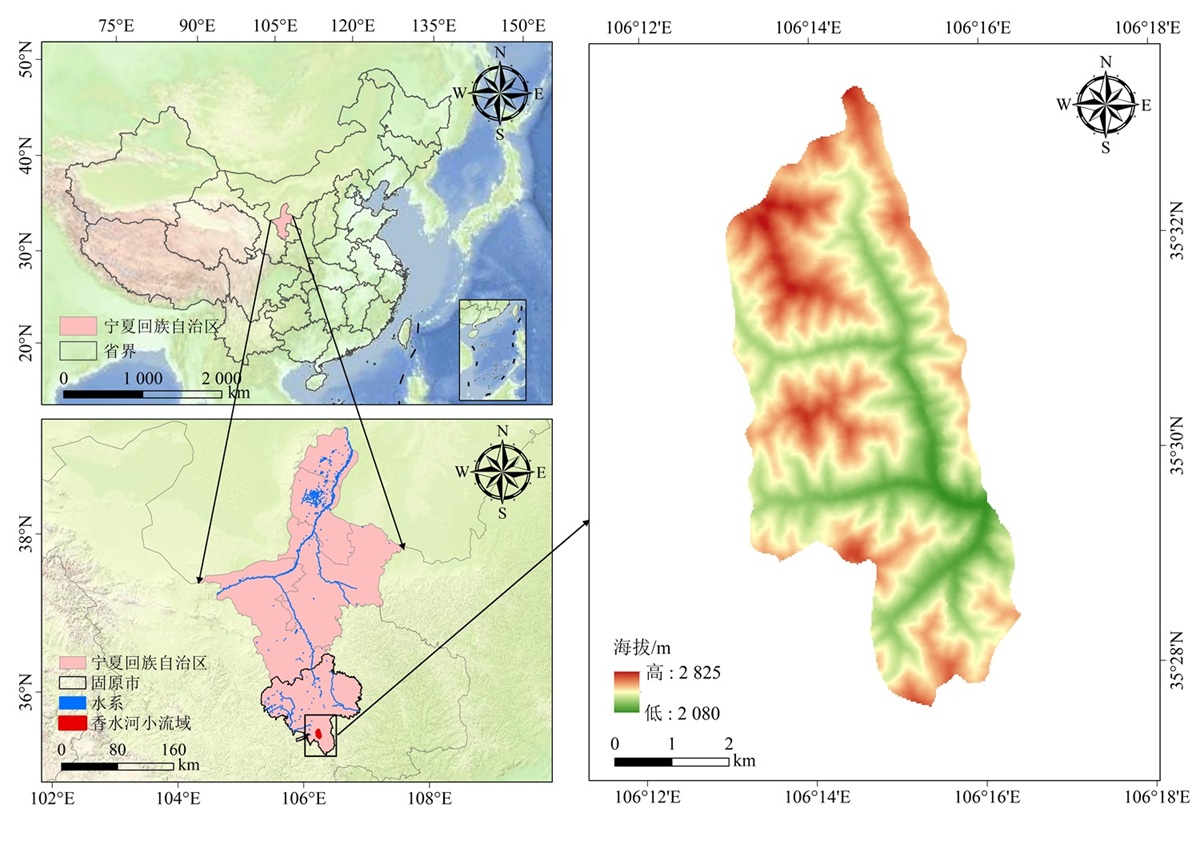
图1 研究区位置示意图 该图基于国家自然资源部标准地图服务网站下载的审图号为GS(2023)2767号的标准地图绘制,底图边界无修改
Figure 1 Schematic diagram of the study area location
| 样树 | 胸径/cm | 树高/m | 边材面积/cm2 | 细根主要分布深度/cm |
|---|---|---|---|---|
| 1 | 16.1 | 17.2 | 98.7 | 0-30 |
| 2 | 19.9 | 21.2 | 157.0 | 0-35 |
| 3 | 22.3 | 20.6 | 201.4 | 0-40 |
| 4 | 26.8 | 22.2 | 301.2 | 0-40 |
表1 样树基本信息
Table 1 Basic information of the sample trees
| 样树 | 胸径/cm | 树高/m | 边材面积/cm2 | 细根主要分布深度/cm |
|---|---|---|---|---|
| 1 | 16.1 | 17.2 | 98.7 | 0-30 |
| 2 | 19.9 | 21.2 | 157.0 | 0-35 |
| 3 | 22.3 | 20.6 | 201.4 | 0-40 |
| 4 | 26.8 | 22.2 | 301.2 | 0-40 |
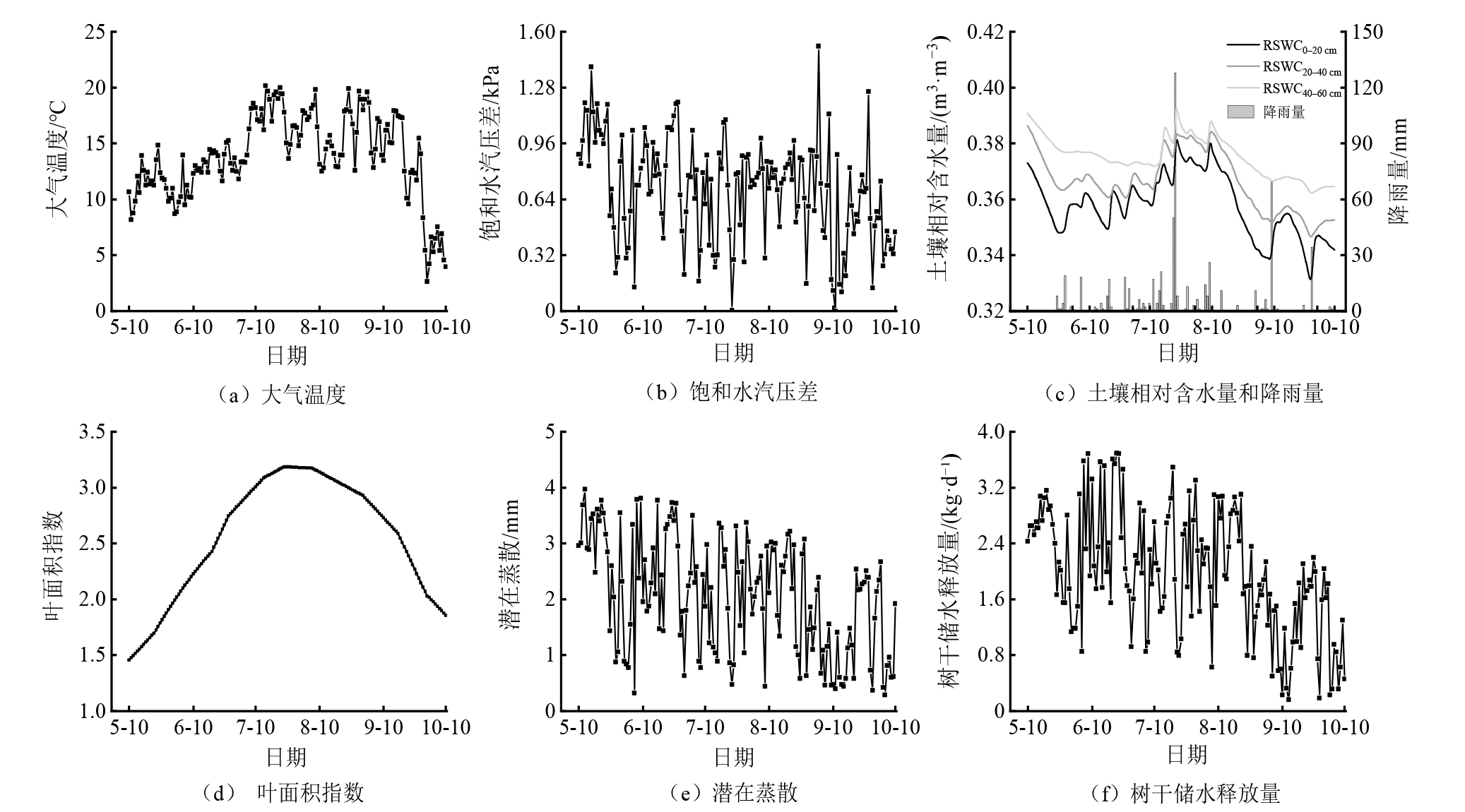
图2 生长季内树干储水与环境因子的日尺度变化 RSWC0-20 cm:0-20 cm土壤相对含水量;RSWC20-40 cm:20-40 cm土壤相对含水量;RSWC40-60 cm:40-60 cm土壤相对含水量
Figure 2 Daily variations of stem water storage and environmental factors within the growing season
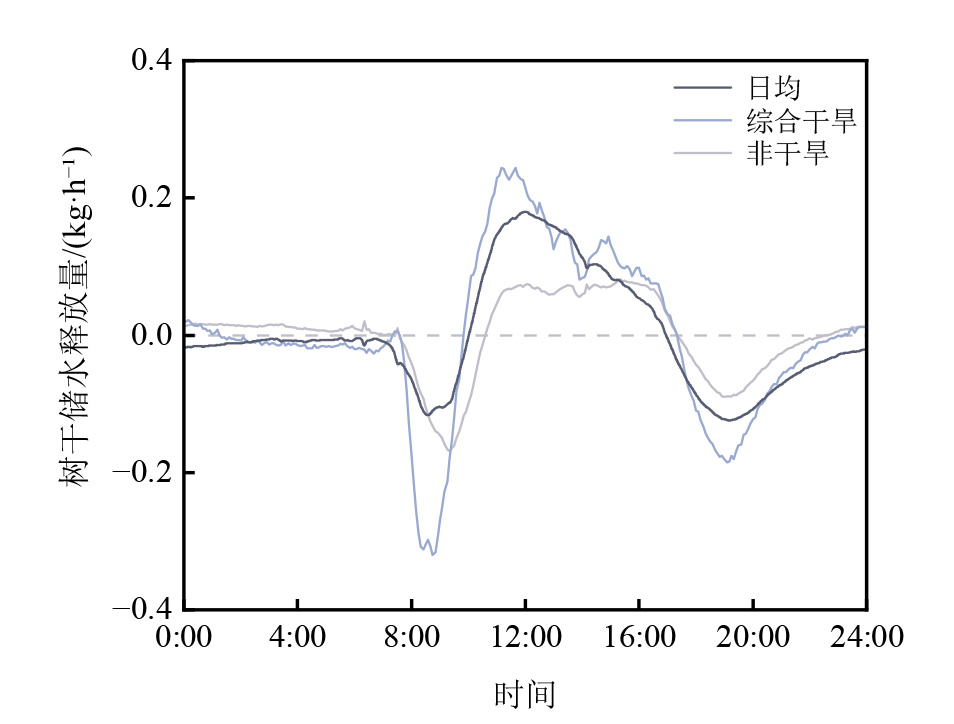
图3 生长季内不同干湿条件下树干储水释放量的平均日内变化曲线
Figure 3 The average diurnal change curve of stem water storage release under different dry and wet conditions in the growing season
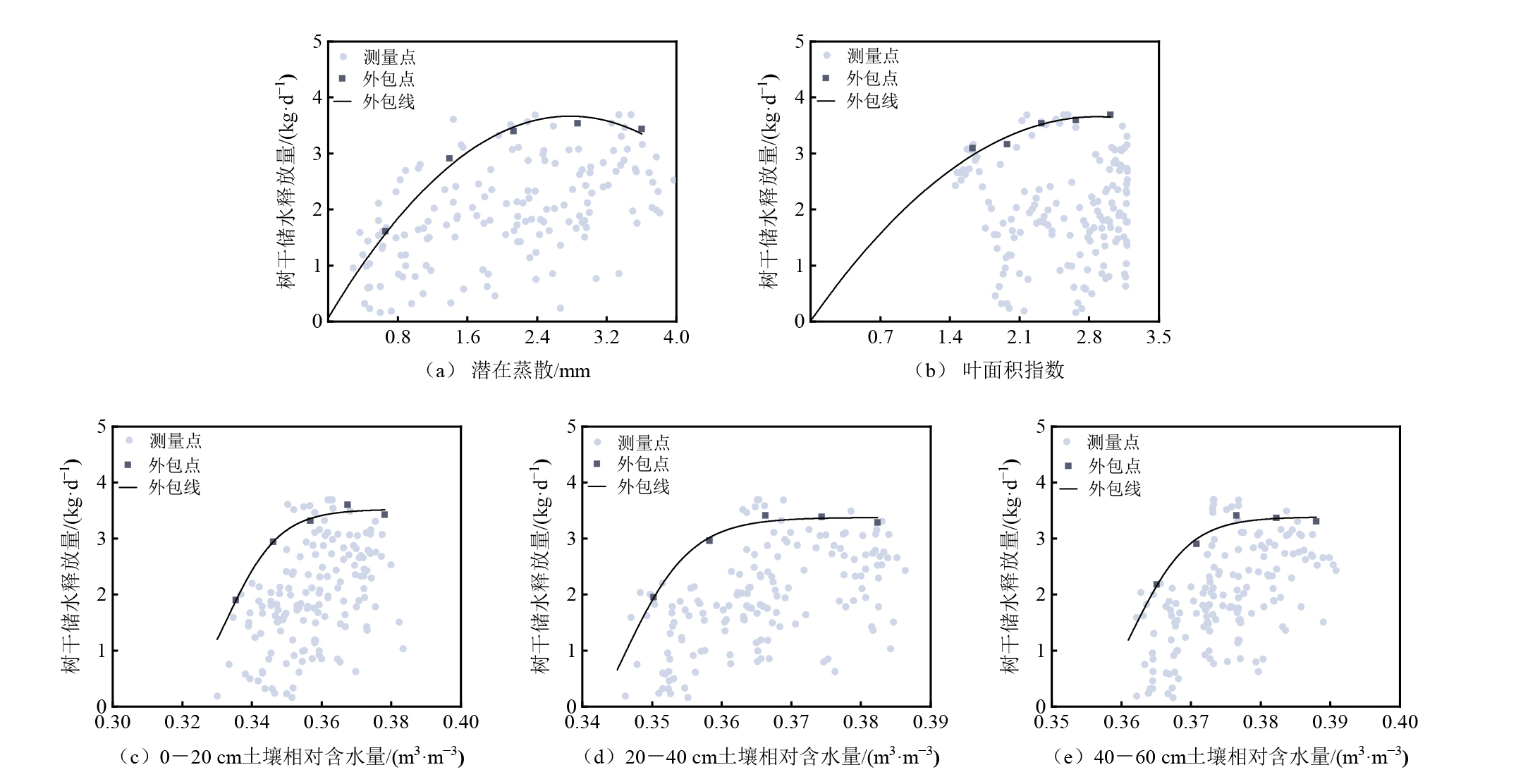
图4 树干储水释放量对单一因子的响应曲线
Figure 4 The response curve of stem water storage release to a single factor
| 单一因子 | 响应函数 | 响应关系 | 阈值 | R2 | F | p |
|---|---|---|---|---|---|---|
| 潜在蒸散 | f(Ep)=a1Ep2+b1Ep | f(Ep)= −0.47×Ep2+3.46×Ep | 3.68 | 0.99 | 277.614 | 0.000* |
| 叶面积指数 | f(L)=b2×(1−ec2L) | f(L)=2.53×(1−e−0.44L) | 3.50 | 0.99 | 400.309 | 0.000* |
| 0-20 cm土壤相对含水量 | f(θ 0‒20 cm)=a3−b3×ec3θ0‒20 cm | f(θ 0‒20 cm)=3.52−3.82×e−8.79θ0‒20 cm | 0.35 | 0.98 | 1026.859 | 0.000* |
| 20-40 cm土壤相对含水量 | f(θ 20‒40 cm)=a4−b4×ec4θ20‒40 cm | f(θ 20‒40 cm)=3.35−3.25×e−8.24θ20‒40 cm | 0.36 | 0.97 | 939.113 | 0.000* |
| 40-60 cm土壤相对含水量 | f(θ 40‒60 cm)=a5−b5×ec5θ40‒60 cm | f(θ 40‒60 cm)=3.38−4.02×e−8.57θ40‒60 cm | 0.37 | 0.97 | 760.894 | 0.000* |
表2 树干储水对单一因子的响应关系及其阈值
Table 2 The response relationship and its threshold of stem water storage to single factor
| 单一因子 | 响应函数 | 响应关系 | 阈值 | R2 | F | p |
|---|---|---|---|---|---|---|
| 潜在蒸散 | f(Ep)=a1Ep2+b1Ep | f(Ep)= −0.47×Ep2+3.46×Ep | 3.68 | 0.99 | 277.614 | 0.000* |
| 叶面积指数 | f(L)=b2×(1−ec2L) | f(L)=2.53×(1−e−0.44L) | 3.50 | 0.99 | 400.309 | 0.000* |
| 0-20 cm土壤相对含水量 | f(θ 0‒20 cm)=a3−b3×ec3θ0‒20 cm | f(θ 0‒20 cm)=3.52−3.82×e−8.79θ0‒20 cm | 0.35 | 0.98 | 1026.859 | 0.000* |
| 20-40 cm土壤相对含水量 | f(θ 20‒40 cm)=a4−b4×ec4θ20‒40 cm | f(θ 20‒40 cm)=3.35−3.25×e−8.24θ20‒40 cm | 0.36 | 0.97 | 939.113 | 0.000* |
| 40-60 cm土壤相对含水量 | f(θ 40‒60 cm)=a5−b5×ec5θ40‒60 cm | f(θ 40‒60 cm)=3.38−4.02×e−8.57θ40‒60 cm | 0.37 | 0.97 | 760.894 | 0.000* |
| 系数 | 值 | R2 | En | n |
|---|---|---|---|---|
| a1 | −0.20 | 0.78 | 0.78 | 154 |
| b1 | 1.15 | |||
| b2 | 2.66 | |||
| c2 | −1.01 | |||
| a3+a4+a5 | 3.90 | |||
| b3 | 2.32 | |||
| c3 | −9.85 | |||
| b4 | 4.12 | |||
| c4 | −9.89 | |||
| b5 | 9.95 | |||
| c5 | −3.11 |
表3 树干储水响应的Jarvis-Stewart模型优化参数值
Table 3 Optimal parameter values of Jarvis-Stewart model for stem water storage response
| 系数 | 值 | R2 | En | n |
|---|---|---|---|---|
| a1 | −0.20 | 0.78 | 0.78 | 154 |
| b1 | 1.15 | |||
| b2 | 2.66 | |||
| c2 | −1.01 | |||
| a3+a4+a5 | 3.90 | |||
| b3 | 2.32 | |||
| c3 | −9.85 | |||
| b4 | 4.12 | |||
| c4 | −9.89 | |||
| b5 | 9.95 | |||
| c5 | −3.11 |
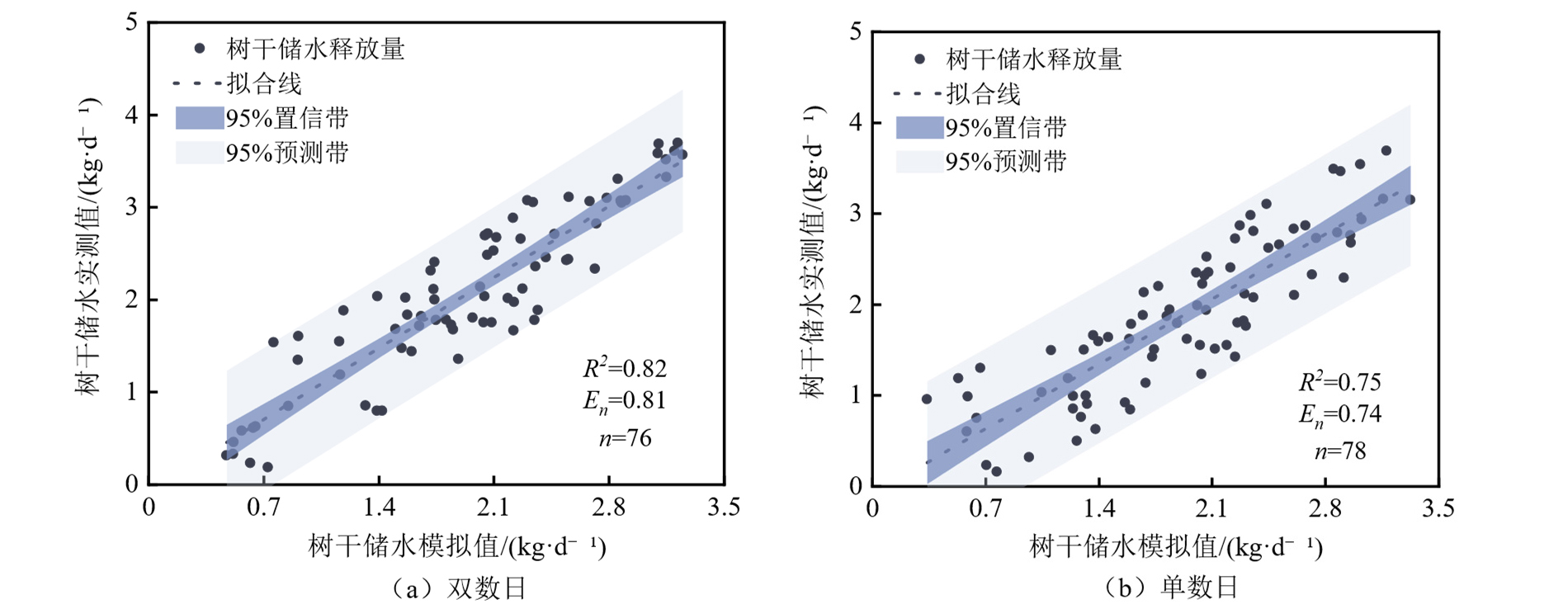
图5 树干储水释放量实测值和模拟值的交互验证关系
Figure 5 The relationship between the measured and simulated values of water storage release from the trunk
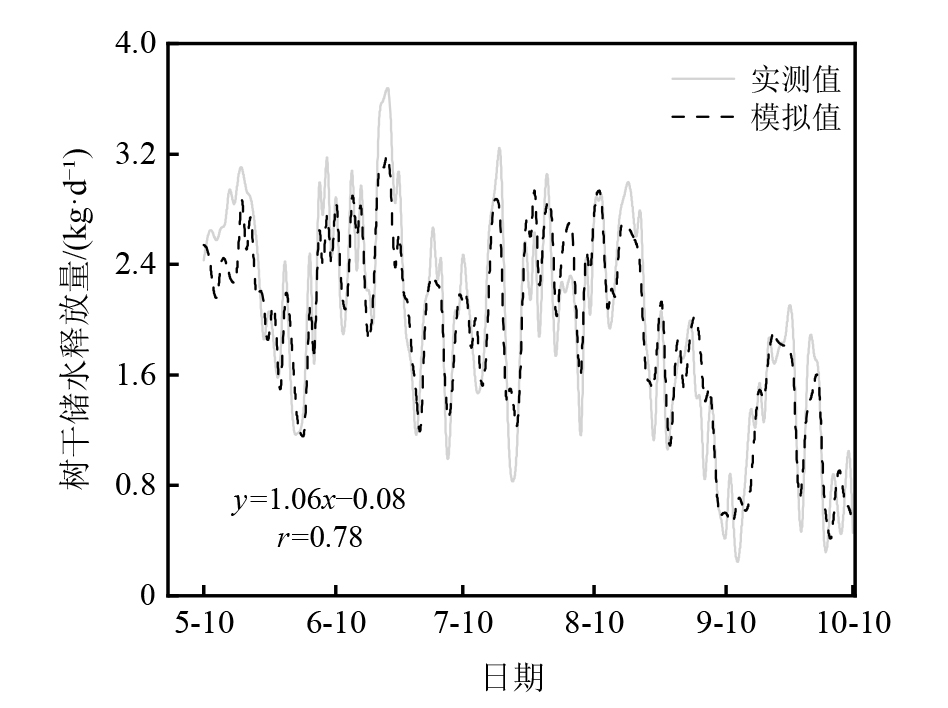
图6 生长季内树干储水释放量实测值和模拟值
Figure 6 Measured and simulated values of stem water release during the growing season
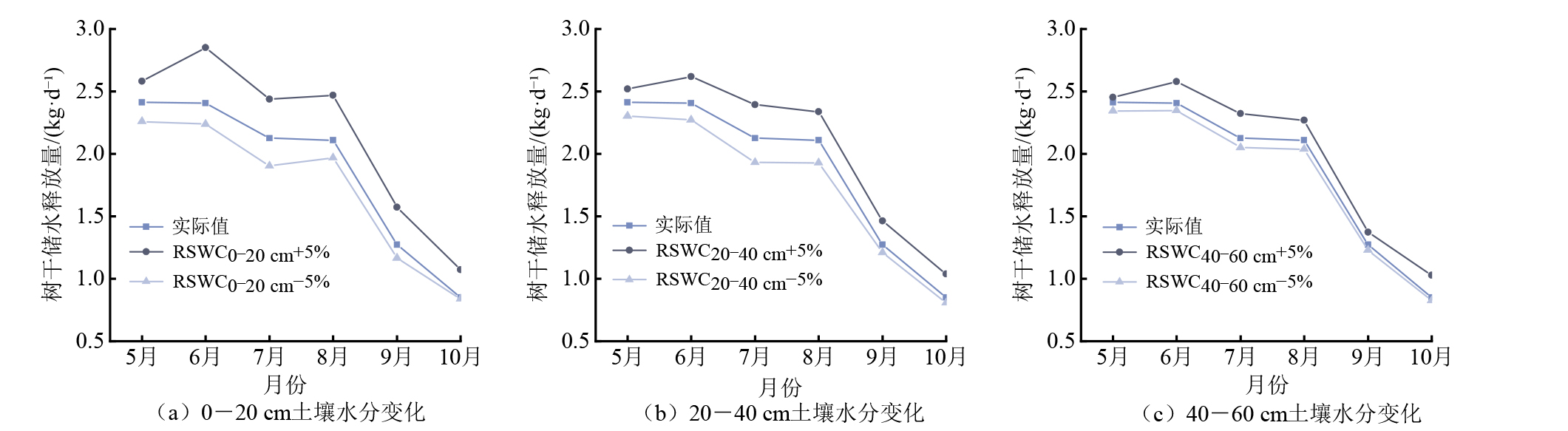
图7 模型预测的土壤水分变化下月均树干储水值
Figure 7 Monthly average stem water storage value under the change of soil moisture predicted by the model
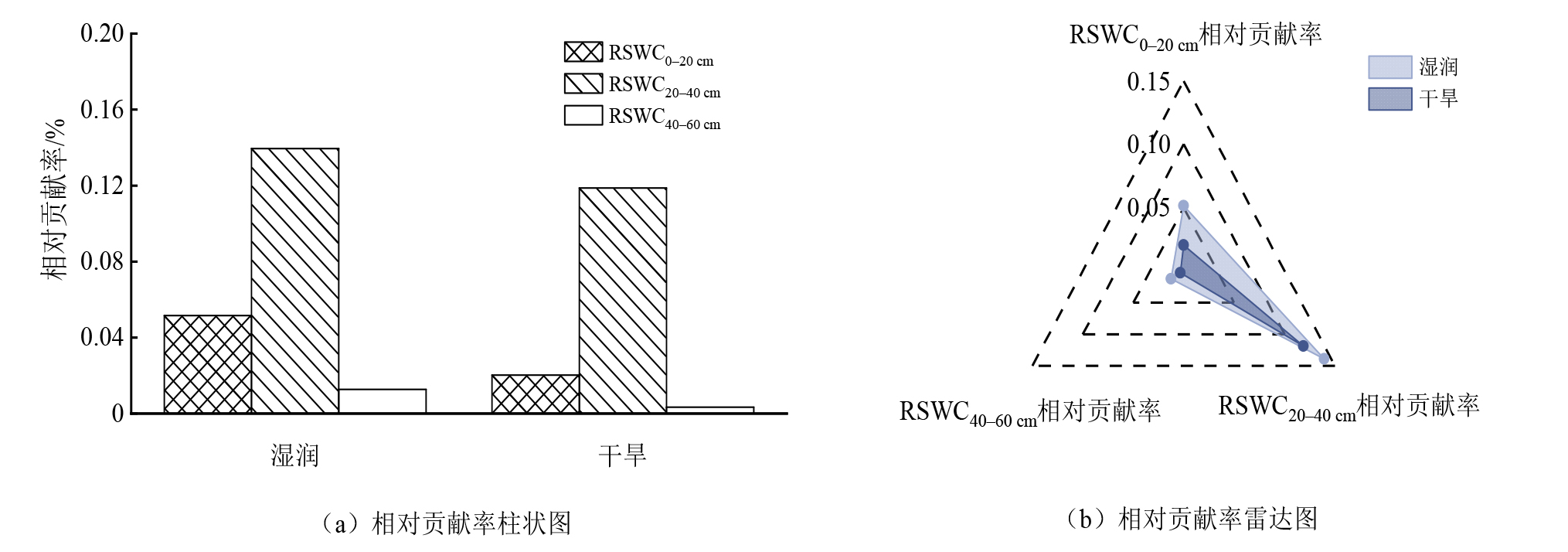
图8 不同水分条件下0-20、20-40、40-60 cm土壤相对含水量对树干储水释放量的相对贡献率
Figure 8 The relative contribution rate of soil water content in 0-20 cm, 20-40 cm, 40-60 cm to stem water storage release under different water conditions
| [1] |
Andriantelomanana T, Améglio T, Delzon S, et al., 2024. Unpacking the point of no return under drought in poplar: Insight from stem diameter variation[J]. New Phytologist, 242(2): 466-478.
DOI URL |
| [2] |
Attia Z, Domec J C, Oren R, et al., 2015. Growth and physiological responses of isohydric and anisohydric poplars to drought[J]. Journal of Experimental Botany, 66(14): 4373-4381.
DOI PMID |
| [3] |
Čermák J, Kučera J, Bauerle W L, et al., 2007. Tree water storage and its diurnal dynamics related to sap flow and changes in stem volume in old-growth Douglas-fir trees[J]. Tree Physiology, 27(2): 181-198.
DOI PMID |
| [4] |
Fang W W, Lu N, Zhang Y, et al., 2018. Responses of nighttime sap flow to atmospheric and soil dryness and its potential roles for shrubs on the Loess Plateau of China[J]. Journal of Plant Ecology, 11(5): 717-729.
DOI |
| [5] |
Gessler A, Bächli L, Rouholahnejad F E, et al., 2022. Drought reduces water uptake in beech from the drying topsoil, but no compensatory uptake occurs from deeper soil layers[J]. New Phytologist, 233(1): 194-206.
DOI URL |
| [6] |
Goldstein G, Andrade J L, Meinzer F C, et al., 1998. Stem water storage and diurnal patterns of water use in tropical forest canopy trees[J]. Plant, Cell & Environment, 21(4): 397-406.
DOI URL |
| [7] | Jarvis P G, 1976. The interpretation of the variations in leaf water potential and stomatal conductance found in canopies in the field[J]. Philosophical Transactions of the Royal Society of London. Series B, Biological Sciences, 273(927): 593-610. |
| [8] |
Jiao L, Lu N, Fang W, et al., 2019. Determining the independent impact of soil water on forest transpiration: A case study of a black locust plantation in the Loess Plateau, China[J]. Journal of Hydrology, 572: 671-681.
DOI |
| [9] |
Klein T, Rotenberg E, Cohen-Hilaleh E, et al., 2014. Quantifying transpirable soil water and its relations to tree water use dynamics in a water-limited pine forest[J]. Ecohydrology, 7(2): 409-419.
DOI URL |
| [10] |
Li Q, Jiao L, Xue R, et al., 2024. Seasonal and depth dynamics of soil moisture affect trees on the Tibetan Plateau[J]. Forests, 15(5): 752.
DOI URL |
| [11] |
Li Y, Shi F, Li X, et al., 2022. Divergent roles of deep soil water uptake in seasonal tree growth under natural drought events in North China[J]. Agricultural and Forest Meteorology, 324: 109102.
DOI URL |
| [12] |
Liu Z, Yu X, Jia G, 2018. Water utilization characteristics of typical vegetation in the rocky mountain area of Beijing, China[J]. Ecological Indicators, 91: 249-258.
DOI URL |
| [13] |
Mccuen R H, Knight Z, Cutter A G, 2006. Evaluation of the Nash-Sutcliffe efficiency index[J]. Journal of Hydrologic Engineering, 11(6): 597-602.
DOI URL |
| [14] |
Meinzer F C, James S A, Goldstein G, 2004. Dynamics of transpiration, sap flow and use of stored water in tropical forest canopy trees[J]. Tree Physiology, 24(8): 901-909.
PMID |
| [15] |
Meinzer F C, James S A, Goldstein G, et al., 2003. Whole-tree water transport scales with sapwood capacitance in tropical forest canopy trees[J]. Plant, Cell & Environment, 26(7): 1147-1155.
DOI URL |
| [16] |
Oren R, Sperry J S, Katul G G, et al., 1999. Survey and synthesis of intra- and interspecific variation in stomatal sensitivity to vapour pressure deficit[J]. Plant, Cell & Environment, 22(12): 1515-1526.
DOI URL |
| [17] |
Qiu J, Crow W T, Dong J, et al., 2020. Model representation of the coupling between evapotranspiration and soil water content at different depths[J]. Hydrology and Earth System Sciences, 24(2): 581-594.
DOI URL |
| [18] |
Spanner G C, Gimenez B O, Wright C L, et al., 2022. Dry season transpiration and soil water dynamics in the Central Amazon[J]. Frontiers in Plant Science, 13: 825097.
DOI URL |
| [19] |
Sun S J, Meng P, Zhang J S, et al., 2011. Variation in soil water uptake and its effect on plant water status in Juglans regia L. during dry and wet seasons[J]. Tree Physiology, 31(12): 1378-1389.
DOI URL |
| [20] |
Thivierge-Lampron J, Girona M M, Pappas C, et al., 2025. Stem water storage dynamics of three boreal tree species under short-term drought[J]. Forests, 16(9): 1448.
DOI URL |
| [21] |
Wang Y, Wang Y, Li Z, et al., 2020. Interannual variation of transpiration and its modeling of a larch plantation in semiarid Northwest China[J]. Forests, 11(12): 1303.
DOI URL |
| [22] |
Whitley R, Zeppel M, Armstrong N, et al., 2008. A modified Jarvis-Stewart model for predicting stand-scale transpiration of an Australian native forest[J]. Plant and Soil, 305(1): 35-47.
DOI URL |
| [23] |
Yang B, Wen X, Sun X, 2015. Seasonal variations in depth of water uptake for a subtropical coniferous plantation subjected to drought in an East Asian monsoon region[J]. Agricultural and Forest Meteorology, 201: 218-228.
DOI URL |
| [24] |
Yang Y, Fu B, 2017. Soil water migration in the unsaturated zone of semiarid region in China from isotope evidence[J]. Hydrology and Earth System Sciences, 21(3): 1757-1767.
DOI URL |
| [25] |
Yu S, Guo J, Liu Z, et al., 2021. Assessing the impact of soil moisture on canopy transpiration using a modified Jarvis-Stewart model[J]. Water, 13(19): 2720.
DOI URL |
| [26] |
Zhang B, Xu Q, Liu S, et al., 2024. Unraveling the effects of plant and soil properties on tree water absorption in pure and mixed forests across subtropical China[J]. Agricultural and Forest Meteorology, 353: 110078.
DOI URL |
| [27] |
Zhang Y P, Jiang Y, Wang B, et al., 2018. Seasonal water use by Larix principis-rupprechtii in an alpine habitat[J]. Forest Ecology and Management, 409: 47-55.
DOI URL |
| [28] |
Zhu X, Yu G, Wang Q, et al., 2014. Seasonal dynamics of water use efficiency of typical forest and grassland ecosystems in China[J]. Journal of Forest Research, 19(1): 70-76.
DOI URL |
| [29] |
Zweifel R, Zimmermann L, Newbery D M, 2005. Modeling tree water deficit from microclimate: An approach to quantifying drought stress[J]. Tree Physiology, 25(2): 147-156.
PMID |
| [30] | 白铭悦, 郭建斌, 刘铭, 等, 2025. 华北落叶松树干液流对不同降雨事件的响应[J]. 农业工程学报, 41(9): 227-236. |
| Bai M Y, Guo J B, Liu M, et al., 2025. Response of stem sap flow of Larix principis-rupprechtii to different rainfall events[J]. Transactions of the Chinese Society of Agricultural Engineering, 41(9): 227-236. | |
| [31] |
韩磊, 孙兆军, 展秀丽, 等, 2015. 宁夏河东沙区柠条植株叶片蒸腾对干旱胁迫的响应[J]. 生态环境学报, 24(5): 756-761.
DOI |
| Han L, Sun Z J, Zhan X L, et al., 2015. Research on leaf transpiration response to soil water stress of Caragana korshinskii Kom. in Hedong Sandy Land of Ningxia[J]. Ecology and Environmental Sciences, 24(5): 756-761. | |
| [32] |
韩磊, 展秀丽, 王芳, 等, 2018. 河东沙区侧柏树干液流与蒸腾驱动因子的时滞效应研究[J]. 生态环境学报, 27(8): 1417-1423.
DOI |
| Han L, Zhan X L, Wang F, et al., 2018. Time lag effect between stem sap flow and driving factors of transpiration of Platycladus orientalis in east sandy land of Yellow River[J]. Ecology and Environmental Sciences, 27(8): 1417-1423. | |
| [33] |
黄玥, 卫伟, 陈胜楠, 2024. 黄土高原侧柏和柠条树干液流日变化及其对环境因子的响应[J]. 生态环境学报, 33(3): 389-398.
DOI |
| Huang Y, Wei W, Chen S N, 2024. Sap flow characteristics of Platycladus orientalis and Caragana korshinskii and its response to environmental factors in the Loess Plateau[J]. Ecology and Environmental Sciences, 33(3): 389-398. | |
| [34] |
刘铭, 郭建斌, 林雪雯, 等, 2025. 六盘山华北落叶松液流速率对干旱类型的响应[J]. 应用生态学报, 36(6): 1690-1698.
DOI |
| Liu M, Guo J B, Lin X W, et al., 2025. Response of sap flow rate of Larix principis-rupprechtii to drought types in Liupan Mountains[J]. Chinese Journal of Applied Ecology, 36(6): 1690-1698. | |
| [35] | 刘泽彬, 王彦辉, 徐丽宏, 等, 2017. 六盘山华北落叶松林坡面的土壤水分时间稳定性[J]. 水土保持学报, 31(1): 153-159,165. |
| Liu Z B, Wang Y H, Xu L H, et al., 2017. Temporal stability of soil moisture on slopes of Larix principis-rupprechtii forest in Liupan Mountains[J]. Journal of Soil and Water Conservation, 31(1): 153-159, 165. | |
| [36] |
秦颢萍, 刘泽彬, 郭建斌, 等, 2021. 环境和冠层结构对华北落叶松林树干液流的影响[J]. 应用生态学报, 32(5): 1681-1689.
DOI |
| Qin H P, Liu Z B, Guo J B, et al., 2021. Effects of environment and canopy structure on stem sap flow in a Larix principis-rupprechtii forest[J]. Chinese Journal of Applied Ecology, 32(5): 1681-1689. | |
| [37] |
于松平, 刘泽彬, 郭建斌, 等, 2021. 六盘山华北落叶松林分蒸腾特征及其影响因素[J]. 南京林业大学学报(自然科学版), 45(1): 131-140.
DOI |
| Yu S P, Liu Z B, Guo J B, et al., 2021. Transpiration characteristics and influencing factors of Larix principis-rupprechtii forest in Liupan Mountains[J]. Journal of Nanjing Forestry University (Natural Sciences Edition), 45(1): 131-140. | |
| [38] |
张国晶, 颜青松, 秦文强, 等, 2025. 基于梯度提升回归树的三江源地区植被指数的预测方法研究[J]. 草地学报, 33(5): 1655-1668.
DOI |
| Zhang G J, Yan Q S, Qin W Q, et al., 2025. Prediction method of vegetation index in the Three-River Headwaters Region based on gradient boosting regression tree[J]. Acta Agrestia Sinica, 33(5): 1655-1668. | |
| [39] | 张中惠, 王彦辉, 郭建斌, 等, 2022. 六盘山华北落叶松单木树高对立地因子和林分特征的响应[J]. 林业科学研究, 35(1): 1-9. |
| Zhang Z H, Wang Y H, Guo J B, et al., 2022. Response of individual tree height of Larix principis-rupprechtii to site factors and stand characteristics in Liupan Mountains[J]. Forest Research, 35(1): 1-9. |
| [1] | 尹延鸽, 曹广超, 陈宗颜, 袁杰, 赵威, 代嘉芳. 祁连山南坡青海云杉林土壤总有机碳对海拔梯度的响应[J]. 生态环境学报, 2026, 35(6): 843-855. |
| [2] | 李彦霖, 徐红伟, 徐琳, 骆紫藤, 袁亚玲, 谭波. 带状改造对柳杉人工林土壤水稳性团聚体组成及稳定性的影响[J]. 生态环境学报, 2026, 35(2): 223-231. |
| [3] | 常博然, 陈茹岚, 王彪, 蓝天, 邓琳, 薛会英. 藏东南折拉山不同林分类型土壤有机碳及其组分分布特征[J]. 生态环境学报, 2024, 33(10): 1495-1505. |
| [4] | 林丹丹, 毕华兴, 赵丹阳, 管凝, 韩金丹, 郭艳杰. 晋西黄土区不同密度刺槐林土壤有机碳组分及碳库特征[J]. 生态环境学报, 2024, 33(3): 379-388. |
| [5] | 秦佳琪, 肖指柔, 明安刚, 朱豪, 滕金倩, 梁泽丽, 陶怡, 覃林. 针阔人工混交林及其纯林对土壤微生物碳循环功能基因丰度的影响[J]. 生态环境学报, 2023, 32(10): 1719-1731. |
| [6] | 陈瑶, 李云红, 邵英男, 刘玉龙, 刘延坤. 阔叶红松林物种多样性与土壤理化特征研究[J]. 生态环境学报, 2022, 31(4): 679-687. |
| [7] | 赵隽宇, 黄小芮, 石媛媛, 宋贤冲, 覃祚玉, 唐健. 南亚热带多代连栽桉树人工林根际土壤FTIR特征分析[J]. 生态环境学报, 2022, 31(4): 688-694. |
| [8] | 祁雪连, 葛晓敏, 钱壮壮, 张康, 郑旭, 钱琦, 丁晖, 唐罗忠. 武夷山天然针阔混交林与毛竹人工林土壤性质差异[J]. 生态环境学报, 2021, 30(8): 1599-1606. |
| 阅读次数 | ||||||
|
全文 |
|
|||||
|
摘要 |
|
|||||
