
Ecology and Environmental Sciences ›› 2026, Vol. 35 ›› Issue (1): 75-87.DOI: 10.16258/j.cnki.1674-5906.2026.01.007
• Research Article [Environmental Science] • Previous Articles Next Articles
FAN Qiang( ), XIANG Mengxue*(), ZHANG Bing, WANG Lifang
Received:2025-04-26
Revised:2025-10-07
Accepted:2025-10-28
Online:2026-01-18
Published:2026-01-05
范强(), 相梦雪*(), 张兵, 王丽芳
通讯作者:
* E-mail: 作者简介:范强(1979年生),男(满族),副教授,博士,研究方向为遥感图像处理及专题地理信息系统。E-mail: lntufanqiang@126.com
基金资助:CLC Number:
FAN Qiang, XIANG Mengxue, ZHANG Bing, WANG Lifang. Based on the Analysis of the Driving Factors of Thermal Environment in the Main Urban Area of Ji’nan City under the “Seasonal-Source-Sink” Situation[J]. Ecology and Environmental Sciences, 2026, 35(1): 75-87.
范强, 相梦雪, 张兵, 王丽芳. 基于“季节-源汇”下的济南市主城区热环境驱动因素分析[J]. 生态环境学报, 2026, 35(1): 75-87.
Add to citation manager EndNote|Ris|BibTeX
URL: https://www.jeesci.com/EN/10.16258/j.cnki.1674-5906.2026.01.007
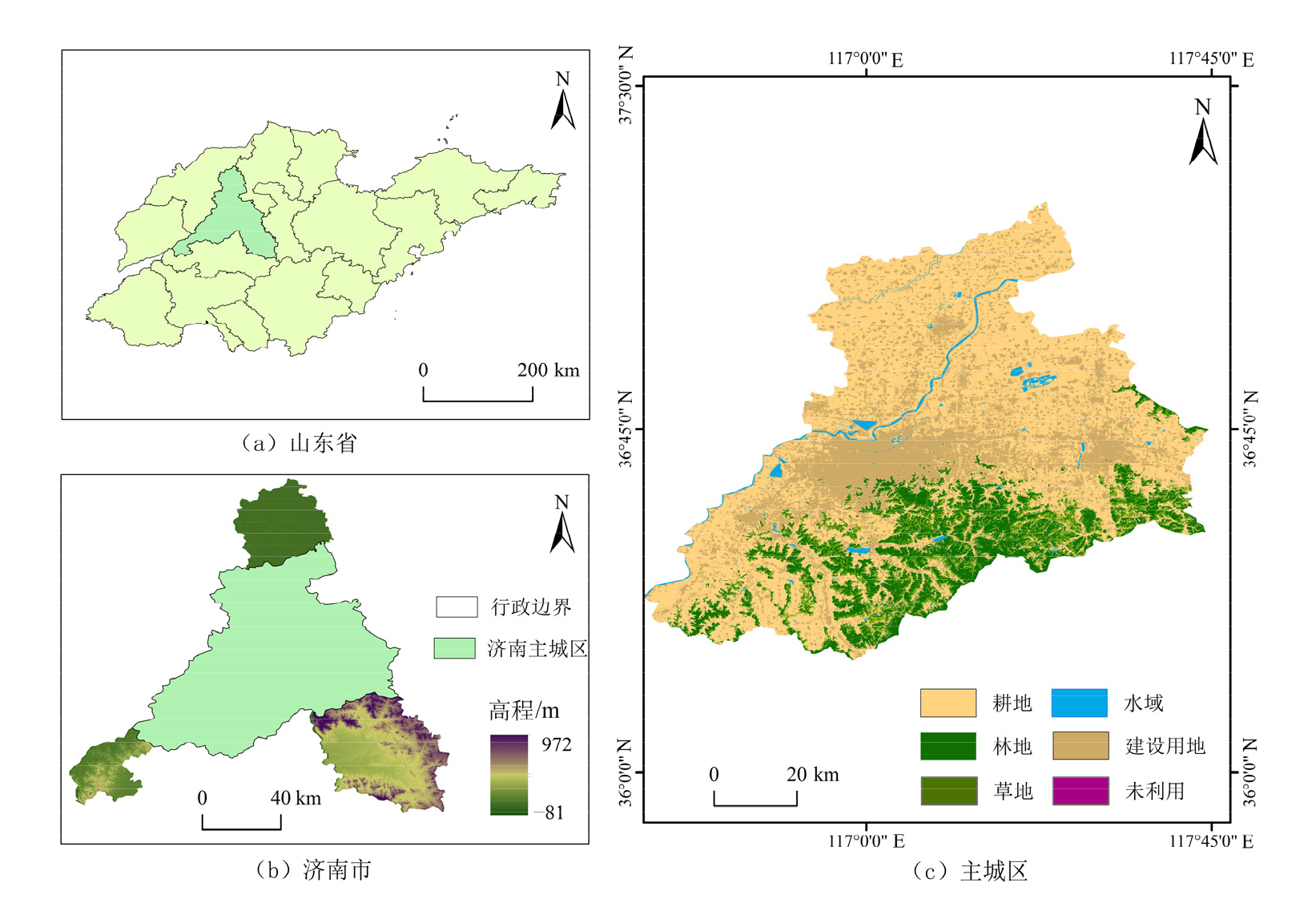
Figure 1 The studied area
| 数据名称 | 时间 | 数据来源 | 用途 |
|---|---|---|---|
| 边界矢量数据 | 2022年 | https://www.ngcc.cn | 精确界定地理边界 |
| Landsat 8 | 2022-1-9(冬)、2022-4-20(春)、 2022-7-4(夏)、2022-9-19(秋) | https://earthexplorer.usgs.gov/ | 反演地表温度以及计算NDVI、MNDWI |
| 主城区道路数据 | 2022年 | https://www.openstreetmap.org/ | 获取ROAD数据 |
| 主城区建筑数据 | 2022年 | 高德 | 计算BCR、MBH、FAR及SVF |
| 主城区高程数据 | 2022年 | https://www.gscloud.cn/ | 获取DEM数据 |
| 主城区兴趣点数据 | 2022年 | https://www.openstreetmap.org/ | 获取POI数据 |
Table 1 Statistics of data sources and purposes
| 数据名称 | 时间 | 数据来源 | 用途 |
|---|---|---|---|
| 边界矢量数据 | 2022年 | https://www.ngcc.cn | 精确界定地理边界 |
| Landsat 8 | 2022-1-9(冬)、2022-4-20(春)、 2022-7-4(夏)、2022-9-19(秋) | https://earthexplorer.usgs.gov/ | 反演地表温度以及计算NDVI、MNDWI |
| 主城区道路数据 | 2022年 | https://www.openstreetmap.org/ | 获取ROAD数据 |
| 主城区建筑数据 | 2022年 | 高德 | 计算BCR、MBH、FAR及SVF |
| 主城区高程数据 | 2022年 | https://www.gscloud.cn/ | 获取DEM数据 |
| 主城区兴趣点数据 | 2022年 | https://www.openstreetmap.org/ | 获取POI数据 |
| 研究区域 | 相关维度 | 因子 | 文献 |
|---|---|---|---|
| 天津市 | 自然环境 | NDVI、NDBI、MNDWI、DEM | 国巧真等, |
| 合肥市主城区 | 自然环境 | NDBI、NDVI、MNDWI | 王爱等, |
| 城市空间形态 | FAR、BH、BD、SVF | ||
| 人类活动 | DP、NP | ||
| 西安市主城区 | 景观格局 | PD、LSI、SHDI、CONTAG | Chen et al., |
| 城市空间形态 | MAH、BD、FAR | ||
| 人类活动 | POD、NL | ||
| 西安市 | 自然环境 | NDVI、MNDWI、VD | 李明哲等, |
| 城市空间形态 | BD | ||
| 人类活动 | PD、POI | ||
| 长沙市 | 自然环境 | FVC、MNDWI、DEM、CONTAG、SHDI、DIVISION、NDISI、NDBBI、Albedo | 熊鹰等, |
| 人类活动 | POI |
Table 2 Relevant literature on selection of driving factors for thermal environment
| 研究区域 | 相关维度 | 因子 | 文献 |
|---|---|---|---|
| 天津市 | 自然环境 | NDVI、NDBI、MNDWI、DEM | 国巧真等, |
| 合肥市主城区 | 自然环境 | NDBI、NDVI、MNDWI | 王爱等, |
| 城市空间形态 | FAR、BH、BD、SVF | ||
| 人类活动 | DP、NP | ||
| 西安市主城区 | 景观格局 | PD、LSI、SHDI、CONTAG | Chen et al., |
| 城市空间形态 | MAH、BD、FAR | ||
| 人类活动 | POD、NL | ||
| 西安市 | 自然环境 | NDVI、MNDWI、VD | 李明哲等, |
| 城市空间形态 | BD | ||
| 人类活动 | PD、POI | ||
| 长沙市 | 自然环境 | FVC、MNDWI、DEM、CONTAG、SHDI、DIVISION、NDISI、NDBBI、Albedo | 熊鹰等, |
| 人类活动 | POI |

Figure 2 Flow chart of the study
| 建筑类型 | 土地覆盖类型 | ||
|---|---|---|---|
| 分类 | 类型 | 分类 | 类型 |
| LCZ1 | 紧凑型高层建筑 | LCZ11 | 稠密树木 |
| LCZ2 | 紧凑型中高层建筑 | LCZ12 | 稀疏树木 |
| LCZ3 | 紧凑型低层建筑 | LCZ13 | 灌木丛 |
| LCZ4 | 开敞式高层建筑 | LCZ14 | 低矮植被 |
| LCZ5 | 开敞式中高层建筑 | LCZ15 | 硬化地面 |
| LCZ6 | 开敞式低层建筑 | LCZ16 | 裸地泥沙 |
| LCZ7 | 轻质建筑 | LCZ17 | 水体 |
| LCZ8 | 大型低层建筑 | ||
| LCZ9 | 稀疏建筑 | ||
| LCZ10 | 重工业区 | ||
Table 3 Definitions of local climate zones
| 建筑类型 | 土地覆盖类型 | ||
|---|---|---|---|
| 分类 | 类型 | 分类 | 类型 |
| LCZ1 | 紧凑型高层建筑 | LCZ11 | 稠密树木 |
| LCZ2 | 紧凑型中高层建筑 | LCZ12 | 稀疏树木 |
| LCZ3 | 紧凑型低层建筑 | LCZ13 | 灌木丛 |
| LCZ4 | 开敞式高层建筑 | LCZ14 | 低矮植被 |
| LCZ5 | 开敞式中高层建筑 | LCZ15 | 硬化地面 |
| LCZ6 | 开敞式低层建筑 | LCZ16 | 裸地泥沙 |
| LCZ7 | 轻质建筑 | LCZ17 | 水体 |
| LCZ8 | 大型低层建筑 | ||
| LCZ9 | 稀疏建筑 | ||
| LCZ10 | 重工业区 | ||
| LST等级 | 分级标准 |
|---|---|
| 高温区 | ts≥tmean+2Sd |
| 次高温区 | tmean+0.05Sd£ts<tmean+2Sd |
| 中温区 | tmean−0.05Sd£ts<tmean+0.05Sd |
| 次低温区 | tmean−2Sd£ts<tmean−0.05Sd |
| 低温区 | ts<tmean−2Sd |
Table 4 Land surface temperature classification
| LST等级 | 分级标准 |
|---|---|
| 高温区 | ts≥tmean+2Sd |
| 次高温区 | tmean+0.05Sd£ts<tmean+2Sd |
| 中温区 | tmean−0.05Sd£ts<tmean+0.05Sd |
| 次低温区 | tmean−2Sd£ts<tmean−0.05Sd |
| 低温区 | ts<tmean−2Sd |
| 因子 | VIF值 | 因子 | VIF值 |
|---|---|---|---|
| BCR | 2.1 | MNDWI | 1.8 |
| MBH | 3.8 | DEM | 1.2 |
| FAR | 4.2 | SPOI | 1.4 |
| SVF | 1.5 | ROAD | 2.0 |
| NDVI | 2.3 |
Table 5 Variance inflation factor value of driving factors
| 因子 | VIF值 | 因子 | VIF值 |
|---|---|---|---|
| BCR | 2.1 | MNDWI | 1.8 |
| MBH | 3.8 | DEM | 1.2 |
| FAR | 4.2 | SPOI | 1.4 |
| SVF | 1.5 | ROAD | 2.0 |
| NDVI | 2.3 |

Figure 3 Spatial distribution of LCZs
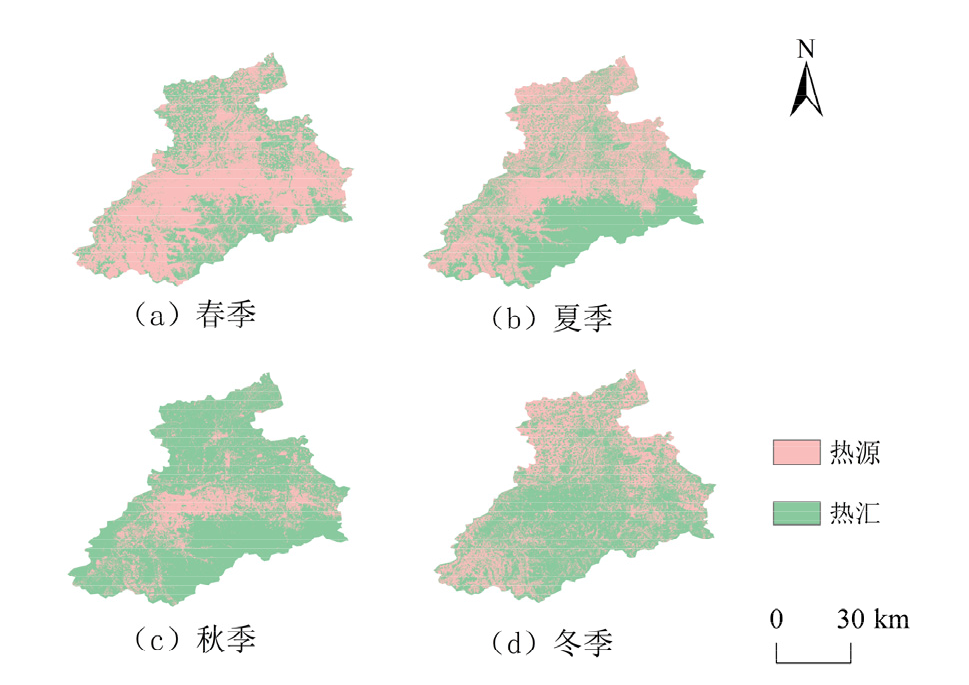
Figure 4 Spatial distribution of source-sink landscape

Figure 5 Spatial distribution characteristics of driving factors
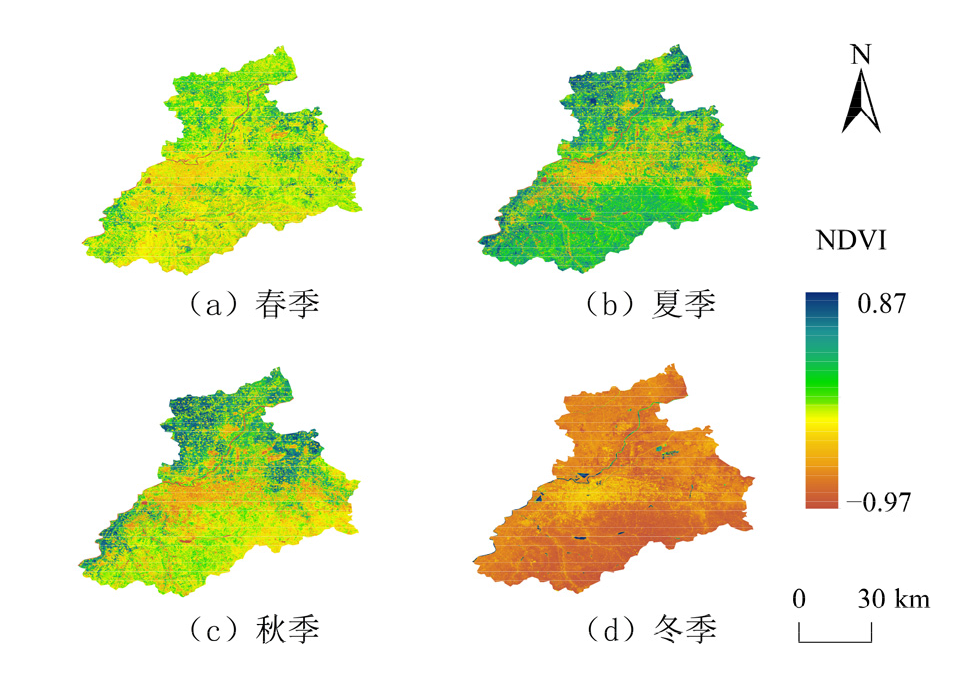
Figure 6 Distribution of NDVI in four seasons

Figure 7 Feature contribution ranking
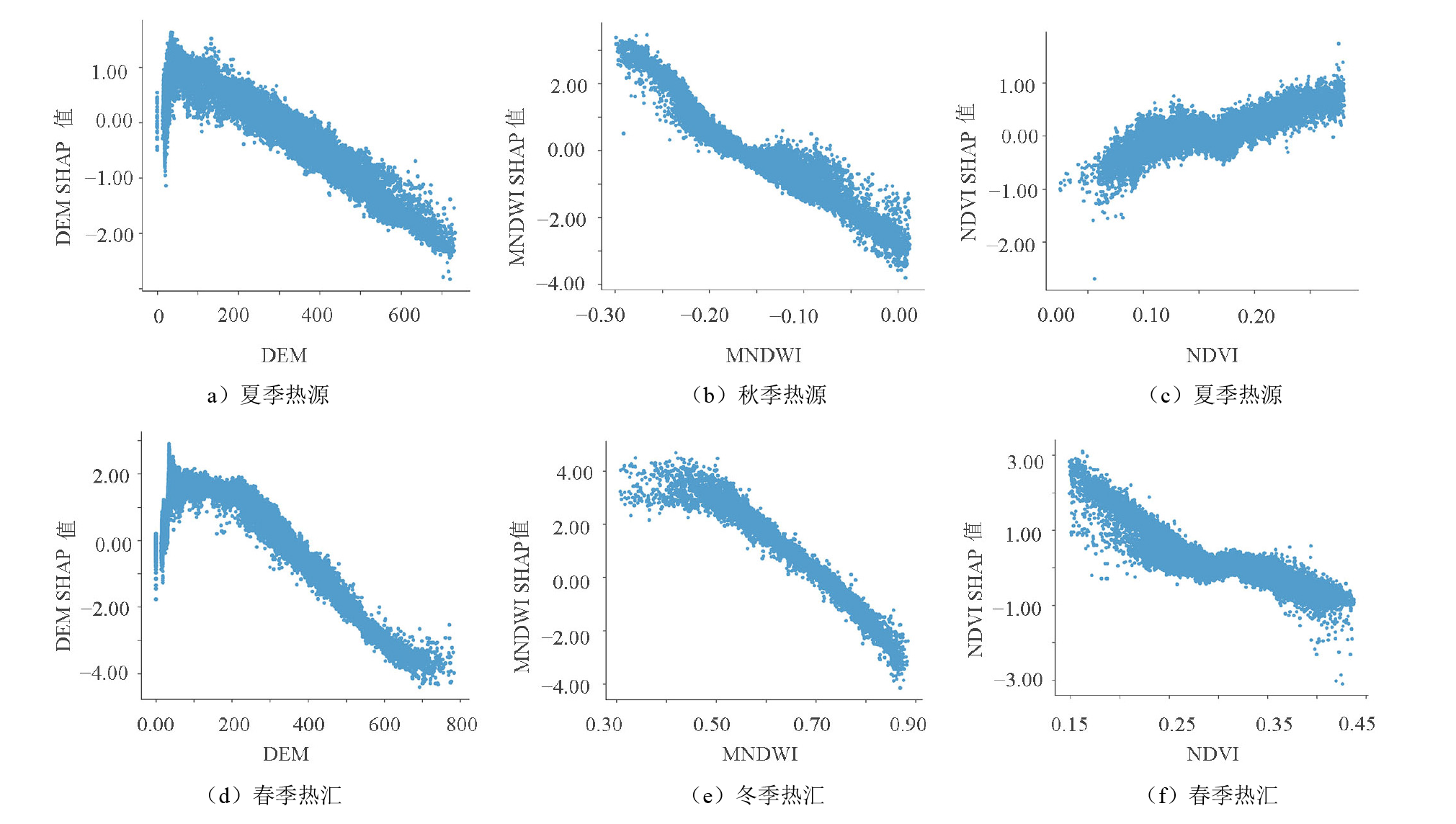
Figure 8 Single-factor action map of the natural environment

Figure 9 Single-factor effect diagram of urban spatial morphology
| [1] |
AMANI-BENI M, ZHANG B, XIE G D, et al., 2019. Impacts of urban green landscape patterns on land surface temperature: evidence from the adjacent area of Olympic Forest Park of Beijing, China[J]. Sustainability, 11(2): 513.
DOI URL |
| [2] |
BECHTEL B, ALEXANDER P J, BÖHNER J, et al., 2015. Mapping local climate zones for a worldwide database of the form and function of cities[J]. ISPRS International Journal of Geo-Information, 4(1): 199-219.
DOI URL |
| [3] |
CHEN Y, YANG J, YU W B, et al., 2023. Relationship between urban spatial form and seasonal land surface temperature under different grid scales[J]. Sustainable Cities and Society, 89: 104374.
DOI URL |
| [4] |
DEMUZERE M, KITTNER J, BECHTEL B, 2021. LCZ Generator: A web application to create local climate zone maps[J]. Frontiers in Environmental Science, 9: 637455.
DOI URL |
| [5] |
KUMAR S V S, KONDAVEETI H K, 2024. Towards transparency in AI: Explainable bird species image classification for ecological research[J]. Ecological Indicators, 169: 112886.
DOI URL |
| [6] | LI C, ZHAO J, HOU W, 2023. Nonlinear effects of landscape patterns on ecosystem services at multiple scales based on gradient boosting decision tree models[J]. Remote Sensing, 15(7): 15071919. |
| [7] |
LI W F, CAO Q W, LANG K, et al., 2017. Linking potential heat source and sink to urban heat island: Heterogeneous effects of landscape pattern on land surface temperature[J]. Science of the Total Environment, 586: 457-465.
DOI URL |
| [8] |
LI Y F, SCHUBERT S, JÜRGEN P KROPP, et al., 2020. On the influence of density and morphology on the Urban Heat Island intensity[J]. Nature Communications, 11: 2647.
DOI PMID |
| [9] |
LIANG Z, HUANG J, WANG Y Y, et al., 2021. The mediating effect of air pollution in the Impacts of urban form on nighttime urban heat island intensity[J]. Sustainable Cities and Society, 74: 102985.
DOI URL |
| [10] |
LU L L, PENG F, DEWAN A, et al., 2023. Contrasting determinants of land surface temperature in three megacities: Implications to cool tropical metropolitan regions[J]. Sustainable Cities and Society, 92: 104505.
DOI URL |
| [11] |
LUO P Y, YU B J, LI P F, et al., 2023. How 2D and 3D built environments impact urban surface temperature under extreme heat: A study in Chengdu, China[J]. Building and Environment, 231: 110035.
DOI URL |
| [12] |
NIU J B, CHEN J K, ZANG Y F, et al., 2025. Deciphering the roles of 2-D and 3-D urban landscape metrics in diurnal surface thermal environment along urban gradients[J]. IEEE Journal of Selected Topics in Applied Earth Observations and Remote Sensing, 17: 16449-16466.
DOI URL |
| [13] |
NIU L, TANG R L, JIANG Y Z, et al., 2020. Spatiotemporal patterns and drivers of the surface urban heat island in 36 major cities in China: a comparison of two different methods for delineating rural areas[J]. Sustainability, 12(2): 478.
DOI URL |
| [14] |
OUYANG N L, RUI X P, ZHANG X P, et al., 2024. Spatiotemporal evolution of ecosystem health and its driving factors in the southwestern karst regions of China[J]. Ecological Indicators, 166: 112530.
DOI URL |
| [15] | WANGHE K H, GUO X L, WANG M, et al., 2020. Gravity model toolbox: An automated and open-source ArcGIS tool to build and prioritize ecological corridors in urban landscapes[J]. Global Ecology and Conservation, 22: e01012. |
| [16] |
YANG C B, YAN F Q, LEI X, et al., 2020. Investigating Seasonal effects of dominant driving factors on urban land surface temperature in a Snow-Climate city in China[J]. Remote Sensing, 12: 3006.
DOI URL |
| [17] |
YANG F, YOUSEFPOUR R, ZHANG, et al., 2023. The assessment of cooling capacity of blue-green spaces in rapidly developing cities: a case study of Tianjin’s central urban area, Sustain[J]. Sustainable Cities and Society, 99: 104918.
DOI URL |
| [18] |
YIN H Y, XIAO R, FEI X F, et al., 2023. Analyzing “Economy-Society-Environment” sustainability from the perspective of urban spatial structure: A case study of the Yangtze River Delta Urban Agglomeration[J]. Sustainable Cities and Society, 96: 104691.
DOI URL |
| [19] |
YOO C, HAN D, IM J, et al., 2019. Comparison between convolutional neural networks and random forest for local climate zone classification in mega urban areas using Landsat images[J]. ISPRS Journal of Photogrammetry and Remote Sensing, 157: 155-170.
DOI URL |
| [20] | 白龙发, 李保珠, 时鹏程, 2024. 基于EO-LightGBM融合模型的边坡稳定性预测方法研究[J]. 地质灾害与环境保护, 35(4): 105-111. |
| BAI L F, LI B Z, SHI P C, 2024. Study on slope stability prediction method based on EO-LightGBM fusion model[J]. Journal of Geological Hazards and Environment Preservation, 35(4): 105-111. | |
| [21] | 蔡智, 韩贵锋, 2018. 山地城市空间形态的地表热环境效应: 基于LCZ的视角[J]. 山地学报, 36(4): 617-627. |
| CAI Z, HAN G F, 2018. Assessing land surface temperature in the mountain city with different urban spatial form based on local climate zone scheme[J]. Mountain Research, 36(4): 617-627. | |
| [22] | 国巧真, 闫兵, 杨光, 等, 2024. 天津市热环境时空演变及影响因素分析[J]. 地球环境学报, 15(1): 129-139. |
| GUO Q Z, YAN B, YANG G, et al., 2024. Spatiotemporal evolution of thermal environment in Tianjin City and its influencing factors[J]. Journal of Earth Environment, 15(1): 129-139. | |
| [23] | 候宗民, 2025. 基于LightGBM和SHAP模型的叶尔羌河流域大气环流对气象干旱的影响研究[J]. 水利科技与经济, 31(2): 51-56. |
| HOU Z M, 2025. Analysis of meteorological drought return period in the Yarkant River Basin based on copula function[J]. Water Conservancy Science and Technology and Economy, 31(2): 51-56. | |
| [24] | 胡德勇, 乔琨, 王兴玲, 等, 2017. 利用单窗算法反演Landsat 8 TIRS数据地表温度[J]. 武汉大学学报(信息科学版), 42(7): 869-876. |
| HU D Y, QIAO K, WANG X L, et al., 2017. Comparison of three single-window algorithms for retrieving land-surface temperature with landsat8 TIRS data[J]. Geomatics and Information Science of Wuhan University, 42(7): 869-876. | |
| [25] | 李明哲, 周庆, 杨艳, 2023. 基于支持向量机的西安城市要素影响地表温度研究[J]. 智能建筑与智慧城市 (11): 13-15. |
| LI M Z, ZHOU Q, YANG Y, 2023. Study on the influence of urban factors on land surface temperature in Xi’an based on support vector machine[J]. Intelligent Building & Smart City (11): 13-15. | |
| [26] |
刘诗喆, 谢苗苗, 武蓉蓉, 等, 2021. 地理单元划分对城市热环境响应规律的影响:以北京为例[J]. 地理科学进展, 40(6): 1037-1047.
DOI |
| LIU S Z, XIE M M, WU R R, et al., 2021. Influence of the choice of geographic unit on the response of urban thermal environment: taking Beijing as an example[J]. Progress in Geography, 40(6): 1037-1047. | |
| [27] | 毛洋, 白杨, 刘文俊, 等, 2018. 基于遥感技术的昆明主城区地表温度与土地覆盖关系研究[J]. 亚热带植物科学, 47(1): 62-68. |
| MAO Y, BAI Y, LIU W J, et al., 2018. Relationships between land surface temperature and land cover in main urban areas of Kunming using remote sensing[J]. Subtropical Plant Science, 47(1): 62-68. | |
| [28] | 沈中健, 赵亚琛, 2024. 济南市主城区空间形态对地表温度影响的交互关系及空间效应[J]. 干旱区资源与环境, 38(3): 65-74. |
| SHEN Z J, ZHAO Y C, 2024. Effect of spatial morphology on land surface temperature and their interaction: a case study of main urban area of Jinan City[J]. Journal of Arid Land Resources and Environment, 38(3): 65-74. | |
| [29] |
宋鑫博, 李根, 梁冬坡, 等, 2023. 城市空间形态与夏季地表温度关系及其响应阈值研究: 以天津市中心城区为例[J]. 地理科学, 43(2): 360-369.
DOI |
| SONG X B, LI G, LIANG D P, et al., 2023. Relationship between urban spatial morphology factors and land surface temperature in summer: a case of the central district of Tianjin[J]. Scientia Geographic Sinica, 43(2): 360-369. | |
| [30] |
孙康慧, 肖安, 夏侯杰, 2024. 基于LightGBM机器学习算法的江西气温短期预报模型研究[J]. 高原气象, 43(6): 1520-1535.
DOI |
|
SUN K H, XIAO A, XIA H J, 2024. Study on short term temperature forecast model in Jiangxi province based on LightGBM machine learning algorithm[J]. Plateau Meteorology, 43(6): 1520-1535.
DOI |
|
| [31] | 孙应龙, 王慧芳, 李根, 等, 2020. 2000-2019年北京市热岛效应时空变化特征及影响因素[J]. 环境生态学, 2(8): 43-50. |
|
SUN Y L, WANG H F, LI G, et al., 2020. Study and influence factors of heat is land spatiotemporal changes in Beijing from 2000 to 2019[J]. Environmental Ecology, 2(8): 43-50.
DOI URL |
|
| [32] |
孙喆, 2020. 高密度城区形态要素对热环境的影响作用: 以北京市五环内区域为例[J]. 生态环境学报, 29(10): 2020-2027.
DOI |
| SUN Z, 2020. Impact of urban morphology factors on thermal environment in high density urban areas: A case of Beijing within 5th ring road[J]. Ecology and Environmental Sciences, 29(10): 2020-2027. | |
| [33] | 王爱, 张迅, 刘少婷, 等, 2024. 合肥市主城区热环境驱动因素的空间非平稳性分析[J]. 测绘科学, 49(10): 202-216. |
| WANG A, ZHANG X, LIU S T, et al., 2024. Spatial non-stationarity analysis of thermal environment driving factors in main urban area of Hefei City[J]. Science of Surveying and Mapping, 49(10): 202-216. | |
| [34] | 汪祖民, 王恺锋, 李艳志, 等, 2023. 基于LightGBM和SHAP的云南省森林火灾预测研究[J]. 消防科学与技术, 42(11): 1567-1571. |
| WANG Z M, WANG K F, LI Y Z, et al., 2023. Research on forest fire prediction in Yunnan province based on LightGBM and SHAP[J]. Fire Science and Technology, 42(11): 1567-1571. | |
| [35] |
熊鹰, 章芳, 2020. 基于多源数据的长沙市人居热环境效应及其影响因素分析[J]. 地理学报, 75(11): 2443-2458.
DOI |
| XIONG Y, ZHANG F, 2020. Effect of human settlements on urban thermal environment and factor analysis based on multisource data: A case study of Changsha city[J]. Journal of Geographical Sciences, 75(11): 2443-2458. | |
| [36] | 阴瑜鑫, 张华, 安慧敏, 等, 2023. 基于GEE的长江经济带城市群热岛特征及影响因素[J]. 生态学杂志, 42(1): 160-169. |
|
YIN Y X, ZHANG H, AN H M, et al., 2023. Heat island characteristics and influencing factors of urban agglomerations in the Yangtze River Economic Zone based on GEE[J]. Chinese Journal of Ecology, 42(1): 160-169.
DOI |
|
| [37] | 赵强, 韩露, 杨世植, 等, 2016. 利用超光谱红外卫星数据反演大气廓线研究[J]. 大气与环境光学学报, 11(2): 118-124. |
| ZHAO Q, HAN L, YANG S Z, et al., 2016. Retrieval of atmospheric profile by hyperspectral infrared satellite data[J]. Journal of Atmospheric and Environmental Optics, 11(2): 118-124. |
| [1] | LI Jianfu, HUANG Zhilin, HE Chengzhong, JIANG Xin, SONG Lin, LIU Jiaxin, CHEN Liding. Spatial Distribution and Key Factors Affecting Soil Organic Carbon Within the Karst Fault Basin in Eastern Yunnan, China [J]. Ecology and Environmental Sciences, 2024, 33(9): 1339-1352. |
| [2] | ZHANG Junmei, WANG Zhiyu, YANG Benyong, YANG Shushen, YANG Lingxiao. Pollution Characteristics, Light Absorption and Sources of Water-soluble Organic Carbon in PM2.5 [J]. Ecology and Environmental Sciences, 2024, 33(7): 1072-1078. |
| [3] | LU Ruilin, CAO Fang, LIN Yuqi, WU Changliu, ZHANG Yanlin. Size Distribution and Source Apportionment of Chemical Compositions in Nanjing Atmospheric Particulate Matter [J]. Ecology and Environmental Sciences, 2024, 33(7): 1079-1088. |
| [4] | SONG Xiaolong, MA Mingde, WANG Peng, LI Longtang, MI Wenbao, SONG Yongyong. The Spatiotemporal Non-stationary Characteristics of Fractional Vegetation Coverage During the Growing Season of Different Geographical Regions in Ningxia [J]. Ecology and Environmental Sciences, 2024, 33(6): 853-868. |
| [5] | LÜ Jinling, YOU Ke, HE Bin, LIU Shuang, LIANG Shaomin, GUO Zhanling. Study on the Correlation between Ammonia Volatilization and near Surface Ammonia Concentration during the Maize Basal Fertilizer Period [J]. Ecology and Environmental Sciences, 2024, 33(3): 399-407. |
| [6] | ZHANG Huaicheng, HAN Hong, WANG Zaifeng, HAN Lizhao, LIU Ke, ZHANG Guiqin, FAN Jing, WEI Xiaofeng. Micromorphology Characteristics and Chemical Composition of Urban Dust in Ji'nan [J]. Ecology and Environmental Sciences, 2023, 32(3): 545-555. |
| [7] | HAN Qian, ZHANG Yujiao, LAI Chengyue, YANG Luyao, MENG Xu. Pollution Characteristics and Ecological Risk Assessment of Tetracycline and Quinolone Antibiotics in Rivers of Chengdu [J]. Ecology and Environmental Sciences, 2023, 32(11): 1922-1932. |
| [8] | LI Shaoning, LI Tingting, TAO Xueying, ZHAO Na, XU Xiaotian, LU Shaowei. Comparative Study on the Release of Beneficial Volatile Organic Compounds from Four Deciduous Tree Species [J]. Ecology and Environmental Sciences, 2023, 32(1): 123-128. |
| [9] | CHEN Xiaonan, LI Qiongwen, YU Jianping, YU Shunhai, LI Shuang, CAO Mingchang. Habitat Suitability Assessment of Syrmaticus ellioti in the Qiangjiangyuan National Park [J]. Ecology and Environmental Sciences, 2022, 31(9): 1832-1839. |
| [10] | JIANG Peng, QIN Mei’ou, LI Rongping, MENG Ying, YANG Feiyun, WEN Rihong, SUN Pei, FANG Yuan. Seasonal Variability of GPP and Its Influencing Factors in the Typical Ecosystems in China [J]. Ecology and Environmental Sciences, 2022, 31(4): 643-651. |
| [11] | LI Shaoning, TAO Xueying, LI Huimin, ZHAO Na, XU Xiaotian, LU Shaowei. Study on Dynamic Characteristics of BVOCs Released from Platycladus orientalis and Salix babylonica in Growing Season [J]. Ecology and Environmental Sciences, 2022, 31(2): 257-264. |
| [12] | WANG Rui, SONG Xiangyun, LIU Xinwei. Seasonal Characteristics of Soil Enzymes in Different Vegetations in the Yellow River Delta [J]. Ecology and Environmental Sciences, 2022, 31(1): 62-69. |
| [13] | DONG Xin, LANG Jiayu, CHUYUAN Mengran, ZHAO Shanshan, ZHANG Jindong, BAI Wenke. The Seasonal Characteristics of Home Range and Habitat Utilization of Sichuan Golden Monkeys (Rhinopithecus roxellana) [J]. Ecology and Environmental Sciences, 2021, 30(7): 1342-1352. |
| [14] | RAN Xiaozhui, LIU Hongyan, TU Yu, GU Xiaofeng, YU Enjiang. Micro-morphology, Heavy Metal Distribution Characteristics and Health Risk Assessment of TSP: A Case Study in Typical Watershed with Superposition of Industry Pollution under High Geological Background in Northwest Guizhou [J]. Ecology and Environmental Sciences, 2021, 30(12): 2339-2350. |
| [15] | TONG Fuchun, DENG Shiyan, HUANG Zijun, HE Xintong, MO Xiaodong, DENG Luxi, LI Juan, REN Yawen, XIAO Yihua. Preliminary Study of Avian Diversity in Yundonghai National Wetland Park of Sanshui, Guangdong Province [J]. Ecology and Environmental Sciences, 2021, 30(11): 2142-2149. |
| Viewed | ||||||
|
Full text |
|
|||||
|
Abstract |
|
|||||
Copyright © 2021 Editorial Office of ACTA PETROLEI SINICA
Address:No. 6 Liupukang Street, Xicheng District, Beijing, P.R.China, 510650
Tel: 86-010-62067128, 86-010-62067137, 86-010-62067139
Fax: 86-10-62067130
Email: syxb@cnpc.com.cn
Support byBeijing Magtech Co.ltd, E-mail:support@magtech.com.cn
