
Ecology and Environmental Sciences ›› 2026, Vol. 35 ›› Issue (6): 856-864.DOI: 10.16258/j.cnki.1674-5906.2026.06.003
• Papers on Carbon Cycling and Carbon Emission Reduction • Previous Articles Next Articles
WANG Danni1,2,4( ), ZENG Rongju3, LIN Shiying3, WU Yan3, LI Yaying1,2, YU Yongxiang1,2,3,*(), YAO Huaiying1,2,3
Received:2025-11-09
Revised:2026-04-03
Accepted:2026-04-28
Online:2026-06-18
Published:2026-06-08
王丹妮1,2,4(), 曾荣菊3, 林诗英3, 吴彦3, 李雅颖1,2, 俞永祥1,2,3,*(), 姚槐应1,2,3
通讯作者:
* 俞永祥,E-mail: 作者简介:王丹妮(1999年生),女,硕士研究生,主要研究方向为土壤活性碳循环。E-mail: wangdanni25@mails.ucas.ac.cn
基金资助:CLC Number:
WANG Danni, ZENG Rongju, LIN Shiying, WU Yan, LI Yaying, YU Yongxiang, YAO Huaiying. Evaluation of Soil Carbon Storage and Carbon Sequestration Potential in Ningbo’s Terrestrial Ecosystems[J]. Ecology and Environmental Sciences, 2026, 35(6): 856-864.
王丹妮, 曾荣菊, 林诗英, 吴彦, 李雅颖, 俞永祥, 姚槐应. 宁波市陆地生态系统土壤碳储量及固碳潜力评估[J]. 生态环境学报, 2026, 35(6): 856-864.
Add to citation manager EndNote|Ris|BibTeX
URL: https://www.jeesci.com/EN/10.16258/j.cnki.1674-5906.2026.06.003
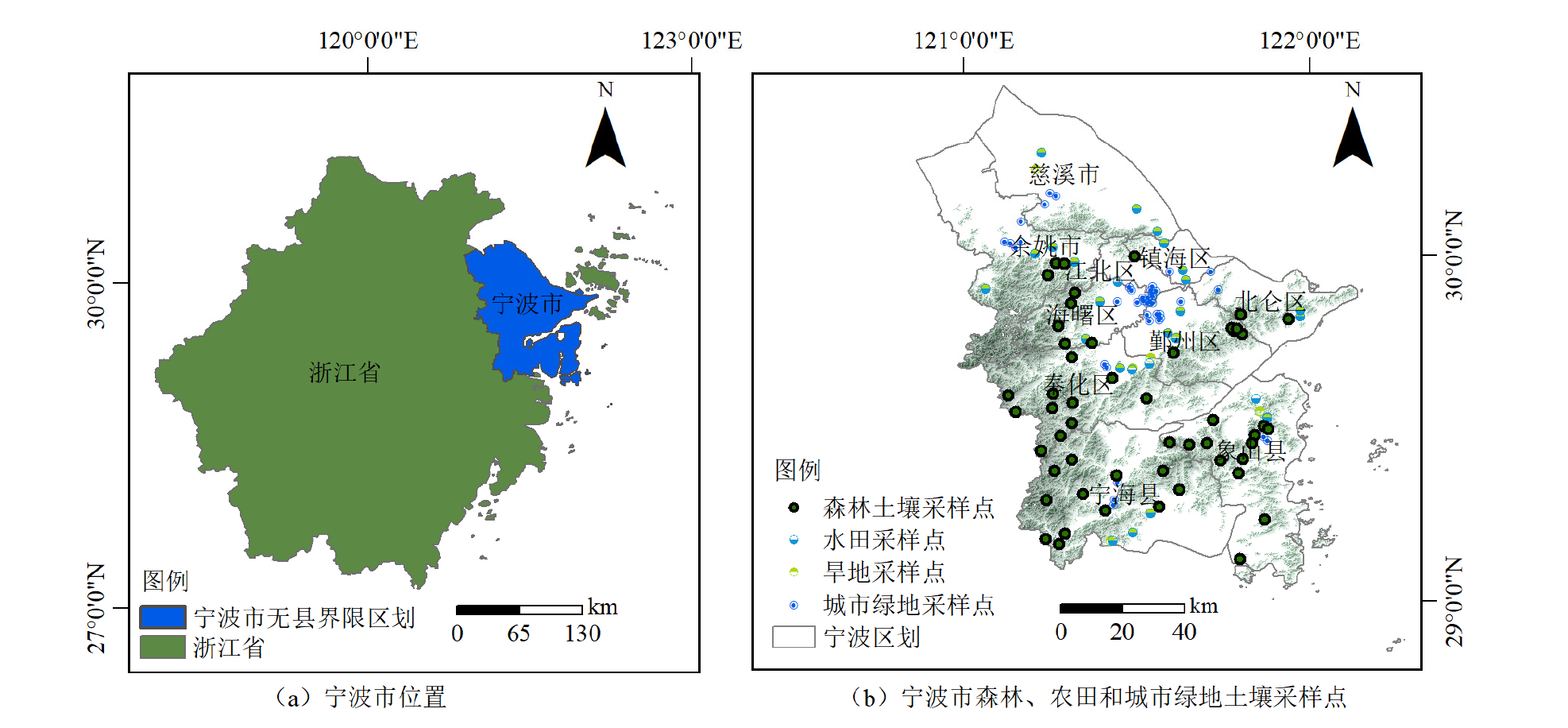
Figure 1 Distribution map of forest, cropland and city green spaces soil sampling sites in Ningbo
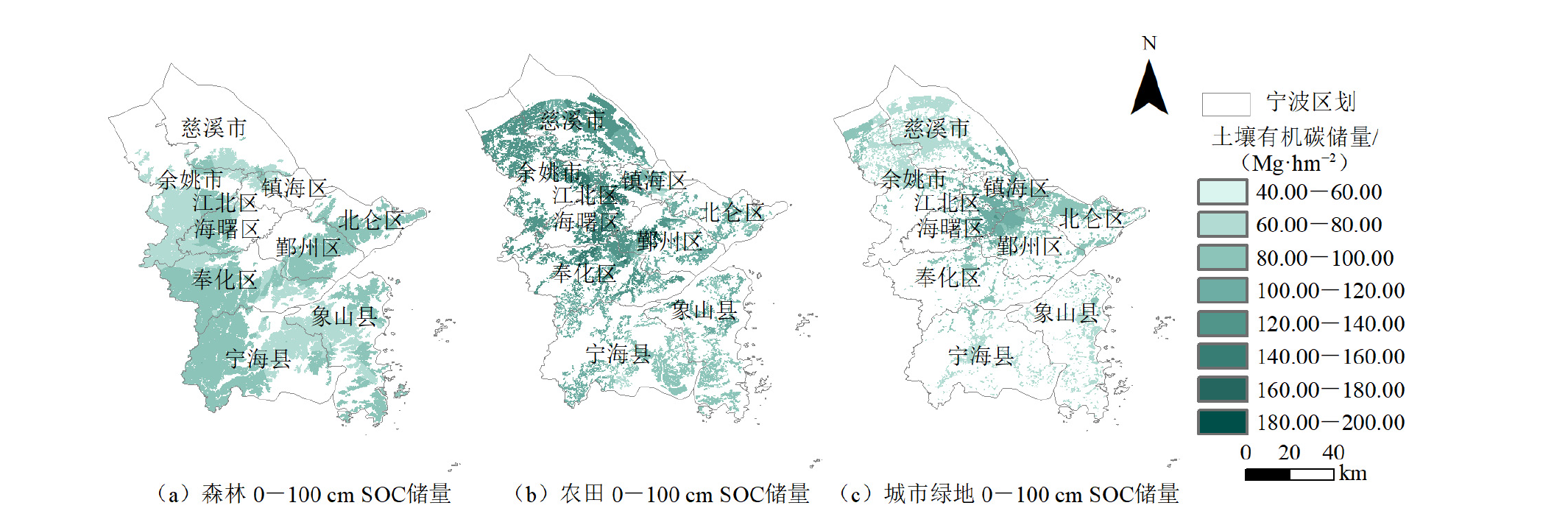
Figure 2 Spatial distribution map of soil organic carbon storage at 0?1 m depth in forests, croplands and urban green spaces of Ningbo
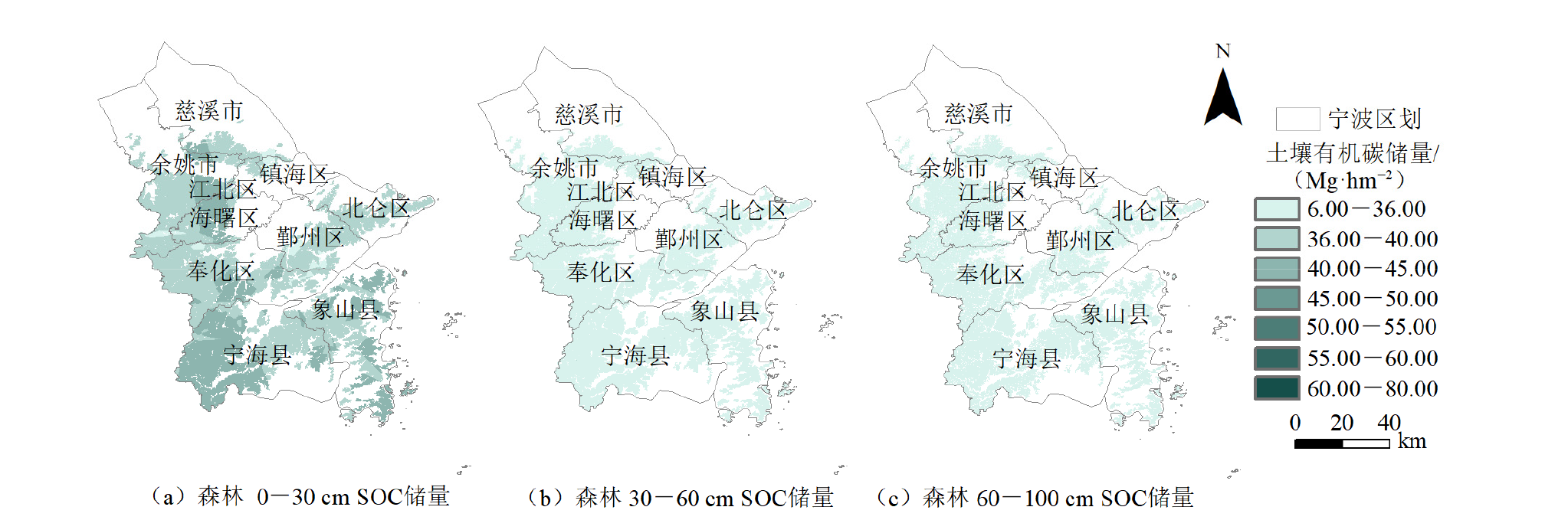
Figure 3 Spatial distribution map of soil organic carbon storage in forest soils of Ningbo
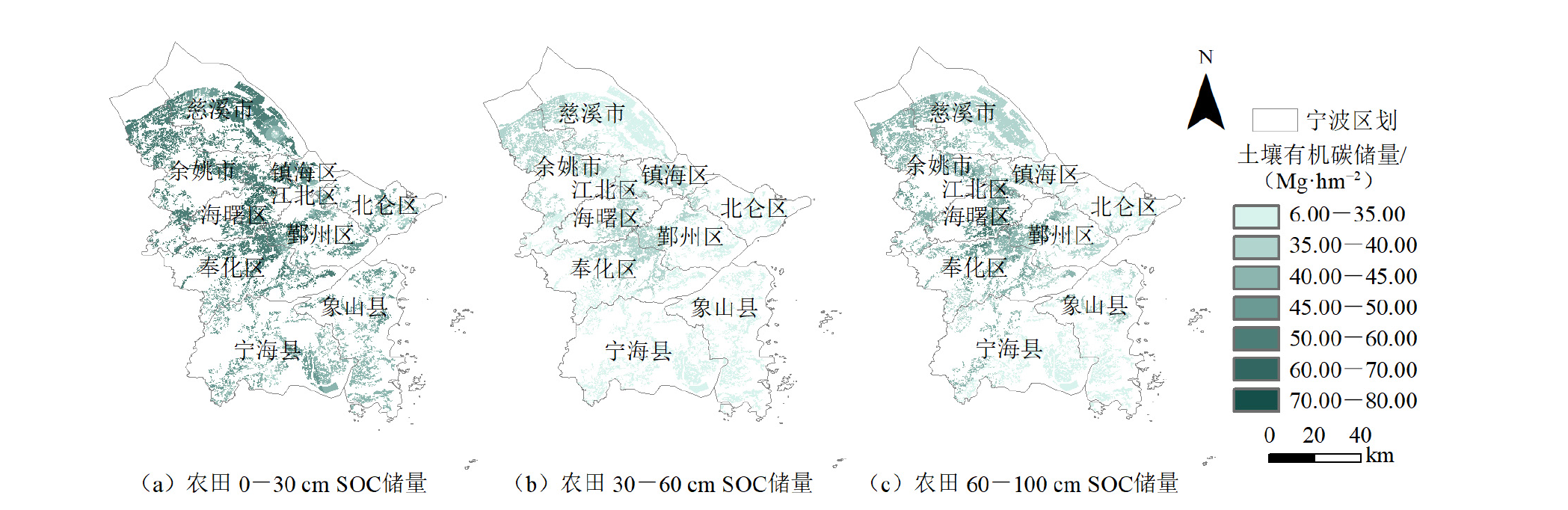
Figure 4 Spatial distribution map of soil organic carbon storage in cropland soils of Ningbo
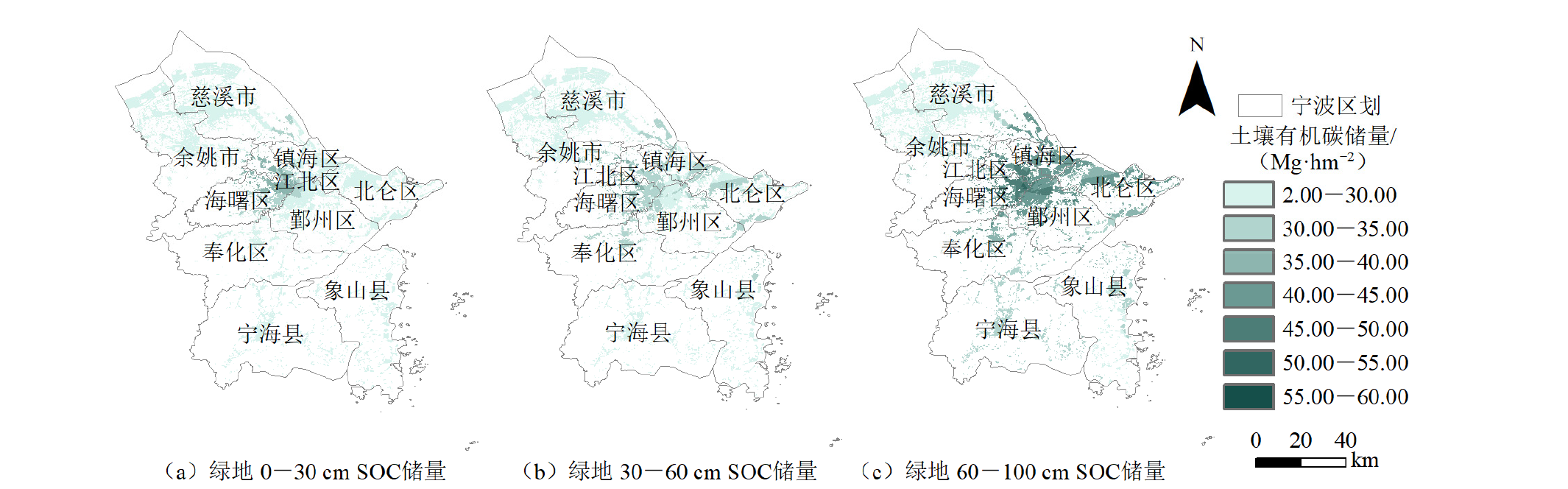
Figure 5 Spatial distribution map of soil organic carbon storage in urban green spaces soils of Ningbo
| 生态系统 | 土壤类型 | 土壤固碳潜力/Gg | 单位面积土壤固碳潜力/(Mg·hm−2) | ||||||
|---|---|---|---|---|---|---|---|---|---|
| 0-30 cm | 30-60 cm | 60-100 cm | 0-100 cm | 0-30 cm | 30-60 cm | 60-100 cm | |||
| 森林 | 低活性强酸土 | 91.6 | 34.9 | 40.7 | 167.0 | 3.7 | 1.4 | 1.7 | |
| 人为土 | 130.8 | 217.7 | 98.4 | 446.9 | 3.0 | 4.9 | 2.2 | ||
| 疏松岩性土 | 345.2 | 543.8 | 218.5 | 1107.5 | 3.7 | 5.8 | 2.3 | ||
| 暗色土 | 709.1 | 563.0 | 1811.1 | 3083.3 | 3.3 | 2.6 | 8.3 | ||
| 农田 | 人为土 | 555.6 | 528.1 | 609.6 | 1693.3 | 5.9 | 5.6 | 6.4 | |
| 冲积土 | 17.6 | 3.2 | 3.2 | 24.0 | 0.3 | 0.1 | 0.1 | ||
| 聚铁网纹土 | 151.9 | 204.0 | 253.1 | 608.9 | 3.1 | 4.1 | 5.1 | ||
| 工程土 | 5.7 | 5.7 | 2.6 | 14.0 | 0.5 | 0.5 | 0.2 | ||
| 暗色土 | 12.2 | 41.0 | 68.6 | 121.8 | 0.3 | 1.0 | 1.7 | ||
| 城市绿地 | 工程土 | 335.1 | 318.9 | 599.9 | 1254.1 | 4.2 | 4.0 | 7.4 | |
| 聚铁网纹土 | 6.5 | 30.1 | 16.8 | 53.4 | 0.5 | 2.3 | 1.3 | ||
| 人为土 | 11.9 | 18.3 | 25.8 | 56.0 | 0.4 | 0.7 | 0.9 | ||
Table 1 Soil carbon sequestration potential and its per-unit area value across different ecosystems in Ningbo
| 生态系统 | 土壤类型 | 土壤固碳潜力/Gg | 单位面积土壤固碳潜力/(Mg·hm−2) | ||||||
|---|---|---|---|---|---|---|---|---|---|
| 0-30 cm | 30-60 cm | 60-100 cm | 0-100 cm | 0-30 cm | 30-60 cm | 60-100 cm | |||
| 森林 | 低活性强酸土 | 91.6 | 34.9 | 40.7 | 167.0 | 3.7 | 1.4 | 1.7 | |
| 人为土 | 130.8 | 217.7 | 98.4 | 446.9 | 3.0 | 4.9 | 2.2 | ||
| 疏松岩性土 | 345.2 | 543.8 | 218.5 | 1107.5 | 3.7 | 5.8 | 2.3 | ||
| 暗色土 | 709.1 | 563.0 | 1811.1 | 3083.3 | 3.3 | 2.6 | 8.3 | ||
| 农田 | 人为土 | 555.6 | 528.1 | 609.6 | 1693.3 | 5.9 | 5.6 | 6.4 | |
| 冲积土 | 17.6 | 3.2 | 3.2 | 24.0 | 0.3 | 0.1 | 0.1 | ||
| 聚铁网纹土 | 151.9 | 204.0 | 253.1 | 608.9 | 3.1 | 4.1 | 5.1 | ||
| 工程土 | 5.7 | 5.7 | 2.6 | 14.0 | 0.5 | 0.5 | 0.2 | ||
| 暗色土 | 12.2 | 41.0 | 68.6 | 121.8 | 0.3 | 1.0 | 1.7 | ||
| 城市绿地 | 工程土 | 335.1 | 318.9 | 599.9 | 1254.1 | 4.2 | 4.0 | 7.4 | |
| 聚铁网纹土 | 6.5 | 30.1 | 16.8 | 53.4 | 0.5 | 2.3 | 1.3 | ||
| 人为土 | 11.9 | 18.3 | 25.8 | 56.0 | 0.4 | 0.7 | 0.9 | ||
| [1] |
BALAGUERA-QUINTERO A, VALLONE A, IGOR-TAPIA S, 2022. Carbon footprint estimation for la serena-coquimbo conurbation based on global protocol for community-scale greenhouse gas emission inventories (GPC)[J]. Sustainability, 14(16): 10309.
DOI URL |
| [2] |
CARTER T L, SCHAECHER C, MONTEITH S, et al., 2024. Using combustion analysis to simultaneously measure soil organic and inorganic carbon[J]. Geoderma, 451: 117066.
DOI URL |
| [3] |
CHENG F S, TIAN J X, HE J Y, et al., 2024. China’s future forest carbon sequestration potential under different management scenarios[J]. Trees, Forests and People, 17: 100621.
DOI URL |
| [4] |
CHITI T, DÍAZ-PINÉS E, RUBIO A, 2012. Soil organic carbon stocks of conifers, broadleaf and evergreen broadleaf forests of spain[J]. Biology and Fertility of Soils, 48(7): 817-826.
DOI URL |
| [5] |
DI S, ZONG M, LI S, et al., 2020. The effects of the soil environment on soil organic carbon in tea plantations in Xishuangbanna, southwestern China[J]. Agriculture, Ecosystems & Environment, 297: 106951.
DOI URL |
| [6] |
DING W H, CHANG N J, ZHANG G L, et al., 2023. Soil organic carbon changes in China’s croplands: A newly estimation based on dndc model[J]. Science of The Total Environment, 905: 167107.
DOI URL |
| [7] |
FUJISAKI K, CHEVALLIER T, CHAPUIS-LARDY L, et al., 2018. Soil carbon stock changes in tropical croplands are mainly driven by carbon inputs: A synthesis[J]. Agriculture, Ecosystems & Environment, 259: 147-158.
DOI URL |
| [8] |
GAO H, GONG J, LIU J, et al., 2025. Modeling of soil organic carbon stock and sequestration potential in grassland and cropland in qinghai-tibet plateau: Prediction and carbon management strategies based on different climate scenarios[J]. Catena, 261: 109545.
DOI URL |
| [9] |
GONÇALVES D R P, CANISARES L P, WOOD H A J, et al., 2025. Agriculture intensification in subtropical crop systems and its potential to sequester carbon in soils[J]. Soil and Tillage Research, 246: 106330.
DOI URL |
| [10] |
GU J, YANG F, LI D X, et al., 2025. Stock and carbon sequestration potential of mineral-associated organic carbon in the qinghai-tibetan plateau[J]. Geoderma, 463: 117585.
DOI URL |
| [11] |
GUO H B, DU E Z, TERRER C, et al., 2024a. Global distribution of surface soil organic carbon in urban greenspaces[J]. Nature Communications, 15(1): 806.
DOI |
| [12] |
GUO Y, HAN J T, BAO H J, et al., 2024b. A systematic analysis and review of soil organic carbon stocks in urban greenspaces[J]. Science of the Total Environment, 948: 174788.
DOI URL |
| [13] |
HAN L J, ZHOU W Q, LI W F, et al., 2024. Global synergy of carbon and pollution emissions among countries with different income levels and development stages[J]. Science of the Total Environment, 922: 171322.
DOI URL |
| [14] |
HUANG S B, XUAN C F, QIAN Y, et al., 2023. Ca/Na concentration-constrained variations of dissolved organic matter leaching from groundwater-irrigation area soil in north China plain[J]. Environmental Monitoring and Assessment, 195(10): 1213.
DOI PMID |
| [15] | JIANG W F, LIN Z Q, QIN Z C, et al., 2025. Climate-management interactions drive soil organic carbon sequestration potential in China’s croplands during 2020-2060[J]. Soil & Environmental Health, 3(3): 100159. |
| [16] |
JIEN S H, MINASNY B, YANG B J, et al., 2025. Enhancing soil carbon storage: Developing high-resolution maps of topsoil organic carbon sequestration potential in taiwan[J]. Geoderma, 459: 117369.
DOI URL |
| [17] |
LI Y, ZHANG J L, LI E Z, et al., 2022. Changes in carbon inputs affect soil respiration and its temperature sensitivity in a broadleaved forest in central China[J]. Catena, 213: 106197.
DOI URL |
| [18] |
LIAO C, LI D, HUANG L, et al., 2020. Higher carbon sequestration potential and stability for deep soil compared to surface soil regardless of nitrogen addition in a subtropical forest[J]. PeerJ, 8: e9128.
DOI URL |
| [19] |
LIN L, LIU J R, WEN Z F, et al., 2025. Spatial scale effects of interacting abiotic and biotic factors on aboveground carbon storage in a subtropical evergreen broadleaf forest in southern China[J]. Journal of Forestry Research, 36(2): 53-64.
DOI |
| [20] |
MA W Z, ZHAN Y, CHEN S C, et al., 2021. Organic carbon storage potential of cropland topsoils in east China: Indispensable roles of cropping systems and soil managements[J]. Soil and Tillage Research, 211: 105052.
DOI URL |
| [21] |
MAZUMDER S Y, BANIA J K, SILESHI G W, et al., 2025. Variation in biomass and soil carbon storage and sequestration rates in different agroforestry systems with climatic zones and soil types[J]. Environmental and Sustainability Indicators, 26: 100642.
DOI URL |
| [22] |
MUDGE P L, GLOVER-CLARK G L, MCNEILL S J E, et al., 2025. Design and results from a national soil carbon stock benchmarking and monitoring system for agricultural land in new zealand[J]. Geoderma, 459: 117354.
DOI URL |
| [23] |
PAREJA-SÁNCHEZ E, CALERO J, GARCÍA-RUIZ R, 2024. Does spontaneous cover crop increase the stocks of soil organic carbon and nitrogen in commercial olive orchard?[J]. Soil and Tillage Research, 244: 106237.
DOI URL |
| [24] |
QIN Z C, HUANG Y, ZHUANG Q L, 2013. Soil organic carbon sequestration potential of cropland in China[J]. Global Biogeochemical Cycles, 27(3): 711-722.
DOI URL |
| [25] |
RODRÍGUEZ MARTÍN J A, ÁLVARO-FUENTES J, GONZALO J, et al., 2016. Assessment of the soil organic carbon stock in spain[J]. Geoderma, 264: 117-125.
DOI URL |
| [26] |
TANG F, BIAN X B, LI J J, et al., 2025. Modelling long-term soil organic carbon dynamics of the typical salt marsh wetlands with the dndc model: A case study from yancheng wetland, China[J]. Ecological Modelling, 510: 111288.
DOI URL |
| [27] |
WANG D, WU B S, LI F, et al., 2023. Soil organic carbon stock in China’s tea plantations and their great potential of carbon sequestration[J]. Journal of Cleaner Production, 421: 138485.
DOI URL |
| [28] |
WEISSERT L F, SALMOND J A, SCHWENDENMANN L, 2016. Variability of soil organic carbon stocks and soil CO2 efflux across urban land use and soil cover types[J]. Geoderma, 271: 80-90.
DOI URL |
| [29] | XI C, 2014. Estimation of soil organic carbon reserves in guangxi and comparion study with some provinces in China[J]. Geographical Science, 34(10): 1247-1253. |
| [30] |
XIANG H M, LUO X Z, ZHANG L L, et al., 2022. Forest succession accelerates soil carbon accumulation by increasing recalcitrant carbon stock in subtropical forest topsoils[J]. Catena, 212: 106030.
DOI URL |
| [31] |
XU Z, GUO L L, YU J J, et al., 2023. Ligand recognition and g-protein coupling of trace amine receptor taar1[J]. Nature, 624(7992): 672-681.
DOI |
| [32] |
YANG L, LI P, WU Y T, et al., 2025. The soil organic carbon sequestration potential and formation efficiency of China’s temperate grasslands[J]. Science Bulletin, 70(22): 3857-3869.
DOI URL |
| [33] |
YU Y X, ZHANG Y X, XIAO M, et al., 2021. A meta-analysis of film mulching cultivation effects on soil organic carbon and soil greenhouse gas fluxes[J]. Catena, 206: 105483.
DOI URL |
| [34] |
YU Z, LIU S R, LI H K, et al., 2024. Maximizing carbon sequestration potential in chinese forests through optimal management[J]. Nature Communications, 15(1): 3154.
DOI PMID |
| [35] |
白龙龙, 盛雅琪, 徐丽丽, 等, 2024. “双碳” 背景下我国稻田生态系统土壤固碳潜力分析[J]. 中国工程科学, 26(6): 246-256.
DOI |
|
BAI L L, SHENG Y Q, XU L L, et al., 2024. Carbon sequestration potential of paddy soil in China under the carbon peaking and carbon neutrality goals[J]. Strategic Study of CAE, 26(6): 246-256.
DOI |
|
| [36] | 姜春艳, 2025. 《2025中国农业农村低碳发展报告》发布[J]. 乡村科技, 16(11): 1. |
| JIANG C Y, 2025. Release of the 2025 report on low-carbon development of China’s agriculture and rural areas[J]. Rural Science and Technology, 16(11): 1. | |
| [37] | 刘世荣, 王晖, 栾军伟, 2011. 中国森林土壤碳储量与土壤碳过程研究进展[J]. 生态学报, 31(19): 5437-5448. |
| LIU S R, WANG H, LUAN J W, 2011. A review of research progress and future prospective of forest soil carbon stock and soil carbon process in China[J]. Acta Ecologica Sinica, 31(19): 5437-5448. | |
| [38] | 刘世荣, 王晖, 李海奎, 等, 2024. 碳中和目标下中国森林碳储量、碳汇变化预估与潜力提升途径[J]. 林业科学, 60(4): 157-172. |
| LIU S R, WANG H, LI H K, et al., 2024. Projections of China’s forest carbon storage and sequestration and ways of their potential capacity enhancement[J]. Scientia Silvae Sinicae, 60(4): 157-172. | |
| [39] | 刘杨毅, 冯添, 陈镔捷, 等, 2025. 星空地协同的多尺度宁波市滨海湿地生物量及碳储量估算[J]. 遥感学报, 29(1): 147-166. |
|
LIU Y Y, FENG T, CHEN B J, et al., 2025. Estimation of multi-scale biomass and carbon storage in the coastal wetlands of Ningbo City through Field-UAV-Satellite synergy[J]. National Remote Sensing Bulletin, 29(1): 147-166.
DOI URL |
|
| [40] | 吕文强, 吉冰倩, 闵飘, 2025. 茂兰喀斯特地区土地利用覆盖变化对土壤有机碳储量及固碳潜力的影响研究[J]. 农业与技术, 45(2): 87-91. |
| LÜ W Q, JI B Q, MIN P, et al., 2025. Effects of land use and cover change on soil organic carbon storage and carbon sequestration potential in karst area of Maolan[J]. Agriculture and Technology, 45(2): 87-91. | |
| [41] | 邱巡巡, 曹广超, 曹生奎, 等, 2022a. 祁连山南坡农田土壤碳氮含量垂直分布特征及其影响因素[J]. 水土保持通报, 42(3): 366-372. |
| QIU X X, CAO G C, CAO S K, et al., 2022a. Vertical dstribution characteristics and influencing factors of soil carbon and nitrogen content in farmland on southern slope of Qilian Mountains[J]. Bulletin of Soil and Water Conservation, 42(3): 366-372. | |
| [42] | 邱巡巡, 曹广超, 张卓, 等, 2022b. 高寒农田土壤有机碳和全氮密度垂直分布特征及其与海拔的关系[J]. 土壤通报, 53(3): 623-630. |
| QIU X X, CAO G C, ZHANG Z, et al., 2022b. Vertical distribution characteristics of soil organic carbon and total nitrogen densities in alpine farmland and their relationship with altitude[J]. Chinese Journal of Soil Science, 53(3): 623-630. | |
| [43] | 沈非, 任雅茹, 黄艳萍, 等, 2018. 芜湖城市绿地表层土壤有机碳密度分布特征[J]. 土壤通报, 49(5): 1123-1129. |
| SHEN F, REN Y R, HUANG Y P, et al., 2018. Distribution characteristics of topsoil organic carbon density in urban green space of Wuhu[J]. Chinese Journal of Soil Science, 49(5): 1123-1129. | |
| [44] | 师晨迪, 2014. 黄土丘陵区县域农田土壤固碳潜力研究[D]. 咸阳: 西北农林科技大学. |
| SHI C D, 2014. Research on soil carbon sequestration potential in cropland at county scale in losses hilly region[D]. Xianyang: Northwest A & F University. | |
| [45] | 孙艳丽, 马建华, 李灿, 2009. 开封市不同功能区城市土壤有机碳含量与密度分析[J]. 地理科学, 29(1): 124-128. |
| SUN Y L, MA J H, LI C, 2009. Content and densities of soil organic carbon in urban soil in different function districts of Kaifeng[J]. Journal of Geographical Sciences, 29(1): 124-128. | |
| [46] | 汤煜, 石铁矛, 卜英杰, 等, 2019. 城市化进程中沈阳城市绿地土壤有机碳储量空间分布研究[J]. 中国园林, 35(12): 68-73. |
| TANG Y, SHI T M, BU Y J, et al., 2019. Spatial distribution of soil organic carbon stocks in urban green space with urbanization in Shenyang, China[J]. Chinese Landscape Architecture, 35(12): 68-73. | |
| [47] | 唐睿, 彭开丽, 2018. 土地利用变化对区域陆地碳储量的影响研究综述[J]. 江苏农业科学, 46(19): 5-11. |
| TANG R, PENG K L, 2018. Impact of land use change on regional land carbon storage: a review[J]. Jiangsu Agricultural Sciences, 46(19): 5-11. | |
| [48] | 王晖, 刘世荣, 周正虎, 等, 2025. 森林土壤储碳与增汇的不确定性分析[J]. 生态学报, 45(8): 3626-3644. |
| WANG H, LIU S R, ZHOU Z H, et al., 2025. Uncertainty analysis of soil carbon storage and sink in forests[J]. Acta Ecologica Sinica, 45(8): 3626-3644. | |
| [49] | 王小涵, 张桂莲, 张浪, 等, 2022. 城市绿地土壤固碳研究进展[J]. 园林, 39(1): 18-24. |
| WANG X H, ZHANG G L, ZHANG L, et al., 2022. Research progress on soil carbon sequestration in urban green space[J]. Landscape Architecture Academic Journal, 39(1): 18-24. | |
| [50] | 徐丽丽, 2024. 气候变化背景下长江中下游区稻田土壤有机碳 (SOC) 储量估算与固碳潜力研究[D]. 杭州: 浙江大学. |
| XU L L, 2004. Simulation of paddy rice soil organic carbon storage and analysis of carbon sequestration potential under climate change[D]. Hangzhou: Zhejiang University. | |
| [51] | 于东升, 史学正, 孙维侠, 等, 2005. 基于1꞉100万土壤数据库的中国土壤有机碳密度及储量研究[J]. 应用生态学报, 16(12): 2279-2283. |
| YU D S, SHI X Z, SUN W X, et al., 2005. Estimation of China soil organic carbon storage and density based on 1꞉1000000 soil database[J]. Chinese Journal of Applied Ecology, 16(12): 2279-2283. | |
| [52] | 张梦亭, 李世雨, 逄梦璇, 等, 2025. 保护性耕作对吉林省农田土壤有机碳含量和储量的影响[J]. 农业环境科学学报, 44(10): 1-16. |
| ZHANG M T, LI S Y, PANG M X, et al., 2025. Effects of conservation tillage on soil organic carbon content and stock in farmland of Jilin province[J]. Journal of Agro-Environment Science, 44(10): 1-16. | |
| [53] | 张青青, 伍海兵, 梁晶, 2020. 上海市绿地表层土壤有机碳储量的估算[J]. 土壤, 52(4): 819-824. |
| ZHANG Q Q, WU H B, LIANG J, 2020. Estimation of storage of organic carbon in green surface soils in Shanghai[J]. Soils, 52(4): 819-824. | |
| [54] |
赵荣钦, 黄贤金, 郧文聚, 等, 2022. 碳达峰碳中和目标下自然资源管理领域的关键问题[J]. 自然资源学报, 37(5): 1123-1136.
DOI |
|
ZHAO R Q, HUANG X J, YUN W J, et al., 2022. Key issues in natural resource management under carbon emission peak and carbon neutrality targets[J]. Journal of Natural Resources, 37(5): 1123-1136.
DOI URL |
|
| [55] | 赵鑫, 2017. 基于meta-analysis对我国保护性耕作农田土壤固碳减排效应及其潜力的研究[D]. 北京: 中国农业大学. |
| ZHAO X, 2017. Effects and potential of conservation tillage on soil carbon sequestration and greenhouse gases emission reduction in China based on meta-analysis[D]. Beijing: China Agricultural University. |
| [1] | WANG Yuxing, WANG Wenying, XIONG Youcai, YANG Fangkun, MA Yanmei. Responses of Soil Total Organic Carbon and Labile Carbon Components to Degradation and Topography of Alpine Grassland [J]. Ecology and Environmental Sciences, 2026, 35(6): 831-842. |
| [2] | LI Meng, HAN Yafeng, HU Yibao, JIANG Mengxiao, ZHANG Xin, GAO Jiakai, MA Rentian, ZHENG Bin, ZHANG Ye, SUN Lirong, GUO Dayong, SHI Zhaoyong, WANG Xugang. Effects of Exogenous Carbon with Distinct Chemical Structures on Soil Organic Carbon Fractions and Emissions in Paddy Soils [J]. Ecology and Environmental Sciences, 2026, 35(6): 865-874. |
| [3] | QIU Xixiang, LUO Yihao, ZHOU Jianshan, ZHANG Kun, ZHANG Yinfeng. Characteristics and Controlling Factors of Iron-Bound Organic Carbon in Typical Plateau Wetland of Northwest Yunnan [J]. Ecology and Environmental Sciences, 2026, 35(5): 714-724. |
| [4] | SHI Hanzhi, CAO Yiran, LIU Fan, WU Zhichao, LI Furong, DENGTENG Haobo, XU Aiping, LI Dongqin, WEN Dian, WANG Xu. Study on the Regulation of Soil Lead Forms Transformation under the Combined Action of Straw and Bacteria [J]. Ecology and Environmental Sciences, 2026, 35(1): 155-166. |
| [5] | TANG Zhongao, CHUN Zhenjie, DUAN Xingwu, ZHANG Ruihuan, RONG Li, LIU Wenxu. Simulated Effects of Erosion on Soil Microorganisms and Soil Organic Carbon [J]. Ecology and Environmental Sciences, 2026, 35(1): 54-61. |
| [6] | LIU Qing, GONG Yushun, WANG Wei, FANG Xiantao, WU Jinshui, SHEN Jianlin. Spatio-temporal Characteristics of Soil Organic Carbon and Its Components in Typical tea Gardens in Hunan Province, China [J]. Ecology and Environmental Sciences, 2025, 34(9): 1386-1397. |
| [7] | SHEN Jialong, WU Lihong, LI Linshuang, ZHOU Yuanfang, YANG Xiaomin. Effects of Land Uses on Soil Organic Carbon Fractions and Their Carbon Sequestration in a Typical Karst Small Mountain Watershed [J]. Ecology and Environmental Sciences, 2025, 34(3): 358-367. |
| [8] | LI Jianfu, HUANG Zhilin, HE Chengzhong, JIANG Xin, SONG Lin, LIU Jiaxin, CHEN Liding. Spatial Distribution and Key Factors Affecting Soil Organic Carbon Within the Karst Fault Basin in Eastern Yunnan, China [J]. Ecology and Environmental Sciences, 2024, 33(9): 1339-1352. |
| [9] | SHI Hanzhi, XIONG Zhenqian, CAO Yiran, WU Zhichao, WEN Dian, LI Furong, LI Dongqin, WANG Xu. Effect of Straw Returning to Field on Organic Carbon Fixation in Red Soil and Black Soil [J]. Ecology and Environmental Sciences, 2024, 33(9): 1372-1383. |
| [10] | LUO Qing, HE Qing, WU Huiqiu, KOU Liyue, FANG Xu, ZHANG Xinyu, LI Yuan, CHAI Yuting, ZHANG Ruisheng, DAI Wenju. Characteristics of Soil Organic Carbon Fractions in Liao River Estuary Wetland and Their Influencing Factors [J]. Ecology and Environmental Sciences, 2024, 33(3): 333-340. |
| [11] | LIN Dandan, BI Huaxing, ZHAO Danyang, GUAN Ning, HAN Jindan, GUO Yanjie. Soil Organic Carbon Fractions and Carbon Pool Characteristics of Robinia pseudoacacia Forests with Different Densities in the Loess Region of Western Shanxi Province [J]. Ecology and Environmental Sciences, 2024, 33(3): 379-388. |
| [12] | CHANG Boran, CHEN Rulan, WANG Biao, LAN Tian, DENG Lin, XUE Huiying. Characteristics of Soil Organic Carbon and Its Component Distribution in Different Forest Stand Types on Mount Zola in Southeastern Tibet [J]. Ecology and Environmental Sciences, 2024, 33(10): 1495-1505. |
| [13] | LI Chuanfu, ZHU Taochuan, MING Yufei, YANG Yuxuan, GAO Shu, DONG Zhi, LI Yongqiang, JIAO Shuying. Effect of Organic Fertilizer and Desulphurized Gypsum on Soil Aggregates and Organic Carbon and Its Fractions Contents in the Saline-alkali Soil of the Yellow River Delta [J]. Ecology and Environmental Sciences, 2023, 32(5): 878-888. |
| [14] | ZHANG Lin, QI Shi, ZHOU Piao, WU Bingchen, ZHANG Dai, ZHANG Yan. Study on Influencing Factors of Soil Organic Carbon Content in Mixed Broad-leaved and Coniferous Forests Land in Beijing Mountainous Areas [J]. Ecology and Environmental Sciences, 2023, 32(3): 450-458. |
| [15] | QIN Jiaqi, XIAO Zhirou, MING Angang, ZHU Hao, TENG Jinqian, LIANG Zeli, TAO Yi, QIN Lin. Effect of Monoculture and Mixed Plantation with Coniferous and Broadleaved Tree Species on Soil Microbial Carbon Cycle Functional Gene Abundance [J]. Ecology and Environmental Sciences, 2023, 32(10): 1719-1731. |
| Viewed | ||||||
|
Full text |
|
|||||
|
Abstract |
|
|||||
Website Copyright © 2021 Editorial Office of Ecology and Environmental Sciences
Add: 808# Tianyuan Road, Tianhe District, Guangzhou. 510650.
Institute of Eco-environmental and Soil Sciences, Guangdong Academy of Sciences
Tel/Fax: 020-87024961; E-mail: editor@jeesci.com
Support by Beijing Magtech Co. Ltd., E-mail: support@magtech.com.cn
