
Ecology and Environmental Sciences ›› 2026, Vol. 35 ›› Issue (1): 15-28.DOI: 10.16258/j.cnki.1674-5906.2026.01.002
• Research Article [Ecology] • Previous Articles Next Articles
FANG Jin1,2,3( ), LIU Han4,*(), ZHANG Dongcai1,3, CHEN Sibo5
Received:2025-04-02
Revised:2025-08-10
Accepted:2025-11-19
Online:2026-01-18
Published:2026-01-05
方瑾1,2,3(), 刘晗4,*(), 张栋才1,3, 陈思博5
通讯作者:
* E-mail: 作者简介:方瑾(1986年生)女,讲师,博士研究生,主要研究方向为环境经济。E-mail: zuccgily@163.com
基金资助:CLC Number:
FANG Jin, LIU Han, ZHANG Dongcai, CHEN Sibo. Construction of China’s Green Development Potential Assessment System: Comparative Analysis Based on Fixed and Heterogeneous Rights[J]. Ecology and Environmental Sciences, 2026, 35(1): 15-28.
方瑾, 刘晗, 张栋才, 陈思博. 中国省域绿色发展潜力评估体系构建:基于固定权与异质权的对比分析[J]. 生态环境学报, 2026, 35(1): 15-28.
Add to citation manager EndNote|Ris|BibTeX
URL: https://www.jeesci.com/EN/10.16258/j.cnki.1674-5906.2026.01.002
| 一级指标 | 二级指标 | 单位 | 属性 |
|---|---|---|---|
| 经济科技指标(A1) | (A11)人均 GDP | 元 | 正向 |
| (A12)GDP增长率 | % | 正向 | |
| (A13)第三产业 GDP 占比 | % | 正向 | |
| (A14)第三产业就业人员占比 | % | 正向 | |
| (A15)R&D 经费投入 | 万元 | 正向 | |
| (A16)专利授权数 | 件 | 正向 | |
| 社会民生指标(A2) | (A21)每千人执业(助理)医师数 | 人/千人 | 正向 |
| (A22)财政性教育经费 支出占GDP比例 | % | 正向 | |
| (A23)人均社会保障财政支出 | 元 | 正向 | |
| (A24)基尼系数 | - | 逆向 | |
| 资源利用指标(A3) | (A31)单位耕地面积产值 | 万元/公顷 | 正向 |
| (A32)万元GDP用水量 | 立方米/万元 | 逆向 | |
| (A33)单位GDP能耗 | 吨标准煤/万元 | 逆向 | |
| (A34)可再生能源消费量 | 万吨 | 正向 | |
| 环境生态水平指标(A4) | (A41)劣V类水体比例 | % | 逆向 |
| (A42)空气质量优良率 | % | 正向 | |
| (A43)森林覆盖率 | % | 正向 | |
| (A44)人均绿地面积增长率 | % | 正向 | |
| (A45)人均碳排放量增长率 | % | 逆向 |
Table 1 Provincial green development potential assessment system
| 一级指标 | 二级指标 | 单位 | 属性 |
|---|---|---|---|
| 经济科技指标(A1) | (A11)人均 GDP | 元 | 正向 |
| (A12)GDP增长率 | % | 正向 | |
| (A13)第三产业 GDP 占比 | % | 正向 | |
| (A14)第三产业就业人员占比 | % | 正向 | |
| (A15)R&D 经费投入 | 万元 | 正向 | |
| (A16)专利授权数 | 件 | 正向 | |
| 社会民生指标(A2) | (A21)每千人执业(助理)医师数 | 人/千人 | 正向 |
| (A22)财政性教育经费 支出占GDP比例 | % | 正向 | |
| (A23)人均社会保障财政支出 | 元 | 正向 | |
| (A24)基尼系数 | - | 逆向 | |
| 资源利用指标(A3) | (A31)单位耕地面积产值 | 万元/公顷 | 正向 |
| (A32)万元GDP用水量 | 立方米/万元 | 逆向 | |
| (A33)单位GDP能耗 | 吨标准煤/万元 | 逆向 | |
| (A34)可再生能源消费量 | 万吨 | 正向 | |
| 环境生态水平指标(A4) | (A41)劣V类水体比例 | % | 逆向 |
| (A42)空气质量优良率 | % | 正向 | |
| (A43)森林覆盖率 | % | 正向 | |
| (A44)人均绿地面积增长率 | % | 正向 | |
| (A45)人均碳排放量增长率 | % | 逆向 |
| 省份 | 平均位次 | 2021年 | |||||
|---|---|---|---|---|---|---|---|
| 熵权法 | CRITIC法 | BoD法 | 熵权法 | CRITIC法 | BoD法 | ||
| 福建 | 1 | 4 | 8 | 2 | 4 | 8 | |
| 北京 | 2 | 2 | 1 | 6 | 1 | 1 | |
| 广东 | 3 | 1 | 3 | 5 | 3 | 3 | |
| 浙江 | 4 | 3 | 5 | 14 | 5 | 9 | |
| 广西 | 5 | 5 | 4 | 4 | 2 | 2 | |
| 海南 | 6 | 6 | 16 | 7 | 11 | 17 | |
| 江西 | 7 | 7 | 14 | 12 | 7 | 12 | |
| 上海 | 8 | 10 | 2 | 1 | 8 | 4 | |
| 云南 | 9 | 9 | 11 | 10 | 9 | 15 | |
| 江苏 | 10 | 8 | 6 | 30 | 6 | 10 | |
| 湖南 | 11 | 12 | 17 | 27 | 24 | 25 | |
| 湖北 | 12 | 13 | 10 | 28 | 16 | 13 | |
| 重庆 | 13 | 14 | 13 | 25 | 15 | 20 | |
| 贵州 | 14 | 15 | 19 | 26 | 17 | 22 | |
| 四川 | 15 | 11 | 9 | 23 | 13 | 16 | |
| 黑龙江 | 16 | 16 | 27 | 29 | 23 | 28 | |
| 吉林 | 17 | 17 | 26 | 16 | 26 | 26 | |
| 天津 | 18 | 20 | 7 | 24 | 10 | 7 | |
| 青海 | 19 | 23 | 23 | 3 | 21 | 21 | |
| 辽宁 | 20 | 18 | 22 | 2 | 25 | 27 | |
| 安徽 | 21 | 21 | 24 | 11 | 14 | 14 | |
| 山西 | 22 | 19 | 18 | 15 | 18 | 24 | |
| 内蒙古 | 23 | 22 | 12 | 13 | 28 | 6 | |
| 甘肃 | 24 | 24 | 25 | 17 | 22 | 23 | |
| 宁夏 | 25 | 27 | 28 | 18 | 19 | 18 | |
| 新疆 | 26 | 25 | 21 | 9 | 20 | 19 | |
| 陕西 | 27 | 30 | 20 | 22 | 27 | 5 | |
| 河南 | 28 | 28 | 30 | 21 | 29 | 30 | |
| 山东 | 29 | 26 | 15 | 19 | 12 | 11 | |
| 河北 | 30 | 29 | 29 | 20 | 30 | 29 | |
Table 2 Average ranking of three comprehensive evaluation methods and 2021
| 省份 | 平均位次 | 2021年 | |||||
|---|---|---|---|---|---|---|---|
| 熵权法 | CRITIC法 | BoD法 | 熵权法 | CRITIC法 | BoD法 | ||
| 福建 | 1 | 4 | 8 | 2 | 4 | 8 | |
| 北京 | 2 | 2 | 1 | 6 | 1 | 1 | |
| 广东 | 3 | 1 | 3 | 5 | 3 | 3 | |
| 浙江 | 4 | 3 | 5 | 14 | 5 | 9 | |
| 广西 | 5 | 5 | 4 | 4 | 2 | 2 | |
| 海南 | 6 | 6 | 16 | 7 | 11 | 17 | |
| 江西 | 7 | 7 | 14 | 12 | 7 | 12 | |
| 上海 | 8 | 10 | 2 | 1 | 8 | 4 | |
| 云南 | 9 | 9 | 11 | 10 | 9 | 15 | |
| 江苏 | 10 | 8 | 6 | 30 | 6 | 10 | |
| 湖南 | 11 | 12 | 17 | 27 | 24 | 25 | |
| 湖北 | 12 | 13 | 10 | 28 | 16 | 13 | |
| 重庆 | 13 | 14 | 13 | 25 | 15 | 20 | |
| 贵州 | 14 | 15 | 19 | 26 | 17 | 22 | |
| 四川 | 15 | 11 | 9 | 23 | 13 | 16 | |
| 黑龙江 | 16 | 16 | 27 | 29 | 23 | 28 | |
| 吉林 | 17 | 17 | 26 | 16 | 26 | 26 | |
| 天津 | 18 | 20 | 7 | 24 | 10 | 7 | |
| 青海 | 19 | 23 | 23 | 3 | 21 | 21 | |
| 辽宁 | 20 | 18 | 22 | 2 | 25 | 27 | |
| 安徽 | 21 | 21 | 24 | 11 | 14 | 14 | |
| 山西 | 22 | 19 | 18 | 15 | 18 | 24 | |
| 内蒙古 | 23 | 22 | 12 | 13 | 28 | 6 | |
| 甘肃 | 24 | 24 | 25 | 17 | 22 | 23 | |
| 宁夏 | 25 | 27 | 28 | 18 | 19 | 18 | |
| 新疆 | 26 | 25 | 21 | 9 | 20 | 19 | |
| 陕西 | 27 | 30 | 20 | 22 | 27 | 5 | |
| 河南 | 28 | 28 | 30 | 21 | 29 | 30 | |
| 山东 | 29 | 26 | 15 | 19 | 12 | 11 | |
| 河北 | 30 | 29 | 29 | 20 | 30 | 29 | |

Figure 1 Spatial characteristics of the green development potential of the three evaluation methods from 2001 to 2021
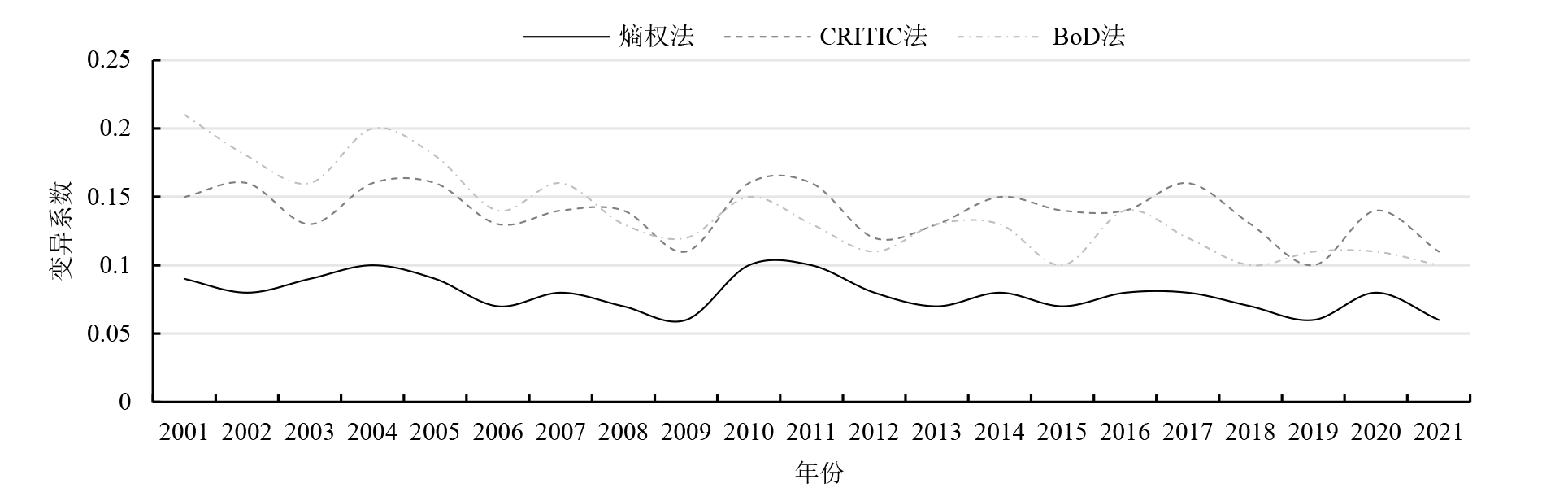
Figure 2 Convergence of σ convergence of green development potential by the three evaluation methods in 2002?2021
| 评价方法 | β | p |
|---|---|---|
| 熵权法 | −0.733 | 0.000 |
| CRITIC法 | −0.588 | 0.000 |
| BoD法 | −0.852 | 0.000 |
Table 3 Absolute β convergence of the green development potential of the three national evaluation methods
| 评价方法 | β | p |
|---|---|---|
| 熵权法 | −0.733 | 0.000 |
| CRITIC法 | −0.588 | 0.000 |
| BoD法 | −0.852 | 0.000 |
| 评价方法 | 年份 | Global Moran’s I | Z | p |
|---|---|---|---|---|
| 熵权法 | 2001 | 0.473 | 4.110 | 0.000 |
| 2011 | 0.350 | 3.432 | 0.001 | |
| 2021 | 0.288 | 2.635 | 0.008 | |
| CRITIC法 | 2001 | 0.490 | 4.235 | 0.000 |
| 2011 | 0.413 | 3.495 | 0.000 | |
| 2021 | 0.402 | 3.532 | 0.000 | |
| BoD法 | 2001 | 0.188 | 1.812 | 0.070 |
| 2011 | 0.257 | 2.426 | 0.015 | |
| 2021 | 0.174 | 1.474 | 0.082 |
Table 4 The Moran’ I index for the green development potential of the three national evaluation methods
| 评价方法 | 年份 | Global Moran’s I | Z | p |
|---|---|---|---|---|
| 熵权法 | 2001 | 0.473 | 4.110 | 0.000 |
| 2011 | 0.350 | 3.432 | 0.001 | |
| 2021 | 0.288 | 2.635 | 0.008 | |
| CRITIC法 | 2001 | 0.490 | 4.235 | 0.000 |
| 2011 | 0.413 | 3.495 | 0.000 | |
| 2021 | 0.402 | 3.532 | 0.000 | |
| BoD法 | 2001 | 0.188 | 1.812 | 0.070 |
| 2011 | 0.257 | 2.426 | 0.015 | |
| 2021 | 0.174 | 1.474 | 0.082 |

Figure 3 Local autocorrelation of green development potential of three evaluation methods in 2001?2021

Figure 4 Standard deviation ellipse and gravity migration of green development potential in 2001?2021
| [1] |
BURKE M, HSIANG S M, MIGUEL E, 2015. Climate and conflict[J]. Annual Review of Economics, 7(1): 577-617.
DOI URL |
| [2] | CHAI H, ZHANG Y B, 2023. Evaluation model of energy-saving potential of green buildings by entropy weight method[J]. Proceedings of the Institution of Civil Engineers - Smart Infrastructure and Construction, 10(4): 1-11. |
| [3] |
DUAN H B, MU T Y, YU Q C, 2025. City-level analysis of carbon reduction potential and decarbonization challenges in China[J]. Cities, 158: 105636.
DOI URL |
| [4] |
DU X L, WANG Y, CHEN F X, 2024. Evaluation of coal-resource-based cities transformation based on CRITIC-TOPSIS model[J]. Sustainable Cities and Society, 103: 105271.
DOI URL |
| [5] |
DUMAN Z, MAO X Q, CAI B F, 2023. Exploring the spatiotemporal pattern evolution of carbon emissions and air pollution in Chinese cities[J]. Journal of Environmental Management, 345: 118870.
DOI URL |
| [6] |
FARZAN A, AZHAR E, OSAMA K, et al., 2025. Assessment and ranking of different vehicles carbon footprint: A comparative study utilizing entropy and TOPSIS methodologies[J]. Green Technologies and Sustainability, 3(1): 100128.
DOI URL |
| [7] |
HASIBUL I, 2025. Nexus of economic, social, and environmental factors on sustainable development goals: The moderating role of technological advancement and green innovation[J]. Innovation and Green Development, 4(1): 100183.
DOI URL |
| [8] |
JIN M M, FENG Y, WANG S K, et al., 2024. Can the development of the rural digital economy reduce agricultural carbon emissions? A spatiotemporal empirical study based on China’s provinces[J]. Science of The Total Environment, 939: 173437.
DOI URL |
| [9] |
LI G Z, WANG L Q, 2023. Study of regional variations and convergence in ecological resilience of Chinese cities[J]. Ecological Indicators, 154: 110667.
DOI URL |
| [10] |
LI Z R, ZHENG K H, ZHONG Q K, 2022. Comprehensive evaluation and spatial-temporal pattern of green development in Hunan Province, China[J]. Sustainability, 14(11): 6819.
DOI URL |
| [11] |
LIN X, HUI E C M, SHEN J F, 2025. Carbon emissions reduction target and green utilization of land resources: Evidence from the industrial land market in China[J]. Environmental Impact Assessment Review, 110: 107677.
DOI URL |
| [12] |
LIU H, GONG Y Z, LI Y R, et al., 2023. Does grazing exclusion enhance grassland restoration? evidence from northern China[J]. Ecological Indicators, 149: 110166.
DOI URL |
| [13] |
NIE C F, LEE C C, 2023. Synergy of pollution control and carbon reduction in China: Spatial-temporal characteristics, regional differences, and convergence[J]. Environmental Impact Assessment Review, 101: 107110.
DOI URL |
| [14] |
SHEN N, PENG H, WANG Q W, 2021. Spatial dependence agglomeration externalities and the convergence of carbon productivity[J]. Socio-Economic Planning Sciences, 78: 101060.
DOI URL |
| [15] |
SUN H W, TANG C L, GAO P, et al., 2025. Digital economy, energy consumption and urban carbon emission reduction: empirical evidence from 278 cities in China[J]. Sustainable Futures, 10: 100858.
DOI URL |
| [16] |
TAN S T, YANG J, YAN J Y, et al., 2017. A holistic low carbon city indicator framework for sustainable development[J]. Applied Energy, 185(Part 2): 1919-1930.
DOI URL |
| [17] |
WU X, ZHONG S Y, CHEN G, et al., 2025. Influence of land use intensity on urban carbon efficiency under a carbon neutrality target: Evidence from the Yangtze River Delta urban agglomeration, China[J]. Environmental Impact Assessment Review, 110: 107689.
DOI URL |
| [18] |
XIE P J, GUO W N, LIN X Y, et al., 2025. Study on the measurement of interprovincial carbon emission performance, regional gaps, and spatial convergence in China[J]. Energy, 317: 134597.
DOI URL |
| [19] |
YAO Y, LI X, SMYTH R, et al., 2022. Air pollution and political trust in local government: Evidence from China[J]. Journal of Environmental Economics and Management, 115: 102724.
DOI URL |
| [20] |
ZHANG H, WEI W, 2025. The impact of green investment policies on the development of new energy enterprises: Analysis based on heterogeneity and threshold effects[J]. Finance Research Letters, 83: 107703.
DOI URL |
| [21] |
ZHANG X Y, ZHONG J T, ZHANG X L, et al., 2024. China Can Achieve Carbon Neutrality in Line with the Paris Agreement’s 2 ℃ Target: Navigating Global Emissions Scenarios, Warming Levels, and Extreme Event Projections[J]. Engineering, 44: 207-214.
DOI URL |
| [22] |
ZHAO R, ZHAO Y H, HE P L, 2025. How does fiscal policy affect green innovation development? Evidence from 30 provinces in China[J]. Journal of Asian Economics, 100: 101967.
DOI URL |
| [23] | 成刚, 董彬怡, 2024. 内涵式高质量发展视角下我国教育经费规模与配置结构的分析[J]. 北京教育学院学报, 38(4): 1-11. |
| CHENG G, DONG B Y, 2024. Analysis of the scale and allocation structure of educational funding in China from the perspective of connotative high-quality development[J]. Journal of Beijing Institute of Education, 38(4): 1-11. | |
| [24] | 陈思博, 2022. 基于BoD多指标综合评价方法的改进研究[D]. 杭州: 浙江工商大学. |
| CHEN S B, 2022. Research on improvement of multi-index comprehensive evaluation method based on BoD[D]. Hangzhou: Zhejiang Gongshang University. | |
| [25] | 陈祖海, 丁莹, 2020. 民族地区绿色发展水平时空演变及其影响因素分析[J]. 生态经济, 36(9): 86-94. |
| CHEN Z H, DING Y, 2020. Analysis on the Spatial and Temporal Evolution of Green Development Level and Its Influencing Factors in Ethnic Areas[J]. Ecological economy, 36(9): 86-94. | |
| [26] | 段华友, 杨兴柳, 董峰, 2023. 数字化转型、融资约束与企业创新[J]. 统计与决策, 39(5): 164-168. |
| DAUN H Y, YANG X L, DONG F, 2023. Digital transformation, financing constraints, and corporate innovation[J]. Statistics and Decision, 39(5): 164-168. | |
| [27] | 耿步健, 2023. 人与自然和谐共生的现代化: 习近平生态文明思想的核心与特色[J]. 探索 (1): 14-25. |
| GENG B J, 2023. Modernization of harmonious coexistence between man and nature: The core and characteristics of Xi Jinping thought on ecological civilization[J]. Probe (1): 14-25. | |
| [28] | 何玉, 王亦辉, 2024. 绿色发展国内外研究热点与演化趋势——基于CiteSpace的可视化分析[J]. 河南社会科学, 32(12): 55-66. |
| HE Y, WANG Y H, 2024. Research hot spots and evolution trends on green development at home and abroad: A visual analysis based on CiteSpace[J]. Henan Social Sciences, 32(12): 55-66. | |
| [29] | 贺正齐, 黄德春, 2024. 生态文明视域下生态产品价值实现的创新路径研究[J]. 江苏社会科学 (6): 94-102. |
| HE Z Q, HUANG D C, 2024. Research on innovative pathways for realizing the value of ecological products from the perspective of ecological civilization[J]. Jiangsu Social Sciences (6): 94-102. | |
| [30] | 黄奇帆, 2021. 伟大复兴的关键阶段——学习《中华人民共和国国民经济和社会发展第十4个五年规划和2035年远景目标纲要》的认识和体会[J]. 人民论坛 (15): 6-10. |
| HUANG Q F, 2021. The key stage of great national rejuvenation: Insights and reflections on studying the Outline of the 14th Five-Year Plan for National Economic and Social Development of the People's Republic of China and the Long-Range Objectives through the Year 2035[J]. People’s Tribune (15): 6-10. | |
| [31] |
黄天能, 许进龙, 谢凌凌, 2021. 资源枯竭城市产业结构转型升级水平测度及其影响因素——基于24座地级市的面板数据[J]. 自然资源学报, 36(8): 2065-2080.
DOI |
|
HUANG T N, XU J L, XIE L L, 2021. Research on measurement of industrial structural transformation and upgrading level in resource-exhausted cities and its influencing factors: Based on panel data of 24 prefecture-level cities of China[J]. Journal of Natural Resources, 36(8): 2065-2080.
DOI URL |
|
| [32] | 刘华军, 吴倩敏, 2024. 新时代十年中国绿色发展之路[J]. 中国人口·资源与环境, 34(3): 102-111. |
| LIU H J, WU Q M, 2024. China’s path to green development in the decade of the new era[J]. China Population, Resources and Environment, 34(3): 102-111. | |
| [33] | 刘来会, 王振, 何春, 2017. 自然资源对经济增长的影响及区域性差异分析[J]. 统计与决策 (5): 146-149. |
| LIU L H, WANG Z, HE C, 2017. The Impact of Natural Resources on Economic Growth and Analysis of Regional Disparities[J]. Statistics & Decision (5): 146-149. | |
| [34] | 刘超, 郑垂勇, 丁晨辉, 等, 2023. 数字经济、绿色金融与绿色技术创新——基于中介效应和空间效应的实证研究[J]. 技术经济与管理研究 (6): 7-12. |
| LIU C, ZHENG C Y, DING C H, et al., 2023. Digital economy, green finance and green technology innovation: An empirical study based on mediating and spatial effects[J]. Journal of Technical Economics & Management (6): 7-12. | |
| [35] |
刘晗, 龚亚珍, 贾册, 等, 2025. 我国原生与恢复草原固碳能力的差异及驱动力[J]. 干旱区研究, 42(9): 1691-1702.
DOI |
|
LIU H, GONG Y Z, JIA C, et al., 2025. Different and driving factors of carbon sequestration capacity in primary and restored grasslands in China[J]. Arid Zone Research, 42(9): 1691-1702.
DOI |
|
| [36] | 李沁玲, 阎建忠, 程先, 等, 2023. 2001-2018年华北平原森林面积变化及影响因素分析[J]. 西南大学学报(自然科学版), 45(2): 107-124. |
| LI Q L, YAN J Z, CHENG X, et al., 2023. Changes of forestland area and their influencing factors in the North China plain from 2001 to 2018[J]. Journal of Southwest University (Natural Science Edition), 45(2): 107-124. | |
| [37] | 林冬, 2021. 降低老工业城市单位GDP能耗对策研究[J]. 低碳世界, 11(12): 4-6. |
| LIN D, 2021. Research on countermeasures to reduce energy consumption per unit of GDP in old industrial cities[J]. Low Carbon World, 11(12): 4-6. | |
| [38] | 马勇, 黄智洵, 2017. 长江中游城市群绿色发展指数测度及时空演变探析——基于GWR模型[J]. 生态环境学报, 26(5): 794-807. |
| MA Y, HUANG Z X, 2017. Study on spatial-temporal evolution and measurement of green development index of urban agglomerations in the middle reaches of Yangtze River: GWR model based[J]. Ecology and Environmental Sciences, 26(5): 794-807. | |
| [39] | 潘加军, 张乐, 2021. 我国绿色发展理念的演进与践行[J]. 湘潭大学学报(哲学社会科学版), 45(6): 163-167. |
| PAN J J, ZHANG L, 2021. The evolution and practice of China’s green development concept[J]. Journal of Xiangtan University (Philosophy and Social Sciences), 45(6): 163-167. | |
| [40] |
陶德凯, 张子建, 2025. 江苏省国土空间绿色发展水平与生态系统服务耦合协同关系研究[J]. 生态环境学报, 34(2): 181-196.
DOI |
| TAO D K, ZHANG Z J, 2025. A study on the coupling and synergistic relationship between the level of territorial space green development and ecosystem services in Jiangsu Province[J]. Ecology and Environmental Sciences, 34(2): 181-196. | |
| [41] | 王永明, 2018. 经济增长与产业结构和就业结构变动关系的研究——基于VAR模型的实证分析[J]. 甘肃行政学院学报 (3): 87-97. |
| WANG Y M, 2018. A study on the relationship between economic growth and the changes in industrial structure and eployment structure: An empirical analysis based on the VAR model[J]. Journal of Gansu Administration Institute (3): 87-97. | |
| [42] | 王兵, 刘光天, 2015. 节能减排与中国绿色经济增长——基于全要素生产率的视角[J]. 中国工业经济 (5): 57-69. |
| WANG B, LIU G T, 2015. Energy Conservation and Emission Reduction and China’s Green Economic Growth-Based on a Total Factor Productivity Perspective[J]. China Industrial Economics (5): 57-69. | |
| [43] | 魏华颖, 张硕, 2022. 社会保障水平对居民消费性支出的影响——基于我国省级面板数据分析[J]. 商业经济研究 (4): 48-51. |
| WEI H Y, ZHANG S, 2022. The Impact of Social Security Levels on Residents' Consumption Expenditure: An Analysis Based on Provincial Panel Data in China[J]. Journal of Commercial Economics (4): 48-51. | |
| [44] | 武云凤, 李彦华, 2023. 基于模糊物元模型的煤炭企业低碳绩效评价研究[J]. 环境科学与管理, 48(5): 178-183. |
| WU Y F, LI Y H, 2023. Evaluation of Low Carbon Performance in Enterprises Based on Fuzzy Matter-element Model[J]. Environmental Science and Management, 48(5): 178-183. | |
| [45] | 席艳玲, 牛桂敏, 2021. 碳排放与经济增长关系的实证研究——基于国际面板数据的经验证据[J]. 现代管理科学 (8): 13-25. |
| XI Y L, NIU G M, 2021. An empirical study on the relationship between carbon emissions and economic growth: Based on evidence from international panel data[J]. Modern Management Science (8): 13-25. | |
| [46] | 杨光磊, 张国兴, 曹冬勤, 2025. 可再生能源技术创新如何驱动城市能源转型?——基于综合能源平衡表的考察[J]. 系统工程理论与实践, 45(4): 1113-1130. |
| YANG G L, ZHANG G X, CAO D Q, 2025. How can renewable energy technological innovation drivecity-level energy transition?: An investigation from the comprehensive energy balance table[J]. Systems Engineering-Theory and Practice, 45(4): 1113-1130. | |
| [47] |
杨振山, 张富荣, 王洪, 2020. 中国生态脆弱区的差异及绿色发展途径分析[J]. 生态环境学报, 29(6): 1071-1077.
DOI |
| YANG Z S, ZHANG F R, WANG H, 2020. Analysis on the differences and its green development ways of ecologically fragile areas in China[J]. Ecology and Environmental Sciences, 29(6): 1071-1077. | |
| [48] | 杨莉, 张卓艳, 2016. 试析绿色发展对科学发展观的创新[J]. 西南交通大学学报(社会科学版), 17(6): 116-121. |
| YANG L, ZHANG Z Y, 2016. On the promotion of the concept of green development to the scientific outlook on development[J]. Journal of Southwest Jiaotong University (Social Sciences), 17(6): 116-121. | |
| [49] | 袁惊柱, 2025. 新型工业化背景下能源体系绿色低碳转型研究[J]. 发展研究, 42(2): 44-50. |
| YUAN J Z, 2025. Research on the green and Low-Carbon transformation of the energy system in the context of new industrialization[J]. Development Research, 42(2): 44-50. | |
| [50] | 赵剑波, 史丹, 邓洲, 2019. 高质量发展的内涵研究[J]. 经济与管理研究, 40(11): 15-31. |
| ZHAO J B, SHI D, DENG Z, 2019. A Framework of China’s High-quality Economic Development[J]. Research on Economics and Management, 40(11): 15-31. | |
| [51] | 张静进, 黄宝荣, 陈劭锋, 2015. 江西省产业绿色转型发展对策研究[J]. 数学的实践与认识, 45(11): 91-100. |
| ZHANG J J, HUANG B R, CHEN S F, 2015. Countermeasures research on Industrial Green Transformation of Jiangxi Province[J]. Mathematics in Practice and Theory, 45(11): 91-100. | |
| [52] | 郑德凤, 臧正, 孙才志, 2015. 绿色经济、绿色发展及绿色转型研究综述[J]. 生态经济, 31(2): 64-68. |
| ZHENG D F, ZANG Z, SUN C Z, 2015. The research summary of green economy, green development and green transformation[J]. Ecological Economy, 31(2): 64-68. |
| [1] | LI Qiliang, LU Huixiong, SUN Yongbin, WANG Bing, ZHAGN En, XUE Qing, HAN Shaofei, NIU Haiwei. Research on Knowledge-driven Remote Sensing Identification Method of Suspected Black and Odor Water Body in Cities [J]. Ecology and Environmental Sciences, 2025, 34(3): 451-460. |
| [2] | LIU Zhenjiang, WANG Zheng, CAO Yujie, CAI Shuwei, CHEN Wei, LU Kaili. Risk Assessment of Bird Strike at Airport Based on Improved CRITIC-cloud Model [J]. Ecology and Environmental Sciences, 2025, 34(1): 135-144. |
| [3] | ZHANG Baodong, WANG Biao, WU Yanlan, MENG Yu, XU Sheng, QIAN Zhenbing, QIN Jun. Analysis and Identification of Characteristics of Rural Black and Odorous Water Bodies in Anhui Province [J]. Ecology and Environmental Sciences, 2024, 33(8): 1257-1268. |
| [4] | YANG Qili, DOU Weili, LIU Zhiwen, GUO Jing, LÜ Gang. Analysis of Petroleum Hydrocarbon Pollution Characteristics and Influencing Factors Based on N-alkanes Tracing in the River Channel of Fuxin Xihe River [J]. Ecology and Environmental Sciences, 2023, 32(3): 599-608. |
| [5] | LU Yanbo, CHEN Zhanfeng, LI Tong. An Analysis of Water Quality Characteristics of Major Lakes and Reservoirs in Guangdong Province Based on Improved TOPSIS Model [J]. Ecology and Environmental Sciences, 2023, 32(12): 2194-2206. |
| [6] | LIU Xilin, ZHUO Ruina. Influential Factors and Their Critical Thresholds of Initial Runoff Production Time on the Benggang Colluvial Slopes [J]. Ecology and Environmental Sciences, 2023, 32(1): 36-46. |
| [7] | HAUNG Hong, ZHENG Xinyun, LI Yingdong, ZHAO Xu, YU Jinchen, WANG Zhenhua. A study on Enrichment of Heavy Metals in Sebastiscus marmoratus at Different Ages in Dachen Islands Sea Area [J]. Ecology and Environmental Sciences, 2022, 31(9): 1885-1891. |
| [8] | KE Lina, XU Jiahui, WANG Nan, HOU Junxuan, HAN Xu, YIN Shusheng. Evaluation of Ecological Quality of Coastal Wetland Based on Remote Sensing Ecological Index: A Case Study of Northern Liaodong Bay [J]. Ecology and Environmental Sciences, 2022, 31(7): 1417-1424. |
| Viewed | ||||||
|
Full text |
|
|||||
|
Abstract |
|
|||||
Copyright © 2021 Editorial Office of ACTA PETROLEI SINICA
Address:No. 6 Liupukang Street, Xicheng District, Beijing, P.R.China, 510650
Tel: 86-010-62067128, 86-010-62067137, 86-010-62067139
Fax: 86-10-62067130
Email: syxb@cnpc.com.cn
Support byBeijing Magtech Co.ltd, E-mail:support@magtech.com.cn
