Ecology and Environmental Sciences ›› 2026, Vol. 35 ›› Issue (10): 1588-1599.DOI: 10.16258/j.cnki.1674-5906.2026.10.009
• Research Article [Environmental Science] • Previous Articles Next Articles
Wang Xiying1,2( ), Liang Yuzhen1,2,*(), Wen Jiongxin1,2, Lu Yang3, Shi Zhenqing1,2
Received:2026-03-30
Revised:2026-09-07
Accepted:2026-09-18
Online:2026-10-18
Published:2026-10-21
王熙颖1,2(), 梁钰贞1,2,*(), 温炅欣1,2, 卢阳3, 石振清1,2
通讯作者:
E-mail: 作者简介:王熙颖(2001年生),女,硕士研究生,主要研究方向为土壤铁氧化物生物还原。E-mail: hnxtwxy230712@163.com
基金资助:CLC Number:
Wang Xiying, Liang Yuzhen, Wen Jiongxin, Lu Yang, Shi Zhenqing. Effect and Mechanisms of Quinone Compounds on the Biotransformation of Iron Oxides[J]. Ecology and Environmental Sciences, 2026, 35(10): 1588-1599.
王熙颖, 梁钰贞, 温炅欣, 卢阳, 石振清. 醌类化合物对铁氧化物生物转化过程的影响和机制[J]. 生态环境学报, 2026, 35(10): 1588-1599.
Add to citation manager EndNote|Ris|BibTeX
URL: https://www.jeesci.com/EN/10.16258/j.cnki.1674-5906.2026.10.009

Figure 1 XRD patterns of minerals treated with different AIQ addition concentrations and corresponding mineral mass fractions

Figure 2 SEM analysis of mineral morphology under different AIQ addition concentrations
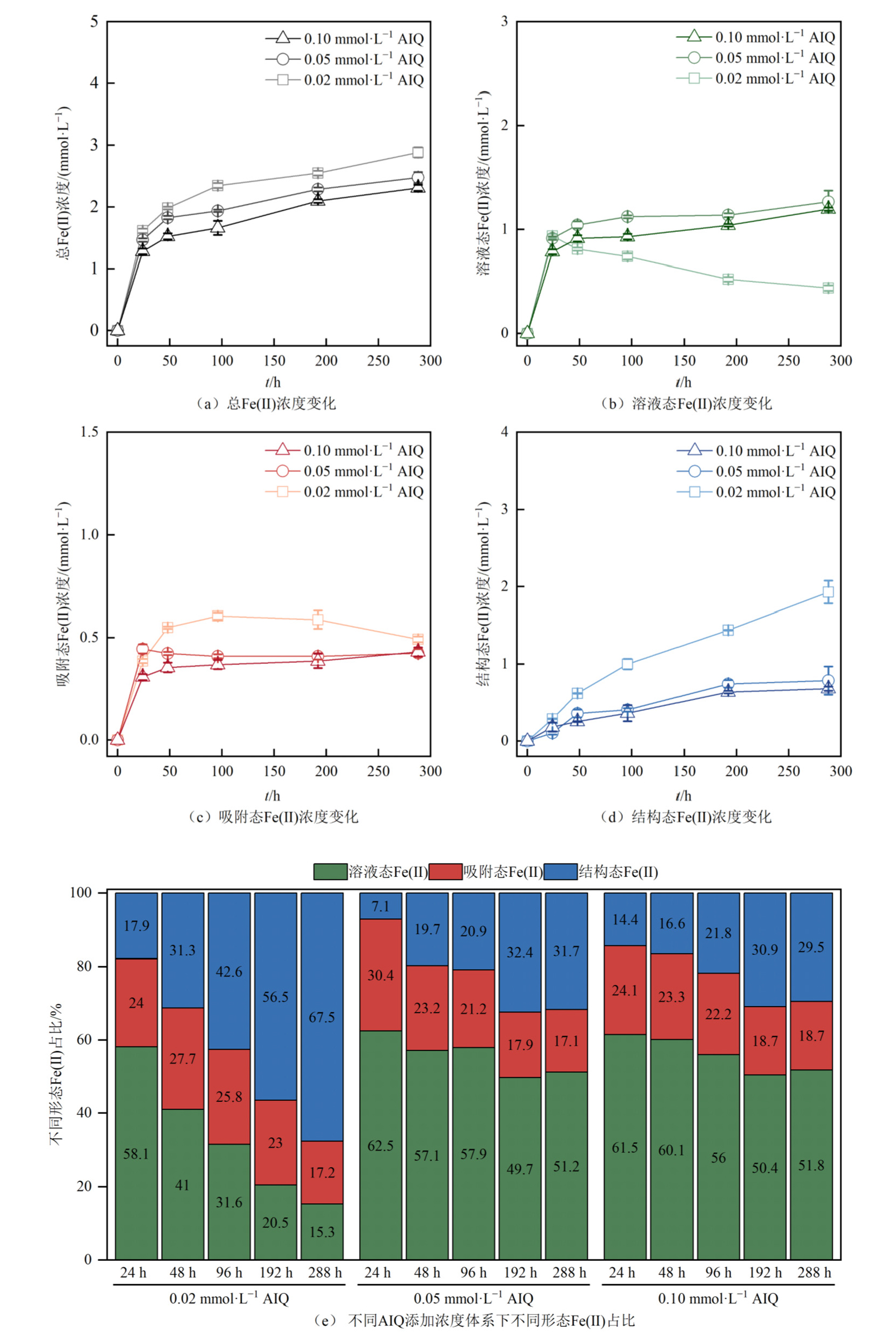
Figure 3 Temporal evolution of different forms of Fe(Ⅱ) during the biological reduction of minerals under different addition concentrations
| AIQ浓度/ (mmol·L−1) | 准一级动力学方程 | 准二级动力学方程 | Elovich方程 | ||||||||
|---|---|---|---|---|---|---|---|---|---|---|---|
| Ce/(mmol·L−1) | k1/h−1 | R2 | Ce/(mmol·L−1) | k2/(L·mmol−1·h−1) | R2 | α/(mmol·L−1·h−1) | β/(L·mmol−1) | R2 | |||
| 0.02 | 2.64 | 3.29×10⁻² | 0.973 | 3.07 | 3.44×10⁻² | 0.995 | 0.505 | 0.501 | 0.987 | ||
| 0.05 | 2.28 | 3.67×10⁻² | 0.962 | 2.63 | 5.16×10⁻² | 0.994 | 0.469 | 0.416 | 0.975 | ||
| 0.1 | 2.09 | 2.98×10⁻² | 0.942 | 2.53 | 6.20×10⁻² | 0.991 | 0.359 | 0.432 | 0.966 | ||
Table 1 Fitting parameters and goodness of fit of three models
| AIQ浓度/ (mmol·L−1) | 准一级动力学方程 | 准二级动力学方程 | Elovich方程 | ||||||||
|---|---|---|---|---|---|---|---|---|---|---|---|
| Ce/(mmol·L−1) | k1/h−1 | R2 | Ce/(mmol·L−1) | k2/(L·mmol−1·h−1) | R2 | α/(mmol·L−1·h−1) | β/(L·mmol−1) | R2 | |||
| 0.02 | 2.64 | 3.29×10⁻² | 0.973 | 3.07 | 3.44×10⁻² | 0.995 | 0.505 | 0.501 | 0.987 | ||
| 0.05 | 2.28 | 3.67×10⁻² | 0.962 | 2.63 | 5.16×10⁻² | 0.994 | 0.469 | 0.416 | 0.975 | ||
| 0.1 | 2.09 | 2.98×10⁻² | 0.942 | 2.53 | 6.20×10⁻² | 0.991 | 0.359 | 0.432 | 0.966 | ||
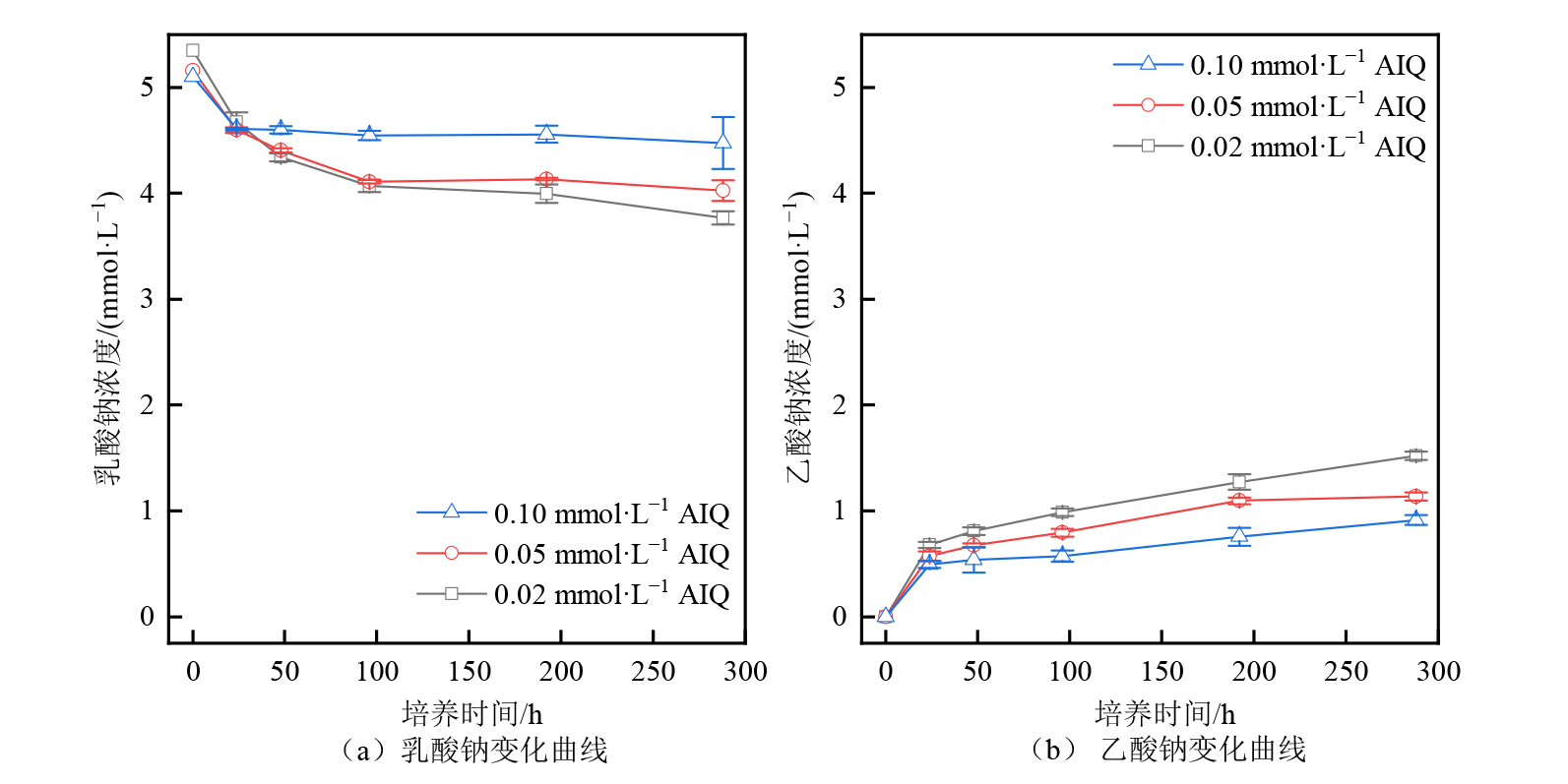
Figure 4 Temporal evolution of sodium lactate and sodium acetate under different AIQ addition concentrations
| AIQ浓度/ (mmol·L−1) | 乳酸钠 | 乙酸钠 | ||||||
|---|---|---|---|---|---|---|---|---|
| A/(mmol·L−1) | kL/h−1 | R2 | CA/(mmol·L−1) | kA/h−1 | R2 | |||
| 0.02 | 3.89 | 1.30 | 2.02×10⁻² | 0.952 | 1.39 | 1.82×10⁻² | 0.939 | |
| 0.05 | 4.07 | 0.96 | 2.45×10⁻² | 0.954 | 1.04 | 1.77×10⁻² | 0.942 | |
| 0.10 | 4.56 | 0.54 | 18.8×10⁻² | 0.966 | 0.91 | 5.48×10⁻² | 0.442 | |
Table 2 Corresponding parameters of the first-order reaction kinetic equations for sodium lactate and sodium acetate
| AIQ浓度/ (mmol·L−1) | 乳酸钠 | 乙酸钠 | ||||||
|---|---|---|---|---|---|---|---|---|
| A/(mmol·L−1) | kL/h−1 | R2 | CA/(mmol·L−1) | kA/h−1 | R2 | |||
| 0.02 | 3.89 | 1.30 | 2.02×10⁻² | 0.952 | 1.39 | 1.82×10⁻² | 0.939 | |
| 0.05 | 4.07 | 0.96 | 2.45×10⁻² | 0.954 | 1.04 | 1.77×10⁻² | 0.942 | |
| 0.10 | 4.56 | 0.54 | 18.8×10⁻² | 0.966 | 0.91 | 5.48×10⁻² | 0.442 | |
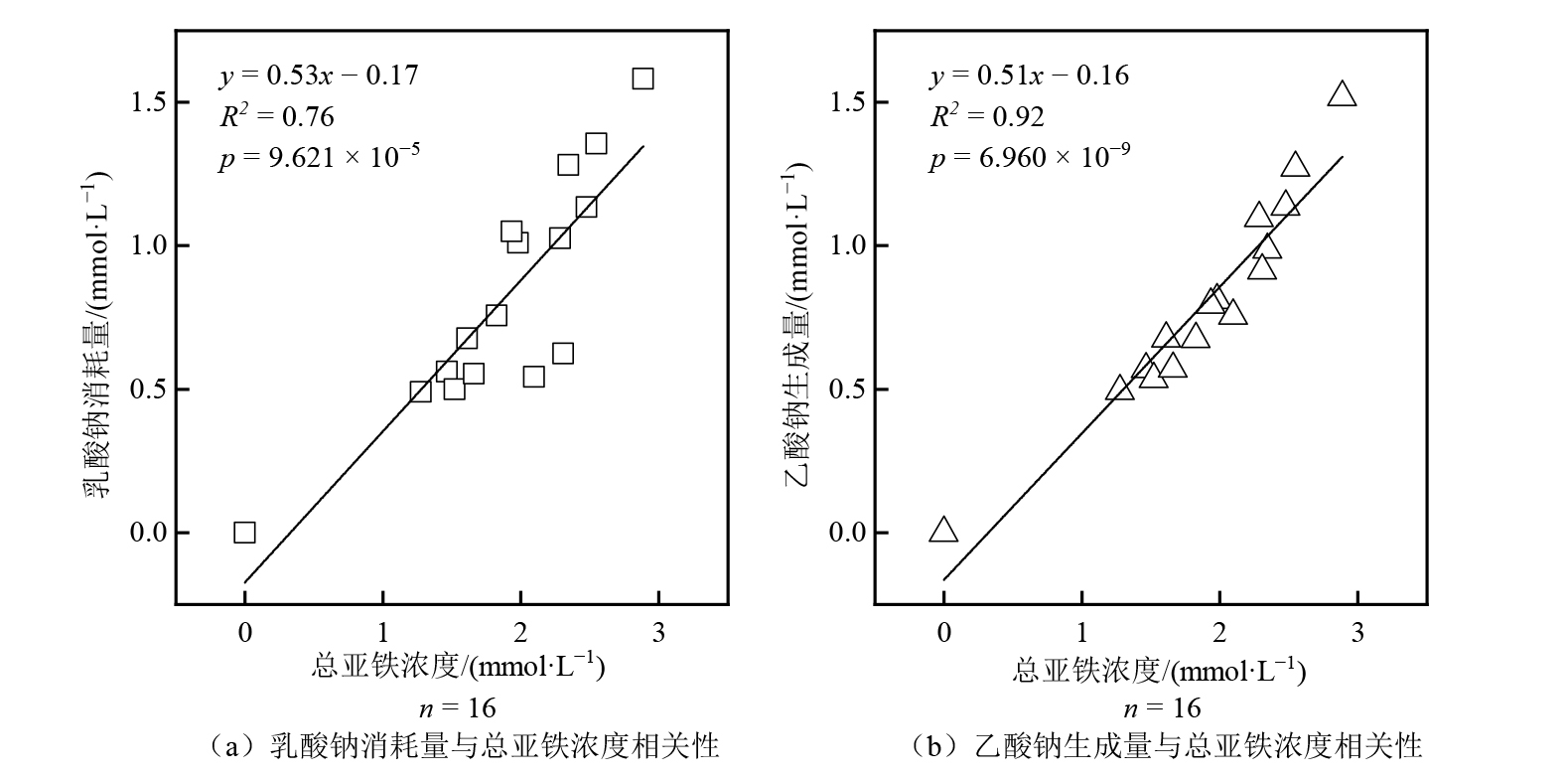
Figure 5 Correlation of total Fe(Ⅱ) concentration with sodium lactate consumption and sodium acetate production
| [1] |
Aeppli M, Kaegi R, Kretzschmar R, et al., 2019. Electrochemical analysis of changes in iron oxide reducibility during abiotic ferrihydrite transformation into goethite and magnetite[J]. Environmental Science & Technology, 53(7): 3568-3578.
DOI URL |
| [2] |
Bai Y G, Mellage A, Cirpka O A, et al., 2020. AQDS and redox-active NOM enables microbial Fe(Ⅲ)-mineral reduction at cm-scales[J]. Environmental Science & Technology, 54(7): 4131-4139.
DOI URL |
| [3] |
Chen C M, Kukkadapu R, Sparks D L, 2015. Influence of coprecipitated organic matter on Fe2+(aq)-catalyzed transformation of ferrihydrite: Implications for carbon dynamics[J]. Environmental Science & Technology, 49(18): 10927-10936.
DOI URL |
| [4] |
D’Acqui L P, Santi C A, Vizza F, et al., 2015. Living and dead soil organic matter under different land uses on a Mediterranean island[J]. European Journal of Soil Science, 66(2): 298-310.
DOI URL |
| [5] |
Ding Y F, Sheng A X, Li X X, et al., 2024. Triplet-excited riboflavin promotes labile Fe(Ⅲ) accumulation and changes mineralization pathways in Fe(Ⅱ)-catalyzed ferrihydrite transformation[J]. Environmental Science & Technology, 58(50): 22148-22158.
DOI URL |
| [6] |
Gu B H, Schmitt J, Chen Z H, et al., 1994. Adsorption and desorption of natural organic matter on iron oxide: Mechanisms and models[J]. Environmental Science & Technology, 28(1): 38-46.
DOI URL |
| [7] |
Kubicki J D, Tunega D, Kraemer S, 2017. A density functional theory investigation of oxalate and Fe(Ⅱ) adsorption onto the (010) goethite surface with implications for ligand- and reduction-promoted dissolution[J]. Chemical Geology, 464: 14-22.
DOI URL |
| [8] |
Li F Y, Koopal L, Tan W F, 2018. Roles of different types of oxalate surface complexes in dissolution process of ferrihydrite aggregates[J]. Scientific Reports, 8(1): 2060.
DOI PMID |
| [9] |
Lin C J, Dong B, Xu Z X, 2025. Microscopic mechanism of organic carbon sequestration and redox properties influenced by iron (Oxyhydr)oxides[J]. Water Research, 275: 123220.
DOI URL |
| [10] |
Liu F, Lu Y, Shi Z Q, 2024. Nanoscale mechanisms of carboxyl carbon preservation during Fe(Ⅱ)-induced ferrihydrite transformation[J]. Geochimica et Cosmochimica Acta, 373: 1-16.
DOI URL |
| [11] |
Liu F, Liang Y Z, Zhu R L, et al., 2025. Probing molecular level and subnanoscale stabilization mechanisms of organic carbon species during Fe(Ⅱ)-induced ferrihydrite transformation[J]. Environmental Science & Technology, 59(27): 13832-13843.
DOI URL |
| [12] |
Lu Y, Hu S W, Zhang H Y, et al., 2022. Effect of humic acid on bioreduction of facet-dependent hematite by Shewanella putrefaciens CN-32[J]. Science of The Total Environment, 849: 157713.
DOI URL |
| [13] |
Mohamed A, Yu L, Fang Y, et al., 2020. Iron mineral-humic acid complex enhanced Cr(VI) reduction by Shewanella oneidensis MR-1[J]. Chemosphere, 247: 125902.
DOI URL |
| [14] |
Notini L, Schulz K, Kubeneck L J L, et al., 2023. A new approach for investigating iron mineral transformations in soils and sediments using 57Fe-labeled minerals and 57Fe Mössbauer spectroscopy[J]. Environmental Science & Technology, 57(27): 10008-10018.
DOI URL |
| [15] |
O’Loughlin E J, Gorski C A, Scherer M M, et al., 2010. Effects of oxyanions, natural organic matter, and bacterial cell numbers on the bioreduction of lepidocrocite (γ-FeOOH) and the formation of secondary mineralization products[J]. Environmental Science & Technology, 44(12): 4570-4576.
DOI URL |
| [16] |
Petridis L, Ambaye H, Jagadamma S, et al., 2014. Spatial arrangement of organic compounds on a model mineral surface: implications for soil organic matter stabilization[J]. Environmental Science & Technology, 48(1): 79-84.
DOI URL |
| [17] |
Pirbadian S, Barchinger S E, Leung K M, et al., 2014. Shewanella oneidensis MR-1 nanowires are outer membrane and periplasmic extensions of the extracellular electron transport components[J]. Proceedings of the National Academy of Sciences, 111(35): 12883-12888.
DOI URL |
| [18] |
Shi Z Q, Hu S W, Lin J Y, et al., 2020. Quantifying Microbially mediated kinetics of ferrihydrite transformation and arsenic reduction: Role of the arsenate-reducing gene expression pattern[J]. Environmental Science & Technology, 54(11): 6621-6631.
DOI URL |
| [19] |
Shyu J B H, Lies D P, Newman D K, 2002. Protective role of tolC in efflux of the electron shuttle anthraquinone-2,6-disulfonate[J]. Journal of Bacteriology, 184(6): 1806-1810.
DOI PMID |
| [20] |
Subdiaga E, Orsetti S, Haderlein S B, 2019. Effects of sorption on redox properties of natural organic matter[J]. Environmental Science & Technology, 53(24): 14319-14328.
DOI URL |
| [21] |
Sun J, Chillrud S N, Mailloux B J, et al., 2016. In situ magnetite formation and long-term arsenic immobilization under advective flow conditions[J]. Environmental Science & Technology, 50(18): 10162-10171.
DOI URL |
| [22] |
Tamura H, Goto K, Yotsuyanagi T, et al., 1974. Spectrophotometric determination of iron(Ⅱ) with 1,10-phenanthroline in the presence of large amounts of iron(Ⅲ)[J]. Talanta, 21(4): 314-318.
PMID |
| [23] | Thapa B S, Flynn T M, Jensvold Z D, et al., 2025. Effects of soluble electron shuttles on microbial iron reduction and methanogenesis[J]. Applied and Environmental Microbiology, 91(5): e02222-02224. |
| [24] |
ThomasArrigo L K, Byrne J M, Kappler A, et al., 2018. Impact of organic matter on iron(Ⅱ)-catalyzed mineral transformations in ferrihydrite-organic matter coprecipitates[J]. Environmental Science & Technology, 52(21): 12316-12326.
DOI URL |
| [25] |
ThomasArrigo L K, Kaegi R, Kretzschmar R, 2019. Ferrihydrite growth and transformation in the presence of ferrous iron and model organic ligands[J]. Environmental Science & Technology, 53(23): 13636-13647.
DOI URL |
| [26] |
Vindedahl A M, Strehlau J H, Arnold W A, et al., 2016. Organic matter and iron oxide nanoparticles: aggregation, interactions, and reactivity[J]. Environmental Science: Nano, 3(3): 494-505.
DOI URL |
| [27] |
Wang X M, Zhu M Q, Lan S, et al., 2015. Formation and secondary mineralization of ferrihydrite in the presence of silicate and Mn(Ⅱ)[J]. Chemical Geology, 415: 37-46.
DOI URL |
| [28] |
Wolf M, Kappler A, Jiang J, et al., 2009. Effects of humic substances and quinones at low concentrations on ferrihydrite reduction by geobacter metallireducens[J]. Environmental Science & Technology, 43(15): 5679-5685.
DOI URL |
| [29] |
Wu S, Fang G D, Wang D J, et al., 2018. Fate of As(Ⅲ) and As(V) during microbial reduction of arsenic-bearing ferrihydrite facilitated by activated carbon[J]. ACS Earth and Space Chemistry, 2(9): 878-887.
DOI URL |
| [30] |
Xue J K, Deng Y M, Zhang Y X, et al., 2024. Hidden role of organic matter in the immobilization and transformation of iodine on Fe-OM associations[J]. Environmental Science & Technology, 58(22): 9840-9849.
DOI URL |
| [31] |
Ye Q T, Li R, Hudson J M, et al., 2025. Linking molecular diversity to electron transfer capacity of soil dissolved organic matter: Role of molecular composition and structure[J]. Environmental Science & Technology, 59(43): 23289-23301.
DOI URL |
| [32] |
Zhang H Y, Lu Y, Ouyang Z Z, et al., 2023. Mechanistic insights into the detoxification of Cr(VI) and immobilization of Cr and C during the biotransformation of ferrihydrite-polygalacturonic acid-Cr coprecipitates[J]. Journal of Hazardous Materials, 448: 130726.
DOI URL |
| [33] |
Zhang Q, Wang Y H, Zhang Y H, et al., 2025. Heating-induced changes in content and molecular characteristics of pyrogenic dissolved organic matter across soil types[J]. Environmental Science & Technology, 59(8): 3937-3948.
DOI URL |
| [34] |
Zhao Y, Moore O W, Xiao K Q, et al., 2023. Behavior and fate of chromium and carbon during Fe(Ⅱ)-induced transformation of ferrihydrite organominerals[J]. Environmental Science & Technology, 57(45): 17501-17510.
DOI URL |
| [35] |
范成新, 刘敏, 王圣瑞, 等, 2021. 近20年来我国沉积物环境与污染控制研究进展与展望[J]. 地球科学进展, 36(4): 346-374.
DOI |
|
Fan C X, Liu M, Wang S R, et al., 2021. Research progress and prospect of sediment environment and pollution control in China in recent 20 years[J]. Advances in Earth Science, 36(4): 346-374.
DOI |
|
| [36] |
刘承帅, 李芳柏, 陈曼佳, 等, 2017. Fe(Ⅱ)催化水铁矿晶相转变过程中Pb的吸附与固定[J]. 化学学报, 75(6): 621-628.
DOI |
|
Liu C S, Li F B, Chen M J, et al., 2017. Adsorption and stabilization of lead during Fe(Ⅱ)-catalyzed phase transformation of ferrihydrite[J]. Acta Chimica Sinica, 75(6): 621-628.
DOI URL |
|
| [37] | 柳广飞, 朱佳琪, 于华莉, 等, 2018. 电子穿梭体介导微生物还原铁氧化物的研究进展[J]. 地球科学, 43(S1): 157-170. |
| Liu G F, Zhu J Q, Yu H L, et al., 2018. Review on electron-shuttle-mediated microbial reduction of iron oxides minerals[J]. Earth Science, 43(S1): 157-170. | |
| [38] | 宋旭昕, 刘同旭, 2021. 土壤铁矿物形态转化影响有机碳固定研究进展[J]. 生态学报, 41(20): 7928-7938. |
| Song X X, Liu T X, 2021. Effects of soil iron mineral transformation on organic carbon sequestration: A review[J]. Acta Ecologica Sinica, 41(20): 7928-7938. | |
| [39] |
王玉洁, 雷琴凯, 卜红玲, 等, 2022. Fe(Ⅱ)aq与纤铁矿-胡敏酸复合物交互反应及其结构转化过程研究[J]. 生态环境学报, 31(4): 777-784.
DOI |
| Wang Y J, Lei Q K, Bu H L, et al., 2022. The study of the interaction of aqueous Fe(Ⅱ) and lepidocrocite-humic acid compounds and the phase transformation[J]. Ecology and Environmental Sciences, 31(4): 777-784. | |
| [40] |
曾岩, 林佳瑾, 聂佳莉, 等, 2026. 生态系统类型对铁氧化物结合态有机碳形成机制的影响[J]. 应用生态学报, 37(1): 295-304.
DOI |
|
Zeng Y, Lin J J, Nie J L, et al., 2026. Influence of ecosystem type on the formation mechanisms of iron oxide-associated organic carbon[J]. Chinese Journal of Applied Ecology, 37(1): 295-304.
DOI |
| [1] | MA Linting, WEI Jianbing, ZHANG Weiwei, SUN Zicheng, XU Jiayao. Effect of Flow Rate and Flow Interruption on the Co-transport of Nanoplastics and Triclosan [J]. Ecology and Environmental Sciences, 2025, 34(7): 1042-1052. |
| [2] | HE Youwen, HAN Yafeng, WANG Xugang, SUN Lirong, XING Jiangbing, CAO Shengyuan. Differences in Drivers of Agricultural Wetland Soils Carbon Emissions under Contrasting Light Conditions [J]. Ecology and Environmental Sciences, 2025, 34(3): 391-400. |
| [3] | LIANG Xin, HAN Yafeng, ZHENG Ke, WANG Xugang, CHEN Zhihuai, DU Juan. Effects of Fe3O4 on Soil Carbon Mineralization in Paddy Field [J]. Ecology and Environmental Sciences, 2023, 32(9): 1615-1622. |
| [4] | ZHANG Yaping, CHEN Huimin, WU Zhiyu, TANG Jia, Xie Zhangzhang, LIU Fanghua. Low Concentration of Ferrihydrite Promoted the Hydrogen Production Efficiency of Clostridium sp. BY-1 Isolated from Rice Paddy Soil [J]. Ecology and Environmental Sciences, 2022, 31(12): 2341-2349. |
| Viewed | ||||||
|
Full text |
|
|||||
|
Abstract |
|
|||||
Website Copyright © 2021 Editorial Office of Ecology and Environmental Sciences
Add: 808# Tianyuan Road, Tianhe District, Guangzhou. 510650.
Institute of Eco-environmental and Soil Sciences, Guangdong Academy of Sciences
Tel/Fax: 020-87024961; E-mail: editor@jeesci.com
Support by Beijing Magtech Co. Ltd., E-mail: support@magtech.com.cn
