
生态环境学报 ›› 2026, Vol. 35 ›› Issue (4): 551-562.DOI: 10.16258/j.cnki.1674-5906.2026.04.006
杜嘉睿( ), 宋芊*(), 高文明
收稿日期:2025-07-13
修回日期:2025-10-30
接受日期:2025-12-22
出版日期:2026-04-18
发布日期:2026-04-14
通讯作者:
*E-mail: 作者简介:杜嘉睿(2002年生),男,硕士研究生,研究方向为生态环境遥感。E-mail: 19591504396@163.com
基金资助:
DU Jiarui(), SONG Qian*(), GAO Wenming
Received:2025-07-13
Revised:2025-10-30
Accepted:2025-12-22
Online:2026-04-18
Published:2026-04-14
摘要:
黄河源区作为国家生态安全的重要屏障,其生态系统健康直接关系到整个黄河流域的生态稳定与水资源保障能力。为系统揭示该区域生态系统健康的时空演变特征与演化机制,构建了以活力-组织-恢复力(VOR)为核心的生态系统健康评价体系,结合Moran’s I空间自相关分析方法识别健康聚集特征,并通过(PLUS)模型模拟不同发展情景下未来生态系统健康状态的变化趋势及潜在影响。结果表明,1)2005-2020年,黄河源区生态系统健康指数(EHI)呈“先降后升”的波动特征,EHI均值由2005年的0.477下降至2015年的0.427,后回升至2020年的0.441,空间格局长期稳定为“东高、西低”,高健康区域主要分布于东南部河谷湿地,低健康区集中于西北高寒脆弱区。2)空间自相关分析显示,生态健康存在显著的高-高和低-低聚集单元,表明健康水平空间结构趋于稳定,高值区生态连通性增强,低值区退化压力仍然突出。3)情景模拟表明,2030年耕地保护(GP)情景下EHI均值提升至0.454,健康区域面积增至9.31×10³ km2,显著高于自然发展(ND)与经济发展(ED)情景,展示出生态保护政策对提升生态系统健康的积极作用。该研究系统揭示了黄河源区生态系统健康的演变规律、空间格局及其驱动机制,强调了生态保护政策在改善生态系统健康中的重要作用。研究成果为优化土地利用结构、制定区域生态保护和管理策略、推动黄河源区生态系统可持续发展提供了科学依据和理论支撑。
中图分类号:
杜嘉睿, 宋芊, 高文明. 黄河源区生态系统健康时空演变与多情景模拟研究[J]. 生态环境学报, 2026, 35(4): 551-562.
DU Jiarui, SONG Qian, GAO Wenming. Spatiotemporal Dynamics and Scenario-Based Simulation of Ecosystem Health in the Yellow River Source Region[J]. Ecology and Environmental Sciences, 2026, 35(4): 551-562.

图1 研究区概况图 审图号:GS(2024)0650号;图边界无修改
Figure 1 The study area
| 目标层 | 指标层 | 计算方法 |
|---|---|---|
| 生态系统活力 | 归一化植被指数NDVI | 采用ArcGIS 10.8模糊隶属工具归一化处理 |
| 生态系统组织力 | 香农多样性指数SHDI | 将土地利用数据导入Fragstats 4.2软件中,计算出4个景观格局指数,再将他们统一导入ArcGIS 10.8中,赋予相同权重,然后用栅格计算器得出生态系统组织力指数 |
| 面积加权平均斑块分形指数AWMPFD | ||
| 蔓延度指数CONTAG | ||
| 景观分离度指数DIVISION | ||
| 生态系统恢复力 | 恢复力指数RI | 将土地利用数据导入ArcGIS 10.8中,将每个地类进行赋权,用栅格计算器进行计算,然后采用模糊隶属归一化得到生态系统恢复力指数 |
表1 生态系统健康评价指标
Table 1 Ecosystem health assessment indicators
| 目标层 | 指标层 | 计算方法 |
|---|---|---|
| 生态系统活力 | 归一化植被指数NDVI | 采用ArcGIS 10.8模糊隶属工具归一化处理 |
| 生态系统组织力 | 香农多样性指数SHDI | 将土地利用数据导入Fragstats 4.2软件中,计算出4个景观格局指数,再将他们统一导入ArcGIS 10.8中,赋予相同权重,然后用栅格计算器得出生态系统组织力指数 |
| 面积加权平均斑块分形指数AWMPFD | ||
| 蔓延度指数CONTAG | ||
| 景观分离度指数DIVISION | ||
| 生态系统恢复力 | 恢复力指数RI | 将土地利用数据导入ArcGIS 10.8中,将每个地类进行赋权,用栅格计算器进行计算,然后采用模糊隶属归一化得到生态系统恢复力指数 |
| 土地利用类型 | 耕地 | 林地 | 草地 | 水域 | 建设用地 | 未利用地 |
|---|---|---|---|---|---|---|
| 恢复力系数 | 0.5 | 0.9 | 0.7 | 0.8 | 0.1 | 0.4 |
表2 土地利用恢复力系数
Table 2 Resilience coefficients of land use types
| 土地利用类型 | 耕地 | 林地 | 草地 | 水域 | 建设用地 | 未利用地 |
|---|---|---|---|---|---|---|
| 恢复力系数 | 0.5 | 0.9 | 0.7 | 0.8 | 0.1 | 0.4 |

图2 土地利用变化驱动因素
Figure 2 Driving forces behind land use change

图3 2005-2020年黄河源区生态系统活力、组织力、恢复力变化空间分布
Figure 3 Spatial distribution of changes in ecosystem vigor, organization and resilience in the source region of the Yellow River in 2005?2020

图4 2005-2020年黄河源区生态系统健康时空分布
Figure 4 Spatiotemporal distribution of ecosystem health in the source region of the Yellow River in 2005?2020
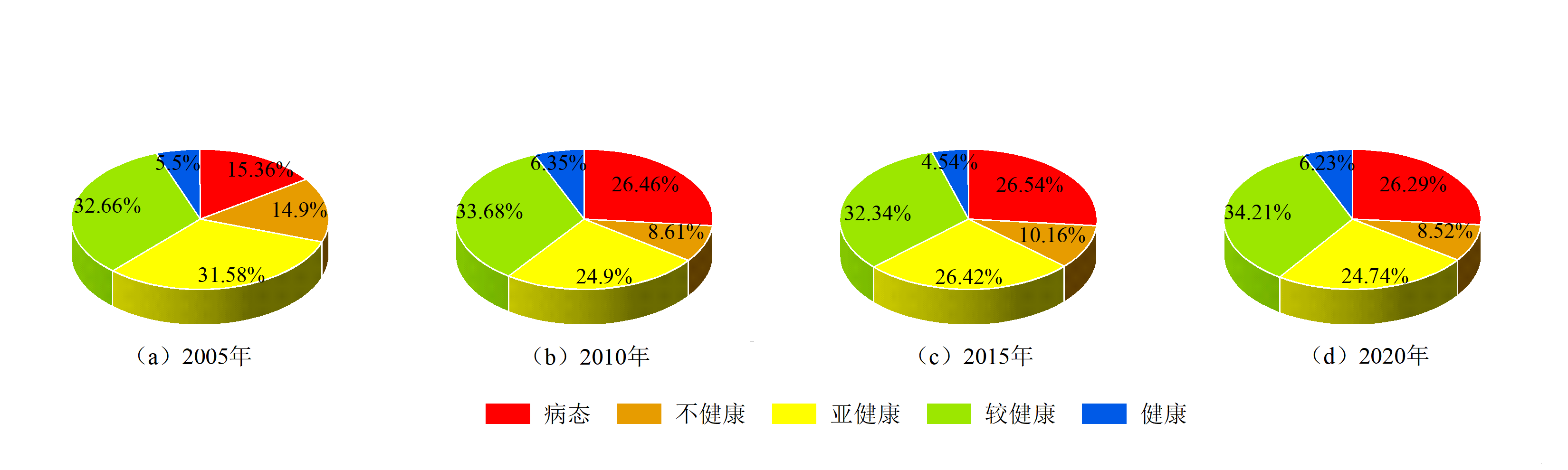
图5 2005-2020年黄河源区健康等级面积占比
Figure 5 Proportion of area by ecosystem health level in the source region of the Yellow River in 2005?2020

图6 2005-2020年黄河源区健康等级转移桑基图
Figure 6 Sankey diagram of health level transitions in the source region of the Yellow River in 2005?2020
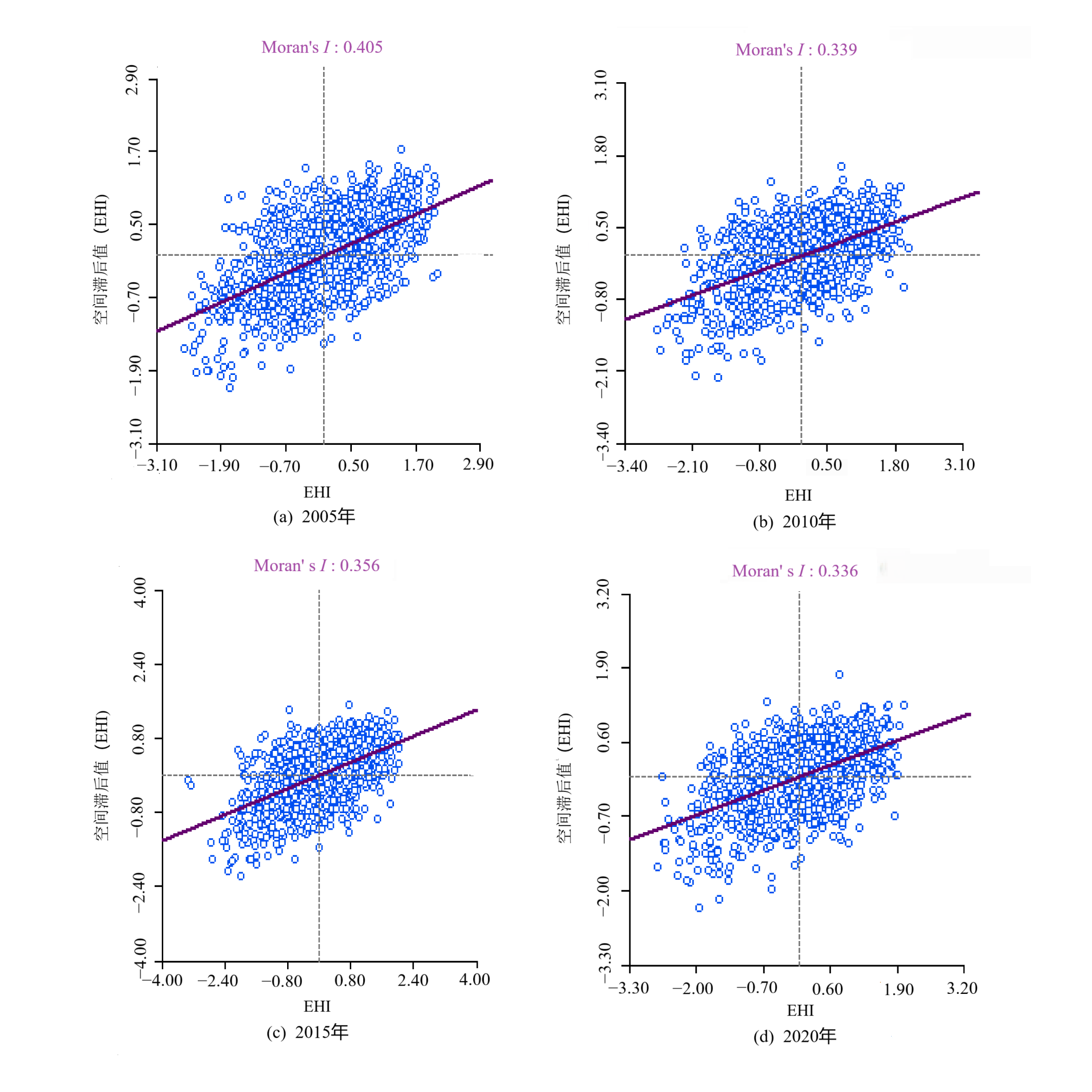
图7 2005-2020年黄河源区生态系统健康全局自相关性分析图
Figure 7 Global spatial autocorrelation analysis of ecosystem health in the source region of the Yellow River in 2005?2020
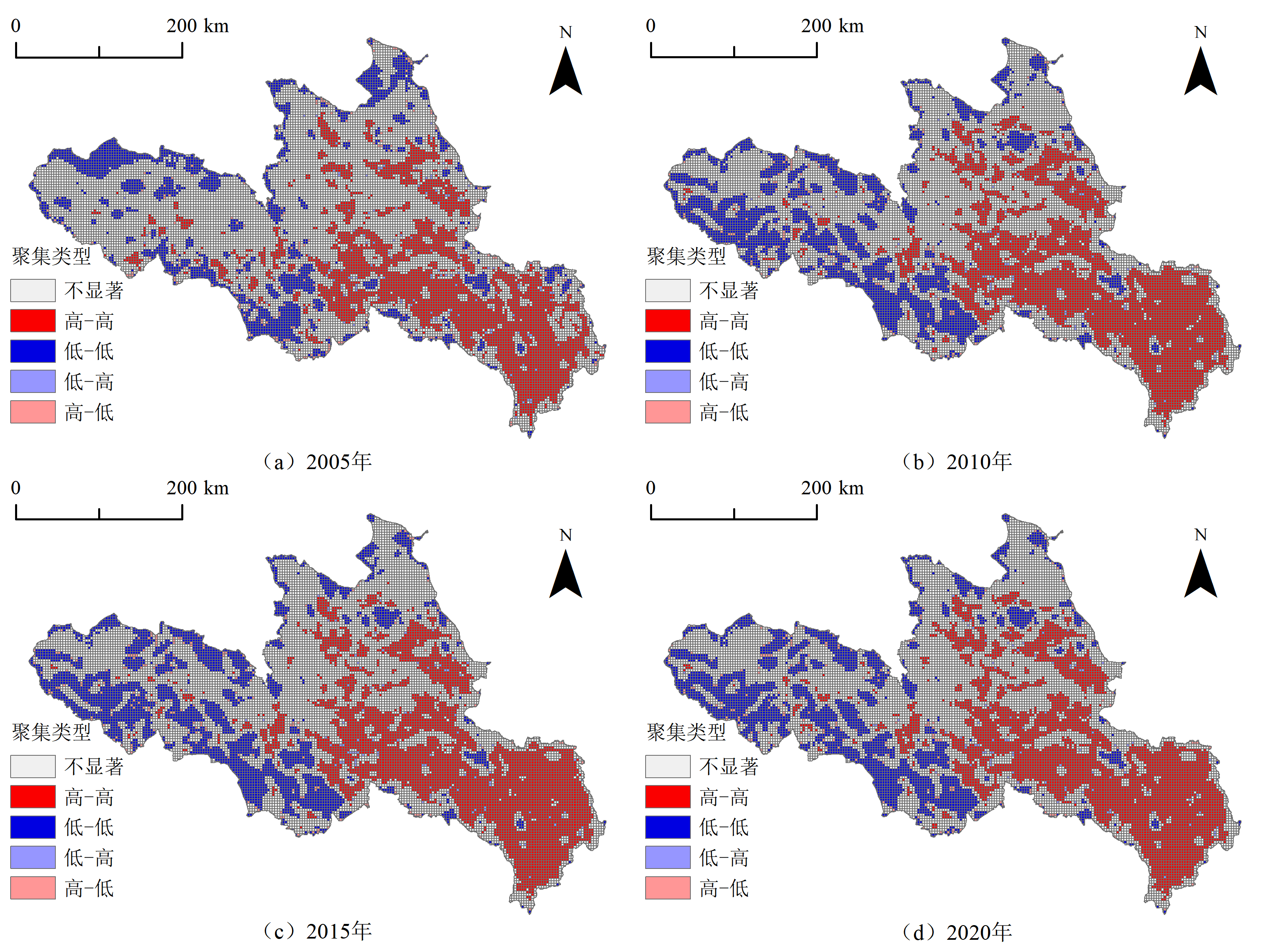
图8 2005-2020年黄河源区局部自相关分析LISA聚类图
Figure 8 LISA cluster map of local spatial autocorrelation analysis for ecosystem health in the Source region of the Yellow River in 2005?2020

图9 不同情景下黄河源区2030年的生态系统健康空间分布
Figure 9 Spatial distribution of ecosystem health in the source region of the Yellow River under different scenarios in 2030
| [1] |
COSTANZA R, 1996. Ecological economics: Reintegrating the Study of Humans and Nature[J]. Ecological Applications, 6(4): 978-990.
DOI URL |
| [2] |
DU Z, JI X, LIU J, et al., 2025. Ecological health assessment of Tibetan alpine grasslands in Gannan using remote sensed ecological indicators[J]. Geo-spatial Information Science, 28(1): 246-264.
DOI URL |
| [3] |
FU X X, LI Z H, MA J H, et al., 2025. Ecosystem resilience response to forest fragmentation in China: Thresholds identification[J]. Journal of Environmental Management, 380: 125180.
DOI URL |
| [4] |
GE F J, TANG G L, ZHONG M X, et al., 2022. Assessment of ecosystem health and its key determinants in the middle reaches of the Yangtze River urban agglomeration, China[J]. International Journal of Environmental Research and Public Health, 19(2): 771.
DOI URL |
| [5] |
GONG J, DU H Y, SUN Y, et al., 2023. Simulation and prediction of land use in urban agglomerations based on the PLUS model: A case study of the Pearl River Delta, China[J]. Frontiers in Environmental Science, 11: 1306187.
DOI URL |
| [6] |
LIU T S, PENG X B, LI J J, 2025. Evaluation of ecological sensitivity and spatial correlation analysis of landscape patterns in Sanjiangyuan National Park[J]. Sustainability, 16(13): 5294.
DOI URL |
| [7] |
LOU Y, YANG D, ZHANG P, et al., 2022. Multi-Scenario Simulation of Land Use Changes with Ecosystem Service Value in the Yellow River Basin[J]. Land, 11(7): 992.
DOI URL |
| [8] | RAPPORT D J, 1992. Evaluating ecosystem health[J]. Journal of Aquatic Ecosystem Stress and Recovery, 1: 15-24. |
| [9] |
RAPPORT D J, COSTANZA R, MECHINEL A J, 1999. Assessing ecosystem health[J]. Trends in Ecology & Evolution, 13(10): 397-402.
DOI URL |
| [10] |
WEI Y T, WANG W, 2025. Rural resilience assessments in the Yangtze River Delta based on the DPSIR model[J]. Sustainability, 17(10): 4725.
DOI URL |
| [11] |
XIAO Z L, LIU R, GAO Y H, et al., 2022. Spatiotemporal variation characteristics of ecosystem health and its driving mechanism in the mountains of Southwest China[J]. Journal of Cleaner Production, 345: 131138.
DOI URL |
| [12] |
YANG J, WANG Z, SUN Y Z, 2025. Multi-scenario simulation of urban land expansion modes considering differences in spatial functional zoning[J]. ISPRS International Journal of Geo-Information, 14(4): 138-138.
DOI URL |
| [13] |
ZHANG Y R, ZHOU D G, GUO X F, 2024. Regional climate response to global warming in the source region of the Yellow River and its impact on runoff[J]. Science China Earth Sciences, 67(3): 843-855.
DOI |
| [14] | 毕研蕾, 段倩茹, 2024. 数字经济赋能黄河流域高质量发展[J]. 大众投资指南 (25): 37-39. |
| BI Y L, DUAN Q R, 2024. Digital economy empowering high-quality development of the Yellow River Basin[J]. Public Investment Guide (25): 37-39. | |
| [15] | 窦世卿, 张楠, 刘丹丹, 等, 2024. 耦合VOR和InVEST模型的广西北部湾经济区生态系统健康时空变化研究[J]. 广西科学, 31(3): 581-592. |
| DOU S Q, ZHANG N, LIU D D, et al., 2024. Coupling VOR and InVEST models to analyze the spatiotemporal changes in ecosystem health of the Guangxi Beibu Gulf Economic Zone[J]. Guangxi Science, 31(3): 581-592. | |
| [16] | 冯应斌, 辜磊, 吴爽, 等, 2025. 喀斯特山区城市土地利用变化及多情景模拟预测: 以贵阳市为例[J/OL]. 环境科学, 1-17 [2025-07-11]. https://doi.org/10.13227/j.hjkx.202503216. |
| FENG Y B, GU L, WU S, et al., 2025. Urban land use change and multi-scenario simulation prediction in karst mountainous cities: A case study of Guiyang[J/OL]. Environmental Science, 1-17 [2025-07-11]. https://doi.org/10.13227/j.hjkx.202503216 | |
| [17] |
高文明, 宋芊, 张皓翔, 等, 2024. 三江源区生态脆弱性时空演变及驱动因素分析[J]. 生态环境学报, 33(10): 1648-1660.
DOI |
| GAO W M, SONG Q, ZHANG H X, et al., 2024. Analysis of spatial and temporal changes and driving factors of ecological vulnerability in Sanjiangyuan Region[J]. Ecology and Environment, 33(10): 1648-1660. | |
| [18] | 韩灵新, 王雨春, 包宇飞, 等, 2025. 基于PSR模型的长江流域生态系统健康评价[J]. 环境科学学报, 45(5): 503-514. |
| HAN L X, WANG Y C, BAO Y F, et al., 2025. Ecosystem health assessment of the Yangtze River Basin based on the PSR model[J]. Acta Scientiae Circumstantiae, 45(5): 503-514. | |
| [19] | 黄圣鸿, 王明旭, 2025. 非生态优势地区的生态文明示范创建路径探索——以汕头市澄海区为例[J]. 环境生态学, 7(2): 159-164, 175. |
| HUANG S H, WANG M X, 2025. Exploration of path for ecological civilization demonstration in non-ecological advantage areas: A case study of Chenghai District, Shantou City[J]. Environmental Ecology, 7(2): 159-164, 175. | |
| [20] | 贾慧聪, 曹春香, 马广仁, 等, 2011. 青海省三江源地区湿地生态系统健康评价[J]. 湿地科学, 9(3): 209-217. |
| JIA H C, CAO C X, MA G R, et al., 2011. Ecosystem health assessment of wetlands in the Sanjiangyuan area of Qinghai province[J]. Wetland Science, 9(3): 209-217. | |
| [21] | 蒋卫国, 李京, 李加洪, 等, 2005. 辽河三角洲湿地生态系统健康评价[J]. 生态学报, 25(3): 408-414. |
| JIANG W G, LI J, LI J H, et al., 2005. Ecosystem health assessment of the Liaohe River delta wetland[J]. Acta Ecologica Sinica, 25(3): 408-414. | |
| [22] | 金晓敏, 2025. 长春市净月区土地利用及其景观格局变化分析[J]. 测绘与空间地理信息, 48(S1): 148-150. |
| JIN X M, 2025. Analysis of land use and landscape pattern changes in Jingyue District, Changchun City[J]. Geomatics and Spatial Information Technology, 48(S1): 148-150. | |
| [23] | 梁秋燕, 宋明洁, 张豆, 等, 2025. 基于生态安全格局的昆明市2030年和2050年土地利用模拟[J/OL]. 生态环境学报, 1-10 [2025-06-27]. https://link.cnki.net/urlid/44.1661.X.20250627.1055.018. |
| LIANG Q Y, SONG M J, ZHANG D, et al., 2025. Land use simulation of Kunming in 2030 and 2050 based on ecological security pattern[J/OL]. Ecology and Environmental Sciences, 1-10 [2025-06-27]. https://link.cnki.net/urlid/44.1661.X.20250627.1055.018. | |
| [24] | 刘淼, 刘义, 苗志加, 等, 2024. 沁河流域上游沁源县生态地质脆弱性评价与分区[J]. 中国地质调查, 11(2): 97-107. |
| LIU M, LIU Y, MIAO Z J, et al., 2024. Ecological-geological vulnerability assessment and zoning of Qinyuan county in the upper reaches of the Qinhe River Basin[J]. China Geological Survey, 11(2): 97-107. | |
| [25] | 刘启峰, 2024. 国土综合整治对区域生态修复效果的评估研究[J]. 皮革制作与环保科技, 5(23): 188-190. |
| LIU Q F, 2024. Evaluation study on the ecological restoration effect of comprehensive land consolidation[J]. Leather Making and Environmental Protection Technology, 5(23): 188-190. | |
| [26] | 刘一鸣, 徐煖银, 曾辉, 2022. 中国东海海岸带地区生态系统健康评估及其尺度依赖性[J]. 生态学报, 42(24): 9913-9926. |
| LIU Y M, XU X Y, ZENG H, 2022. Ecosystem health assessment and its scale dependence in the coastal zone of the east China Sea[J]. Acta Ecologica Sinica, 42(24): 9913-9926. | |
| [27] | 陆智博, 宋芊, 赵健赟, 等, 2022. 黄河源区2005-2020年生态用地格局变化与分异趋势[J]. 水土保持通报, 42(6): 277-284. |
| LU Z B, SONG Q, ZHAO J Y, et al., 2022. Changes and differentiation trends of ecological land use pattern in the source region of the Yellow River from 2005 to 2020[J]. Bulletin of Soil and Water Conservation, 42(6): 277-284. | |
| [28] | 马小宾, 章锦河, 马天驰, 等, 2024. 国家公园生态系统健康测度模型构建及黄山实证研究[J]. 生态学报, 44(13): 5746-5760. |
| MA X B, ZHANG J H, MA T C, et al., 2024. National park ecosystem health measurement model construction and empirical study in Huangshan National Park[J]. Acta Ecologica Sinica, 44(13): 5746-5760. | |
| [29] | 马泽钰, 邢延军, 王勇为, 等, 2025. 基于土地利用变化的青海省生态系统健康时空演变及情景模拟[J]. 水土保持通报, 45(3): 165-178. |
| MA Z Y, XING Y J, WANG Y W, et al., 2025. Spatiotemporal evolution and scenario simulation of ecosystem health in Qinghai province based on land use change[J]. Bulletin of Soil and Water Conservation, 45(3): 165-178. | |
| [30] |
欧阳晓, 陈键, 魏晓, 等, 2024. 长株潭城市群土地利用变化对生态系统健康影响的关键类型及阈值效应[J]. 地理科学, 44(11): 1946-1954.
DOI |
| OUYANG X, CHEN J, WEI X, et al., 2024. Key types and threshold effects of land use change impacting ecosystem health in the Chang-Zhu-Tan Urban Agglomeration[J]. Scientia Geographica Sinica, 44(11): 1946-1954. | |
| [31] | 潘玉莲, 陈大安, 秦苗, 等, 2025. 鄂东北大别山区生态环境质量时空演变及归因分析[J/OL]. 环境科学, 1-21[2025-04-24]. https://doi.org/10.13227/j.hjkx.202412301. |
| PAN Y L, CHEN D A, QIN M, et al., 2015. Spatiotemporal Evolution and Attribution Analysis of Ecological Environmental Quality in the Dabie Mountain Area of Northeastern Hubei[J/OL]. Environmental Science, 1-21 [2025-04-24]. https://doi.org/10.13227/j.hjkx.202412301. | |
| [32] | 覃智敏, 2024. 广西西大明山自治区级自然保护区生态修复策略探析[J]. 南方农业, 18(14): 153-155. |
| QIN Z M, 2024. Analysis of ecological restoration strategies in the Daming Mountain autonomous region nature reserve of western Guangxi[J]. Southern Agriculture, 18(14): 153-155. | |
| [33] | 万海峰, 蒙友波, 陈洋, 等, 2025. 基于土地利用/覆被变化的贵州省生态环境效应空间分异特征研究[J]. 西北林学院学报, 40(2): 165-176, 189. |
| WAN H F, MENG Y B, CHEN Y, et al., 2025. Study on spatial differentiation characteristics of ecological environment effects in Guizhou province based on land use/cover change[J]. Journal of Northwest Forestry University, 40(2): 165-176, 189. | |
| [34] |
王帝盟, 尹小君, 王娇娇, 等, 2025. 玛纳斯河流域生态系统健康时空演变及归因分析[J]. 地理研究, 44(2): 515-537.
DOI |
| WANG D M, YIN X J, WANG J J, et al., 2025. Spatiotemporal Evolution and Attribution Analysis of Ecosystem Health in the Manas River Basin[J]. Geographical Research, 44(2): 515-537. | |
| [35] | 王敉敉, 朱爱青, 黄滔, 等, 2024. 2011-2021年环巢湖地区生态服务价值评估[J]. 阜阳师范大学学报(自然科学版), 41(4): 50-57. |
| WANG M M, ZHU A Q, HUANG T, et al., 2024. Evaluation of ecosystem service value in the area around Chaohu Lake from 2011 to 2021[J]. Journal of Fuyang Normal University (Natural Science Edition), 41(4): 50-57. | |
| [36] | 王培家, 宋玉军, 章锦河, 等, 2025. 顾及空间尺度的京津冀地区生态系统健康归因分析及其多情景模拟研究[J]. 生态学报, 45(18): 1-14. |
| WANG P J, SONG Y J, ZHANG J H, et al., 2025. Attribution analysis and multi-scenario simulation of ecosystem health in the Beijing-Tianjin-Hebei Region considering spatial scale[J]. Acta Ecologica Sinica, 45(18): 1-14. | |
| [37] | 王怡蓉, 刘健, 2024. 基于VORS模型的关中地区生态系统健康评价[J]. 农业与技术, 44(12): 107-111. |
| WANG Y R, LIU J, 2024. Ecosystem health assessment of Guanzhong region based on the VORS model[J]. Agriculture and Technology, 44(12): 107-111. | |
| [38] |
许静, 王德仁, 2024. 基于VORS模型的黄河流域生态系统健康评估与预测[J]. 生态环境学报, 33(10): 1612-1623.
DOI |
| XU J, WANG D R, 2024. Assessment and prediction of ecosystem health in the Yellow River Basin based on the VORS model[J]. Ecology and Environment, 33(10): 1612-1623. | |
| [39] |
尹云鹤, 吴绍洪, 赵东升, 等, 2016. 过去30年气候变化对黄河源区水源涵养量的影响[J]. 地理研究, 35(1): 49-57.
DOI |
| YIN Y H, WU S H, ZHAO D S, et al., 2016. Impact of climate change on water conservation capacity in the source region of the Yellow River over the past 30 years[J]. Geographical Research, 35(1): 49-57. | |
| [40] | 虞畅, 金君良, 王国庆, 等, 2024. 黄河源区典型流域水文要素演变及其对气候变化的响应[J]. 南水北调与水利科技, 22(5): 845-855. |
| YU C, JIN J L, WANG G Q, et al., 2024. Evolution of hydrological elements and their response to climate change in typical basins of the Yellow River Source Region[J]. South-to-North Water Transfers and Water Science & Technology, 22(5): 845-855. | |
| [41] | 张渊, 2020. 基于VOR模型的滇池流域生态系统健康多尺度评价研究[D]. 昆明: 云南财经大学. |
| ZHANG Y, 2020. Multi-scale assessment of ecosystem health in the Dianchi Basin based on the VOR model[D]. Kunming: Yunnan University of Finance and Economics. |
| [1] | 程文杰, 倪用鑫, 吕锡芝, 马力, 张秋芬, 王建伟, 张恒硕, 邓文彦. 黄河源区植被总生产力对气候干旱的响应[J]. 生态环境学报, 2026, 35(3): 393-402. |
| [2] | 王悦, 于福东, 张月, 相恒星, 焉恒琦, 毛德华. 基于PLUS-InVEST模型的东北黑土区景观格局与碳储量变化多情景模拟[J]. 生态环境学报, 2026, 35(2): 178-189. |
| [3] | 侯慧敏, 李浩浩, 王辉, 王鹏全, 包志强, 任志伟. 石羊河流域氮保持功能评估与未来情景预测[J]. 生态环境学报, 2026, 35(2): 232-244. |
| [4] | 王宝强, 赵衡哲, 黄山, 周新刚. 基于扰动情景模拟的江苏省生态网络韧性评估与优化研究[J]. 生态环境学报, 2026, 35(2): 298-310. |
| [5] | 梁秋燕, 宋明洁, 张豆, 李士成. 基于生态安全格局的昆明市2030年和2050年土地利用模拟[J]. 生态环境学报, 2025, 34(9): 1463-1472. |
| [6] | 吴雨桐, 於冉, 余祺琪, 王成, 张紫涵. 皖江流域生境质量评价及多情景优化研究[J]. 生态环境学报, 2025, 34(6): 961-973. |
| [7] | 夏依宁, 刘鹏翱, 何柯润, 田朝晖, 曾丽婷, 侯珂伦. 基于土地利用的长株潭都市圈碳储量时空格局与情景模拟[J]. 生态环境学报, 2025, 34(11): 1661-1674. |
| [8] | 刘甜甜, 柳杨, 王玉玺, 秦臻. 河南省生态环境质量的时空演变特征及驱动力分析[J]. 生态环境学报, 2025, 34(11): 1778-1787. |
| [9] | 叶俊宏, 刘珍环, 刘子瑜. 珠江三角洲城市群国土空间生态修复分区情景模拟[J]. 生态环境学报, 2025, 34(1): 4-12. |
| [10] | 张雯, 郑天, 刘永超, 钟捷, 苏杰, 李加林. 基于电路理论的浙江省生态保护修复关键区域识别[J]. 生态环境学报, 2024, 33(9): 1482-1494. |
| [11] | 奥勇, 张龙, 王晓峰, 吴彦芸, 唐冰倩, 张亦恒. 基于“自然-社会”视角的陕西省土地利用变化碳核算与演变格局分析[J]. 生态环境学报, 2024, 33(8): 1306-1317. |
| [12] | 王雯, 侯青青, 裴婷婷. 甘肃河东地区坡度对生态系统服务的影响及其阈值效应[J]. 生态环境学报, 2024, 33(7): 1117-1129. |
| [13] | 许静, 王德仁. 基于VORS模型的黄河流域生态系统健康评估与预测[J]. 生态环境学报, 2024, 33(10): 1612-1623. |
| [14] | 胡盈盈, 罗红霞, 戴声佩, 禹萱, 邓春梅, 李海亮, 梁伟红, 郑倩. 基于遥感生态指数的海南五指山市生态环境质量评价及成因分析[J]. 生态环境学报, 2024, 33(10): 1624-1633. |
| [15] | 冯自贤, 佘璐, 王秀慧, 杨璐, 杨晨. 基于改进遥感生态指数的宁夏生态环境质量时空变化[J]. 生态环境学报, 2024, 33(1): 131-143. |
| 阅读次数 | ||||||
|
全文 |
|
|||||
|
摘要 |
|
|||||
