
生态环境学报 ›› 2026, Vol. 35 ›› Issue (7): 1045-1058.DOI: 10.16258/j.cnki.1674-5906.2026.07.006
姚旭兵1,*( ), 张玲1, 车四方2, 邓晓霞1
收稿日期:2026-01-21
修回日期:2026-06-07
接受日期:2026-06-15
出版日期:2026-07-18
发布日期:2026-07-17
通讯作者:
*姚旭兵,yaoxubing@163.com
作者简介:姚旭兵(1973年生),男,教授,博士,硕士研究生导师,研究方向为农业经济。E-mail: yaoxubing@163.com
基金资助:
Yao Xubing1,*(), Zhang Ling1, Che Sifang2, Deng Xiaoxia1
Received:2026-01-21
Revised:2026-06-07
Accepted:2026-06-15
Online:2026-07-18
Published:2026-07-17
摘要:
数字乡村建设是乡村振兴与农业现代化的核心依托,提升农业生态效率则是达成农业强国目标的关键支撑。为揭示数字乡村建设对农业生态效率的影响,为各地区因地制宜推进农业现代化发展提供具体实践参考,该文基于2012-2022年中国30个省份的面板数据,运用熵值法和全局超效率SBM模型分别测算数字乡村建设水平和农业生态效率水平,结合固定效应、中介效应、门槛效应及时空地理加权回归模型,系统剖析数字乡村建设对农业生态效率的影响效应、作用机制与时空特征。研究表明:1)数字乡村建设对农业生态效率的影响系数是0.632,具有显著正向提升作用,该结论经稳健性与内生性检验后依然成立;2)农业新质生产力在二者间发挥部分中介作用,数字乡村建设可通过赋能农业新质生产力发展间接促进农业生态效率提升;3)随着数字乡村建设水平的提升,其对农业生态效率的促进作用存在单一门槛值0.043,且呈现边际效应递减规律;4)研究期内,数字乡村建设对农业生态效率的影响具有显著的时空异质性,时间维度上促进作用逐步递减,空间维度上正向影响覆盖范围持续扩大。
中图分类号:
姚旭兵, 张玲, 车四方, 邓晓霞. 数字乡村建设对农业生态效率的影响研究[J]. 生态环境学报, 2026, 35(7): 1045-1058.
Yao Xubing, Zhang Ling, Che Sifang, Deng Xiaoxia. Study on the Impact of Digital Rural Development on Agricultural Ecological Efficiency[J]. Ecology and Environmental Sciences, 2026, 35(7): 1045-1058.
| 变量 | 具体指标 | 测度方法 | 指标属性 |
|---|---|---|---|
| 投入 指标 | 劳动投入指标 | 农业总产值/农林牧渔业总产值 | − |
| 自然资源 投入指标 | 农作物总播种面积 | − | |
| 有效灌溉面积 | − | ||
| 耕地面积 | − | ||
| 化学物质 投入指标 | 化肥使用量 | − | |
| 农药使用量 | − | ||
| 农用塑料薄膜使用量 | − | ||
| 农机动力 投入指标 | 农业机械总动力 | − | |
| 役畜投入指标 | 大牲畜年底头数 | − | |
| 期望产出指标 | 农业总产值 | 农业总产值 | + |
| 非期望产出 指标 | 碳排放 | 化肥、农药、农膜、柴油、农业灌溉和农业播耕的碳排放总量 | − |
| 农业面源污染 | 农业面源污染综合指数 | − |
表1 农业生态效率综合评价指标体系
Table 1 Comprehensive evaluation index system of agricultural ecological efficiency
| 变量 | 具体指标 | 测度方法 | 指标属性 |
|---|---|---|---|
| 投入 指标 | 劳动投入指标 | 农业总产值/农林牧渔业总产值 | − |
| 自然资源 投入指标 | 农作物总播种面积 | − | |
| 有效灌溉面积 | − | ||
| 耕地面积 | − | ||
| 化学物质 投入指标 | 化肥使用量 | − | |
| 农药使用量 | − | ||
| 农用塑料薄膜使用量 | − | ||
| 农机动力 投入指标 | 农业机械总动力 | − | |
| 役畜投入指标 | 大牲畜年底头数 | − | |
| 期望产出指标 | 农业总产值 | 农业总产值 | + |
| 非期望产出 指标 | 碳排放 | 化肥、农药、农膜、柴油、农业灌溉和农业播耕的碳排放总量 | − |
| 农业面源污染 | 农业面源污染综合指数 | − |
| 变量 | 具体指标 | 测度方法 | 指标属性 |
|---|---|---|---|
| 数字基础设施 | 农村移动电话普及水平 | 农村居民平均每百户年末移动电话拥有量 | + |
| 农村电脑普及水平 | 农村居民平均每百户年末计算机拥有量 | + | |
| 农村互联网普及水平 | 农村宽带接入用户 | + | |
| 农村电力水平 | 农村用电量/乡村人口 | + | |
| 农村流通设施建设 | 农村投递线路 | + | |
| 农业气象观测站 | 农业气象观测业务 站点个数 | + | |
| 乡村农业数字化 | 电子商务销售额 | 直接数据 | + |
| 电子商务采购额 | 直接数据 | + | |
| 有效灌溉面积 | 直接数据 | + | |
| 农用大中型拖拉机数量 | 直接数据 | + | |
| 快递量 | 直接数据 | + | |
| 淘宝村数量 | 直接数据 | + | |
| 已通邮的行政村数量 | 直接数据 | + | |
| 乡村生活数字化 | 电视普及率 | 农村电视节目人口覆盖率 | + |
| 广播普及率 | 农村广播节目人口覆盖率 | + | |
| 数字技术人才 | 信息传输、软件和信息技术服务业城镇单位就业人员 | + | |
| 数字创新环境 | 国内专利申请授权量 | + | |
| 农村居民交通、 通讯消费支出 | 农村居民人均 交通通信支出 | + | |
| 农村每周平均投递次数 | 直接数据 | + |
表2 数字乡村建设综合评价指标体系
Table 2 Evaluation index system for digital rural construction
| 变量 | 具体指标 | 测度方法 | 指标属性 |
|---|---|---|---|
| 数字基础设施 | 农村移动电话普及水平 | 农村居民平均每百户年末移动电话拥有量 | + |
| 农村电脑普及水平 | 农村居民平均每百户年末计算机拥有量 | + | |
| 农村互联网普及水平 | 农村宽带接入用户 | + | |
| 农村电力水平 | 农村用电量/乡村人口 | + | |
| 农村流通设施建设 | 农村投递线路 | + | |
| 农业气象观测站 | 农业气象观测业务 站点个数 | + | |
| 乡村农业数字化 | 电子商务销售额 | 直接数据 | + |
| 电子商务采购额 | 直接数据 | + | |
| 有效灌溉面积 | 直接数据 | + | |
| 农用大中型拖拉机数量 | 直接数据 | + | |
| 快递量 | 直接数据 | + | |
| 淘宝村数量 | 直接数据 | + | |
| 已通邮的行政村数量 | 直接数据 | + | |
| 乡村生活数字化 | 电视普及率 | 农村电视节目人口覆盖率 | + |
| 广播普及率 | 农村广播节目人口覆盖率 | + | |
| 数字技术人才 | 信息传输、软件和信息技术服务业城镇单位就业人员 | + | |
| 数字创新环境 | 国内专利申请授权量 | + | |
| 农村居民交通、 通讯消费支出 | 农村居民人均 交通通信支出 | + | |
| 农村每周平均投递次数 | 直接数据 | + |
| 变量 | 一级指标 | 二级指标 | 测度方法 |
|---|---|---|---|
| 农业劳动者 | 劳动者技能 | 受教育程度 | 农村劳动力人均受教育年限(+) |
| 农村成人技术培训比例 | 农村成人文化技术培训学校结业生数量/乡村人口(+) | ||
| 劳动生产率 | 第一产业人均产值 | 第一产业产值/第一产业从业人数(+) | |
| 农村居民人均收入 | 农村居民人均可支配收入(+) | ||
| 劳动者就业理念 | 农村劳动力流动情况 | 外出务工劳动力/乡村从业人员(−) | |
| 农业劳动对象 | 生态环境 | 绿色环保 | 森林覆盖率(+) |
| 环境保护财政支出/政府公共财政支出(+) | |||
| 污染治理 | 农业COD污染排放占比/第一产业产值占比(−) | ||
| 农业氨氮排放占比/第一产业产值占比(−) | |||
| 新质产业 | 农林牧渔服务业情况 | 农林牧渔服务业增加值(+) | |
| 农业劳动资料 | 物质生产资料 | 传统基础设施 | 农村公路里程数/乡村人口(+) |
| 数字基础设施 | 农村宽带接入用户数/乡村户数(+) | ||
| 每平方米光缆线路长度(+) | |||
| 能源消耗 | 农村人均用电量(+) | ||
| 无形生产资料 | 科技创新 | 农业科技从业人员数(+) | |
| 农业科技投入存量(+) | |||
| 数字化水平 | 农村数字普惠金融投资指数(+) | ||
| 农村数字普惠金融移动支付指数(+) |
表3 农业新质生产力水平指标体系
Table 3 Agricultural new quality productivity level index system
| 变量 | 一级指标 | 二级指标 | 测度方法 |
|---|---|---|---|
| 农业劳动者 | 劳动者技能 | 受教育程度 | 农村劳动力人均受教育年限(+) |
| 农村成人技术培训比例 | 农村成人文化技术培训学校结业生数量/乡村人口(+) | ||
| 劳动生产率 | 第一产业人均产值 | 第一产业产值/第一产业从业人数(+) | |
| 农村居民人均收入 | 农村居民人均可支配收入(+) | ||
| 劳动者就业理念 | 农村劳动力流动情况 | 外出务工劳动力/乡村从业人员(−) | |
| 农业劳动对象 | 生态环境 | 绿色环保 | 森林覆盖率(+) |
| 环境保护财政支出/政府公共财政支出(+) | |||
| 污染治理 | 农业COD污染排放占比/第一产业产值占比(−) | ||
| 农业氨氮排放占比/第一产业产值占比(−) | |||
| 新质产业 | 农林牧渔服务业情况 | 农林牧渔服务业增加值(+) | |
| 农业劳动资料 | 物质生产资料 | 传统基础设施 | 农村公路里程数/乡村人口(+) |
| 数字基础设施 | 农村宽带接入用户数/乡村户数(+) | ||
| 每平方米光缆线路长度(+) | |||
| 能源消耗 | 农村人均用电量(+) | ||
| 无形生产资料 | 科技创新 | 农业科技从业人员数(+) | |
| 农业科技投入存量(+) | |||
| 数字化水平 | 农村数字普惠金融投资指数(+) | ||
| 农村数字普惠金融移动支付指数(+) |
| 变量 | 测度方法 |
|---|---|
| 农业结构 | 粮食播种面积/农作物总播种面积 |
| 第一产业增加值占比 | 第一产业增加值/地区生产总值 |
| 技术水平 | 农业机械总动力/农作物总播种面积 |
| 城镇化 | 城镇人口/年末常住人口 |
| 财政支农水平 | 地区财政事务支农支出/农作物总面积 |
表4 控制变量衡量方式
Table 4 Measurement of control variables
| 变量 | 测度方法 |
|---|---|
| 农业结构 | 粮食播种面积/农作物总播种面积 |
| 第一产业增加值占比 | 第一产业增加值/地区生产总值 |
| 技术水平 | 农业机械总动力/农作物总播种面积 |
| 城镇化 | 城镇人口/年末常住人口 |
| 财政支农水平 | 地区财政事务支农支出/农作物总面积 |

图1 2012-2022年中国数字乡村建设水平及农业生态效率空间分布 基于自然资源部标准地图服务网站的标准地图(审图号:GS(2024)0650号)制作;底图边界无修改
Figure 1 Spatial distribution of China's digital rural construction level and agricultural ecological efficiency from 2012 to 2022
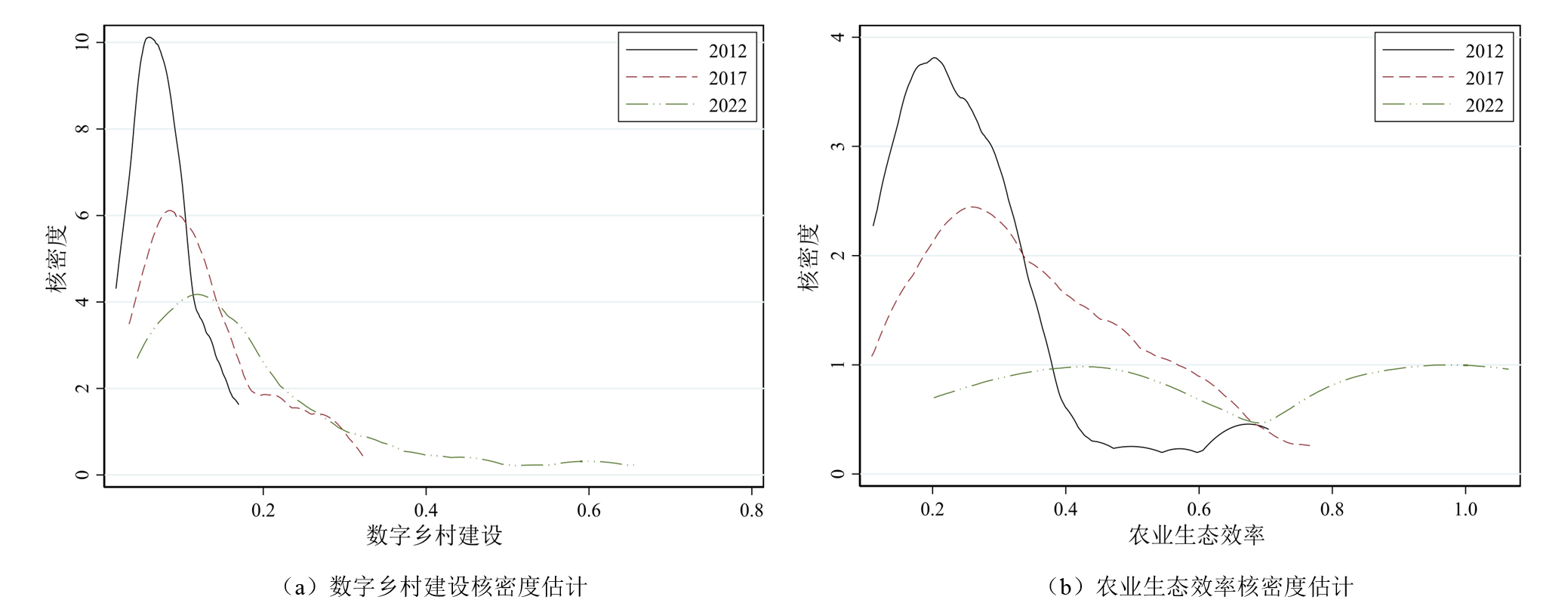
图2 2012-2022年中国数字乡村建设水平及农业生态效率核密度估计
Figure 2 Nuclear density estimation of China’s digital rural construction level and agricultural ecological efficiency from 2012 to 2022
| 变量 | 模型1 | 模型2 | 模型3 |
|---|---|---|---|
| 数字乡村建设 | 0.406*** | 0.470*** | 0.631*** |
| (0.138) | (0.130) | (0.122) | |
| 农业结构 | - | −0.457 | −0.737** |
| (0.303) | (0.315) | ||
| 第一产业增加值 | - | 1.063 | 1.652** |
| (0.728) | (0.702) | ||
| 技术水平 | - | 0.134** | 0.205*** |
| (0.060) | (0.059) | ||
| 城镇化 | - | - | 1.310** |
| (0.529) | |||
| 财政支农水平 | - | - | −0.052*** |
| (0.019) | |||
| 常数项 | 0.352*** | 0.453** | −0.268 |
| (0.021) | (0.218) | (0.454) | |
| 统计量 | 330 | 330 | 330 |
| 决定系数R2 | 0.853 | 0.858 | 0.872 |
| F | 8.63 | 6.15 | 12.99 |
表5 基准回归分析结果
Table 5 Results of benchmark regression analysis
| 变量 | 模型1 | 模型2 | 模型3 |
|---|---|---|---|
| 数字乡村建设 | 0.406*** | 0.470*** | 0.631*** |
| (0.138) | (0.130) | (0.122) | |
| 农业结构 | - | −0.457 | −0.737** |
| (0.303) | (0.315) | ||
| 第一产业增加值 | - | 1.063 | 1.652** |
| (0.728) | (0.702) | ||
| 技术水平 | - | 0.134** | 0.205*** |
| (0.060) | (0.059) | ||
| 城镇化 | - | - | 1.310** |
| (0.529) | |||
| 财政支农水平 | - | - | −0.052*** |
| (0.019) | |||
| 常数项 | 0.352*** | 0.453** | −0.268 |
| (0.021) | (0.218) | (0.454) | |
| 统计量 | 330 | 330 | 330 |
| 决定系数R2 | 0.853 | 0.858 | 0.872 |
| F | 8.63 | 6.15 | 12.99 |
| 变量 | (1) | (2) | (3) |
|---|---|---|---|
| 更换解释变量 | 剔除直辖市 | 剔除异常值 | |
| 数字乡村建设 | 0.288*** (0.093) | 0.666*** (0.138) | 0.668*** (0.136) |
| 农业结构 | −0.890*** | −1.298*** | −0.913*** |
| (0.286) | (0.359) | (0.343) | |
| 第一产业增加值 | −0.797 | 1.510** | 1.820** |
| (0.894) | (0.730) | (0.765) | |
| 技术水平 | 0.085 | 0.236*** | 0.207*** |
| (0.058) | (0.058) | (0.059) | |
| 城镇化 | 0.146 | 0.448 | 0.975 |
| (0.591) | (0.743) | (0.594) | |
| 财政支农水平 | −0.004 | 0.544* | −0.092*** |
| (0.017) | (0.286) | (0.029) | |
| 常数项 | 0.933* | 0.543 | 0.040 |
| (0.500) | (0.549) | (0.522) | |
| 省份固定效应 | 是 | 是 | 是 |
| 年份固定效应 | 是 | 是 | 是 |
| 决定系数R2 | 0.866 | 0.882 | 0.872 |
| F | 9.98 | 14.28 | 12.62 |
| 统计量 | 330 | 286 | 330 |
表6 稳健性检验
Table 6 Robustness tests
| 变量 | (1) | (2) | (3) |
|---|---|---|---|
| 更换解释变量 | 剔除直辖市 | 剔除异常值 | |
| 数字乡村建设 | 0.288*** (0.093) | 0.666*** (0.138) | 0.668*** (0.136) |
| 农业结构 | −0.890*** | −1.298*** | −0.913*** |
| (0.286) | (0.359) | (0.343) | |
| 第一产业增加值 | −0.797 | 1.510** | 1.820** |
| (0.894) | (0.730) | (0.765) | |
| 技术水平 | 0.085 | 0.236*** | 0.207*** |
| (0.058) | (0.058) | (0.059) | |
| 城镇化 | 0.146 | 0.448 | 0.975 |
| (0.591) | (0.743) | (0.594) | |
| 财政支农水平 | −0.004 | 0.544* | −0.092*** |
| (0.017) | (0.286) | (0.029) | |
| 常数项 | 0.933* | 0.543 | 0.040 |
| (0.500) | (0.549) | (0.522) | |
| 省份固定效应 | 是 | 是 | 是 |
| 年份固定效应 | 是 | 是 | 是 |
| 决定系数R2 | 0.866 | 0.882 | 0.872 |
| F | 9.98 | 14.28 | 12.62 |
| 统计量 | 330 | 286 | 330 |
| 变量 | 第一阶段 | 第二阶段 |
|---|---|---|
| 数字乡村建设 | - | 0.600** (0.251) |
| 滞后一期数字乡村建设 | 1.046*** (0.039) | - |
| 控制变量 | 是 | 是 |
| 省份固定效应 | 是 | 是 |
| 年份固定效应 | 是 | 是 |
| 不可识别检验 | - | Chi2=4.056,p=0.044 |
| 弱工具变量检验 | - | F=737.619,[16.38] |
| 统计量 | 300 | 300 |
表7 内生性检验
Table 7 Endogeneity tests
| 变量 | 第一阶段 | 第二阶段 |
|---|---|---|
| 数字乡村建设 | - | 0.600** (0.251) |
| 滞后一期数字乡村建设 | 1.046*** (0.039) | - |
| 控制变量 | 是 | 是 |
| 省份固定效应 | 是 | 是 |
| 年份固定效应 | 是 | 是 |
| 不可识别检验 | - | Chi2=4.056,p=0.044 |
| 弱工具变量检验 | - | F=737.619,[16.38] |
| 统计量 | 300 | 300 |
| 变量 | (1) | (2) | (3) |
|---|---|---|---|
| 农业生态效率 | 农业新质生产力 | 农业生态效率 | |
| 数字乡村建设 | 0.631*** | 0.274*** | 0.422*** |
| (0.122) | (0.036) | (0.157) | |
| 农业新质生产力 | - | - | 0.764** |
| (0.331) | |||
| 常数项 | −0.268 | 0.014 | −0.279 |
| (0.454) | (0.127) | (0.449) | |
| 省份固定效应 | 是 | 是 | 是 |
| 年份固定效应 | 是 | 是 | 是 |
| 决定系数R2 | 0.872 | 0.940 | 0.874 |
| 控制变量 | 是 | 是 | 是 |
| 统计量 | 330 | 330 | 330 |
表8 农业新质生产力中介检验结果
Table 8 Intermediate test results of new agricultural productive forces
| 变量 | (1) | (2) | (3) |
|---|---|---|---|
| 农业生态效率 | 农业新质生产力 | 农业生态效率 | |
| 数字乡村建设 | 0.631*** | 0.274*** | 0.422*** |
| (0.122) | (0.036) | (0.157) | |
| 农业新质生产力 | - | - | 0.764** |
| (0.331) | |||
| 常数项 | −0.268 | 0.014 | −0.279 |
| (0.454) | (0.127) | (0.449) | |
| 省份固定效应 | 是 | 是 | 是 |
| 年份固定效应 | 是 | 是 | 是 |
| 决定系数R2 | 0.872 | 0.940 | 0.874 |
| 控制变量 | 是 | 是 | 是 |
| 统计量 | 330 | 330 | 330 |
| 效应 | 系数 | 标准误 | p值 | 置信区间(95%) |
|---|---|---|---|---|
| 间接效应 | 0.209 | 0.103 | 0.042 | [0.008, 0.411] |
| 直接效应 | 0.422 | 0.165 | 0.011 | [0.099, 0.745] |
表9 Bootstrap检验结果
Table 9 Bootstrap test results
| 效应 | 系数 | 标准误 | p值 | 置信区间(95%) |
|---|---|---|---|---|
| 间接效应 | 0.209 | 0.103 | 0.042 | [0.008, 0.411] |
| 直接效应 | 0.422 | 0.165 | 0.011 | [0.099, 0.745] |
| 门槛个数 | p | BS次数 | 门槛值 | Trimming比例 | 置信区间(95%) |
|---|---|---|---|---|---|
| 单一门槛 | 0.04 | 300 | 0.043 | 0.01 | [0.039, 0.095] |
| 双重门槛 | 0.38 | 300 | 0.217 | 0.01 | [0.206, 0.225] |
表10 门槛值检验
Table 10 Threshold test
| 门槛个数 | p | BS次数 | 门槛值 | Trimming比例 | 置信区间(95%) |
|---|---|---|---|---|---|
| 单一门槛 | 0.04 | 300 | 0.043 | 0.01 | [0.039, 0.095] |
| 双重门槛 | 0.38 | 300 | 0.217 | 0.01 | [0.206, 0.225] |
| 变量 | (1)(Digv<0.043) | (2)(Digv≥0.043) | |||
|---|---|---|---|---|---|
| 系数 | 标准误 | 系数 | 标准误 | ||
| 数字乡村建设 | 2.067*** | 0.453 | 1.351*** | 0.197 | |
| 控制变量 | 是 | 是 | 是 | 是 | |
| 常数项 | −0.912** (0.41) | −0.912** (0.41) | |||
| 统计量 | 330 | 330 | 330 | 330 | |
表11 门槛回归
Table 11 Threshold regression
| 变量 | (1)(Digv<0.043) | (2)(Digv≥0.043) | |||
|---|---|---|---|---|---|
| 系数 | 标准误 | 系数 | 标准误 | ||
| 数字乡村建设 | 2.067*** | 0.453 | 1.351*** | 0.197 | |
| 控制变量 | 是 | 是 | 是 | 是 | |
| 常数项 | −0.912** (0.41) | −0.912** (0.41) | |||
| 统计量 | 330 | 330 | 330 | 330 | |
| 年份 | 系数 | 邻域 | 残差平方和 | 有效 数量 | 残差 估计标准差 | 修正后赤池信息量准则 | 决定系数 | 调整决定系数 |
|---|---|---|---|---|---|---|---|---|
| 2012- 2015 | 3.03 | 44 | 1.15 | 27.27 | 0.10 | −141.61 | 0.74 | 0.73 |
| 2016- 2019 | 1.82 | 46 | 1.01 | 26.30 | 0.09 | −160.52 | 0.74 | 0.73 |
| 2020- 2022 | 1.79 | 34 | 2.25 | 26.59 | 0.16 | 5.16 | 0.70 | 0.67 |
表12 GTWR模型参数估计及检验结果
Table 12 GTWR model parameter estimation and test results
| 年份 | 系数 | 邻域 | 残差平方和 | 有效 数量 | 残差 估计标准差 | 修正后赤池信息量准则 | 决定系数 | 调整决定系数 |
|---|---|---|---|---|---|---|---|---|
| 2012- 2015 | 3.03 | 44 | 1.15 | 27.27 | 0.10 | −141.61 | 0.74 | 0.73 |
| 2016- 2019 | 1.82 | 46 | 1.01 | 26.30 | 0.09 | −160.52 | 0.74 | 0.73 |
| 2020- 2022 | 1.79 | 34 | 2.25 | 26.59 | 0.16 | 5.16 | 0.70 | 0.67 |
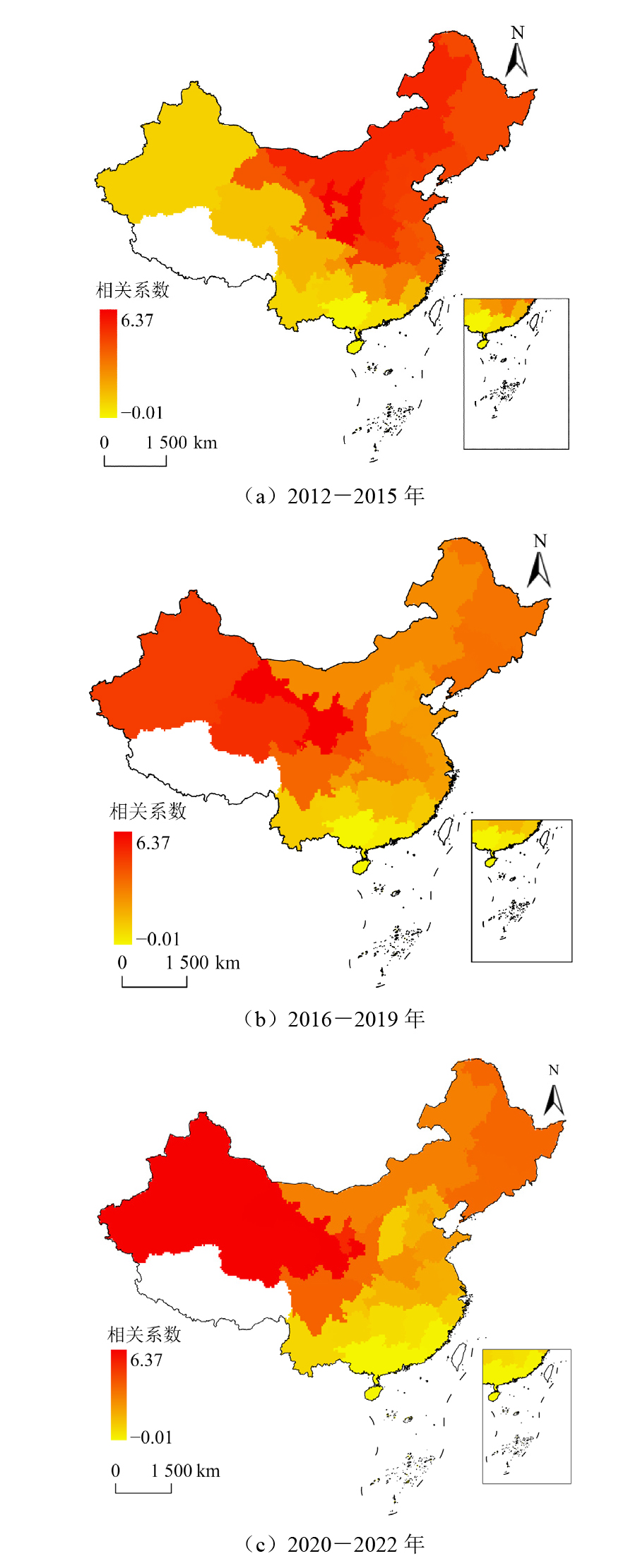
图3 GTWR模型回归系数空间分布 基于自然资源部标准地图服务网站的标准地图(审图号:GS(2024)0650号)制作;底图边界无修改
Figure 3 Spatial distribution of regression coefficients of GTWR model
| [1] |
Ren J, Chen X R, Gao T T, et al., 2023. New digital infrastructure's impact on agricultural eco-efficiency improvement: Influence mechanism and empirical test-evidence from China[J]. International Journal of Environmental Research and Public Health, 20(4): 3552-3552.
DOI URL |
| [2] | 阿里研究院, 2022. 2022年中国淘宝村研究报告[R/OL]. 2022-10-31. http://www.aliresearch.com/cn/activity/taobaoVillage. |
| Alibaba Research Institute, 2022. 2022 China taobao village research report[R/OL]. 2022-10-31. http://www.aliresearch.com/cn/activity/taobaoVillage. | |
| [3] | 陈阳, 穆怀中, 2022. 中国农业生态效率测算及影响因素研究[J]. 统计与决策, 38(23): 101-106. |
| Chen Y, Mu H Z, 2022. Measurement of agricultural ecological efficiency in China and research on its influencing factors[J]. Statistics and Decision, 38(23): 101-106. | |
| [4] | EPS数据平台, 2026. 中国农村经济数据库[DB/OL]. 北京: 北京搜知数据科技有限公司. [2026-04-24]. https://www.epsnet.com.cn/. |
| EPS Data Platform, 2026. China rural economic database[DB/OL]. Beijing: Beijing souzhi data technology co., ltd. [2026-04-24]. https://www.epsnet.com.cn/. | |
| [5] | 高鸣, 杜志雄, 2024. 深入推进数字乡村建设的趋势研判和路径优化[J]. 世界农业 (4): 17-26. |
| Gao M, Du Z X, 2024. Trend judgment and path optimization for in-depth promotion of digital rural construction[J]. World Agriculture (4): 17-26. | |
| [6] | 黄磊, 吴传清, 2019. 长江经济带城市工业绿色发展效率及其空间驱动机制研究[J]. 中国人口·资源与环境, 29(8): 40-49. |
| Huang L, Wu C Q, 2019. Study on the efficiency of urban industrial green development and its spatial driving mechanism in the Yangtze River Economic Belt[J]. China Population, Resources and Environment, 29(8): 40-49. | |
| [7] | 黄恒君, 王子源, 2024. 数字普惠金融对农业生态效率的影响——理论框架、机制分析与空间溢出效应[J]. 现代财经(天津财经大学学报), 44(1): 3-17. |
| Huang H J, Wang Z Y, 2024. Impact of digital inclusive finance on agricultural ecological efficiency: Theoretical framework, mechanism analysis and spatial spillover effect[J]. Modern Finance and Economics-Journal of Tianjin University of Finance and Economics, 44(1): 3-17. | |
| [8] | 胡平波, 刘金, 2025. 数字乡村发展提升农业生态效率的机理与实证检验[J]. 中国人口·资源与环境, 35(3): 162-173. |
| Hu P B, Liu J, 2025. Mechanism and empirical test of digital rural development improving agricultural ecological efficiency[J]. China Population, Resources and Environment, 35(3): 162-173. | |
| [9] | 黄惠春, 王雅婧, 2025. 数字乡村建设赋能农业新质生产力发展——基于马克思主义政治经济学视角[J]. 经济学家 (5): 109-118. |
| Huang H C, Wang Y J, 2025. Digital rural construction empowers the development of new-quality productive forces in agriculture: From the perspective of Marxist political economy[J]. Economist (5): 109-118. | |
| [10] | 金绍荣, 冯乐, 贾益鸣, 2025. 数字乡村建设对农民精神文明发展水平的影响研究[J]. 西南大学学报(自然科学版), 47(5): 2-15. |
| Jin S R, Feng L, Jia Y M, 2025. Research on the impact of digital rural construction on the development level of farmers' spiritual civilization[J]. Journal of Southwest University (Natural Science Edition), 47(5): 2-15. | |
| [11] | 蒯腊梅, 张毅, 2026. 数字经济对耕地利用生态效率的影响机制与空间溢出效应[J]. 云南农业大学学报(社会科学), 20(1): 45-55. |
| Kuai L M, Zhang Y, 2026. Impact mechanism and spatial spillover effects of digital economy on ecological efficiency of cultivated land utilization[J]. Journal of Yunnan Agricultural University (Social Science), 20(1): 45-55. | |
| [12] | 雷焕贵, 2023. 弥合城乡数字鸿沟: 乡村振兴进程中数字乡村建设实践路径研究[J]. 新视野 (6): 72-78. |
| Lei H G, 2023. Bridging the urban-rural digital divide: A study on practical approaches to digital village construction in rural revitalization[J]. Expanding Horizons (6): 72-78. | |
| [13] | 李文学, 马婧杰, 2024. 生态农业发展的价值意蕴、国际经验与路径指向[J]. 农业经济 (9): 11-14. |
| Li W X, Ma J J, 2024. Value implication, international experience and path direction of ecological agriculture development[J]. Agricultural Economy (9): 11-14. | |
| [14] | 李媛, 阮连杰, 2025. 中国数字乡村发展的测度、动态演进及驱动因素[J]. 统计与信息论坛, 40(1): 106-118. |
| Li Y, Ruan L J, 2025. Measurement, dynamic evolution and driving factors of digital rural development in China[J]. Journal of Statistics and Information, 40(1): 106-118. | |
| [15] |
林利平, 张悟移, 2025. 粮食主产区农业生态效率时空特征、驱动因素及提升路径[J]. 资源科学, 47(2): 402-416.
DOI |
| Lin L P, Zhang W Y, 2025. Spatiotemporal characteristics, driving factors and improvement paths of agricultural ecological efficiency in major grain-producing areas[J]. Resources Science, 47(2): 402-416. | |
| [16] | 刘颖, 徐少雄, 2025. 数字乡村发展赋能农业碳减排的空间效应与影响机制[J]. 环境科学, 46(10): 6198-6208. |
|
Liu Y, Xu S X, 2025. Spatial effect and influence mechanism of digital rural development empowering agricultural carbon emission reduction[J]. Environmental Science, 46(10): 6198-6208.
DOI URL |
|
| [17] | 罗明忠, 田齐月, 2025. 数字乡村建设、社会网络拓展与新型农村集体经济发展[J]. 农业经济与管理 (2): 23-37. |
| Luo M Z, Tian Q Y, 2025. Digital rural construction, social network expansion and development of new-type rural collective economy[J]. Agricultural Economics and Management (2): 23-37. | |
| [18] | 宁发金, 鲁茸拉木, 杜发春, 2024. 云南省县域农业生态效率时空分异及其影响因素[J]. 中国农业资源与区划, 45(2): 49-61. |
| Ning F J, Lu R L M, Du F C, 2024. Spatiotemporal differentiation and influencing factors of agricultural eco-efficiency at the county level in Yunnan Province[J]. Chinese Journal of Agricultural Resources and Regional Planning, 45(2): 49-61. | |
| [19] | 彭丽娜, 姜志德, 闫振宇, 等, 2024. 互联网发展水平对农业生态效率的影响[J]. 统计与决策, 40(18): 80-84. |
| Peng L N, Jiang Z D, Yan Z Y, et al., 2024. Impact of internet development level on agricultural ecological efficiency[J]. Statistics and Decision, 40(18): 80-84. | |
| [20] |
祁明星, 陈爽, 2023. 环维多利亚湖国家人口城市化与基础设施耦合协调关系研究[J]. 世界地理研究, 32(5): 34-45.
DOI |
| Qi M X, Chen S, 2023. Study on the coupled and coordinated relationship between population urbanization and infrastructure in Lake Victoria countries[J]. World Regional Studies, 32(5): 34-45. | |
| [21] | 任晓聪, 程思进, 2024. 数字乡村建设、农业技术进步与农民共同富裕[J]. 统计与决策, 40(19): 78-83. |
| Ren X C, Cheng S J, 2024. Digital rural construction, agricultural technological progress and farmers' common prosperity[J]. Statistics and Decision, 40(19): 78-83. | |
| [22] | 王宝义, 张卫国, 2018. 中国农业生态效率的省际差异和影响因素——基于1996-2015年31个省份的面板数据分析[J]. 中国农村经济 (1): 46-62. |
| Wang B Y, Zhang W G, 2018. Inter-provincial differences and influencing factors of agricultural ecological efficiency in China: Based on panel data analysis of 31 provinces from 1996 to 2015[J]. Chinese Rural Economy (1): 46-62. | |
| [23] | 王国峰, 钱子玉, 石瑞, 2023. 中国农业生态效率研究热点和趋势分析[J]. 中国农业资源与区划, 44(10): 20-31. |
| Wang G F, Qian Z Y, Shi R, 2023. Analysis of research hotspots and trends of agricultural ecological efficiency in China[J]. Chinese Journal of Agricultural Resources and Regional Planning, 44(10): 20-31. | |
| [24] | 王敬, 2024. 数字乡村发展推动农业高质量发展研究[J]. 管理学刊, 37(5): 146-158. |
| Wang J, 2024. Research on digital rural development promoting high-quality agricultural development[J]. Journal of Management, 37(5): 146-158. | |
| [25] | 王善高, 2025. 数字乡村建设对农村居民共同富裕的影响研究[J]. 统计与决策, 41(2): 48-53. |
| Wang S G, 2025. Research on the impact of digital rural construction on the common prosperity of rural residents[J]. Statistics and Decision, 41(2): 48-53. | |
| [26] | 王智鹏, 宋宇琴, 唐文艺, 等, 2025. 数字经济对农业生态效率的影响研究: 内在机理与实证检验[J]. 农业现代化研究, 46(5): 821-831. |
| Wang Z P, Song Y Q, Tang W Y, et al., 2025. Research on the impact of digital economy on agricultural ecological efficiency: Internal mechanism and empirical test[J]. Research of Agricultural Modernization, 46(5): 821-831. | |
| [27] | 邢文婷, 刘明珠, 2026. 减污降碳与新质生产力发展耦合协调效应时空演变格局及影响因素: 以长江经济带为例[J]. 环境科学, 47(2): 741-755. |
|
Xing W T, Liu M Z, 2026. Spatio temporal evolution pattern and influencing factors of coupled coordination effect between pollution reduction, carbon reduction and new-quality productive forces development: A case study of the Yangtze River Economic Belt[J]. Environmental Science, 47(2): 741-755.
DOI URL |
|
| [28] | 杨和平, 李红波, 2024. 农业新质生产力对耕地利用生态效率的影响——以长江经济带为例[J]. 中国土地科学, 38(11): 94-104. |
| Yang H P, Li H B, 2024. The influence of new agricultural productivity on ecological efficiency of cultivated land use: A case study of the Yangtze River Economic Belt[J]. China Land Science, 38(11): 94-104. | |
| [29] | 于松, 高建中, 2024. 中国数字乡村建设效率评价与影响因素分析[J]. 统计与决策, 40(14): 74-78. |
| Yu S, Gao J Z, 2024. Evaluation of digital rural construction efficiency and analysis of influencing factor in China[J]. Statistics and Decision, 40(14): 74-78. | |
| [30] | 张云光, 宋山梅, 伍国勇, 等, 2025. 数字乡村建设对农业面源污染的影响研究[J]. 中国生态农业学报(中英文), 33(10): 2029-2042. |
| Zhang Y G, Song S M, Wu G Y, et al., 2025. Research on the impact of digital rural construction on agricultural non-point source pollution[J]. Chinese Journal of Eco-Agriculture, 33(10): 2029-2042. | |
| [31] | 郑丽楠, 洪名勇, 2019. 中国农业生态效率的时空特征及驱动因素[J]. 江西财经大学学报 (5): 46-56. |
| Zheng L N, Hong M Y, 2019. Spatiotemporal characteristics and driving factors of agricultural ecological efficiency in China[J]. Journal of Jiangxi University of Finance and Economics (5): 46-56. | |
| [32] | 中央网络安全和信息化委员会办公室秘书局, 农业农村部办公厅, 国家发展和改革委员会办公厅, 等, 2024. 数字乡村建设指南2.0[EB/OL]. 北京: 中央网络安全和信息化委员会办公室. [2026-04-24]. https://www.cac.gov.cn/2024-05/15/c_1717449042791246.htm. |
| Secretariat of the Office of the Central Cyberspace Affairs Commission, General Office of the Ministry of Agriculture and Rural Affairs, General Office of the National Development and Reform Commission, et al., 2024. Guide to digital rural construction 2.0[EB/OL]. Beijing:Office of the central cyberspace affairs commission, [2026-04-24]. https://www.cac.gov.cn/2024-05/15/c_1717449042791246.htm. | |
| [33] | 周兵, 李艺, 张弓, 2023. 数字乡村建设赋能乡村振兴的影响机制与空间效应[J]. 中国流通经济, 37(7): 3-16. |
| Zhou B, LI Y, Zhang G, 2023. Influence mechanism and spatial effect of digital rural construction empowering rural revitalization[J]. China Business and Market, 37(7): 3-16. | |
| [34] | 朱迪, 叶林祥, 2024. 中国农业新质生产力: 水平测度与动态演变[J]. 统计与决策, 40(9): 24-30. |
| Zhu D, Ye L X, 2024. New-quality productive forces in Chinese agriculture: Level measurement and dynamicevolution[J]. Statistics and Decision, 40(9): 24-30. |
| [1] | 张任菲, 肖萌, 刘志成. 京津冀地区景观破碎化的时空异质性及驱动因素研究[J]. 生态环境学报, 2025, 34(3): 461-473. |
| [2] | 郑晓豪, 陈颖彪, 郑子豪, 郭城, 黄卓男, 周泳诗. 湖北省生态系统服务价值动态变化及其影响因素演变[J]. 生态环境学报, 2023, 32(1): 195-206. |
| [3] | 赵锐, 詹梨苹, 周亮, 张军科. 地理探测联合地理加权岭回归的PM2.5驱动因素分析[J]. 生态环境学报, 2022, 31(2): 307-317. |
| 阅读次数 | ||||||
|
全文 |
|
|||||
|
摘要 |
|
|||||
