
生态环境学报 ›› 2025, Vol. 34 ›› Issue (12): 1879-1889.DOI: 10.16258/j.cnki.1674-5906.2025.12.005
颜营林1( ), 李少辉1, 王邵军1,2,*(), 曹子林1, 曹乾斌1, 左倩倩1, 陈闽昆1
收稿日期:2025-03-18
出版日期:2025-12-18
发布日期:2025-12-10
通讯作者:
*E-mail:shaojunwang2009@163.com
作者简介:颜营林(2001年生),男,硕士研究生,主要研究方向为土壤生态学。E-mail: 1765133055@qq.com
基金资助:
YAN Yinglin1(), LI Shaohui1, WANG Shaojun1,2,*(), CAO Zilin1, CAO Qianbin1, ZUO Qianqian1, CHEN Minkun1
Received:2025-03-18
Online:2025-12-18
Published:2025-12-10
摘要: 硝化作用是调控森林土壤氮素转变的关键微生物过程,并能产生氧化亚氮(N2O)而影响全球气候变化进程。为探明土壤硝化N2O排放动态对森林恢复的响应,选择西双版纳不同恢复阶段热带森林(初期的白背桐群落、中期的崖豆藤群落、后期的高檐蒲桃群落)为研究对象,采用“乙炔抑制土壤硝化作用”的室内连续培养方法,研究热带森林恢复过程中土壤硝化N2O排放速率的干湿季和沿土层的变化动态及其与环境因子的关系。结果表明,1)热带森林恢复促进了土壤硝化的N2O排放(p<0.01)。土壤硝化N2O排放速率(以N计,下同)的大小顺序为:恢复后期[(90.8±2.2)μg∙kg−1∙h−1]>中期[(87.7±2.3)μg∙kg−1∙h−1]>初期[(57.5±2.5)μg∙kg−1∙h−1]。2)不同恢复阶段热带森林土壤硝化N2O排放速率均表现为:雨季[(120.9±2.7)μg∙kg−1∙h−1]>干季[(69.8±1.5)μg∙kg−1∙h−1],其中,恢复中期土壤硝化N2O排放速率季节变幅最大,变异系数为48.3%。3)不同恢复阶段热带森林土壤硝化的N2O排放速率均沿土层加深而降低,其中,恢复后期变幅最大,且0-5 cm土层硝化N2O排放均占0-15 cm土层的50.0%以上。4)土壤理化性质变化显著影响硝化N2O排放。其中,土壤温度与水分变化分别解释硝化N2O排放的52.0%-58.2%和60.7%-71.4%;相关性分析表明,硝化N2O排放与土壤铵态氮呈极显著正相关,与土壤有机碳、微生物生物量碳、全氮、pH显著正相关,而与土壤容重呈显著负相关;结构方程结果显示,土壤氮组分、碳组分、容重分别解释了67.3%、53.4%和41.7%的通量变化。因此,热带森林恢复主要通过介导土壤氮组分特别是铵态氮含量变化而调控硝化N2O的排放。
中图分类号:
颜营林, 李少辉, 王邵军, 曹子林, 曹乾斌, 左倩倩, 陈闽昆. 土壤硝化N2O排放时空动态对退化热带森林恢复的响应[J]. 生态环境学报, 2025, 34(12): 1879-1889.
YAN Yinglin, LI Shaohui, WANG Shaojun, CAO Zilin, CAO Qianbin, ZUO Qianqian, CHEN Minkun. Response of Spatiotemporal Variation in Soil N2O Emissions from Nitrification to the Restoration of Degraded Tropical Forests[J]. Ecology and Environmental Sciences, 2025, 34(12): 1879-1889.
| 土壤性质 | 土层 深度/cm | 白背桐群落 | 崖豆藤群落 | 高檐蒲桃群落 | |||||
|---|---|---|---|---|---|---|---|---|---|
| 干季 | 湿季 | 干季 | 湿季 | 干季 | 湿季 | ||||
| 土壤有机碳质量分数/ (g·kg−1) | 0-5 | 36.61 | 40.54 | 36.37 | 41.68 | 37.73 | 45.19 | ||
| 5-10 | 31.95 | 40.25 | 33.69 | 39.32 | 34.59 | 40.50 | |||
| 10-15 | 31.78 | 36.49 | 32.70 | 38.55 | 32.68 | 39.39 | |||
| 易氧化有机碳质量分数/ (g·kg−1) | 0-5 | 6.37 | 11.25 | 6.71 | 11.14 | 7.37 | 11.78 | ||
| 5-10 | 6.74 | 10.53 | 6.55 | 10.57 | 7.21 | 10.77 | |||
| 10-15 | 6.91 | 9.87 | 6.05 | 10.39 | 7.85 | 10.14 | |||
| 微生物生物量碳质量分数/(g·kg−1) | 0-5 | 1.14 | 3.03 | 2.02 | 3.76 | 2.17 | 4.55 | ||
| 5-10 | 1.08 | 2.54 | 1.76 | 3.38 | 1.93 | 3.64 | |||
| 10-15 | 0.93 | 2.32 | 1.54 | 2.46 | 1.70 | 3.15 | |||
| 全氮质量 分数/(g·kg−1) | 0-5 | 0.78 | 1.38 | 0.80 | 1.16 | 0.79 | 1.50 | ||
| 5-10 | 0.71 | 1.50 | 0.82 | 1.37 | 0.76 | 1.45 | |||
| 10-15 | 0.78 | 1.03 | 0.65 | 1.35 | 0.77 | 1.15 | |||
| 铵态氮质量分数/ (mg·kg−1) | 0-5 | 10.31 | 10.73 | 10.61 | 10.12 | 10.39 | 9.47 | ||
| 5-10 | 10.97 | 11.12 | 9.64 | 8.48 | 11.16 | 10.26 | |||
| 10-15 | 9.89 | 9.76 | 10.90 | 10.99 | 9.86 | 10.24 | |||
| 硝态氮质量分数/ (mg·kg−1) | 0-5 | 1.48 | 2.21 | 1.77 | 2.32 | 1.48 | 2.80 | ||
| 5-10 | 1.39 | 2.35 | 1.42 | 2.33 | 1.61 | 2.12 | |||
| 10-15 | 1.42 | 2.38 | 1.25 | 2.37 | 1.22 | 2.12 | |||
| 水解氮质量分数/ (mg·kg−1) | 0-5 | 110.53 | 109.11 | 69.51 | 117.18 | 103.88 | 117.04 | ||
| 5-10 | 50.26 | 81.2 | 48.58 | 81.76 | 93.45 | 84.07 | |||
| 10-15 | 103.04 | 63.71 | 231.63 | 84.00 | 99.96 | 76.44 | |||
| pH | 0-5 | 3.95 | 3.73 | 3.86 | 3.68 | 3.86 | 3.69 | ||
| 5-10 | 3.97 | 3.72 | 3.87 | 3.74 | 3.93 | 3.69 | |||
| 10-15 | 3.95 | 3.70 | 3.94 | 3.70 | 3.93 | 3.66 | |||
| 容重/(g·cm−3) | 0-5 | 1.31 | 1.23 | 1.33 | 1.20 | 1.30 | 1.18 | ||
| 5-10 | 1.36 | 1.25 | 1.42 | 1.14 | 1.30 | 1.22 | |||
| 10-15 | 1.28 | 1.24 | 1.40 | 1.20 | 1.30 | 1.23 | |||
| 温度/ ℃ | 0-5 | 18.88 | 25.84 | 19.16 | 26.54 | 18.91 | 27.60 | ||
| 5-10 | 19.19 | 25.76 | 19.34 | 25.49 | 20.64 | 27.42 | |||
| 10-15 | 19.37 | 25.34 | 19.52 | 25.24 | 20.43 | 26.92 | |||
| 含水率/ % | 0-5 | 15.98 | 31.79 | 20.43 | 31.88 | 18.33 | 33.54 | ||
| 5-10 | 15.24 | 29.82 | 20.38 | 28.80 | 18.23 | 29.94 | |||
| 10-15 | 11.84 | 27.78 | 18.82 | 27.34 | 17.90 | 26.64 | |||
表1 不同恢复阶段热带森林群落土壤理化特征
Table 1 Soil physicochemical properties along tropical forest restoration
| 土壤性质 | 土层 深度/cm | 白背桐群落 | 崖豆藤群落 | 高檐蒲桃群落 | |||||
|---|---|---|---|---|---|---|---|---|---|
| 干季 | 湿季 | 干季 | 湿季 | 干季 | 湿季 | ||||
| 土壤有机碳质量分数/ (g·kg−1) | 0-5 | 36.61 | 40.54 | 36.37 | 41.68 | 37.73 | 45.19 | ||
| 5-10 | 31.95 | 40.25 | 33.69 | 39.32 | 34.59 | 40.50 | |||
| 10-15 | 31.78 | 36.49 | 32.70 | 38.55 | 32.68 | 39.39 | |||
| 易氧化有机碳质量分数/ (g·kg−1) | 0-5 | 6.37 | 11.25 | 6.71 | 11.14 | 7.37 | 11.78 | ||
| 5-10 | 6.74 | 10.53 | 6.55 | 10.57 | 7.21 | 10.77 | |||
| 10-15 | 6.91 | 9.87 | 6.05 | 10.39 | 7.85 | 10.14 | |||
| 微生物生物量碳质量分数/(g·kg−1) | 0-5 | 1.14 | 3.03 | 2.02 | 3.76 | 2.17 | 4.55 | ||
| 5-10 | 1.08 | 2.54 | 1.76 | 3.38 | 1.93 | 3.64 | |||
| 10-15 | 0.93 | 2.32 | 1.54 | 2.46 | 1.70 | 3.15 | |||
| 全氮质量 分数/(g·kg−1) | 0-5 | 0.78 | 1.38 | 0.80 | 1.16 | 0.79 | 1.50 | ||
| 5-10 | 0.71 | 1.50 | 0.82 | 1.37 | 0.76 | 1.45 | |||
| 10-15 | 0.78 | 1.03 | 0.65 | 1.35 | 0.77 | 1.15 | |||
| 铵态氮质量分数/ (mg·kg−1) | 0-5 | 10.31 | 10.73 | 10.61 | 10.12 | 10.39 | 9.47 | ||
| 5-10 | 10.97 | 11.12 | 9.64 | 8.48 | 11.16 | 10.26 | |||
| 10-15 | 9.89 | 9.76 | 10.90 | 10.99 | 9.86 | 10.24 | |||
| 硝态氮质量分数/ (mg·kg−1) | 0-5 | 1.48 | 2.21 | 1.77 | 2.32 | 1.48 | 2.80 | ||
| 5-10 | 1.39 | 2.35 | 1.42 | 2.33 | 1.61 | 2.12 | |||
| 10-15 | 1.42 | 2.38 | 1.25 | 2.37 | 1.22 | 2.12 | |||
| 水解氮质量分数/ (mg·kg−1) | 0-5 | 110.53 | 109.11 | 69.51 | 117.18 | 103.88 | 117.04 | ||
| 5-10 | 50.26 | 81.2 | 48.58 | 81.76 | 93.45 | 84.07 | |||
| 10-15 | 103.04 | 63.71 | 231.63 | 84.00 | 99.96 | 76.44 | |||
| pH | 0-5 | 3.95 | 3.73 | 3.86 | 3.68 | 3.86 | 3.69 | ||
| 5-10 | 3.97 | 3.72 | 3.87 | 3.74 | 3.93 | 3.69 | |||
| 10-15 | 3.95 | 3.70 | 3.94 | 3.70 | 3.93 | 3.66 | |||
| 容重/(g·cm−3) | 0-5 | 1.31 | 1.23 | 1.33 | 1.20 | 1.30 | 1.18 | ||
| 5-10 | 1.36 | 1.25 | 1.42 | 1.14 | 1.30 | 1.22 | |||
| 10-15 | 1.28 | 1.24 | 1.40 | 1.20 | 1.30 | 1.23 | |||
| 温度/ ℃ | 0-5 | 18.88 | 25.84 | 19.16 | 26.54 | 18.91 | 27.60 | ||
| 5-10 | 19.19 | 25.76 | 19.34 | 25.49 | 20.64 | 27.42 | |||
| 10-15 | 19.37 | 25.34 | 19.52 | 25.24 | 20.43 | 26.92 | |||
| 含水率/ % | 0-5 | 15.98 | 31.79 | 20.43 | 31.88 | 18.33 | 33.54 | ||
| 5-10 | 15.24 | 29.82 | 20.38 | 28.80 | 18.23 | 29.94 | |||
| 10-15 | 11.84 | 27.78 | 18.82 | 27.34 | 17.90 | 26.64 | |||
| 土层深度/ cm | N2O排放速率/(μg∙kg−1∙h−1) | |||||||
|---|---|---|---|---|---|---|---|---|
| 白背桐 | 崖豆藤 | 高檐蒲桃 | ||||||
| 干季 | 雨季 | 干季 | 雨季 | 干季 | 雨季 | |||
| 0-5 | 95.52± 8.65 | 281.95± 20.05 | 132.89± 4.56 | 387.54± 11.17 | 152.32± 9.56 | 419.66±18.07 | ||
| 5-10 | 54.05± 5.51 | 108.35± 9.66 | 77.62± 9.85 | 139.93± 16.42 | 82.42± 2.97 | 141.98±5.56 | ||
| 10-15 | 37.65± 3.68 | 56.40± 6.09 | 46.42± 3.14 | 68.72± 6.24 | 51.65± 5.74 | 78.06± 6.60 | ||
表2 不同恢复阶段热带森林土壤硝化N2O排放的时空动态
Table 2 Spatiotemporal dynamics of soil nitrification N2O emissions along tropical forest restoration
| 土层深度/ cm | N2O排放速率/(μg∙kg−1∙h−1) | |||||||
|---|---|---|---|---|---|---|---|---|
| 白背桐 | 崖豆藤 | 高檐蒲桃 | ||||||
| 干季 | 雨季 | 干季 | 雨季 | 干季 | 雨季 | |||
| 0-5 | 95.52± 8.65 | 281.95± 20.05 | 132.89± 4.56 | 387.54± 11.17 | 152.32± 9.56 | 419.66±18.07 | ||
| 5-10 | 54.05± 5.51 | 108.35± 9.66 | 77.62± 9.85 | 139.93± 16.42 | 82.42± 2.97 | 141.98±5.56 | ||
| 10-15 | 37.65± 3.68 | 56.40± 6.09 | 46.42± 3.14 | 68.72± 6.24 | 51.65± 5.74 | 78.06± 6.60 | ||
| 处理 | df | F | p |
|---|---|---|---|
| 恢复阶段 | 2 | 89 | 0.010 |
| 土层 | 2 | 148 | 0.006 |
| 季节 | 1 | 3793 | 0.000 |
| 恢复阶段×土层 | 4 | 28 | 0.017 |
| 恢复阶段×季节 | 2 | 362 | 0.000 |
| 土层×季节 | 2 | 138 | 0.001 |
| 恢复阶段×土层×季节 | 4 | 187 | 0.004 |
表3 恢复阶段、季节、土层对土壤硝化N2O排放速率影响的三因素方差分析
Table 3 Three-way ANOVAs showing the effect of restoration stage, season and sample layer on soil nitrification N2O emission rate
| 处理 | df | F | p |
|---|---|---|---|
| 恢复阶段 | 2 | 89 | 0.010 |
| 土层 | 2 | 148 | 0.006 |
| 季节 | 1 | 3793 | 0.000 |
| 恢复阶段×土层 | 4 | 28 | 0.017 |
| 恢复阶段×季节 | 2 | 362 | 0.000 |
| 土层×季节 | 2 | 138 | 0.001 |
| 恢复阶段×土层×季节 | 4 | 187 | 0.004 |

图1 不同恢复阶段热带森林土壤温度和含水率与硝化N2O排放速率的关系
Figure 1 Relationships between nitrification N2O emission rates and soil temperature and water content during tropical forest restoration
| 森林类型 | 硝化N2O排放速率:R=a+b×t+c×w+d×t×w | R2 | p |
|---|---|---|---|
| 白背桐群落 | R=346.995−1.520×t−171.412×w+ 6.426×t×w | 0.748 | <0.01 |
| 崖豆藤群落 | R=2108.513−83.486×t−273.485×w+ 11.508×t×w | 0.890 | <0.01 |
| 高檐蒲桃群落 | R=945.270−35.923×t−168.671×w+ 7.258×t×w | 0.894 | <0.01 |
表4 不同恢复阶段热带森林硝化N2O排放与土壤温湿度的复合关系
Table 4 Compositive relationship of soil temperature and water content with nitrification N2O emission rates during tropical forest restoration
| 森林类型 | 硝化N2O排放速率:R=a+b×t+c×w+d×t×w | R2 | p |
|---|---|---|---|
| 白背桐群落 | R=346.995−1.520×t−171.412×w+ 6.426×t×w | 0.748 | <0.01 |
| 崖豆藤群落 | R=2108.513−83.486×t−273.485×w+ 11.508×t×w | 0.890 | <0.01 |
| 高檐蒲桃群落 | R=945.270−35.923×t−168.671×w+ 7.258×t×w | 0.894 | <0.01 |
| 指标 | 土壤硝化N2O排放速率(R) | 土壤有机碳 (SOC) 质量分数 | 易氧化有机碳(EOC) 质量分数 | 微生物量碳 (MBC) 质量分数 | 全氮(TN) 质量分数 | 水解氮(HN)质量分数 | 硝态氮(NO3−-N) 质量分数 | 铵态氮 (NH4+-N) 质量分数 | pH | 容重 (BD) |
|---|---|---|---|---|---|---|---|---|---|---|
| R | 1 | |||||||||
| SOC质量分数 | 0.582* 1) | 1 | ||||||||
| EOC质量分数 | 0.481 | 0.896** | 1 | |||||||
| MBC质量分数 | 0.646* | 0.817** | 0.845** | 1 | ||||||
| TN质量分数 | 0.543* | 0.848** | 0.871** | 0.737** | 1 | |||||
| HN质量分数 | 0.490 | 0.752** | 0.723** | 0.469 | 0.692* | 1 | ||||
| NO3−-N质量分数 | 0.460 | 0.833** | 0.818** | 0.582* | 0.833** | 0.876** | 1 | |||
| NH4+-N质量分数 | 0.822** 2) | 0.789** | 0,765** | 0.517 | 0.752** | 0.896** | 0.891** | 1 | ||
| pH | 0.541* | 0.510 | 0.490 | 0.547* | 0.789** | 0.889** | 0.897** | 0.898** | 1 | |
| BD | −0.589* | 0.383 | 0.408 | 0.435 | 0.157 | 0.023 | 0.065 | 0.040 | 0.051 | 1 |
表5 土壤硝化N2O排放速率与土壤理化性质的相关系数
Table 5 Correlation coefficients of soil nitrification N2O emission rate with soil physicochemical properties
| 指标 | 土壤硝化N2O排放速率(R) | 土壤有机碳 (SOC) 质量分数 | 易氧化有机碳(EOC) 质量分数 | 微生物量碳 (MBC) 质量分数 | 全氮(TN) 质量分数 | 水解氮(HN)质量分数 | 硝态氮(NO3−-N) 质量分数 | 铵态氮 (NH4+-N) 质量分数 | pH | 容重 (BD) |
|---|---|---|---|---|---|---|---|---|---|---|
| R | 1 | |||||||||
| SOC质量分数 | 0.582* 1) | 1 | ||||||||
| EOC质量分数 | 0.481 | 0.896** | 1 | |||||||
| MBC质量分数 | 0.646* | 0.817** | 0.845** | 1 | ||||||
| TN质量分数 | 0.543* | 0.848** | 0.871** | 0.737** | 1 | |||||
| HN质量分数 | 0.490 | 0.752** | 0.723** | 0.469 | 0.692* | 1 | ||||
| NO3−-N质量分数 | 0.460 | 0.833** | 0.818** | 0.582* | 0.833** | 0.876** | 1 | |||
| NH4+-N质量分数 | 0.822** 2) | 0.789** | 0,765** | 0.517 | 0.752** | 0.896** | 0.891** | 1 | ||
| pH | 0.541* | 0.510 | 0.490 | 0.547* | 0.789** | 0.889** | 0.897** | 0.898** | 1 | |
| BD | −0.589* | 0.383 | 0.408 | 0.435 | 0.157 | 0.023 | 0.065 | 0.040 | 0.051 | 1 |
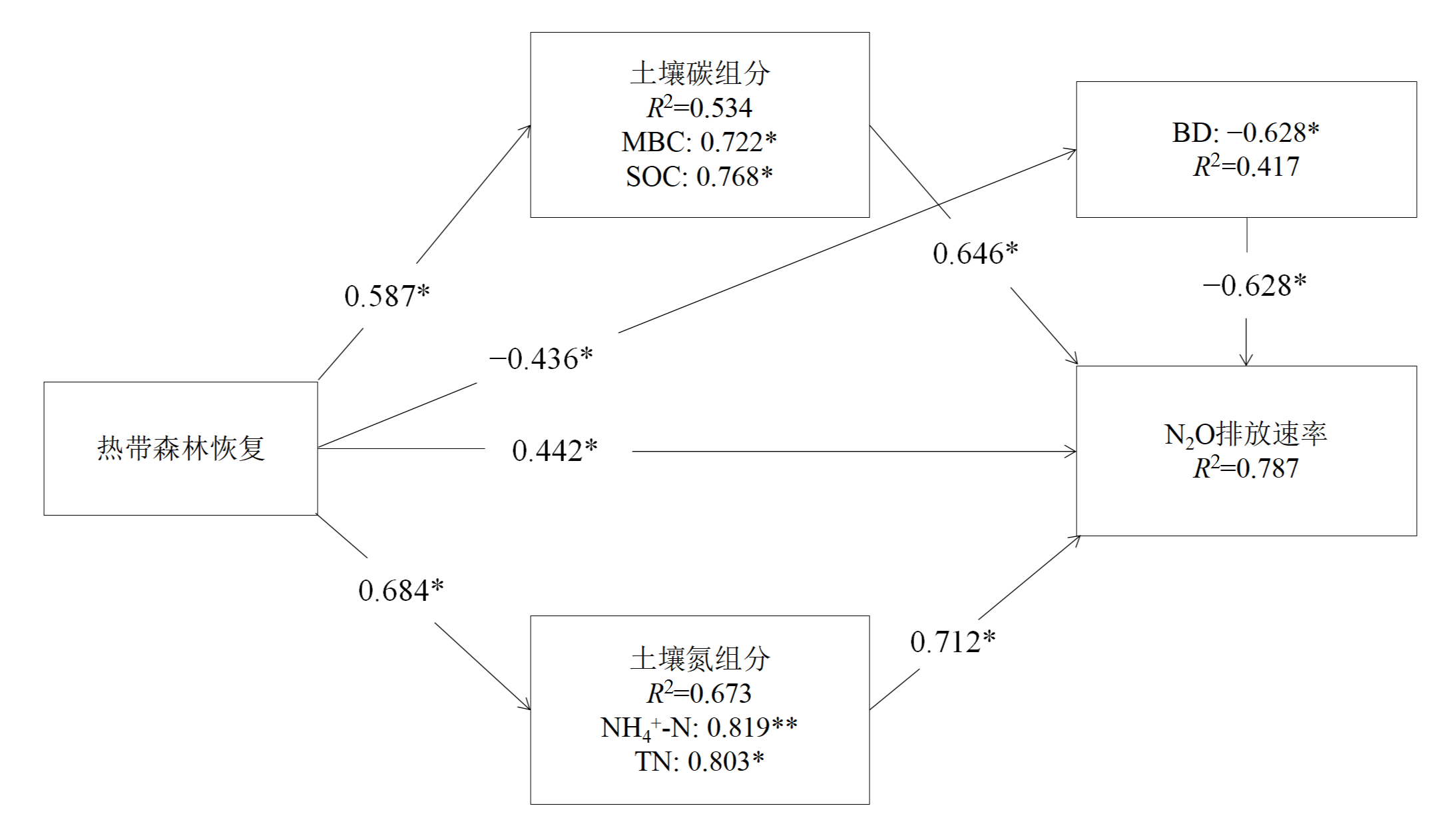
图2 土壤理化性质对N2O排放通量影响的结构方程分析 **表示p<0.01极显著水平;*表示p<0.05显著水平
Figure 2 Structural equation analysis showing the effect of soil physicochemical properties on N2O emissions from nitrification
| [1] | BREUER L, KIESE R, BUTTERBACH-BAHL K, 2002. Temperature and moisture effects on nitrification rates in tropical rain forest soils[J]. Soil Science Society of America Journal, 66(3): 399-402. |
| [2] |
DALIAS P, ANDERSON J M, BOTTNER P, et al., 2002. Temperature responses of net nitrogen mineralization and nitrification in conifer forest soils incubated under standard laboratory conditions[J]. Soil Biology and Biochemistry, 34(5): 691-701.
DOI URL |
| [3] |
GEISSELER D, SCOW K M, 2014. Long-term effects of mineral fertilizers on soil microorganisms: A review[J]. Soil Biology and Biochemistry, 75: 54-63.
DOI URL |
| [4] |
HANKINSON T R, SCHMIDT E L, 1988. An acidophilic and a neutrophilic nitrobacter strain isolated from the numerically predominant nitrite-oxidizing population of an Acid forest soil[J]. Applied and Environmental Microbiology, 54(6): 1536-1540.
DOI PMID |
| [5] |
HE J Z, SHEN J P, ZHANG L M, et al., 2007. Quantitative analyses of the abundance and composition of ammonia-oxidizing bacteria and ammonia-oxidizing archaea of a Chinese upland red soil under long-term fertilization practices[J]. Environmental Microbiology, 9(9): 2364-2374.
DOI URL |
| [6] |
IHARA H, KATO N, TAKAHASHI S, et al., 2014. Effect of soil solarization on subsequent nitrification activity at elevated temperatures[J]. Soil Science and Plant Nutrition, 60(6): 824-831.
DOI URL |
| [7] |
INGWERSEN J, BUTTERBACH-BAHL K, GASEHE R, et al., 1999. Barometric process separation: New method for quantifying nitrification, denitrification, and nitrous oxide sources in soils[J]. Soil Science Society of America Journal, 63(1): 117-128.
DOI URL |
| [8] |
JORDAN C, CASKEY W, ESCALANTE G, et al., 1983. Nitrogen dynamics during conversion of primary Amazonian rain forest to slash and burn agriculture[J]. Oikos, 40(1): 131-139.
DOI URL |
| [9] |
KILLHAM K, 1990. Nitrification in coniferous forest soils. Proceedings of a workshop on nitrogen saturation in forest ecosystems[J]. Plant and Soil, 128(1): 31-44.
DOI URL |
| [10] |
LINN D M, DORAN J, 1984. Effect of water-filled pore space on carbon dioxide and nitrous oxide production in tilled and non-tilled soils[J]. Soil Science Society of America Journal, 48(6): 1267-1272.
DOI URL |
| [11] |
MARTENS-HABBENA W, BERUBE P M, URAKAWA H, et al., 2009. Ammonia oxidation kinetics determine niche separation of nitrifying Archaea and Bacteria[J]. Nature, 461: 976-979.
DOI |
| [12] |
MARTIKAINEN P J, DEBOER W, 1993. Nitrous oxide production and nitrification in acidic soil from a Dutch coniferous forest[J]. Soil Biology and Biochemistry, 25(3): 343-347.
DOI URL |
| [13] |
MATSON P A, VITOUSEK P M, EWELL J J, 1987. Nitrogen transformations following tropical forest felling and burning on a volcanic soil[J]. Ecology, 68(3): 491-502.
DOI URL |
| [14] |
NUGROHO R A, RÖLING W F M, LAVERMAN A M, et al., 2005. Presence of Nitrosospira cluster 2 bacteria corresponds to N transformation rates in nine acid Scots pine forest soils[J]. FEMS Microbiology Ecology, 53(3): 473-481.
PMID |
| [15] |
PINAY G, ROQUES L, FABRE A, 1993. Spatial and temporal patterns of denitrification in a riparian forest[J]. Applied Ecology, 30(4): 581-591.
DOI URL |
| [16] |
SAID-PULLICINO D, CUCU M A, SODANO M, et al., 2014. Nitrogen immobilization in paddy soils as affected by redox conditions and rice straw incorporation[J]. Geoderma, 228-229: 44-53.
DOI URL |
| [17] |
SKIBA U, SMITH K A, FOWLER D, 1993. Nitrification and denitrification as sources of nitric oxide and nitrous oxide in sandy loam soil[J]. Soil Biology and Biochemistry, 25(11): 1527-1536.
DOI URL |
| [18] |
SKOPP J, JAWSON M D, DORAN J W, 1990. Steady-state aerobic microbial activity as a function of soil water content[J]. Soil Science Society of America Journal, 54(6): 1619-1625.
DOI URL |
| [19] |
SZUKICS U, ABELL G C J, HÖDL V, et al., 2010. Nitrifiers and denitrifiers respond rapidly to changed moisture and increasing temperature in a pristine forest soil[J]. FEMS Microbiology Ecology, 72(3): 395-406.
DOI PMID |
| [20] | ZHU W X, EHRENFELD J G, 1999. Nitrogen mineralization and nitrification in suburban and undeveloped Atlantic white cedar wetlands[J]. Journal of Environmental Quality, 28(2): 523-529. |
| [21] | 蔡祖聪, 赵维, 2009. 土地利用方式对湿润亚热带土壤硝化作用的影响[J]. 土壤学报, 46(5): 795-801. |
| CAI Z C, ZHAO W, 2009. Effects of land use types on nitrification in humid subtropical soils of China[J]. Acta Pedologica Sinca, 46(5): 795-801. | |
| [22] | 曹文超, 王娅静, 李艳青, 等, 2024. 乙炔抑制法对农田土壤反硝化潜势不确定性的量化[J]. 中国环境科学, 44(10): 5733-5742. |
| CAO W C, WANG Y J, LI Y Q, et al., 2024. Quantifying the uncertainty of farmland soil actual denitrification potential as determined by the acetylene inhibition method[J]. China Environmental Science, 44(10): 5733-5742. | |
| [23] | 曹广民, 李英年, 张金霞, 等, 2001. 高寒草甸不同土地利用格局土壤CO2的释放量[J]. 环境科学, 22(6): 14-19. |
| CAO G M, LI Y N, ZHANG J X, et al., 2001. Values of carbon dioxide emission from different land-use patterns of alpine meadow[J]. Environmental Science, 22(6): 14-19. | |
| [24] | 陈思扬, 李晴, 孔凡靖, 等, 2023. 沼液还田对土壤NO3--N累积影响的整合分析[J]. 中国环境科学, 43(S1): 179-185. |
| CHEN S Y, LI Q, KONG F J, et al., 2023. Integrated analysis of effects of livestock and poultry manure biogas slurry returning to fields on soil NO3--N accumulation[J]. China Environmental Science, 43(S1): 179-185. | |
| [25] | 德吉卓玛, 曾科, 尹斌, 等, 2024. 尿素穴施削减麦田NH3挥发、NO和N2O排放[J]. 中国土壤与肥料, 51(6): 18-26. |
| DROMA, ZENG K, YIN B, et al., 2024. Eliminating NH3, NO and N2O emissions simultaneously in a wheat field by urea point placement[J]. Soils and Fertilizers Sciences in China, 51(6): 18-26. | |
| [26] | 付志高, 肖以华, 许涵, 等, 2024. 南亚热带常绿阔叶林土壤微生物生物量碳氮年际动态特征及其影响因子[J]. 生态学报, 44(3): 1092-1103. |
| FU Z G, XIAO Y H, XU H, et al., 2024. Inter-annual dynamics of soil microbial biomass carbon and nitrogen in subtropical evergreen broad-leaved forest and its environmental impact factors[J]. Acta Ecologica Sinica, 44(3): 1092-1103. | |
| [27] | 高文栋, 钟圣赟, 刘伟丰, 等, 2014. 吊罗山青皮林土壤硝化-反硝化作用及其影响因素[J]. 林业资源管理, 36(5): 69-73. |
| GAO W D, ZHONG S Y, LIU W F, et al., 2014. The Intensity of soil nitrification-denitrification and its influence factors in Diaoluoshan Vatica mangachapoi Forest[J]. Forest Resources Management, 36(5): 69-73. | |
| [28] |
葛晓敏, 陈水飞, 周旭, 等, 2019. 武夷山中亚热带常绿阔叶林土壤氮矿化的季节动态[J]. 生态环境学报, 28(7): 1351-1360.
DOI |
| GE X M, CHEN S F, ZHOU X, et al., 2019. Seasonal dynamics of soil nitrogen mineralization in a mid-subtropical evergreen broad-leaved forest in Wuyi mountains, Fujian Province, China[J]. Ecology and Environmental Sciences, 28(7): 1351-1360. | |
| [29] | 海旭莹, 董凌勃, 汪晓珍, 等, 2020. 黄土高原退耕还草地C、N、P生态化学计量特征对植物多样性的影响[J]. 生态学报, 40(23): 8570-8581. |
| HAI X Y, DONG L B, WANG X Z, et al., 2020. Effects of carbon, nitrogen, and phosphorus ecological stoichiometry characteristics on plant diversity since returning farmland to grassland on the Loess Plateau[J]. Acta Ecologica Sinica, 40(23): 8570-8581. | |
| [30] | 韩林, 何朋, 张志明, 等, 2024. 增温和秸秆还田对黑土农田土壤氮素有效性和N2O通量的影响[J]. 土壤与作物, 13(2): 154-164. |
| HAN L, HE P, ZHANG Z M, et al., 2024. Effects of warming and straw returning on soil nitrogen availability and nitrous oxide flux in a Mollisol cropland[J]. Soils and Crops, 13(2): 154-164. | |
| [31] | 解玲玲, 王邵军, 肖博, 等, 2024. 蚂蚁巢穴对高檐蒲桃热带次生林土壤CH4排放通量的影响[J]. 应用生态学报, 5(3): 678-686. |
| XIE L L, WANG S J, XIAO B, et al., 2024. Effects of ant nests on soil CH4 emissions from Syzygium oblatum communities of a secondary tropical forest[J]. Chinese Journal of Applied Ecology, 35(3): 678-686. | |
| [32] | 孔德杰, 2020. 秸秆还田和施肥对麦豆轮作土壤碳氮及微生物群落的影响[D]. 咸阳: 西北农林科技大学. |
| KONG D J, 2020. Effect on nitrogen and carbon content and microbial community structure of wheat-soybean rotation soil under straw return and fertilizer application treatments[D]. Xianyang: Northwest Sci-Tech University of Agriculture and Forestry. | |
| [33] |
李铭, 朱利川, 张全发, 等, 2012. 不同土地利用类型对丹江口库区土壤氮矿化的影响[J]. 植物生态学报, 36(6): 530-538.
DOI |
|
LI M, ZHU L C, ZHANG Q F, et al., 2012. Impacts of different land use types on soil nitrogen mineralization in Danjiangkou Reservoir Area, China[J]. Chinese Journal of Plant Ecology, 36(6): 530-538.
DOI URL |
|
| [34] | 李平, 郎漫, 李煜姗, 等, 2015. 不同施肥处理对黑土硝化作用和矿化作用的影响[J]. 农业环境科学学报, 34(7): 1326-1332. |
| LI P, LANG M, LI Y S, et al., 2015. Effects of Different Fertilization on Nitrification and Mineralization in Black Soil[J]. Journal of Agro-Environment Science, 34(7): 1326-1332. | |
| [35] | 李亚林, 练金山, 任凤玲, 2024. 不同土地利用方式和气候区域下土壤溶解性有机碳差异特征[J]. 环境工程技术学报, 14(5): 1427-1435. |
| LI Y L, LIAN J S, REN F L, et al., 2024. Characteristics of dissolved organic carbon under various land use types and climatic regions[J]. Journal of Environmental Engineering Technology, 14(5): 1427-1435. | |
| [36] | 李艳春, 叶菁, 刘岑薇, 等, 2024. 长期施用炭基有机肥对土壤铜形态及微生物群落的影响[J]. 中国农业大学学报, 29(6): 219-229. |
| LI Y C, YE Q, LIU C W, et al., 2024. Effects of biochar-based organic fertilizer on Cu speciation and microbial community in soils[J]. Journal of China Agricultural University, 29(6): 219-229. | |
| [37] | 林伟, 裴广廷, 马红亮, 等, 2015. 甲硫氨基酸对亚热带森林土壤硝化作用和N2O排放的影响[J]. 应用生态学报, 26(9): 2646-2654. |
| LIN W, PEI G Y, MA H L, et al., 2015. Effects of L-methionine on nitrification and N2O emission in subtropical forest soil[J]. Chinese Journal of Applied Ecology, 26(9): 2646-2654. | |
| [38] | 刘义, 陈劲松, 尹华军, 等, 2006. 川西亚高山针叶林土壤硝化作用及其影响因素[J]. 应用与环境生物学报, 12(4): 500-505. |
| LIU Y, CHEN J S, YIN H J, et al., 2006. Nitrification and impact factors of subalpine coniferous forest soil in western Sichuan, China[J]. Chinese Journal of Applied and Environmental Biology, 12(4): 500-505. | |
| [39] | 马顺容, 林永静, 卢同平, 等, 2020. 外源磷添加对西双版纳热带雨林土壤生态化学计量特征的影响[J]. 生态学杂志, 39(10): 3194-3202. |
|
MA S C, LIN Y J, LU T P, et al., 2020. Effects of exogenous phosphorus addition on soil ecological stoichiometry in Xishuangbanna tropical rainforest[J]. Chinese Journal of Ecology, 39(10): 3194-3202.
DOI |
|
| [40] | 钱海燕, 周杨明, 谢冬明, 等, 2021. 鄱阳湖季节性积水湿地表层土壤碳氮高程梯度分布特征及其影响因素[J]. 江西农业大学学报, 43(5): 1199-1210. |
| QIAN H Y, ZHOU Y M, XIE D M, et al., 2021. Distribution characteristics of surface soil carbon and nitrogen along with the elevation gradient and their influencing factors in seasonal waterlogged wetlands of Poyang Lake[J]. Acta Agriculturae Universitatis Jiangxiensis, 43(5): 1199-1210. | |
| [41] | 王大鹏, 郑亮, 罗雪华, 等, 2018. 砖红壤不同温度、水分及碳氮源条件下硝化和反硝化特征[J]. 土壤通报, 49(3): 616-622. |
| WANG D P, ZHENG L, LUO X H, et al., 2018. Nitrification and denitrification under different temperature, moisture, carbon and nitrogen sources in latosols[J]. Chinese Journal of Soil Science, 49(3): 616-622. | |
| [42] | 王峰, 陈玉真, 尤志明, 等, 2015. 福建5种类型茶园土壤硝化作用及其影响因子[J]. 茶叶学报, 56(2): 91-96. |
| WANG F, CHEN Y Z, YOU Z M, et al., 2015. Nitrification of five types of soils at tea plantations in Fujian[J]. Acta Tea Sinica, 56(2): 91-96. | |
| [43] | 王莉, 2020. 草地不同禾草对土壤N2O排放的影响[D]. 兰州: 兰州大学. |
| WANG L, 2020. Grassland Plant species effects on nitrous oxide emissions from soil[D]. Lanzhou: Lanzhou University. | |
| [44] |
王明柳, 曹乾斌, 陆梅, 等, 2024. 热带森林恢复过程中氨氧化细菌群落的季节变化[J]. 应用生态学报, 35(5): 1242-1250.
DOI |
|
WANG M L, CAO Q B, LU M, et al., 2024. Seasonal changes of ammonia-oxidizing bacterial communities during tropical forest restoration[J]. Chinese Journal of Applied Ecology, 35(5): 1242-1250.
DOI |
|
| [45] | 王平, 王邵军, 曹乾斌, 等, 2021. 西双版纳热带森林恢复过程中土壤有机碳矿化速率的时空变化[J]. 西北林学院学报, 36(3): 22-28. |
| WANG P, WANG S J, CAO Q B, et al., 2021. Spatiotemporal dynamics of soil carbon mineralization rates during the restoration of Xishuangbanna Tropical Forests[J]. Journal of Northwest Forestry University, 36(3): 22-28. | |
| [46] |
王邵军, 王红, 李霁航, 2016. 热带森林不同演替阶段蚂蚁巢穴的分布特征及其影响因素[J]. 生物多样性, 24(8): 916-921.
DOI |
|
WANG S J, WANG H, LI J H, 2016. Distribution characteristics of ant mounds and correlating factors across different succession stages of tropical forests in Xishuangbanna[J]. Biodiversity Science, 24(8): 916-921.
DOI |
|
| [47] | 王歆鹏, 陈坚, 华兆哲, 等, 1999. 硝化菌群在不同条件下的增殖速率和硝化活性[J]. 应用与环境生物学报, 5(1): 65-69. |
| WANG X P, CHEN J, HUA Z Z, et al., 1999. The optimum growth and nitrification conditions of nitrifying bacteria[J]. Chinese Journal of Applied and Environmental Biology, 5(1): 65-69. | |
| [48] | 杨起帆, 熊勇, 余泽平, 等, 2021. 江西官山不同海拔常绿阔叶林土壤活性氮组分特征[J]. 中南林业科技大学学报, 41(9): 138-147. |
| YANG Q F, XIONG Y, YU Z P, et al., 2021. Characteristics of soil active nitrogen fractions in evergreen broad-leaved forests at different altitudes in Guanshan Mountain of eastern China[J]. Journal of Central South University of Forestry and Technology, 41(9): 138-147. | |
| [49] | 杨小东, 王刘炜, 侯德义, 2024. 深耕对土壤温室气体排放影响研究进展[J]. 中国土壤与肥料, 51(5): 190-205. |
| YANG X D, WANG L W, HOU D Y, 2024. Recent advances of relationship between deep tillage and soil greenhouse gas emissions[J]. Soils and Fertilizers Sciences in China, 51(5): 190-205. | |
| [50] |
余广彬, 杨效东, 2007. 不同演替阶段热带森林地表凋落物及土壤节肢动物群落特征[J]. 生物多样性, 15(2): 188-198.
DOI |
|
YU G B, YANG X D, 2007. Characteristics of litter and soil arthropod communities at different successional stages of tropical forests[J]. Biodiversity Science, 15(2): 188-198.
DOI URL |
|
| [51] | 张彪, 高人, 杨智杰, 等, 2010. 森林土壤N2O产生与排放影响因子研究进展[J]. 世界林业研究, 23(2): 11-16. |
| ZHANG B, GAO R, YANG Z J, et al., 2010. Research progress of factors influencing N2O production and emission from forest soils[J]. World Forestry Research, 23(2): 11-16. | |
| [52] | 张冬毅, 刘宁, 刘航, 等, 2024. 生物炭对土壤中氮转化的影响[J]. 黑龙江科学, 15(14): 20-23. |
| ZHANG D Y, LIU N, LIU H, et al., 2024. Effects of biochar on nitrogen conversion in soil[J]. Heilongjiang Science, 15(14): 20-23. | |
| [53] |
张昆凤, 王邵军, 王平, 等, 2023. 蚂蚁筑巢对热带次生林土壤N2O排放季节动态的影响[J]. 应用生态学报, 34(5): 1218-1224.
DOI |
| ZHANG K F, WANG S J, WANG P, et al., 2023. Effects of ant nesting on seasonal dynamics of soil N2O emission in a secondary tropical forest[J]. Chinese Journal of Applied Ecology, 34(5): 1218-1224. | |
| [54] | 张路路, 王邵军, 张昆凤, 等, 2024. 西双版纳热带森林恢复对土壤反硝化N2O排放的影响[J]. 西北林学院学报, 39(2): 97-105. |
| ZHANG L L, WANG S J, ZHANG K F, et al., 2024. Influence of tropical forest restoration on spatiotemporal variations in N2O emissions from soil denitrification[J]. Journal of Northwest Forestry University, 39(2): 97-105. | |
| [55] | 张哲, 王邵军, 陈闽昆, 等, 2019b. 蚂蚁筑巢对不同恢复阶段热带森林土壤易氧化有机碳时空动态的影响[J]. 生物多样性, 27(6): 658-666. |
|
ZHANG Z, WANG S J, CHEN M K, et al., 2019b. Effect of ant colonization on spatiotemporal dynamics of readily oxidizable soil carbon across different restoration stages of tropical forests[J]. Biodiversity Science, 27(6): 658-666.
DOI URL |
|
| [56] | 张哲, 王邵军, 陈闽昆, 等, 2019a. 西双版纳不同演替阶段热带森林土壤N2O排放的时间特征[J]. 生态环境学报, 28(4): 702-708. |
| ZHANG Z, WANG S J, CHEN M K, et al., 2019a. Temporal characteristics of soil N2O emission of different succession stages in Xishuangbanna Tropical Forests[J]. Ecology and Environmental Sciences, 28(4): 702-708. | |
| [57] |
郑欠, 丁军军, 李玉中, 等, 2017. 土壤含水量对硝化和反硝化过程N2O排放及同位素特征值的影响[J]. 中国农业科学, 50(24): 4747-4758.
DOI |
|
ZHENG Q, DING J J, LI Y Z, et al., 2017. The effects of soil water content on N2O emissions and isotopic signature of nitrification and denitrification[J]. Scientia Agricultura Sinica, 50(24): 4747-4758.
DOI |
|
| [58] | 周才平, 欧阳华, 2001. 温度和湿度对暖温带落叶阔叶林土壤氮矿化的影响[J]. 植物生态学报, 25(2): 204-209. |
| ZHOU C P, OUYANG H, 2001. Temperature and moisture effects on soil nitrogen mineralization in deciduous broad-leaved forest[J]. Chinese Journal of Plant Ecology, 25(2): 204-209. | |
| [59] | 朱华, 2007. 论滇南西双版纳的森林植被分类[J]. 云南植物研究, 29(4): 377-387. |
| ZHU H, 2007. On the classification of forest vegetation in Xishuangbanna, southern Yunnan[J]. Acta Botanica Yunnanica, 29(4): 377-387. |
| [1] | 黄霄宇, 李欢欢, 王新宇, 王进欣. 中国黄泛区生态系统服务供需匹配特征及冲突识别[J]. 生态环境学报, 2025, 34(6): 863-875. |
| [2] | 胡永红, 袁艳峰, 徐榕焓, 艾金龙, 侯美亭. 基于年度热浪强度指数的海南岛热浪变化特征研究[J]. 生态环境学报, 2025, 34(12): 1909-1918. |
| [3] | 张成驰, 姚慧芳, 马秀枝. 新疆天山地区净生态系统生产力时空动态及归因分析[J]. 生态环境学报, 2025, 34(11): 1690-1704. |
| [4] | 程鹏, 孙明东, 宋晓伟. 中国灰水足迹时空动态演进及驱动因素研究[J]. 生态环境学报, 2024, 33(5): 745-756. |
| [5] | 王郑钧, 王邵军, 肖博, 解玲玲, 郭志鹏, 张昆凤, 张路路, 樊宇翔, 郭晓飞, 罗双, 夏佳慧, 李瑞, 杨胜秋, 兰梦杰. 西双版纳热带森林土壤有机碳积累-分配动态对蚂蚁筑巢活动的响应[J]. 生态环境学报, 2024, 33(1): 35-44. |
| [6] | 肖博, 王邵军, 解玲玲, 王郑钧, 郭志鹏, 张昆凤, 张路路, 樊宇翔, 郭晓飞, 罗双, 夏佳慧, 李瑞, 兰梦杰, 杨胜秋. 蚂蚁筑巢定居活动对热带森林土壤氮库及组分分配的影响[J]. 生态环境学报, 2023, 32(6): 1026-1036. |
| [7] | 李成伟, 刘章勇, 龚松玲, 杨伟, 李绍秋, 朱波. 稻作模式改变对稻田CH4和N2O排放的影响[J]. 生态环境学报, 2022, 31(5): 961-968. |
| [8] | 张开, 王立为, 高西宁, 贺明慧. 基于DNDC模型不同降水年型下氮肥管理对马铃薯田N2O减排及增产潜力影响研究[J]. 生态环境学报, 2021, 30(8): 1672-1682. |
| [9] | 雷金睿, 陈宗铸, 陈毅青, 陈小花, 李苑菱, 吴庭天. 1990—2018年海南岛湿地景观格局演变及其驱动力分析[J]. 生态环境学报, 2020, 29(1): 59-70. |
| 阅读次数 | ||||||
|
全文 |
|
|||||
|
摘要 |
|
|||||
