
生态环境学报 ›› 2026, Vol. 35 ›› Issue (10): 1495-1508.DOI: 10.16258/j.cnki.1674-5906.2026.10.001
• 研究论文【生态学】 •
下一篇
彭文英( ), 单子溢, 陈泽宇, 赵爽, 李浩菘
收稿日期:2026-04-17
修回日期:2026-07-27
接受日期:2026-08-17
出版日期:2026-10-18
发布日期:2026-10-21
作者简介:彭文英(1967年生),女,教授,博士,主要研究方向为土地经济与生态文明建设。E-mail: pengwenying0316@163.com
基金资助:
Peng Wenying(), Shan Ziyi, Chen Zeyu, Zhao Shuang, Li Haosong
Received:2026-04-17
Revised:2026-07-27
Accepted:2026-08-17
Online:2026-10-18
Published:2026-10-21
摘要:
【目的】解析土地生态文明建设的基本内涵,探究中国土地生态文明建设的时空格局及其影响机制。【方法】基于中国285个地级及以上城市2012-2023年面板数据,从土地生态文化、土地生态经济、土地生态安全和土地生态管理4个维度构建评价体系,运用熵权法、核密度估计、全局莫兰指数、空间冷热点分析及地理探测器模型等方法进行评价分析。【结果】2012-2023年中国土地生态文明建设水平由0.019升至0.027,土地生态文化增幅达92.82%,土地生态管理水平相对最低但增长明显,土地生态经济持续向好,土地生态安全总体稳定。空间差异显著表现出一定的空间集聚特征,高值区主要集中于长江中下游及华南沿海,低值区主要分布于西部和东北地区。土地生态文明建设受系统内生要素和外部发展环境的综合影响,科技投入强度是最重要障碍因子,外部发展环境中多因素交互解释力普遍高于单因子作用,科技因素及其与社会因素交互作用的重要性总体提升。【结论】中国土地生态文明建设取得了显著进步,但区域差异突出,应持续加强土地资源要素管理,加大土地科技投入,重视科技与社会经济多重因素协同驱动作用,因地制宜制定差异化策略。
中图分类号:
彭文英, 单子溢, 陈泽宇, 赵爽, 李浩菘. 中国土地生态文明建设时空格局及影响机制研究[J]. 生态环境学报, 2026, 35(10): 1495-1508.
Peng Wenying, Shan Ziyi, Chen Zeyu, Zhao Shuang, Li Haosong. Spatiotemporal Differentiation and Influencing Mechanisms of Land Ecological Civilization Construction in China[J]. Ecology and Environmental Sciences, 2026, 35(10): 1495-1508.

图1 土地生态文明建设内涵解析框架
Figure 1 Connotation analysis framework of land ecological civilization construction
| 目标层 | 因素层 | 指标层 | 单位 | 属性 | 权重 |
|---|---|---|---|---|---|
| 土地生态文化 | 生态认知 | 人均绿色专利申请量LX1 | 个∙人−1 | + | 0.0824 |
| 生态科技 | 地均科技投入LX2 | 104 yuan·km−2 1) | + | 0.2861 | |
| 生态教育 | 地均高等教育人数LX3 | person·km−2 2) | + | 0.1143 | |
| 土地生态经济 | 资源节约 | 单位二三产业产值的建设用地投入LX4 | km2·108 yuan−1 | + | 0.0261 |
| 资源集约 | 地均GDP LX5 | 108 yuan·km−2 | + | 0.1154 | |
| 产业生态化 | 地均能耗LX6 | t·km−2 3) | - | 0.0020 | |
| 土地生态安全 | 环境安全 | 森林覆盖率LX7 | % | + | 0.0179 |
| 资源安全 | 人均耕地面积LX8 | km2·person−1 | + | 0.2134 | |
| 利用安全 | 人口密度LX9 | person∙km−2 | - | 0.0009 | |
| 土地生态管理 | 生态维护 | 建成区绿化覆盖率LX10 | % | + | 0.0011 |
| 生态治理 | 地均三废排放量LX11 | t·km−2 | - | 0.0004 | |
| 生态控制 | 地均环保支出LX12 | 104 CNY·km−2 | + | 0.1400 |
表1 土地生态文明建设评价指标体系
Table 1 Index system for land ecological civilization construction
| 目标层 | 因素层 | 指标层 | 单位 | 属性 | 权重 |
|---|---|---|---|---|---|
| 土地生态文化 | 生态认知 | 人均绿色专利申请量LX1 | 个∙人−1 | + | 0.0824 |
| 生态科技 | 地均科技投入LX2 | 104 yuan·km−2 1) | + | 0.2861 | |
| 生态教育 | 地均高等教育人数LX3 | person·km−2 2) | + | 0.1143 | |
| 土地生态经济 | 资源节约 | 单位二三产业产值的建设用地投入LX4 | km2·108 yuan−1 | + | 0.0261 |
| 资源集约 | 地均GDP LX5 | 108 yuan·km−2 | + | 0.1154 | |
| 产业生态化 | 地均能耗LX6 | t·km−2 3) | - | 0.0020 | |
| 土地生态安全 | 环境安全 | 森林覆盖率LX7 | % | + | 0.0179 |
| 资源安全 | 人均耕地面积LX8 | km2·person−1 | + | 0.2134 | |
| 利用安全 | 人口密度LX9 | person∙km−2 | - | 0.0009 | |
| 土地生态管理 | 生态维护 | 建成区绿化覆盖率LX10 | % | + | 0.0011 |
| 生态治理 | 地均三废排放量LX11 | t·km−2 | - | 0.0004 | |
| 生态控制 | 地均环保支出LX12 | 104 CNY·km−2 | + | 0.1400 |
| 系统层 | 指标层 | 单位 |
|---|---|---|
| 经济驱动 | GDP增长率(IX1) | % |
| 公共预算支出/财政支出比重(IX2) | % | |
| 人均GDP(IX3) | 元 | |
| 社会驱动 | 城镇化率(IX4) | % |
| 人均社会消费品零售总额(IX5) | 元 | |
| 城乡收入比(IX6) | % | |
| 科技驱动 | 软件业从业人数与计算机从业人员数/ 总人口数(IX7) | % |
| 互联网普及率(IX8) | % | |
| 人工智能企业数量(取对数)(IX9) | 个 |
表2 土地生态文明建设水平驱动因素
Table 2 Index system of factors influencing the land ecological civilization construction level
| 系统层 | 指标层 | 单位 |
|---|---|---|
| 经济驱动 | GDP增长率(IX1) | % |
| 公共预算支出/财政支出比重(IX2) | % | |
| 人均GDP(IX3) | 元 | |
| 社会驱动 | 城镇化率(IX4) | % |
| 人均社会消费品零售总额(IX5) | 元 | |
| 城乡收入比(IX6) | % | |
| 科技驱动 | 软件业从业人数与计算机从业人员数/ 总人口数(IX7) | % |
| 互联网普及率(IX8) | % | |
| 人工智能企业数量(取对数)(IX9) | 个 |

图2 2012-2023年中国土地生态文明建设指数变化趋势
Figure 2 Trend of the overall Index of land ecological civilization construction in China from 2012 to 2023
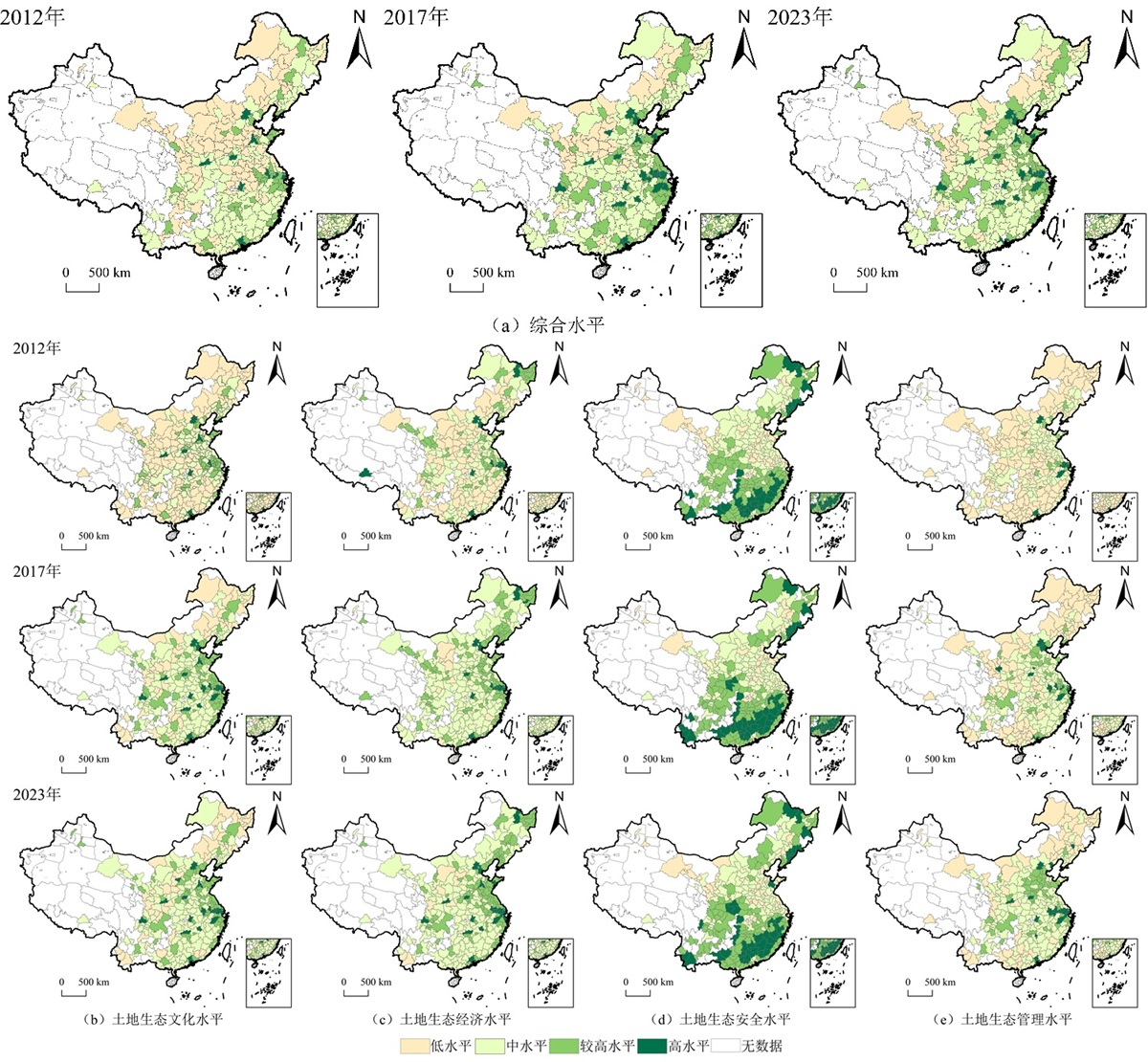
图3 中国土地生态文明建设空间格局 该图基于自然资源部标准地图服务网站下载的审图号为GS(2024)0650号的标准地图制作,底图边界无修改。下图同
Figure 3 Spatial pattern of land ecological civilization construction in China

图4 2012、2017、2023年中国土地生态文明建设水平核密度分布图
Figure 4 Kernel density distribution maps of land ecological civilization construction Level of 2012, 2017, and 2023

图5 土地生态文明建设泰尔指数及其分解 Twr:区域内差异贡献率;Tbr:区域间差异贡献率
Figure 5 Theil index and its decomposition of land ecological civilization construction

图6 2023年土地生态文明建设水平冷热点分布
Figure 6 Cold and Hot Spot distribution of land ecological civilization construction Level in 2023
| 地区 | 障碍因子障碍度/%及排序 | 地区 | 障碍因子障碍度/%及排序 | 地区 | 障碍因子障碍度/%及排序 | ||||||
|---|---|---|---|---|---|---|---|---|---|---|---|
| 东北 | 1 | 2 | 3 | 西北 | 1 | 2 | 3 | 华中 | 1 | 2 | 3 |
| 2012 | LX8 (36.32) | LX2 (19.43) | LX3 (11.84) | 2012 | LX2 (30.70) | LX3 (25.14) | LX5 (12.62) | 2012 | LX2 (33.79) | LX3 (24.83) | LX1 (14.66) |
| 2017 | LX8 (35.82) | LX2 (20.28) | LX3 (11.16) | 2017 | LX2 (31.04) | LX3 (25.36) | LX5 (12.47) | 2017 | LX2 (33.42) | LX3 (24.67) | LX1 (13.47) |
| 2023 | LX8 (35.83) | LX2 (20.02) | LX3 (11.28) | 2023 | LX2 (29.63) | LX3 (25.11) | LX5 (11.85) | 2023 | LX2 (32.15) | LX3 (24.13) | LX1 (14.48) |
| 西南 | 1 | 2 | 3 | 华北 | 1 | 2 | 3 | 华东 | 1 | 2 | 3 |
| 2012 | LX2 (36.63) | LX3 (22.08) | LX1 (14.48) | 2012 | LX2 (39.63) | LX1(15.06) | LX3 (14.91) | 2012 | LX2 (32.62) | LX11 (15.74) | LX3 (15.48) |
| 2017 | LX2 (37.02) | LX3 (22.24) | LX1 (13.01) | 2017 | LX2 (38.93) | LX3 (14.84) | LX1 (14.41) | 2017 | LX2 (32.66) | LX11 (16.50) | LX3 (15.62) |
| 2023 | LX2 (36.16) | LX3 (21.26) | LX1 (14.79) | 2023 | LX2 (38.12) | LX1 (14.65) | LX3 (14.52) | 2023 | LX2 (32.30) | LX11 (16.70) | LX3 (15.07) |
| 华南 | 1 | 2 | 3 | 全国 | 1 | 2 | 3 | 4 | 5 | 6 | |
| 2012 | LX2 (33.60) | LX5 (19.88) | LX3 (14.99) | 2012 | LX2 (29.17) | LX8 (21.79) | LX12 (14.22) | LX5 (11.63) | LX3 (11.12) | LX1 (8.16) | |
| 2017 | LX2 (33.35) | LX5 (19.81) | LX3 (15.05) | 2017 | LX2 (29.29) | LX8 (21.99) | LX12 (14.25) | LX5 (11.64) | LX3 (11.14) | LX1 (7.78) | |
| 2023 | LX2 (32.85) | LX5 (19.13) | LX3 (14.78) | 2023 | LX2 (29.21) | LX8 (22.06) | LX12 (14.27) | LX5 (11.53) | LX3 (10.94) | LX1 (8.01) | |
表3 全国及七大地区土地生态文明建设障碍因素障碍度排序
Table 3 Analysis of obstacle factors for land ecological civilization construction in China and its seven major regions %
| 地区 | 障碍因子障碍度/%及排序 | 地区 | 障碍因子障碍度/%及排序 | 地区 | 障碍因子障碍度/%及排序 | ||||||
|---|---|---|---|---|---|---|---|---|---|---|---|
| 东北 | 1 | 2 | 3 | 西北 | 1 | 2 | 3 | 华中 | 1 | 2 | 3 |
| 2012 | LX8 (36.32) | LX2 (19.43) | LX3 (11.84) | 2012 | LX2 (30.70) | LX3 (25.14) | LX5 (12.62) | 2012 | LX2 (33.79) | LX3 (24.83) | LX1 (14.66) |
| 2017 | LX8 (35.82) | LX2 (20.28) | LX3 (11.16) | 2017 | LX2 (31.04) | LX3 (25.36) | LX5 (12.47) | 2017 | LX2 (33.42) | LX3 (24.67) | LX1 (13.47) |
| 2023 | LX8 (35.83) | LX2 (20.02) | LX3 (11.28) | 2023 | LX2 (29.63) | LX3 (25.11) | LX5 (11.85) | 2023 | LX2 (32.15) | LX3 (24.13) | LX1 (14.48) |
| 西南 | 1 | 2 | 3 | 华北 | 1 | 2 | 3 | 华东 | 1 | 2 | 3 |
| 2012 | LX2 (36.63) | LX3 (22.08) | LX1 (14.48) | 2012 | LX2 (39.63) | LX1(15.06) | LX3 (14.91) | 2012 | LX2 (32.62) | LX11 (15.74) | LX3 (15.48) |
| 2017 | LX2 (37.02) | LX3 (22.24) | LX1 (13.01) | 2017 | LX2 (38.93) | LX3 (14.84) | LX1 (14.41) | 2017 | LX2 (32.66) | LX11 (16.50) | LX3 (15.62) |
| 2023 | LX2 (36.16) | LX3 (21.26) | LX1 (14.79) | 2023 | LX2 (38.12) | LX1 (14.65) | LX3 (14.52) | 2023 | LX2 (32.30) | LX11 (16.70) | LX3 (15.07) |
| 华南 | 1 | 2 | 3 | 全国 | 1 | 2 | 3 | 4 | 5 | 6 | |
| 2012 | LX2 (33.60) | LX5 (19.88) | LX3 (14.99) | 2012 | LX2 (29.17) | LX8 (21.79) | LX12 (14.22) | LX5 (11.63) | LX3 (11.12) | LX1 (8.16) | |
| 2017 | LX2 (33.35) | LX5 (19.81) | LX3 (15.05) | 2017 | LX2 (29.29) | LX8 (21.99) | LX12 (14.25) | LX5 (11.64) | LX3 (11.14) | LX1 (7.78) | |
| 2023 | LX2 (32.85) | LX5 (19.13) | LX3 (14.78) | 2023 | LX2 (29.21) | LX8 (22.06) | LX12 (14.27) | LX5 (11.53) | LX3 (10.94) | LX1 (8.01) | |

图7 土地生态文明建设驱动因子q值探测结果
Figure 7 The q-value detection results of the influencing factors on the land ecological civilization construction
| [1] |
Alencar L, Baldauf C, Manhaes A P, et al., 2023. Tradeoffs and synergies between food security and forest cover in Brazilian drylands[J]. Land Degradation and Development, 34(17): 5343-5354.
DOI URL |
| [2] |
Foley J A, Defries R, Asner G P, et al., 2005. Global consequences of land use[J]. Science, 309(5734): 570-574.
DOI PMID |
| [3] |
Frazier A E, Bryan B A, Buyantuev A, et al., 2019. Ecological civilization: perspectives from landscape ecology and landscape sustainability science[J]. Landscape Ecology, 34(1): 1-8.
DOI |
| [4] | Gare A, 2016. The philosophical foundations of ecological civilization: A manifesto for the future[M]. London: Routledge: 177-178. |
| [5] |
Hansen M H, Li H, Svarverud R, 2018. Ecological civilization: Interpreting the Chinese past, projecting the global future[J]. Global Environmental Change, 53: 195-203.
DOI URL |
| [6] |
Tuan Y F, 1971. Essay reviews: Environmental attitudes[J]. Science Studies, 1(2): 215-224.
DOI URL |
| [7] | 白玉娟, 洪增林, 薛旭平, 等, 2021. 关中平原城市群土地集约利用与生态文明建设耦合性研究[J]. 水土保持研究, 28(3): 272-280. |
| Bai Y J, Hong Z L, Xue X P, et al., 2021. Research on coupling of intensive land use and ecological civilization construction of urban agglomeration in Guanzhong Plain[J]. Research of Soil and Water Conservation, 28(3): 272-280. | |
| [8] | 蔡太义, 张合兵, 黄会娟, 等, 2013. 河南粮食主产区土地生态文明建设评价指标体系构建研究[J]. 上海国土资源, 34(4): 67-70. |
| Cai T Y, Zhang H B, Huang H J, et al., 2013. Research on the construction of evaluation index system of land ecological civilization in the major grain-producing area of Henan province, China[J]. Shanghai Land & Resources, 34(4): 67-70. | |
| [9] |
陈慧, 付光辉, 刘友兆, 等, 2017. 南京市土地资源安全SD法评价研究[J]. 资源科学, 39(5): 846-859.
DOI |
|
Chen H, Fu G H, Liu Y Z, et al., 2017. Regional land resource security evaluation based on system dynamics in Nanjing City[J]. Resources Science, 39(5): 846-859.
DOI |
|
| [10] | 陈美景, 白中科, 于潇, 等, 2025. 黄河流域资源型城市国土空间转型特征与影响机制研究[J]. 中国土地科学, 39(2): 69-81. |
| Chen M J, Bai Z K, Yu X, et al., 2025. Study on territorial space transition and impact mechanism of resource-based cities in the Yellow River Basin[J]. China Land Science, 39(2): 69-81. | |
| [11] |
邓宗兵, 宗树伟, 苏聪文, 等, 2019. 长江经济带生态文明建设与新型城镇化耦合协调发展及动力因素研究[J]. 经济地理, 39(10): 78-86.
DOI |
|
Deng Z B, Zong S W, Su C W, et al., 2019. Research on coupling coordination development between ecological civilization construction and new urbanization and its driving forces in the Yangtze River Economic Zone[J]. Economic Geography, 39(10): 78-86.
DOI |
|
| [12] |
董会忠, 李旋, 张仁杰, 2021. 粤港澳大湾区绿色创新效率时空特征及驱动因素分析[J]. 经济地理, 41(5): 134-144.
DOI |
| Dong H Z, Li X, Zhang R J, 2021. Spatio-temporal characteristics and driving factors of green innovation efficiency in Guangdong-Hong Kong-Macao Greater Bay Area[J]. Economic Geography, 41(5): 134-144. | |
| [13] | 杜立民, 王如琦, 肖赵华, 2024. 生态创新对长三角地区生态经济的影响[J]. 资源科学, 43(10): 1961-1975. |
| Du L M, Wang R Q, Xiao Z H, 2024. The impact of ecological innovation on ecological economy of the Yangtze River Delta in China[J]. Resources Science, 43(10): 1961-1975. | |
| [14] | 樊传浩, 孙桂路, 2024. “双碳” 目标下黄河流域绿色技术创新效率评价及影响因素[J]. 水利经济, 42(1): 21-27, 33. |
| Fan C H, Sun G L, 2024. The evaluation of green technology innovation efficiency and its influencing factors in the Yellow River Basin under the carbon peaking and carbon neutrality goals[J]. Journal of Economics of Water Resources, 42(1): 21-27, 33. | |
| [15] | 郭文华, 张迪, 陈静, 2017. 把生态文明融入土地管理主基调[J]. 中国土地 (7): 4-7. |
| Guo W H, Zhang D, Chen J, 2017. Integrating ecological civilization into the main tone of land management[J]. China Land (7): 4-7. | |
| [16] | 韩琭, 陶德鑫, 史鲁彦, 2024. 黄河流域两大区域的土地生态安全动态评价及比较[J]. 水土保持学报, 38(1): 255-266, 277. |
|
Han L, Tao D X, Shi L Y, 2024. Dynamic evaluation and comparison of land ecological security in the two regions of the Yellow River Basin[J]. Journal of Soil and Water Conservation, 38(1): 255-266, 277.
DOI URL |
|
| [17] |
郝庆, 梁鹤年, 杨开忠, 等, 2022. 生态文明时代国土空间规划理论与技术方法创新[J]. 自然资源学报, 37(11): 2763-2773.
DOI |
|
Hao Q, Leung H N, Yang K Z, et al., 2022. Innovation of theory and technical method of territory spatial planning in the era of ecological civilization[J]. Journal of Natural Resources, 37(11): 2763-2773.
DOI URL |
|
| [18] | 郇庆治, 2021. 习近平生态文明思想的体系样态、核心概念和基本命题[J]. 学术月刊, 53(9): 5-16, 48. |
| Huan Q Z, 2021. The systematic pattern, kernel concept and basic proposition of Xi Jinping’s thought of ecological civilization[J]. Academic Monthly, 53(9): 5-16, 48. | |
| [19] | 李平星, 陈雯, 高金龙, 2015. 江苏省生态文明建设水平指标体系构建与评估[J]. 生态学杂志, 34(1): 295-302. |
| Li P X, Chen W, Gao J L, 2015. Index system design and evaluation of ecological civilization construction in Jiangsu Province[J]. Chinese Journal of Ecology, 34(1): 295-302. | |
| [20] | 李茜, 胡昊, 李名升, 等, 2015. 中国生态文明综合评价及环境、经济与社会协调发展研究[J]. 资源科学, 37(7): 1444-1454. |
| Li Q, Hu H, Li M S, et al., 2015. Ecological civilization evaluation and coordinated development between environment, economy and society[J]. Resources Science, 37(7): 1444-1454. | |
| [21] | 李双成, 谢爱丽, 吕春艳, 等, 2018. 土地生态系统服务研究进展及趋势展望[J]. 中国土地科学, 32(12): 82-89. |
| Li S C, Xie A L, Lü C Y, et al., 2018. Research progress and prospect for land ecosystem services[J]. China Land Science, 32(12): 82-89. | |
| [22] | 刘国锋, 刘富华, 李宏寅, 2026. 地方财政压力、命令型环境规制与碳排放[J]. 统计与决策, 42(8): 135-140. |
| Liu G F, Liu F H, Li H Y, 2026. Local fiscal pressure, command-type environmental regulations and carbon[J]. Statistics & Decision, 42(8): 135-140. | |
| [23] | 刘守英, 熊雪锋, 章永辉, 等, 2022. 土地制度与中国发展模式[J]. 中国工业经济 (1): 34-53. |
| Liu S Y, Xiong X F, Zhang Y H, et al., 2022. Land system and China’s development mode[J]. China Industrial Economics (1): 34-53. | |
| [24] |
龙花楼, 马历, 周贵鹏, 2025. 中国土地利用转型研究进展与展望[J]. 地理学报, 80(8): 1993-2015.
DOI |
|
Long H L, Ma L, Zhou G P, 2025. Land use transition research in China: Progress, challenges and prospect[J]. Acta Geographica Sinica, 80(8): 1993-2015.
DOI |
|
| [25] |
龙亮军, 2019. 综合福利视角下中国生态文明建设绩效评价及国际比较[J]. 自然资源学报, 34(6): 1259-1272.
DOI |
|
Long L J, 2019. Evaluation of ecological civilization construction performance and its international comparison from the perspective of overall well-being[J]. Journal of Natural Resources, 34(6): 1259-1272.
DOI URL |
|
| [26] | 彭文英, 陈泽宇, 赵爽, 等, 2025b. 粤港澳大湾区土地绿色利用推动构建新质生产力研究[J]. 经济地理, 45(9): 190-199. |
|
Peng W Y, Chen Z Y, Zhao S, et al., 2025. Promoting the construction of new quality productive forces through green land use in Guangdong-Hong Kong-Macao Greater Bay Area[J]. Economic Geography, 45(9): 190-199.
DOI |
|
| [27] | 彭文英, 单子溢, 赵爽, 2025a. 东北地区新质生产力发展区域格局及障碍因素[J]. 学习与探索 (4): 91-99. |
| Peng W Y, Shan Z Y, Zhao S, 2025. Regional pattern and obstacle factors of new quality productive forces development in Northeast China[J]. Study & Exploration (4): 91-99. | |
| [28] | 彭文英, 李碧君, 刘灿, 2021. 习近平关于生态安全重要论述及生态安全体系建设研究[J]. 城市与环境研究 (1): 20-34. |
| Peng W Y, Li B J, Liu C, 2021. Xi Jinping’s important exposition on ecological security and the construction of ecological security system[J]. Urban and Environmental Studies (1): 20-34. | |
| [29] | 彭文英, 尉迟晓娟, 孙岳, 等, 2024. 基于生态产品供给的山水林田湖草沙一体化保护与系统治理——以京津冀为例[J]. 干旱区资源与环境, 38(7): 1-12. |
| Peng W Y, Yuchi X J, Sun Y, et al., 2024. Integrated protection and systematic management of grass and sand in landscape, forest, field and lake based on the supply of ecological products: A case study of Beijing, Tianjin and Hebei[J]. Journal of Arid Land Resources and Environment, 38(7): 1-12. | |
| [30] | 曲福田, 马贤磊, 郭贯成, 2021. 从政治秩序、经济发展到国家治理: 百年土地政策的制度逻辑和基本经验[J]. 管理世界, 37(12): 1-15. |
| Qu F T, Ma X L, Guo G C, 2021. Institutional logic and major contribution of centennial land policy to political order, economic development and national governance[J]. Journal of Management World, 37(12): 1-15. | |
| [31] |
宋洋, 贺灿飞, Yeung Godfrey, 等, 2023. 中国资源型城市产业结构升级对土地利用效率的影响[J]. 地理研究, 42(1): 86-105.
DOI |
| Song Y, He C F, Yeung G, et al., 2023. Industrial structure upgrading and urban land use efficiency: Evidence from 115 resource-based cities in China[J]. Geographical Research, 42(1): 86-105. | |
| [32] |
苏聪文, 邓宗兵, 李莉萍, 等, 2021. 中国水生态文明发展水平的空间格局及收敛性[J]. 自然资源学报, 36(5): 1282-1301.
DOI |
|
Su C W, Deng Z B, Li L P, et al., 2021. Spatial pattern and convergence of the development level of water ecological civilization in China[J]. Journal of Natural Resources, 36(5): 1282-1301.
DOI URL |
|
| [33] |
孙玉环, 杨逸辰, 张汀昱, 2026. 中国生态经济效率的空间格局及演进特征研究——基于生态优先视角[J]. 生态环境学报, 35(1): 1-14.
DOI |
| Sun Y H, Yang Y C, Zhang T Y, 2026. Spatial patterns and evolutionary characteristics of ecological and economic efficiency in China: An ecological priority perspective[J]. Ecology and Environmental Sciences, 35(1): 1-14. | |
| [34] | 汪秀琼, 彭韵妍, 吴小节, 等, 2015. 中国生态文明建设水平综合评价与空间分异[J]. 华东经济管理, 29(4): 52-56, 146. |
| Wang X Q, Peng Y Y, Wu X J, et al., 2015. A comprehensive appraisal and spatial variation of the level of ecological civilization construction in China[J]. East China Economic Management, 29(4): 52-56, 146. | |
| [35] |
王耕, 李素娟, 马奇飞, 2018. 中国生态文明建设效率空间均衡性及格局演变特征[J]. 地理学报, 73(11): 2198-2209.
DOI |
|
Wang G, Li S J, Ma Q F, 2018. Spatial equilibrium and pattern evolution of ecological civilization construction efficiency in China[J]. Acta Geographica Sinica, 73(11): 2198-2209.
DOI |
|
| [36] |
王劲峰, 徐成东, 2017. 地理探测器: 原理与展望[J]. 地理学报, 72(1): 116-134.
DOI |
|
Wang J F, Xu C D, 2017. Geodetector: Principle and prospective[J]. Acta Geographica Sinica, 72(1): 116-134.
DOI |
|
| [37] | 王军, 2012. 土地整治: 推进生态文明建设美丽中国的平台——学习贯彻党的十八大精神心得体会[J]. 中国土地 (12): 8-9. |
| Wang J, 2012. A platform for promoting ecological progress and building a beautiful China: Reflections on studying and implementing the spirit of the 18th National Congress of the Communist Party of China[J]. China Land (12): 8-9. | |
| [38] | 夏方舟, 张松培, 2024. 土地要素赋能新质生产力发展: 作用机理与基本路径[J]. 改革 (8): 130-139. |
| Xia F Z, Zhang S P, 2024. Empowering the development of new quality productive forces with land elements: Action principles and basic paths[J]. Reform (8): 130-139. | |
| [39] | 谢花林, 陈倩茹, 2021. 土地利用与生态文明: 实证研究[J]. 资源与生态学报, 12(2): 137-142, 302. |
|
Xie H L, Chen Q R, 2021. Land use and ecological civilization: A collection of empirical studies[J]. Journal of Resources and Ecology, 12(2): 137-142, 302.
DOI |
|
| [40] | 徐绍史, 2012. 创新国土资源管理促进生态文明建设[J]. 求是 (19): 23-25. |
| Xu S S, 2012. Innovating land and resources management and promoting the construction of ecological civilization[J]. Qiushi (19): 23-25. | |
| [41] | 严金明, 蒲金芳, 2025. “十五五” 时期中国土地资源保护利用的战略思考[J]. 中国土地科学, 39(11): 1-10. |
| Yan J M, Pu J F, 2025. Strategic thinking for land resource protection and utilization in the 15th Five-year Plan period in China[J]. China Land Science, 39(11): 1-10. | |
| [42] | 郧文聚, 宇振荣, 2011. 生态文明: 土地整治的新目标[J]. 中国土地 (9): 20-21. |
| Yun W J, Yu Z R, 2011. Ecological civilization: The new goal of land renovation[J]. China Land (9): 20-21. | |
| [43] | 张传华, 张凤太, 王钟书, 等, 2021. 生态敏感区村域尺度土地生态经济系统的耦合协调发展研究——以重庆市江津区为例[J]. 长江流域资源与环境, 30(7): 1547-1558. |
| Zhang C H, Zhang F T, Wang Z S, et al., 2021. Study on the coupling and coordinated development of land eco-economic system in village scale in the ecologically sensitive area: A case of Jiangjin District, Chongqing, China[J]. Resources and Environment in the Yangtze Basin, 30(7): 1547-1558. | |
| [44] | 张合兵, 蔡太义, 黄会娟, 等, 2015. 中原粮食主产区土地生态文明建设水平测度——以新郑市为例[J]. 中国人口·资源与环境, 25(S1): 98-101. |
| Zhang H B, Cai T Y, Huang H J, et al., 2015. Measuring for construction of land eco-civilization in the major grain producing area of central plains: A Case Study of Xinzheng City[J]. China Population, Resources and Environment, 25(S1): 98-101. | |
| [45] | 张虹, 胡金, 2023. 生态文明建设促进绿色技术创新了吗——来自合成控制法的实证评估[J]. 科技进步与对策, 40(8): 151-160. |
| Zhang H, Hu J, 2023. Has ecological civilization construction promoted green technology innovation? An empirical assessment from synthetic control method[J]. Science & Technology Progress and Policy, 40(8): 151-160. | |
| [46] | 张杨, 严金明, 石义, 2013. 新型城镇化背景下的国土生态文明战略框架设计研究[J]. 中国土地科学, 27(11): 11-17. |
| Zhang Y, Yan J M, Shi Y, 2013. Strategic framework design of territory ecological civilization in the context of new-pattern urbanization[J]. China Land Sciences, 27(11): 11-17. | |
| [47] | 郑红玉, 吴次芳, 徐忠国, 等, 2020. 面向生态文明建设的土地价值认知反思与重塑[J]. 中国土地科学, 34(4): 10-17. |
| Zheng H Y, Wu C F, Xu Z G, et al., 2020. The reflection and rebuilding of land-value cognition for ecological civilization construction[J]. China Land Science, 34(4): 10-17. | |
| [48] | 朱乾隆, 刘鹏凌, 栾敬东, 等, 2019. 城市土地集约利用与生态文明建设的耦合关系[J]. 浙江农林大学学报, 36(5): 999-1005. |
| Zhu Q L, Liu P L, Luan J D, et al., 2019. Coupling relationship between urban land intensive use and ecological civilization construction[J]. Journal of Zhejiang A & F University, 36 (5): 999-1005. |
| [1] | 秦群策, 李连伟, 郑直. 基于SRP模型的青岛市生态脆弱性时空演变分析[J]. 生态环境学报, 2026, 35(4): 540-550. |
| [2] | 蒋瑞霞, 王正鑫, 孙芳芳, 董程程, 赵龙龙, 李晓丽, 陈劲松, 李洪忠, 王莉. 基于统一遥感生态指数的深圳市生态质量时空演变格局分析[J]. 生态环境学报, 2025, 34(5): 796-806. |
| [3] | 陈洁茹, 叶长盛, 魏嶶, 蔡鑫, 汪礼丽. 环鄱阳湖城市群县域“三生空间”耦合协调性及影响因素分析[J]. 生态环境学报, 2025, 34(5): 807-818. |
| [4] | 陶德凯, 张子建. 江苏省国土空间绿色发展水平与生态系统服务耦合协同关系研究[J]. 生态环境学报, 2025, 34(2): 181-196. |
| [5] | 刘军, 刘鑫宇, 问鼎. 中国区域旅游碳排放网络特征及碳减排协同效应研究[J]. 生态环境学报, 2025, 34(11): 1675-1689. |
| [6] | 张晓晴, 廖星月, 李果, 任大军, 张淑琴. 基于DPSIR模型的湖北省长江干流城市群水生态安全评估及未来趋势预测[J]. 生态环境学报, 2025, 34(10): 1618-1632. |
| [7] | 徐佳乐, 杨兴川, 赵文吉, 杨志强, 钟一雪, 师乐颜, 马鹏飞. 气候变化背景下内蒙古中西部植被覆盖度演变特征研究[J]. 生态环境学报, 2024, 33(7): 1008-1018. |
| [8] | 张维琛, 王惺琪, 王博杰. 塔布河流域生态系统服务时空格局及影响因素分析[J]. 生态环境学报, 2024, 33(7): 1142-1152. |
| [9] | 胡韵菲, 陶亮, 罗旖文. 广东省农业绿色发展潜力影响因素及空间格局演变[J]. 生态环境学报, 2024, 33(10): 1600-1611. |
| [10] | 肖博, 王邵军, 解玲玲, 王郑钧, 郭志鹏, 张昆凤, 张路路, 樊宇翔, 郭晓飞, 罗双, 夏佳慧, 李瑞, 兰梦杰, 杨胜秋. 蚂蚁筑巢定居活动对热带森林土壤氮库及组分分配的影响[J]. 生态环境学报, 2023, 32(6): 1026-1036. |
| [11] | 夏美君, 李健, 闫永蚕. 京津冀城市群生态福利绩效时空格局及演进特征[J]. 生态环境学报, 2023, 32(4): 814-824. |
| [12] | 舒洋, 陈魁, 李航, 魏江生, 赵鹏武, 周梅. 高纬度冻土区林火干扰对土壤碳释放影响研究进展[J]. 生态环境学报, 2022, 31(6): 1278-1284. |
| 阅读次数 | ||||||
|
全文 |
|
|||||
|
摘要 |
|
|||||
