
生态环境学报 ›› 2025, Vol. 34 ›› Issue (12): 1974-1984.DOI: 10.16258/j.cnki.1674-5906.2025.12.014
陈凤1( ), 杨锦程1,2,3, 黑亮1,*(), 蒋勤2
收稿日期:2025-06-19
出版日期:2025-12-18
发布日期:2025-12-10
通讯作者:
*E-mail:41470127@qq.com
作者简介:陈凤(1984年生),女,工程师,从事水资源调度和水环境治理方面的研究。E-mail: 251700086@qq.com
基金资助:
CHEN Feng1(), YANG Jincheng1,2,3, HEI Liang1,*(), JIANG Qin2
Received:2025-06-19
Online:2025-12-18
Published:2025-12-10
摘要:
红树林生态系统是滨海湿地的重要组成部分。目前红树林生态系统健康评价缺少具有代表性和普适性的健康评价标准,评价指标及方法的选择应用也未统一。该文综合评述了其健康评价方法的研究进展。结果显示,相关评价方法主要集中于指示物种法和指标体系法。指示物种法以生态系统中的关键物种、特有物种、濒危物种或环境敏感物种为研究对象,通过监测其种群数量、物种分布、种群年龄结构、生物体型分布和个体健康状态等来描述生态系统的健康状况;指标体系法通过选择生态系统中的多个特征指标,建立评价指标体系或评价模型,获取相关数据并依据指标在生态系统健康中的重要性对其进行赋权,最终进行综合评价以反映生态系统的健康状况。针对红树林生态系统健康评价中存在的评价健康标准、评价尺度和评价方法的选择等问题,提出开展多尺度相互耦合的健康评价,利用人工智能、物联网技术、“3S”技术、无人机遥感技术等新兴技术,构建涵盖生态、社会和经济等多维度的指标体系和搭建国家级红树林健康动态评估平台等建议。该文通过总结现有研究成果,为实现红树林健康状况的“实时感知、动态评价、智能预警”等生态保护决策提供支撑。
中图分类号:
陈凤, 杨锦程, 黑亮, 蒋勤. 红树林生态系统健康评价及方法研究进展[J]. 生态环境学报, 2025, 34(12): 1974-1984.
CHEN Feng, YANG Jincheng, HEI Liang, JIANG Qin. Advancements in Mangrove Ecosystem Health Assessment: Methodological Innovations and Research Progress[J]. Ecology and Environmental Sciences, 2025, 34(12): 1974-1984.

图1 红树林生态系统健康示意图
Figure 1 Map of mangrove ecosystem health

图2 红树林生态系统健康评价示意图
Figure 2 Schematic diagram of mangrove ecosystem health assessment
| 参考文献 | 指示物种 | 研究区域 | 主要结论 |
|---|---|---|---|
| 刘毅等, | 耳螺 | - | 提出了耳螺对环境变迁和人为干扰十分敏感,可作为海堤建设对红树林影响的重要指示物种,是未来的重要研究方向之一 |
| 刘莎,2011 | 环节动物 | 广东湛江、福建漳江口 | 深入分析大型底栖动物中环节动物在红树林和盐沼湿地中的群落特点,比较其差异 |
| 李春榆等, | 海蛙 | 海南东寨港红树林 | 通过比较区域不同微生境海蛙组织中部分抗氧化酶活性、免疫指标等,评估海蛙所遭受的环境胁迫大小,探讨将海蛙作为红树林环境质量监测指示物种的可能性 |
| 陈昕韡, | 寡毛类动物 | 深圳福田红树林 | 研究红树林中寡毛类动物生物群落状况,并探讨其环境污染指示作用 |
| 肖霄,2019 | 蚂蚁 | 海南东寨港红树林 | 应用多种研究方法,揭示东寨港红树林湿地蚂蚁的物种分布格局与生态学指示意义 |
表1 指示物种法的相关应用
Table 1 Literature application of the indicator species method
| 参考文献 | 指示物种 | 研究区域 | 主要结论 |
|---|---|---|---|
| 刘毅等, | 耳螺 | - | 提出了耳螺对环境变迁和人为干扰十分敏感,可作为海堤建设对红树林影响的重要指示物种,是未来的重要研究方向之一 |
| 刘莎,2011 | 环节动物 | 广东湛江、福建漳江口 | 深入分析大型底栖动物中环节动物在红树林和盐沼湿地中的群落特点,比较其差异 |
| 李春榆等, | 海蛙 | 海南东寨港红树林 | 通过比较区域不同微生境海蛙组织中部分抗氧化酶活性、免疫指标等,评估海蛙所遭受的环境胁迫大小,探讨将海蛙作为红树林环境质量监测指示物种的可能性 |
| 陈昕韡, | 寡毛类动物 | 深圳福田红树林 | 研究红树林中寡毛类动物生物群落状况,并探讨其环境污染指示作用 |
| 肖霄,2019 | 蚂蚁 | 海南东寨港红树林 | 应用多种研究方法,揭示东寨港红树林湿地蚂蚁的物种分布格局与生态学指示意义 |
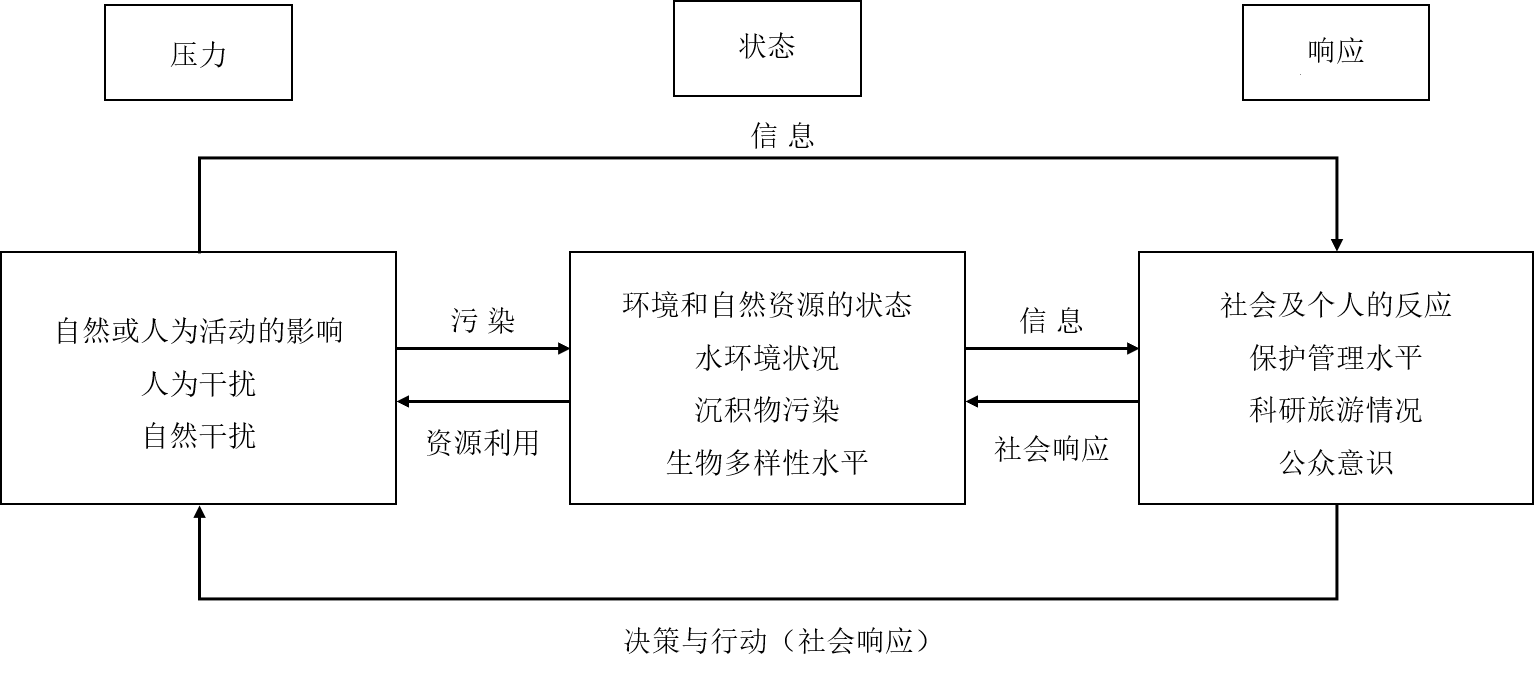
图3 PSR模型框架示意(参考徐浩田等,2017)
Figure 3 Press-state-response model framework
| 类别 | 评价文件 | 发布/编制部门 | 主要内容 |
|---|---|---|---|
| 国家 | GB/T 45140—2025《红树林生态修复监测和效果评估技术指南》 | 国家市场监督管理总局,国家标准化管理委员会 | 该指南涉及红树林生态修复监测和效果评估工作的一系列流程;其中修复效果评估部分,选择红树林植被、动物群落、生境条件作为生态修复的评估内容,选择生物多样性维持、生态系统固碳、消浪缓流作为生态功能评估内容 |
| 行业 | HY/T 087—2005《近岸海洋生态健康评价指南》 | 国家海洋局 | 涉及包括红树林生态系统在内的5个近岸海洋生态系统健康评价;规定了红树林生态健康评价的指标、方法及要求,囊括水环境、生物残毒状况、栖息地、生物等共16个指标 |
| LY/T 2794—2017《红树林湿地评价技术规程》 | 国家林业局 | 该标准规定了红树林湿地健康的定义、评价指标体系和评价方法;从生物群落与结构、水土环境、外部威胁与干扰和生物安全4个方面选择了18个指标构建评价体系 | |
| LY/T 2794—2023《红树林湿地生态系统健康评价规范》 | 国家林业和草原局 | 该规范规定了红树林湿地生态系统监测评价的一般要求、监测指标及方法、生态质量评价指标体系及方法技术要求;红树林湿地健康评价指标体系,由水环境、生境质量、物种多样性、干扰压力等4个评价内容10个评价指标组成 | |
| 地方 | DB44/T 2410—2023《红树林生态修复工程评价技术规程》 | 广东省市场监督管理总局 | 该规程为广东地方标准,适用于红树林生态修复工程的评价与管理工作;综合评价部分,从植物群落恢复和动物群落建立起综合指标体系,并确定相应指标权重、评分标准及赋分 |
| DB 45/T 1230—2015 《红树林湿地生态系统固碳能力评估技术规程》 | 广西壮族自治区质量技术监督总局 | 广西地方标准,规定了红树林湿地生态系统固碳能量评估的指标、方法及技术要求。通过计算红树林植物固碳能力、底栖动物固碳能力、沉积物固碳能力,综合评估红树林湿地生态系统的总固碳能力 | |
| DB45/T 832—2012《广西红树林生态健康监测评价指南》 | 广西壮族自治区质量技术监督总局 | 广西地方标准,结合广西红树林资源特征及保护管理需求等实际,共选用4类19项评价指标,并明确相应的指标权重、赋分及计算方法 | |
| 团体 | T/CAOE 20.3—2020《海岸带生态系统现状与评估技术导则第3部分》 | 中国海洋工程咨询协会 | 适用于海岸带红树林生态系统现状调查与评估工作;该规范部分给出了红树林生态系统的现状调查内容、调查方法及生态状况评估的相关规定 |
| T/GXAS 1021—2025《白骨壤群落健康监测技术规程》 | 广西标准化协会 | 广西壮族自治区团体标准,适用于白骨壤群落健康监测。涉及白骨壤群落健康评价,确定了评价指标、评分标准、综合健康指数计算方法及相应健康等级划分等 |
表2 国内发布的红树林生态系统健康评价标准/规范
Table 2 Mangrove ecosystem health assessment standards/norms published in China
| 类别 | 评价文件 | 发布/编制部门 | 主要内容 |
|---|---|---|---|
| 国家 | GB/T 45140—2025《红树林生态修复监测和效果评估技术指南》 | 国家市场监督管理总局,国家标准化管理委员会 | 该指南涉及红树林生态修复监测和效果评估工作的一系列流程;其中修复效果评估部分,选择红树林植被、动物群落、生境条件作为生态修复的评估内容,选择生物多样性维持、生态系统固碳、消浪缓流作为生态功能评估内容 |
| 行业 | HY/T 087—2005《近岸海洋生态健康评价指南》 | 国家海洋局 | 涉及包括红树林生态系统在内的5个近岸海洋生态系统健康评价;规定了红树林生态健康评价的指标、方法及要求,囊括水环境、生物残毒状况、栖息地、生物等共16个指标 |
| LY/T 2794—2017《红树林湿地评价技术规程》 | 国家林业局 | 该标准规定了红树林湿地健康的定义、评价指标体系和评价方法;从生物群落与结构、水土环境、外部威胁与干扰和生物安全4个方面选择了18个指标构建评价体系 | |
| LY/T 2794—2023《红树林湿地生态系统健康评价规范》 | 国家林业和草原局 | 该规范规定了红树林湿地生态系统监测评价的一般要求、监测指标及方法、生态质量评价指标体系及方法技术要求;红树林湿地健康评价指标体系,由水环境、生境质量、物种多样性、干扰压力等4个评价内容10个评价指标组成 | |
| 地方 | DB44/T 2410—2023《红树林生态修复工程评价技术规程》 | 广东省市场监督管理总局 | 该规程为广东地方标准,适用于红树林生态修复工程的评价与管理工作;综合评价部分,从植物群落恢复和动物群落建立起综合指标体系,并确定相应指标权重、评分标准及赋分 |
| DB 45/T 1230—2015 《红树林湿地生态系统固碳能力评估技术规程》 | 广西壮族自治区质量技术监督总局 | 广西地方标准,规定了红树林湿地生态系统固碳能量评估的指标、方法及技术要求。通过计算红树林植物固碳能力、底栖动物固碳能力、沉积物固碳能力,综合评估红树林湿地生态系统的总固碳能力 | |
| DB45/T 832—2012《广西红树林生态健康监测评价指南》 | 广西壮族自治区质量技术监督总局 | 广西地方标准,结合广西红树林资源特征及保护管理需求等实际,共选用4类19项评价指标,并明确相应的指标权重、赋分及计算方法 | |
| 团体 | T/CAOE 20.3—2020《海岸带生态系统现状与评估技术导则第3部分》 | 中国海洋工程咨询协会 | 适用于海岸带红树林生态系统现状调查与评估工作;该规范部分给出了红树林生态系统的现状调查内容、调查方法及生态状况评估的相关规定 |
| T/GXAS 1021—2025《白骨壤群落健康监测技术规程》 | 广西标准化协会 | 广西壮族自治区团体标准,适用于白骨壤群落健康监测。涉及白骨壤群落健康评价,确定了评价指标、评分标准、综合健康指数计算方法及相应健康等级划分等 |
| 指标赋权方法 | 特征分析 | 举例 | 参考文献 |
|---|---|---|---|
| 主观赋权法 | 基于评价者的主观偏好或经验给出指标的相对重要程度,简便易行,结果一般符合常识,但在权重分配时存在一定主观性 | 1. 层次分析法;2. 德尔菲法;3. 专家评分法 | 王玉图等, |
| 客观赋权法 | 基于指标值本身的数值特征,通过建立数学模型计算权重系数,可避免人为因素的影响,但需要足够的数据支撑,可能存在权重系数不合理的情况 | 1. 熵权法;2. 变异系数法;3. 主成分分析法 | 朱爽等, |
| 组合赋权法 | 主客观综合赋权,实现主观决策与客观计算的良性结合,但其数学推导复杂,应用性和可操作性较差 | 层次分析法结合熵权法综合定权 | 钟连秀, |
表3 指标赋权方法比较
Table 3 Comparison of index weighting methods
| 指标赋权方法 | 特征分析 | 举例 | 参考文献 |
|---|---|---|---|
| 主观赋权法 | 基于评价者的主观偏好或经验给出指标的相对重要程度,简便易行,结果一般符合常识,但在权重分配时存在一定主观性 | 1. 层次分析法;2. 德尔菲法;3. 专家评分法 | 王玉图等, |
| 客观赋权法 | 基于指标值本身的数值特征,通过建立数学模型计算权重系数,可避免人为因素的影响,但需要足够的数据支撑,可能存在权重系数不合理的情况 | 1. 熵权法;2. 变异系数法;3. 主成分分析法 | 朱爽等, |
| 组合赋权法 | 主客观综合赋权,实现主观决策与客观计算的良性结合,但其数学推导复杂,应用性和可操作性较差 | 层次分析法结合熵权法综合定权 | 钟连秀, |
| 存在问题 | 具体描述 | 未来展望 |
|---|---|---|
| 健康标准 | 如何评判某个红树林生态系统的健康状况?基于何种标准 | 应考虑人类社会服务需要,结合研究区域的实际情况,多方面综合做出评判 |
| 评价尺度 | 当前时间点和系统层次尺度研究较多,多尺度研究较少 | 开展不同尺度的研究及相互耦合延展 |
| 评价方法 | 面对不同的研究对象,如何应用一个客观且合适的评价方法 | 借鉴其他学科领域先进评价方法,不断规避现有评价体系的缺陷,达到有效合理评估 |
| 监测体系与数据共享 | 当前监测体系不健全且数据共享渠道不畅通 | 应用新兴技术,配合人工调查,建立健全智能智慧监测体系;搭建数据共享平台,助力相关研究发展 |
表4 当前存在问题与未来研究展望
Table 4 Current problems and future research prospects
| 存在问题 | 具体描述 | 未来展望 |
|---|---|---|
| 健康标准 | 如何评判某个红树林生态系统的健康状况?基于何种标准 | 应考虑人类社会服务需要,结合研究区域的实际情况,多方面综合做出评判 |
| 评价尺度 | 当前时间点和系统层次尺度研究较多,多尺度研究较少 | 开展不同尺度的研究及相互耦合延展 |
| 评价方法 | 面对不同的研究对象,如何应用一个客观且合适的评价方法 | 借鉴其他学科领域先进评价方法,不断规避现有评价体系的缺陷,达到有效合理评估 |
| 监测体系与数据共享 | 当前监测体系不健全且数据共享渠道不畅通 | 应用新兴技术,配合人工调查,建立健全智能智慧监测体系;搭建数据共享平台,助力相关研究发展 |
| [1] |
COSTANZA R, D’ARGE R, DE GROOT R, et al., 1997. The value of the world’s ecosystem services and natural capital[J]. Nature, 387: 253-260.
DOI |
| [2] |
COSTANZA R, GROOT R, SUTTON P, et al., 2014. Changes in the global value of ecosystem services[J]. Global Environmental Change, 26: 152-158.
DOI URL |
| [3] | COSTANZA R, NORTON B D, HASKELL B D, 1992. Ecosystem health: New goals for environmental management[M]. Washington D.C: Island Press: 239-256. |
| [4] |
DUKE N C, MEYNECKE J O, DITTMANN S, et al., 2007. A world without mangroves?[J]. Science, 317(5834): 41-42.
DOI PMID |
| [5] |
ELWIN A, BUKOSKI J J, JINTANA V, et al., 2019. Preservation and recovery of mangrove ecosystem carbon stocks in abandoned shrimp ponds[J]. Scientific Reports, 9: 18275.
DOI PMID |
| [6] |
FELLER I C, FRIESS D A, KRAUSS K W, et al., 2017. The state of the world’s mangroves in the 21st century under climate change[J]. Hydrobiologia, 803: 1-12.
DOI |
| [7] |
LIN X L, HETHARUA B, LIN L, et al., 2019. Mangrove sediment microbiome: adaptive microbial assemblages and their routed biogeochemical processes in Yunxiao Mangrove National Nature Reserve, China[J]. Microbial Ecology, 78(1): 57-69.
DOI PMID |
| [8] |
MO M H, WANG X L, WU H J, et al., 2009. Ecosystem health assessment of Honghu Lake Wetland of China using artificial neural network approach[J]. Chinese Geographical Science, 19(4): 349-356.
DOI URL |
| [9] |
MUNAWAR M, MUNAWAR I F, WEISSE T, et al., 1994. The significance and future potential of using microbes for assessing ecosystem health: The Great Lakes example[J]. Journal of Aquatic Ecosystem Health, 3(4): 295-310.
DOI URL |
| [10] |
OUYANG X, LEE S Y, CONNOLLY R M, et al., 2018. Spatiallyexplicit valuation of coastal wetlands for cyclone mitigation in Australia and China[J]. Scientific Reports, 8(1): 3035.
DOI |
| [11] |
PANTUS F J, DENNISON W C, 2005. Quantifying and evaluating ecosystem health: A case study from Moreton Bay, Australia[J]. Environmental Management, 36(5): 757-771.
PMID |
| [12] |
RAPPORT D J, COSTANZA R, MCMICHAEL A J, 1998. Assessing ecosystem health[J]. Trends in Ecology & Evolution, 13(10): 397-402.
DOI URL |
| [13] |
RAPPORT D J, WHITFORD W G, 1999. How ecosystems respond to stress: Common properties of arid and aquatic systems[J]. BioScience, 49(3): 193-203.
DOI URL |
| [14] |
TEYMOURI M, AKHTARI J, KARKHANE M, et al., 2016. Assessment of phosphate solubilization activity of rhizobacteria in mangrove forest[J]. Biocatalysis and Agricultural Biotechnology, 5: 168-172.
DOI URL |
| [15] |
VALIELA I, BOWEN J L, YORK J K, 2001. Mangrove Forests: One of the world’s threatened major tropical environments[J]. BioScience, 51(10): 807.
DOI URL |
| [16] |
ZHANG H, XIA Q, DAI S, et al., 2023. Mangrove forest mapping from object-oriented multifeature ensemble classification using Sentinel-2 images[J]. Frontiers in Marine Science, 10: 1243116.
DOI URL |
| [17] | ZHANG Z, LUO X Z, FRIESS D A, et al., 2024. Stronger increases but greater variability in global mangrove productivity compared to that of adjacent terrestrial forests[J]. Nature Ecology & Evolution, 8: 239-250. |
| [18] | 毕温凯, 袁兴中, 唐清华, 等, 2012. 基于支持向量机的湖泊生态系统健康评价研究[J]. 环境科学学报, 32(8): 1984-1990. |
| BI W K, YUAN X Z, TANG Q H, et al., 2012. Investigation of health assessment for lake ecosystem based on support vector machine (SVM)[J]. Acta Scientiae Circumstantiae, 32(8): 1984-1990. | |
| [19] | 曹虹, 刘世好, 刘斯垚, 2020. 海南花场湾红树林生态系统健康评价与保护策略[J]. 中南林业调查规划, 39(2): 16-19, 28. |
| CAO H, LIU S H, LIU S Y, 2020. Health evaluation and protection strategy of mangrove ecosystem in Huachangwan, Hainan[J]. Central South Forest Inventory and Planning, 39(2): 16-19, 28. | |
| [20] | 陈昕韡, 2013. 深圳湾红树林湿地寡毛类动物多样性和生态功能研究[D]. 厦门: 厦门大学. |
| CHEN X W, 2013. Study on the Diversity and ecological function of oligochaetes in Shenzhen Bay mangrove wetland[D]. Xiamen: Xiamen University. | |
| [21] | 陈子月, 卓子荣, 陈卓杰, 2016. 深圳红树林湿地系统健康[J]. 中国人口·资源与环境, 26(5): 149-152. |
| CHEN Z Y, ZHUO Z R, CHEN Z J, 2016. Health assessment of mangrove wetland in Shenzhen by PSR - entropy method[J]. China Population, Resources and Environment, 26(5): 149-152. | |
| [22] | 崔保山, 杨志峰, 2002. 湿地生态系统健康评价指标体系I.理论[J]. 生态学报, 22(7): 1005-1011. |
| CUI B S, YANG Z F, 2002. Establishing an indicator system for ecosystems health evaluation on wetland. A theoretical framework[J]. Acta Ecologica Sinica, 22(7): 1005-1011. | |
| [23] | 崔保山, 杨志峰, 2003. 湿地生态系统健康的时空尺度特征[J]. 应用生态学报, 14(1): 121-125. |
| CUI B S, YANG Z F, 2003. Temporal-spatial scale characteristics of wetland ecosystem health[J]. Chinese Journal of Applied Ecology, 14(1): 121-125. | |
| [24] | 戴全厚, 刘国彬, 田均良, 等, 2006. 侵蚀环境小流域生态经济系统健康定量评价[J]. 生态学报, 26(7): 2219-2228. |
| DAI Q H, LIU G B, TIANS J L, et al., 2006. Health dignoses of eco-economy system in Zhifanggou small watershed on typical erosion environment[J]. Acta Ecologica Sinica, 26(7): 2219-2228. | |
| [25] |
但新球, 廖宝文, 吴照柏, 等, 2016. 中国红树林湿地资源、保护现状和主要威胁[J]. 生态环境学报, 25(7): 1237-1243.
DOI |
| DAN X, LIAO B W, WU Z B, et al., 2016. Resources, conservation status and main threats of mangrove wetlands in China[J]. Ecology and Environmental Sciences, 25(7): 1237-1243. | |
| [26] | 樊明玉, 2012. 国内外城市水环境评价指标体系比较与技术模型研究[D]. 重庆: 重庆大学. |
| FAN M Y, 2012. Study on comparison and technical models of domestic and overseas urban water environment assessment indicator systems[D]. Chongqing: Chongqing University. | |
| [27] | 冯颖萦, 彭祺, 桂发亮, 等, 2023. 河流健康评价方法及指标体系研究进展[J]. 江西水利科技, 49(2): 135-142. |
| FENG Y Y, PENG Q, GUI F L, et al., 2023. Research progress on river health evaluation methods and index systems[J]. Jiangxi Hydraulic Science & Technology, 49(2): 135-142. | |
| [28] | 傅秀梅, 王亚楠, 邵长伦, 等, 2009. 中国红树林资源状况及其药用研究调查Ⅱ. 资源现状、保护与管理[J]. 中国海洋大学学报(自然科学版), 39(4): 705-711. |
| FU X M, WANG Y N, SHAO C L, et al., 2009. Investigation on the status of mangrove resources and medicinal research in China II. Resource status, protection and management[J]. Periodical of Ocean University of China, 39(4): 705-711. | |
| [29] |
高文明, 宋芊, 张皓翔, 等, 2024. 基于生态服务功能和保护动物栖息地适宜性评价的优先保护区选取——以三江源地区为例[J]. 生态环境学报, 33(8): 1318-1328.
DOI |
| GAO W M, SONG Q, ZHANG H X, et al., 2024. Selection of priority conservation areas based on ecosystem service functions and wildlife habitat suitability evaluation: A case study in the Sanjiang-yuan region[J]. Ecology and Environmental Sciences, 33(8): 1318-1328. | |
| [30] | 郭菊兰, 朱耀军, 武高洁, 等, 2013. 红树林湿地健康评价指标体系[J]. 湿地科学与管理, 9(1): 18-22. |
| GUO J L, ZHU Y J, WU G J, et al., 2013. A indicators system for health assessment of mangrove wetland[J]. Wetland Science & Management, 9(1): 18-22. | |
| [31] | 胡涛, 丑庆川, 徐华林, 等, 2015. 深圳湾福田红树林保护区生态系统健康评价[J]. 湿地科学与管理, 11(1): 16-20. |
| HU T, CHOU Q C, XU H L, et al., 2015. Health assessment of the ecosystem in the Futian Mangrove Reserve, Shenzhen Bay[J]. Wetland Science & Management, 11(1): 16-20. | |
| [32] | 黄海萍, 陈克亮, 王爱军, 等, 2022. 广西山口红树林保护区保护成效评估[J]. 海洋开发与管理, 39(7): 35-40. |
| HUANG H P, CHEN K L, WANG A J, et al., 2022. Evaluation on conservation effectiveness of Shankou mangrove reserve in Guangxi[J]. Ocean Development and Management, 39(7): 35-40. | |
| [33] |
黄艺, 文航, 蔡佳亮, 2010. 基于环境管理的河流健康评价体系的研究进展[J]. 生态环境学报, 19(4): 967-973.
DOI |
| HUANG Y, WEN H, CAI J L, 2010. Research progress on river health assessment system based on environmental management[J]. Ecology and Environmental Sciences, 19(4): 967-973. | |
| [34] |
胡盈盈, 罗红霞, 戴声佩, 等, 2024. 基于遥感生态指数的海南五指山市生态环境质量评价及成因分析[J]. 生态环境学报, 33(10): 1624-1633.
DOI |
| HU Y Y, LUO H X, DAI S P, et al., 2024. Evaluation of ecological environment quality and analysis of driving mechanism in Wuzhishan City of Hainan Island based on remote sensing ecological indices[J]. Ecology and Environmental Sciences, 33(10): 1624-1633. | |
| [35] | 贾明明, 2014. 1973-2013年中国红树林动态变化遥感分析[D]. 长春: 中国科学院研究生院(东北地理与农业生态研究所). |
| JIA M M, 2014. Remote Sensing analysis of China’s mangroves forests dynamic during 1973 to 2013[D]. Changchun: Northeast Institute of Geography and Agroecology, Chinese Academy of Sciences. | |
| [36] | 贾凯, 陈水森, 蒋卫国, 2022. 粤港澳大湾区红树林长时间序列遥感监测[J]. 遥感学报, 26(6): 1096-1111. |
|
JIA K, CHEN S S, JIANG W G, 2022. Long time-series remote sensing monitoring of mangrove forests in the Guangdong-Hong Kong-Macao Greater Bay Area[J]. National Remote Sensing Bulletin, 26(6): 1096-1111.
DOI URL |
|
| [37] | 孔红梅, 赵景柱, 马克明, 等, 2002. 生态系统健康评价方法初探[J]. 应用生态学报, 13(4): 486-490. |
| KONG H M, ZHAO J Z, MA K M, et al., 2002. Assessment method of ecosystem health[J]. Chinese Journal of Applied Ecology, 13(4): 486-490. | |
| [38] | 李冰, 杨桂山, 万荣荣, 2014. 湖泊生态系统健康评价方法研究进展[J]. 水利水电科技进展, 34(6): 98-106. |
| LI B, YANG G S, WAN R R, 2014. Progress on evaluation methods for lake ecosystems[J]. Advances in Science and Technology of Water Resources, 34(6): 98-106. | |
| [39] | 李春榆, 黄国超, 洪云彩, 等, 2012. 以海蛙作为红树林环境监测指示物种的初步研究 (英文)[J]. Agricultural Science & Technology, 13(2): 434-438. |
| LI C Y, HUANG G C, HONG Y C, et al., 2012. A preliminary study on taking Rana cancrivora as indicator species for mangroves environment monitoring[J]. Agricultural Science & Technology, 13(2): 434-438. | |
| [40] |
梁舒汀, 王菲, 吴丹, 等, 2023. 基于大型底栖动物完整性指数的海河流域典型水库水生态健康评价[J]. 生态环境学报, 32(8): 1457-1464.
DOI |
| LIANG S T, WANG F, WU D, et al., 2023. Ecological health assessment of reservoirs based on macrobenthic index of biotic integrity in Haihe Basin[J]. Ecology and Environmental Sciences, 32(8): 1457-1464. | |
| [41] | 林倩如, 杨雪倩, 张攀, 等, 2023. 东寨港红树林湿地沉积物抗生素抗性基因的分布特征及其影响因素[J]. 安全与环境工程, 30(4): 221-231. |
| LIN Q R, YANG X Q, ZHANG P, et al., 2023. Distribution characteristics and influencing factors of antibiotic resistance genes in the sediments of Dongzhai Port Mangrove Wetland[J]. Safety and Environmental Engineering, 30(4): 221-231. | |
| [42] | 刘莎, 2011. 红树林和盐沼湿地环节动物多样性研究[D]. 厦门: 厦门大学. |
| LIU S, 2011. Study on the diversity of annelids in mangrove and salt marsh wetland[D]. Xiamen: Xiamen University. | |
| [43] |
刘毅, 王瑁, 王文卿, 等, 2011. 中国红树林区的耳螺[J]. 生物多样性, 19(6): 723-728.
DOI |
|
LIU Y, WANG M, WANG W Q, et al., 2011. Ellobiid molluscs of China mangrove habitats[J]. Biodiversity Science, 19(6): 723-728.
DOI |
|
| [44] | 吕一河, 傅伯杰, 2001. 生态学中的尺度及尺度转换方法[J]. 生态学报, 21(12): 2096-2105. |
| LÜ Y H, FU B J, 2001. Ecological scale and scaling[J]. Acta Ecologica Sinica, 21(12): 2096-2105. | |
| [45] | 马克明, 孔红梅, 关文彬, 等, 2001. 生态系统健康评价:方法与方向[J]. 生态学报, 21(12): 2106-2116. |
| MA K M, KONG H M, GUAN W B, et al., 2001. Ecosystem health assessment: methods and directions[J]. Acta Ecologica Sinica, 21(12): 2106-2116. | |
| [46] | 宁秋云, 2021. 广西海洋类保护区红树林生态健康评价与分析[J]. 安徽农业科学, 49(8): 101-103, 113. |
| NING Q Y, 2021. Assessment and analysis on the mangrove ecosystems of marine reserve in Guangxi[J]. Journal of Anhui Agricultural Sciences, 49(8): 101-103, 113. | |
| [47] | 彭建, 王仰麟, 吴健生, 等, 2007. 区域生态系统健康评价——研究方法与进展[J]. 生态学报, 27(11): 4877-4885. |
|
PENG J, WANG Y L, WU J S, et al., 2007. Evaluation for regional ecosystem health: Methodology and research progress[J]. Acta Ecologica Sinica, 27(11): 4877-4885.
DOI URL |
|
| [48] | 任海, 邬建国, 彭少麟, 2000. 生态系统健康的评估[J]. 热带地理, 20(4): 310-316. |
| REN H, WU J G, PENG S L, 2000. Evaluation and montoring of ecosystem health[J]. Tropical Geography, 20(4): 310-316. | |
| [49] | 孙毅, 黄奕龙, 刘雪朋, 2009. 深圳河河口红树林湿地生态系统健康评价[J]. 中国农村水利水电 (10): 32-35. |
| SUN Y, HUANG Y L, LIU X P, 2009. A health assessment of estuarine wetland ecosystem in Shenzhen River[J]. China Rural Water and Hydropower (10): 32-35. | |
| [50] | 王晖, 陈丽, 陈垦, 等, 2007. 多指标综合评价方法及权重系数的选择[J]. 广东药学院学报, 23(5): 583-589. |
| WANG H, CHEN L, CHEN K, et al., 2007. Selection of multi-indicator comprehensive evaluation methods and weight coefficients[J]. Journal of Guangdong College Pharmacy, 23(5): 583-589. | |
| [51] | 汪晖, 章金鸿, 2013. 我国红树林生态系统健康评价研究现状及展望[J]. 生物技术世界 (10): 22-23, 25. |
| WANG H, ZHANG J H, 2013. Current status and prospects of research on the health assessment of mangrove ecosystems in China[J]. Biotech World (10): 22-23, 25. | |
| [52] | 王丽荣, 李贞, 蒲杨婕, 等, 2011. 海南东寨港、三亚河和青梅港红树林群落健康评价[J]. 热带海洋学报, 30(2): 81-86. |
| WANG L R, LI Z H, PU Y J, et al., 2011. Health evaluation of mangrove community in Dongzhaigang, Sanyahe, and Qingmeigang Mangrove Nature Reserves of Hainan Province[J]. Journal of Tropical Oceanography, 30(2): 81-86. | |
| [53] | 王计平, 邹欣庆, 左平, 2007. 基于社区居民调查的海岸带湿地环境质量评价——以海南东寨港红树林自然保护区为例[J]. 地理科学, 27(2): 249-255. |
| WANG J P, ZOU X Q, ZUO P, 2007. Quality evaluation of coastal wetland environmental based on resident investigation: A case study of the Dongzhaigang Mangrove Nature Reserve, Hainan province[J]. Scientia Geographica Sinica, 27(2): 249-255. | |
| [54] | 王敏, 谭娟, 沙晨燕, 等, 2012. 生态系统健康评价及指示物种评价法研究进展[J]. 中国人口·资源与环境, 22(S1): 69-72. |
| WANG M, TAN J, SHA C Y, et al., 2012. Advances in assessment of ecosystem health and indicator species method[J]. China Population, Resources and Environment, 22(S1): 69-72. | |
| [55] | 王树功, 郑耀辉, 彭逸生, 等, 2010. 珠江口淇澳岛红树林湿地生态系统健康评价[J]. 应用生态学报, 21(2): 391-398. |
| WANG S G, ZHENG Y H, PENG Y S, et al., 2010. Health assessment of Qi’ao Island mangrove wetland ecosystem in Pearl River Estuaryt[J]. Chinese Journal of Applied Ecology, 21(2): 391-398. | |
| [56] | 王小军, 冯时泽, 2010. RS、GIS在海南东寨港红树林保护区地表覆盖研究中的应用[J]. 测绘通报 (2): 22-25. |
| WANG X J, FENG S Z, 2010. Application of RS and GIS in Surface coverage of red forest protectorate in Dongzhaigang Hainan[J]. Bulletin of Surveying and Mapping (2): 22-25. | |
| [57] | 王玉图, 李楠, 林立, 等, 2010. 基于PSR模型的红树林生态系统健康评价体系——以广东省为例[J]. 生态科学, 29(3): 234-241. |
| WANG Y T, LI N, LIN L, et al., 2010. The health assessing system of mangrove ecosystems applying with the PSR model: A case study of Guangdong Province[J]. Ecological Science, 29(3): 234-241. | |
| [58] | 肖霄, 2019. 东寨港红树林湿地蚂蚁多样性、分布格局与生态指示作用初探[D]. 海口: 海南师范大学. |
| XIAO X, 2019. A preliminary study of the diversity, distribution pattern and ecological indication of ants in Dongzhaigang mangrove wetland[D]. Haikou: Hainan Normal University. | |
| [59] | 徐浩田, 周林飞, 成谴, 等, 2017. 基于PSR模型的凌河口湿地生态系统健康评价与预警研究[J]. 生态学报, 37(24): 8264-8274. |
| XU H T, ZHOU L F, CHENG Q, et al., 2017. Study on ecosystem health evaluation and risk assessment for Linghekou wetlands based on a PSR model[J]. Acta Ecologica Sinica, 37(24): 8264-8274. | |
| [60] |
许静, 王德仁, 2024. 基于VORS模型的黄河流域生态系统健康评估与预测[J]. 生态环境学报, 33(10): 1612-1623.
DOI |
| XU J, WANG D R, 2024. Assessment and prediction of ecosystem health in the Yellow River Basin based on the VORS model[J]. Ecology and Environmental Sciences, 33(10): 1612-1623. | |
| [61] |
易浪, 孙颖, 尹少华, 等, 2022. 生态安全格局构建: 概念、框架与展望[J]. 生态环境学报, 31(4): 845-856.
DOI |
| YI L, SUN Y, YIN S H, et al., 2022. Construction of ecological security pattern: Concept, framework and prospect[J]. Ecology and Environmental Sciences, 31(4): 845-856. | |
| [62] | 尹艺洁, 刘世梁, 成方妍, 等, 2017. 基于景观特征的广西典型红树林湿地生态系统健康评价[J]. 安全与环境学报, 17(3): 1164-1170. |
| YIN Y J, LIU S L, CHENG F Y, et al., 2017. Ecosystem health evaluation of mangrove wetlands in Guangxi based on landscape characteristics[J]. Journal of Safety and Environment, 17(3): 1164-1170. | |
| [63] | 袁兴中, 叶林奇, 2001. 生态系统健康评价的群落学指标[J]. 环境导报 (1): 45-47. |
| YUAN X Z, YE L Q, 2001. The community index of assessing ecosystem health[J]. Environmental Herald (1): 45-47. | |
| [64] | 张婉婷, 马志远, 陈彬, 等, 2022. 福建省九龙江口红树林生态系统健康评价: 基于活力-组织结构-恢复力框架[J]. 生态与农村环境学报, 38(1): 61-68. |
| ZHANG W T, MA Z Y, CHEN B, et al., 2022. Health assessment of mangrove ecosystem in Jiulong Estuary, Fujian province: Based on the Vigor-Organizational-Resilience framework[J]. Journal of Ecology and Rural Environment, 38(1): 61-68. | |
| [65] | 张月琪, 张志, 江鎞倩, 等, 2022. 城市红树林生态系统健康评价与管理对策——以粤港澳大湾区为例[J]. 中国环境科学, 42(5): 2352-2369. |
| ZHANG Y Q, ZHANG Z, JIANG B Q, et al., 2022. Ecosystem health assessment and management strategies of urban mangrove: A case study of Guangdong-Hong Kong-Macao Greater Bay Area[J]. China Environmental Science, 42(5): 2352-2369. | |
| [66] | 赵志江, 崔丽娟, 朱利, 等, 2018. 指标体系法在我国湿地生态系统健康评价研究中的应用进展[J]. 湿地科学与管理, 14(4): 9-13. |
| ZHAO Z J, CUI L J, ZHU L, et al., 2018. Progress in the application of indicators system in assessment of ecosystem health of wetlands in China[J]. Wetland Science & Management, 14(4): 9-13. | |
| [67] | 曾祥云, 2015. 海南东寨港红树林湿地水生生态系统健康评价研究[D]. 广州: 华南理工大学. |
| ZENG X Y, 2015. Research on the health assessment for Hainan Dongzhai port mangrove wetland aquatic ecosystem[D]. Guangzhou: South China University of Technology. | |
| [68] | 郑耀辉, 王树功, 陈桂珠, 2010. 滨海红树林湿地生态系统健康的诊断方法和评价指标[J]. 生态学杂志, 29(1): 111-116. |
| ZHENG Y H, WANG S G, CHEN G Z, 2010. Diagnostic methods and assessment indicators for mangrove wetland ecosystem health[J]. Chinese Journal of Ecology, 29(1): 111-116. | |
| [69] | 钟才荣, 程成, 陈鹭真, 等, 2021. 海南省红树林湿地监测体系构建和监测方法初探[J]. 湿地科学, 19(5): 646-650. |
| ZHONG C R, CHENG C, CHEN L Z, et al., 2021. A preliminary study on construction of monitoring system and monitoring methods for mangrove wetland in Hainan province[J]. Wetland Science, 19(5): 646-650. | |
| [70] | 钟连秀, 2020. 漳江口红树林湿地生态系统健康水平综合评价研究[D]. 福州: 福建农林大学. |
| ZHONG L X, 2020. Comprehensive assessment of health level of mangrove swamp ecosystem in Zhangjiangkou[D]. Fuzhou: Fujian Agriculture and Forestry University. | |
| [71] | 钟连秀, 路春燕, 王宗明, 等, 2019. 基于GIS与RS的漳江口红树林湿地生态系统健康评价[J]. 生态学杂志, 38(8): 2553-2563. |
| ZHONG L X, LU C Y, WANG Z M, et al., 2019. Health assessment of mangrove swamp in Zhangjiang Estuary based on GIS and RS[J]. Chinese Journal of Ecology, 38(8): 2553-2563. | |
| [72] | 周静, 万荣荣, 2018. 湿地生态系统健康评价方法研究进展[J]. 生态科学, 37(6): 209-216. |
| ZHOU J, WAN R R, 2018. Advances in methods of wetland ecosystem health evaluation[J]. Ecological Science, 37(6): 209-216. | |
| [73] | 朱爽, 林黎阳, 吴衍, 等, 2016. 基于物元可拓法的湿地生态系统健康评价——以衡水湖国家湿地自然保护区为例[J]. 安全与环境学报, 16(1): 348-353. |
| ZHU S, LIN L Y, WU Y, et al., 2016. Application of the matter-element extension method to the ecosystem health assessment of the wetland: A case study on Hengshui Lake wetland national natural reserve[J]. Journal of Safety and Environment, 16(1): 348-353. |
| [1] | 丁洪伟, 郭婷婷, 郭晓辉, 雷鸣, 刘孝利. 渌水流域枯水期水生态环境空间特征及其评价[J]. 生态环境学报, 2024, 33(11): 1748-1755. |
| [2] | 梁舒汀, 王菲, 吴丹, 赵燕楚, 孔凡青. 基于大型底栖动物完整性指数的海河流域典型水库水生态健康评价[J]. 生态环境学报, 2023, 32(8): 1457-1464. |
| [3] | 赵燕楚, 王菲, 吴丹, 黄鑫, 陈佳林, 周琳普, 孔凡青. 海河流域河流大型底栖动物生物完整性指数健康评价[J]. 生态环境学报, 2023, 32(10): 1785-1793. |
| 阅读次数 | ||||||
|
全文 |
|
|||||
|
摘要 |
|
|||||
